This climate phenomenon once killed 50 million people. And it’s coming back (13 photos)
The worst climate catastrophe in human history was caused not by a volcano or a meteorite, but by a couple of degrees of warming in the Pacific Ocean. A century and a half later, a similar scenario is unfolding before our eyes. We explore what the drought of 1877 and the summer anomaly of 2026 have in common—and whether this means history is about to repeat itself. 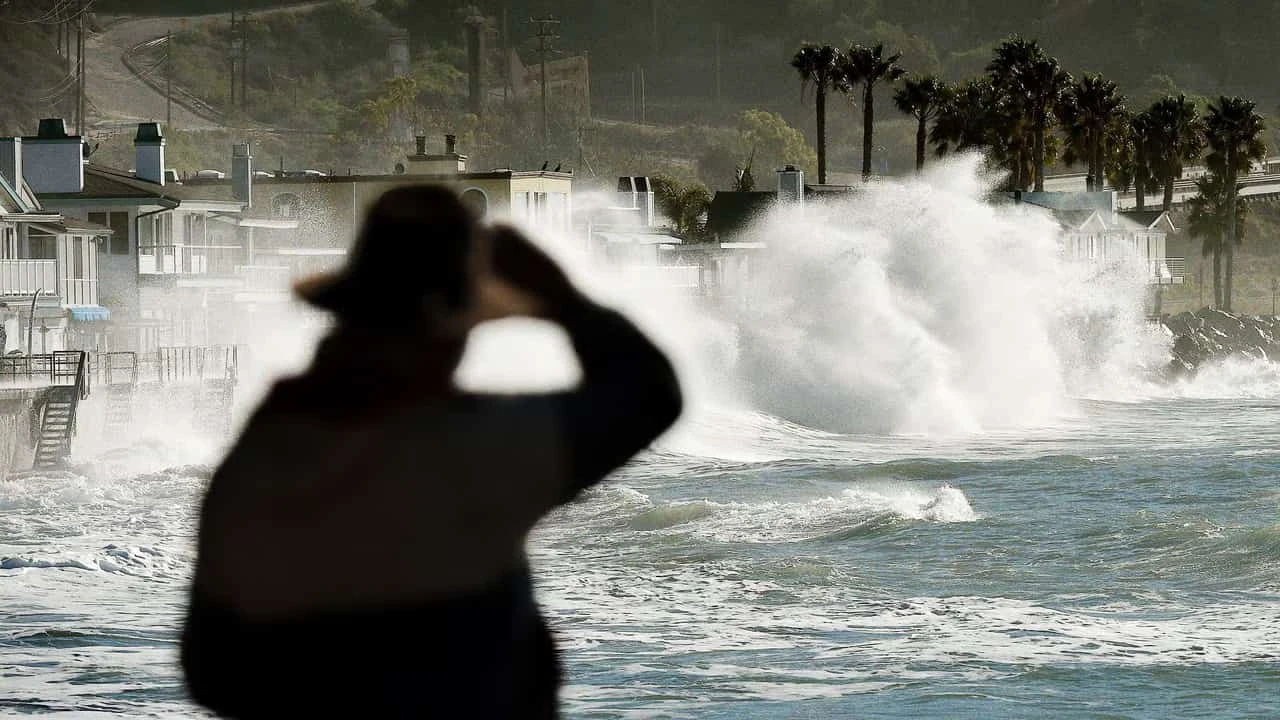
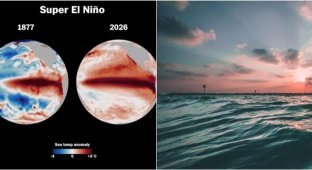
In 1877, a drought simultaneously hit India, China, and Brazil. Harvests failed, followed by famine. By 1878, the death toll had exceeded 50 million—approximately 3-4% of the Earth's population at the time. Scientists attribute this to a super El Niño, the rarest and most powerful version of a known climate phenomenon. Today, meteorologists are sounding the alarm again. A new super El Niño is forming in the Pacific Ocean in the summer of 2026. According to forecasts, it could break the 1877 record.
The Christ Child, who changes the weather across the planet
The name was coined by Peruvian fishermen in the 17th century. They noticed that every few years, the waters off the coast of South America would become unusually warm—specifically, in December. The phenomenon was dubbed "El Niño de Navidad," or "Christ Child," and was eventually shortened to El Niño, meaning "the boy." 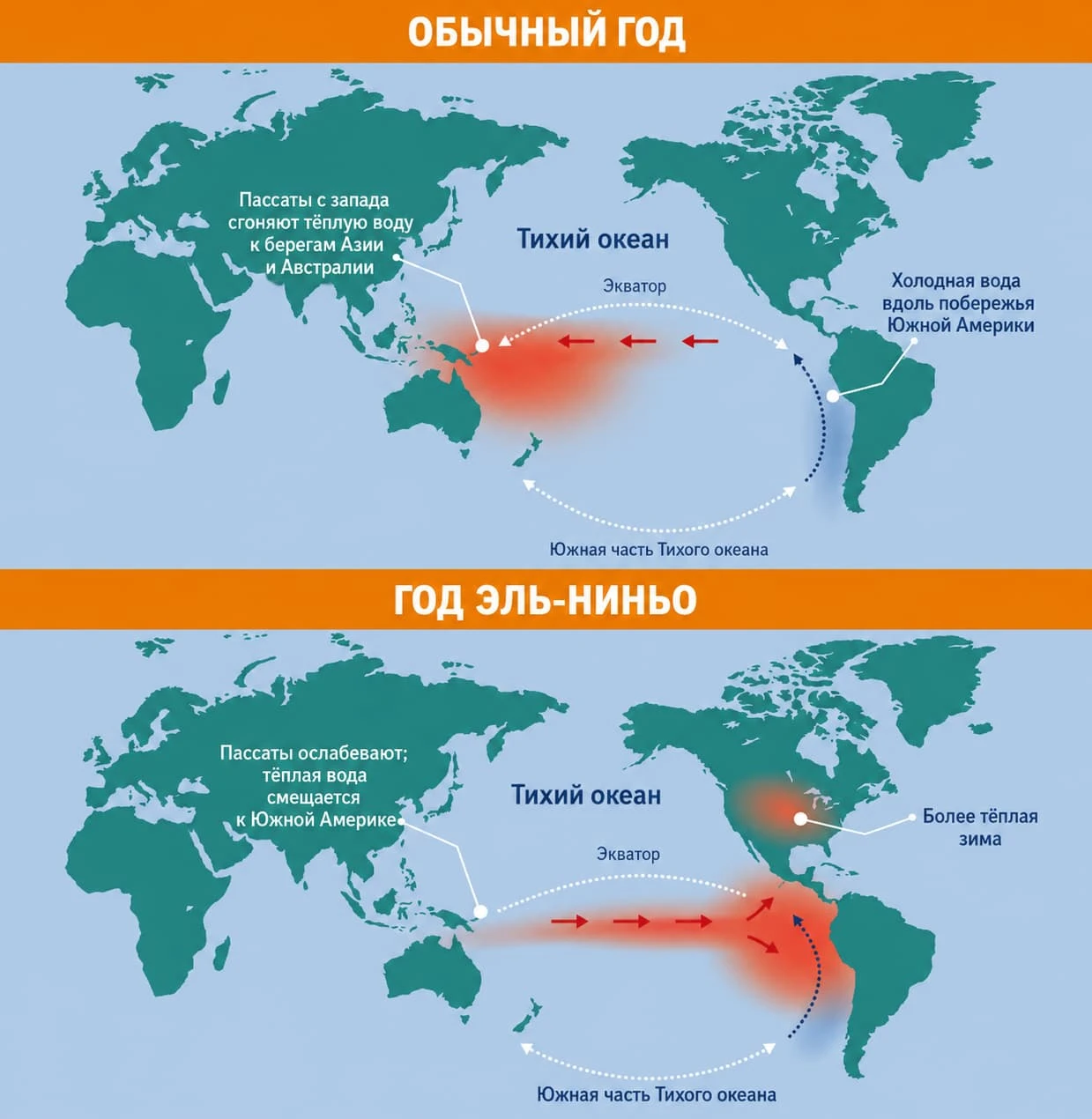
The weakening of the trade winds disrupts the normal circulation of air masses over the entire Pacific Ocean.
Normally, stable trade winds blow over the tropical Pacific Ocean, pushing warm water westward toward Indonesia and Australia. Every 2-7 years, the trade winds weaken, warm water flows back east, and the entire system begins to work in reverse. 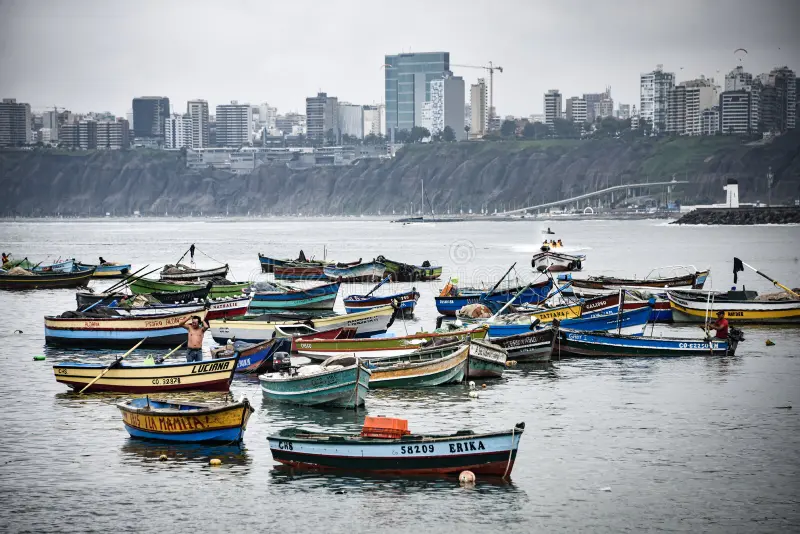
Off the coast of Peru, El Niño is most acute: the cold current that feeds the fish weakens, and catches plummet.
Scientists call this the "chicken and egg problem": weak winds warm the water, and the warmer water weakens the winds even further. This self-reinforcing process lasts for 9-12 months. When the temperature anomaly in the central Pacific Ocean exceeds 2°C above normal, the event is classified as a super El Niño. 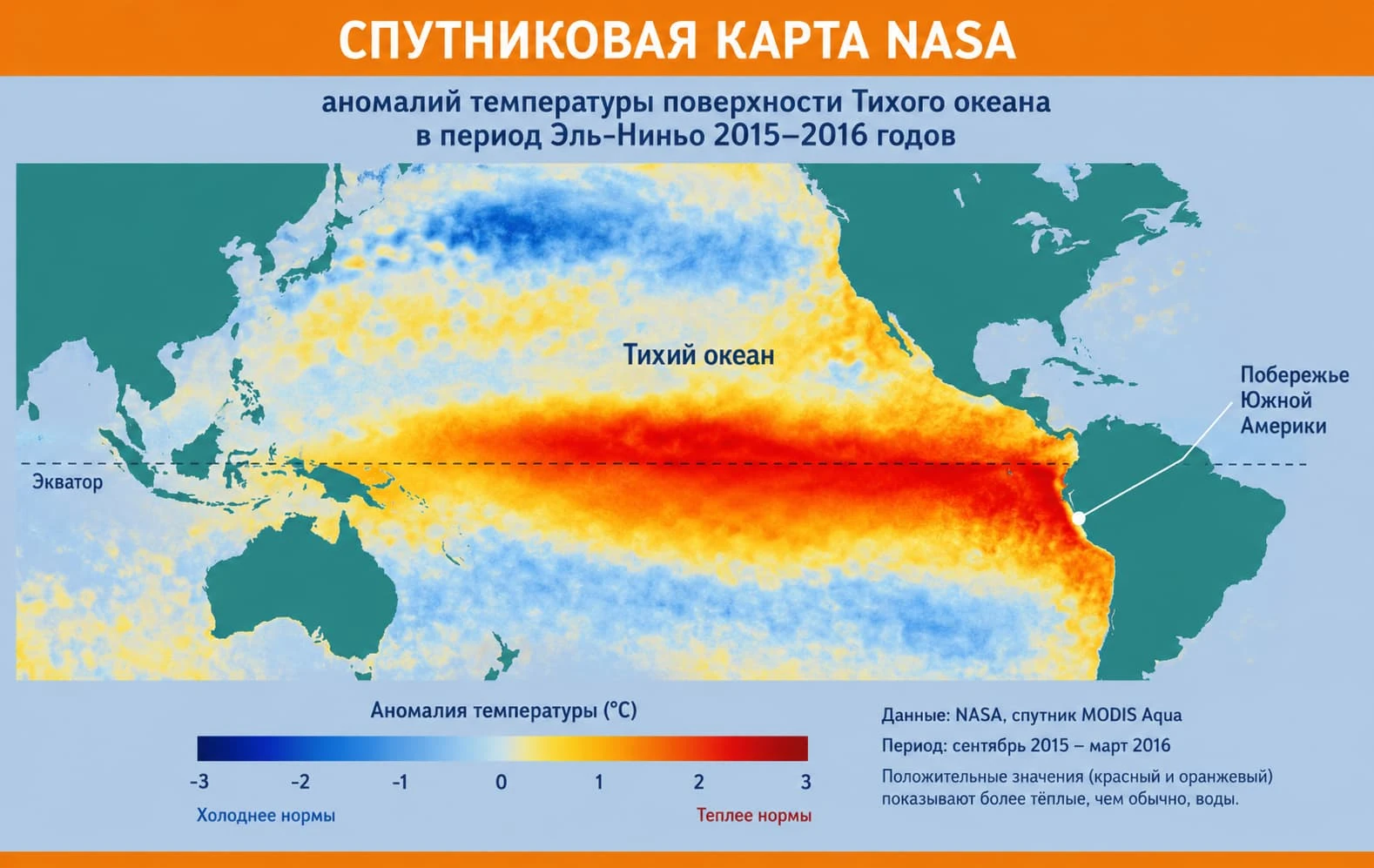
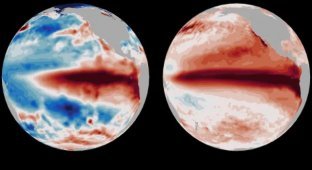
NASA satellite map: red zones indicate abnormally warm water during the 2015–2016 El Niño
The famine that killed 50 million
Climatologists have reconstructed 19th-century data and discovered that the droughts of 1875–1877 in Asia, Brazil, and Africa coincided with an exceptionally strong El Niño. In India, between 5.6 and 9.6 million people died from the famine—even though the British colonial administration continued to export grain to the mother country. In northern China, between 9.5 and 13 million people died. Researchers estimate the global death toll at between 19 and 60 million. 
Famine in the Madras Presidency, 1877: engraving from the British weekly The Graphic
The authors of a 2018 scientific paper in the journal Climate called this event possibly the worst climate disaster in history—comparable in casualties to both world wars. However, the scientists emphasize that El Niño itself was only the trigger. The drought was preceded by abnormally cold waters in the Pacific Ocean, accompanied by a sharp temperature fluctuation in the Indian Ocean. And the colonial economy, which extracted food from famine-stricken regions, completed the devastation.
Three Super El Niños of the Instrumental Era
After 1878, no super El Niños were recorded until the second half of the 20th century. With the advent of satellites, meteorologists have identified three such events: 1982-1983, 1997-1998, and 2015-2016. 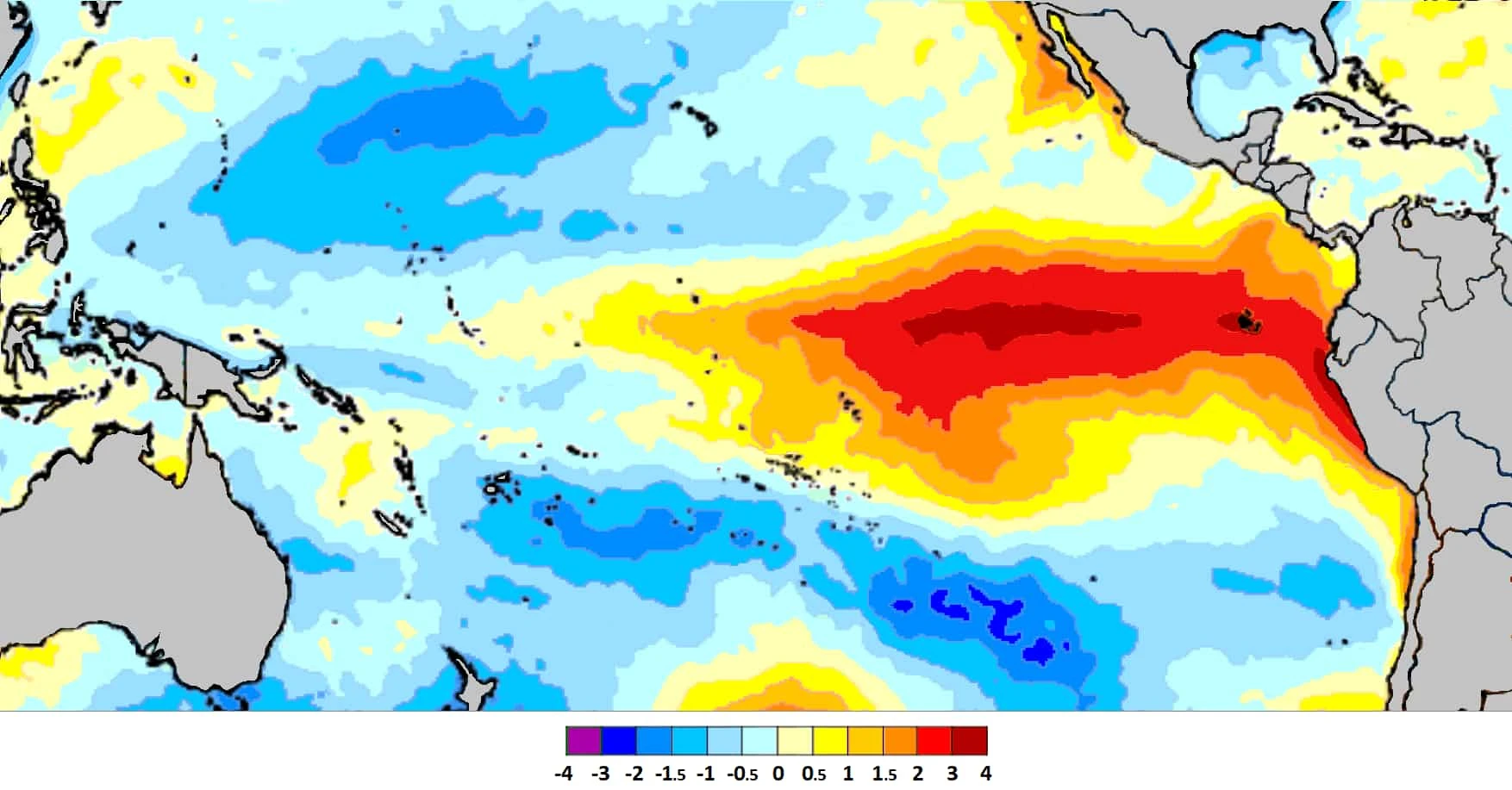
The 1982-1983 Super El Niño: The First Event Scientists Could Track in Real Time from Satellites
The 1997-1998 event was long considered a record-breaking event. It raised the global average temperature by 1.5°C. Floods devastated Peru and East Africa, where Rift Valley fever broke out. Catastrophic forest fires raged in Southeast Asia. In California, heavy rains triggered landslides that destroyed hundreds of homes. About 16% of the planet's coral reefs were destroyed. 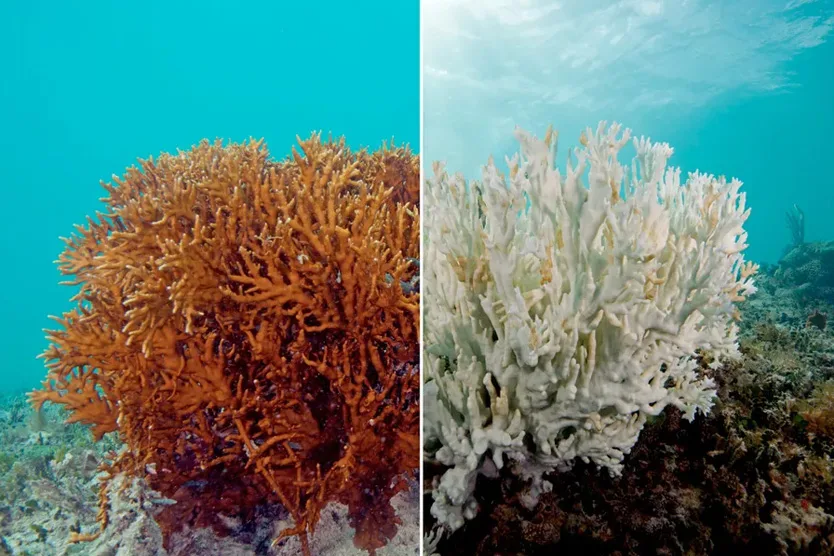
Coral bleaching is one of the most visible signs of ocean overheating during El Niño.
The 2015-2016 event was comparable in severity. Drought ravaged the Caribbean and Ethiopia. The Pacific typhoon season was the worst on record. Floods in January 2016 forced the evacuation of more than 150,000 people in South America. 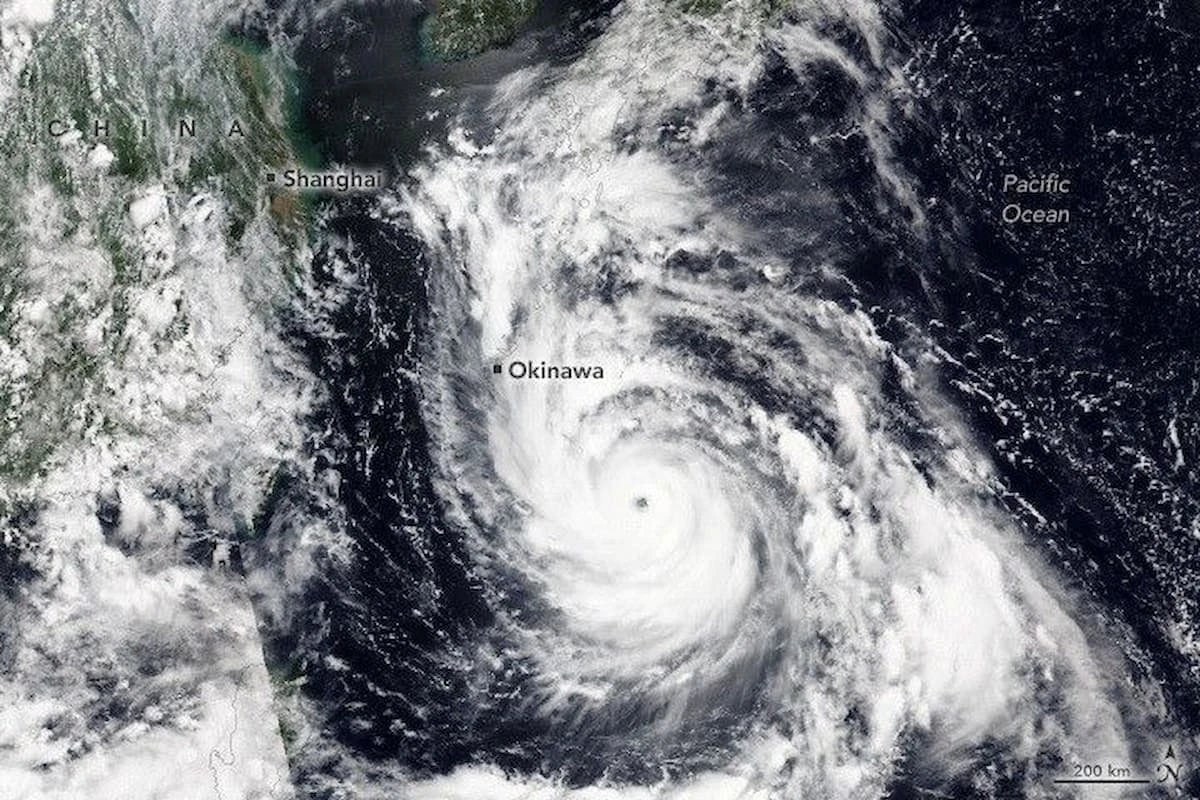
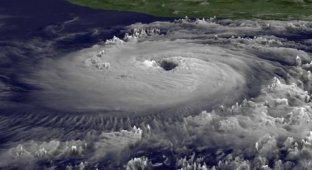
Typhoon over the Pacific Ocean: Abnormally warm ocean fuels cyclones with additional energy
The cost of the phenomenon: from billions to trillions
A 2023 study in the journal Science estimated the global losses from the 1982-1983 and 1997-1998 events at $4.1 trillion and $5.7 trillion, respectively. The effects linger for years due to the destruction of agriculture and infrastructure. 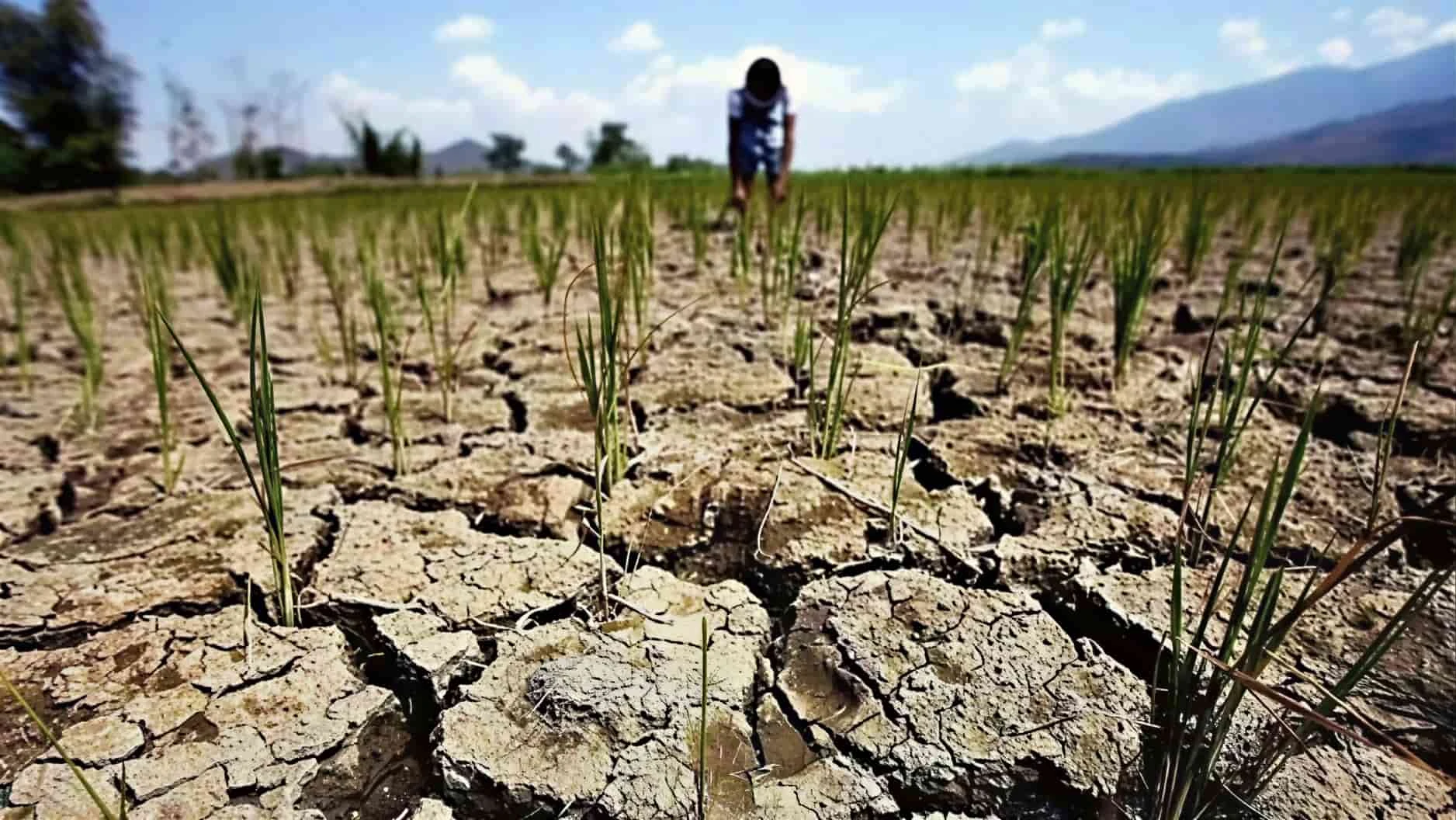
Drought destroys crops and undermines regional food security for years to come.
The 2023–2024 El Niño, one of the five most severe on record, cost $103.3 billion in damage. Due to the drought, India banned rice exports. 2023 was the warmest year on record, and 2024 broke that record. The WMO directly attributed El Niño's contribution to both records. 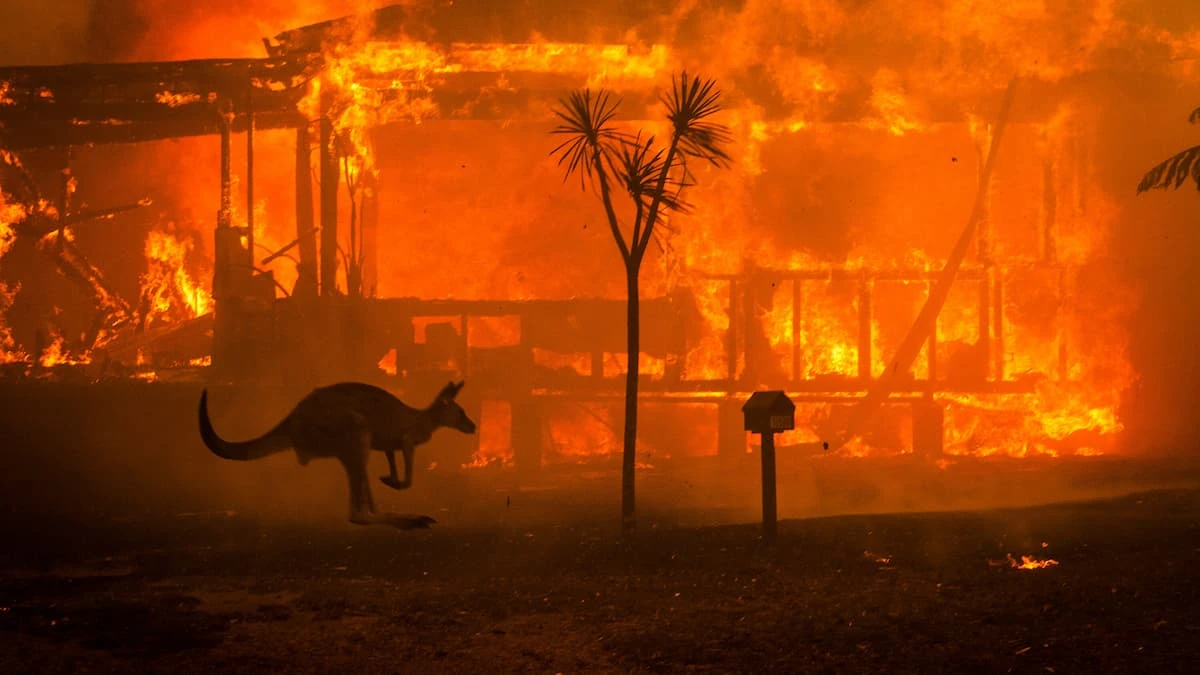
The bushfires in Australia are a direct result of the dry conditions created by El Niño in the western Pacific.
What's happening in 2026
On June 2, 2026, the WMO estimated the probability of an El Niño developing at 80%, with a 90% chance of it continuing until November. On June 9, the US National Weather Service announced that the event had officially arrived, with a 63% chance of becoming a super storm. 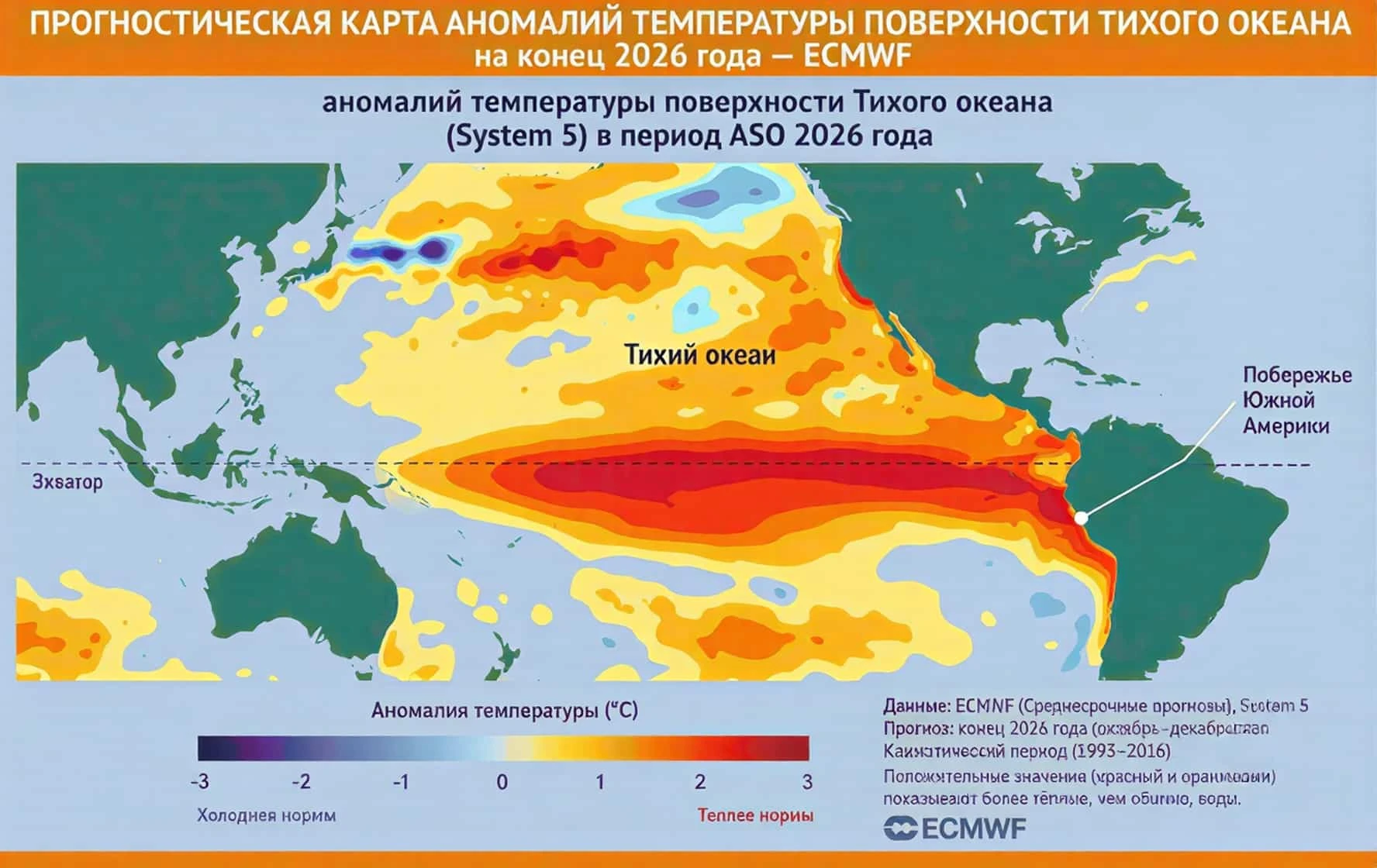
ECMWF forecast for December 2026: dark red zones indicate potential record warming in the Pacific Ocean
WMO Secretary-General Celeste Saulo warned of the risks of droughts, heavy rains, and heatwaves. Some models, including those from the European Weather Forecast Center, point to an anomaly of up to 3-4°C by December—this would exceed both 20th-century records. The exact magnitude of the peak is impossible to predict in advance. However, the World Economic Forum has already called the approaching event a systemic shock—for food markets, energy, and government budgets.
Climate change has nothing to do with it—and yet it does.
El Niño is a natural cycle that existed long before the Industrial Revolution. But ocean warming, caused by greenhouse gases, amplifies its effects. More energy for storms, more moisture in the air. Rainfalls become more intense, and droughts more severe. 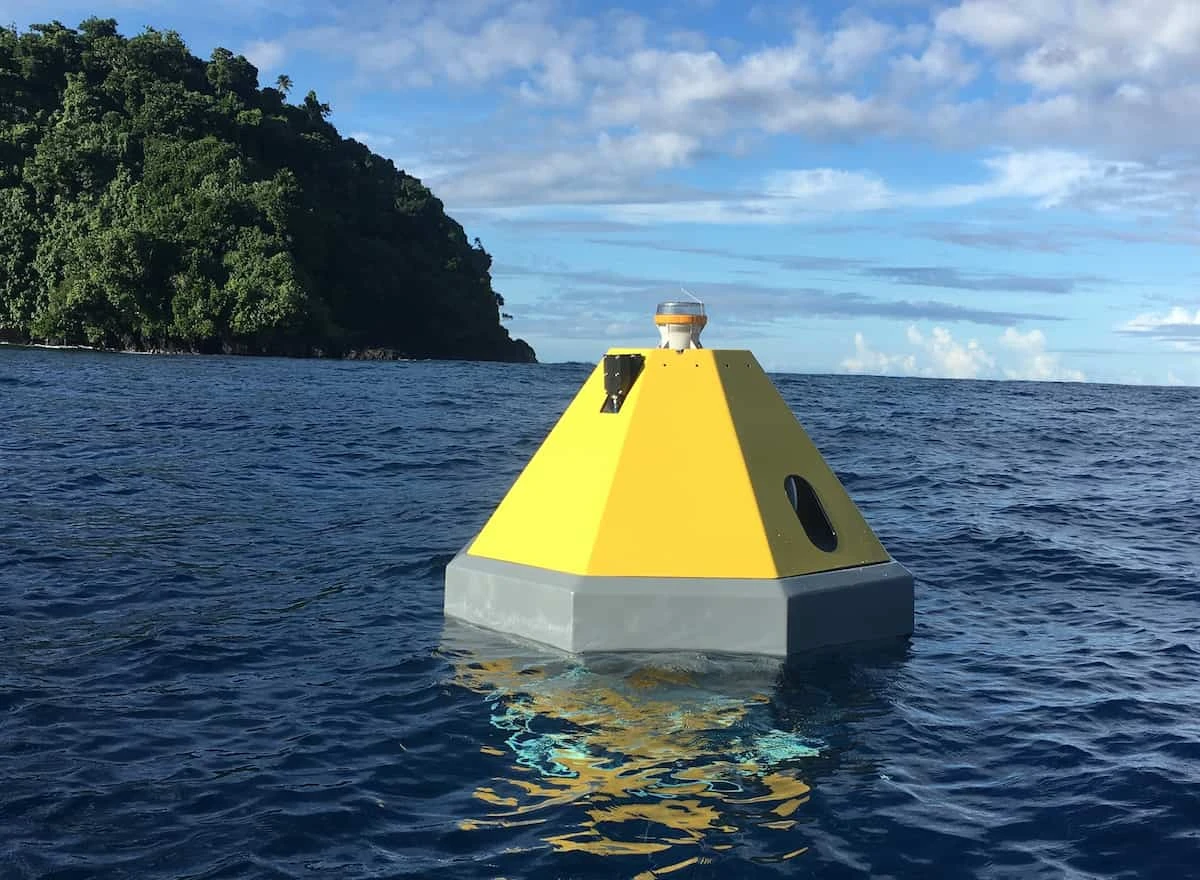
The ENSO network of buoys in the equatorial Pacific Ocean transmits water temperature data in real time.
El Niño itself increases global temperatures by about 0.2°C. But combined with the long-term warming trend, this means that each new super El Niño breaks records even harder than the last.
What to expect
The effects are uneven. The west coast of South America experiences heavy rains and floods. Indonesia, Australia, and Southeast Asia experience droughts and fires. Heat waves are intensifying in India. The hurricane season typically weakens in the Atlantic, but intensifies in the Pacific. 
Urban heat waves are one of the most noticeable consequences of El Niño for residents of South and Southeast Asia.
For the average person, this means rising food prices, more frequent extreme weather events, and an increased risk of drought or flooding, depending on the region. The peak impact typically occurs in the second year of the event, with the main consequences expected in 2027.
Super El Niños have killed tens of millions, cost humanity trillions of dollars, and broken temperature records. The new event of 2026 is unfolding in a world warmer than all previous ones. Its outcome will become clear by the end of the year.
The Cold Summer of 1816: How Weather Changes Impacted World History
What Will Happen to the Planet if All the Ice Melts
Tornadoes, Tornadoes, Hurricanes, and Typhoons: What Are the Differences Between These Natural Phenomena
Historical Events That Caused the Greatest Losses to Humanity