35 monuments to the tenacity of people who refused to sell their homes to the very end (12 photos)
When ordinary citizens stand up for their rights, despite opposition from governments and powerful corporations, it gives hope that even the "little people" have power and opportunity. The world knows many cases of people refusing to sell their homes, stores, or plots of land, even though developers wanted the land and were offering high prices for it.
These stories have repeatedly become media hits, especially in China, where such brave homeowners receive widespread support. In both Chinese and English, such cases have even acquired a term—nail house or holdout—and directors have based them on works of art, such as the Australian film "Castle" or the well-known animated film "Up." 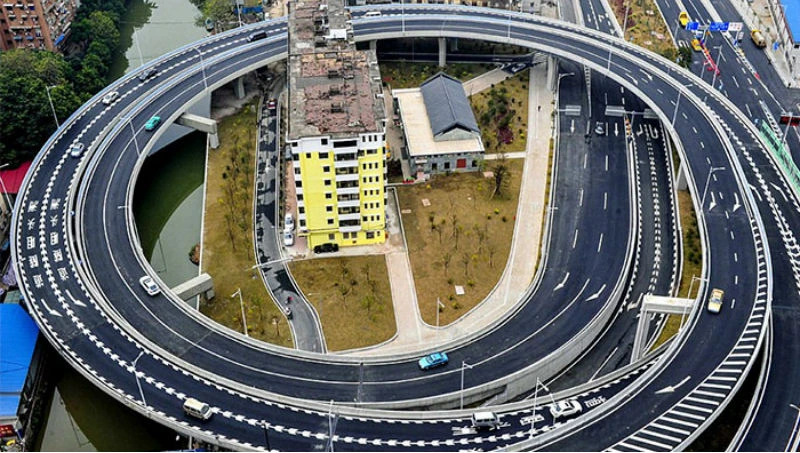
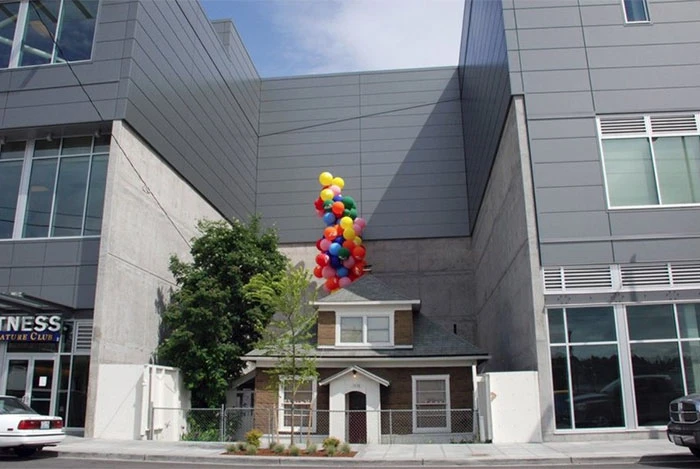
85-year-old Edith Macefield refused to sell her home in 2006, even after being offered a million dollars. She had once promised her ailing mother that she would not send her to any nursing home and would let her end her life at home, and then she herself refused to leave. This story later became the basis for the cartoon "Up." 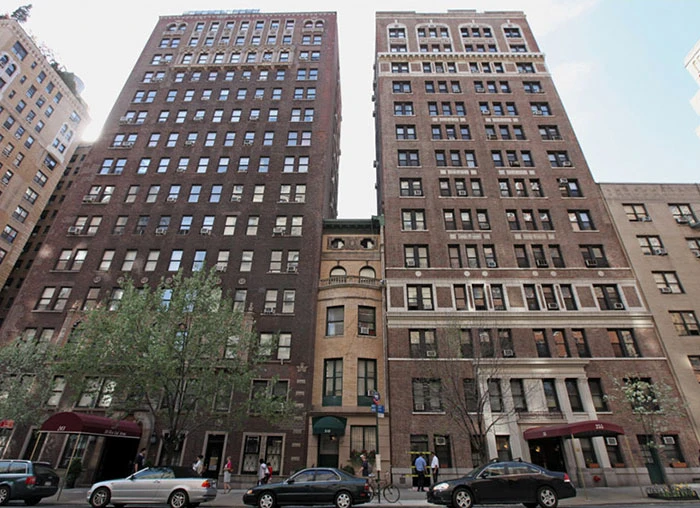
When construction began in Mary Cook's neighborhood, all her neighbors' houses were demolished, but she refused to sell hers. Now this pretty house is squeezed between gigantic neighbors, like something out of a children's book. 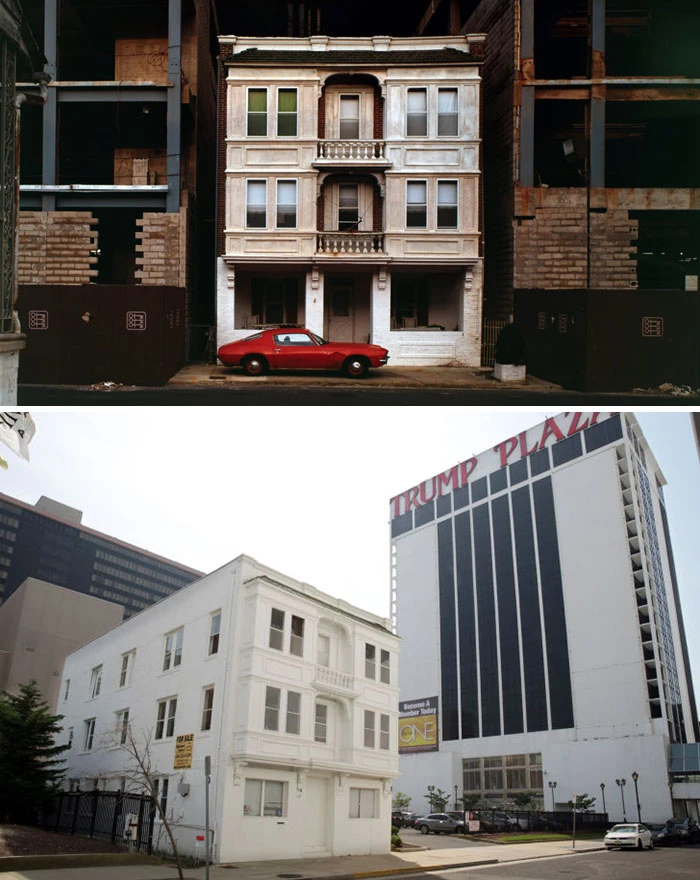
Vera Cocking refused to sell her house twice: first, Penthouse publisher Bob Guccione wanted to build a casino on the land, and then, later, Donald Trump's company wanted it. 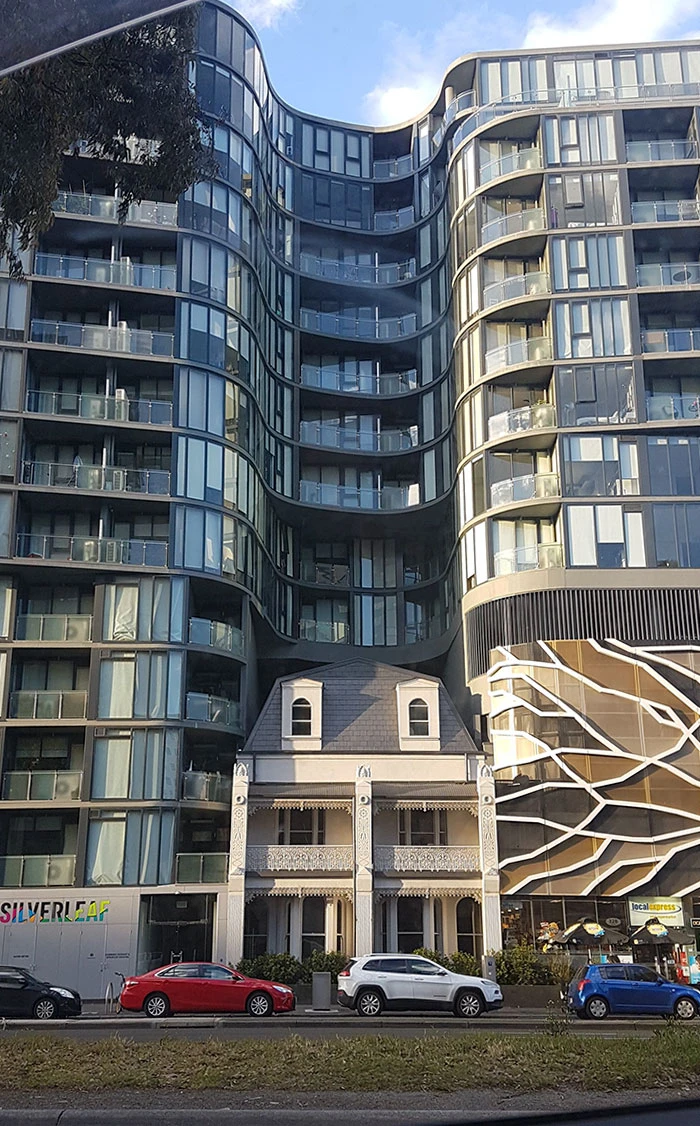
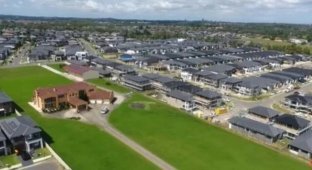
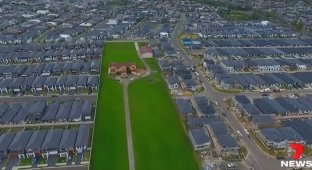
Another stubborn homeowner – an Australian from Melbourne. 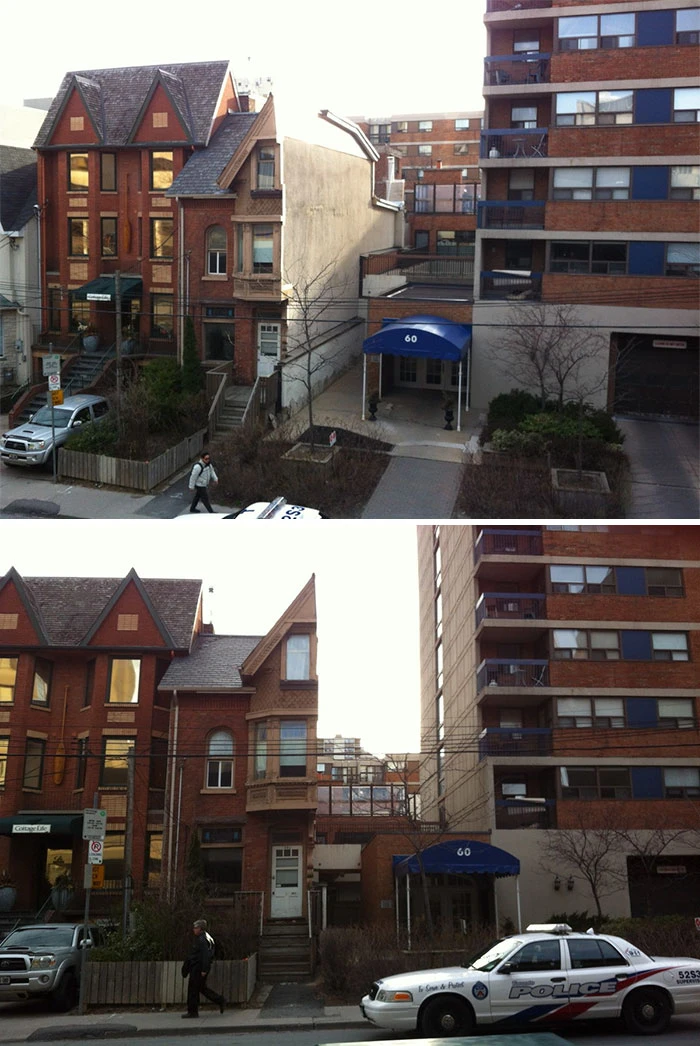
This house belonged to two owners. One of them refused to sell his share, so the house was simply divided in half. 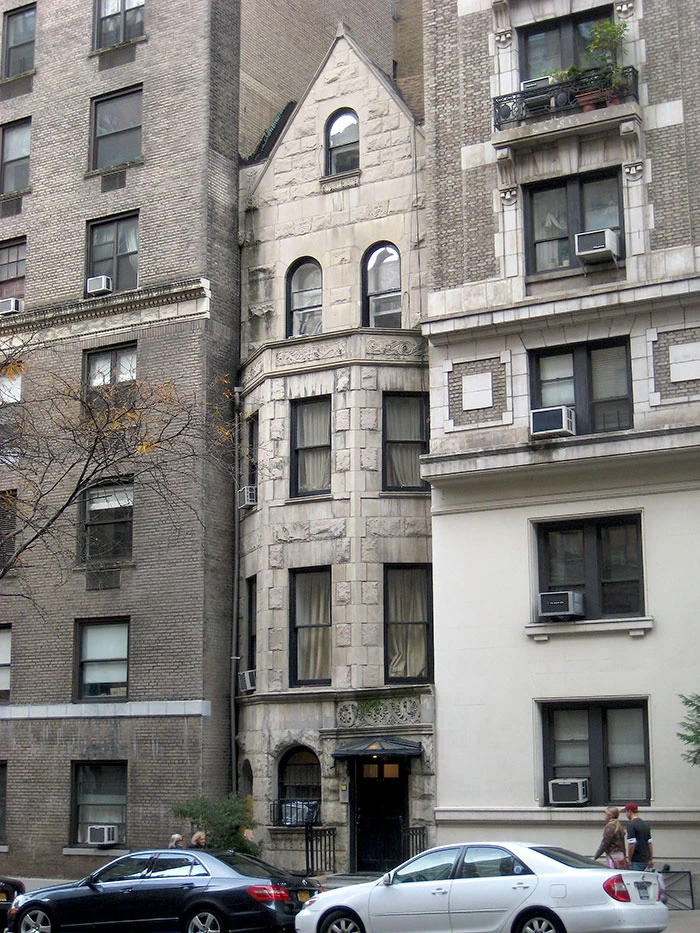
A townhouse with Gothic motifs, surrounded by massive pre-war houses. 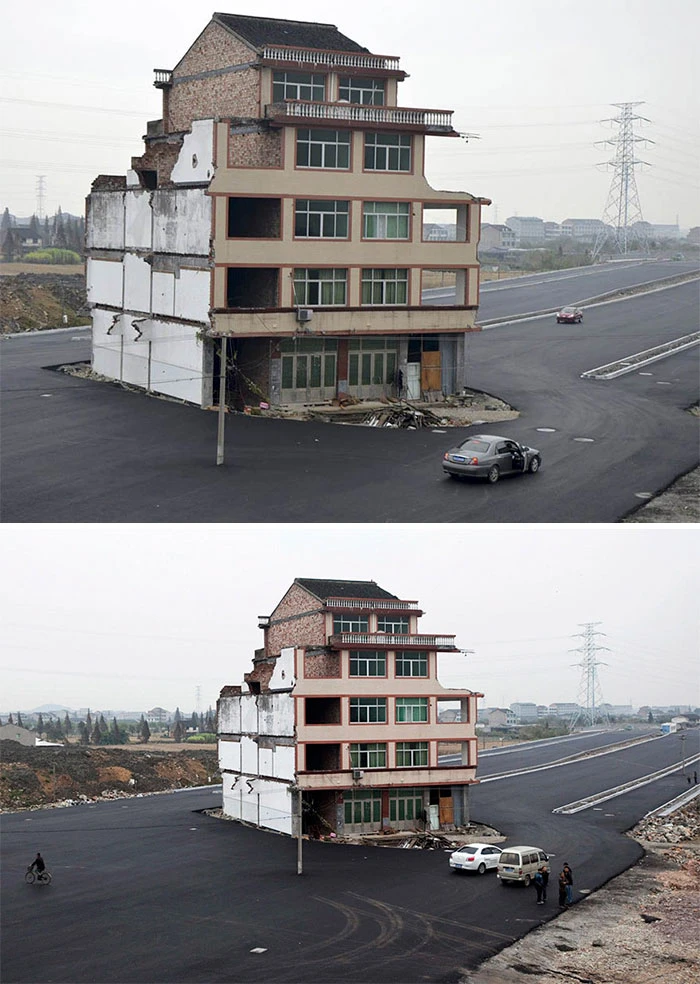
The residents of this house in China were so stubborn about selling it that the government built a road right around the building. They eventually moved out, but the house became a symbol of resistance to developers. 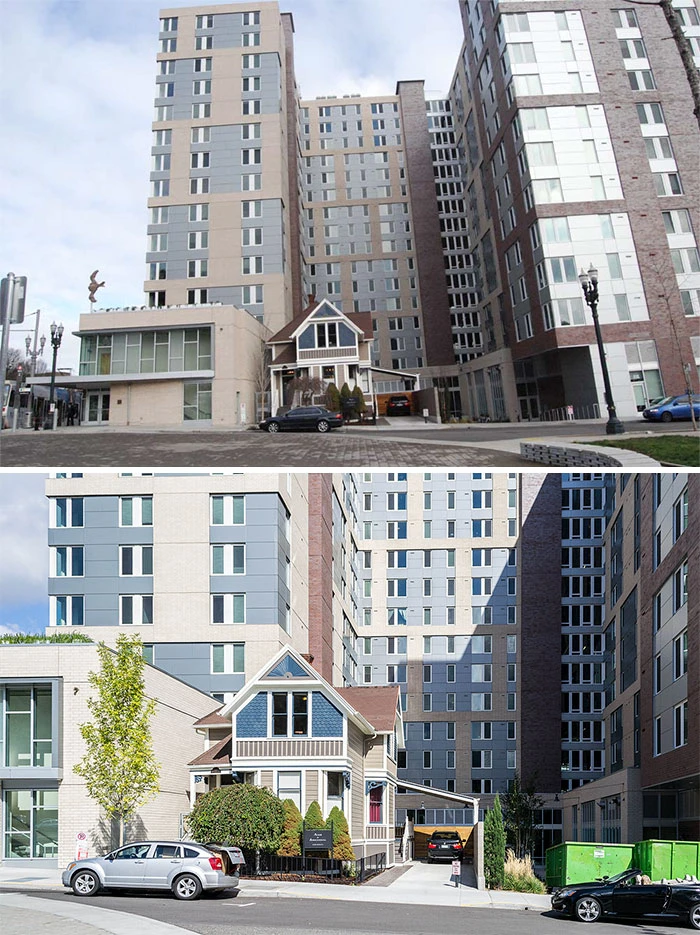
Randal Acker refused to sell his Queen Anne-style house in downtown Portland, and now it neighbors a dorm for Portland State University students. 
A road was planned for the site of this house in Guangzhou, but three families decided to stay put, so the road had to be rebuilt as a ring road. 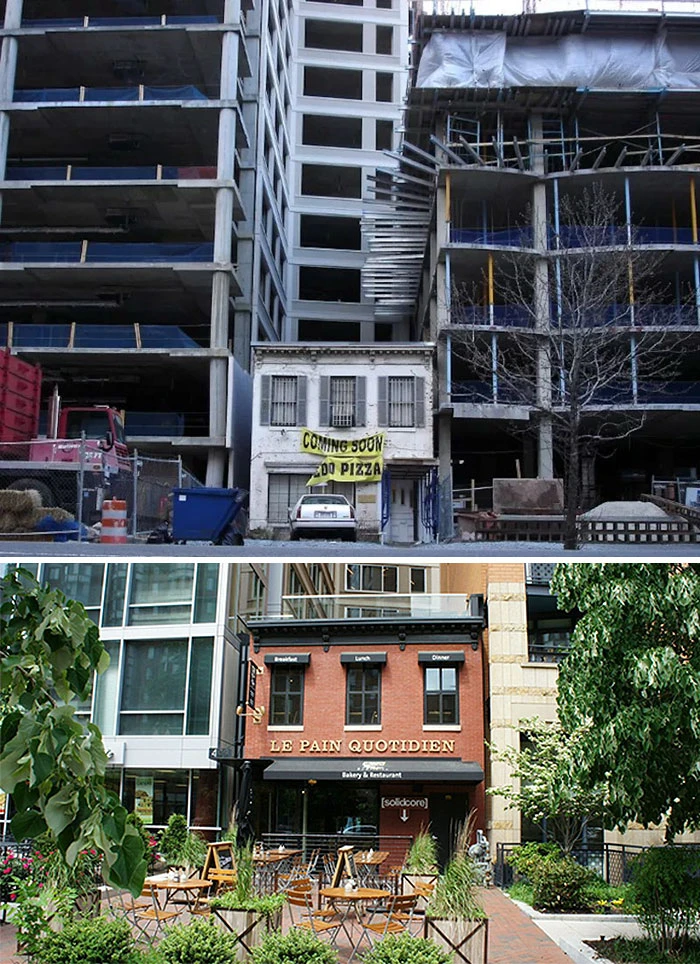
Austin Spriggs's house in Washington, D.C., for which he was offered $3 million. He declined, but later sold the building for $4 million, and it now houses a Le Pain Quotidien ("Daily Bread") cafe. 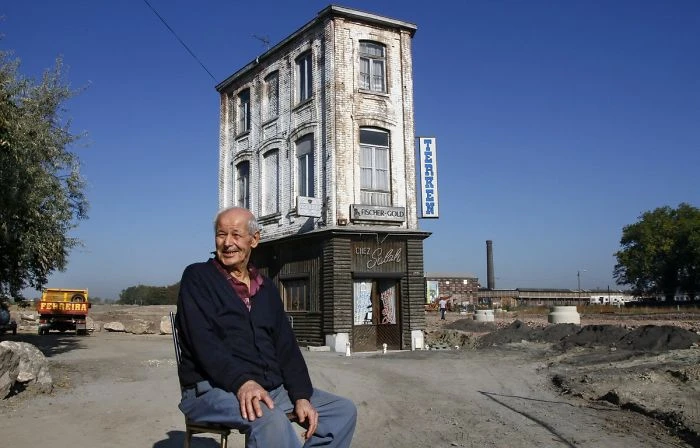
This is the last building remaining from the old Roubaix district in Northern France, but owner Salah Oujani isn't ready to sell: he's worked in this coffee shop for the past 46 years.