The hat that ruled the world: how the tricorne conquered Europe in a century and vanished in a single decade (16 photos)
Throughout human history, there's a thing that united kings, pirates, simple peasants, and the first US presidents. The tricorne—a headdress that defined the silhouette of an entire century—is now perceived as little more than a theatrical costume element. Three hundred years ago, it ruled the world. Its triumph was the result not of a whim of fashion, but of a chain of astonishing coincidences, economic factors, and purely practical considerations. How did a simple soldier's ruse give birth to a symbol of an era—and why did it vanish in just a decade? 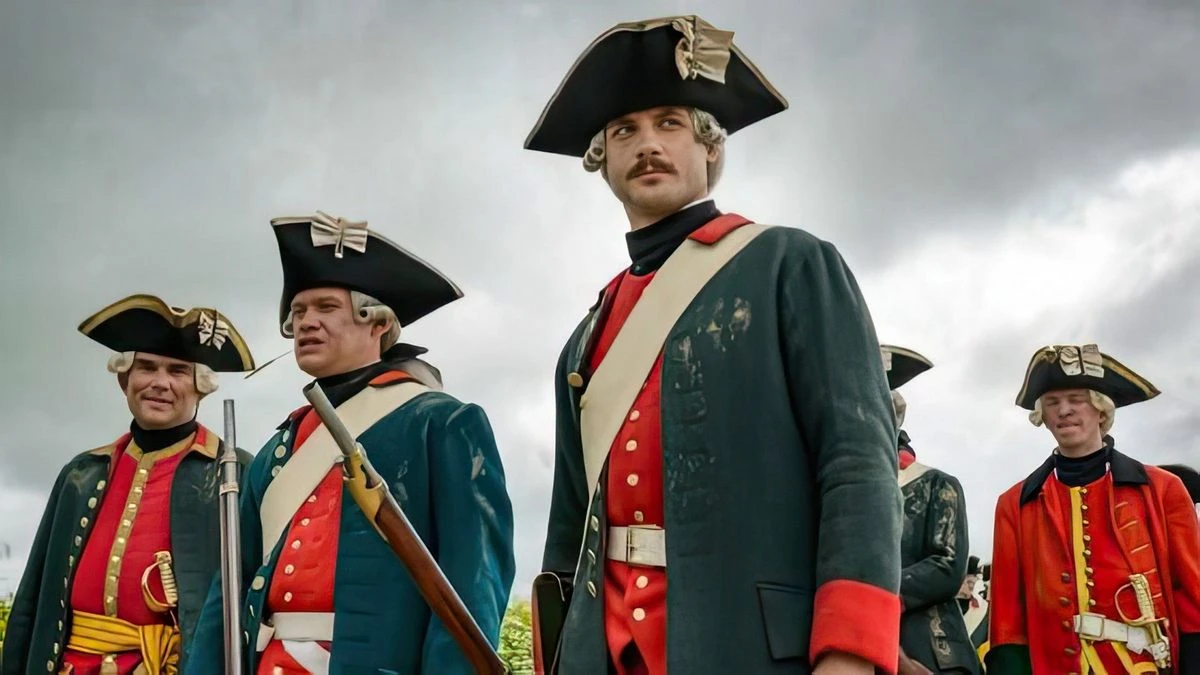
Trench Savvy: How a Musket and Rain Created a Legend
The history of the tricorn hat began not in the glittering halls of Versailles, but in the Flemish trenches. In 1667, the War of Devolution broke out—France and Spain clashed over the Spanish Netherlands. Spanish soldiers at the time wore wide-brimmed hats with soft, drooping brims. This caused a great deal of inconvenience in battle.
When firing a musket, the wide brim made aiming difficult and caught on the buttstock. On the march, the hat kept slipping sideways. A solution was quickly found: soldiers began folding the brim on three sides and securing it to the crown with pins, lacing, or buttons. The triangular silhouette emerged seemingly naturally. 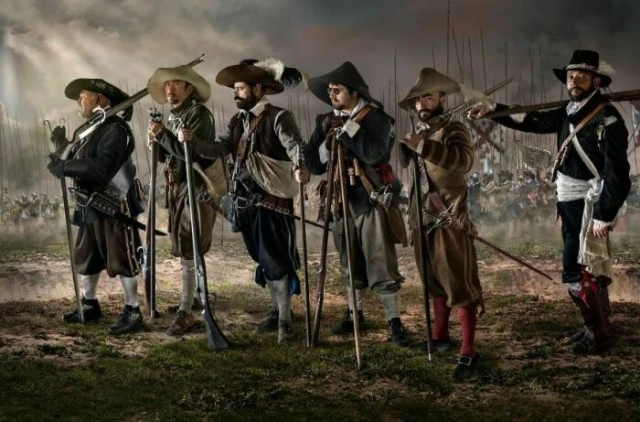
Spanish infantrymen of the 17th century wearing hats with upturned brims. Artist: Jordi Bru
The new style unexpectedly solved another problem—the Flemish climate. Rain is common in Flanders, and waterproof cloaks didn't yet exist. The upturned brim of the tricorne formed gutters. The water now ran down the corners directly onto their shoulders, protected by the cloth of their uniforms, without splashing their faces. This was pure engineering ingenuity—and the soldiers immediately appreciated it. 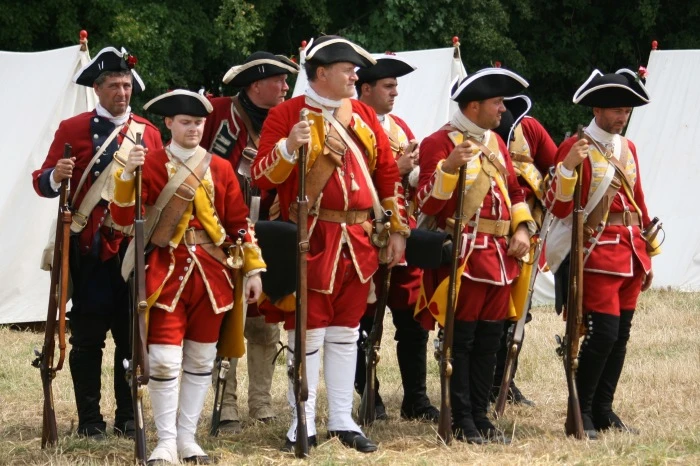
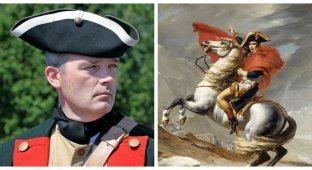
Reenactors in the uniforms of 18th-century British infantrymen
The new fashion, as often happened in the military, spread rapidly. The practical invention interested not only the rank and file but also the officers. The tricorne was more compact than the old hats. It was tucked under the arm when entering a room—as required by etiquette.
A Royal Gesture: How Versailles Conquered Europe
French soldiers quickly appreciated their opponents' ingenuity and adopted the style. The tricorn reached Paris with the troops returning home, where it was noticed at court. Louis XIV, keenly aware of the power of visual image, made the tricorn an obligatory element of court etiquette. 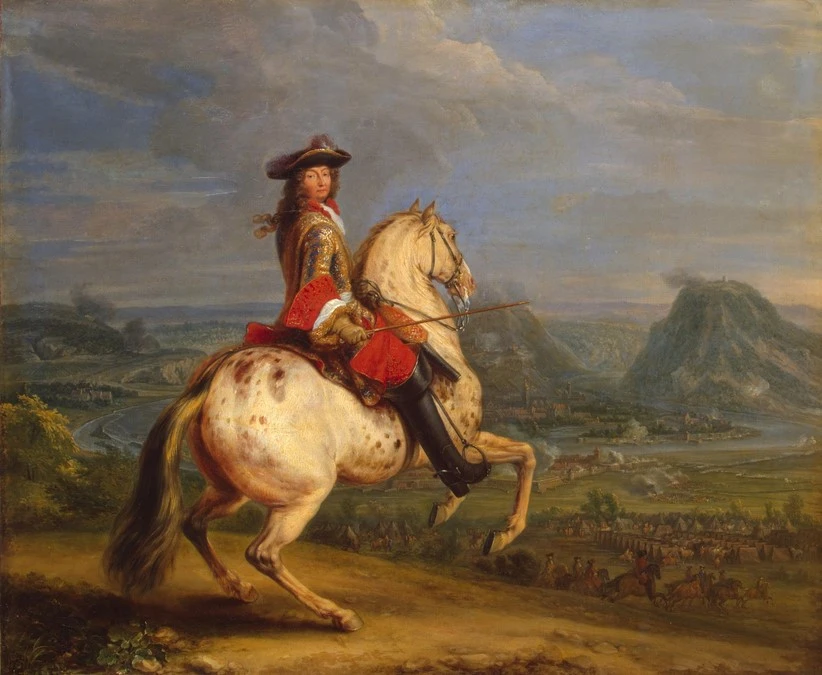
Louis XIV at the Capture of Besançon. Artist: Adam Frans van der Meulen. 1674
By the end of the 17th century, the tricorn had ceased to be a military accessory. It became the absolute standard of men's fashion—worn by aristocrats and footmen, wealthy merchants and ordinary citizens. Due to the fashion for enormous powdered wigs, the tricorn hat couldn't always be placed on the head; it was often carried under the arm. The hat became a stylish accessory and a status symbol: it was effectively used to "wave" during social bows. 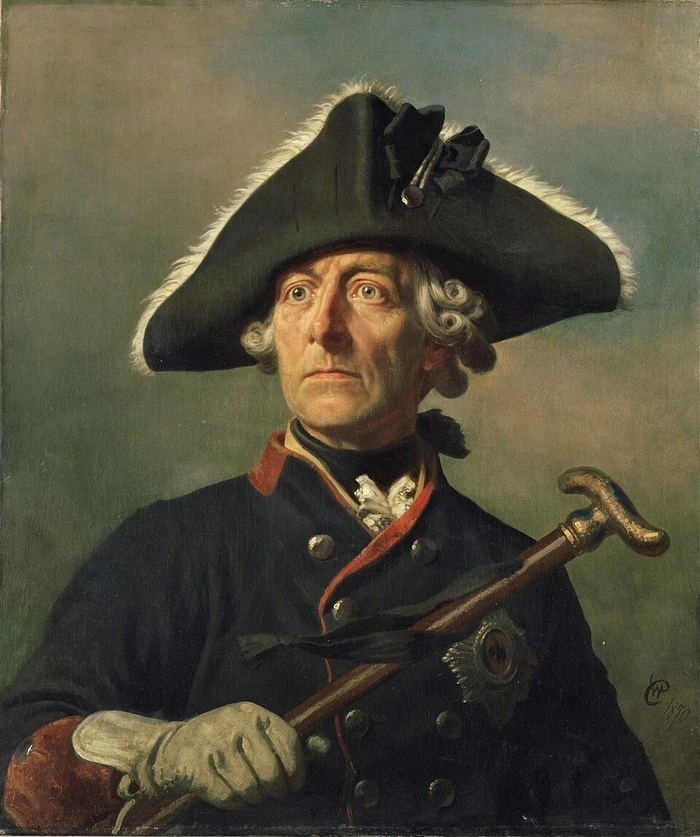
King of Prussia Friedrich II the Great. Artist Wilhelm Camphausen. 1870
A special etiquette for wearing the tricorn emerged. Most wore it with the point forward. Soldiers who carried a musket over their left shoulder turned the corner just above their left eyebrow—this way, the weapon wouldn't snag on the brim. And the Duke of Wellington, according to legend, wore his tricorn hat front to back. Napoleon, on the other hand, always wore it sideways, with the corners facing outward. Contemporaries could read a person's character by the way they wore their tricorn hat. 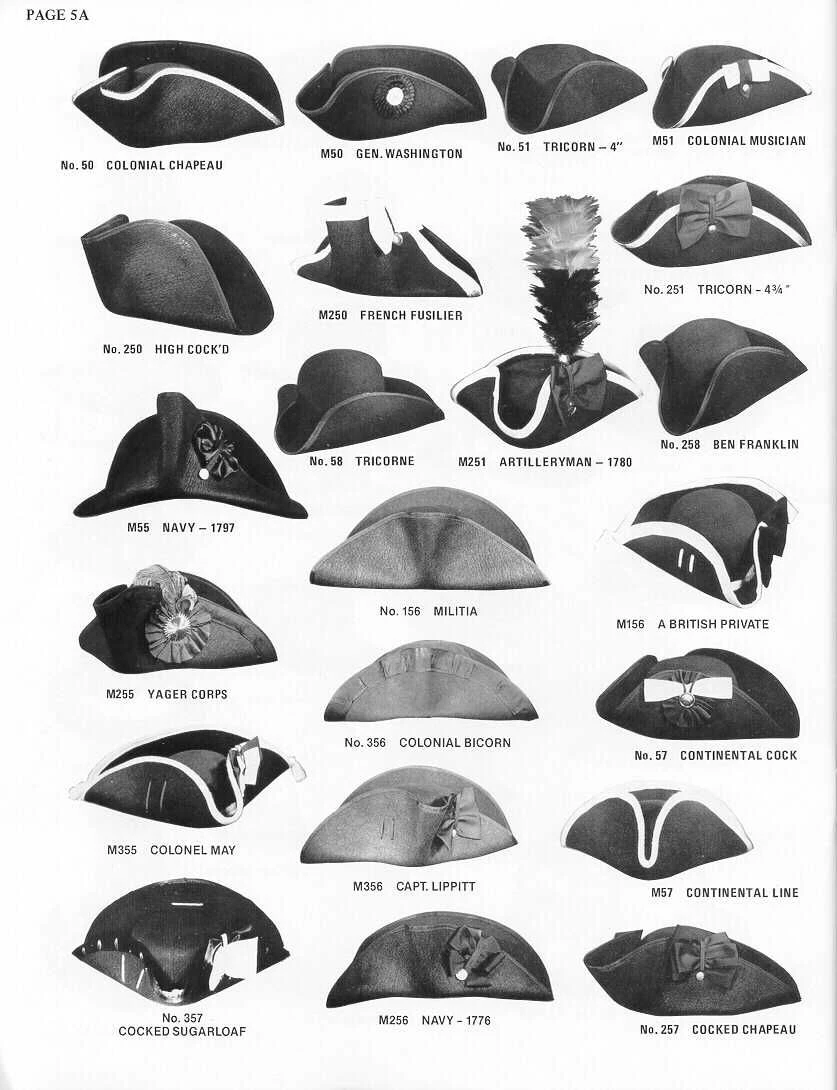
What we collectively call tricorn hats is actually a large family of hats with different names.
There were many styles. The most common military version had a brim about 13 centimeters wide at the back and 10 centimeters at the front. Some triangular hats had lacing that could be loosened and the edges lowered during inclement weather. The color was most often black, less commonly gray or brown. Military and naval officers wore a cockade or national insignia on the front. 
Tsar Peter I. Artist Vasily Khudoyarov. 2008 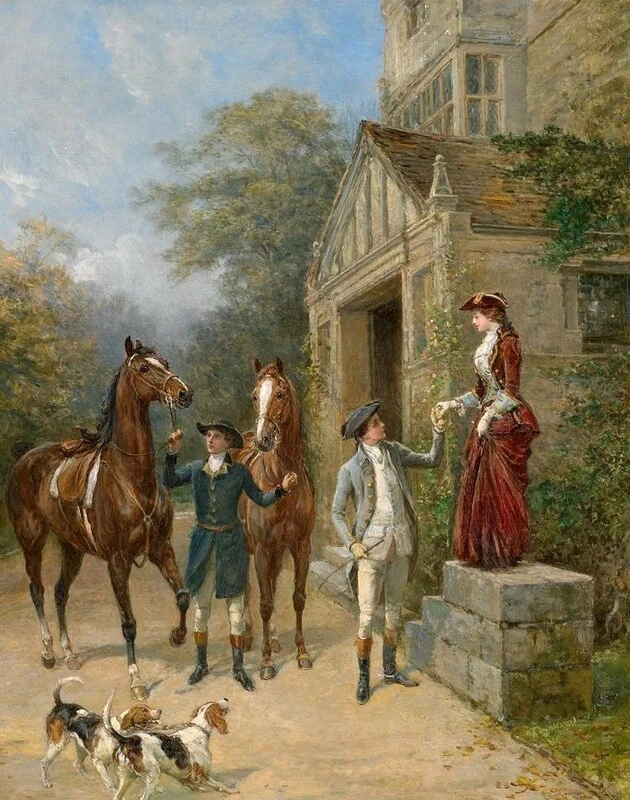
Ladies didn't neglect tricorns either. A New Horse. Artist Heywood Hardy. 1902
From Pirate Seas to the White House
In the 18th century, the tricorn hat became a truly universal symbol. It was worn by Caribbean pirates for protection from the scorching sun and sea spray. The first five US presidents—from George Washington to James Monroe—appeared wearing tricorns as a symbol of dignity and civic duty. 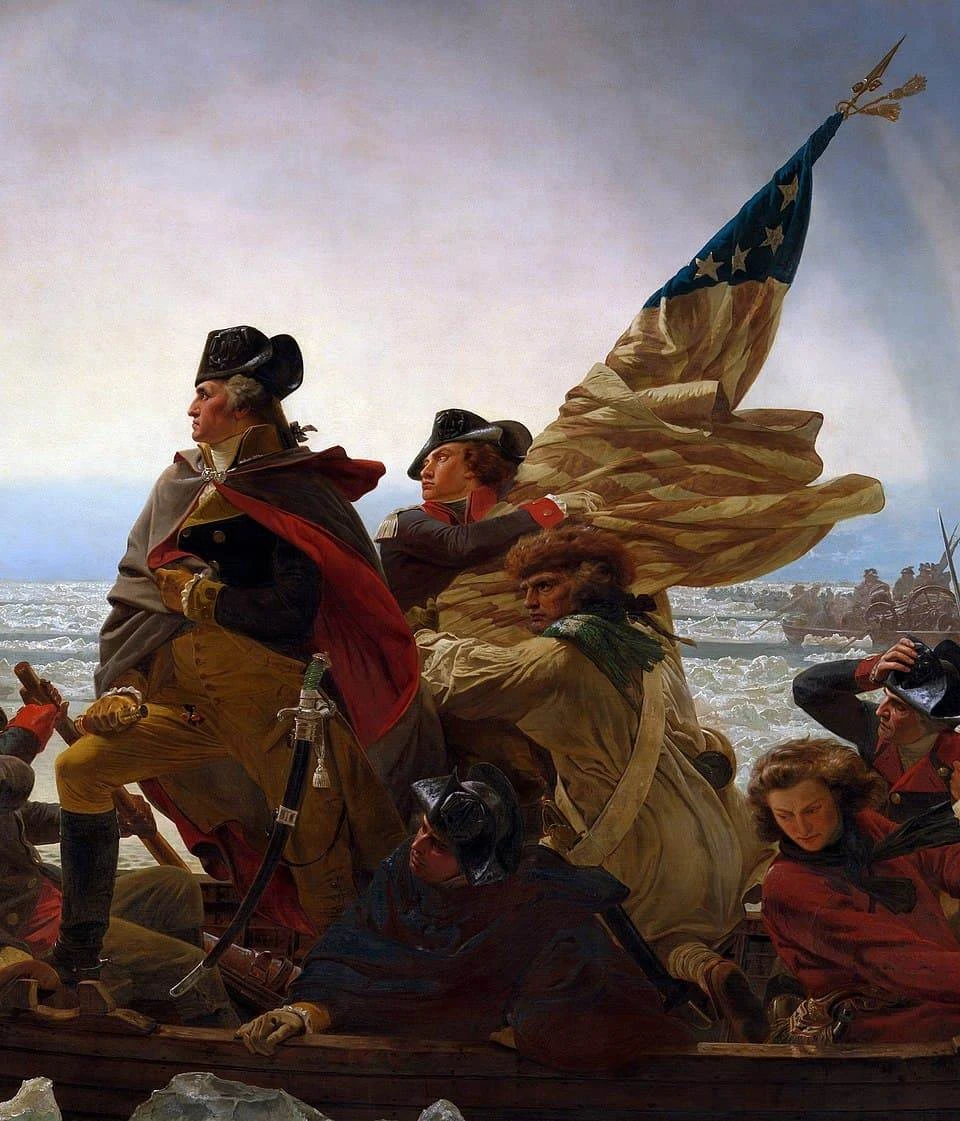
Monroe holding a banner behind Washington. Detail from a painting by Emmanuel Leutze. 19th century.
Monroe held onto his favorite hat so conservatively, even as it was falling out of fashion, that he earned the nickname "The Last Cocked Hat." The hat united continents and classes. In North America, the tricorn hat became a symbol of the Revolutionary War. Continental Army soldiers wore it, made of black felt—and today, this image is inseparable from the concept of the "American patriot." 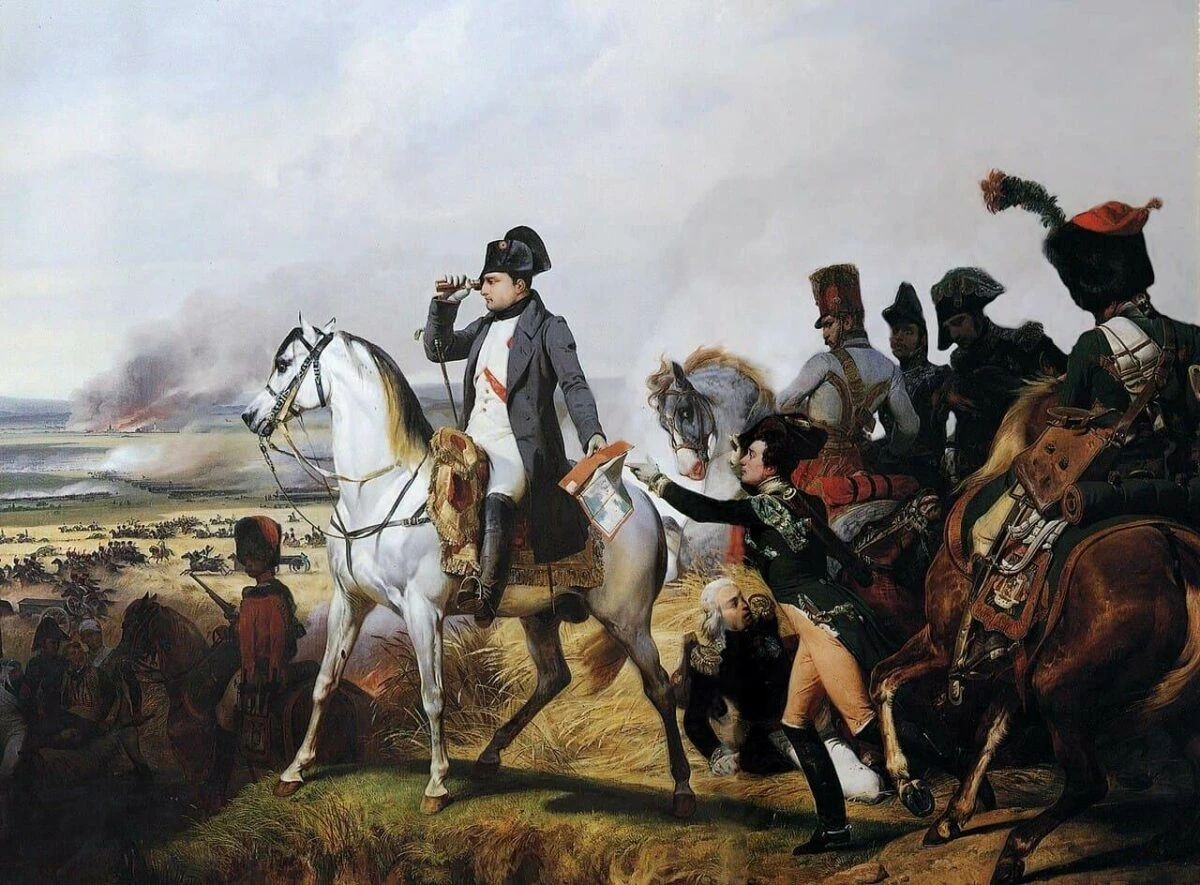
Napoleon at the Battle of Wagram. Artist: Horace Vernet. 1836
Napoleon deserves a separate discussion. We are accustomed to seeing him in a tricorn—but this is inaccurate. Bonaparte wore a bicorne—a more practical style, with only two brims folded over rather than three. The bicorne is easier to fold and easier to carry under the arm. It was in this hat that Napoleon entered history, although in the popular imagination it is still called a tricorn. 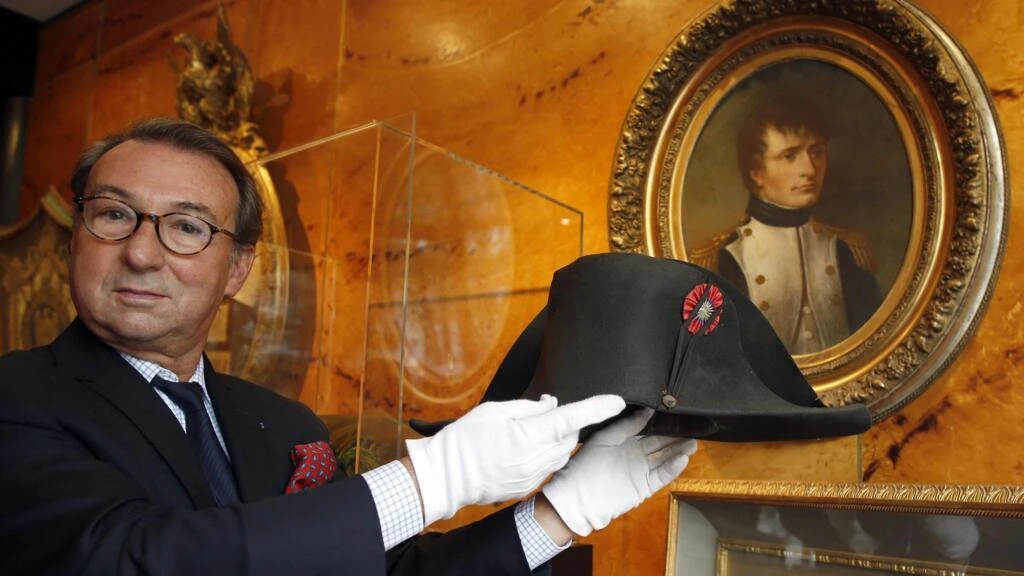
Napoleon Bonaparte's legendary bicorne was recently sold at auction in Fontainebleau for €1,884,000.
Beaver Wars: How Fashion Driven the Economy
A tricorne was more than just a headdress—it served as an accurate social marker. The quality of the hat instantly determined the owner's status. The most expensive ones were made of thick felt made from beaver undercoat. This felt held its shape even in the rain and didn't wrinkle for years. Cheaper versions were made of coarse wool—they would lose their shape after the first rainstorm. 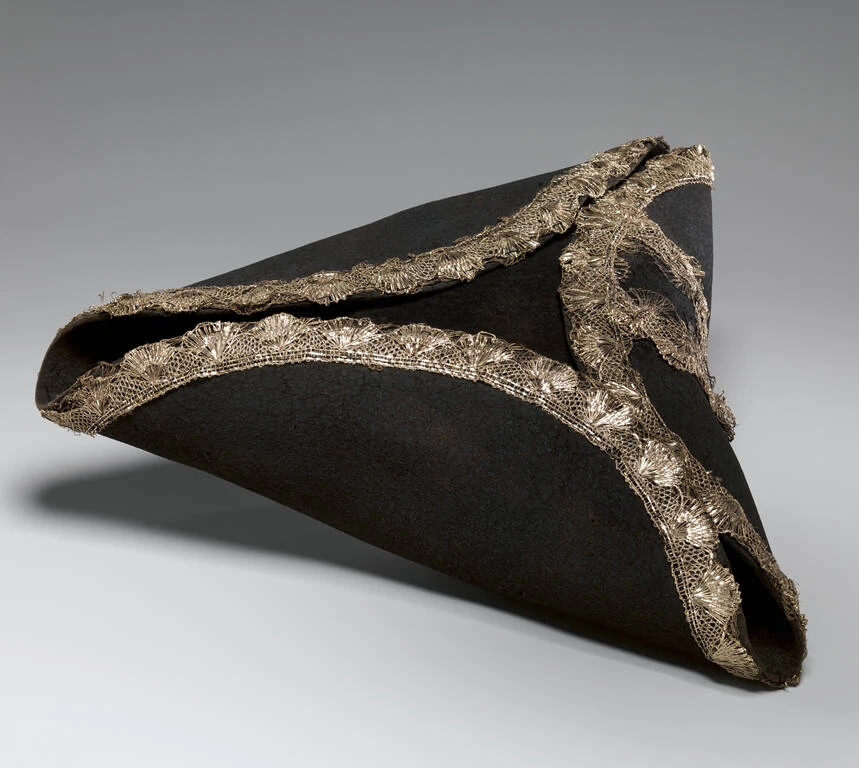
Exquisitely decorated wool tricorn hat. Italy. 18th century
Elite tricorn hats were decorated with the finest silk, lace, gold and silver embroidery, and sometimes ostrich feathers. The gap between expensive and inexpensive hats was obvious at first glance. This is precisely what made beaver felt a strategic resource: demand for it spawned an entire transatlantic industry. 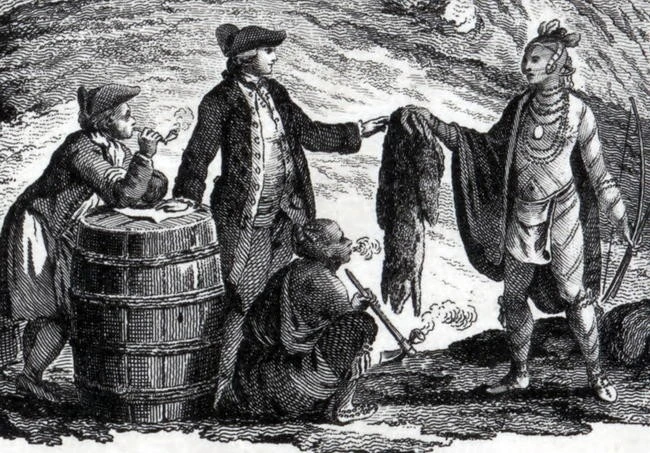
The Fur Trade with Canadian Indians. Artist: William Faden. 1777
European beavers were almost completely exterminated by the 17th century. Hunters moved to North America, where a veritable beaver craze unfolded. From 1700 to 1750, revenue from beaver hat exports from Britain alone to Spain and Portugal increased from £44,000 to £263,000. Over the course of a century, the price of a single pelt tripled—from approximately $31 in 1700 to nearly $95 by 1800 (in today's terms). 
Pirate Edward Teach, nicknamed Blackbeard. Colored engraving by an unknown artist
Pels were the source of trading posts, new territories were developed, and wars broke out between colonizers and indigenous peoples. The fur trade became the driving force behind the development of entire regions of the continent. Beavers were exterminated in many parts of North America long before fashion changed. They only regained their former numbers in the 20th century—many decades after the silk top hat had finally supplanted the felt tricorn.
The Rapid End of the Rococo Era
The tricorn's reign seemed eternal. But its decline was swift. By the end of the 18th century, the French Revolution had forever changed European society. The opulent aesthetics of Rococo, associated with an effete aristocracy, instantly became dangerous. Wearing a hat reminiscent of Versailles on the streets of Paris meant literally risking one's life. 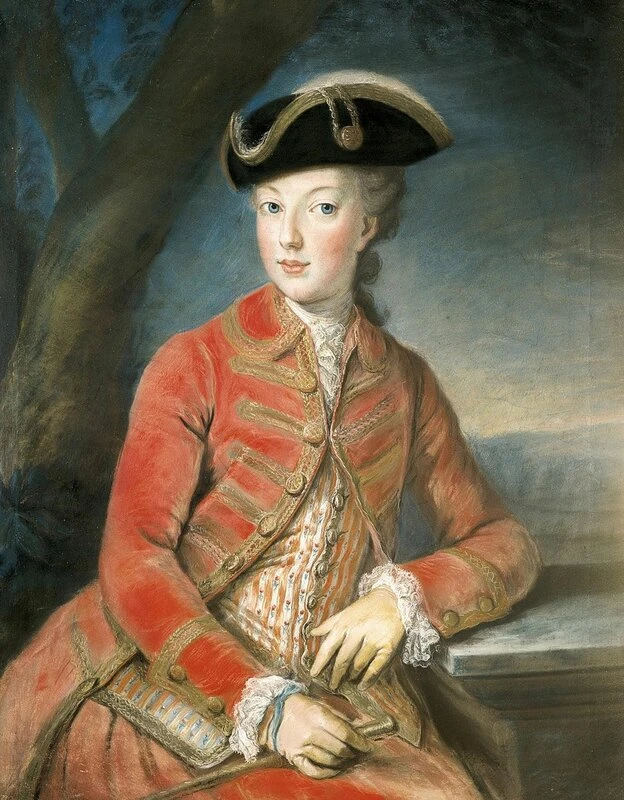
Young Queen Marie Antoinette in a red hunting suit. Artist Josef Kranzinger. 1771
The tricorn hat, beloved by Bonaparte, replaced the tricorn in military attire. By 1800, private soldiers had switched to the shako (shako), a tall, hard hat with a visor. Civilian life ushered in an era of austerity and industrial progress, symbolized by the tall top hat. Within just one decade, the tricorn hat disappeared from the streets of Europe. 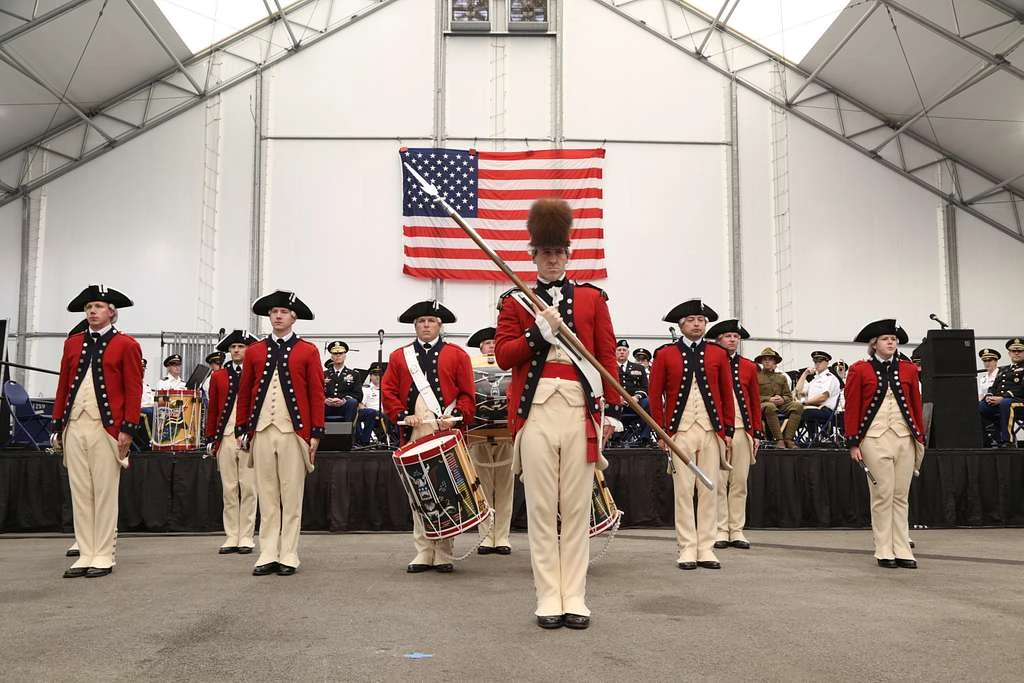
Musicians of the historic Old Guard Fife and Drum Corps orchestra
Today, the tricorne has retained its status only in ceremonial culture. It is worn in parades by the Spanish Guardia Civil and by veterans of the Chelsea Pensioners. The tricorne is the ceremonial dress of the American Old Guard Fife and Drum Corps. In the UK, a black tricorne with a feather is worn by Lord Mayors during the annual Lord Mayor's Procession in London. In Canada, it is part of the ceremonial attire of Speakers of Parliament and Supreme Court judges.
The tricorne has evolved from a trench invention to a global fashion icon. It has given way to newer designs as quickly as it once conquered the world. What do you think: are there any items in our wardrobes today that, three hundred years from now, will seem to our descendants to be just as amazing and incredibly stylish symbols of the era?