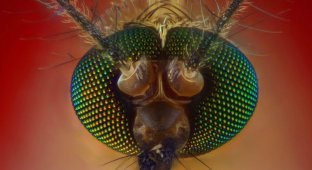
The Crane Mosquito: Myths and Truths About the Giant "Malarial Mosquito" (8 photos)
This is a crane fly, also known as a caramora. And everything you might have thought about it is probably wrong. 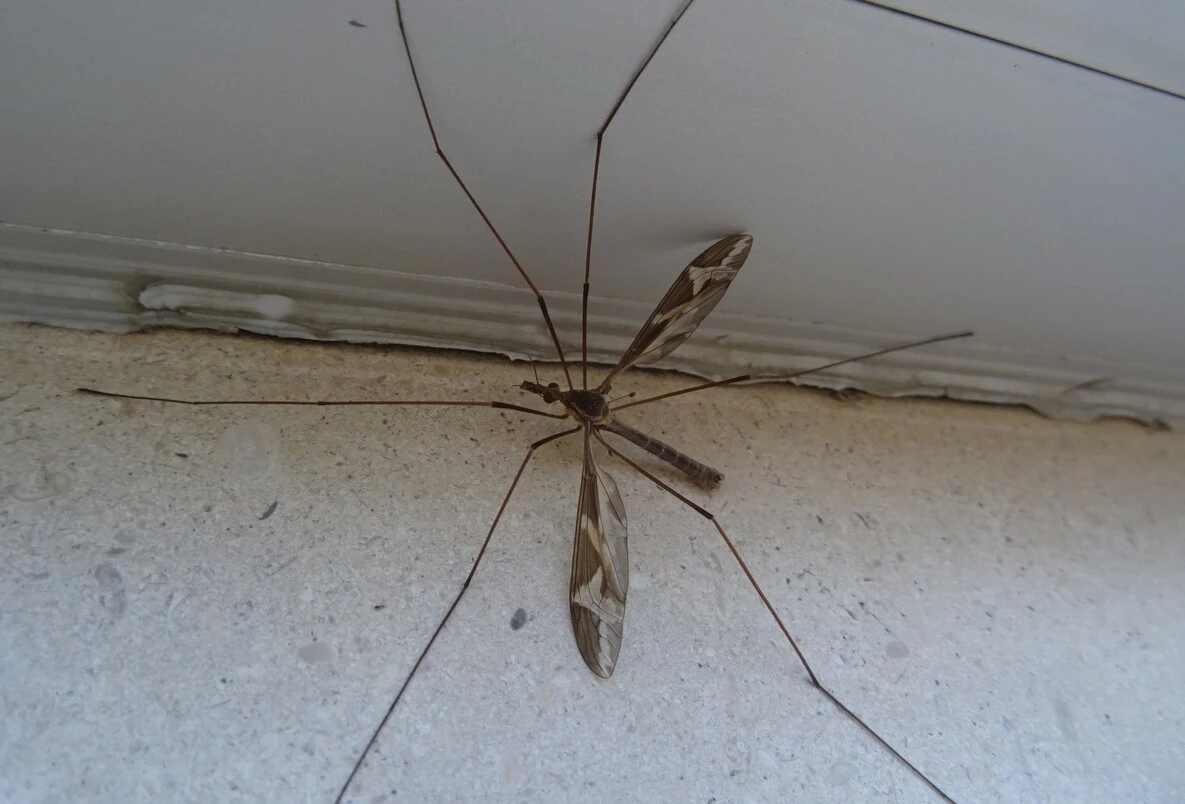
Why does big mean it carries malaria? Where's the logic?
Myth #1: It's a huge malaria mosquito
Many people mistake crane flies for malaria mosquitoes. In fact, malaria mosquitoes look completely different, and crane flies, despite their size, are completely harmless to humans. 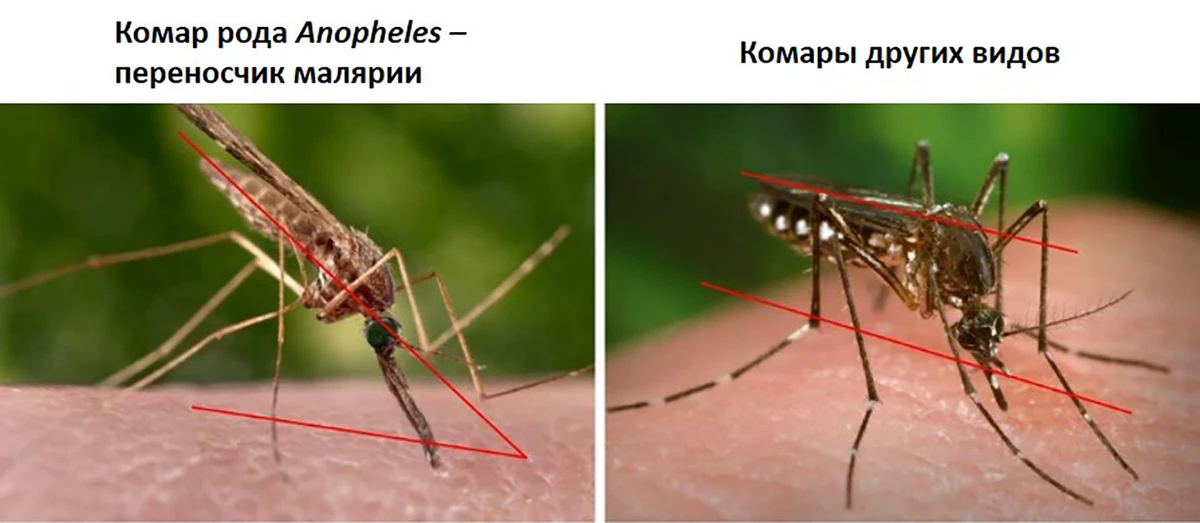
Anopheles mosquitoes do exist, but they look like ordinary little mosquitoes. The only reliable way to determine whether a mosquito is a malaria-carrying species is to look at the angle it bites. But who would bother? Overall, it's nothing to worry about; malaria has been almost completely eradicated.
The crane fly is a separate family, Tipulidae, related to the common mosquito about as much as an ostrich is related to a sparrow. There is a superficial resemblance, but the lifestyle, habits, and intentions are completely different. The family is at least one hundred and fifty million years old—the first traces of these insects were discovered in deposits of the Late Jurassic period. While the dinosaurs were sorting things out, the crane fly was already flying over the swamps without biting anyone. 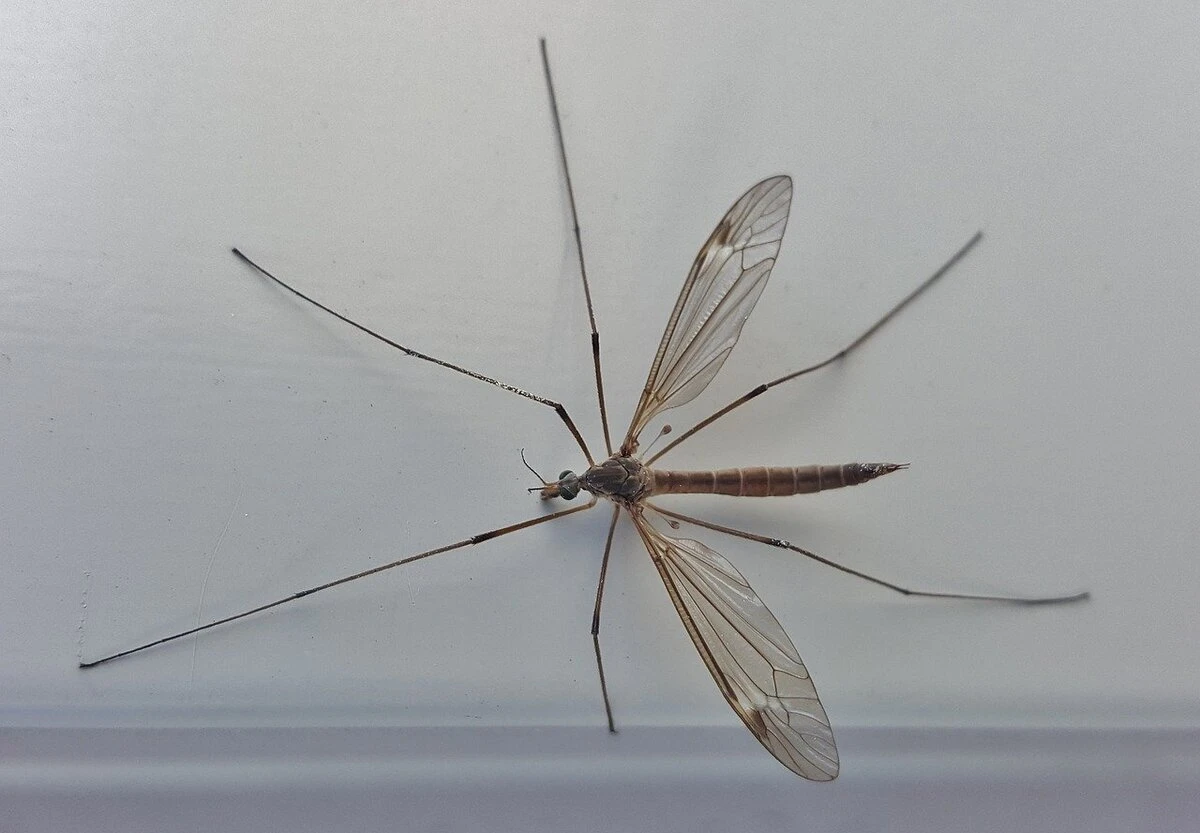
Looking for a husband. Nadezhda, 4 days old.
Myth two: It bites.
No. Physically, it can't. The crane fly doesn't have piercing bristles like a common mosquito. Its proboscis is short and soft. And that "thorn" that many mistake for a stinger is the female's ovipositor, completely harmless to humans. So the creature you're trying to crush with a slipper is technically incapable of harming you. It simply flies toward the light, loses its bearings, and darts around the room in a panic. Poor thing... 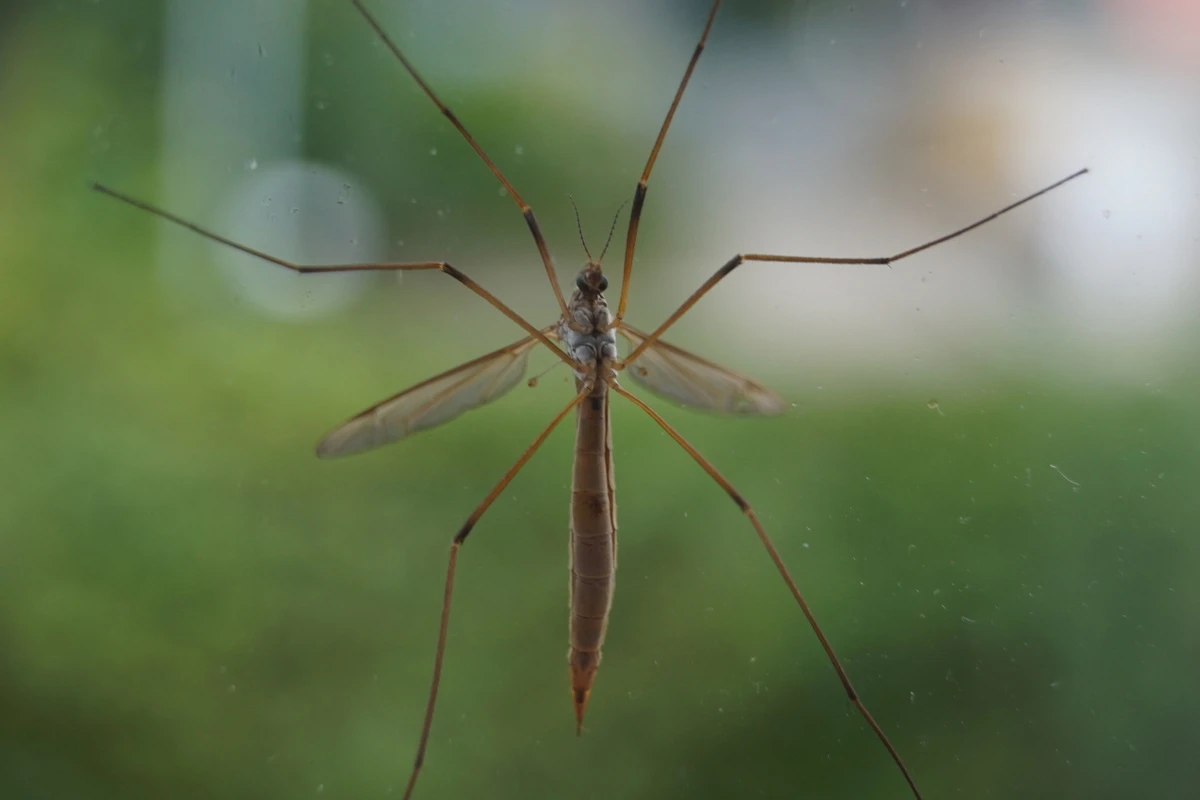
Boss, let me in to warm up. 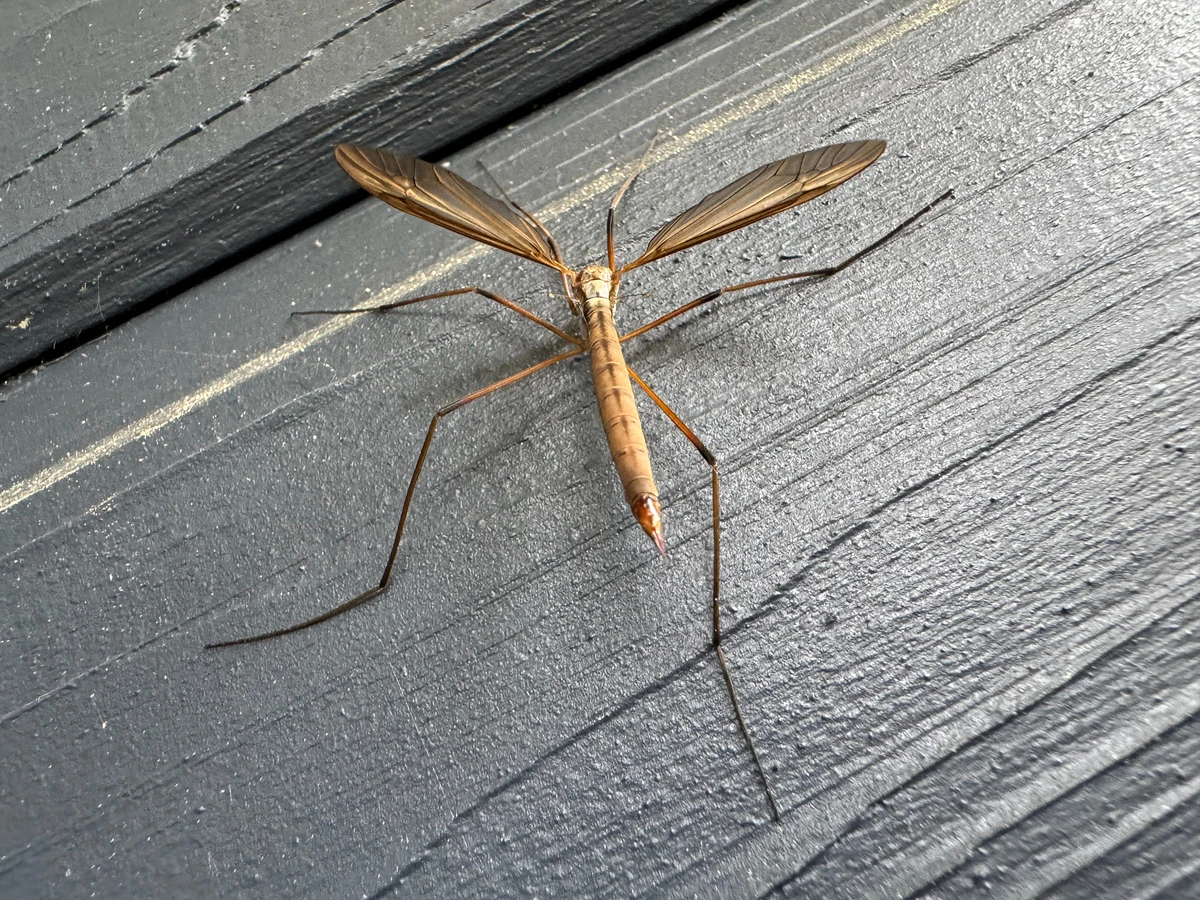
The tip of the female's body appears pointed, but the ovipositor has no combat use. It's literally a tube for laying eggs.
Myth three: Adult crane flies search for food
This is where it gets really interesting. Adult crane flies practically never eat. Their mouthparts aren't adapted for biting or chewing. Their entire adult life is dedicated to one thing: mating and laying eggs. They have ten to fifteen days at most to do this. This is why crane flies sit motionless so often—they're conserving their almost-existent energy. This creature is in the final stages of its life, literally running out of fuel. Sometimes, males still drink flower nectar to last until they meet a female. Females, however, simply sit and wait for a real mosquito man to find them. 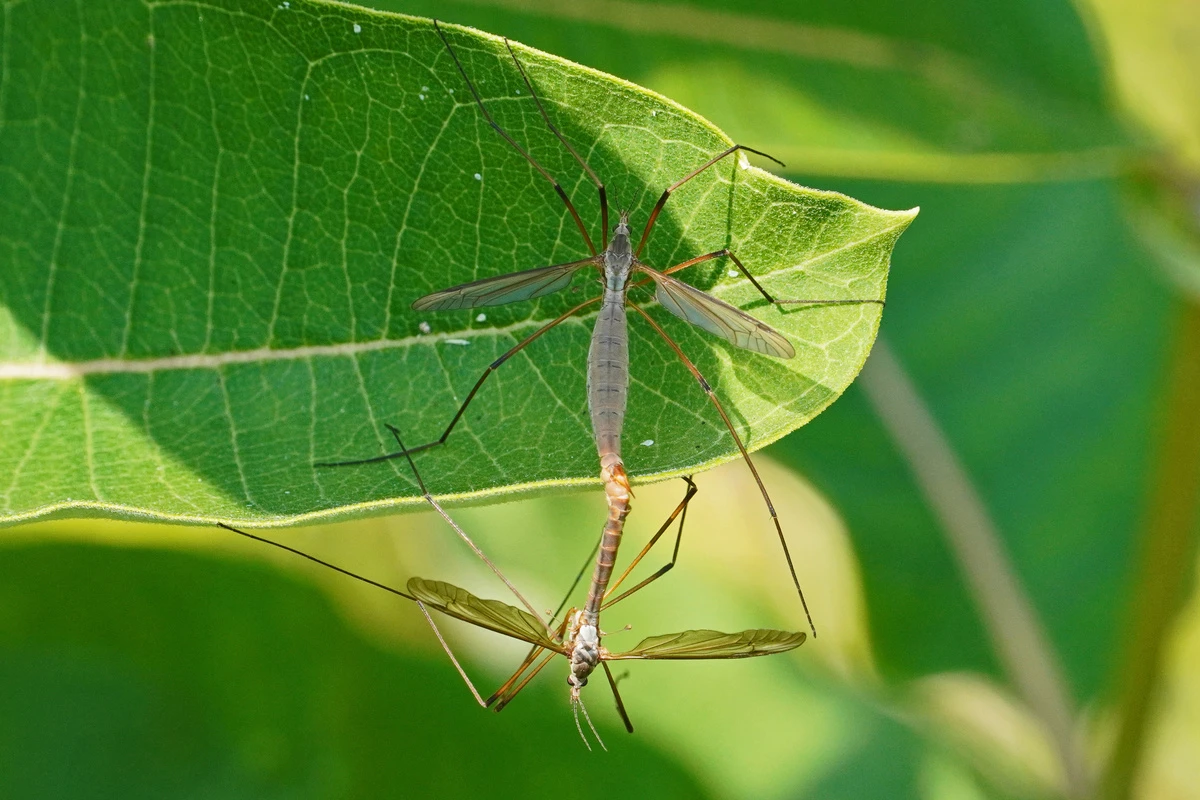
Hooray, the meeting was a success!
Who's really dangerous here?
The adult crane fly is harmless. But its larvae are a different story. The larvae are voracious. They live in the soil, in damp places—meadows, vegetable gardens, and near water. They damage field crops, vegetables, and berries: cereals, corn, potatoes, beets, cabbage, cucumbers, and clover. In Britain, crane fly larvae are even called "leatherjackets" for their tough gray skin. The thick skin discourages some birds from eating these worms. 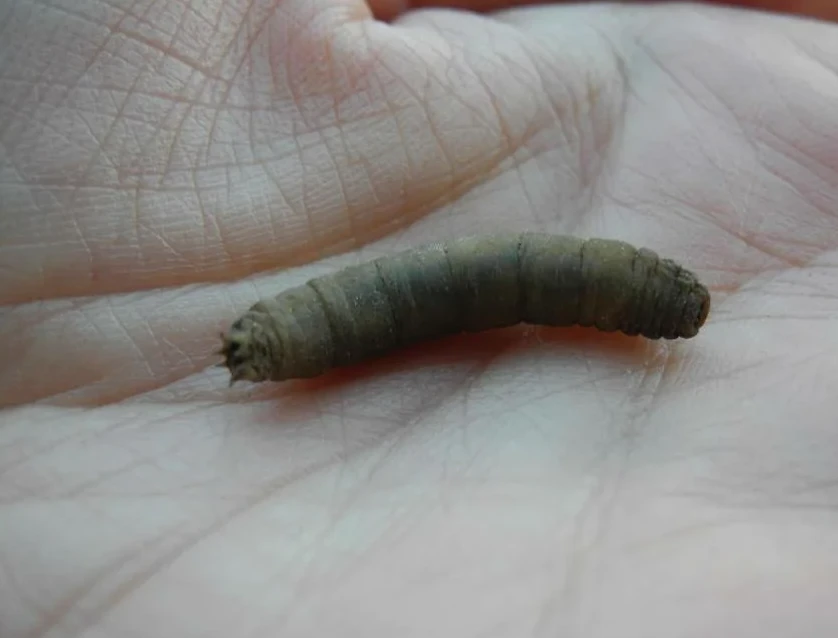
The most boring, simple larva. It sits in the ground and eats whatever it can find.
Why is the crane fly so clumsy at flying?
Because it's not very good... Its flight is chaotic and uncertain for the same reason it hardly eats: it lacks resources, and precision is not a priority. The only priority is finding a mate. Incidentally, crane flies can also shed their legs when threatened—like the harvestmen we wrote about yesterday. Basically, a crane fly is an insect that flies into your window, doesn't want anything, poses no threat, and dies within two weeks. The only thing it manages to do in its adult life is mate and lay eggs in the soil, from which larvae hatch. And then the larvae will start eating your carrots... 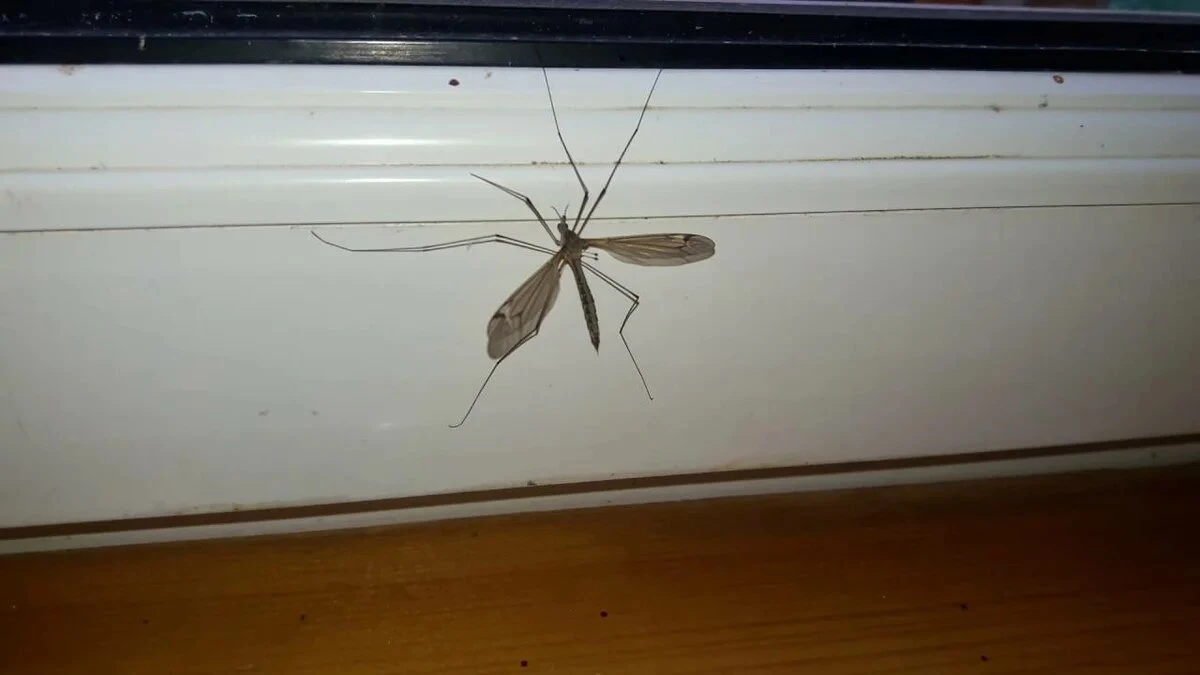
Next time, you can simply carefully release the crane fly out the window.