In Edo-era Japan, no one needed to ask: "What did this man do while being escorted by samurai?" Because everything was clear at a glance, and this was evident in the method used to tie the criminal. 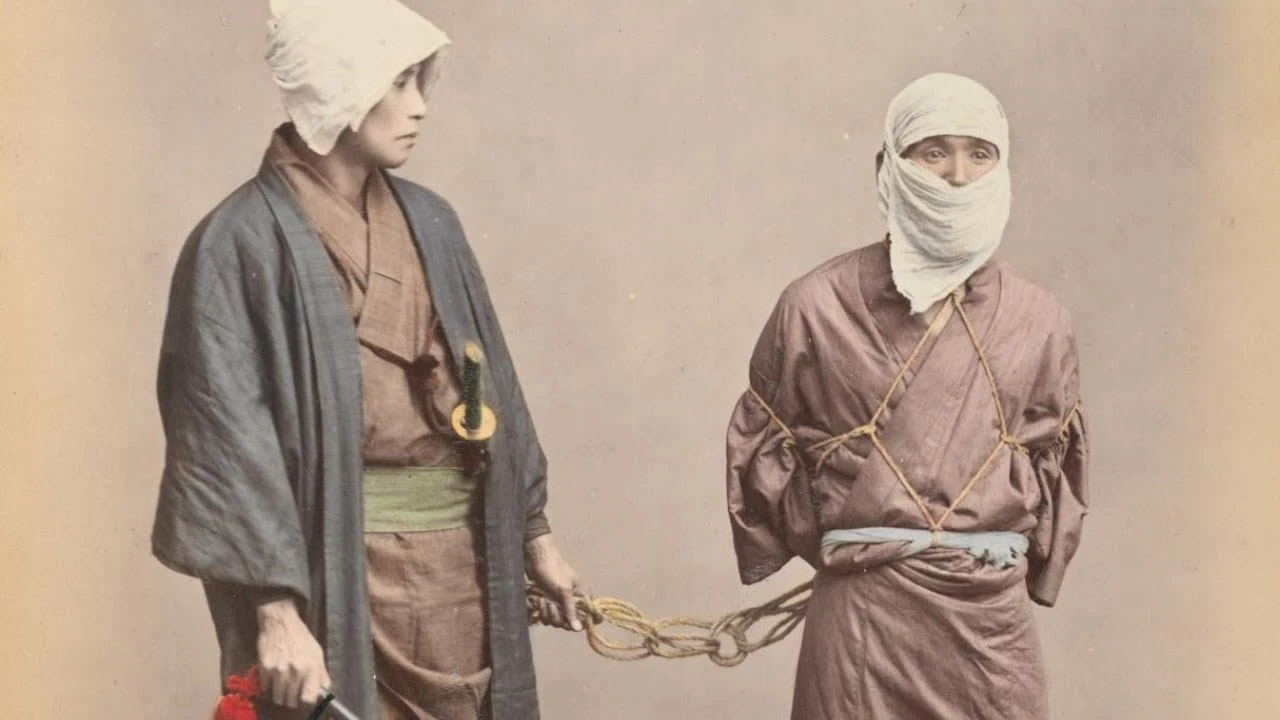
Not just immobilizing a criminal
In medieval Japan, when the country became more or less unified and the samurai began to function as a police force, the art of tying knots suddenly flourished. Previously, peasants tying bundles of rice straw had been the masters of knotting. Samurai now practiced with ropes to apply their skills to criminals. This is how the art of hojojutsu (meaning rope tying technique) emerged. Not to be confused with shibari, which is offensive, as shibari originated from the binding of sheaves of rice. 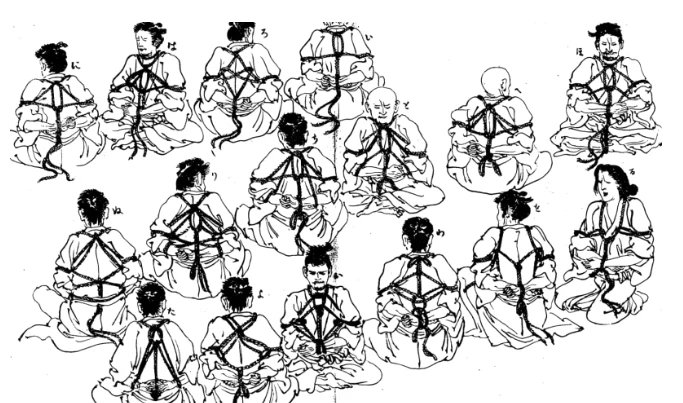
From a history book about the Shogunate
The samurai tried harder than the peasants, because when tying up, they had to avoid strangling the person, prevent them from moving or escaping, and ensure they could answer questions without losing their mobility. It was a complex system. Over the years, dozens of types of tying emerged, each used for a specific purpose. For example, it was necessary to know a dozen knotless tying techniques. Because the presence of a knot, especially in combination with a noose around the neck, meant that a person was officially declared beast. This was the ultimate humiliation. 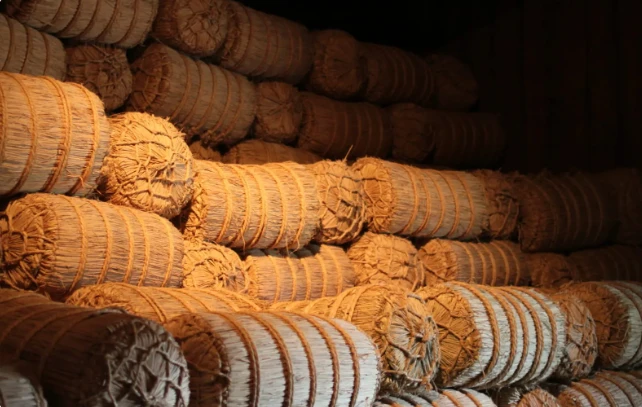
The forefather of shibari is here
Suspects whose guilt had not yet been proven were tied without knots, sometimes even with the rope hidden under their clothing. But those condemned to their deaths were conspicuously adorned with intricate knotted patterns, where each twist of the rope carried meaning. 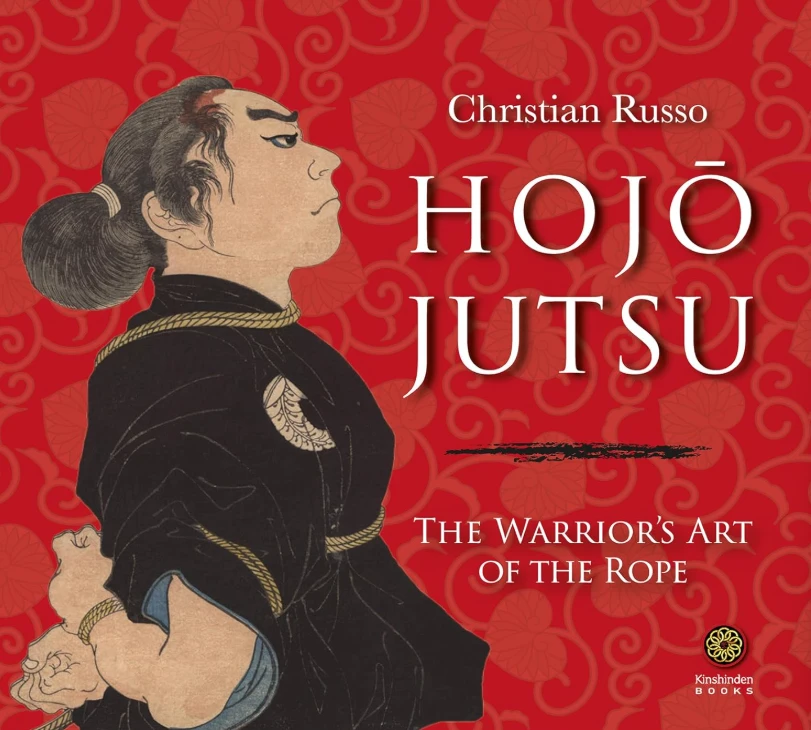
Nowadays, books are published for, um... connoisseurs.
Thus, a samurai who had tarnished his honor was bound with a "double diamond." Women of most classes were bound with a "hook on the chest." There were special binding methods for children, the blind, monks, strongmen, and other categories of the population. The color of the rope also mattered. A simple hemp cord was called hayanawa ("quick rope") and was used for immediate capture. And when a criminal was taken to court, a decorative, colored rope was placed over the main rope. The ropes were often red, dyed with animal blood. 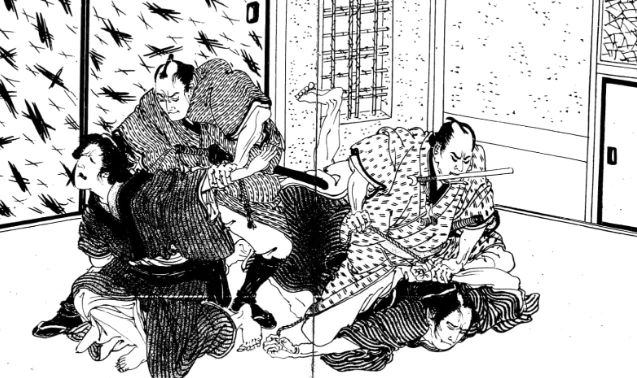
from the "Illustrated Manual of Punishments of the Tokugawa Shogunate"
Not just to instill horror, but also to strengthen the fibers (the salt in the blood preserved the material). At the height of this art, there was a SEASONAL FASHION for ropes and bindings. In the spring, the ropes were made lighter, in the winter, darker. It was an ostentatious gesture demonstrating the shogunate's power. "We have the resources to change the color of the ropes depending on the season." That's what it means to show off, Japanese style. 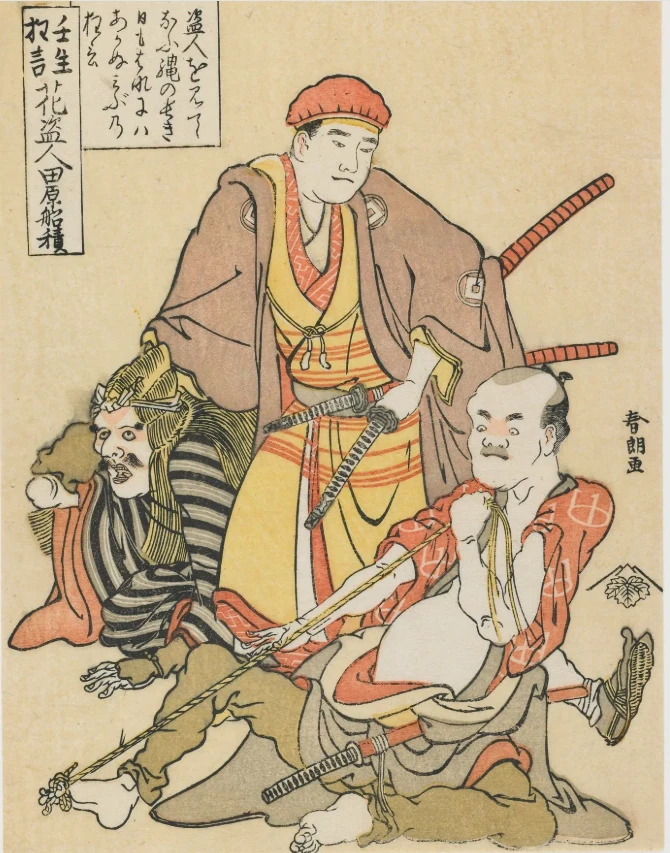
No big deal, but a Hokusai painting.
Even without seeing a criminal's face, any trained person could decipher their crime, status, and fate by the way they tied them. Since the art of tying was so well-honed, every policeman knew how to tie someone so as to inflict maximum pain without causing them to lose consciousness. At first, rings and hooks were woven into the rope for quick tightening, and the hooks, when twisted inward, could inflict extreme pain. 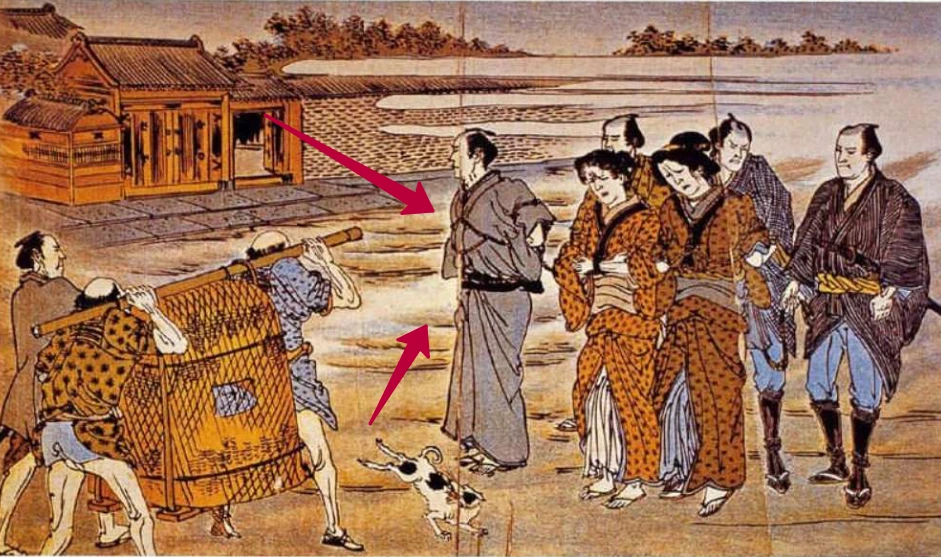
Here they lead the guilty samurai.
The masters knew how to compress a nerve, immobilize a joint at an unnatural angle, and restrict blood flow so that any movement would cause excruciating pain. Particularly dangerous criminals were bound and suspended from beams in a position that gradually cramped their muscles. Many criminals asked to be beaten rather than tied up. Sometimes, beating seemed more merciful. 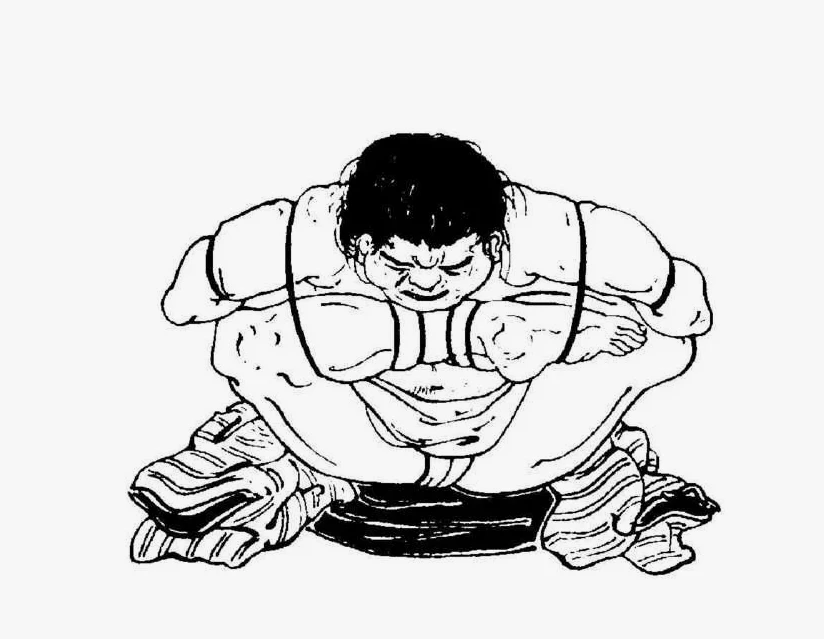
Painful, humiliating tying
By the way, although with the advent of handcuffs, police officers stopped wasting time learning techniques, some, in memory of the past, still know the basic techniques. Some police departments invite martial arts masters to master classes for their officers to demonstrate basic knots. 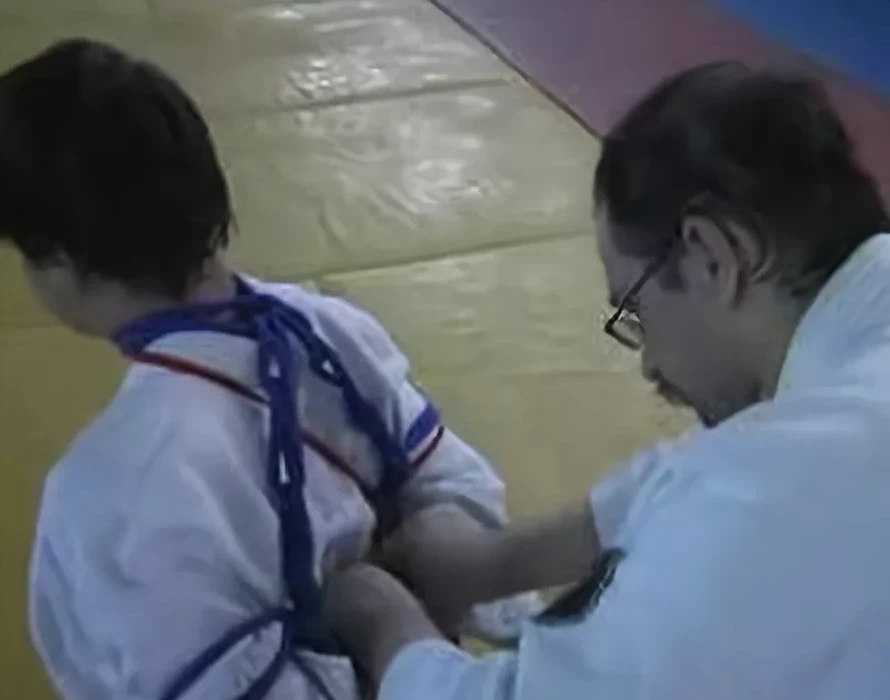
In self-defense classes, the sensei teaches something strange.
Add your comment
You might be interested in:











Real samurai of the 19th century (10 photos)
Japanese Pure Men - Trash Samurai (6 photos)

A selection of funny and strange pictures from the vastness
10 little-known facts about Japanese ronin (10 photos)

The samurai have not yet been intertwined
25 interesting facts about the Land of the Rising Sun (26

Persistence in achieving a goal

Not everyone is having fun on the amusement ride

A biker prevented a hit-and-run driver from escaping

Absolute perfection

The cutest lunch delivery ever
17 Photos That Will Stop You in Your Tracks (18 Photos)

Young women, Dancing and George Michael: nothing superfluous
A steam locomotive for "big boys"

What Would Happen to a Human on Every Planet in the Solar
