A Collection of Photos from the Past That Will Surprise You (21 photos)
Among these shots are some that are perplexing, shocking, or, on the contrary, bring a bright smile. Sit back—a true journey through time awaits you. 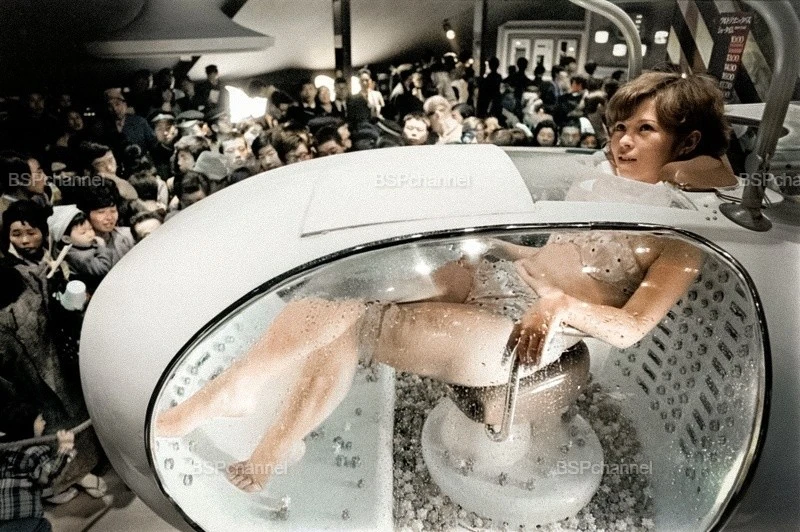
Central Aerohydrodynamic Institute named after Professor N.E. Zhukovsky (TsAGI). Installation of a TU-144 aircraft model in a large wind tunnel. Moscow Region, 1968. 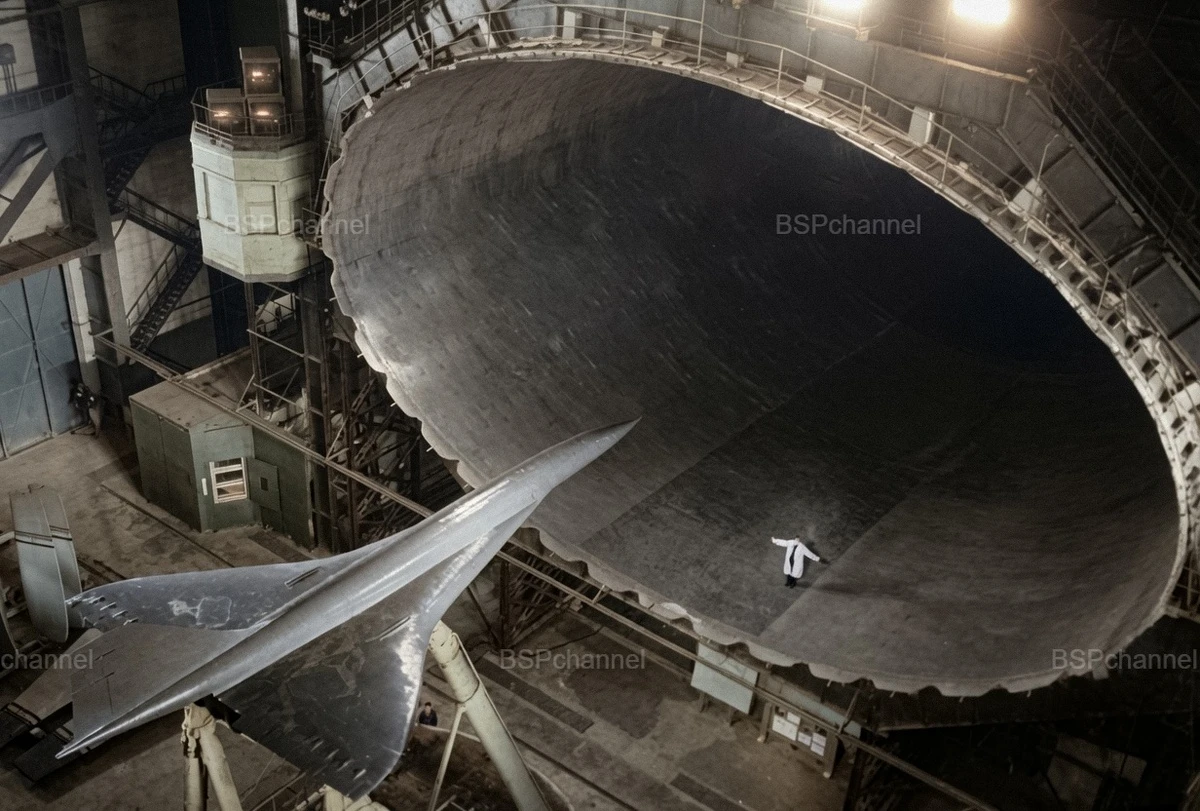
Photographer: Sergey Solovyov
The N.E. Zhukovsky Central Aerohydrodynamic Institute (TsAGI) is the world's largest state research center for the aviation and space industry. Founded on December 1, 1918, by the eminent scientist Nikolai Yegorovich Zhukovsky, the institute became the foundation for the development of domestic aircraft manufacturing, seaplanes, and rocket technology. The installation of a Tu-144 mockup in TsAGI's large wind tunnel is one of the most famous and visually impressive stages in the design of the world's first Soviet supersonic passenger airliner. A large-scale mockup was used to practice takeoff, landing, and subsonic performance, and was tested in the legendary T-101 full-scale wind tunnel—the largest in Europe (the elliptical nozzle measures 24 by 14 meters).
Lev Fagan with film producer Sidney Franklin. Los Angeles, 1951. 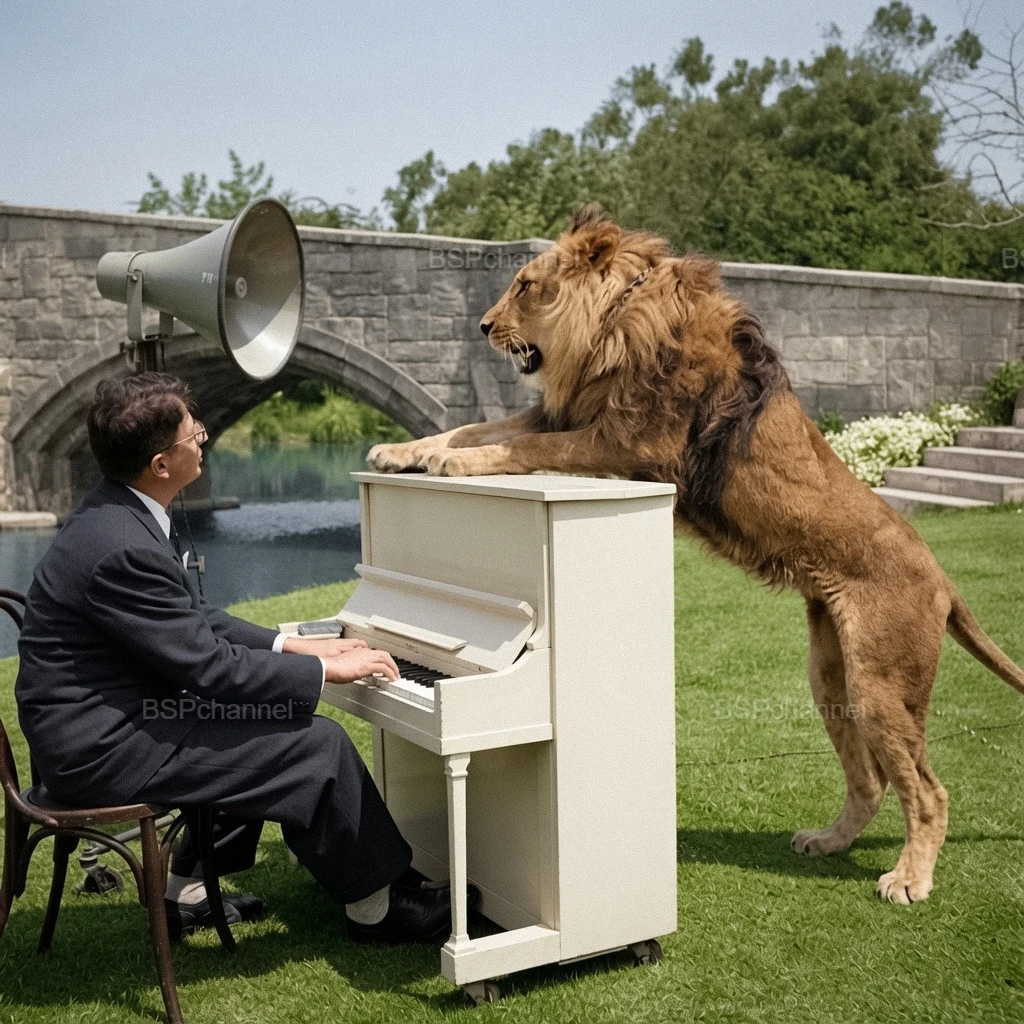
An ordinary American man, Floyd Hameston, bought Fagan as a tiny lion cub from a zoo in 1947. He raised him like a regular house cat: brushing his teeth, combing his mane, and sleeping with him in the same bed. The lion grew up completely tame and affectionate. In 1950, Floyd was drafted into the military. Unable to find anyone to care for his enormous pet, he submitted an official petition to the Fort Ord (California) military base asking for permission to take the lion with him to the barracks. The army, of course, refused. This curious story made it into the pages of the famous LIFE magazine in February 1951 under the headline "Fearless Fagan Finds a Home." A young producer at MGM, Sidney Franklin Jr., read the article and immediately recognized it as a film plot. Metro-Goldwyn-Mayer purchased the rights to the story and promptly launched production on the comedy-drama Fearless Fagan (1952). Fagan played himself in the film. His owner, Floyd, was regularly given official leave by the army to be on set as the chief trainer and technical advisor. Although Fagan was incredibly obedient, he was substituted for in some action-packed scenes by a seasoned Hollywood lion named Jackie (the same one who roared on MGM's title card back then). Filming marked the peak of Fagan's public life. After the film's completion and the end of Floyd Hameston's service, maintaining an adult lion in normal conditions became too difficult and expensive, especially after Floyd married and had children. Fagan was retired to an American zoo, where he lived out the rest of his days.
British strongwoman Joan Rhodes bending an iron bar with her teeth in front of three astonished men, 1952. 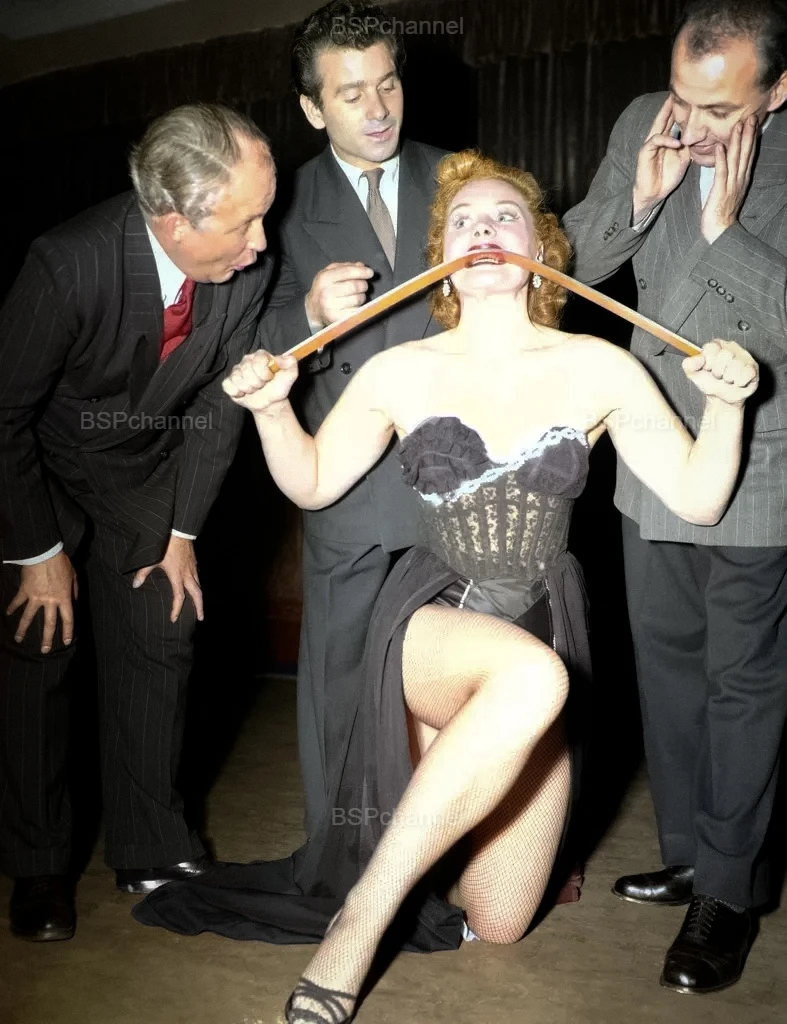
Joan Rhodes is one of the most famous and unique female strongwomen of the 20th century. She achieved fame under the catchy stage name "The Iron Lady in the Velvet Glove." Her uniqueness lay in the combination of incredible physical prowess with a refined model's looks, a slender figure, and the glamorous style of the Old Hollywood era. Rhodes was born into abject poverty in London's East End. Her parents abandoned her and her siblings as a young child. Joan also lived with a strict aunt, who constantly mocked her for her large frame. At 14, she ran away from home with just a few pennies and joined a traveling fairground circus. Observing the training and performances of male athletes, she realized she possessed an innate strength and began to develop this gift. On the arena and stage, Joan Rhodes performed in evening gowns, glittering leotards, fishnet stockings, and high heels, creating a powerful visual contrast to her abilities. She effortlessly tore thick telephone directories in half and quarters before the audience's eyes. She bent thick iron bars and 25-centimeter nails with her hands, knees, and even teeth. She lifted grown men over her head. At one audition early in her career, when the manager didn't believe in her abilities, she angrily lifted him and performed several laps around a pool table, instantly landing a contract. Rhodes's popularity peaked in the 1950s and 1960s. She toured Europe and the United States, performing on television, in variety shows, cabaret shows, and nightclubs. As she aged, Joan gave up weightlifting and opened her own small, cozy café in north London. She lived a long life and died at the age of 89 in 2010. Her remarkable life story was the subject of the biography "An Iron Girl in a Velvet Glove."
Advertising campaign for Mercury Marine outboard motors, created in the 1950s and 1960s. 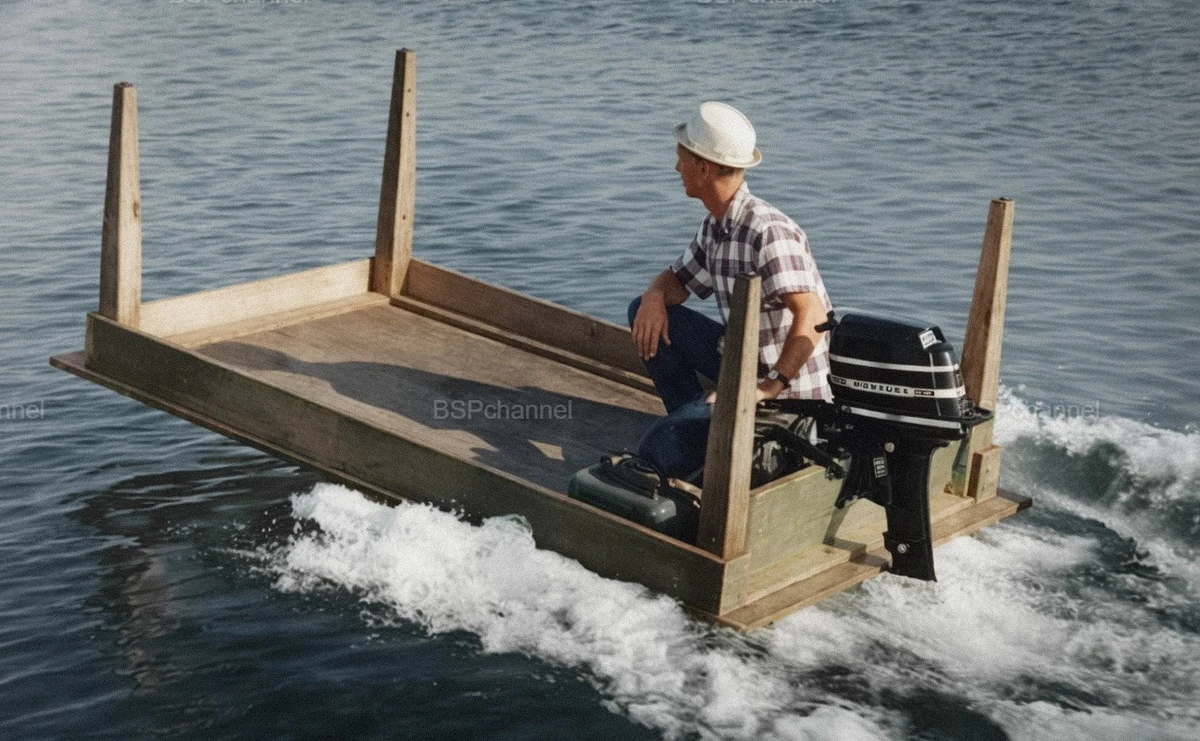
The company used the famous shot called "Table Boat" as striking visual proof of the capabilities of its outboard motors: incredible power and thrust—without compromise.
Mercury Hair Competition. Spain, 1927. 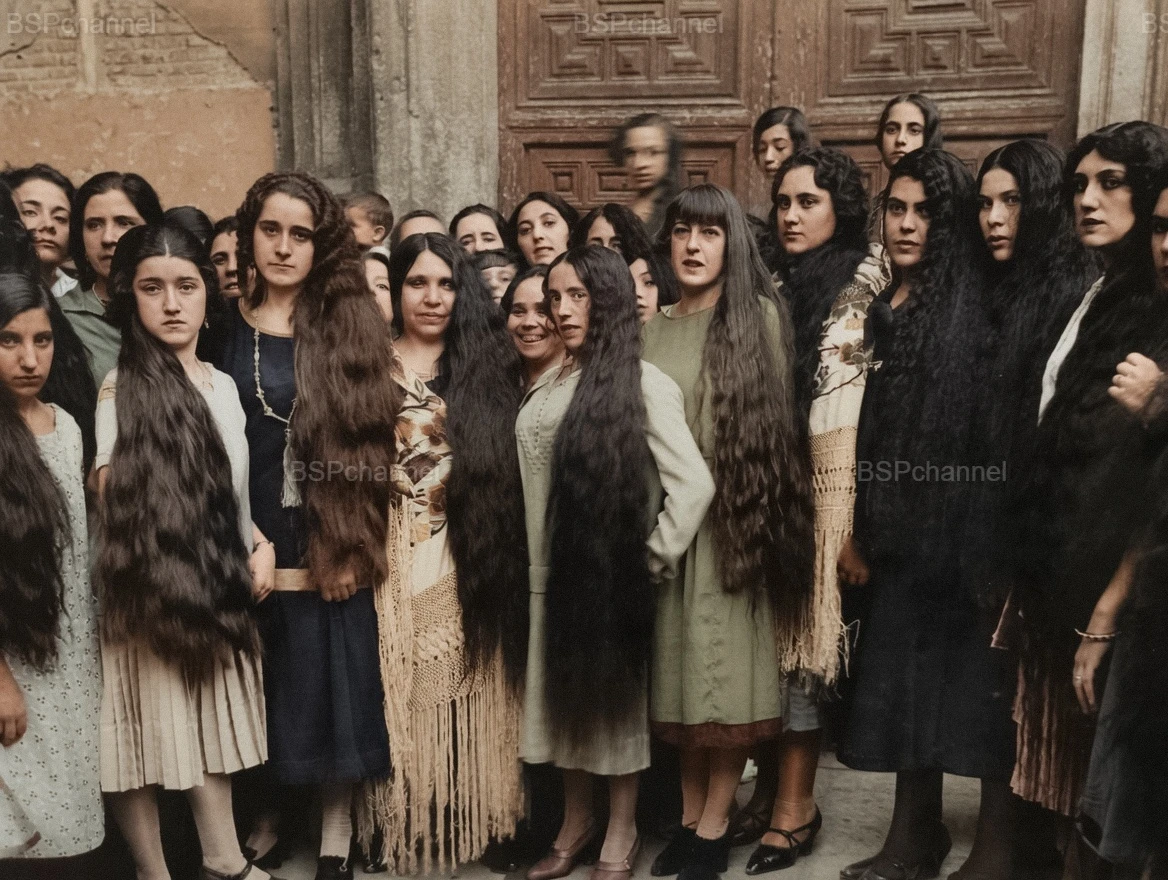
The competition took place in Madrid during the traditional summer festival, the Verbena de la Paloma (Fair of the Virgin of La Paloma), in August 1927.
First class service on board a Scandinavian Airlines DC-8, 1965. 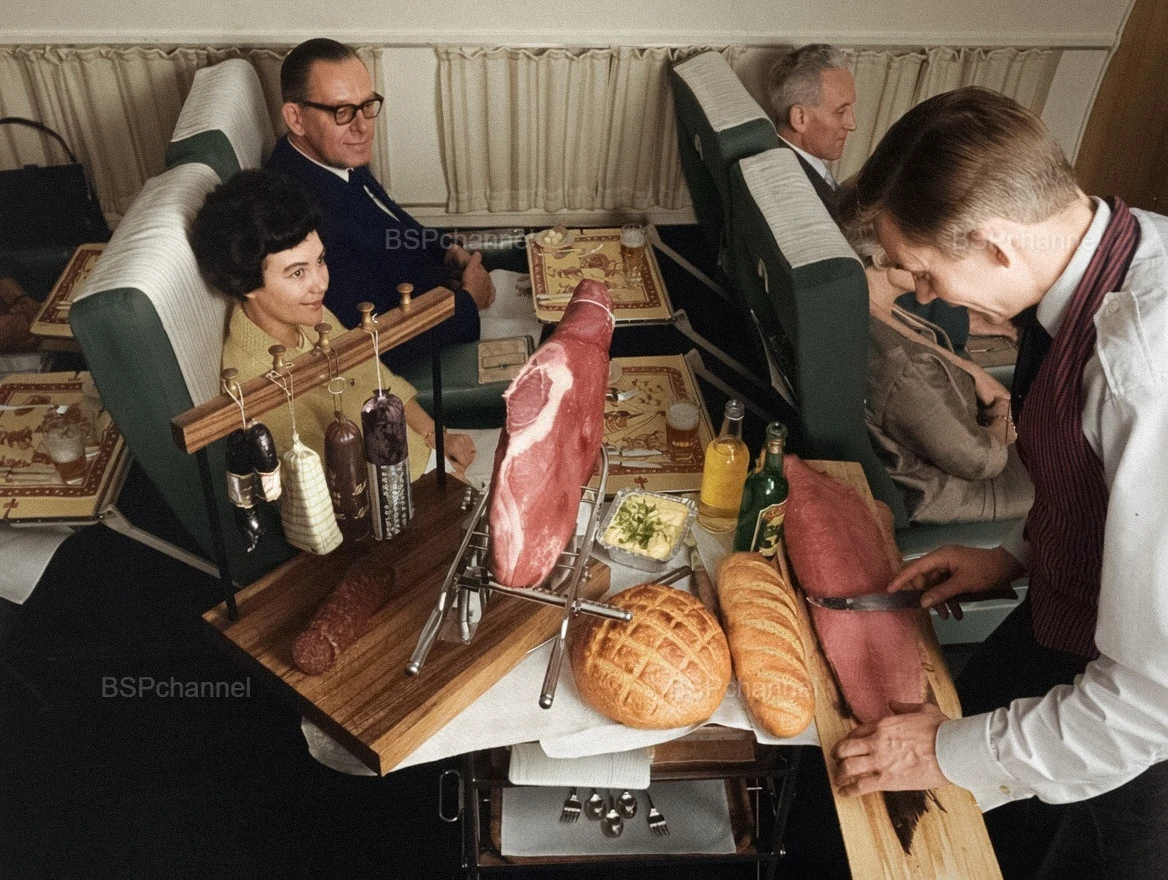
The Golden Age of Aviation. Today, such a food service is impossible for safety and cost reasons. Flight attendants are strictly prohibited from using long, sharp knives to cut food in front of passengers. Furthermore, modern fire safety and turbulence standards require that all food be pre-portioned and secured on trays.
Demonstration of the approximate size of a giant sequoia. Late 19th, early 20th century. 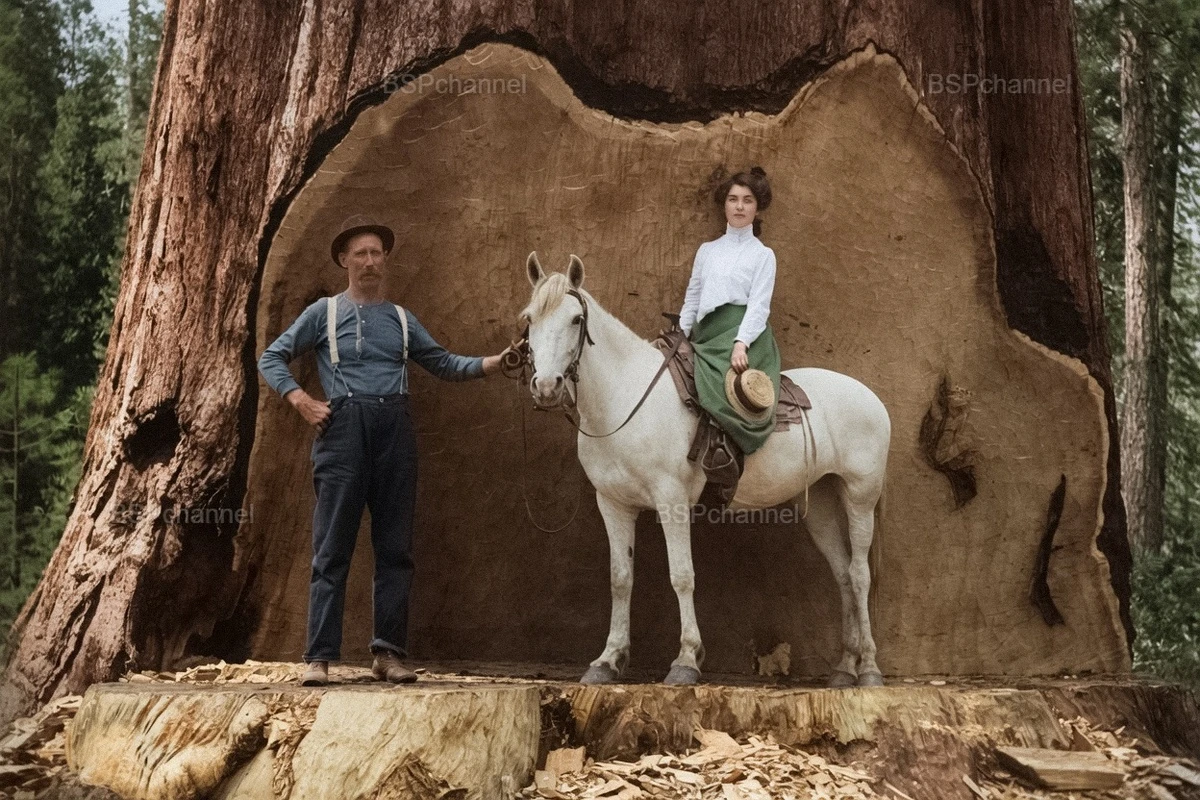
This is an iconic subject in the history of American photography, actively used to attract tourists and demonstrate the "conquest" of wildlife by humans. To illustrate the colossal scale of these trees (many of which reached 80–90 meters in height and over 10 meters in diameter), people resorted to incredible and sometimes destructive methods. Tunnels were cut through giant trees, either living or already felled. The most famous was the Wawona Tree in Yosemite National Park, a tunnel cut in 1881. Horse-drawn carriages, and later, the first passenger cars, could easily pass through it. Dance floors on stumps: after a giant tree was cut down (which took several days or even weeks of nonstop work), the flat surface of the enormous stump was transformed into a tourist attraction. On the stump of the Mark Twain Tree, felled in 1891, a full-fledged dance floor was constructed, where dozens of couples could waltz simultaneously or entire orchestras could gather. Loggers, their families, or groups of tourists would line up on a fallen tree trunk. Often, for contrast, they would place horses and carts on the end of the giant log, or lay 20–30 people in a row to demonstrate that the trunk's diameter was several times greater than a human's height. In the scorched or hollowed-out bases of living redwoods, pioneers and hermits built temporary shelters, stables, or warehouses.
"Where Man Has Not Set Foot." USSR, 1967. 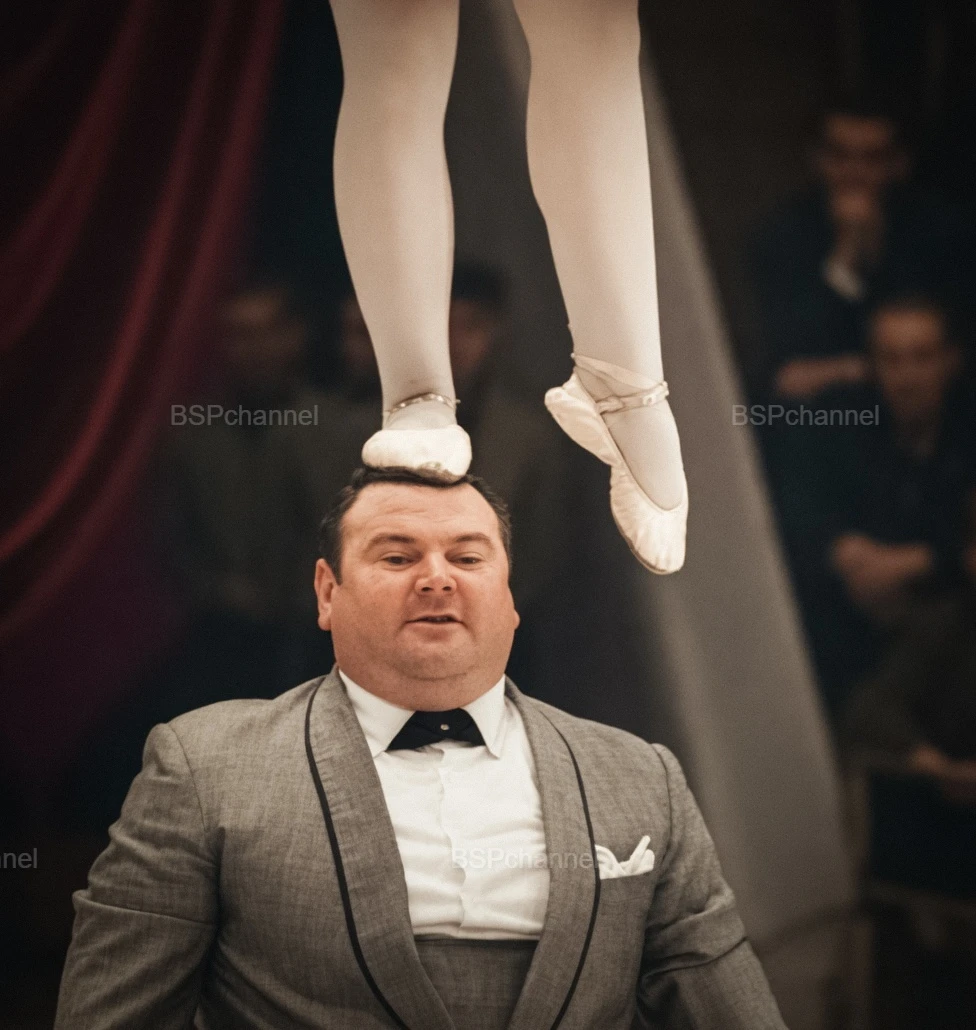
Photographer: Viktor Akhlomov
The "Human Washing Machine" is displayed at the Sanyo Pavilion during a press preview prior to the opening of Expo '70, March 10, 1970, in Suita, Osaka, Japan. 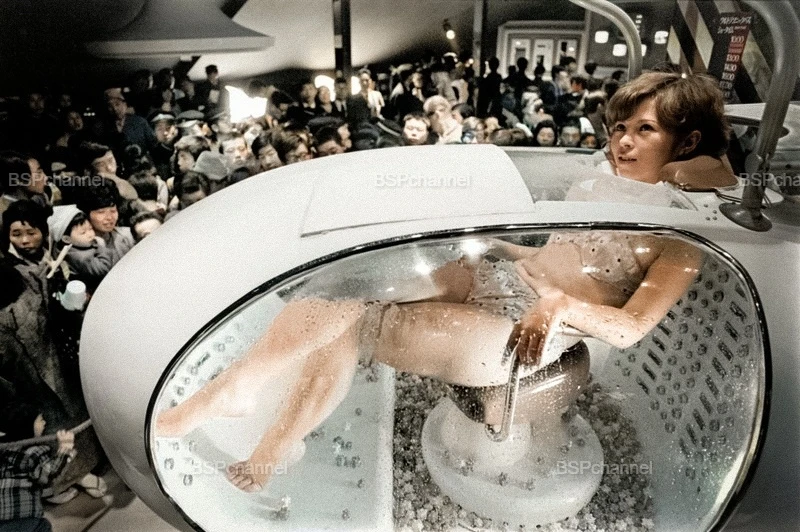
At Expo '70, the Japanese corporation Sanyo Electric unveiled an exhibit officially named the Ultrasonic Bath. It was shaped like a giant futuristic egg, approximately two meters tall. A person wearing a bathing suit climbed a ladder and sat inside the capsule, leaving their head outside. The entire cycle took exactly 15 minutes. First, the body was washed with powerful jets of hot water (a pre-shower). The capsule was then filled with water, and an ultrasound was activated, creating a cloud of microbubbles that literally "knocked" dirt out of the skin's pores. Simultaneously, dozens of rubber balls were released into the water to provide a gentle massage and stimulate blood circulation. Finally, the water was drained, and the user was blasted with streams of warm air, irradiated with infrared and ultraviolet radiation, for sterilization. The concept caused an incredible stir (at that time, many Japanese did not yet have home baths and went to public baths, or sento). However, the device proved too bulky, expensive, and complex for mass production, and it remained a museum exhibit.
A two-year-old street girl from Bombay (now Mumbai) balances on a pole while performing for tourists. India, 1992. 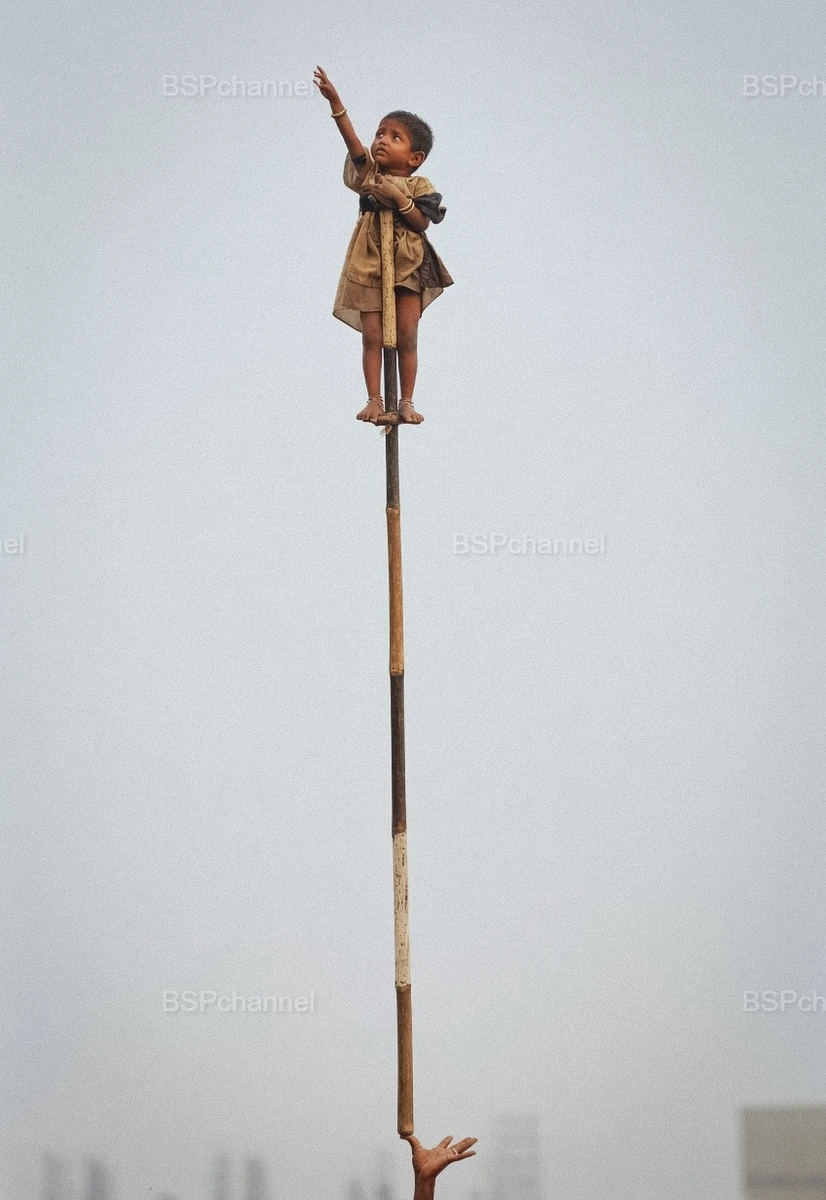
Photographer: Dario Mitidieri
A Ford Mustang on trolley tracks after a young woman accidentally drove into the entrance to the 40th Street Tunnel in Philadelphia, 1965. 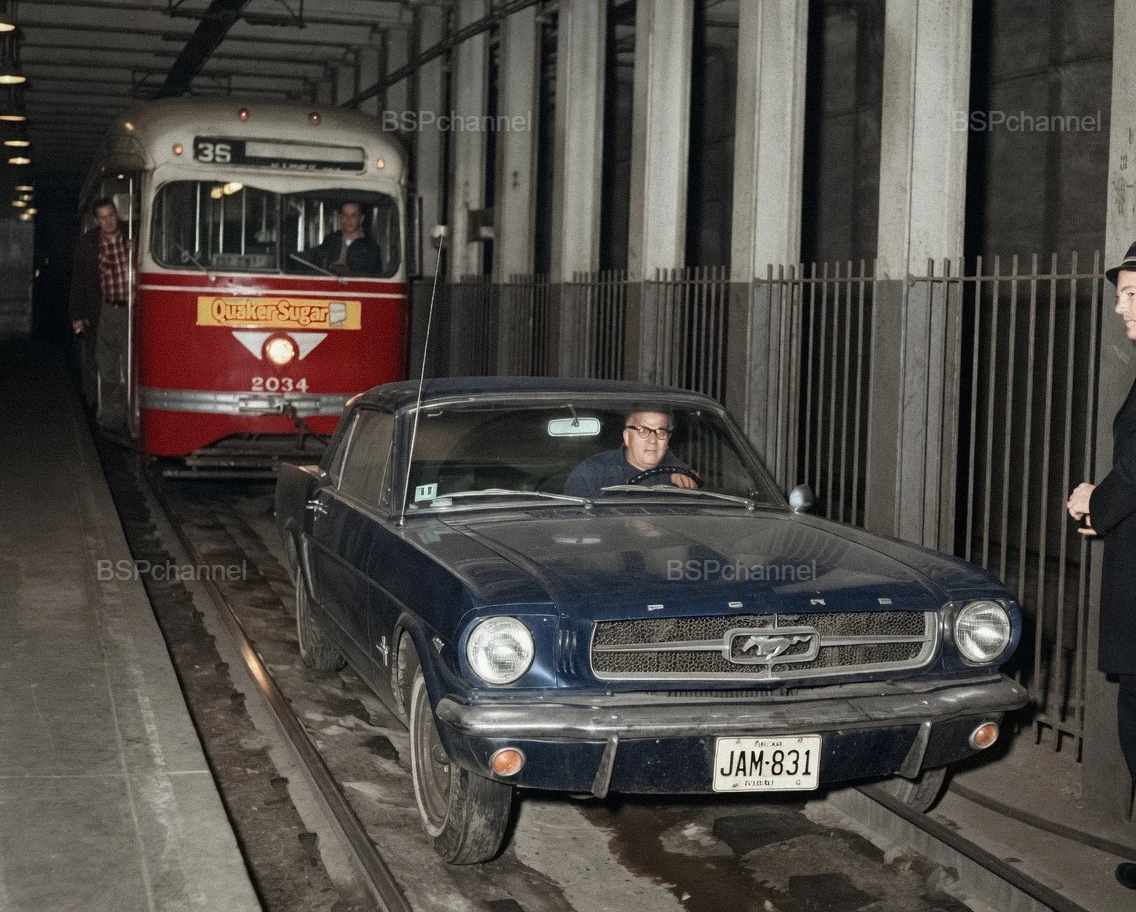
A young New Jersey woman was driving her brand-new gray 1965 Ford Mustang and became lost on the streets of Philadelphia. Trying to find her way, she asked a passerby (or, according to other versions, a gas station attendant) for directions. He gave her the literal advice: "Just drive straight along the trolley tracks." The woman followed the advice to the letter. She entered the Woodland Avenue tracks and, ignoring several warning signs and signals, drove straight into the 40th Street Portal. It was the entrance to a system of underground tunnels designed exclusively for high-speed underground and overground trams. The low-slung sports car quickly landed on its belly and got stuck on the railroad ties in the middle of the underground tracks, completely blocking public transportation. In the photo, a city transportation employee is sitting inside the stuck Mustang, trying to carefully and safely remove the car from the tunnel.
"The Motherland Calls!" Volgograd, 1986. 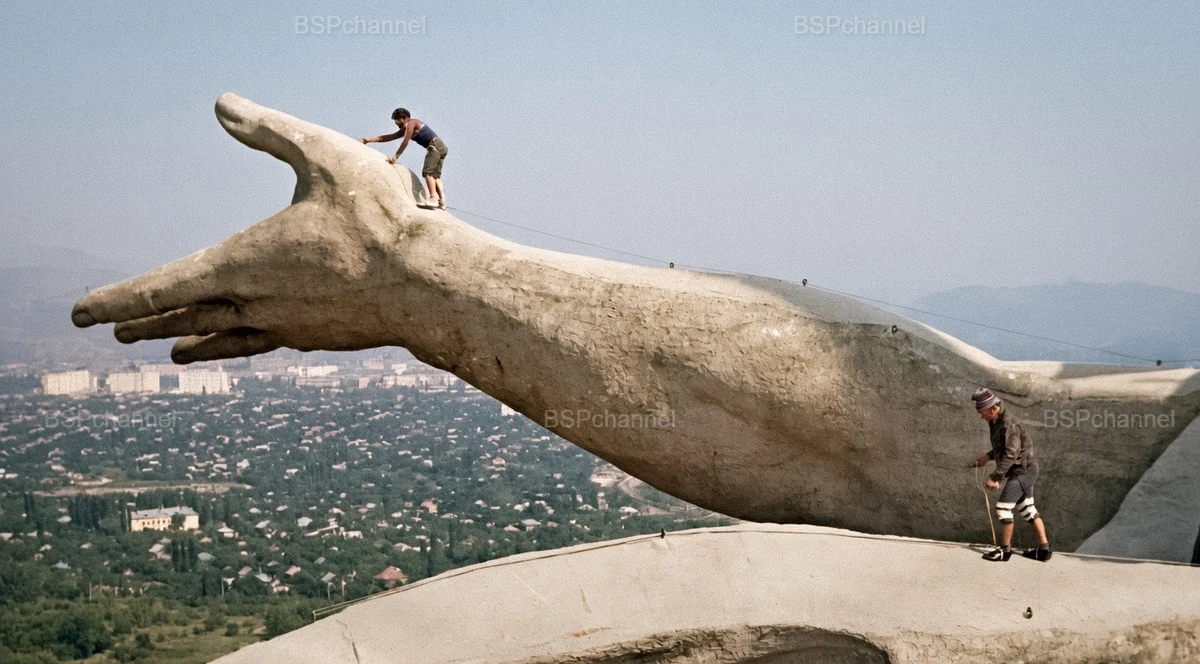
An American military plane carrying 243 orphans takes off from Saigon-Tan Son Nhut Airport during the final days of the Vietnam War, 1975. 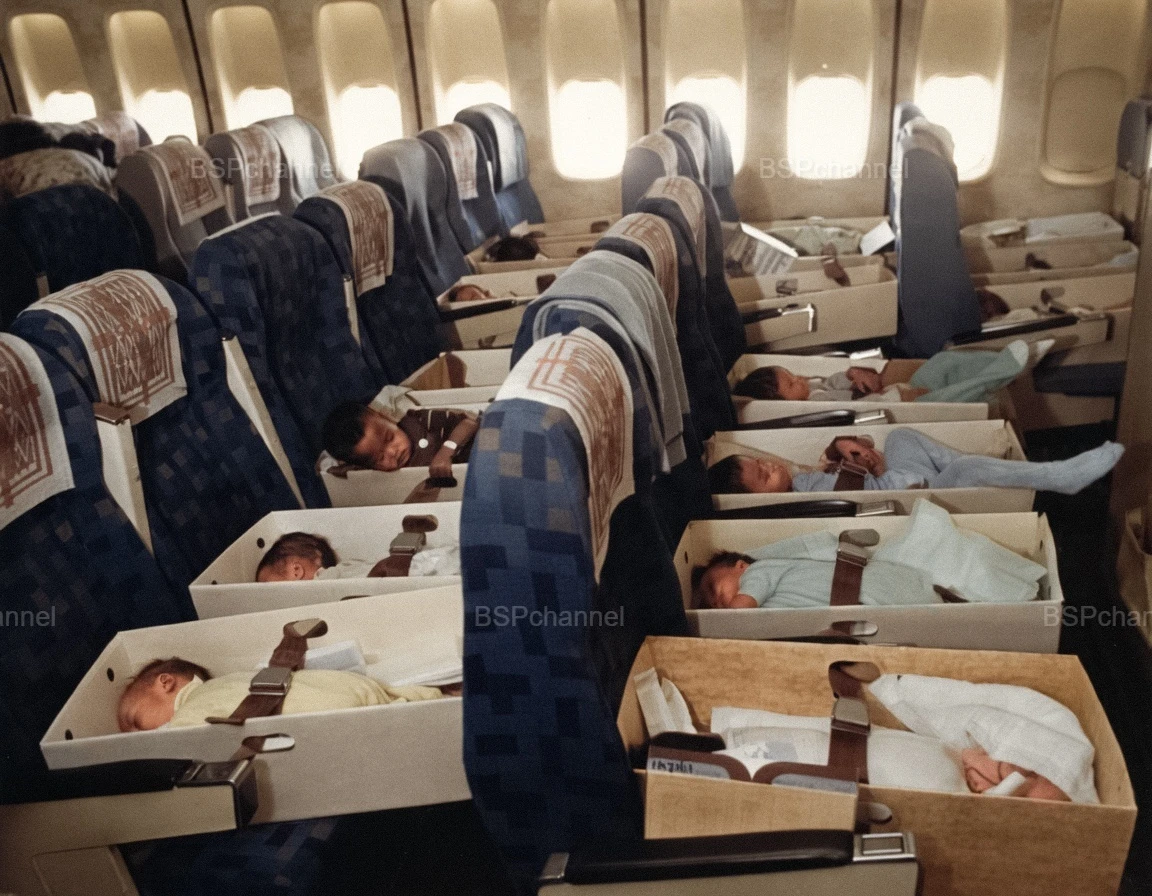
This operation went down in history primarily because of the tragedy that unfolded on the very first day. A heavy C-5 transport aircraft, taking off from Saigon with over three hundred passengers on board, suddenly lost pressurization while approaching the sea, causing an explosive pressure drop. The crew turned the aircraft around but were unable to reach the airfield. The giant crashed into a rice field. 155 people died in the emergency landing, including 78 children. Despite the impact, the operation was not halted. It continued, and subsequent flights were uneventful. The C-5 crash in April 1975 remains one of the most high-profile aviation tragedies of the Vietnam War. However, some sources still erroneously claim that the passengers on board were American military personnel or supporters of the collapsed South Vietnamese regime, hastily fleeing the country. In fact, the passengers on that ill-fated flight were primarily children.
Construction of the Empress of Britain, 1931. 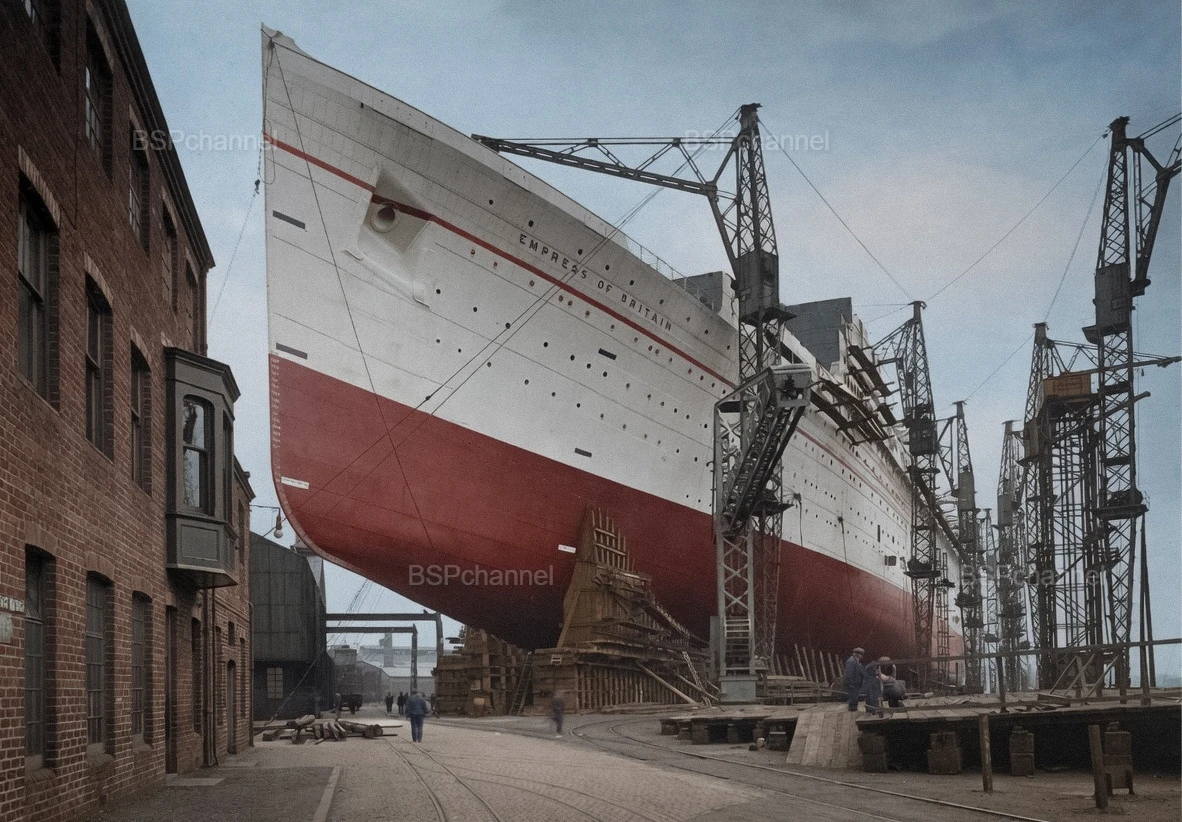
This luxurious four-funnel (later rebuilt to a three-funnel) superliner was built at the renowned Scottish shipyard John Brown & Company in Clydebank for Canadian Pacific Steamships. The Empress of Britain's life was bright, but short-lived. With the outbreak of World War II, the ship was converted into a military transport for troops. On October 26, 1940, off the coast of Ireland, the liner was attacked and set ablaze by a German Fw-200 Condor bomber. Two days later, while being towed, it was finally torpedoed and sunk by the German submarine U-32.
An employee of the Dutch Indies Gas Company greets a visitor, 1932. 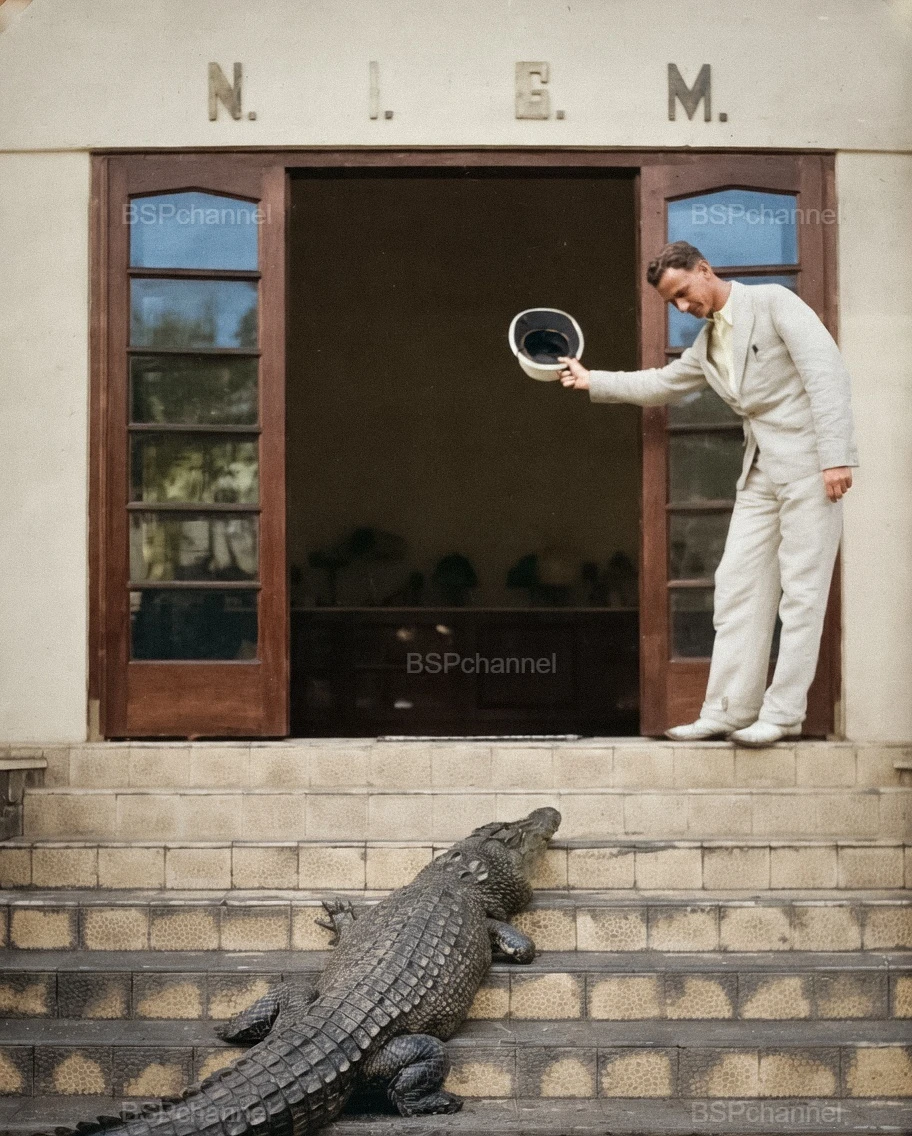
Transporting a house by water in Maine, 1951. 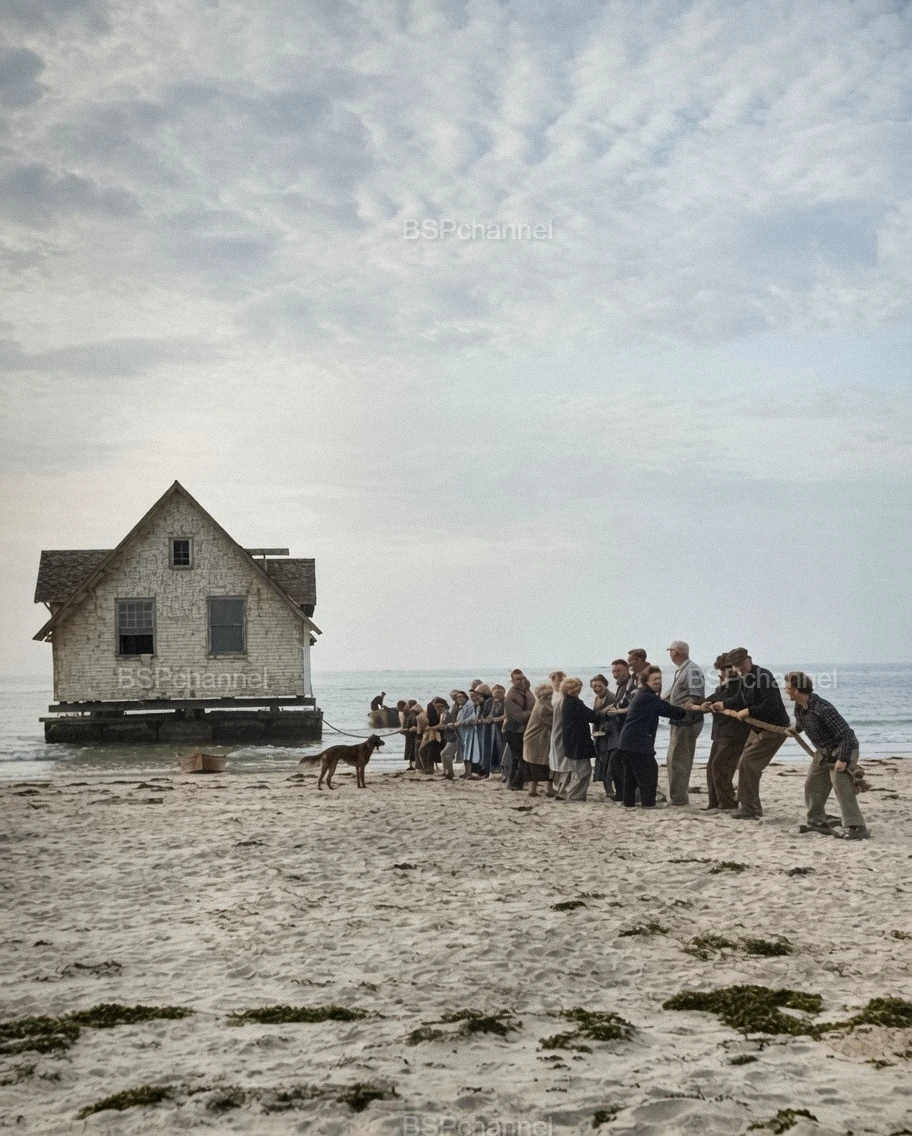
In the fall of 1951, a local beach association purchased a wood-frame building in the neighboring town of Kennebunkport to use as a social club. Transporting the house along the narrow and winding roads was too difficult and expensive. Instead, engineers and workers decided to transport it by sea. The house was secured on special inflatable pontoons at low tide. When the tide came in, the building lifted off the ground, and a tugboat towed it across the Atlantic Ocean 9 miles (approximately 14.5 km) north. The house was even anchored overnight in open water. Arriving at its destination, the tug approached as close to the shore as possible at high tide. As soon as the water began to recede, dozens of local residents—men, women, and even children—formed a chain on the sandy beach, grabbed hold of thick ropes, and worked together to pull the massive building onto its new permanent foundation.
British Marines during a fundraising event for the Royal Marines School of Music, Deal, Kent, UK, 1988. 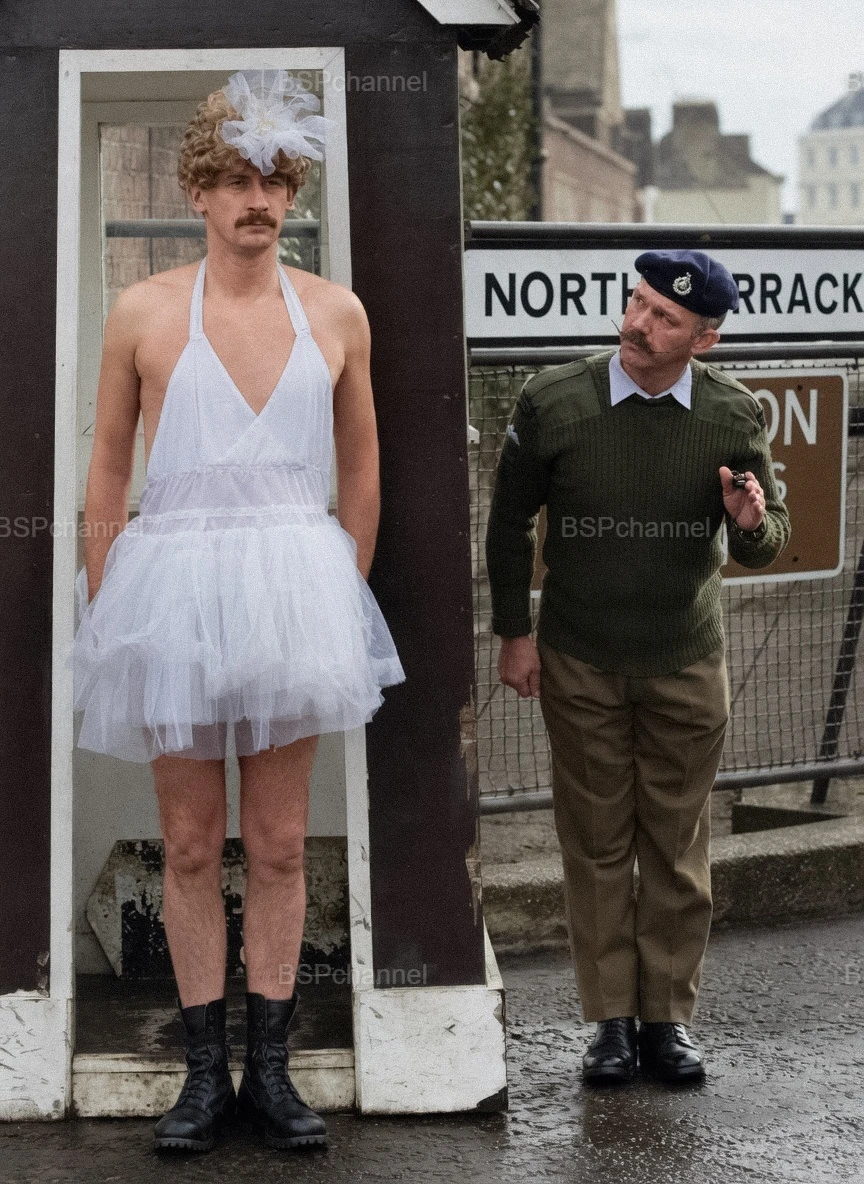
British army and navy culture has a long and popular tradition of humorous dress-up for charity.
The enormous wooden floatplane "Spruce Goose." Long Beach, California, 1947. 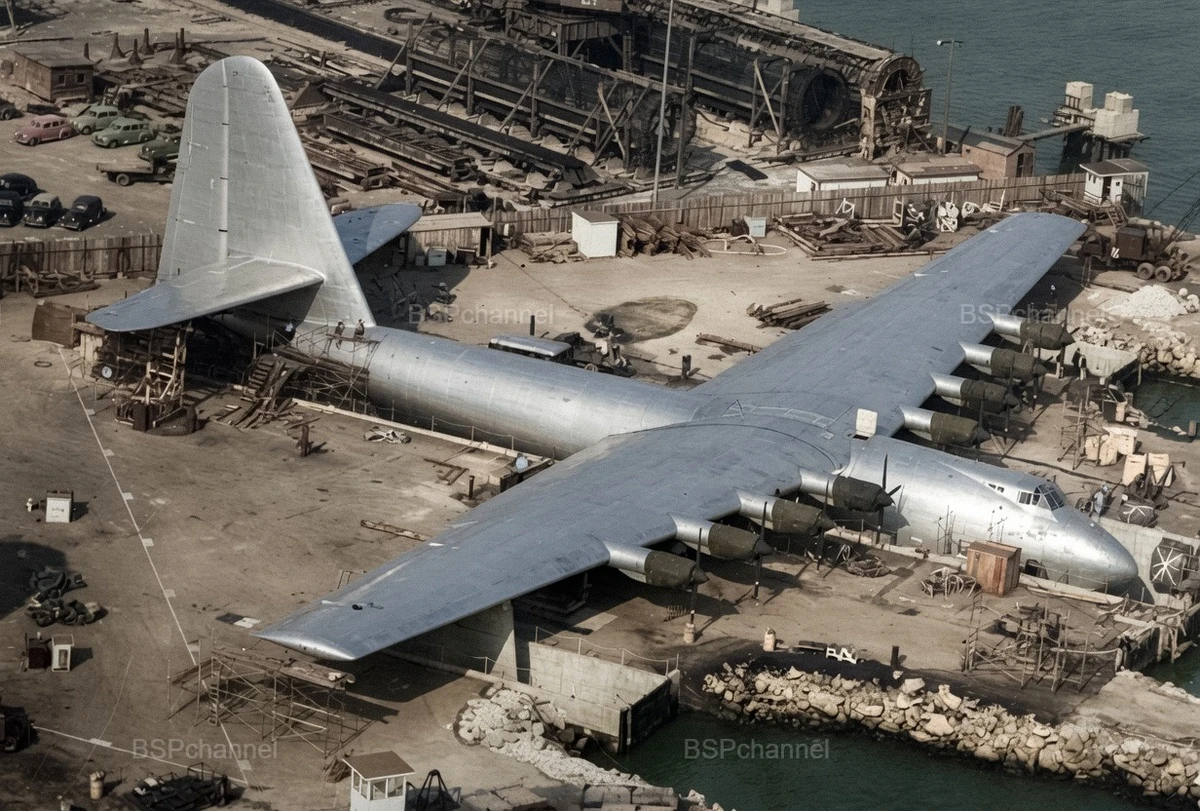
This is the largest wooden flying boat in aviation history. Built as a one-off by the eccentric American billionaire, aviator, and film producer Howard Hughes, this giant made just one flight, lasting 26 seconds at an altitude of 21 meters above the water.
A man balancing atop a 20-story building. USA, 1920. 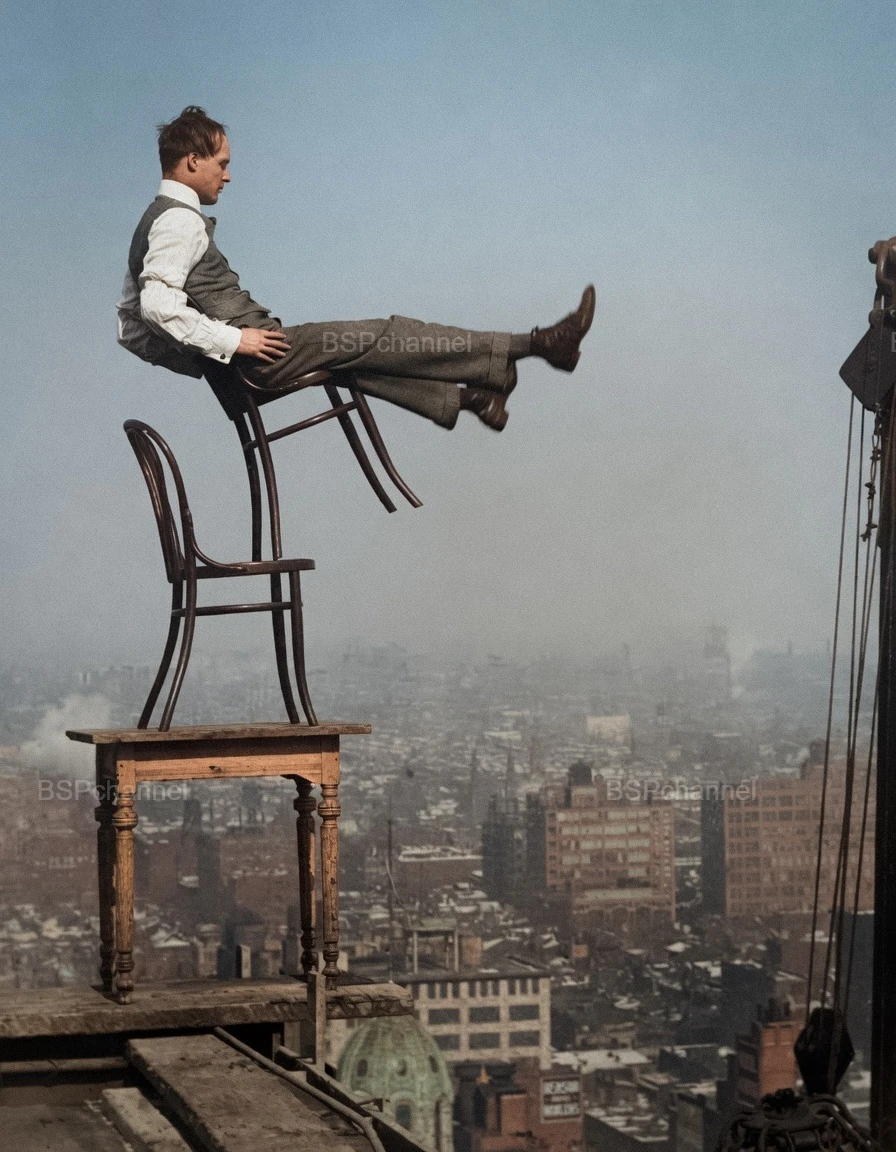
Mathematician Howard Aiken with his first computer. USA, 1944. 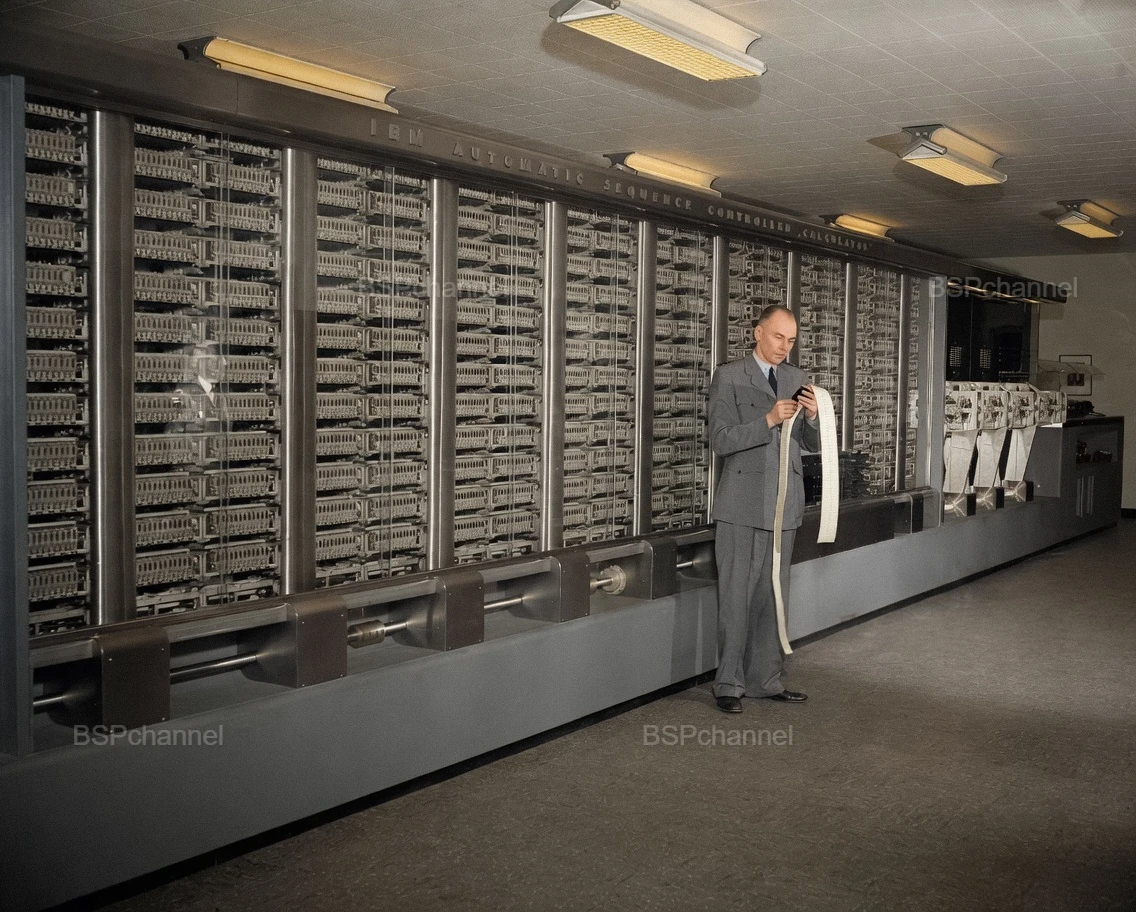
This device, officially called the Automatic Sequentially Controlled Calculator (ASCC), was the first programmable automatic computer in the United States. It marked the transition from simple adding machines to sophisticated computing technology.