Gunpowder and early torpedo prototypes: from the Middle Ages to the present day (3 photos)
How did the invention of gunpowder influence the development of warfare? This question has puzzled historians for many years. The generally accepted theory is that gunpowder was invented in China. However, another hypothesis suggests that Indians may have known about it as early as 1500 BC. 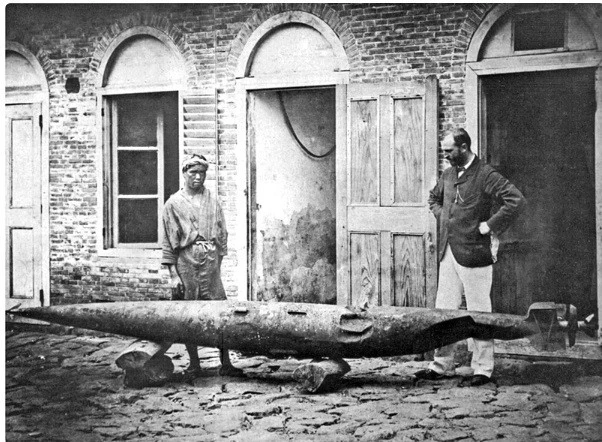
While there is no convincing evidence for either theory and the exact date of gunpowder's invention is impossible to determine, its role in the ancient world was colossal. The power of this "miracle powder" could not go unnoticed: neighboring peoples sought to uncover the secret of its production and use it in battle.
By the 12th century, knowledge of gunpowder had reached Islamic lands. Muslims actively sought ways to use this new weapon against the European Crusaders—and this is not surprising: superior weaponry could decide the outcome of a battle.
It is noteworthy that different cultures adapted gunpowder to their own needs and combat tactics. For example, in Europe, it was later used to create artillery, and in the East, for rockets and incendiary mixtures.
One of the most prominent inventors who worked with gunpowder was Hasan al-Rammah, a 13th-century Syrian master. Little information remains about his life, but contemporaries gave him two nicknames: "the brilliant hunchback" and Nedshmeddin ("Beacon of Faith").
Al-Rammah wrote a manuscript known by two titles:
1. "The Art of Military Horsemanship and Ingenious Military Devices";
2. "The Book of Battles with Cavalry and War Machines."
In this work, he described 107 gunpowder recipes and 22 rocket models, which he called "Chinese arrows." Why this? Perhaps it's a reference to the Chinese origin of gunpowder or the shape of the projectiles.
A special place among al-Rammah's inventions is occupied by a prototype torpedo—a device designed to attack enemy ships. What did it look like? 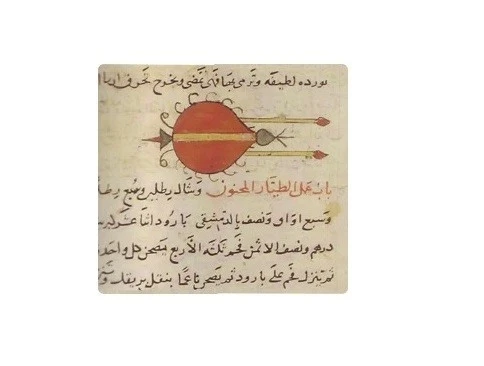
The device consisted of a metal vessel made of sheet iron. It contained gunpowder, and an additional rocket and two stabilizer rods were attached to the top. The openings were sealed with felt, and metal hooks and a point were placed around the perimeter to allow the projectile to snag on the side of an enemy vessel. 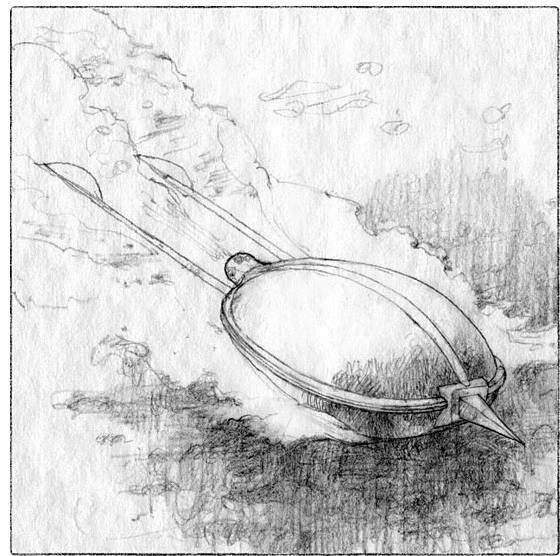
Modern reconstructions have confirmed that the device was floating. But how effective was it? Hitting a target with it proved extremely difficult.
An interesting fact: historians still debate whether this weapon was used in actual battles. Perhaps it remained on the pages of a manuscript, like Leonardo da Vinci's famous tank prototype, which was also ahead of its time.
The idea of attacking ships with self-propelled projectiles had been around for centuries. But it wasn't until 1868 that it became a reality. Robert Whitehead imagined the first torpedo in the modern sense, and the Austro-Hungarian Navy immediately recognized its potential, placing an order for production.
The history of gunpowder and early torpedo prototypes is a clear example of how an idea can be ahead of its time. Hasan al-Rammah's invention, although it never became a mass-produced weapon, demonstrated the potential of gunpowder in naval warfare.