New Glenn rocket explosion: a "disaster" that is affecting not only Blue Origin but the entire US space industry (5 photos + 1 video)
The scale of the accident is comparable to the explosion of the Soviet N-1 super-heavy rocket in 1969. 
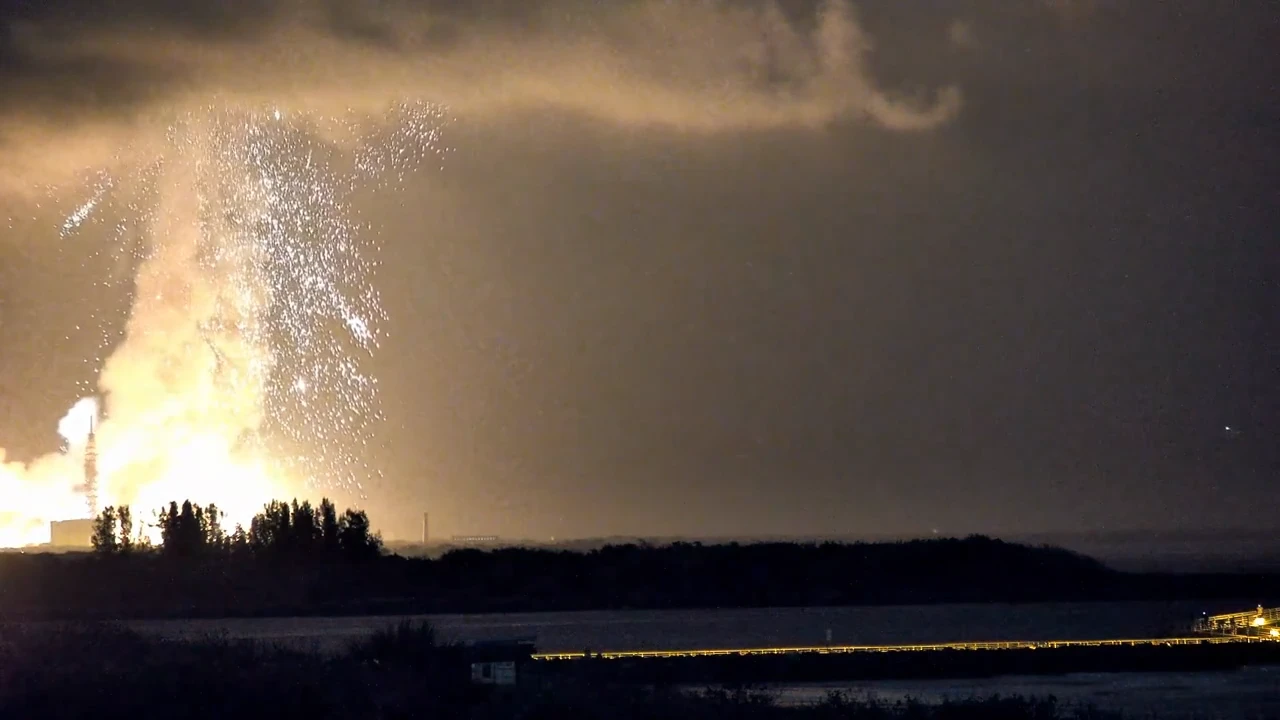
On the evening of May 28, 2026, Jeff Bezos's Blue Origin New Glenn two-stage heavy-lift launch vehicle exploded during a routine fire test in Florida. The official cause is still unknown.
According to Ars Technica Senior Editor Eric Berger, the May "disaster" is a blow not only to the company itself, but also to NASA and the US space industry as a whole.
Goodbye, Launch Pad?
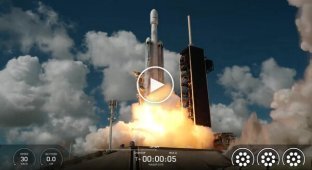
Ground infrastructure is a complex and underappreciated part of rocket launches, writes Berger. It's no coincidence that Elon Musk noted before the Falcon Heavy's first test flight that even the mere safety of the launch pad after the test was a success.
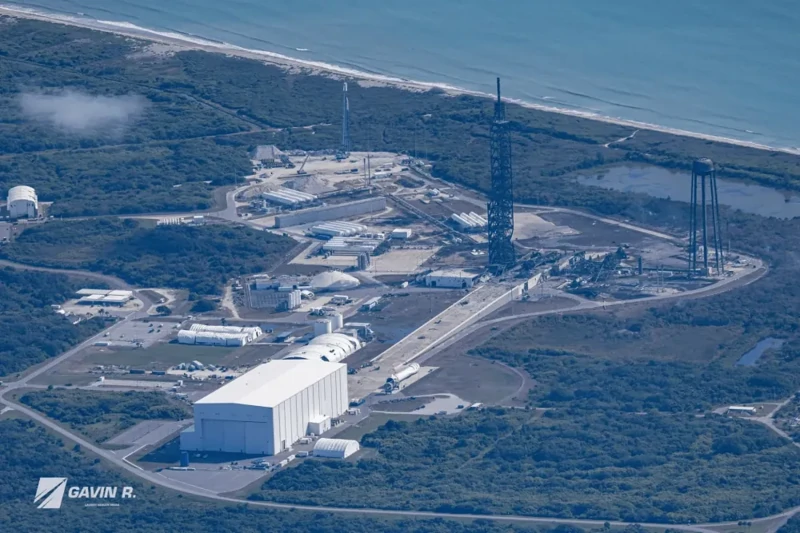
Blue Origin has only one functioning launch pad for New Glenn launches. This is LC-36A, which the company has spent "years and at least hundreds of millions of dollars" upgrading. But, according to Ars Technica sources, it has sustained "severe damage": one of the lightning protection towers and the transporter/erector unit are believed to be beyond repair.
Blue Origin is conducting pre-design work on the adjacent LC-36B pad and plans to deploy another complex at Vandenberg Air Force Base in California.
But repairing the damaged pad or upgrading the old one will take at least a year—even if Blue Origin throws all its efforts and even more of Bezos's "resources" at it. According to the publication's source, 15 months is a "best-case scenario."
SpaceX took over a year to restore the SLC-40 platform damaged by the explosion.
SpaceX is different. Its engineers use an iterative approach: they test, launch, identify faults and problems, and then make improvements—and so on. Blue Origin, on the other hand, takes a more conservative approach, Berger writes.
New Glenn is a "mature design," not an experimental prototype that will later be replaced by a dozen others. During the first three launches, the rocket's first stage performed "almost flawlessly." On the second launch, it was successfully landed, and on the third, it was reused.
In the second half of 2026, Blue Origin planned to begin launching almost monthly for NASA, telecom provider AST SpaceMobile, Bezos's Amazon, and others, although it didn't launch its first launch until 2025. But now those plans are in doubt.
United Launch Alliance's Vulcan heavy-lift rocket has been temporarily decommissioned due to technical issues, so launch capacity is "once again concentrated in the hands of SpaceX."
What about the American lunar program?
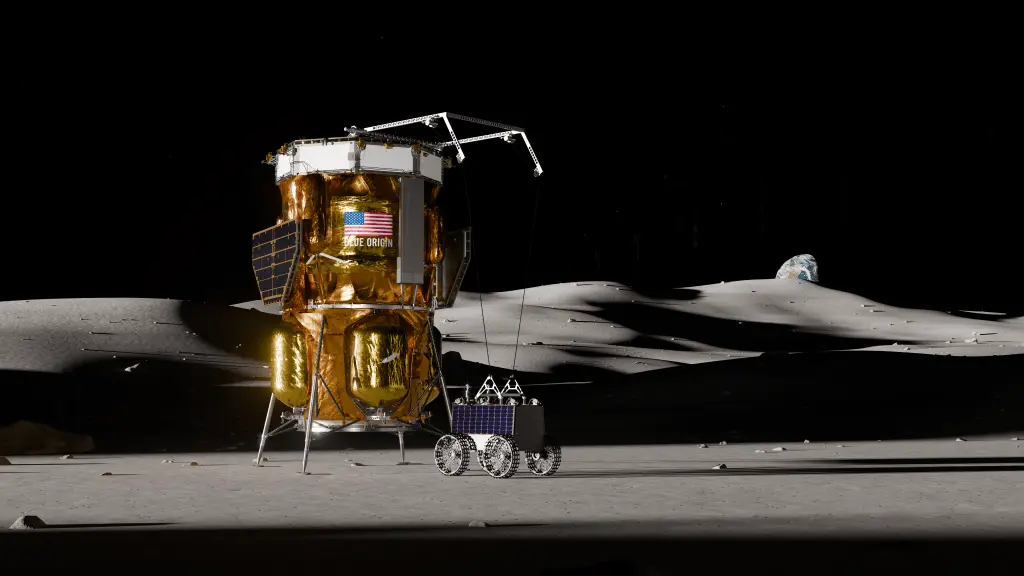
Blue Moon Mark 1's total payload mass is up to 3 tons. Rendering source: NASA
On May 26, 2026, NASA announced that Blue Origin's autonomous lander, Blue Moon Mark 1, would be used as part of the Moon Base I lunar mission and awarded the company up to $280.4 million to deliver, among other things, two rovers to the Moon in 2028.
The lander itself was expected to launch via New Glenn. Vulcan and Falcon Heavy would theoretically be comparable in terms of payload capacity, but Vulcan's return to service is unknown, and it has a backlog of defense contracts.
It also uses the same engine as New Glenn: the closed-cycle liquid-fuel BE-4. If the explosion was caused by problems with it, the timeline could be delayed as well. It is manufactured by Blue Origin.
The Falcon Heavy's second stage uses kerosene as fuel and supercooled liquid oxygen as an oxidizer, while the BE-7 lunar module engine runs on liquid hydrogen and oxygen.
Berger points out possible incompatibilities and doubts Bezos's company would even want to collaborate closely with a direct competitor.
Given the situation with Blue Moon Mark 1, the observer believes the lunar program will likely have to be reconsidered. The Astrolab and Lunar Outpost rovers weigh about a ton. Only Blue Moon Mark 1 and Starship can deliver such a load.

NASA has scheduled an Orion mission for 2027 as part of the Artemis 3 mission. The spacecraft will test docking in low Earth orbit with one or both modules—SpaceX's Starship Human Landing System and Blue Moon from Blue Origin.
However, according to Berger, Blue Moon won't be ready for such a mission for at least a year and a half, so NASA will have to decide: wait for Blue Origin or stick with SpaceX.
NASA hopes to land a crew on the Moon as part of the Artemis 4 mission. The launch is scheduled for 2028. The agency is once again relying on both SpaceX and Blue Origin. However, the journalist doubts that Blue Origin will have time to conduct all the necessary tests for Blue Moon Mark 2.
According to Berger, New Glenn won't launch before 2027 or even the second half of that year. Politico, however, admits that Blue Origin's participation in the American lunar program could be delayed by at least a year.