7 amazing stories about people and things that don't fit the usual standards (8 photos)
A brave woman calmly killed 140 snakes and then sewed a dress from them. But that's just the beginning; things get more interesting. 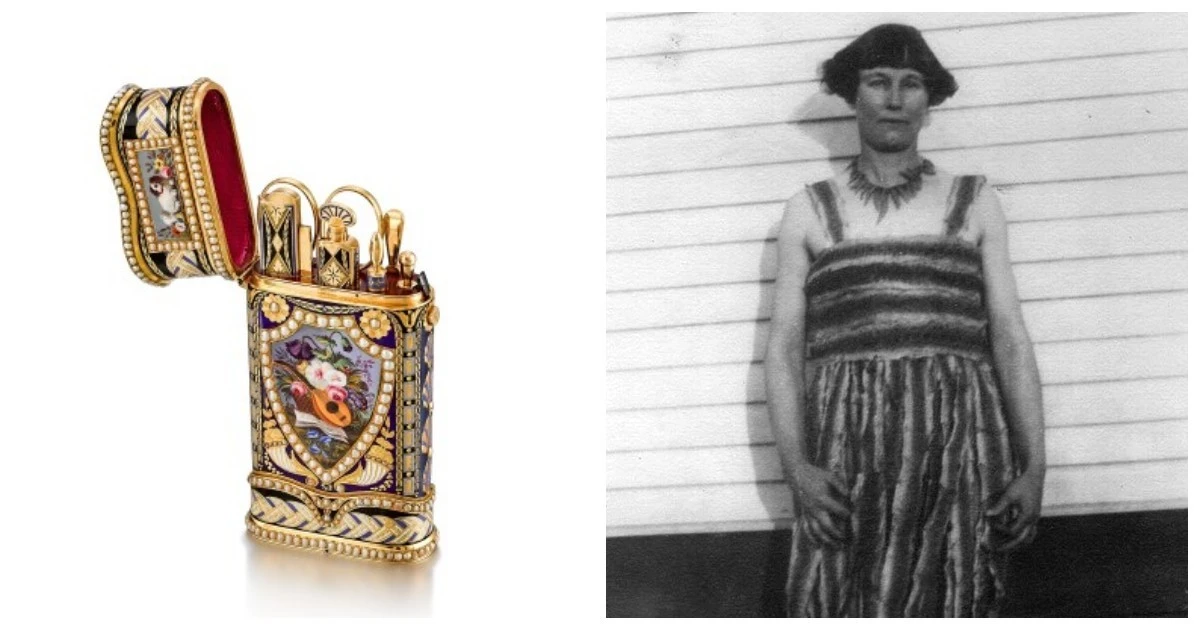
This collection also features knives with musical notes for singing before and after meals, the smallest mountain in the world that can be mistaken for a hummock, 88 dollhouse-sized Buddhist shrines at a Hawaiian temple, and more. Each story is a portal to a past that was simultaneously absurd, beautiful, and deeply human.
1. "Rattlesnake Kate" 
In the 1920s, Katherine McHale Slaughterback was riding horseback with her young son and found herself right in the path of a mass migration of rattlesnakes. The slithering creatures were so numerous that the ground, she said, "moved." Without waiting for help, Katherine single-handedly killed 140 of the reptiles. And when the danger passed, she didn't throw away the skins, but sewed them into a dress, shoes, and a belt.
2. A Hole for Offerings to the Spirits 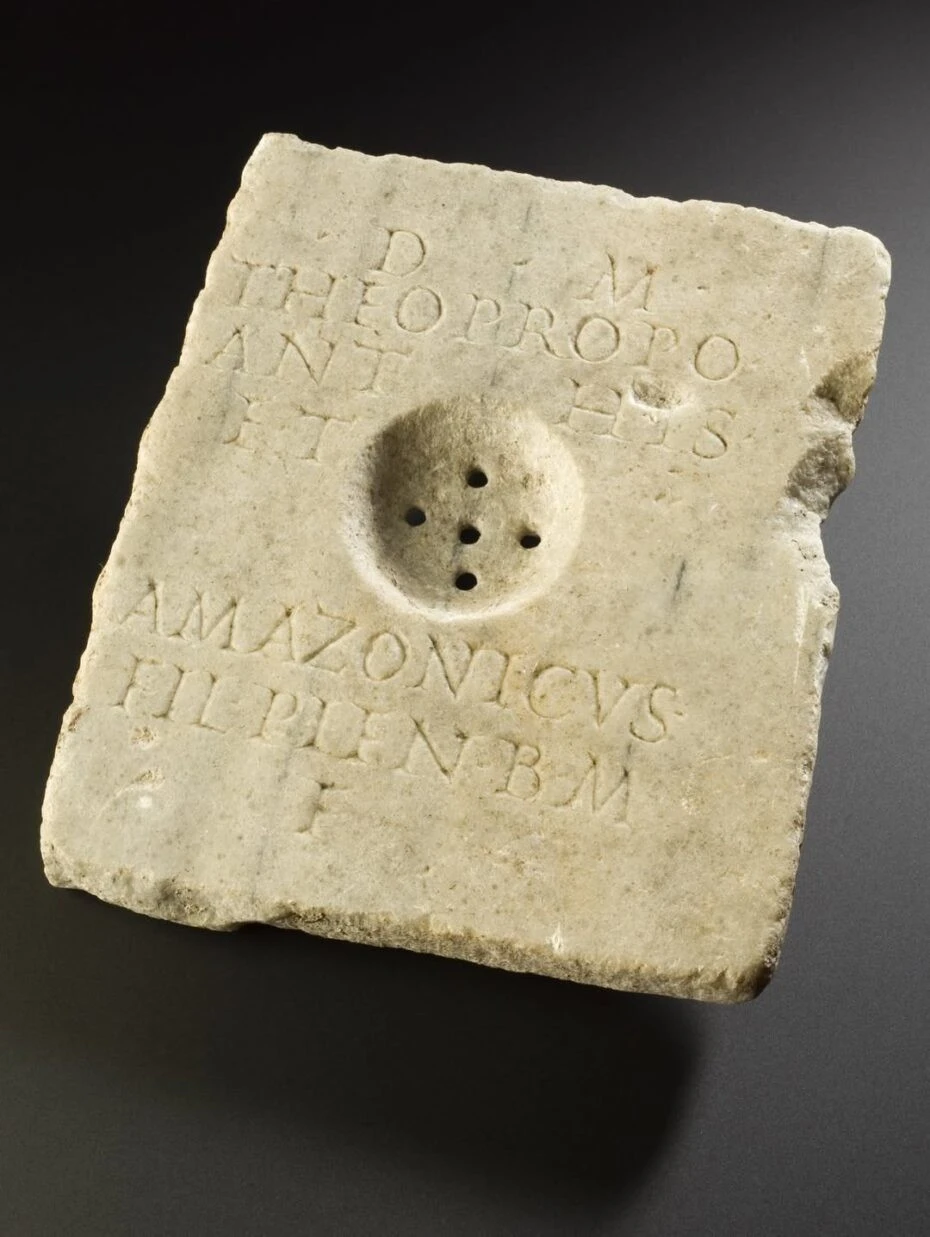
Imagine standing at a grave, leaning over the slab, reading the first words "To the Spirits of the Departed," and carefully pouring wine directly into the ground. No, this isn't magic or a movie script. This is a real ancient Roman tombstone, dedicated by parents to their son Theopropus. Special holes were made under the stone lid of the slab so relatives could pour wine, milk, honey, water, or olive oil into the grave.
In ancient times, such offerings were called libations. They were believed to feed the souls of the dead in the afterlife. According to another version, they were simply paid off by ghosts so they would not disturb the living. Most astonishingly, this slab once belonged to Evangelista Gennaro Gorga, an Italian opera tenor who collected antiquities. His collection was purchased by businessman Henry Wellcome in 1924 and 1936.
3. An ancient Hawaiian temple where Japanese immigrants built 88 dollhouse-sized shrines 
A green valley on the south shore of Kauai. Peace, tranquility, harmony. Once upon a time, an ancient heiau—a sacred Hawaiian temple—stood here. And in 1904, Japanese immigrants built 88 Buddhist shrines on this same site. Each one is no larger than a dollhouse. And each one is an exact miniature replica of the temples that line the long pilgrimage route across the island of Shikoku in Japan.
By the 1960s, Lawai Valley had fallen into disrepair. The shrines began to crumble, slowly being devoured by trees and vines. For decades, the miniature temples stood in ruins, like a quiet, forgotten archipelago amidst the jungle.
Today, things are different. Visitors are invited to take a leisurely stroll through the hills, where restored shrines are once again visible. This is not a place for selfies and fuss. It is for those willing to walk slowly, remain silent, and gaze at the tiny doorway beyond which a whole world unfolds.
4. The ancestor of wallpaper that wasn't ashamed to be cheap 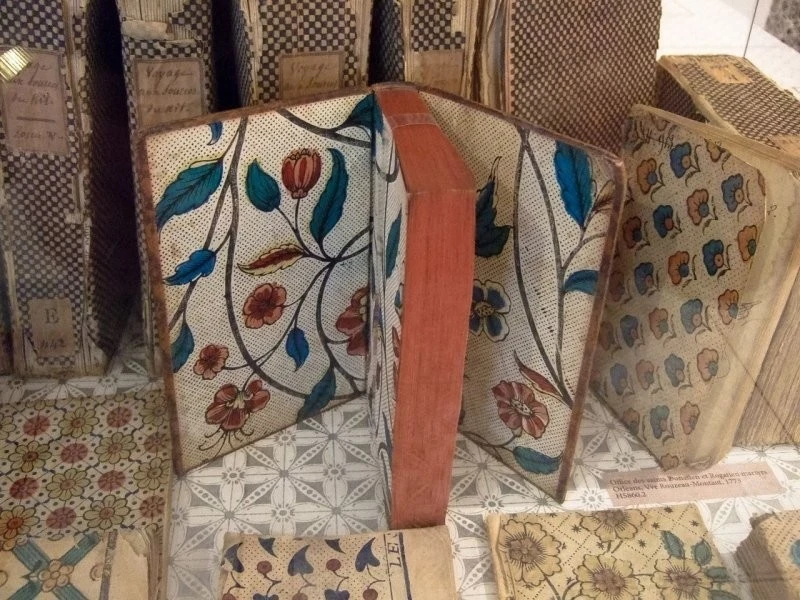
There are things that are loved for their content. And there are things that are valued for their appearance. Domino is precisely the latter.
Imagine a 36x45 cm sheet of paper, printed with engraved wooden blocks in a single color (black, blue, or red), and then painted with a brush or stencil. This is domino paper—the direct ancestor of wallpaper, which reached its peak in the second half of the 18th century. Such sheets were made by master dominotiers. And they were used everywhere: for decorating books, the insides of boxes, chests, cabinets and drawers, folding screens, and even servants' quarters.
France was the heart of this movement. Dominoes represented the "casual elegance" of their era. Inexpensive, yet beautiful. They could be found in a variety of places—at the bottom of a jewelry box, inside a dresser drawer. But their most charming use was in the world of book lovers.
Who were the dominotiers? The artistic chameleons of the 18th century. They made playing cards, they also printed pictures. Their guild was officially recognized as early as 1540, but the exact moment when the craftsmen transitioned from simple pictures to these iconic patterned sheets remains a mystery.
5. The World's Smallest "Giant" 
There are mountains in the world that take your breath away. And there's one that makes you ask, "Is that it?"
It's called Mount Paltry. Think about it: "paltry" means "pitiful" or "insignificant" in English. The name speaks for itself. This geographical oddity is often called the smallest mountain in the world. It rises above its surroundings by just 7 centimeters. If you were driving by, you likely wouldn't even notice it: it would seem like just a gentle hump on the side of the road.
Where is this wonder located? In Australia. And yet, despite its ridiculous height, Mount Paltry fits the geographical definition of a mountain. It is a natural elevation, shaped by geological processes. It quietly but confidently defies our notions of how large an object must be to bear the proud title of "mountain."
6. The Queen's Mini Suitcase of Secrets 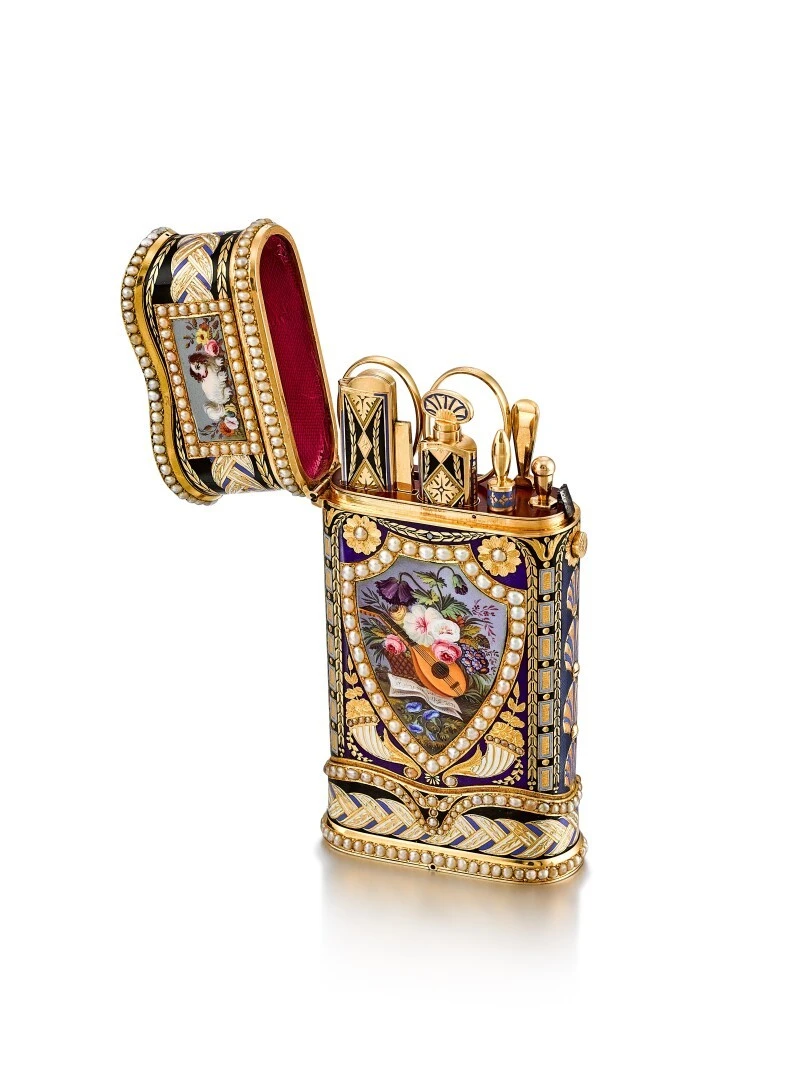
Imagine a Victorian-era handbag. Now forget it. The Etui de voyage is something entirely different. Hidden within its tiny gold, enamel, and pearl case are a striking clock, a music box with a miniature mechanism, and—get this—an automatic figurine (automaton) that moves when the lid is opened. And that's not all. The set also includes scissors, a tiny knife, a perfume bottle, a key, a cuticle stick, and an awl. All items are crafted from gold and covered with exquisite enamel.
Etui de voyage translates from French as "travel case" or "travel box." In the 18th century, such items were the pinnacle of women's luxury. Small and pocket-sized, they served as cosmetic bags, vanity cases, and snuffboxes all at once. But their main purpose was to demonstrate status. Only members of the elite commissioned them. Each box was a unique work of jewelry: gold, precious stones, pearls, and hand-painted enamel. And the most sophisticated examples—like this one from 1800—hid true treasures inside: automatic figurines that danced or played musical instruments, musical mechanisms, and even tiny clocks.
This wasn't just a thing. It was a small world enclosed in a golden casket. A world where scissors coexisted with music, and perfume with theater.
7. Singing Knives 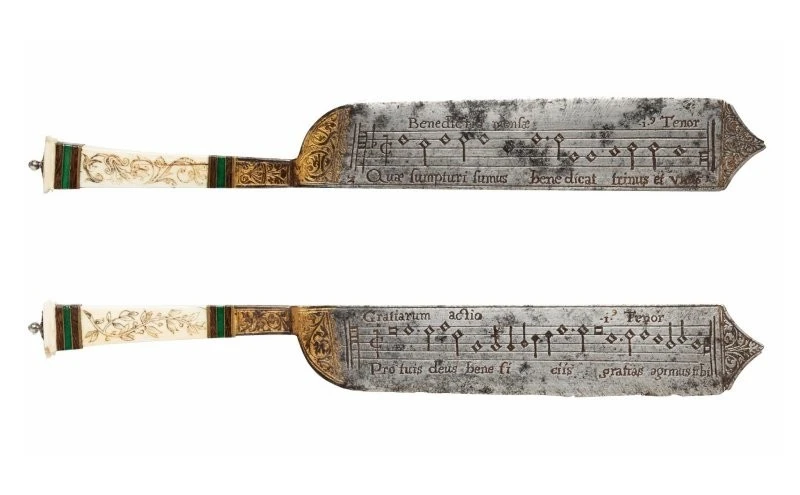
You sit down at the table. You pick up a knife. And you sing. Because there are notes on the blade. This is not a fiction. These are notation knives. Rare Renaissance objects, probably created around 1550, in Italy. Only about 20 examples have survived to this day.
What are these? These aren't just cutlery. They're musical scores. Each knife in the set corresponded to one voice in a polyphonic choir. Imagine: six people sitting down to dinner. Each has their own knife. On one side of the blade is engraved the text and notes of "Benedictio mensae," a blessing over the meal sung before eating:
"Quae sumpturi sumus bene dicat trinus et unus"
"May the Trinity in Unity bless this which we are about to partake of."
Turn the knife over, and on the other side is "Gratiarum actio," a thanksgiving after the meal:
"Pro tuis deus beneficiis gratias agimus tibi"
"For your gifts, O God, we give you thanks."
And everyone sings. Polyphonically. Each one sings their part. The knives served both as eating instruments and as a kind of score—a music notebook for the choir.