10 psychological experiments on human behavior that reveal unpleasant truths about us (11 photos)
Humans have always been fascinated by the unknowns of how the mind works and the causes of our behavior. And so, in the early 20th century, experimental psychology developed. 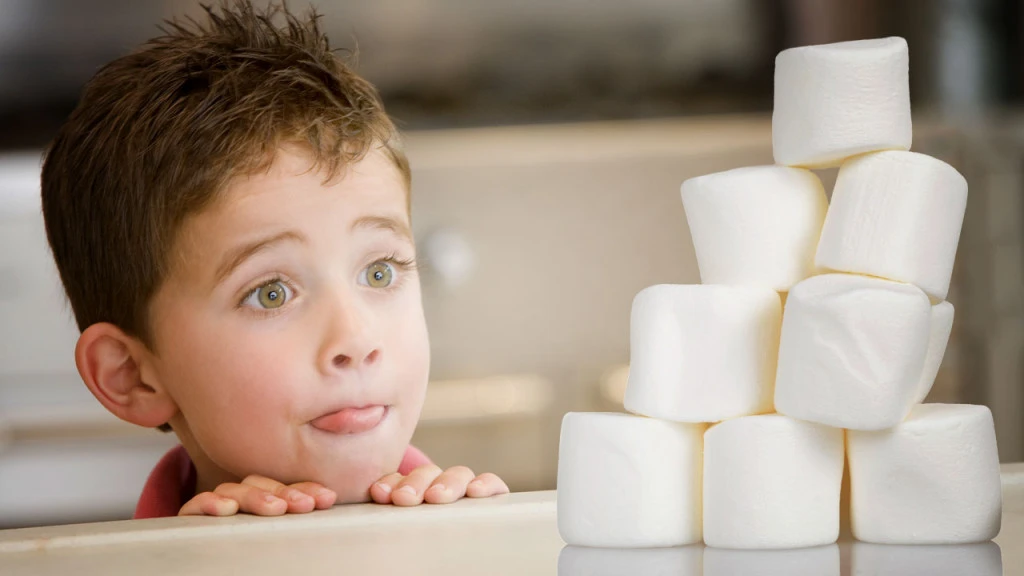
Research has explored a wide range of areas: from behavioral science to social dynamics and the complex biological processes occurring in the brain. The results of carefully controlled studies conducted in the name of experimental psychology have revealed much about the human condition, allowing us to better understand why we behave the way we do.
We've compiled a list of the most famous and intriguing experiments of the last century. From the most basic social studies to those exploring complex behavioral patterns that reveal how the human subconscious works and challenge accepted ethical boundaries, you'll definitely wonder how much you know about yourself and what you're truly capable of.
"Blue-Eyed/Brown-Eyed"
In 1968, after the assassination of civil rights leader Martin Luther King, Jr., teacher Jane Elliott attempted to discuss discrimination, racism, and prejudice with her third-grade students at a school in Riceville, Iowa. Feeling that the children not only didn't understand what discrimination based on skin color meant but had never encountered it in their small town, Elliott launched a two-day "Blue-Eyed/Brown-Eyed" exercise to highlight the injustice of racism. 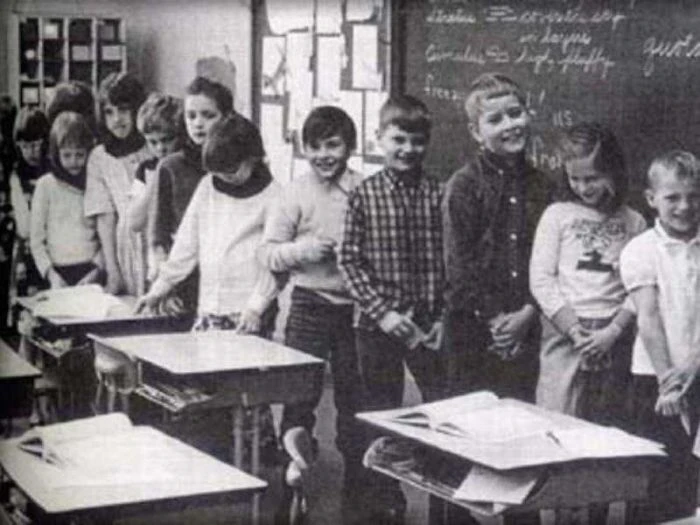
Students were divided into two groups based on eye color. Those with blue eyes received educational privileges: a second helping at lunch, access to a new playroom, and an extra five minutes during recess. Elliott placed blue-eyed students in the front rows of the classroom, while brown-eyed students were relegated to the back. She encouraged her students to interact only with classmates from their own group, advising them to avoid contact with brown-eyed students.
Members of the two groups were also forbidden from drinking from the same water fountain. Brown-eyed students were constantly punished by the teacher when they disobeyed rules or made mistakes. Elliott emphasized the differences between the groups, highlighting the strengths of blue-eyed students and the weaknesses of brown-eyed students. The next day, the brown-eyed students became the privileged ones.
As a result, the group considered superior began to perform better academically. Those who were discriminated against began to make more mistakes—even those students who had been excellent students before the experiment.
Piano-Shaped Steps
A Volkswagen initiative group called The Fun Theory wanted to prove that human behavior can improve by adding a touch of fun to routine and boring activities. They placed piano-shaped steps in the Stockholm subway to see how many people would choose the stairs over the escalator. 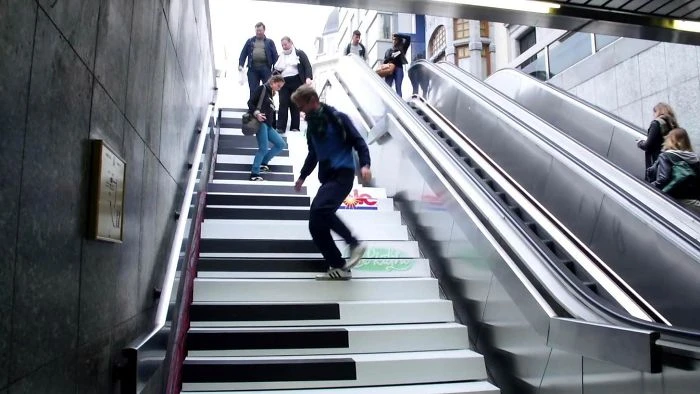
Results showed that 66 percent of passengers chose the stairs with musical steps that day.
Violinist on the Subway
On January 12, 2007, about a thousand morning commuters passing through a Washington, D.C., subway station heard a short free concert by virtuoso violinist Joshua Bell. He played for about 45 minutes, performing six classical pieces on a 1713 Stradivarius violin, reportedly worth $3.5 million. 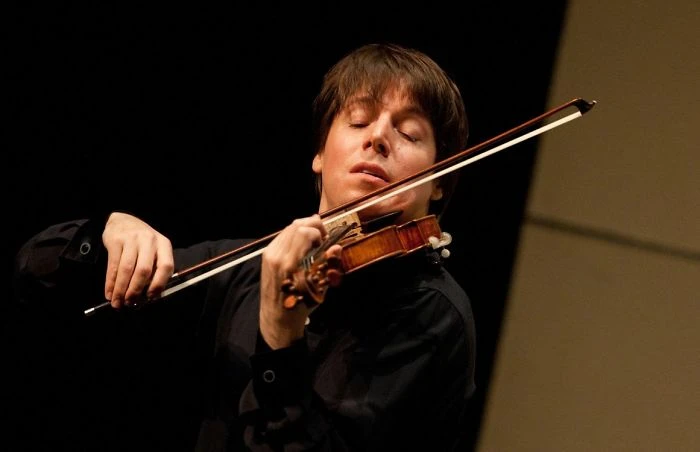
Only six people stopped to listen to the music. About 20 gave money, continuing their normal pace. The violinist collected $32. When he finished playing and silence fell, no one noticed. No one applauded. No one realized that one of the world's finest musicians had played one of the most complex compositions on a violin worth $3.5 million.
Washington Post writer and journalist Gene Weingarten, the author of this experiment, described it "as an experiment in context, perception, and priorities, as well as in assessing public taste: in a banal and boring setting, at an inconvenient time for everyone, will beauty be noticed?"
Smoke in the Room
For the experiment, people were gathered in a room to fill out a questionnaire when smoke suddenly began billowing from under the door. What would you do? Most likely, you'd get up and leave the room or report it to someone in charge. Now imagine the same situation, except you're not alone; there are other people with you who don't seem bothered by the smoke at all. 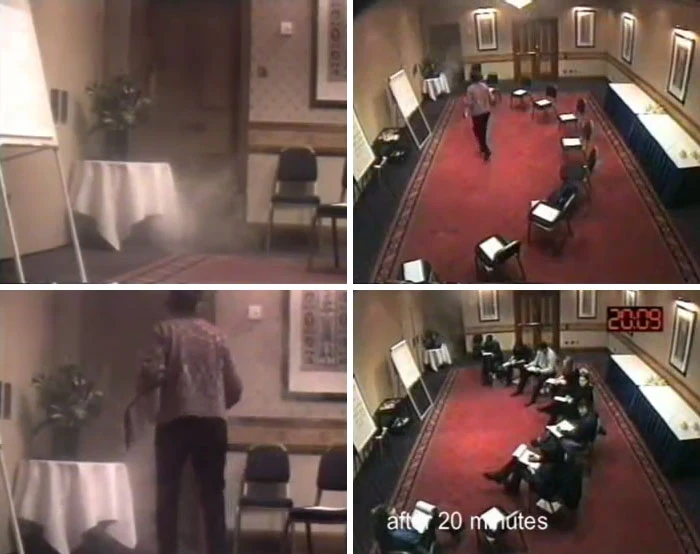
Two hired actors were instructed to act as if nothing was happening. Only 10% of subjects left the room or reported smoke. Nine out of 10 actually continued working on the questionnaire, rubbing their eyes and brushing smoke away from their faces.
The experiment showed that people react more slowly or fail to react at all to emergency situations in the presence of passive individuals. We rely more heavily on the reactions and behavior of others than on our own instincts. If a group of people acts as if everything is fine, then it must be, right? Actually, no. Don't allow yourself to be inactive because of others' passivity. Don't assume that someone else will always help.
"Summer Camp"
This experiment tested the theory of realistic conflicts and provided an example of how negative attitudes arise between groups due to competition for limited resources. 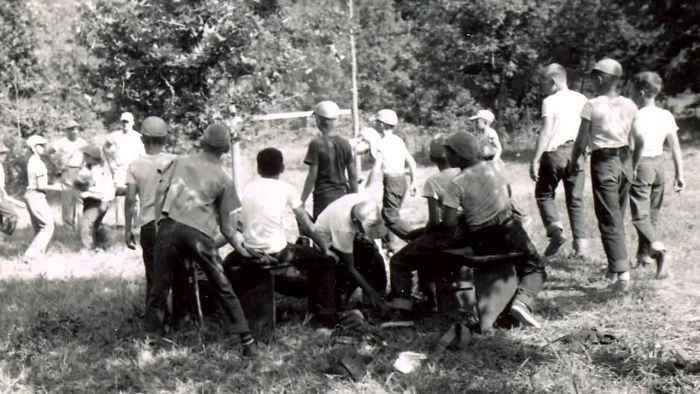
The experimenters took two groups of 11- and 12-year-old boys and placed them in what they believed to be a summer camp. For the first week, the groups were separated and unaware of each other. During this time, relationships within the groups strengthened.
The boys were then introduced to each other, and signs of conflict immediately began to emerge. The experimenters created competition between the groups, and, as expected, hostility and aggressive behavior increased.
In the third week, the experimenters created conditions for both groups to work together to solve a common problem. For example, drinking water. The children were under the impression that their drinking water had been cut off, perhaps due to vandals. Both groups worked together to solve this problem.
By the end of the experiment, after the boys from different groups had worked together, they had become friends, demonstrating that working together is one of the most effective ways to reduce prejudice and discrimination.
The Carlsberg Experiment
The social experiment was conducted by the Danish brewery Carlsberg. An unsuspecting couple entered a movie theater crowded with bikers. Only two seats were available, next to a tattooed biker. 
According to the results of the informal experiment (conducted as a product advertisement), not all couples sat in the empty seats: upon seeing their neighbor, they immediately left the theater. Some did stay and take a seat, for which they were immediately rewarded with applause and free Carlsberg beer. Don't judge a book by its cover.
The Misinformation Effect
In 1974, Elizabeth Loftus began studying the misinformation effect using traffic accidents as an example. In one experiment, seven video sequences, ranging from 5 to 30 seconds in length, were shown to 45 students, divided into groups of nine. These videos featured recordings of car accidents. After each video, the students completed a questionnaire, the first item of which was worded: "Give an account of the accident you just witnessed." 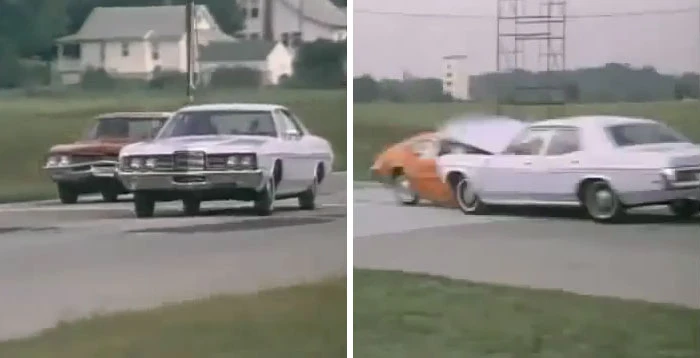
Next, a series of specific questions about the accident were presented. The most important question concerned the speed of the cars shown in the videos. Nine people were asked, "How fast were the cars in the video traveling when they crashed into each other?" The remaining subjects received a similar question, but instead of the word "crashed," the words "touched," "hit," "crashed," and "bumped" were used. When the word "crashed" was used in the question, the cars were assigned the highest speed—40.8 mph. The result of this experiment was the conclusion that the form of the question influences the witness's response. Loftus hypothesized that this is due to changes in the subjects' memory representation.
The Milgram Experiment
This experiment was conducted in 1961 by psychologist Stanley Milgram. His goal was to understand how far people will go in obeying authority figures, even when those authorities' orders harm others.
The experiment involved an experimenter, a subject, and an actor playing the role of the other subject. One participant (the "student") was told to memorize pairs of words from a long list until they memorized each pair, while the other (the "teacher") was told to test the first participant's memory and punish them with increasingly powerful electric shocks for each error. 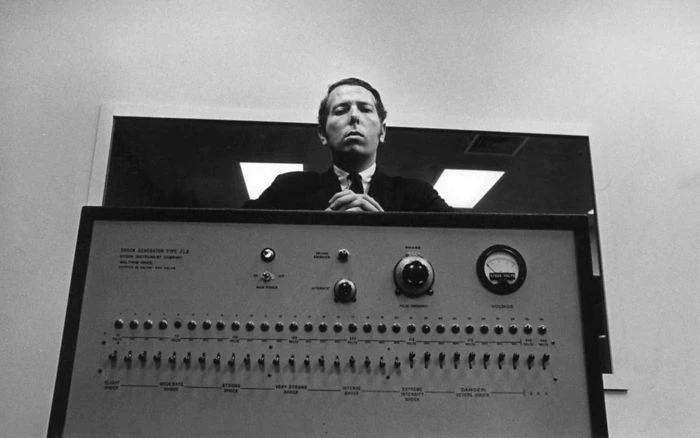
At the beginning of the experiment, the roles of teacher and student were assigned by lottery between the subject and the actor using folded sheets of paper with the words "teacher" and "student," with the subject always assigned the role of teacher. Afterward, the "student" was demonstratively strapped to a chair with electrodes. The "teacher" received a "demonstration" electric shock.
The "teacher" went into another room and sat at a table in front of the generator. The experimenter explained to the "teacher" that pressing each switch applied a corresponding voltage to the student, and releasing the switch stopped the current. The pressed switch remained in the down position so the "teacher" would remember which switch had been pressed and which had not. The device created a serious impression of realism, leaving no room for doubt about the experiment's authenticity.
In reality, no one was shocked. The "student" deliberately answered questions incorrectly and pretended to feel more pain, as the voltage supposedly increased with each incorrect answer. Despite this, many subjects continued to shock people when ordered to do so by the authority figure—the "experimenter." Ultimately, 65% of subjects administered a shock that could have been fatal.
The results of the experiment showed that ordinary people are more likely to follow orders from an authority figure, even to the point of killing an innocent person. Submission to authority is ingrained in all of us, as that's how we're raised as children.
The Marshmallow Test
An experiment from the late 1960s and early 1970s led by psychologist Walter Mischel involved a series of studies on delayed gratification. Children aged 4 to 6 were seated in a chair in a room with a treat (usually a marshmallow, sometimes a cookie or pretzel) on a table. The children were told they could eat the treat, but if they waited 15 minutes and resisted temptation, they would receive a second helping. 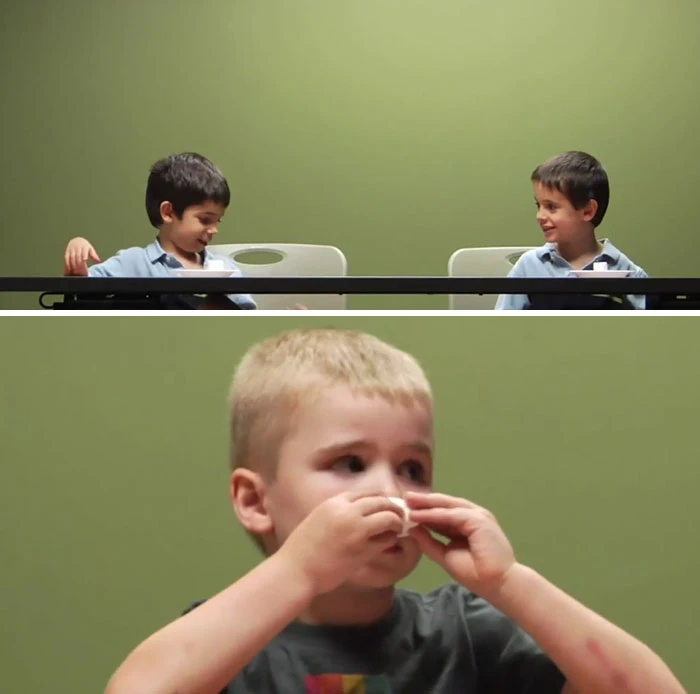
Michel noticed that some children covered their eyes with their hands or turned around to avoid seeing the treats; others started kicking the table, pulling their hair, or stroking the marshmallow as if it were a stuffed animal. Still others simply ate the marshmallows as soon as the researchers left.
Over 600 children participated in the experiment. A minority ate the treats immediately. Of those who tried to hold back, one-third received a second treat. Age was the main determining factor.
Further research showed that children who were able to wait tended to have better life outcomes, higher educational levels, and a lower body mass index.
False Consensus Effect
In this experiment, researchers asked college students whether they would walk around campus for half an hour with a large sign reading "Eat at Joe's." The students were then asked to estimate how many people would agree. Those who agreed to walk around with the sign predicted that most people would also agree. Those who refused, naturally, assumed that most people would also refuse. In other words, the study participants firmly believed that most people would make the same choice as they did. 
The results demonstrated what is known in psychology as the false consensus effect. Regardless of our beliefs, opinions, or behavior, we tend to assume that most other people agree with us and act similarly.