The 100-kilometer Mayan road – a marvel of ancient engineering (6 photos)
Of all ancient civilizations, the Mayan culture remains the most fascinating and mysterious. Much of this ancient people's legacy is hidden by impenetrable jungle, and nature reluctantly allows humans to uncover these secrets. The 100-kilometer-long stone road is one of the most impressive structures that has survived to this day. 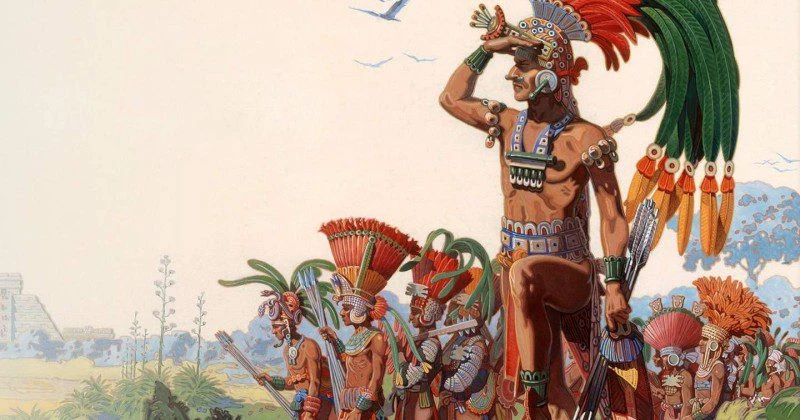
Despite extensive research and excavations, we know very little about the Maya and cannot even say with certainty why their powerful cities fell into decline. When the Spanish conquered the lands of Yucatán in the 16th century, they found only fragments of its former glory, which nevertheless captured the imagination of the conquistadors. 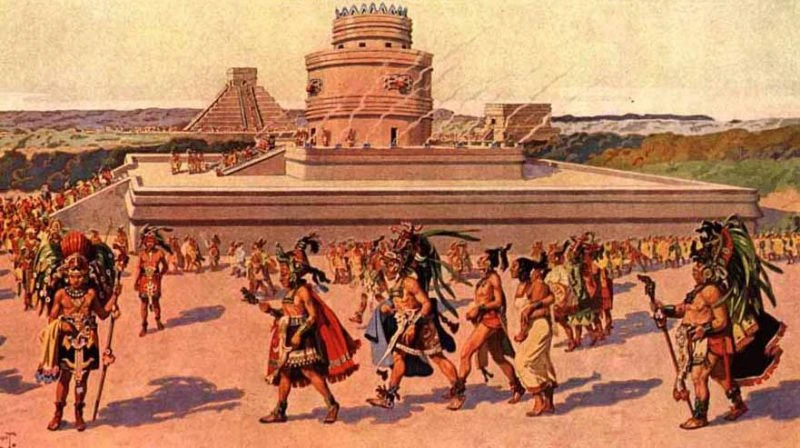
The jungle carefully guards the secrets of ancient civilizations, perfectly concealing even the most magnificent landmarks. That's why the Mayan "Great White Road," stretching for approximately 100 km, was only discovered in the 1930s, and then only by accident. People in the dense forest often encountered sections paved with carefully hewn stones, but no one could have imagined that these areas, scattered over tens of kilometers, were part of a single ancient road.
The first explorers of the Mayan road believed it was as straight as an arrow and connected two endpoints: the large city of Coba with the small, remote settlement of Yaxuna. Archaeologists immediately wondered why they built such a grand stone highway to connect an ancient metropolis with a mere village.
It was later discovered that the road wasn't perfectly straight and deviated from the line, connecting several settlements important to the Maya from a trade and strategic standpoint. The settlement of Yaxuna was merely the site where the final stone of the ancient highway was laid. 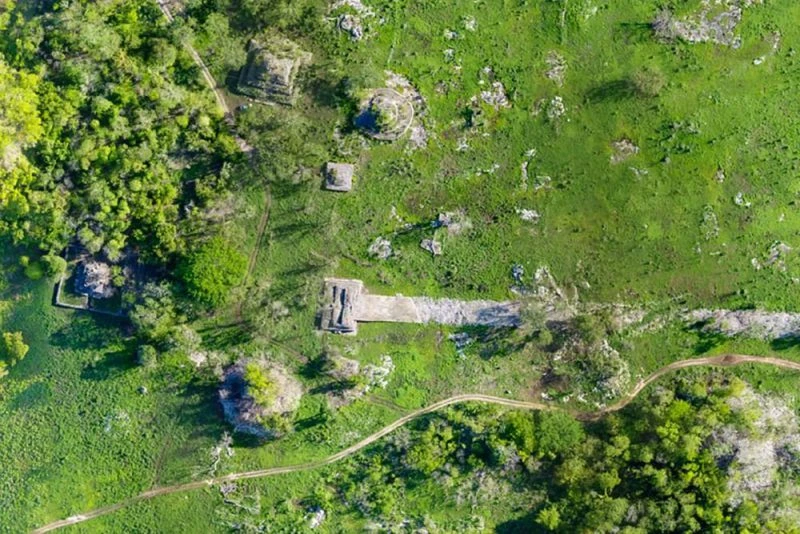
A section of the "Great White Road." View from above
Scientists have determined that the road was built during the heyday of Mayan cities, approximately 1,300 years ago, and that the ruler K'awiil Ajo gave the order for its construction. The "Great White Road" was needed to ensure the fastest possible movement of troops and supplies within the empire. The settlement of Yaksuna was the kingdom's most remote outpost on the border with the neighboring hostile state of Chechen Itza.
Both archaeologists and engineers consider the Mayan road a miracle. It is 8 meters wide throughout its entire length and is made of limestone blocks of varying sizes. During Mayan times, the road was covered with plaster, which researchers believe glowed in the dark thanks to special mineral additives. 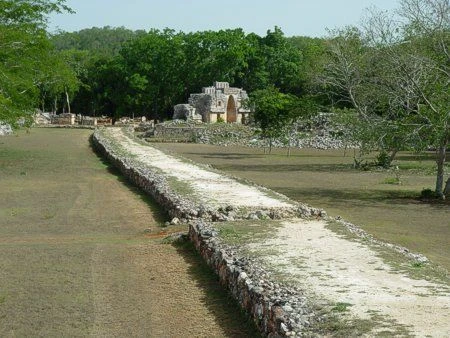
During their construction, the Mayans ignored the difficult terrain, maintaining the main route. Hills encountered along the way were razed to the ground, and hollows and ravines were filled with limestone boulders and earth. Slave labor was widely used, so the Mayan engineers were not at all fazed by the enormous scale of the project.
Professor Tracy Ardren, a Mayan cultural researcher who has devoted many years to studying Mayan heritage, believes that the road served not only for the movement of troops and goods, but also as an important landmark. Today, almost the entire "Great White Road" is hidden by jungle, but a thousand years ago, things were different. It passed not through forest, but through cornfields and orchards, and its bright white surface was visible from afar. 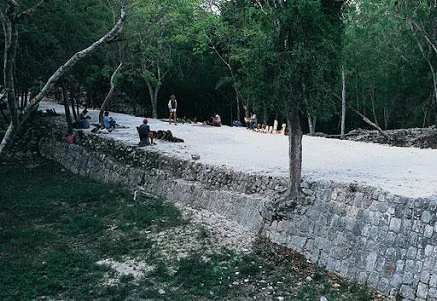
Forests were very scarce in the Mayan areas at the time, as the Indians extensively cut down trees for construction and firewood. The "Great White Road" also consumed considerable wood—massive quantities of fired limestone were required to produce the plaster covering its surface.
Every 8 km, the road widened into a platform where travelers could rest. Thus, even when stopping, troops or traders could remain on a flat, dry surface, avoiding ground that had become soggy from rain or, conversely, sun-dried to a fine dust. 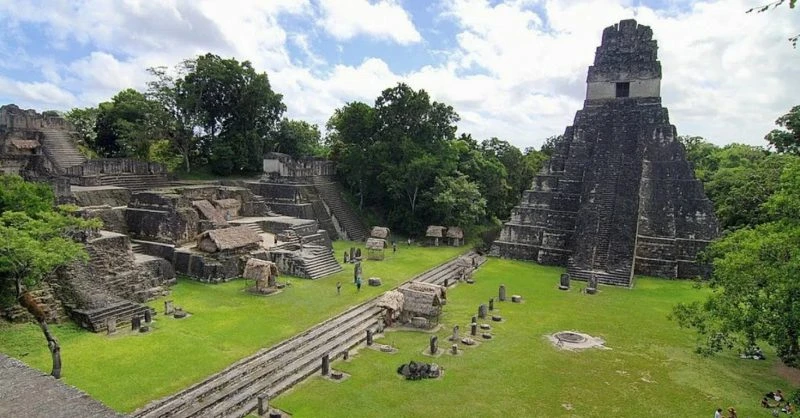
The "Great White Road," along with the majestic Mayan pyramids and the vast ruins of their cities, proves that the ancient Mayans were well versed in geometry, astronomy, and engineering. Without a solid understanding of these fields, it would have been impossible to create a route that precisely connected dozens of towns and cities and that has survived for 13 centuries.