Allen Ginsberg as a photographer: the little-known side of a beatnik icon (18 photos)
New York, 1953. In a cramped apartment, Allen Ginsberg pointed a cheap Kodak camera at Jack Kerouac. Jack hadn't yet written "On the Road"—it wouldn't be published for four years. Everyone knows Ginsberg as a poet and rebel, the author of the controversial "Howl." But almost no one knows that for half a century, he never let go of his camera. He left behind an archive of nearly 8,000 photographs—a unique chronicle of an entire generation, captured from the inside.
In the mid-1940s, Allen Ginsberg bought his first box camera and began photographing his friends. Not as an artist, but simply to preserve what would otherwise disappear. 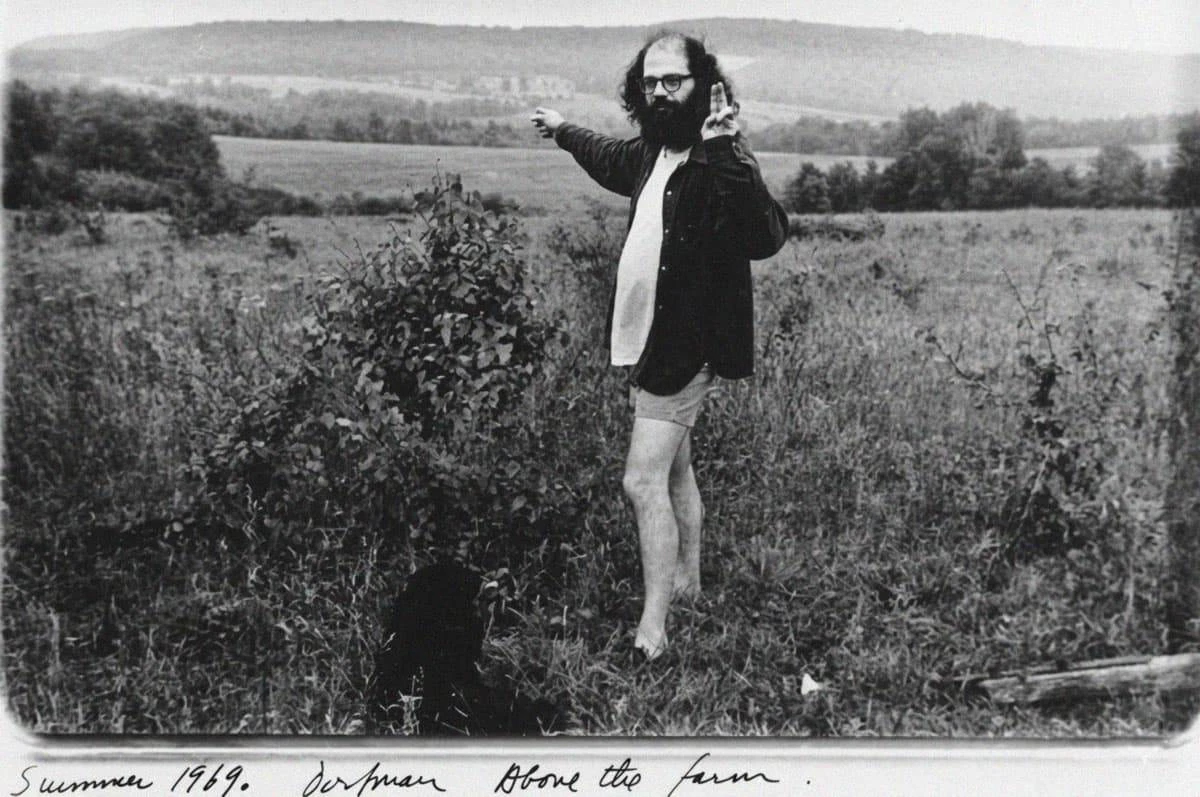
A Childhood That Required a Witness
Allen Ginsberg was born on June 3, 1926, in Newark, New Jersey. His family was Jewish, immigrants. He spent his childhood in industrial Paterson. His father, Louis Ginsberg, taught English and wrote poetry himself—traditional, precise ones. He taught his son to respect words from an early age. 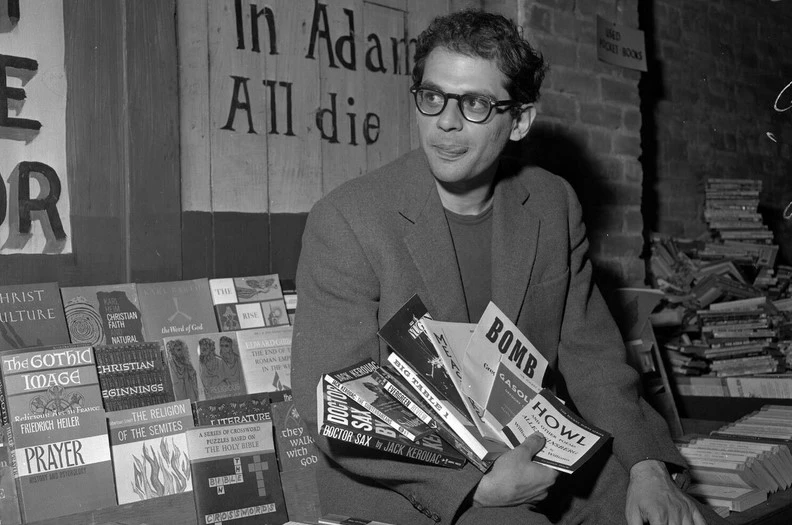
Allen Ginsberg in a bookstore. 1959
His mother, Naomi Levi Ginsberg, was a Marxist and activist for the Communist Party of the United States. She suffered from a severe mental disorder—paranoid psychosis. For years, she was taken to psychiatric hospitals. Allen witnessed all of this from childhood. Life in the house was fragile: reality could collapse at any moment. 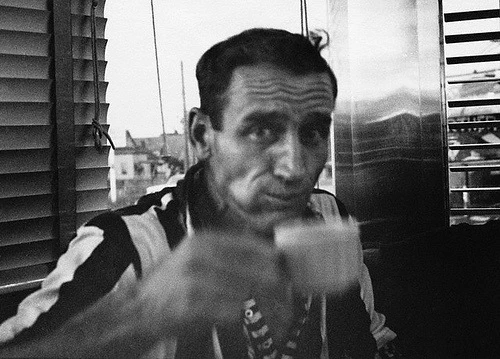
Neal Cassady, a key figure of the Beat Generation. Photo by Allen Ginsberg. Mid-1950s
This experience resulted in the poem "Kaddish" – one of his most powerful elegies. But first – in his diaries. Allen understood early on: people leave, and moments vanish. At first, he tried to hold on to life with words. Then he found another way. 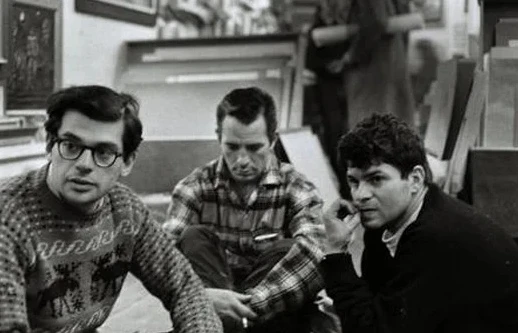
Allen Ginsberg (left), Jack Kerouac (center), and Gregory Corso (right). 1957
The first camera for a few dollars
In 1945 or 1946, Ginsberg bought his first box camera. He was then studying at Columbia University and already knew people who would go down in history: William Burroughs, Jack Kerouac, Hal Chase, and Herbert Hankey. Among the earliest photos is Hankey in a straw hat on Burroughs's Texas marijuana farm. 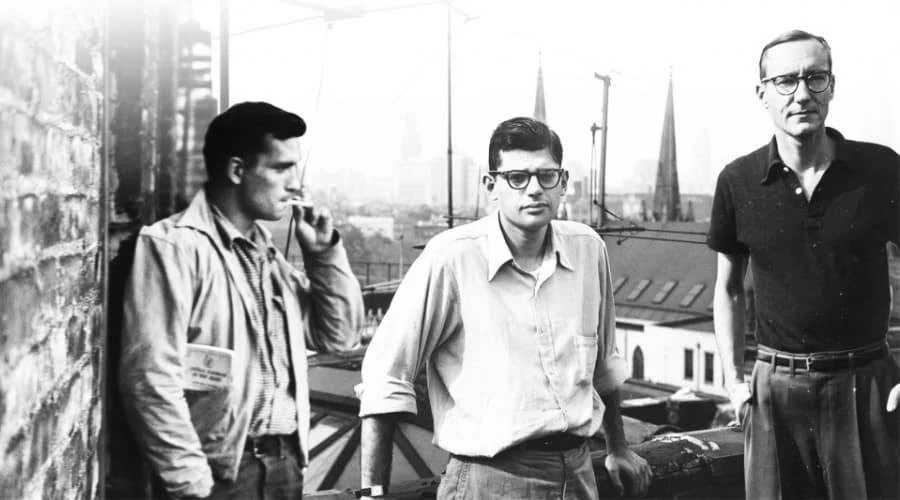
Jack Kerouac (left), Allen Ginsberg (center), and William Burroughs (right). New York City. Mid-1950s
Ginsberg himself explained his interest simply: "My interest in photographs was more sacred than photographic." He didn't think about framing or lighting. He wanted to preserve the moment. He developed the film at the nearest drugstore—as ordinary people did back then. 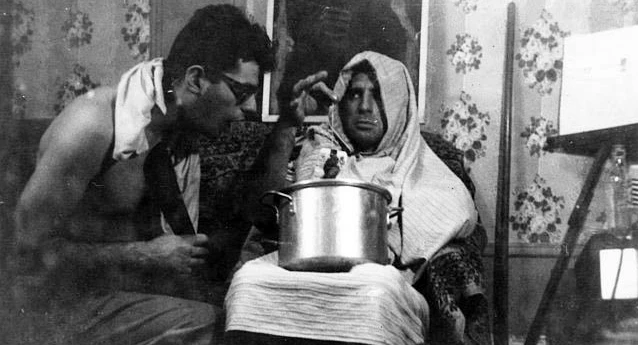
Ginsberg and Kerouac. Photo by William Burroughs. 1953
None of these people were famous yet. Kerouac's "On the Road" would be published in 1957. Ginsberg's "Howl" in 1956. Burroughs would publish "Junkie" in 1953. But Allen photographed them without any calculation. He simply captured life as it was—fragile and real.
1953: A New Camera and a Different Perspective
The real turning point came in 1953. Ginsberg went into a pawn shop on Third Avenue and bought a used Kodak Retina for $13. The camera was small—it fit easily in his jacket pocket. It was with this camera that he began shooting regularly. 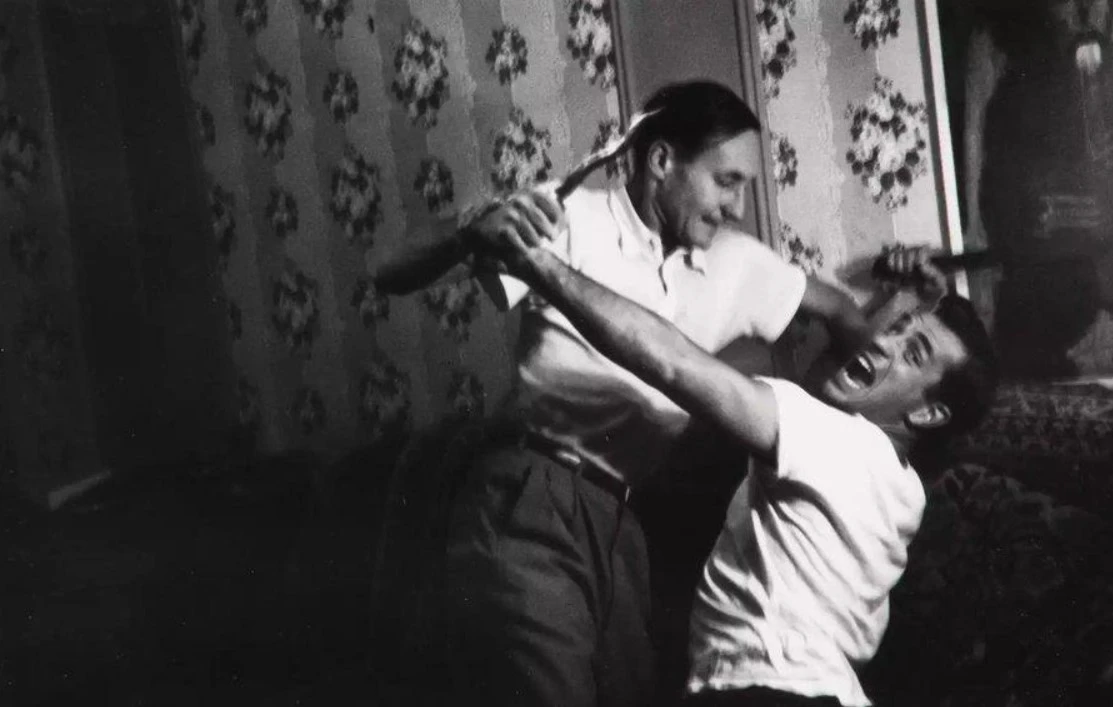
William Burroughs and Jack Kerouac. Photo by Allen Ginsberg. 1953
He shot in apartments on the East Side and right on the streets of New York. Kerouac on a fire escape, holding a railroad charter in his pocket, a gift from Neal Cassady. Cassady with his lover. Gregory Corso arguing about poetry. All the shots are warm, without distance. The photo sessions lasted no more than 5-10 minutes. 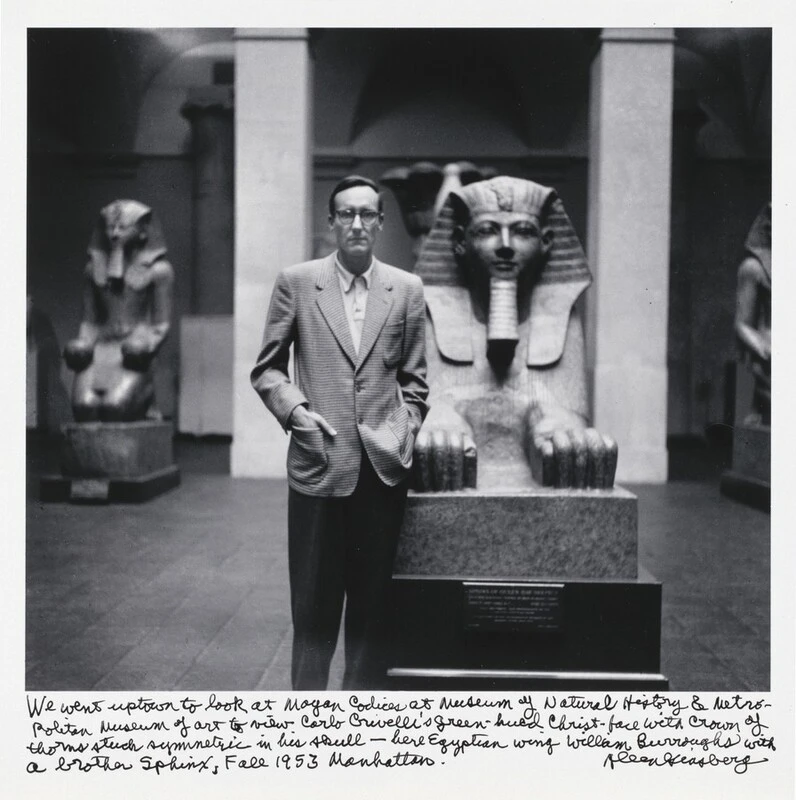
The iconic photo of Burroughs by the Egyptian sculpture. Ginsberg's commentary in the margins. 1953
One of the most famous photos of those years is of Burroughs at the Metropolitan Museum of Art next to the Egyptian chimera sculpture. Ginsberg later handwritten the following on the print: "William Seward Burroughs, my sphinx brother..." Such signatures became his trademark. 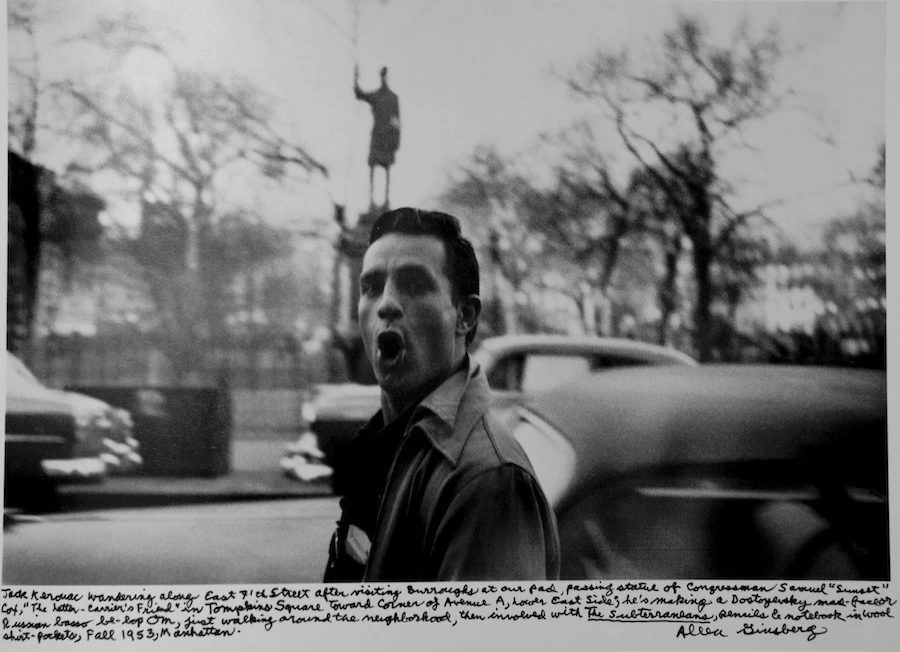
Jack Kerouac. Photo with commentary by Allen Ginsberg. 1953
He wrote names, dates, short stories, and lines of poetry directly on the silver gelatin prints with ink. Sometimes, he included quotes from conversations he was having at the time the photo was taken. The photograph ceased to be just a snapshot. It became a document.
A 20-Year Pause
In the mid-1960s, Ginsberg gave up photography. He lost his camera at a pawn shop. Life changed: anti-war rallies, the "Howl" trials, trips to India, Morocco, and the USSR. Old films and negatives were stored in boxes and forgotten. 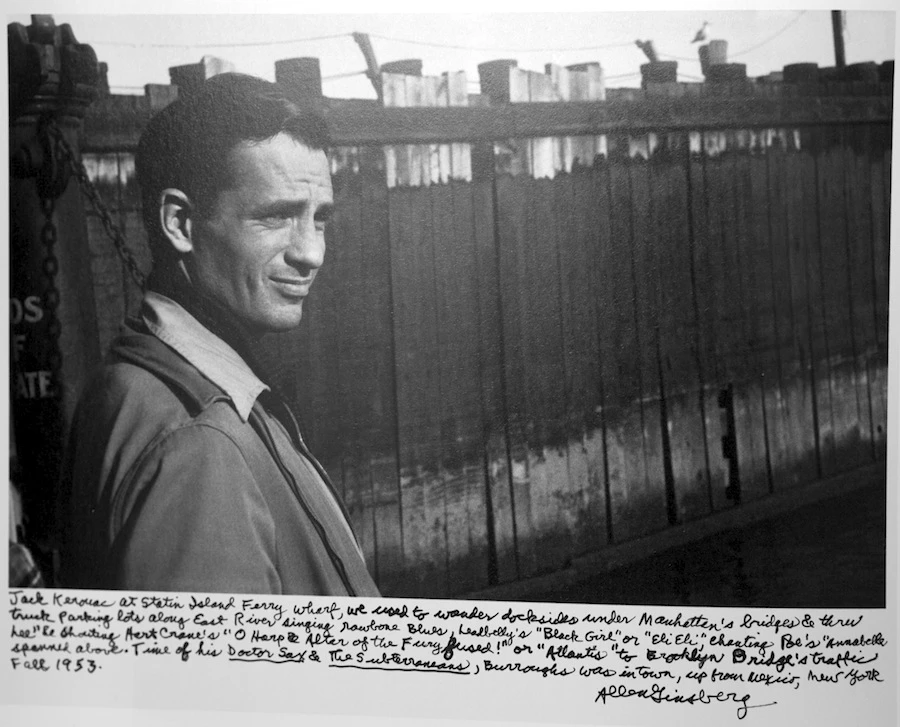
Jack Kerouac. Photo with commentary by Allen Ginsberg. 1953
In the early 1980s, archivist Bill Morgan was sorting through Ginsberg's papers at Columbia University. Among the manuscripts, he found boxes of yellowed negatives. Ginsberg hardly thought about them. Morgan showed the find to the poet, and he stopped.
Returning with Understanding
Ginsberg showed the negatives to two of his friends, photographers Berenice Abbott and Robert Frank. Their reaction was simple: this is important, this must be printed. In 1983, he printed the best early shots and bought a new camera. 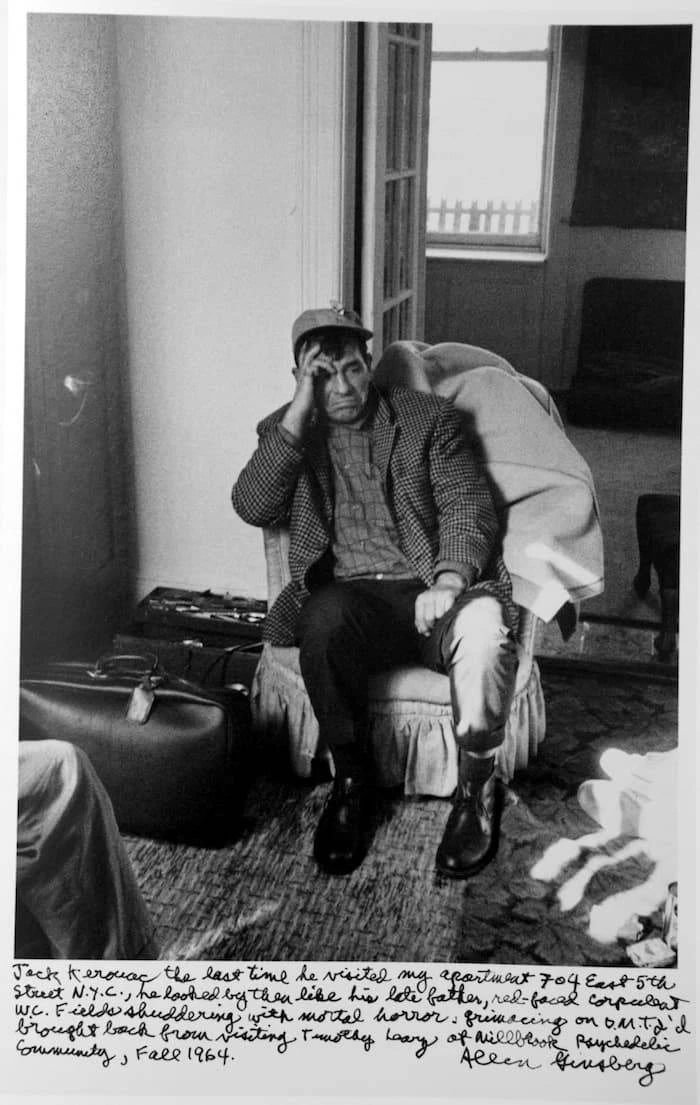
Jack Kerouac. Photo with Allen Ginsberg's commentary. 1964 – his last visit to Ginsberg. Kerouac died in 1969.
The second period was different. Now he photographed consciously. Bob Dylan, artist Francesco Clemente, Patti Smith, Madonna, Paul McCartney, and Bono all appeared before his lens. People posed willingly for him—because he was Allen Ginsberg. The poet himself said the photographs were "intended for an audience in heaven, not here on earth."
Eight thousand photographs—a portrait of an era
Ginsberg's complete archive spans the years 1944–1997. The exact number is 7,686 photographs in the Thomas Fisher Library plus 236 silver gelatin prints in the art center—altogether nearly 8,000 items. Today, this collection is housed at the University of Toronto, donated by the Larry and Cookie Rossi Foundation. 
Allen Ginsberg and Bob Dylan. 1975
Subjects of the photographs include John Cage, Bob Dylan, Paul McCartney, Iggy Pop, and Patti Smith. Burroughs appears in over 300 photographs. Another frequent subject is Peter Orlovsky, Ginsberg's longtime partner. There are portraits of Timothy Leary, Dr. Benjamin Spock, poet Doris Lessing, and poet Yevgeny Yevtushenko. 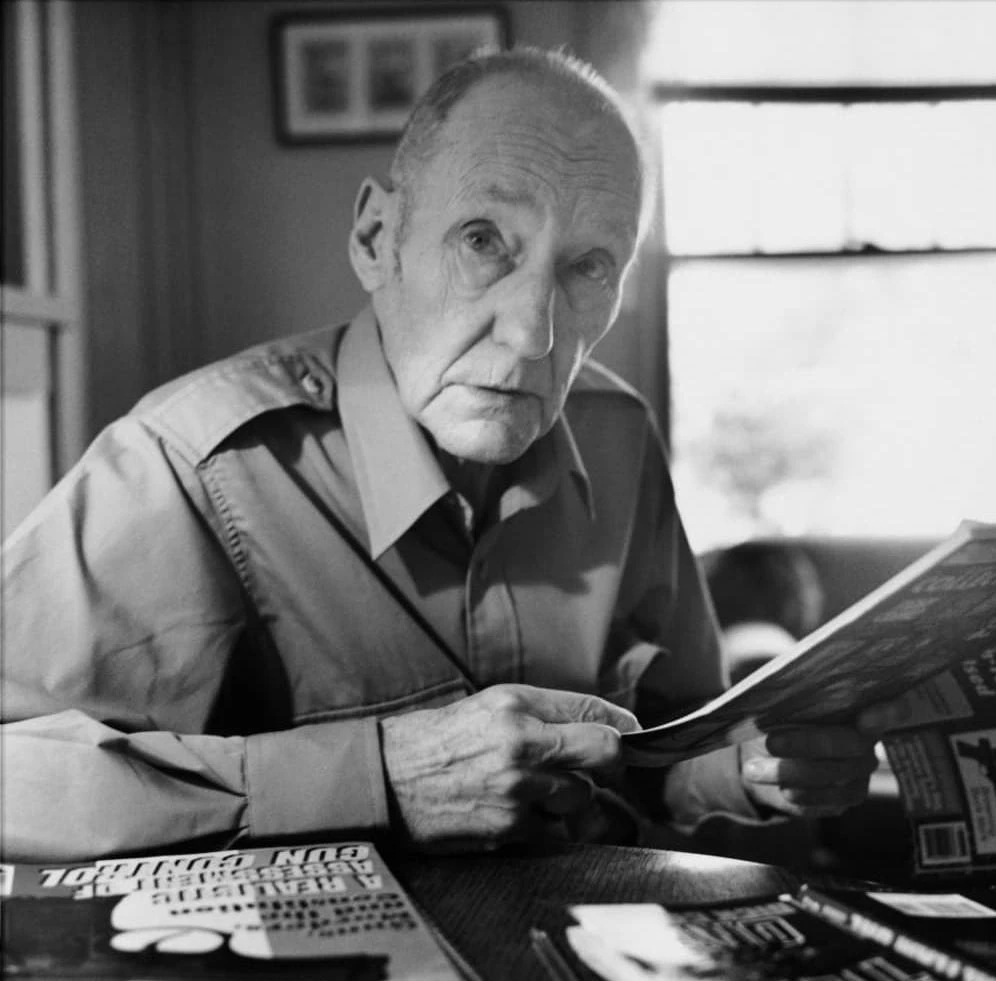
William Burroughs reading magazines. Photo by Allen Ginsberg. 1991
Each print is signed by Ginsberg. This is not just an archive—it is a portrait gallery of the second half of the 20th century, photographed from the inside by a close friend.
Exhibition and Scholarly Recognition
The first major exhibition of Ginsberg's work opened at the National Gallery of Art in Washington, D.C., back in 2010. In 2013, the exhibition traveled to New York City, to New York University's Grey Art Gallery. It was called "Beat Memories: The Photographs of Allen Ginsberg." The curator was Sarah Greenough, Senior Curator of Photography at the National Gallery. 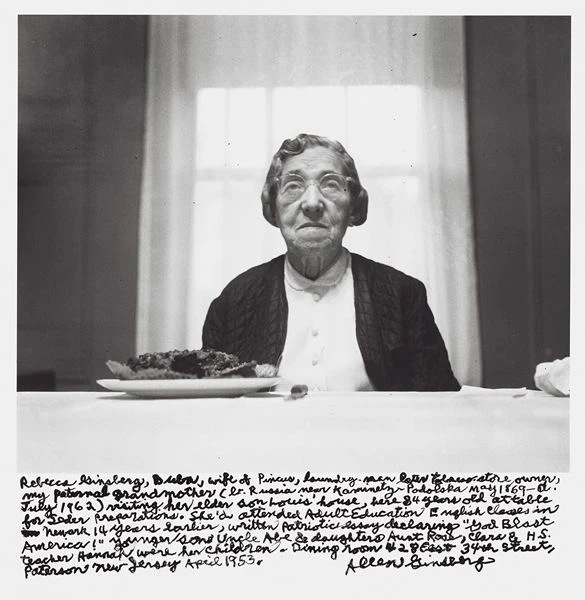
Rebecca Ginsberg, Allen's grandmother. 1953
The exhibition featured 94 black-and-white works, many with the artist's handwritten signatures. Nearby were display cases containing original letters, manuscripts, and first editions of "Howl," "On the Road," and "Junkie." After New York, the exhibition moved to the Jewish Museum of San Francisco, where it ran from May to September 2013. 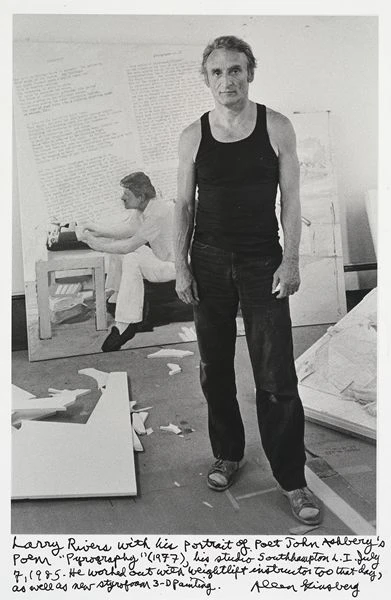
Artist Larry Rivers. Photo with commentary by Allen Ginsberg. 1985
The curators noted that behind the apparent simplicity of the photographs lies a genuine artistic flair. The same principles as in the poems: a keen attention to the world, a love of living language, a faith in the power of the moment. 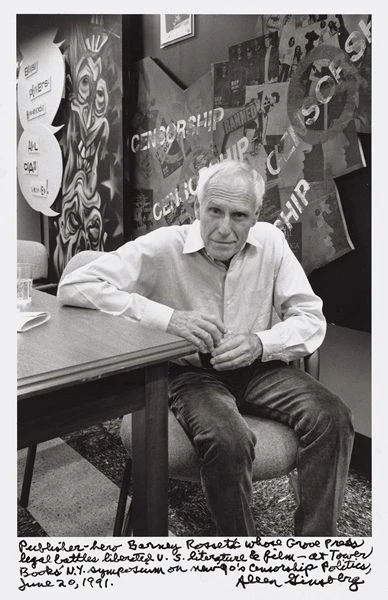
Publisher Barney Rosset. Photo with commentary by Allen Ginsberg. 1991
On the Nature of Gaze
Shortly before his death, Ginsberg said he always photographed "certain moments in eternity." A poet and a photographer do the same thing—they snatch a moment from time. It's just that one uses words, the other uses light and chemistry. 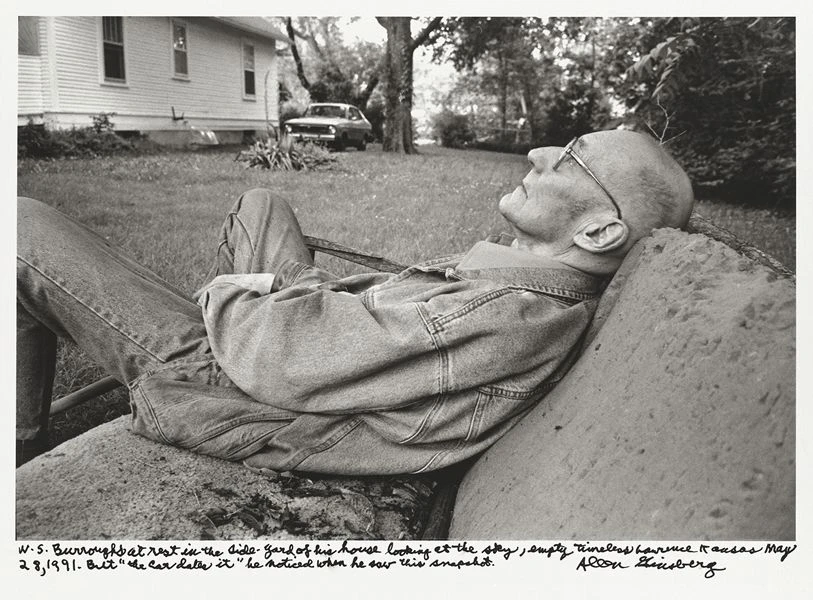
William Burroughs at his home. Photo with commentary by Allen Ginsberg. May 28, 1991
Looking at Ginsberg's archival footage, we see his era through his eyes. Not through a reporter's lens, but through the gaze of a friend. A man entrusted with the most vivid moments. He photographed without distance, without pathos, and without posing. 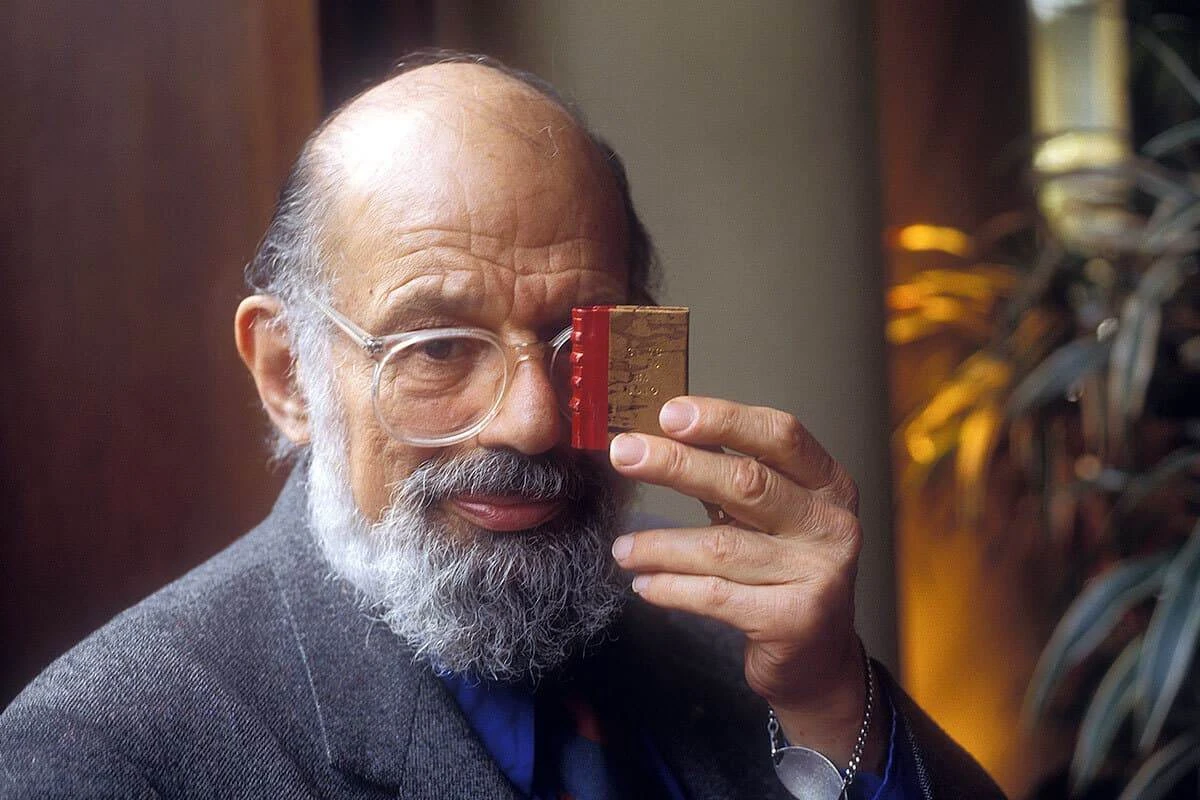
Allen Ginsberg. 1992
Do you think Ginsberg the photographer and Ginsberg the poet are the same or two different people? Share in the comments which photograph or poem resonates most with you.