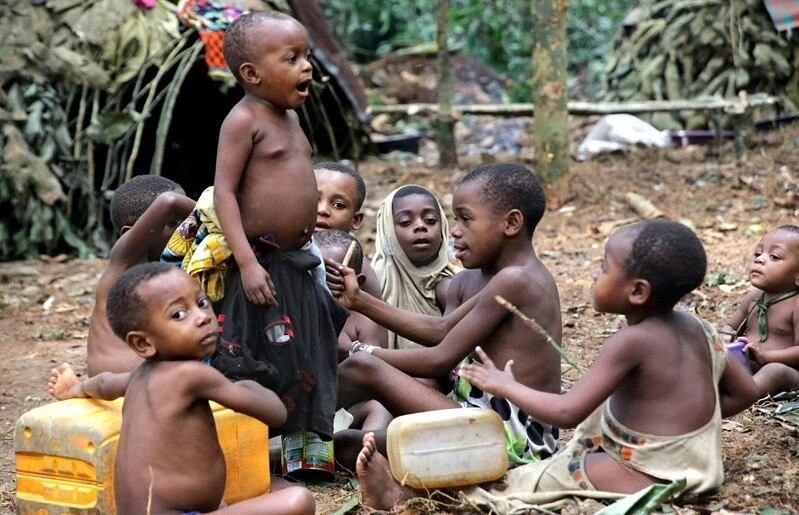
People the Size of a Fist (6 photos)
How Pygmies Live—the Shortest People on the Planet 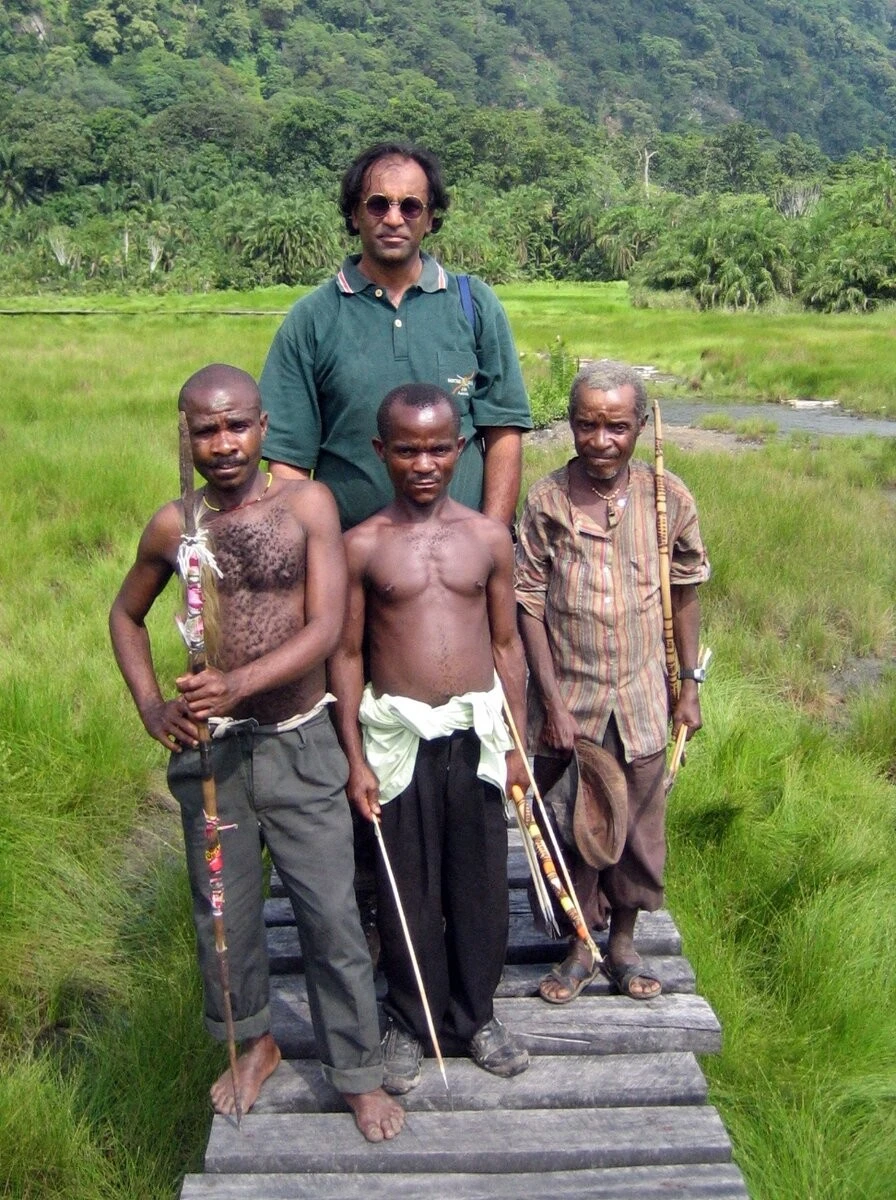
Their height is often less than five feet, and their life expectancy rarely exceeds a quarter of a century. The timid tribes of primitive, short people from East Africa—the Pygmies (a Greek word meaning "fist-sized person")—do not constitute a single ethnic group. There are numerous tribes on the African continent that are considered Pygmies. But they all share one thing in common: a practically prehistoric way of life, short stature, and an early death. It's hard to comprehend that in the modern world there still exist people for whom 28 is a ripe old age, and at 35, you're already a local long-lived deity. So how do these timid tribes exist, and why did evolution bestow upon them their diminutive stature and short lifespan?
Natural selection is undoubtedly at work here. And their short stature is a direct consequence of their short lifespan. For centuries, pygmies had a high mortality rate: half of the children in the tribe did not survive to adulthood. This was due to harsh natural conditions, constant dangers, and genetic failures. Therefore, evolution began to preserve those survivors who could reproduce as early as possible. If puberty had occurred later, the tribes would have simply died out.
Gradually, from birth, the pygmy body is restructured for reproduction, not for growing tall. Nature found it more important for the young pygmies to become parents as soon as possible, and growth became secondary. Due to these evolutionary quirks, their size continued to shrink: for example, a seven-year-old pygmy looks like a two-year-old European. Scientists observing them noticed that their growth continued to decline, and everyone wondered where this process would stop.
While researchers study them, the pygmies lead a harsh nomadic life in the tropical forests of East Africa. They constantly move in search of places rich in fruit and honey. When the surrounding crops are consumed, they pack up their belongings and move on. Meat makes up only a tenth of their diet: hunting is difficult, as their weapons are primitive spears with stone tips and poor bows that miss their targets.
They not only eat the forest bounty they gather, but also trade it with farmers at the edge of the forest for vegetables, fabric, metal, alcohol, and tobacco. As true foragers, they have an intimate knowledge of African flora, distinguishing between the edible and the poisonous. The latter is also used: the pygmies prepare poison for… fish. This is their method of fishing—no rods or nets required: they sprinkle a poisonous powder into the water, and all the fish around float belly-up. Moreover, the poison is short-lived: any fish not caught within three hours revive and swim back to the depths.
The pygmies also take their caught fish to local farmers, who are essentially their masters. Slavery has long been abolished throughout Africa, but here, it seems, they are unaware of this: every “civilized” farmer owns several dozen pygmies, who supply him with forest bounty. The most surprising thing is that the pygmies themselves don't mind: this is how they get the things and food they need. Their nomadic lifestyle doesn't interfere with this: they never stray far from their homes, and the most agile serve several masters in different parts of the forest. If one doesn't feed them, another will. This is where they see the meaning of life.
And also reproduction. While nature hasn't given the pygmies tall stature, they've been generously endowed with it. As a result of evolution, they reach sexual maturity at age 12. They also have children at that age, and by age 17 or 18, they're considered mature adults, having three or four children. However, they're far from promiscuous—they live in monogamous families. A familial friendship reigns within the tribe. All food gathered is traditionally brought into a communal pot and divided equally. They own nothing—everything is shared, except for their wives. Things get a bit ridiculous: if you give a pygmy a lollipop, they'll suck on it for a second, then pass it on to their neighbor, who then passes it on to the next person, and so on down the line until the candy melts.
It would seem that who would dare offend these unassuming, tiny people? Who could they possibly harm? However, history knows of cases of outright genocide against the pygmies. According to wild African beliefs, anyone who eats a pygmy will gain unprecedented virility, and other tall tribes would hunt these little forest people. This continued even in the early 2000s (during the Congolese civil war from 1998 to 2003). Today, cannibalism has disappeared, but these poor creatures are still persecuted, driven from their homes. For example, Ugandan authorities recently evicted one pygmy tribe to save the local gorillas.
All this is taking a toll on the people: there are no more than 280,000 of them left in Africa, and their numbers are declining every year. Furthermore, the Pygmies are gradually blending with neighboring tribes, losing their uniqueness. Living in complete isolation is becoming increasingly difficult for them. This means the day is not far off when this people will simply disappear from the face of the Earth. And that is a great pity.
Despite everything, they most likely consider themselves lucky. 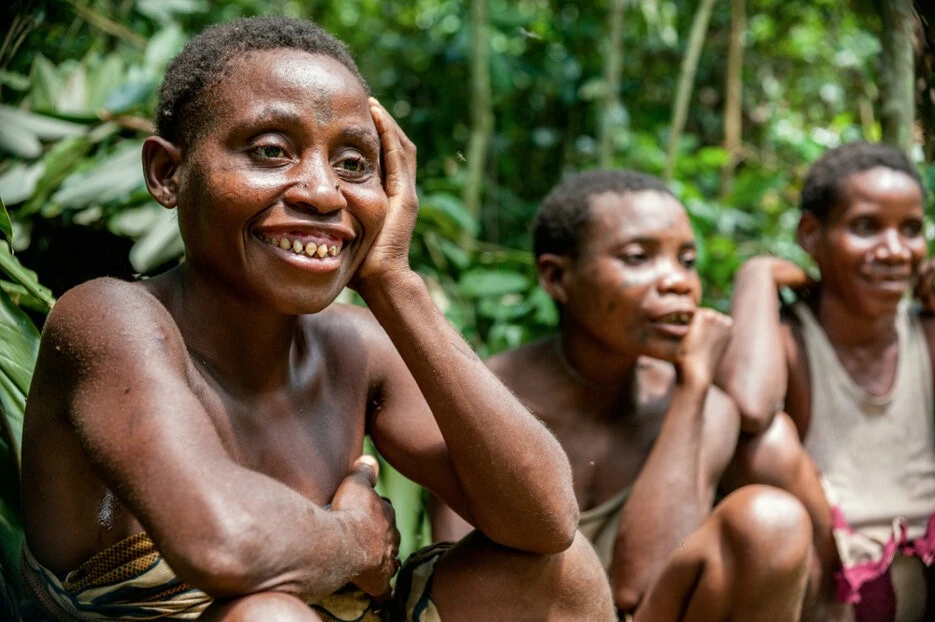
Pygmies rarely hunt, and usually only small animals. 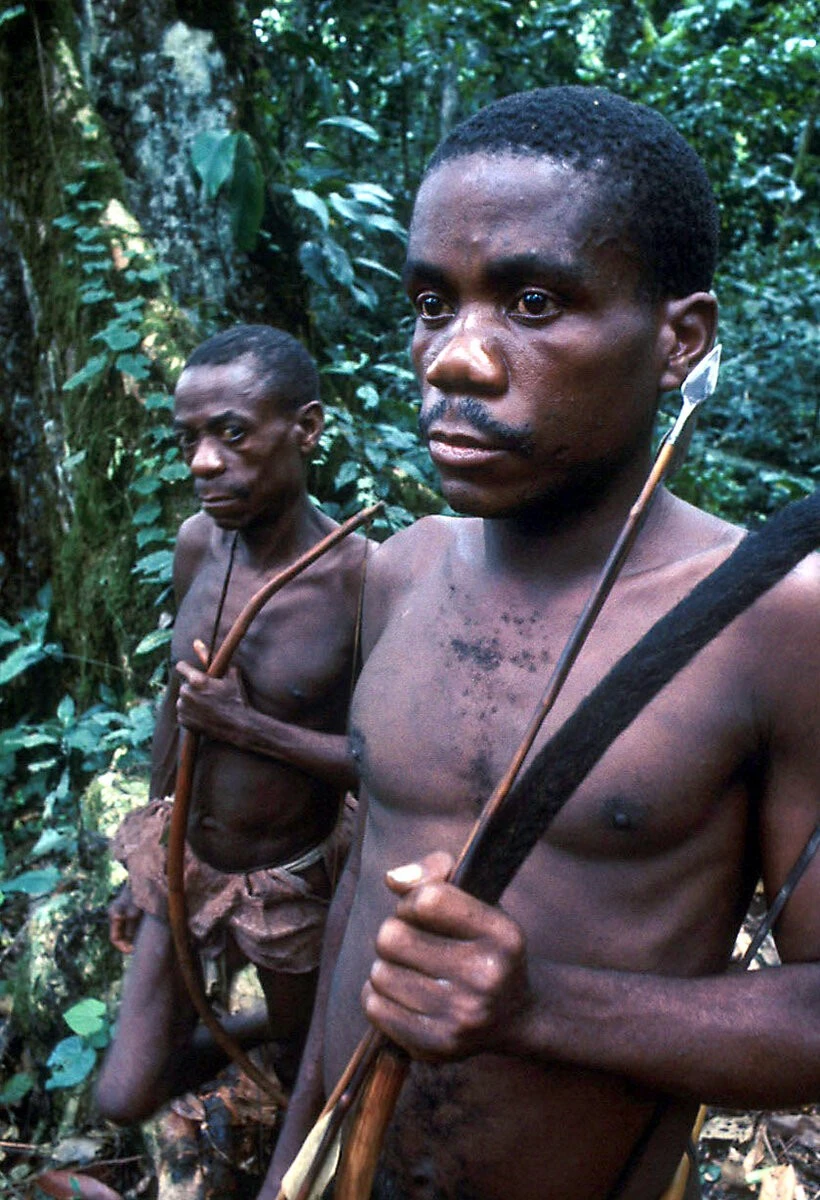
Pygmies are constantly being driven out of their habitats. Habitat 
Her facial features suggest a teenager, yet she is a fully-fledged mother. 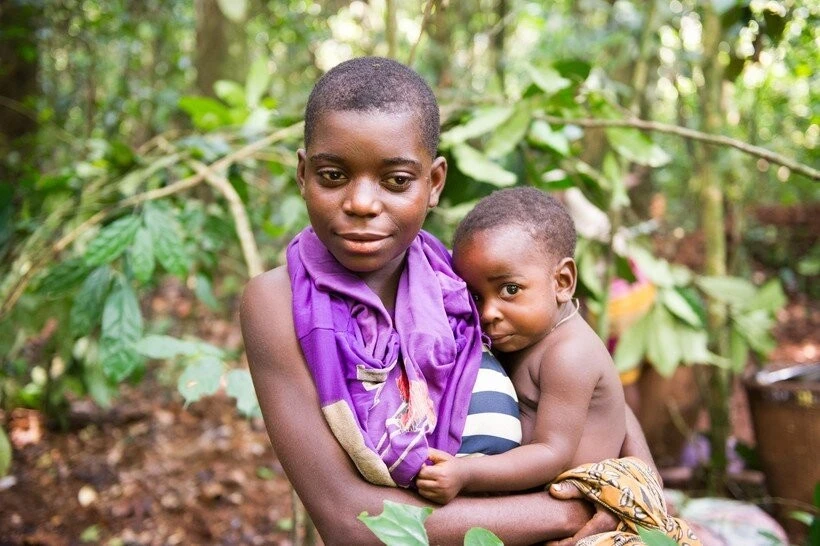
These children are not so small by pygmy standards.