One of the most common Japanese traditional knives is the "aikuchi," a variation of the "tanto" knife, but without the tsuba. 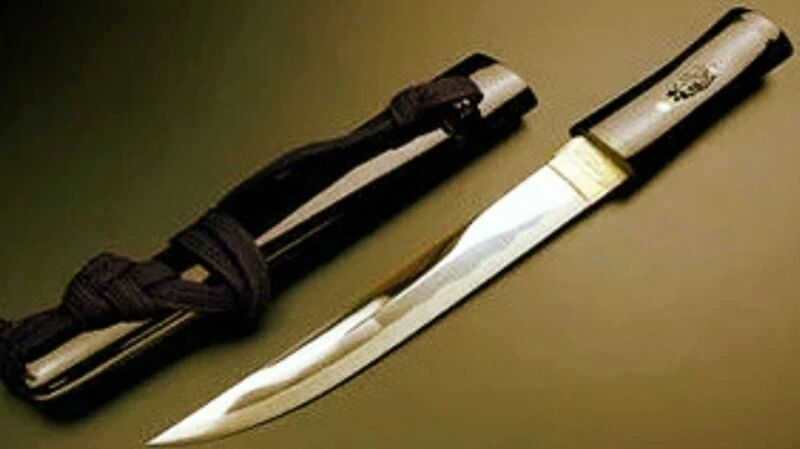
The tsuba is the Japanese equivalent of a guard. It was often decorated with elaborate engraving.
Besides the lack of a tsuba, another characteristic of the weapon is that the transition from the handle to the blade was usually not marked. A thin metal band between the handle and the blade was occasionally used as a transition.
The aikuchi blade has a traditional Japanese single-edged sharpening with a slight curve, measuring only 10-30 cm in length. There were no strict blade standards, and various variations of the knife were found. 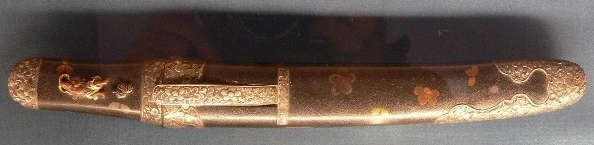
The handle and scabbard of the weapon also feature a wide variety of finishes. The most common are those with rich carvings or, conversely, completely smooth finishes. Stingray leather-covered handles, like those of the katana, are also common.
However, it is worth noting that despite the variety of weapon modifications, each knife displays a consistent style of handle and scabbard, seemingly forming a single unit. In some examples, an inexperienced person might not even be able to immediately tell the difference between the handle and the sheath. 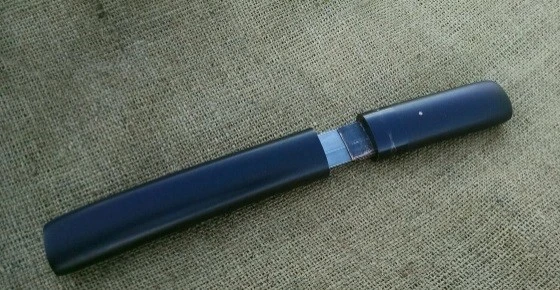
In ancient times, the aikuchi's purpose was purely practical. The samurai code of honor (bushido) forbade killing a person lying on the ground with a sword. Therefore, the aikuchi, although not a sword, was actively used for this purpose until the 17th century, which is why it is often called the "misericordia of the East." Subsequently, the knife gradually became a work of art and a status item. 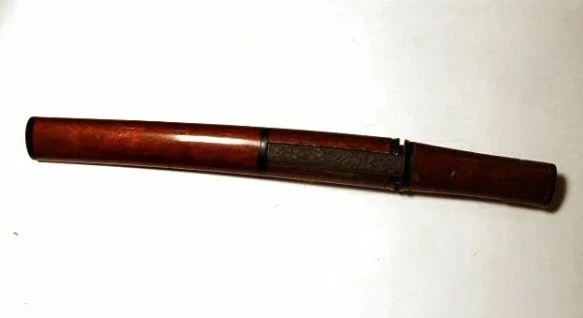
Depending on its size and, likely, the owner's preference, the aikuchi could be worn openly at the side, like a tanto or wakizashi, or hidden – in the sleeve or under the jacket.
Speaking of this weapon, it's impossible not to mention that the smallest aikuchi became a distinct type of the highly popular Japanese national knife, the kaiken.
Nowadays, an authentic historical Japanese aikuchi is extremely rare and almost impossible to find.
Add your comment
You might be interested in:














Protective film Removing it with a power screwdriver

When a child plays hide-and-seek at a professional level

Man sets up bedroom camera and discovers the reason for his

Super dads who swoop in to save the day
Precision carpentry

Looks like it's time to buy WinRAR
How to hang wallpaper neatly

How to start a 102-liter engine

Athlete in Bavarian dress flies over a lake on a hydrofoil
