The Mystery of the Wild Lords of Namibia (12 photos + 1 video)
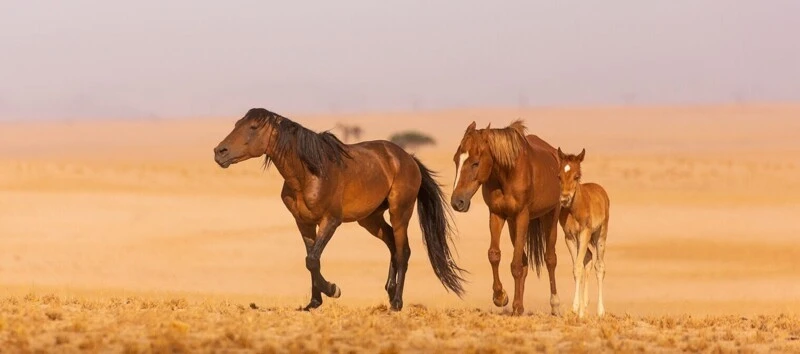
The bare, sun-baked Garuba Plains on the eastern edge of the Namib Desert could rightly be called hell. There's nothing here but barren land, heat, and the meager remains of vegetation. 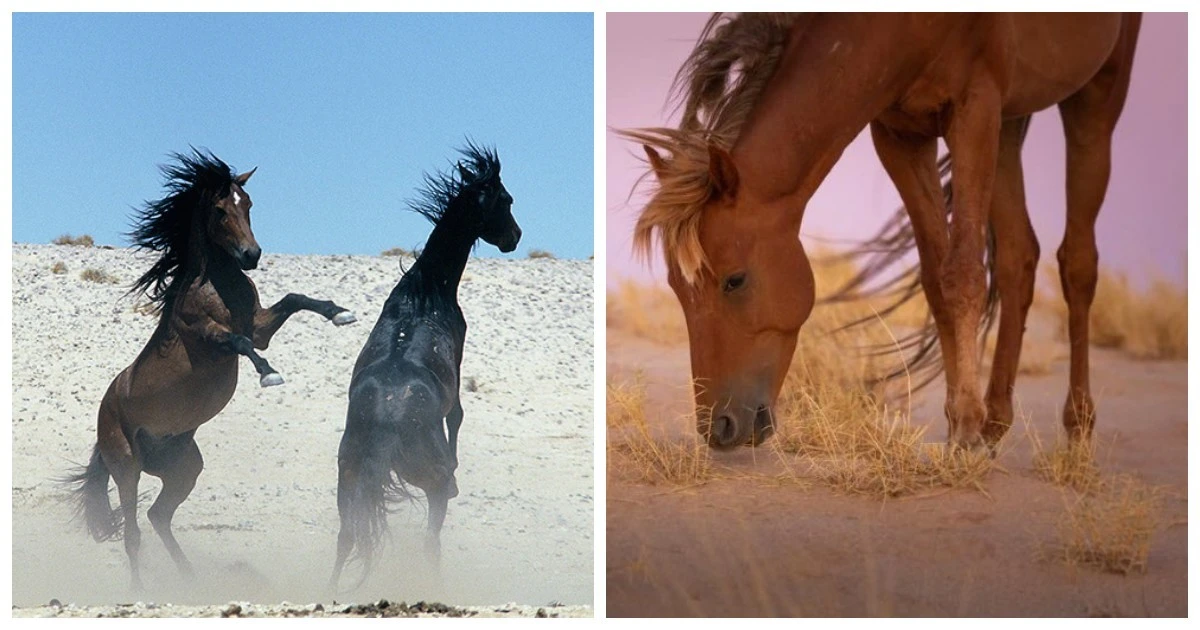
However, despite all this, a small herd of horses has called this inferno home for a century. 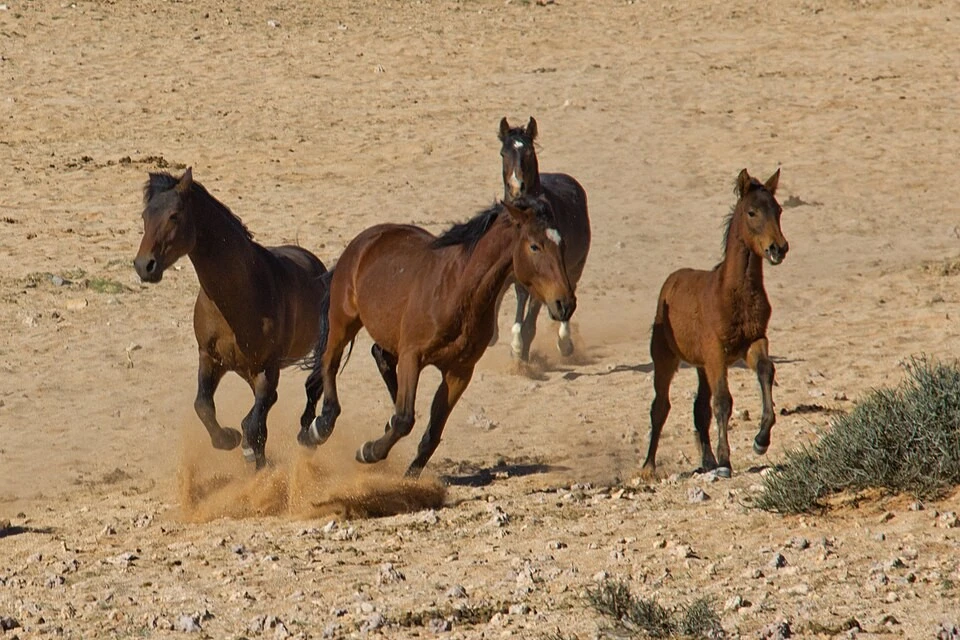
They are living ghosts of war and diamond fever, wandering along the edge of the blade but refusing to give in to difficult conditions. 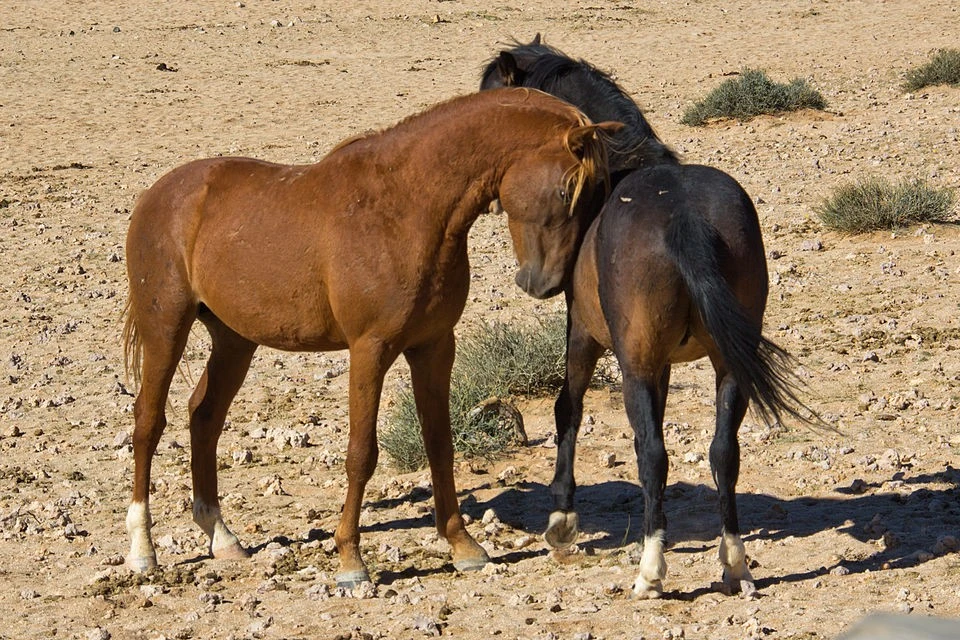
Numbering between 90 and 150 individuals, these wild horses are one of the most isolated horse populations in the world and the only truly feral herd in Africa. 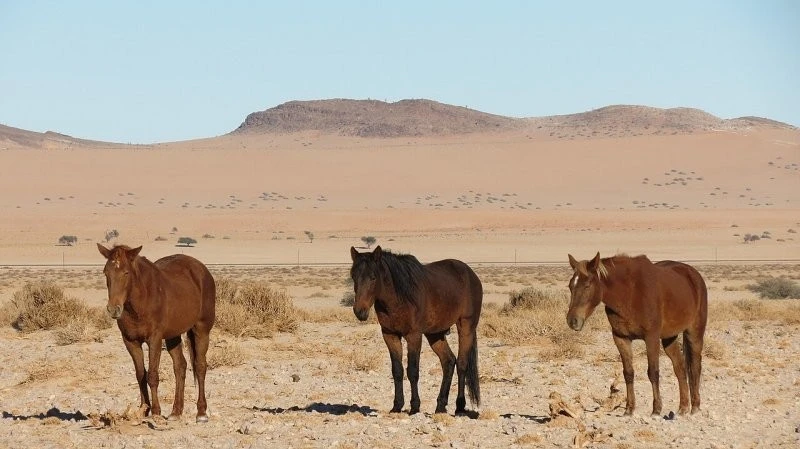
How did they end up in this inhospitable place? The story is shrouded in mystery, but the most plausible version dates back to World War I. They are descendants of cavalry horses brought by German troops during their occupation of Southwest Africa. In 1915, when the troops retreated or were defeated, the horses were released into the wild or simply escaped into the desert. 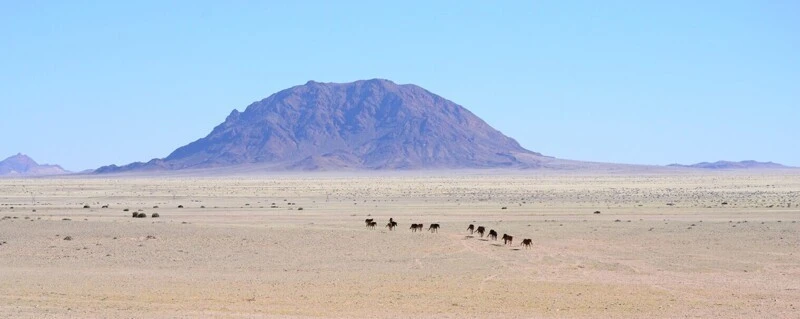
A fatal accident became their salvation. In 1908, diamonds were discovered near Kolmanskop. German colonists closed off the region, creating a "Forbidden Territory" of 350 square kilometers. Garoub was surrounded by barbed wire. Hunters and horse thieves were banned. Thus, the horses found an unexpected refuge. 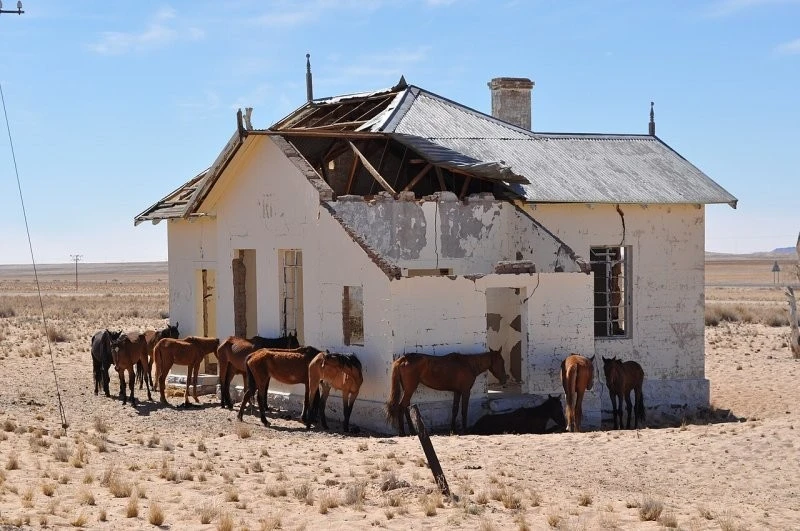
When the railway switched from steam to diesel in 1977, the pumps supplying water to the locomotives stopped, and the horses began to die of thirst. They were saved by ordinary workers. 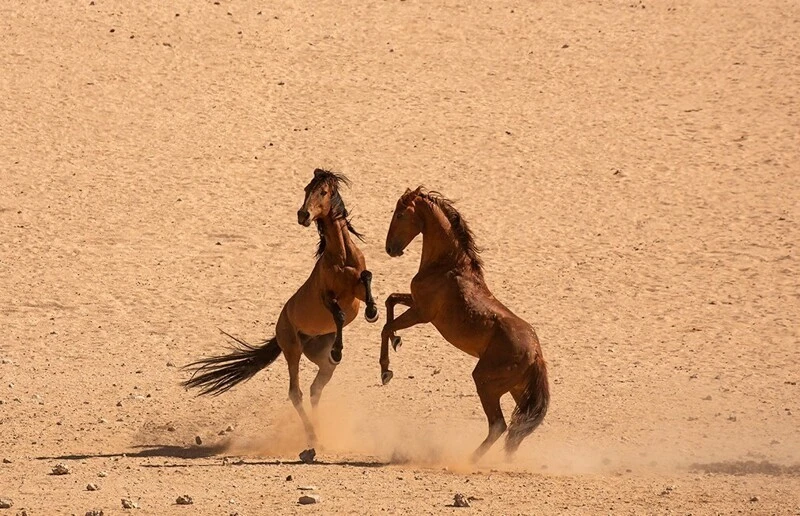
One of the employees of the diamond company De Beers begged management to provide water for the animals. The company installed reservoirs and a watering trough—the only source of life amidst death, which still operates there today. 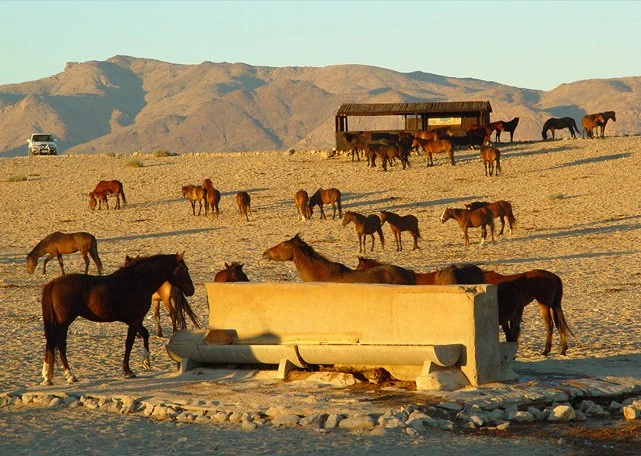
Evolution has transformed them into superhorses. In summer heat of 40 degrees Celsius, Namibian mustangs can go without water for up to 30 hours. In winter, this period reaches a terrifying 72 hours. Scientific research confirms that their secret lies not so much in their genes as in their behavior. These desert steeds tolerate dehydration with astonishing ease, unmatched by their domestic counterparts. 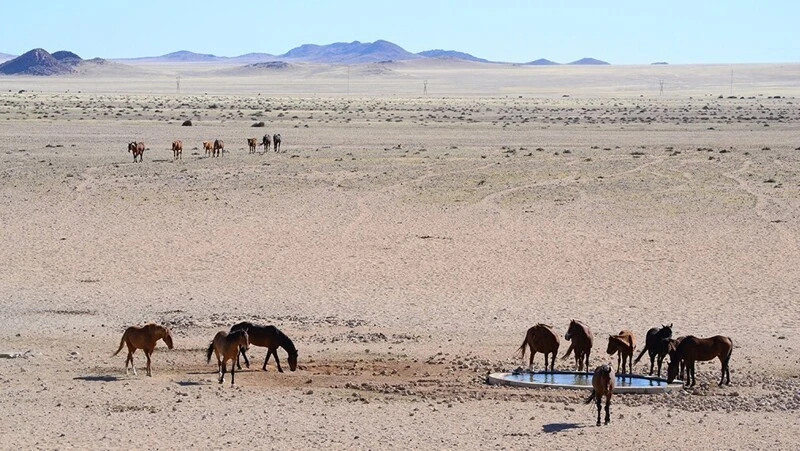
When food is scarce, these survivalists resort to extreme measures – they eat their own dung. And it's not crazy. Horse manure contains almost three times the fat and twice the protein of parched desert grass. 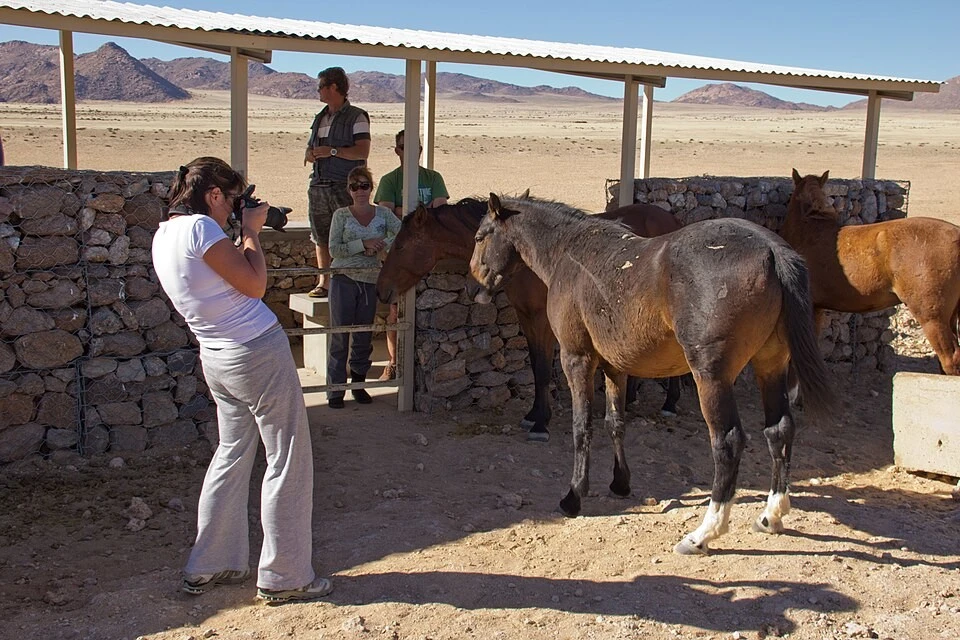
When the long-awaited rains finally arrive, life turns into a feast: the horses graze at night and spend their days by the water, gathering strength. 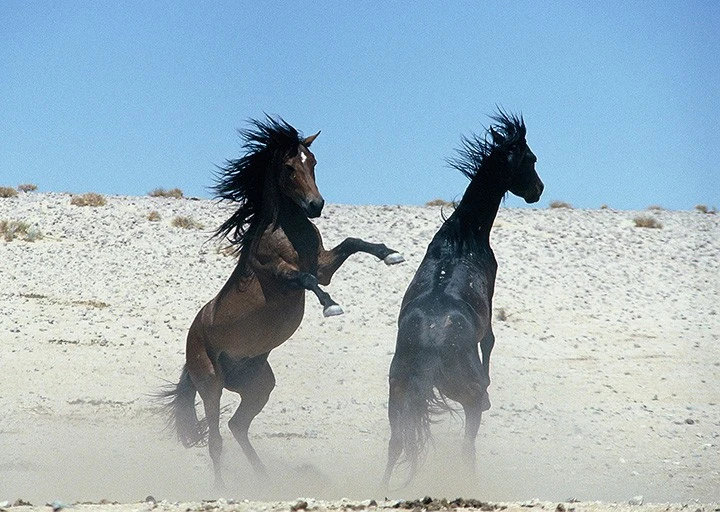
Today, the watering hole in Garuba is maintained specifically for these horses, who have become a living legend in Namibia. They are a living reminder of war, greed, and the strength of spirit that can survive where it seems impossible.