Wasps: 5 terrifying species From a Maniac Butcher to a Fig Parasite (14 photos)
From a taxonomic standpoint, wasps are a kind of dumping ground, where practically all Hymenoptera that aren't bees or ants have been lumped together. However, the evolutionary paths of some of them diverged 200-250 million years ago, when mammals weren't even a thing! 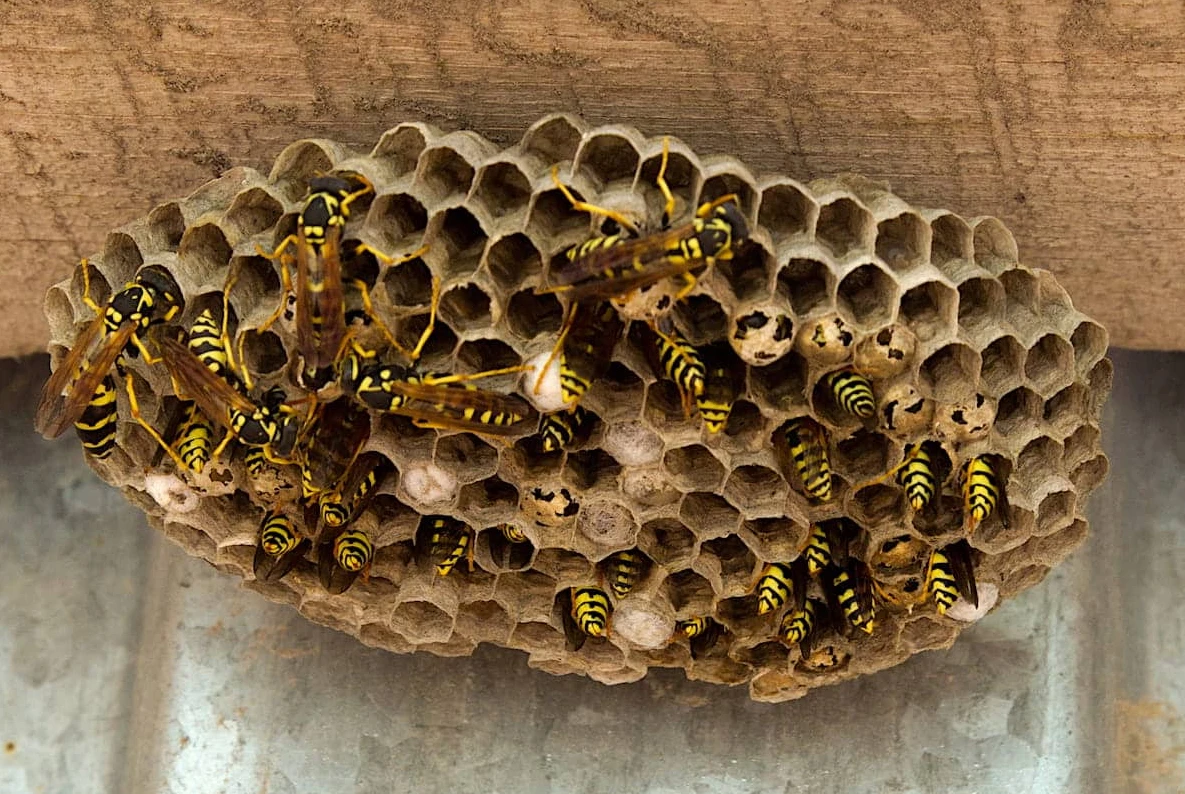
Paper wasps build their paper cottage.
But now we have an insane diversity of wasps, because over hundreds of millions of years of evolution, they have come up with so many different ways to live that they would fill dozens of articles. But we've still chosen five of the most dissimilar wasps to show you their differences and one commonality: they're all creepy. 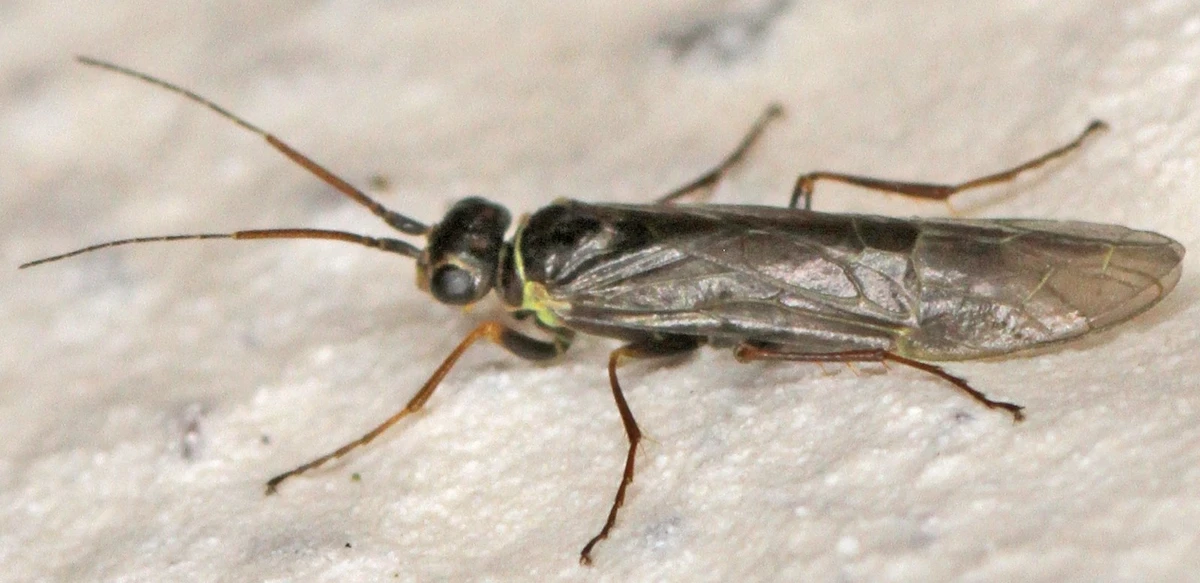
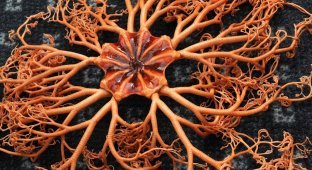
This marvel is an insect from the xyelid family. It's a hymenopteran, but not a wasp, bee, or ant. And it's the only non-wasp in this article!
1) Asian hornets: the most terrifying wasps
Yes, those monsters, half the size of a sparrow and with a half-centimeter-long stinger, are also wasps. Moreover, they are part of the true wasp family, along with those funny little yellow insects that are attracted by the smell of fresh barbecue at picnics. Only they are much stronger. 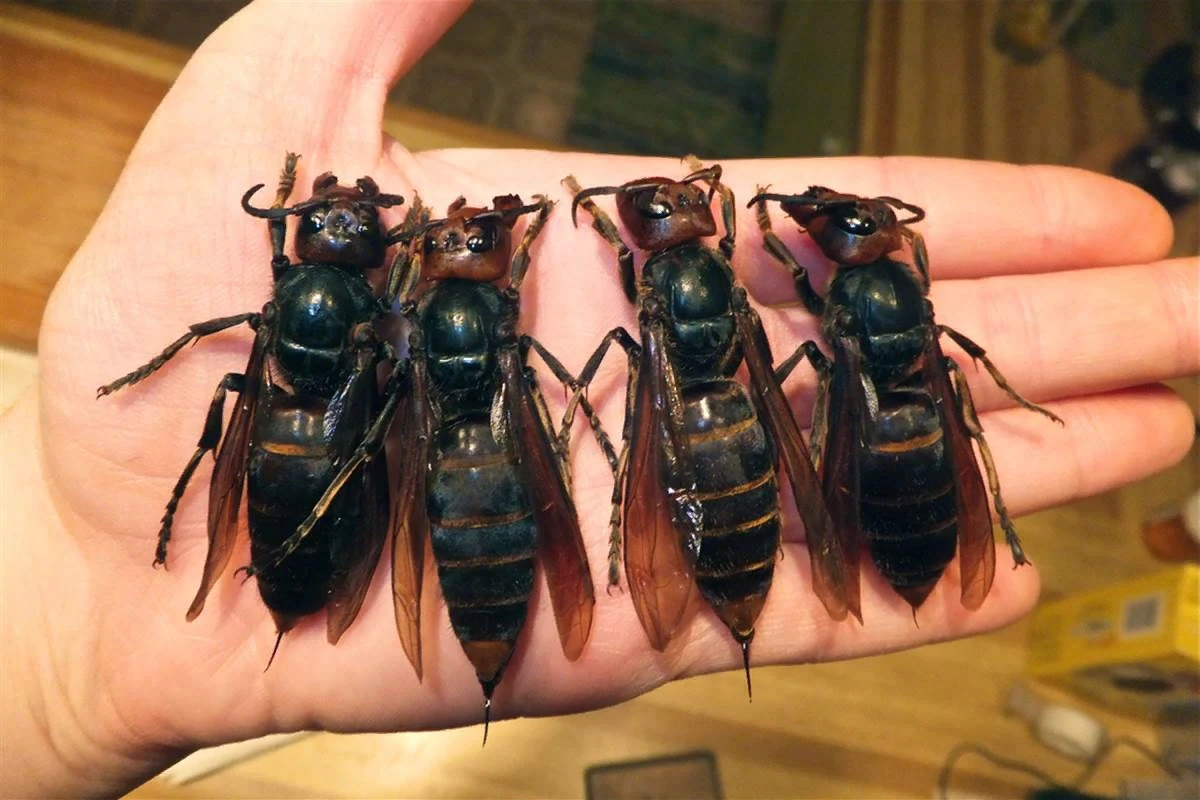
The latest bullets for sniper rifles!
Even a single Asian hornet is a monster, capable of killing dozens of bees, dealing with a large, powerful beetle, or stinging a person so severely that they'll need antihistamines for a week. But a hive can contain up to 300 hornets, and they can coordinate attacks. 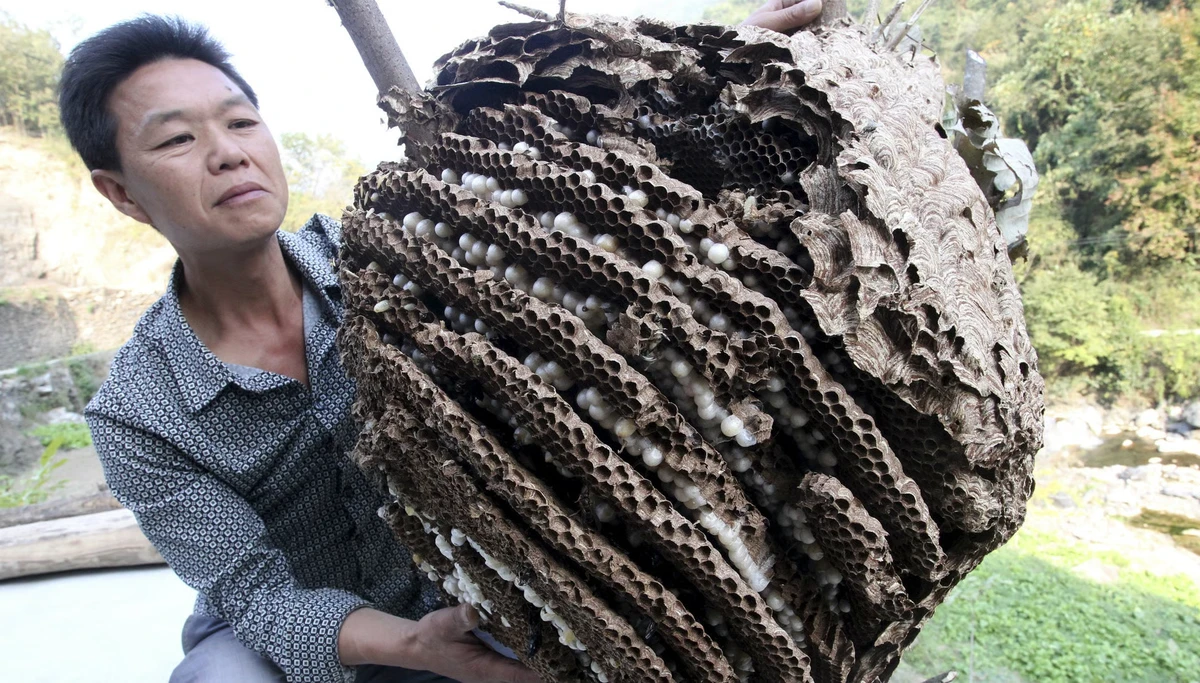
Big hornets need big nests!
Even a gang of a hundred hornets can completely destroy a beehive of several thousand bees, and a dozen stings will kill even a person without an allergy to bee venom components. And as if that weren't enough, their range is expanding due to climate change and human activity.
2) German Wasp: The Wingless Wasp
The name for this family of wasps is simple: if they don't have wings, they don't make noise, meaning they're mute. The British didn't bother either, but went a different route – they called them velvet ants. But even the inability to fly doesn't stop wasps from being first-class hunters and incredibly brazen creatures. 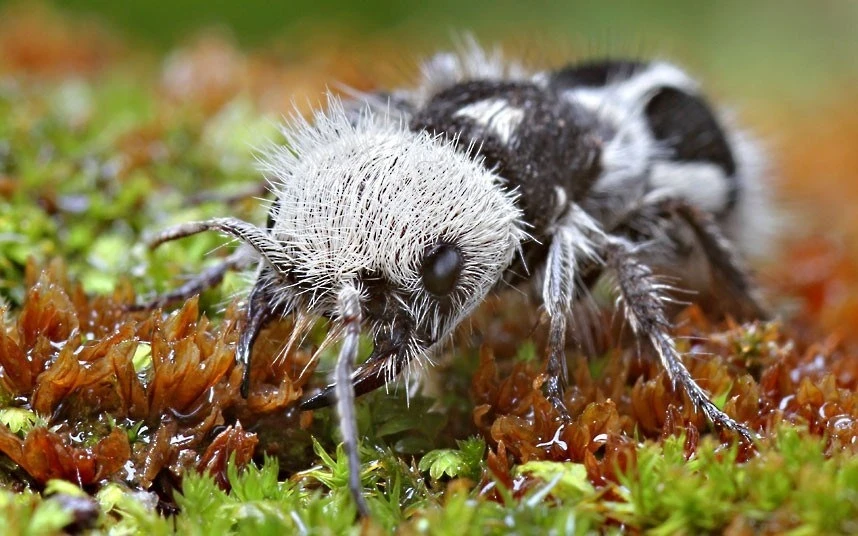
This is the panda ant, also a German wasp. We sincerely hope you're not confused yet!!!
Unlike true wasps, German wasps are solitary insects accustomed to relying only on themselves and their fighting skills. This makes them even more dangerous than hornets in a one-on-one fight. Each wingless wasp has a sharp, curved stinger half the length of their abdomen. And their sting is VERY painful. 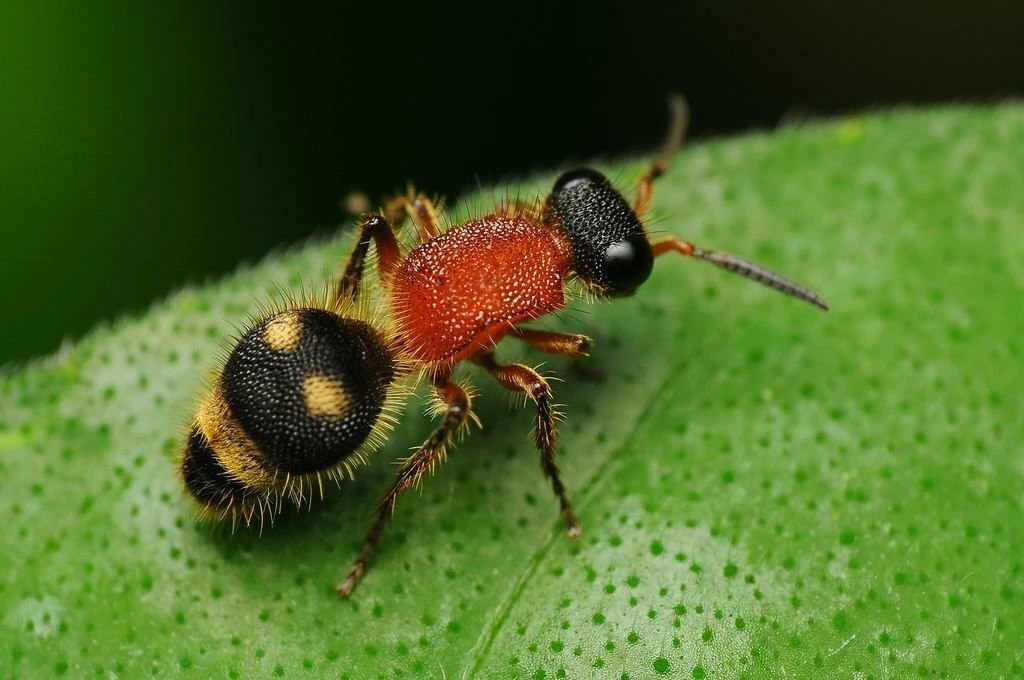
European German wasp.
The venom of the German wasp is not capable of causing serious harm to the body, but it causes extremely severe pain, almost unbearable. The eastern velvet ant of North America is famous for its sting, which feels like molten lead just under the skin. And the pain only begins to subside half an hour after the sting! 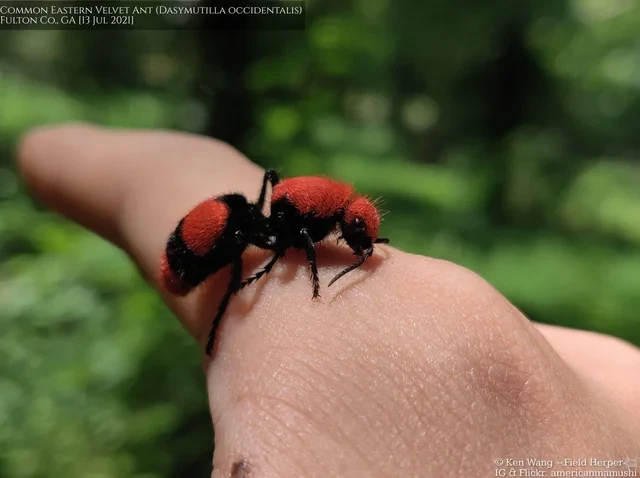
Can I sting you?
3) Hawk Wasp: Tarantula Hunter
The Hawk Wasp has the best of both worlds. It's huge (up to 5 centimeters long), flies well, and has a huge stinger filled with paralyzing and extremely painful venom. And it's a good thing it's also a solitary wasp, lacking aggressive defensive instincts. It prefers to retreat rather than attack. Unless, of course, you're a tarantula. 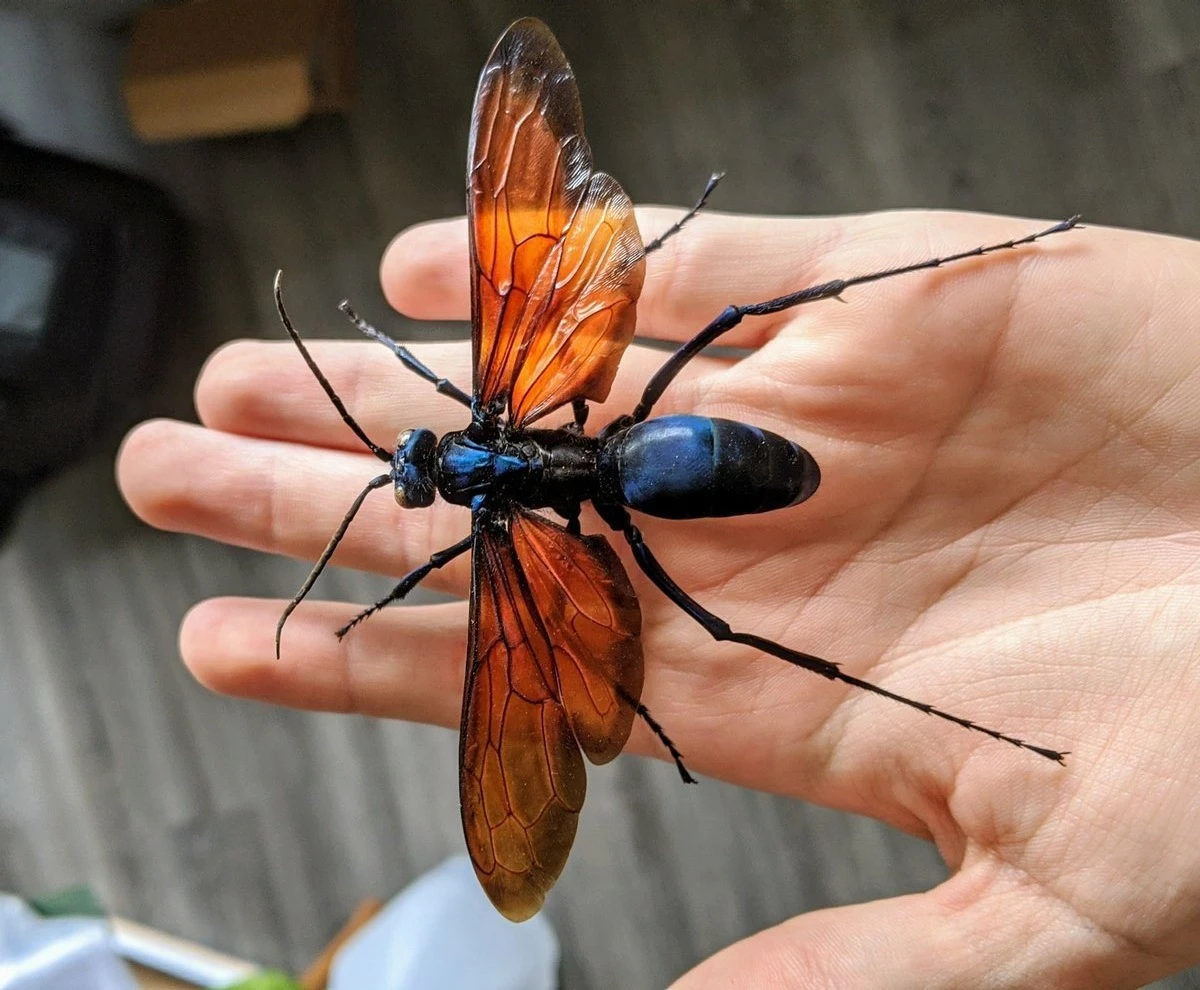
And she's got a great sense of style, too!
When a female hawk wasp plans to reproduce, she begins searching for a tarantula's nest—a burrow in the ground where it waits for potential prey. The predator approaches and begins drumming its paws nearby. The intrigued tarantula emerges from its burrow and approaches its potential prey. It's not afraid, and with good reason—the spider is twice as large and four to five times heavier than the wasp. But the wasp wants it to come closer. 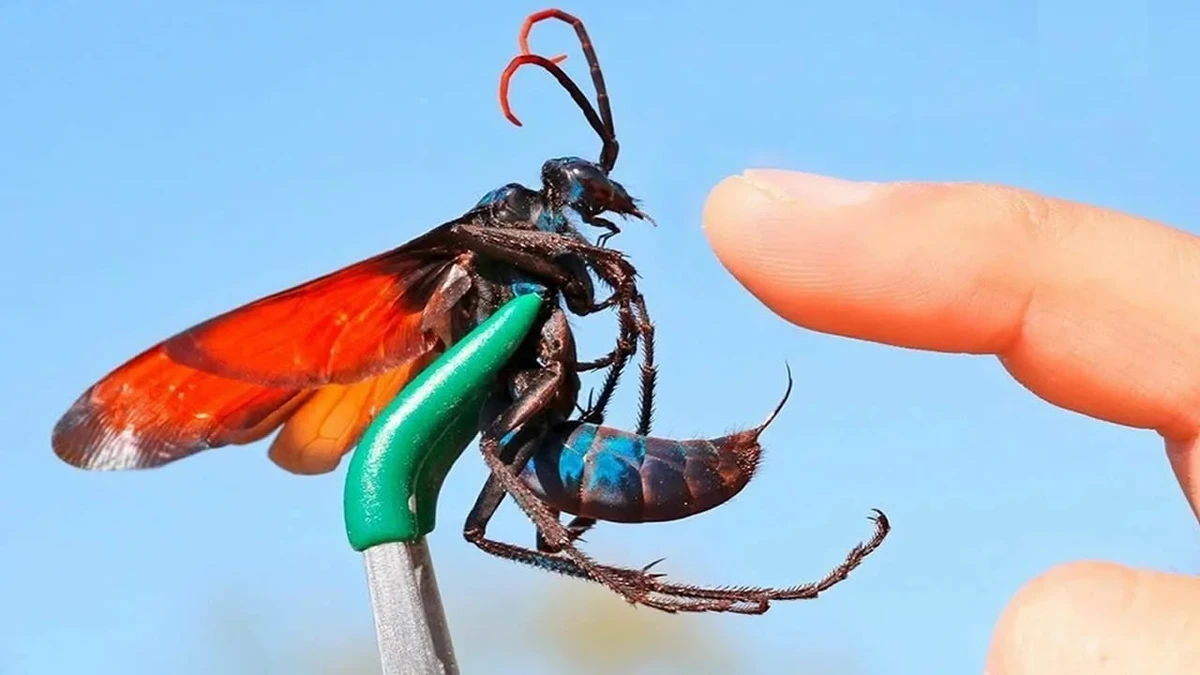
What a risk this guy is taking!
Using specialized glands, she releases pungent, strong-smelling compounds into the air, disorienting the tarantula and forcing it to assume a defensive position, leaving its central nervous system vulnerable. One quick prick—and the spider's entire nervous system is paralyzed. The female then drags it back to its burrow and lays an egg inside. The tarantula will remain alive for a long time while the larva eats it from the inside. 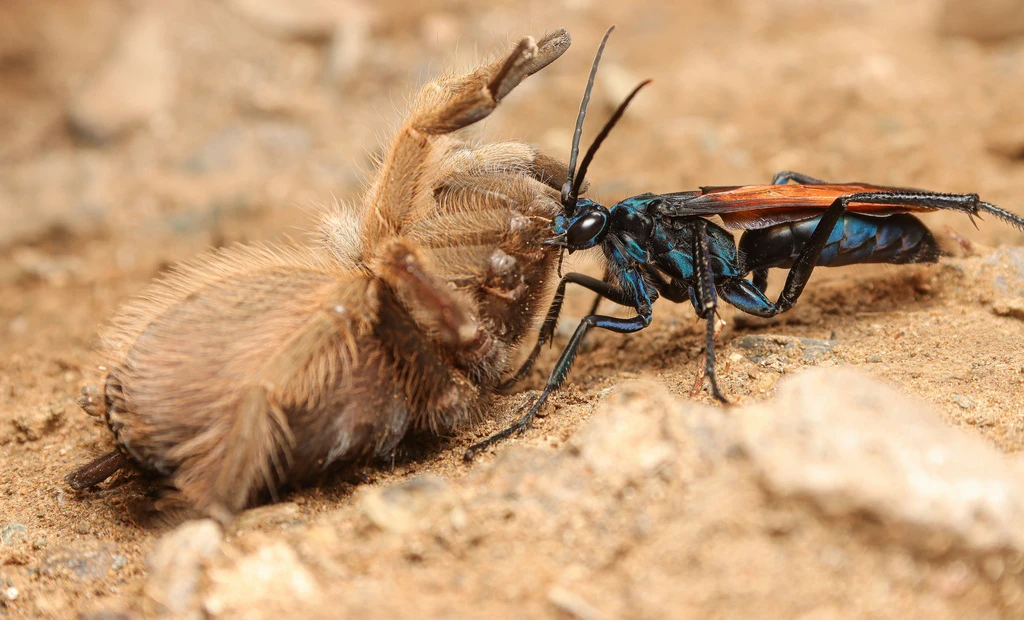
That's it, the spider is trapped.
4) Wasps: Parasites You Can't Hide From
For a change, parasitic wasps can't hurt humans, as they have a long, sturdy ovipositor instead of a venomous sting. However, they do hurt other insects. When the eggs inside a parasitic wasp mature, she goes looking for her victim and then carefully injects them into their abdomen, which is creepy enough in itself. What's doubly creepy is that you can't hide from them. 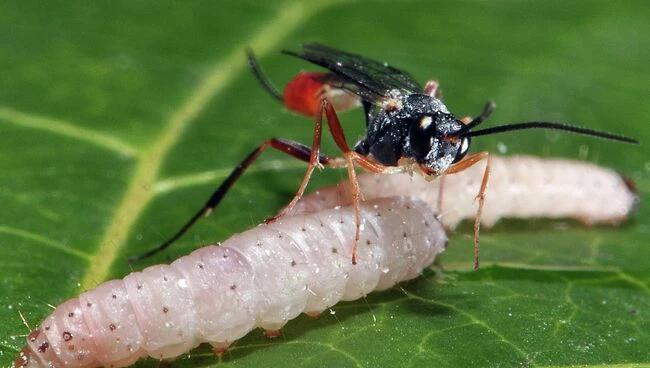
Gotcha!
Wasps lay their eggs not only in caterpillars and beetles that perch on trees. Some of them use bark beetle larvae, which live deep within the trunk, as incubators. They literally bore through the tree bark with their enormous ovipositors and do their dirty work. 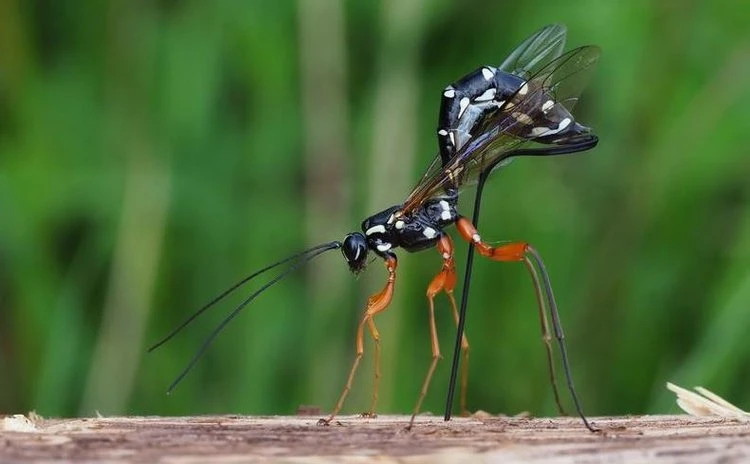
Drilling rig deployed!
5) Fig Wasps: Personal Pollen Transport
Compared to other wasps, these ones look like outliers. They don't eat anything, don't have venom, and don't even lay their eggs inside other living things. But they have formed a symbiotic relationship with the fig tree. And they've become so close that without the wasps, the fruit simply can't ripen! 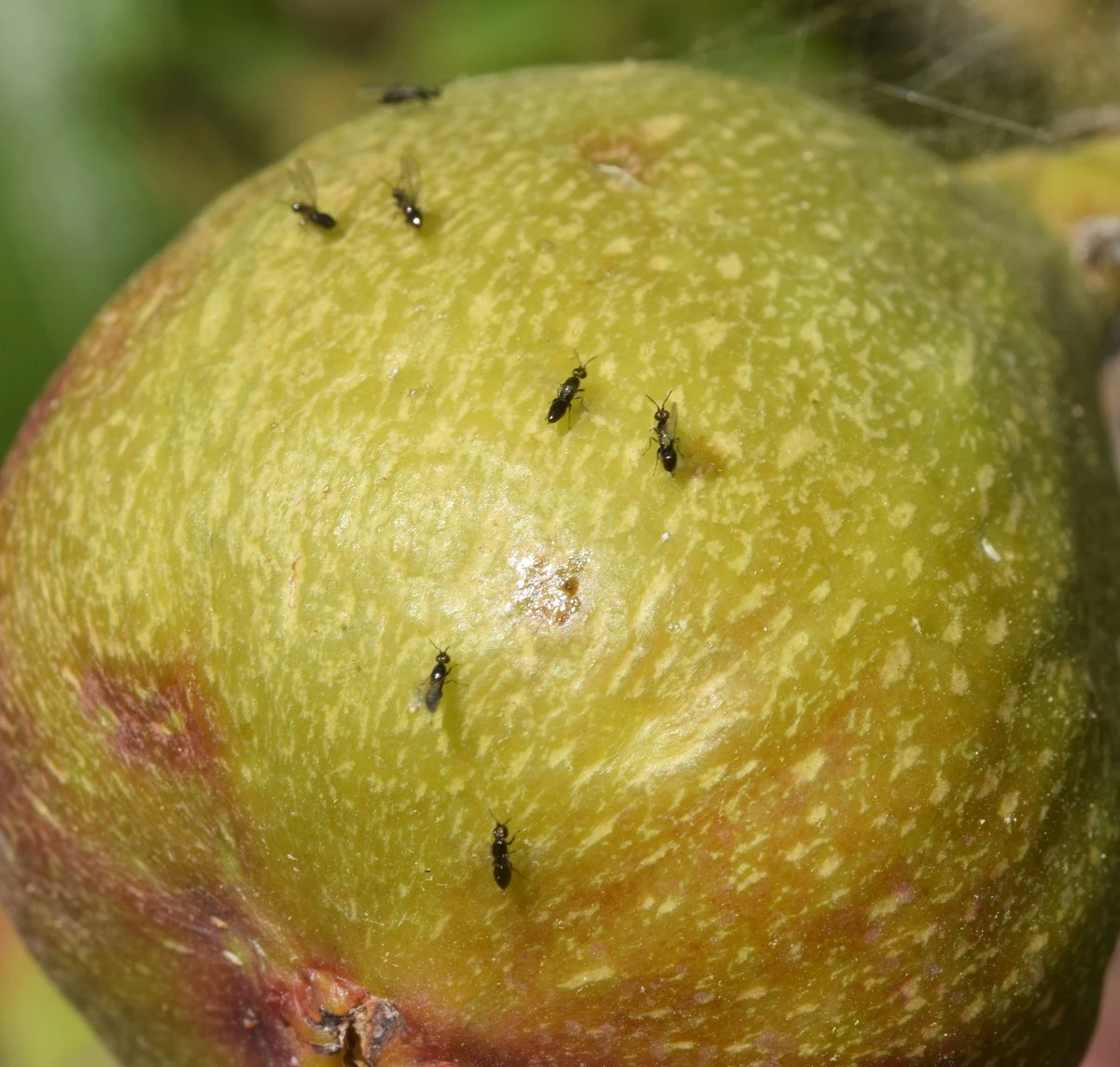
Fig wasps are very small, up to 2 mm.
The fig wasp's life begins inside the ripening fig. It feeds on the fruit's tissues and grows slowly. When the fruit is fully ripe, the female emerges and mates with the male, then seeks out fig flowers, inside which she crawls to lay her eggs. But here's the catch: the wasp carries pollen, which is what causes the trees to form fruit. 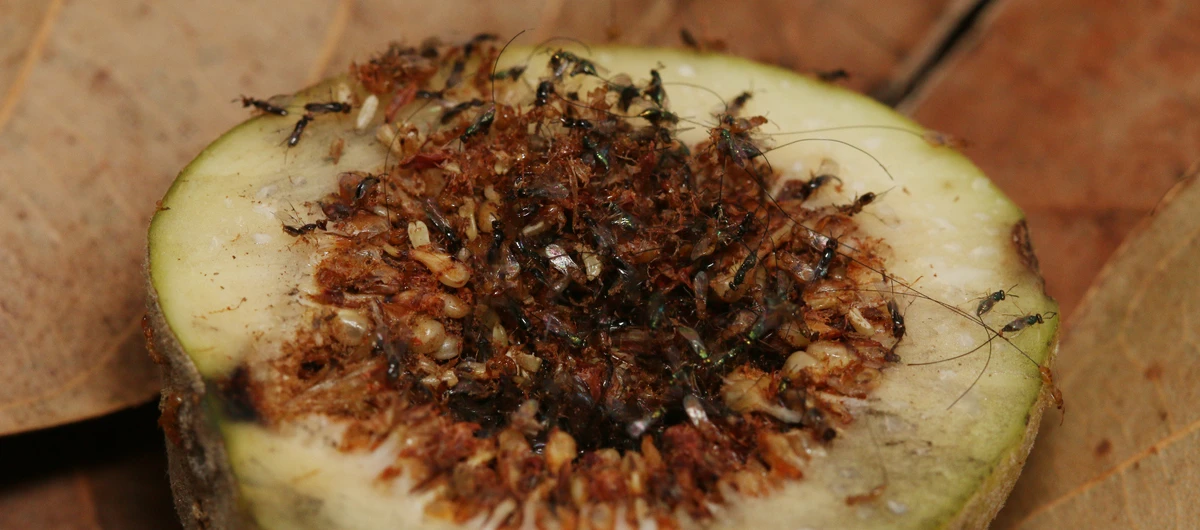
Bon appétit!
So every time you eat a fig, know that a whole brood of wasps once lived inside it!