Varroa: The Main Cause of Bee Extinction (9 photos)
In just the last 30 years, the total number of wild bees worldwide has declined by a quarter. And while the number of domestic bees continues to grow, the cost of maintaining them is increasing every year. And the culprit of this mass extinction has a specific name: the Varroa mite. 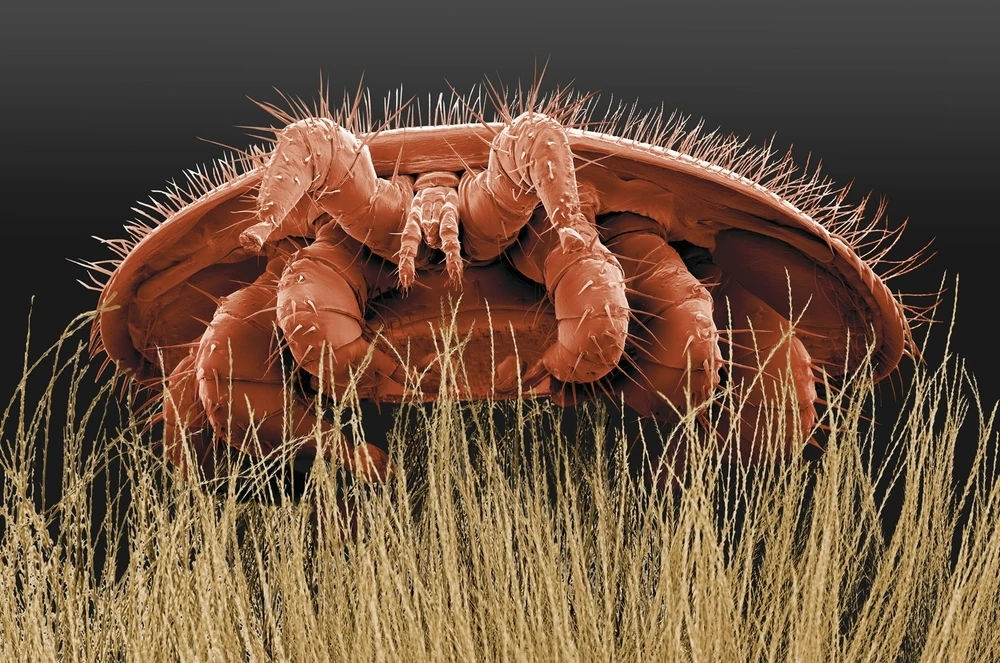
The main culprit of the apocalypse looks like this.
Varroa is a genus of mites that parasitize all species of honey bees, causing a disease called varroa. But that's not the main problem. If they were just mites that simply fed on insect hemolymph, it wouldn't be half as scary. Instead, Varroa mites feed on the insects' fat body—a specialized organ that performs a variety of functions, from storing food to removing uric acid and breaking down nutrients. Therefore, even one or two mites are enough to kill a worker bee. 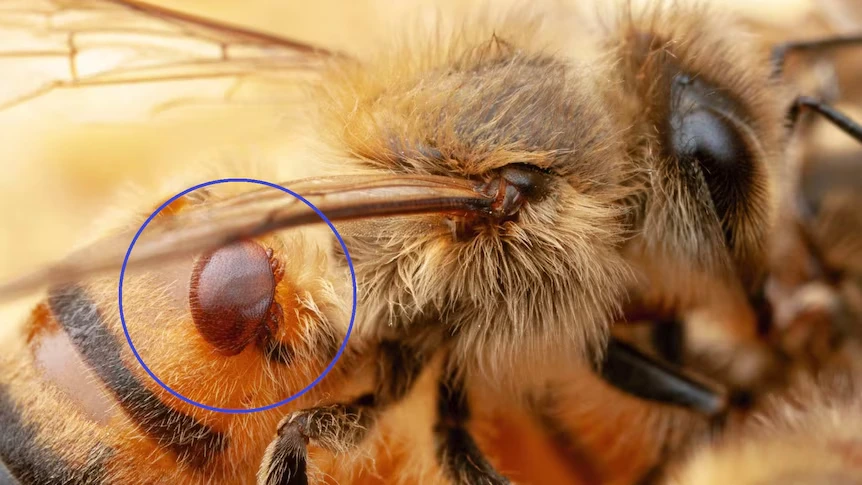
Not only does it travel without paying, it also eats the carrier!
The life cycle of the mites is both cunning and terrifying. First, the female mite sneaks into a honeycomb where an egg has already been laid and hides there. She lies motionless until the egg hatches into a bee larva. Afterward, she lays several eggs, which hatch into 3-5 females and 1 male. The female then bites through the larva's integument and dies. 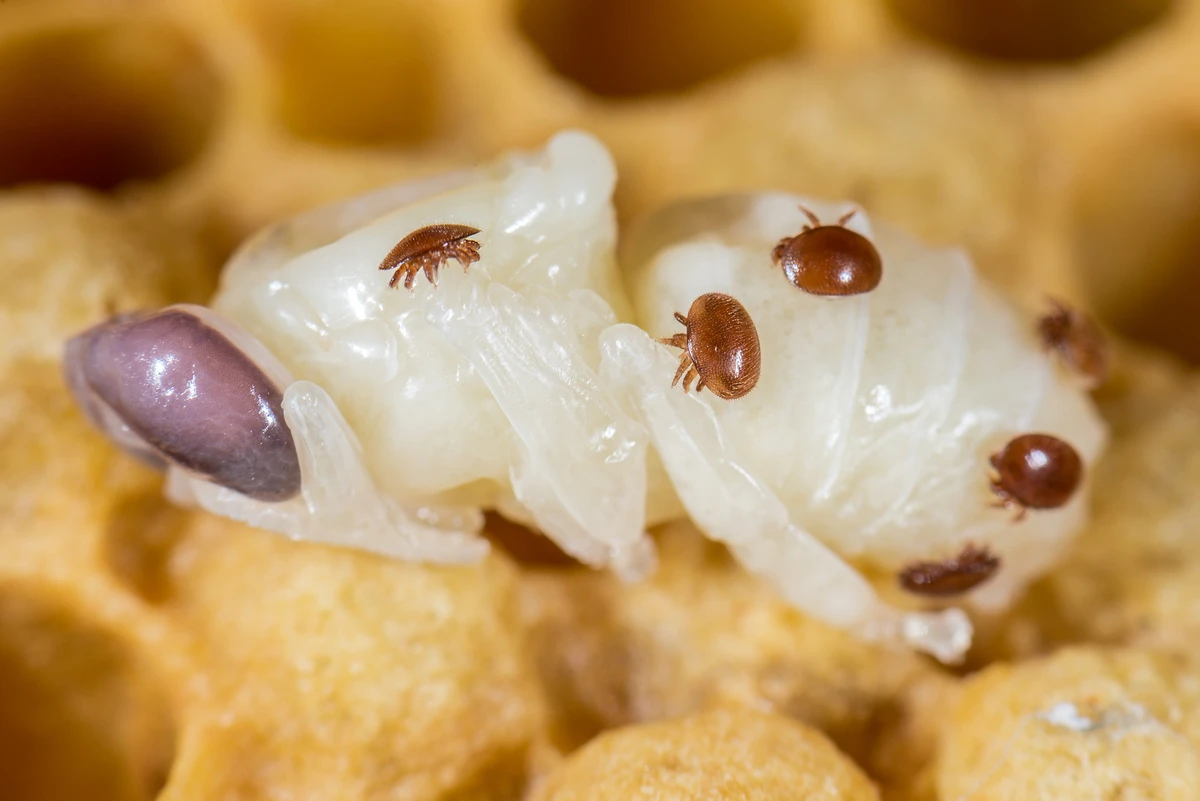
Unfortunately, this pupa's fate is already sealed.
While the bee larva eats the honey, the mites eat the larva and mate with each other (after which the male also dies). And when the wounded and weakened larva turns into a weak and sick bee, the mites settle on it and wait to see where fate takes them. 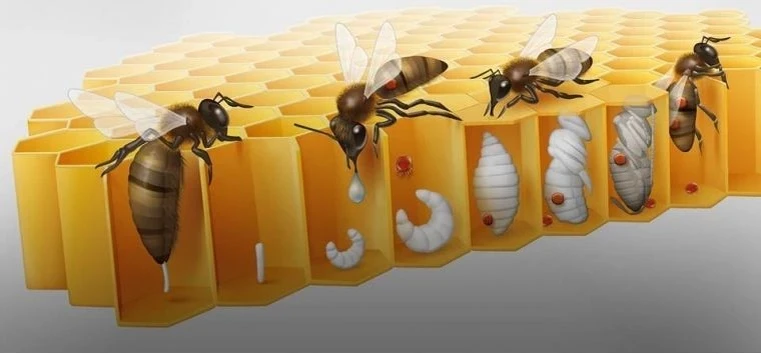
The mite development and spread cycle looks like this.
Some of them will die, others will fall onto flowers, where they can migrate to bees from other nests. But most will simply move to neighboring cells and repeat the cycle there. This is especially true if the mother mite was a carrier of the deformed wing virus and transmitted it to the bee larva. 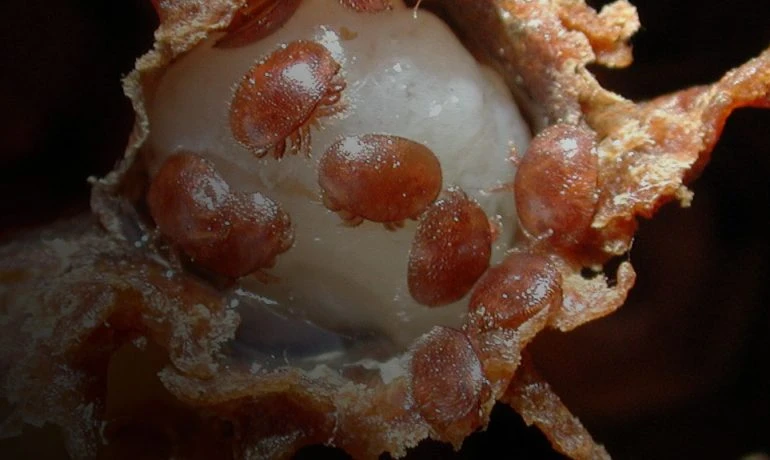
And why is it that parasites inevitably invade any successful and productive community?
This virus is an incredibly nasty thing. In adult bees, it is often asymptomatic or only causes a weakened immune system, but when pupae and larvae become infected, they develop into adults with deformed wings and shortened abdomens, unable to fly and only able to eat the hive's reserves, spreading mites to new combs. 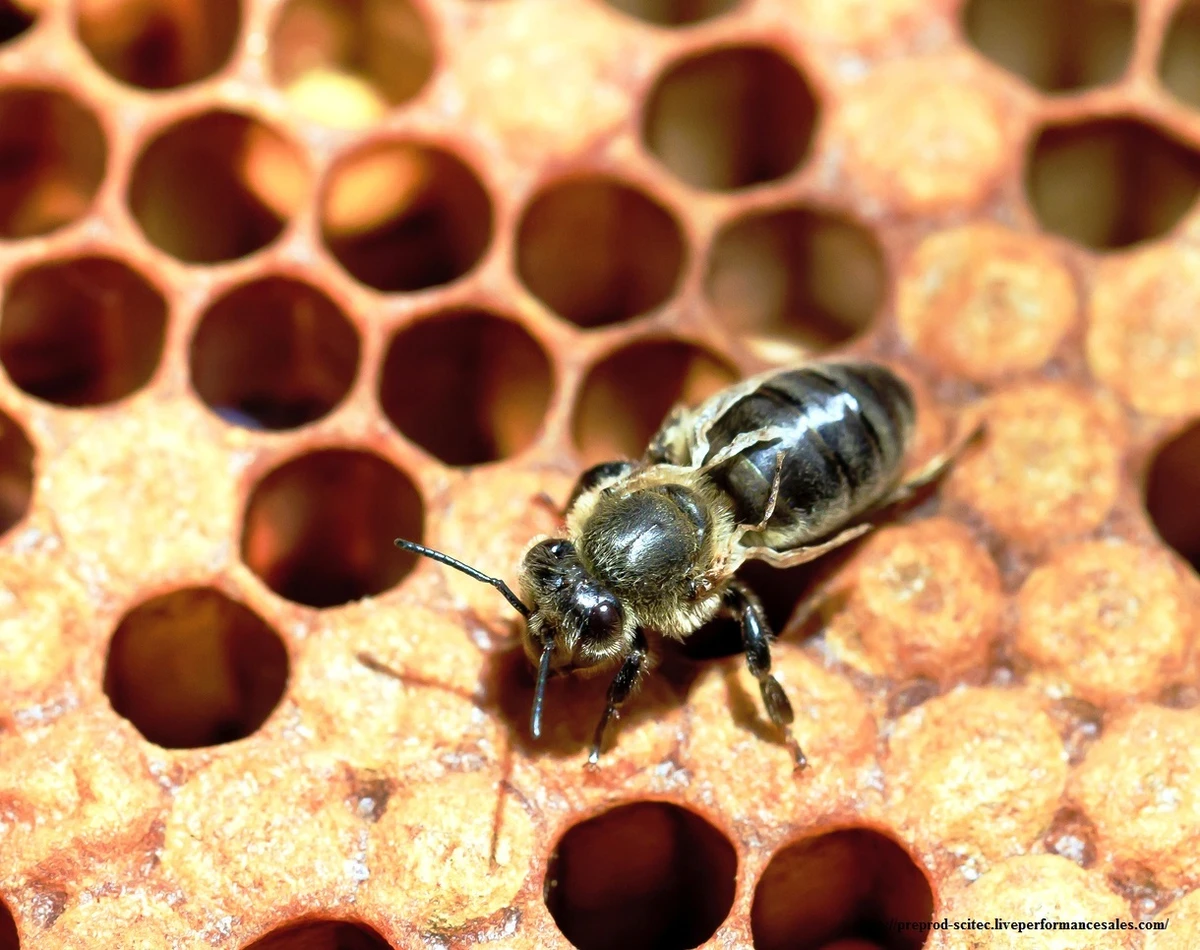
A bee without wings is useless. But it won't be thrown out of the hive for parasitism.
You got it right: the virus and the mite cooperate, enhancing each other's effects. Thanks to the mite, the virus spreads quickly and kills those bees that the mites haven't killed. Thanks to the virus, the mite quickly depletes the hive's resources and its ability to resist the mite invasion. 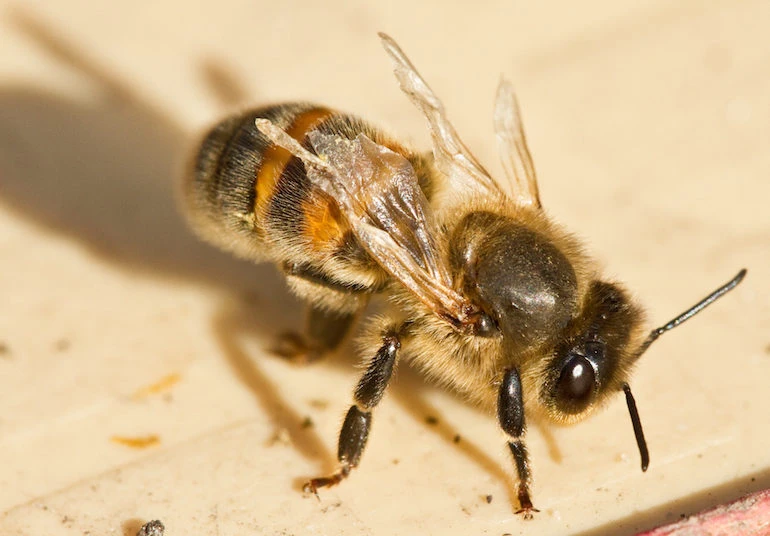
See the bee in the hive with chewed wings? That means it's been infected with the virus since infancy.
Furthermore, treating bees for both varratosis and the virus simultaneously is an extremely difficult task. Beekeepers have to manually collect infected bees, feed them antiviral medications, and treat the nest with alcohol or specialized products. This must be done throughout the season. After all, mites hidden in brood combs are immune to toxins. Just like those nesting on flowers, they can return home. 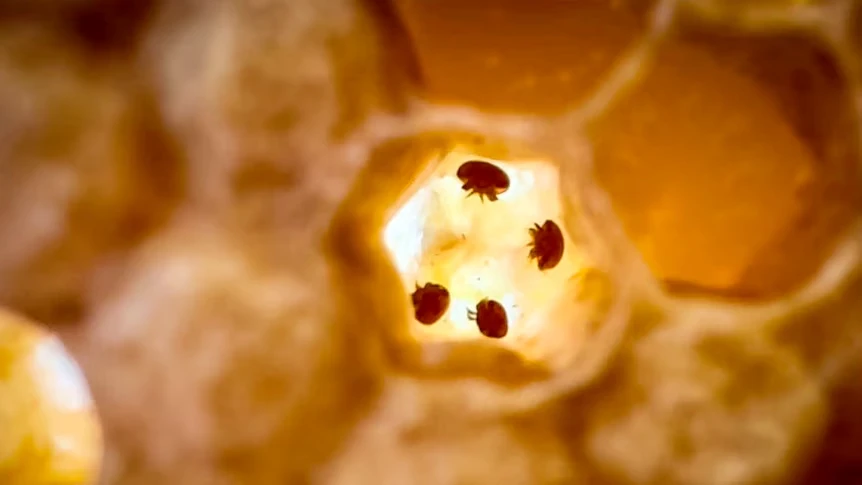
Quiet, guys, we're not going to show ourselves...
So what does this mean: life is rotten, and we can't save the bees? The answer is yes and no. In the honey industry, the virus-mite duo causes enormous losses. And in the wild, it's pure horror—after all, there's no one to protect the bees. However, there is a light at the end of the tunnel, and its name is hygiene. In the past decade, scientists have noticed that some bee subspecies are surprisingly resistant to the parasite. They can shed the mites and even eject infected larvae. Thanks to this, the mite count in the colony has dropped by more than 70%! 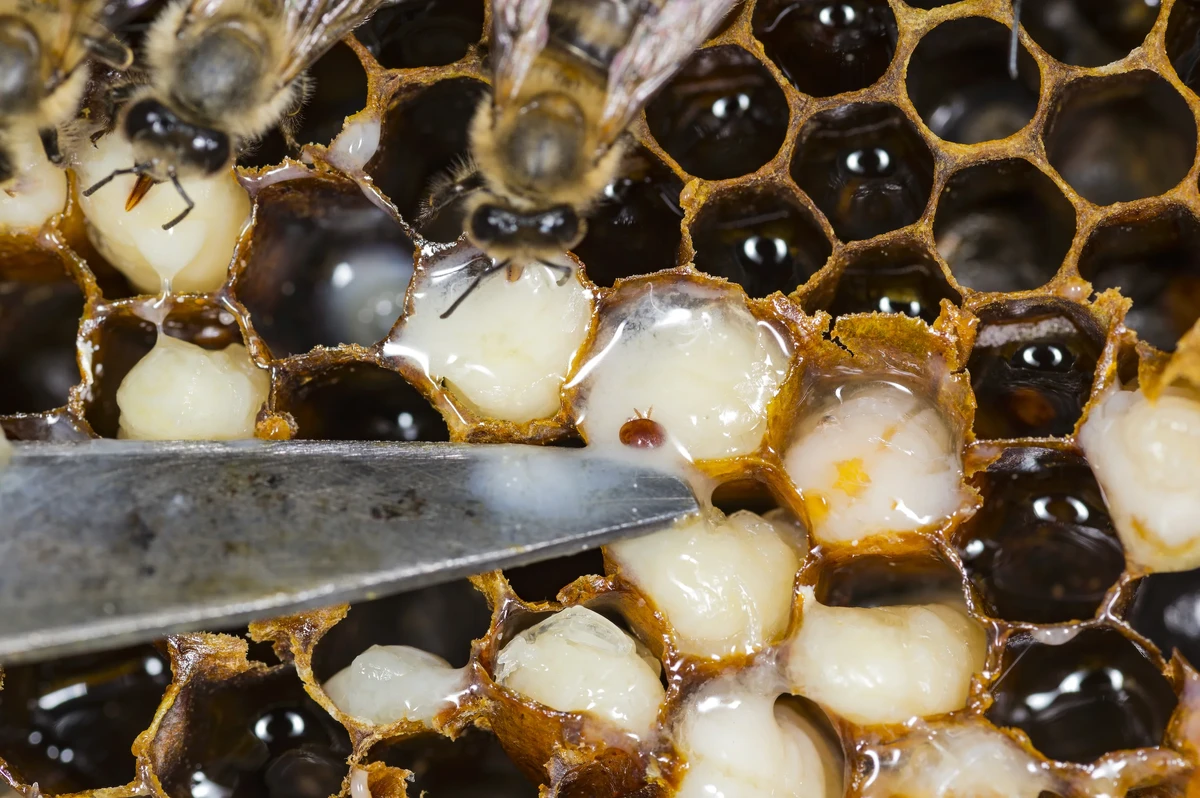
A spoonful of Varroa in a barrel of honey.
And most importantly, improved hygiene is genetically inherited, meaning it can be introduced into bee breeds through selective breeding, entrenched in the population, and transform varratosis from a terrifying epidemic into just another factor to consider. It's a shame, though, that the same can't be done with wild bees. They face very, very dark times in the coming decades. Meanwhile, we must study the capabilities and adaptations of wild populations to resist the parasite without human intervention.