10 most microscopic things ever created (11 photos)
Do you know what nanopainting is? This technology is used to create sculptures less than one millimeter in size. In this post, the site will indulge those who love all things tiny: we present ten miniature things created by human hands. Among them are a microscopic snowman and a mini Bible! 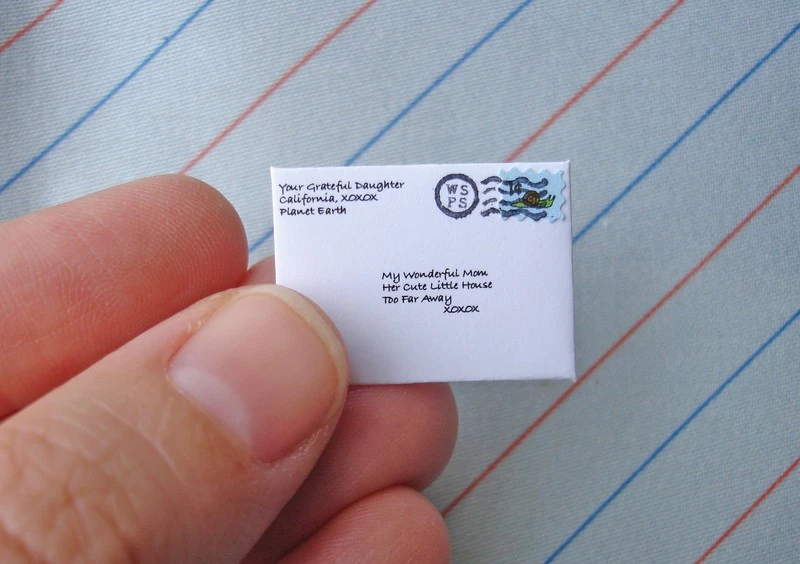
Microscopic Snowman 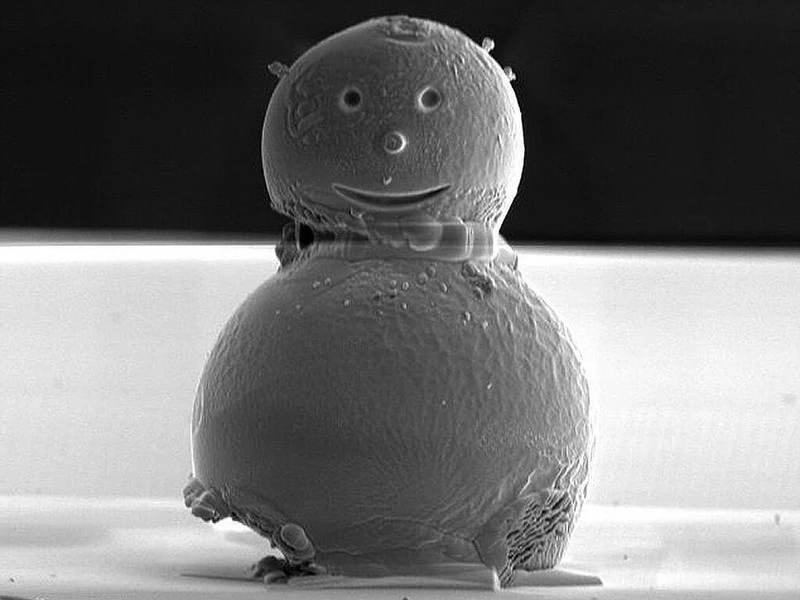
In 2009, scientists created the world's smallest snowman—about one-fifth the width of a human hair. Experts from the National Physical Laboratory in West London created a miniature figurine measuring just 0.01 mm in cross-section. This masterpiece was assembled using tools designed for manipulating nanoparticles.
The snowman consists of two small tin beads welded together with platinum—typically used to calibrate microscope electron lenses. A focused ion beam created the snowman's eyes and smile, and added a tiny drop of platinum for the nose. This creation was created by Dr. David Cox, a member of the laboratory's quantum particle detection team, who also captured the image of the snowman.
The Smallest Sculpture in the World 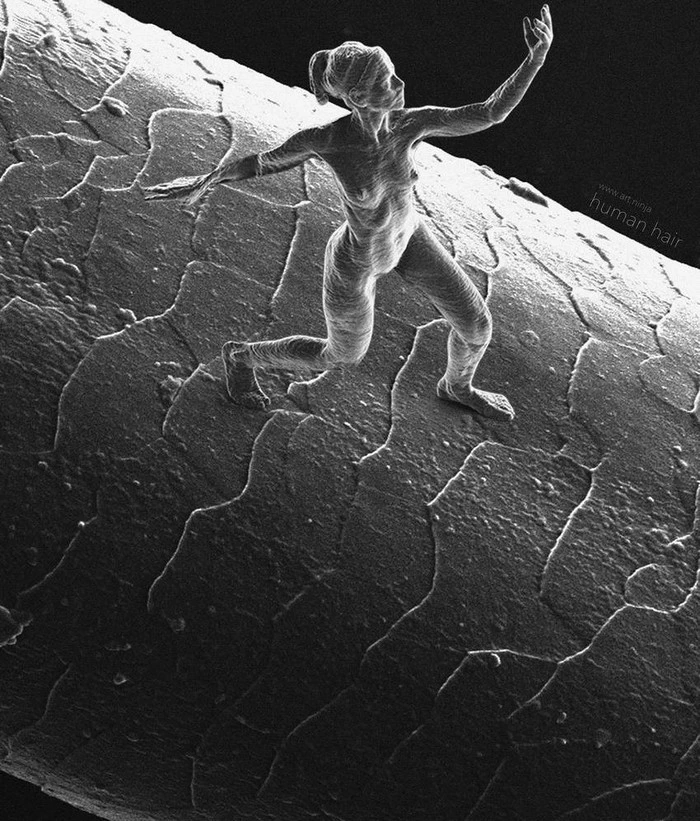
In April 2015, artist Jonty Hurwitz created the smallest sculpture in the world. Hurwitz's creations are so small that they could rest on a human hair or the head of a similarly sized ant.
The sculptures, less than 1 mm tall, are produced using a process called nanopainting. They are too small to be visible to the naked eye. They can only be seen under a microscope or in photography. Mr. Hurwitz used 3D printing technology in his production.
After spending months working on the fragments, he invited a 45-year-old photographer from Chichester, West Sussex, to photograph the sculpture under a microscope. Unfortunately, just minutes after the photo shoot, Hurwitz's work was destroyed by a stray finger from a lab technician.
Tiny Bible 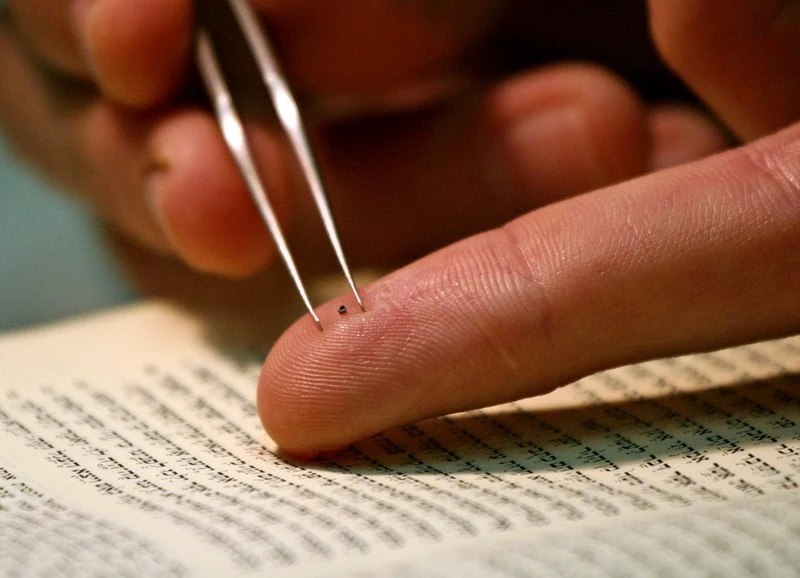
Russell Berry's Bible
This Bible will be difficult to read, but that's not the point. Russell Berry, a nanotechnology researcher at an institute in Israel, engraved the Hebrew Bible on a chip the size of a grain of sugar to demonstrate the scale at which it can be worked. The "Nano-Bible" is written on an ultra-thin silicon wafer, less than 100 atoms thick, coated with a layer of gold. To engrave Hebrew letters, the researchers used the same focused ion beam, cutting away unnecessary layers of gold. Combining modern technology and ancient methods, the team called the chip's engraving process "poetic beauty." The nano-Bible is on display in the Shrine of the Book at the Israel Museum.
Micro-Racing Car 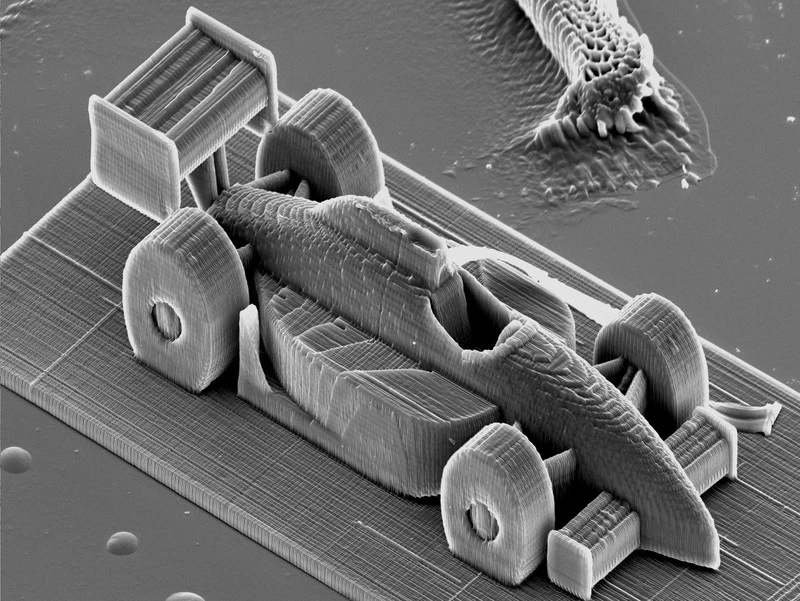
This microscopic race car, just 100 micrometers wide, was built by scientists at the Vienna University of Technology using a nanoscale 3D printer in 2012. Like a conventional 3D printer, resin is used to shape the object, and a laser is used to harden it.
The Tiny "Thinker" 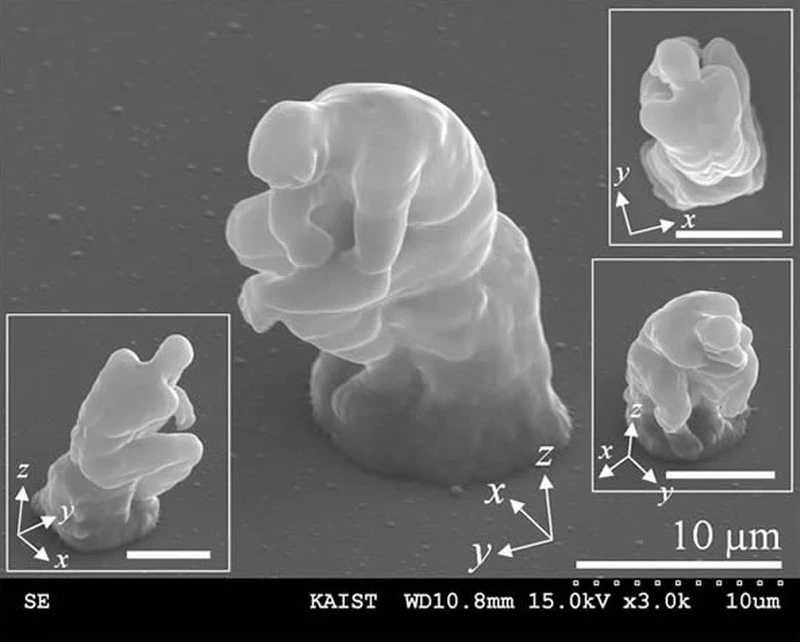
In 2007, Korean researchers used lasers to create a microscopic version of Rodin's famous sculpture, "The Thinker," completed in 1880.
At 20 millionths of a meter tall, the "Micro Thinker" is approximately twice the size of a red blood cell. Fingers and even muscles are visible in the tiny model.
Tiny Postal Service
If you're looking to surprise your loved ones and believe that great things can come in small packages, you'll want to consider the world's smallest postal service. It was founded in San Francisco by postmaster Leah Redmond, who decided to put a bold idea into practice. 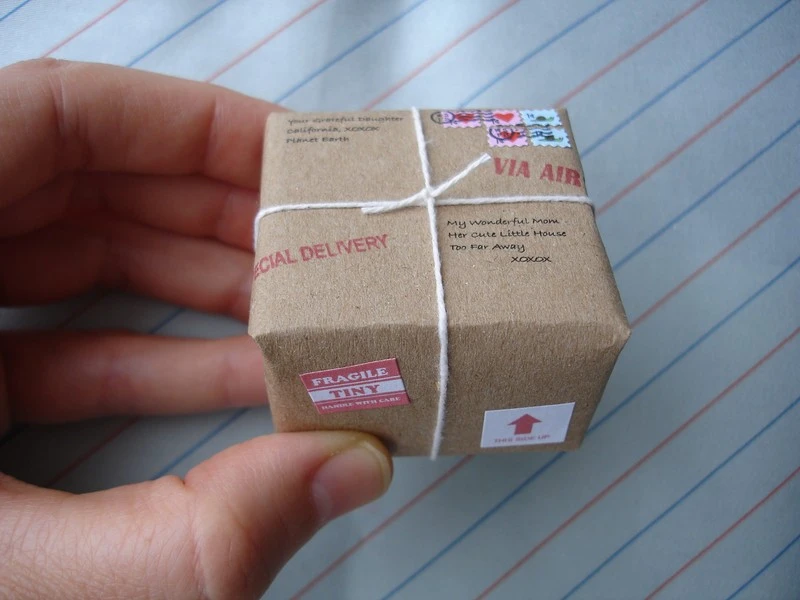
She simply packed a small desk into her backpack, hopped on her bike, and set up a post office in a local cafe. Leah immediately charmed everyone with her miniature post office. 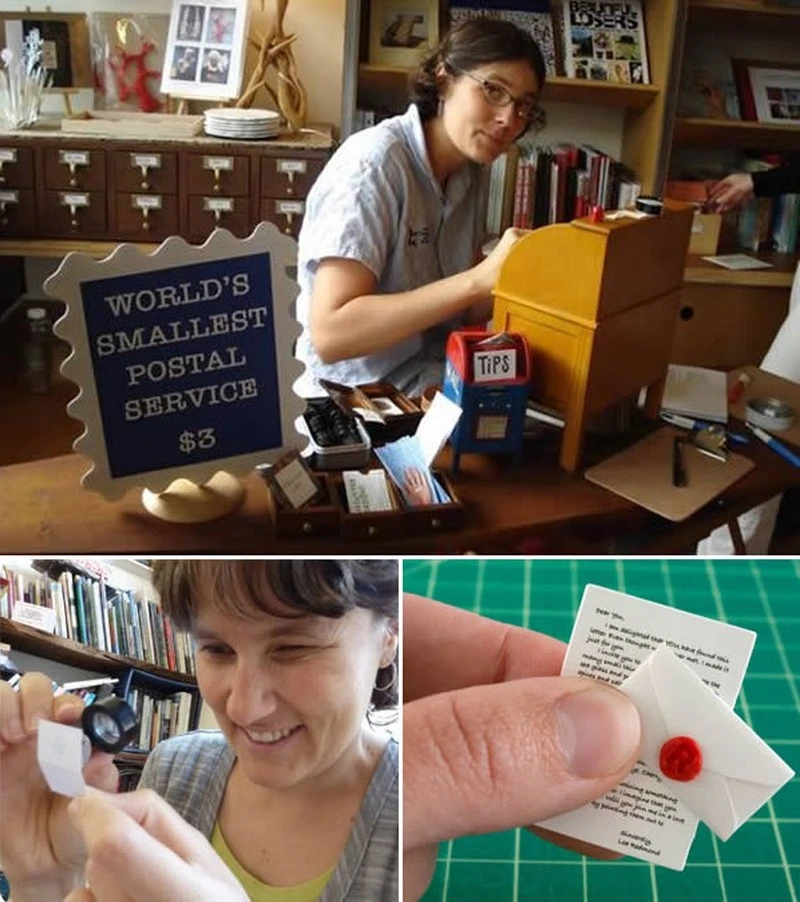
At the world's smallest postal service, your letters are written in microscopic letters, carefully packaged, and sealed with a tiny stamp bearing the sender's initials. To prevent these tiny messages from getting lost in traditional mail, Lea packs them in clear envelopes with a magnifying glass to reveal the postal address.
Smaller than a Movie
This is no joke; this movie was actually created by moving single atoms around in a circle and filmed using a giant microscope.
IBM is exploring new possibilities for atomic-scale memory. Soon, you'll be able to press play and meet the boy who befriended an atom.
3D Bull Sculpture 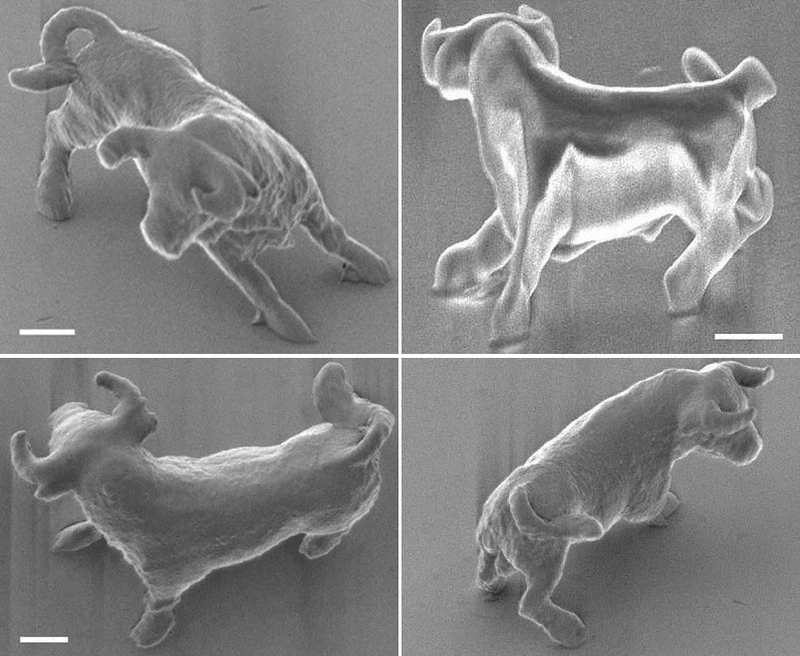
In 2001, a group of Japanese engineers created a small three-dimensional bull monument, the size of a red blood cell. It was engraved from plastic by engineers at Osaka University in Japan.
The sculpture measures just 10 by 7 micrometers (one micrometer is one thousandth of a millimeter). The bull is the smallest three-dimensional sculpture ever created.
The Little Express 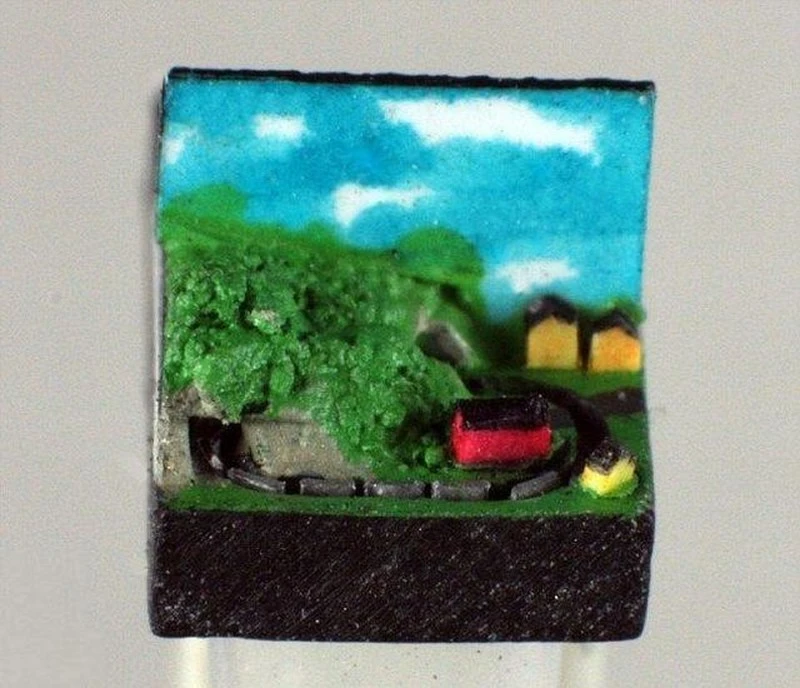
Tiny, just 3.175 mm by 6.35 mm, this train is a true work of engineering art. Five cars, 35,200 times smaller than those on a real train, follow an oval route and even pass through a tunnel on a 19-millimeter track.
David Smith, a railroad enthusiast from New Jersey, created this train with a simple craft knife and a steady hand.
The train is powered by a standard 51mm-long rotating motor, cut from moldable plastic. David needed just over 6 pounds to make his train model.
Microscopic Origami 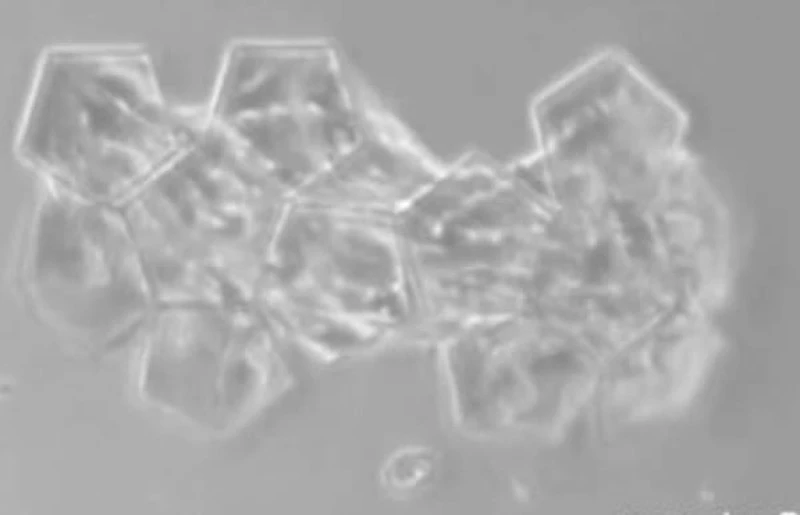
Shoji Takeuchi and his colleagues at the University of Tokyo have taken the art of origami to new heights. The team succeeded in creating microscopic origami folds using living cell tissue cultures.
They created flat origami structures by cutting thin plastic sheets, then grew cells to fill the seams of the tiny plates. Early studies used animal connective tissue cells (which typically help heal wounds) to create the samples. Later, they switched to rat heart cells. Takeuchi and his colleagues hope that this process will eventually lead to the creation of artificial blood vessels, as well as other biological tissues.