Why 10 Centimeters of Ash Could Destroy All of Japan (3 photos + 1 video) (video)
While we're discussing innovation and lunar missions, Japanese scientists are preoccupied with a much more mundane (literally) question: how quickly will Tokyo turn into a Silent Hill set if sacred Mount Fuji decides to awaken. 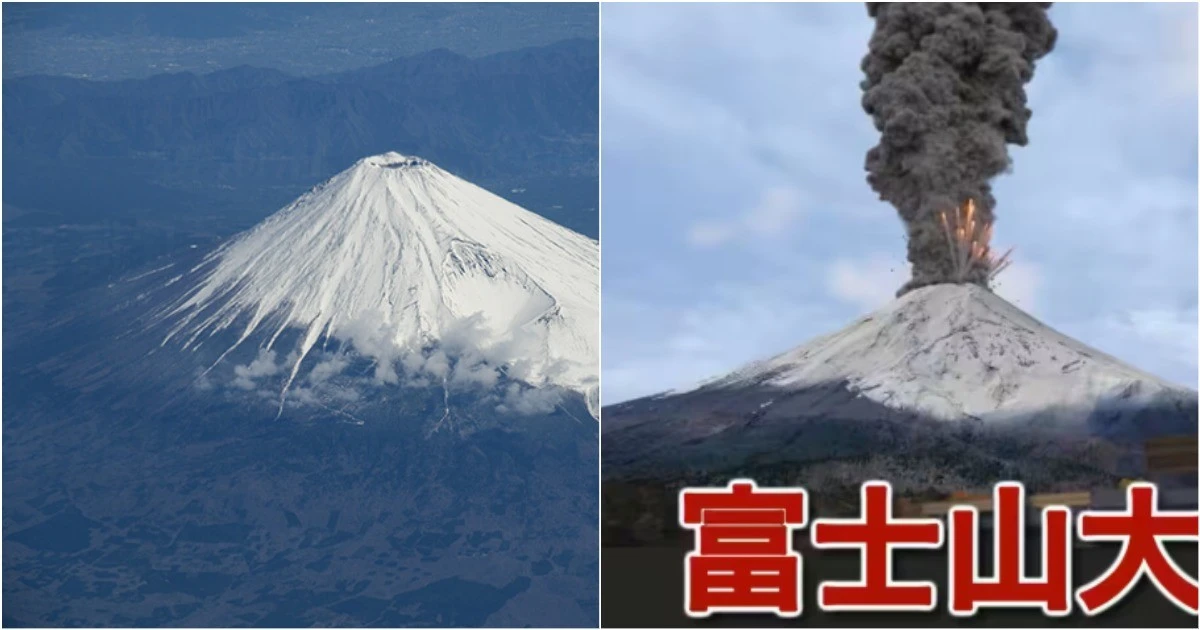
Spoiler: things are bad. Recent experiments have shown that a sea of lava isn't needed to collapse one of the world's most technologically advanced capitals—ordinary volcanic ash, which acts as an ideal engine killer, is enough.
Japanese experts have been playing with diesel generators, the very ones that are supposed to save hospitals and server rooms during emergencies, and discovered a curious detail. As soon as the ash layer reaches 7 centimeters, the engine oil pressure drops, causing it to "cough." And when the "gray snow" reaches 27.5 cm, the generator officially turns into a lump of iron. Considering that the government predicts that up to 490 million cubic meters of this joy could fall on Tokyo, 400,000 households will be without power within the first few days.
Ash isn't just dust; it's microscopic shards of glass and rock. It clogs filters, turns lubricants into sandpaper, and shorts out electrical grids. Tokyo is expecting a 10-cm layer in just two weeks of the eruption. This is enough to stop the trains, shut down the backup communication systems, and plunge the city into a cozy Middle Ages with neon signs that no longer glow. The futuristic cyberpunk they deserve.
According to the Japanese, modern civilization rests on its word of honor and clean air filters. One sneeze from Mount Fuji, and the entire might of the Japanese auto industry and electronics capitulates to ordinary volcanic mud. And then a logical question arises: "How do our people in Kamchatka survive when Klyuchevskaya Sopka spews ash with enviable regularity?"
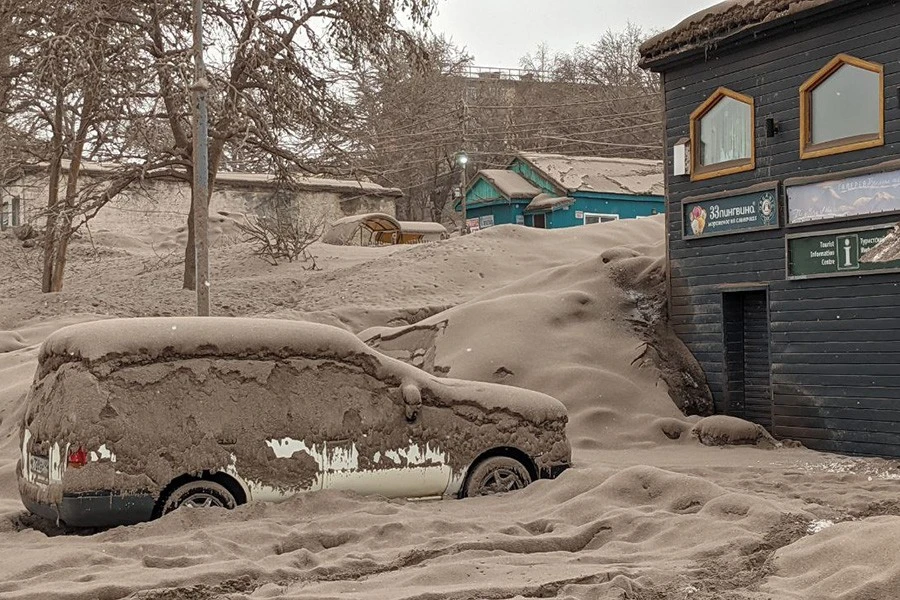
The Kamchatka village of Klyuchi sends greetings in April 2023. After the Shiveluch eruption, the ash layer there reached 20 cm in places. And yet, they survived and dug themselves out.
The answer is simple: the difference lies in the fragility of existence. The Greater Tokyo metropolitan area, home to 38 million people, lives beneath Mount Fuji. It's the densest development in the world. There, every centimeter of land is paved, power lines hang in clusters, and transformers are on every corner. Here, volcanoes erupt in the middle of nowhere (well, almost). The nearest major city, Petropavlovsk-Kamchatsky, is a considerable distance from the most violent giants. The brunt of the ash falls on the taiga, the bears, and a couple of villages like Klyuchi or Ust-Kamchatsk. The scale of the disaster is simply incomparable in terms of the number of electrical outlets per square kilometer.
Our equipment in the north is accustomed to operating in conditions where the "air" is a mixture of snow, sand, fuel oil, and the curses of mechanic Mikhalych. Air filters in Kamchatka are literally consumables, changed more often than socks. The diesel engines there are old-fashioned, often Soviet-era, and will "digest" even fine ash, choke, but still keep turning.
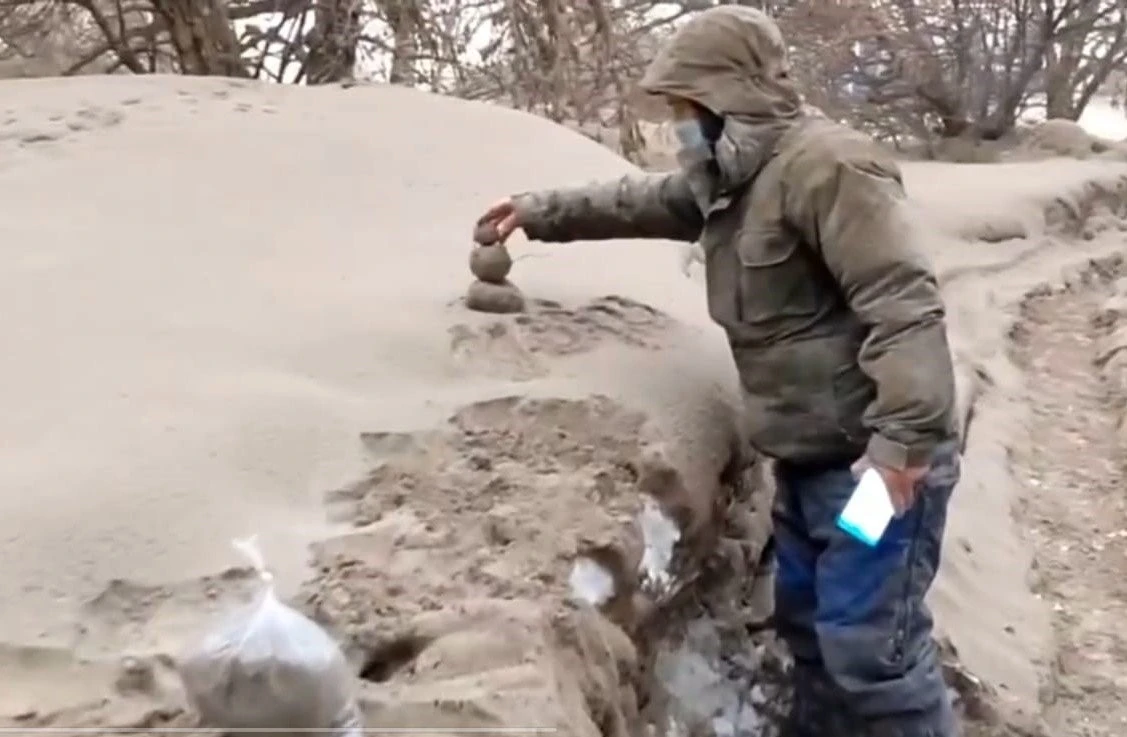
In Japan, ash settles on power lines, gets wet from the humid sea air, and turns into conductive mud. Massive short circuits occur. Here in Kamchatka, our power lines are built from the ground up to withstand extreme icing and winds. The insulators there—I respect them—are not easily shorted. In Tokyo, 10 cm of ash will knock out 400,000 homes, but in Kamchatka, it's simply an excuse to change filters and discuss on a local social media page which volcano erupted the most spectacularly.