Australia's fauna is quite unusual. This is due to the continent's isolation from the rest of the world for 125 million years. Because of this, local fauna have evolved in their own unique way. This has resulted in animals with unique characteristics. It's as if they didn't originate on Earth, but arrived here from distant planets. And one of the most unusual creatures is the Australian echidna. 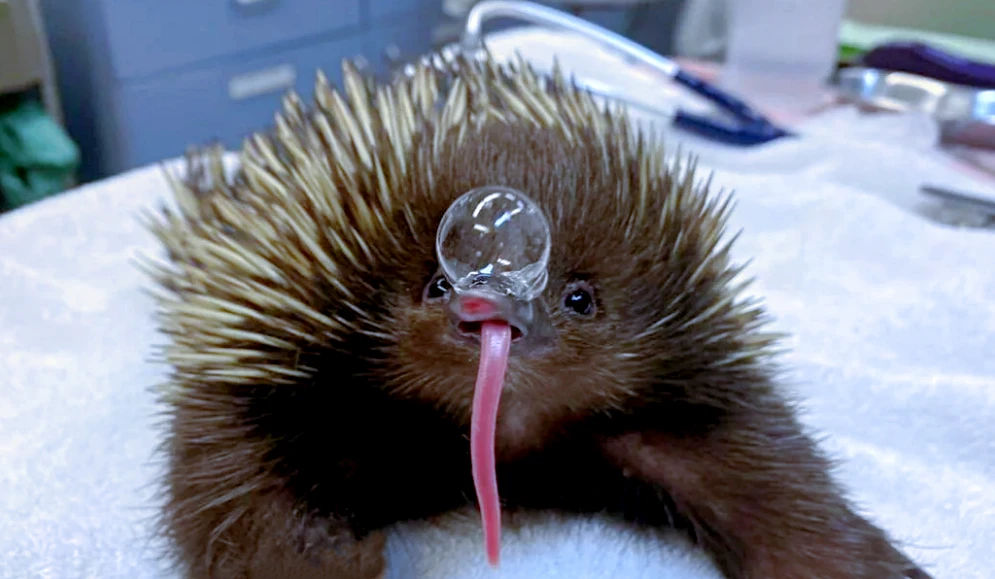
Spiky Individualists
Echidnas are endemic. These animals evolved and live only in Australia and Tasmania. They resemble small porcupines, but their quills are slightly shorter. Their body length can reach 40-50 cm, and they weigh 4-5 kg. These animals are self-sufficient and prefer solitude. They ignore their fellow echidnas and simply pass by. The exception is the mating season. They do not dig burrows and are nocturnal.
When threatened, echidnas hide in the undergrowth. If this is impossible, they can dig a hole in seconds with their unusually powerful paws and long, wide claws. They then lie down in the hole and spread their quills in all directions, turning into a spiny ball. After this, they are inaccessible. If the ground is hard, they curl up into a ball, just like our hedgehogs. The greatest threat to them is wild dogs (dingos) and red foxes, introduced to the continent. 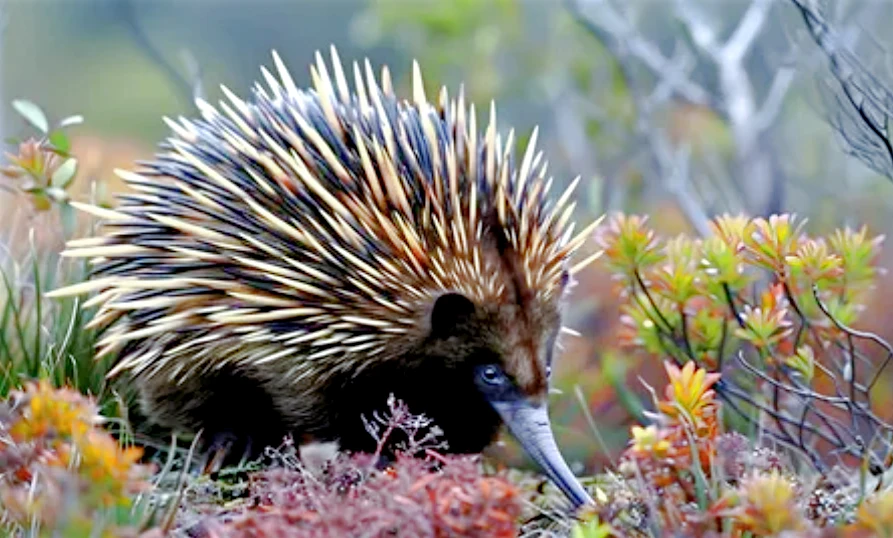
Echidnas are monogamous in their diet, preferring ants and termites. With their powerful, albeit short, legs, they break open anthills and termite mounds. Then, they insert their 7.5 cm long "beak" into the mounds. They lick up the prey with their sticky tongue, which they can extend up to 18 cm. This wonderful creature's mouth is toothless and opens no wider than 5 mm. They grind their food using horny plates.
They lay eggs, but feed their young with milk.
The closest living relative of the echidna is the mysterious platypus. The ancestors of these animals were reptiles, so both, although mammals, lay eggs. They are unique in the world and are extremely ancient. It's no wonder these relict creatures have been nicknamed "first beasts."
The female echidna lays a single egg, 1.7 cm in diameter and weighing 1.5 grams. She then places it in a pouch on her abdomen. Within 10 days, the young are born. The mother nurses them with milk, but she lacks nipples. The milk seeps through pores in the skin, and the baby licks it off, but not all of it. Some of the milk ends up in the pouch and eventually turns sour. 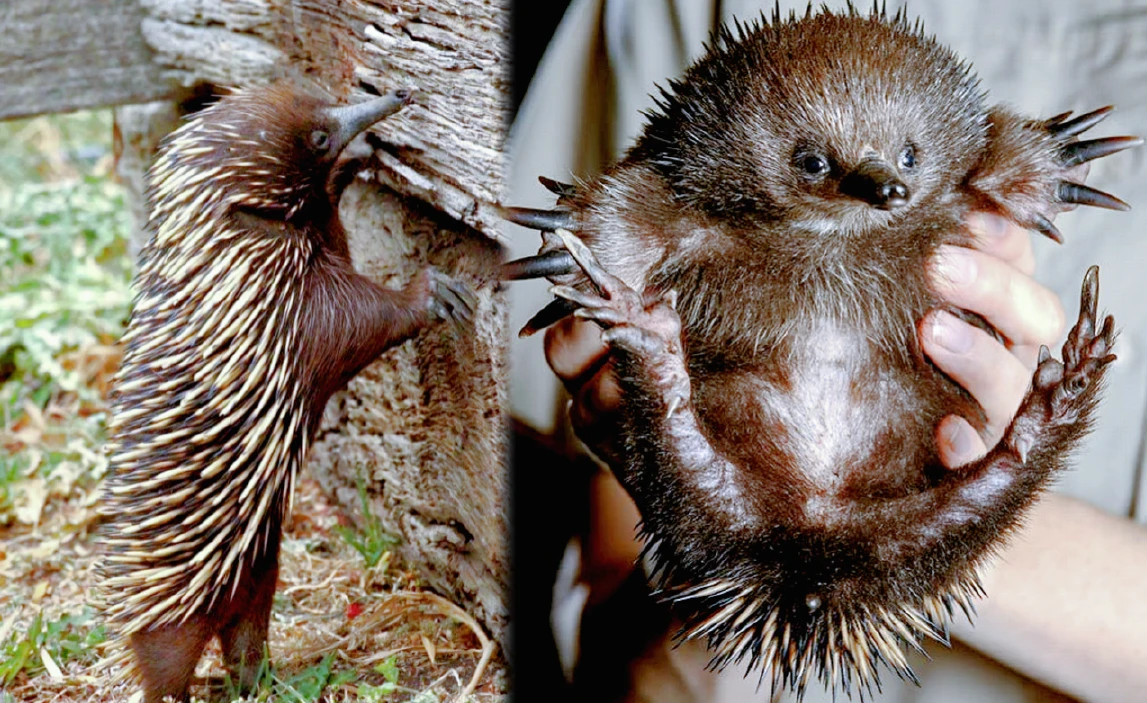
Either a rat or a hedgehog.
Then a miracle happens. To prevent pathogenic microbes from developing, the mother's body produces antimicrobial proteins. These proteins are capable of suppressing the growth of even such a tenacious and dangerous bacterium as Staphylococcus aureus. It's like a field hospital!
After two months, the cub develops spines and begins to prick its mother. So the mother digs a shelter for it and moves it to a separate "apartment." Then, for five months, she comes to feed him on a strict schedule – once every five days. And that's not all the miracles this species is capable of.
How a Runny Nose Can Save a Life
As is well known, runny noses in humans and animals occur when they have a cold. This most often happens when it's cool outside. However, echidnas develop runny noses when the temperature in Australia is 30 degrees Celsius or higher. Scientists puzzled over this for a long time, but finally discovered the cause. 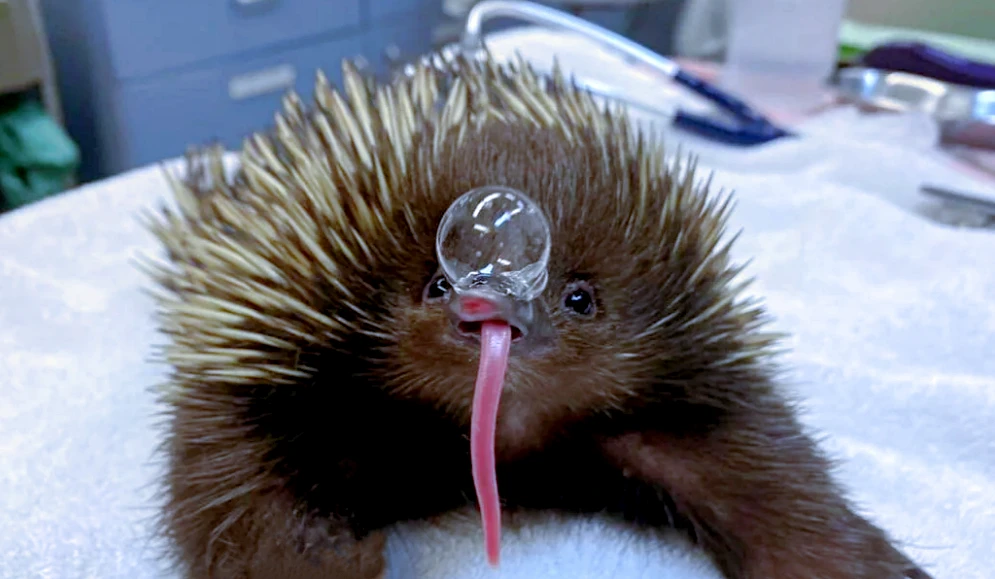
From dawn to dusk, I blow bubbles!
It turns out that these amazing little animals don't sweat. Furthermore, they're unable to breathe rapidly or dissipate heat through their mouths. However, in hot weather, they secrete a clear fluid from special glands on the tip of their nose. This fluid quickly evaporates, and blood vessels run to the tip of their nose. This evaporation cools the surface, and with it, the blood. Essentially, it's similar to sweating.
This is how a common cold literally saves echidnas' lives. Incidentally, their lifespan in the wild is 15 years and 45-50 in captivity.
4 more interesting facts about echidnas
1. The quills of their "body armor" are made of exactly the same material as human nails and hair: keratin.
2. Despite their poor eyesight, these creatures possess electroreception. A "radar" is located at the tip of their "beak." With it, they detect weak electric field fluctuations generated by the movement of other animals. This ability allows them to find food tens of meters away and "see" threats to their lives even at night.
3. When the temperature in Australia drops to 4-5 degrees Celsius, they simply hibernate. This hibernation can last for four months.
4. Like platypuses, echidnas are excellent swimmers. They can cross any river and reach a neighboring island without any problem. 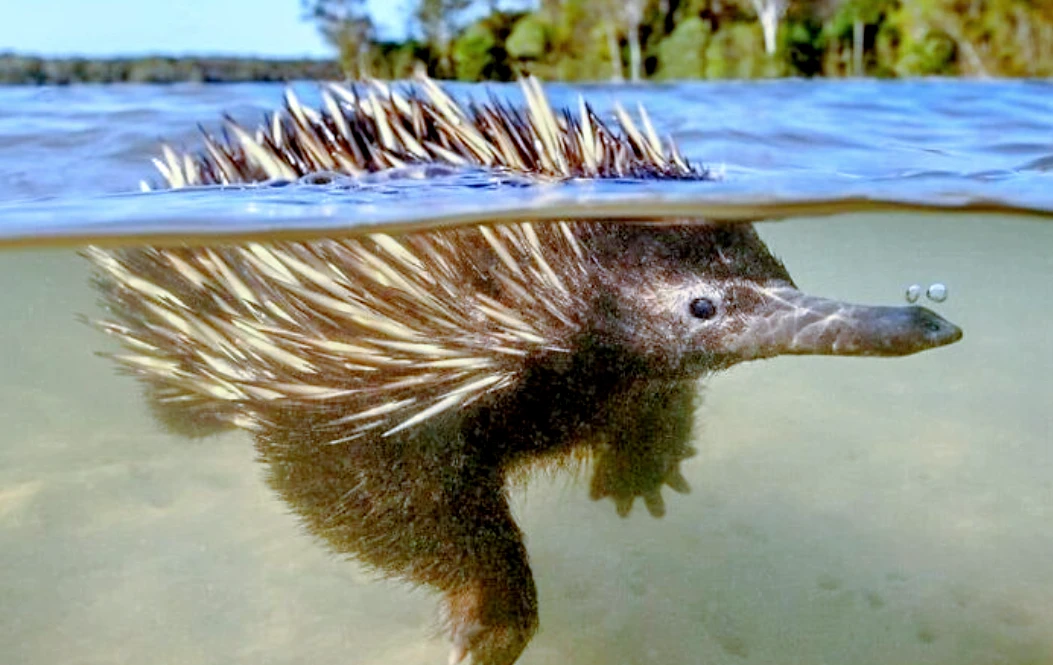
Add your comment
You might be interested in:













20 Personal Photos of Celebrities That Ooze Vintage

Protective film Removing it with a power screwdriver

Global Sex Symbol: Rare Photos of Monica Bellucci (26
Animal Paws and Claws: 50 Photos That Will Surprise Even

Precision carpentry

America's Cheese Caves: How and Why the US Government
Fascinating Facts to Blow Your Mind (10 Photos)
Discover the Truly Unique: 27 One-of-a-Kind Items That

Straight Out of the '80s: Band Posters No One Would Ever
