Islands Off-limits (5 photos)
Most of our planet is water. And land, which makes up a smaller portion of the surface, is far from uniformly distributed. Landmasses range from vast continents to patches of dry land amidst seas and oceans. And not all of them are welcoming. 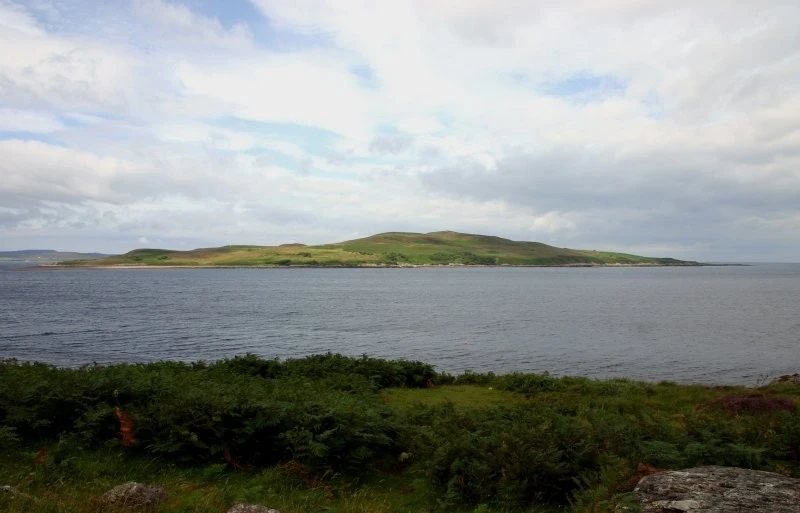
Gruinard Island
Located off the coast of Scotland, Gruinard Island is quite cold and inhospitable, but its main danger lies in the aftermath of British biological weapons testing during World War II. Highly contagious strains of anthrax remained in the soil of this small island for decades. In the 1980s, following the revelations and the resulting scandal, the island was cleaned up, and it is now believed to no longer contain the deadly spores of the disease, but no one has yet found a willing home there.
Bikini Atoll remains no less dangerous. Bright sunshine, the azure Pacific Ocean, and palm trees and sand. Everything looks like something out of a beach vacation brochure. However, this is an illusion. It was here that the United States conducted 67 nuclear tests from 1946 to 1958. Even after the test site's closure, radiation levels here in some places are 1,000 times higher than in the Chernobyl Nuclear Power Plant exclusion zone. Officially, Bikini has a population of nine, but statistics show an explosive increase in cancer cases and deaths among those who lived there before the tests.
A similar fate befell Mururoa Atoll. From 1966 to 1996, the French government conducted 181 nuclear tests there. Mururoa is notable for its inner basin's isolation from the ocean, which was one of the reasons it was chosen as a nuclear test site. However, on July 25, 1979, an accident occurred during one of the tests, and the explosion triggered a massive underwater landslide, breaking off a significant section of the atoll's outer slope, creating a crack 2 km long and up to 40 cm wide. The French subsequently closed the test site, announcing that they would install sensors to monitor and regularly publish data on the leakage of nuclear waste into the ocean. However, this turned out to be a lie, and no data was ever published. Thus, Mururoa became a source of slow and silent poisoning for the entire Pacific Ocean. And, of course, landing and staying on its shores is dangerous to one's health.
However, not all islands that are not recommended for landing are so-called because of testing. Queimada Grande Island is located off the coast of South America, just 35 kilometers from the Brazilian coast. It would seem like an ideal location for an oligarch's expensive mansion, a government residence, or even a secret service base. However, things are not so simple. This island is also known as Snake Island, and for good reason. The island is home to a population of a rare but highly venomous snake, the Island Bothrops (Bothrops insularis). This snake's vinegar is almost always fatal, and the Brazilian government has banned not only landing on the island, but even going near it and diving in the surrounding waters. 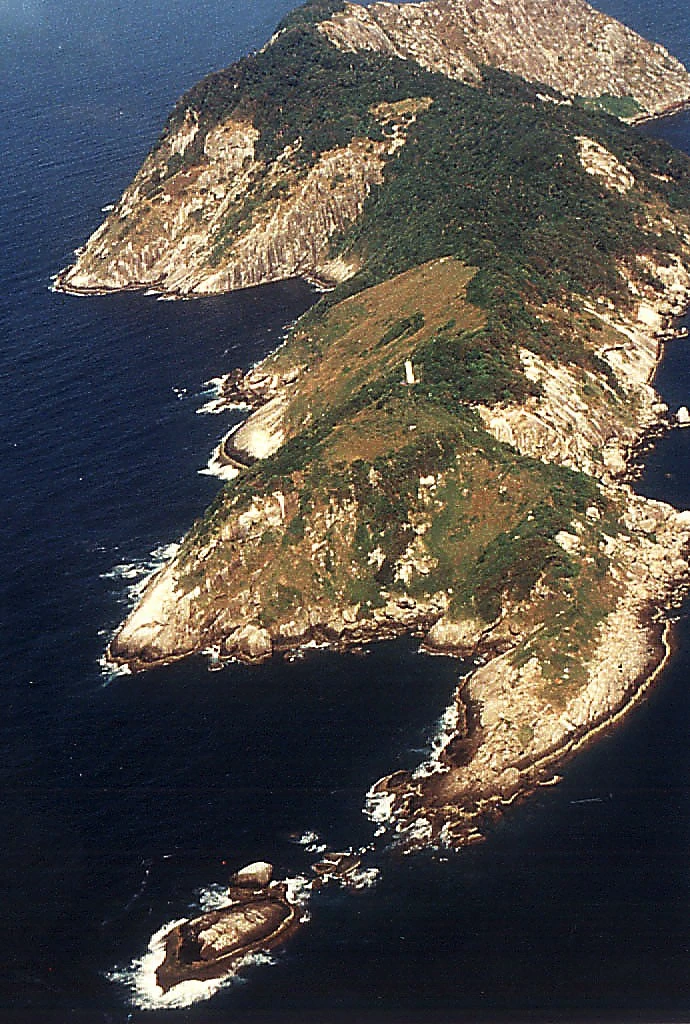
Keimada Grande Island
In the Pacific Ocean, off the southwest coast of Japan, lies the small island of Hashima, just 6.8 hectares. Rich coal deposits were discovered there in the early 19th century, and the Japanese government began actively mining it. This led to the tiny island being overrun with buildings, occupying more than 60% of its surface area. Over time, buildings began to grow due to a lack of space. For over half a century, the island developed and prospered, constantly expanding and rebuilding its structure, and for almost 50 years, it was considered one of the most densely populated islands on the planet. But by the late 1960s, industry began to shift to oil, coal production began to decline, and by 1974 the mine was finally closed, leaving the island deserted.
Now Hashima is a veritable ghost town in the middle of the ocean. Without support and maintenance, the buildings are slowly deteriorating and falling into disrepair. Visitors are allowed to visit the island, but only in a fenced-off, safe area, as it's very easy to die under the collapsed and dilapidated buildings. The ghost town has inspired numerous comics in Japan and also featured in the film "Skyfall." 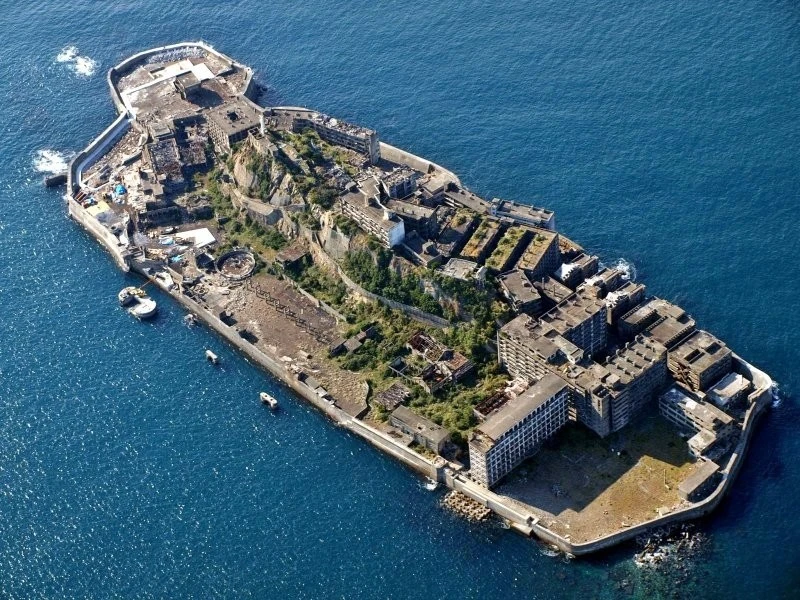
Hashima Island
Another island where visitors are not welcome is North Sentinel, located in the Indian Ocean. The island is surrounded by a coral ridge, which in itself makes landing difficult. But the main danger for those who decide to visit is a savage tribe of natives who are liable to kill anyone who dares set foot on their land. The key problem is that no one really understands the islanders' language, and scientists can't translate a single word with absolute certainty. One thing is clear: the locals don't take kindly to extended visits. The island is currently closed to visitors, and its waters are patrolled by Indian border guards. Only scientists with permission from Indian authorities are allowed to visit. The natives of North Sentinel are one of the few tribes virtually untouched by civilization and living in isolation.
There are also islands where the echoes of war are still felt, and it wouldn't be difficult to stumble upon one. One such island is Kiska. Captured by Japanese forces at the start of the Pacific War, it was recaptured by US and Allied forces by 1943. The Japanese command, realizing that defending the island would be costly and futile, carried out a brilliant evacuation operation that went unnoticed by the enemy. American forces, however, unleashed a hurricane of fire from both the sea and air as part of Operation Cottage. Under cover of this, an assault force launched an assault. As a result of the confusion, friendly fire, and abandoned mines, more than three hundred people died during the assault on the deserted island. The island and its coastal waters are still littered with weapons remnants, unexploded ordnance, and mines, making it highly discouraged to visit.
A similar fate befell Attu Island, located nearby. However, the three-thousand-strong Japanese garrison there fought a desperate battle and was almost entirely destroyed. Like Kiska, Attu is now completely deserted, and only the remains of defensive fortifications and the rusting hulks of sunken ships and guns serve as reminders of the battles fought almost a century ago.
However, not all islands deemed uninhabitable became so after human invasion. For example, Devon Island lies off the northern coast of Canada. Devon is considered the largest uninhabited island on Earth, measuring 55,247 square kilometers. It is an icy desert covering its entire surface. Life here is extremely difficult and practically pointless. Some sources call this island "Mars on Earth" due to its virtually nonexistent flora and fauna and its extremely harsh natural conditions. Only rare scientists and explorers occasionally set foot on its shores; for the average traveler, there's simply no place to go, and staying for long periods without special equipment is downright dangerous. 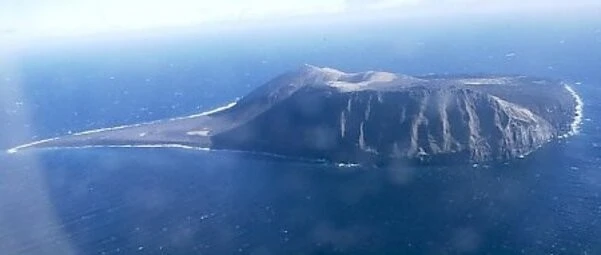
Surtsey Island
Another place where humans shouldn't set foot, but for a different reason, is Surtsey Island. Located off the southern coast of Iceland and formed geologically just minutes ago, it owes its existence to intense volcanic activity from 1963 to 1967. During this time, an underwater volcanic eruption ejected large masses of rock, which became the foundation of the new island. Surtsey is now a truly unique and natural laboratory, allowing scientists to observe the development and spread of life on the new island in real time. According to their data, the first living organisms appeared here within the first hours after the island's formation and were represented by simple microorganisms. Now, the number of species inhabiting the island has already exceeded one hundred, and all this has happened literally before the scientists' eyes.
Little Saint James Island
This small, heavenly island, measuring just 30 hectares and part of the Windward Islands of the Lesser Antilles in the Caribbean Sea, unlike Queimada Grande, has become the residence of a recently highly renowned oligarch. And, it would seem, what could go wrong? So wrong, in fact, that, according to some particularly impressionable individuals, from 1998 to 2019, this place was the most terrifying place on planet Earth, more terrifying than all the above-mentioned places combined. What actually happened there remains unknown, so feel free to offer your own theories in the comments.
There are countless islands in the oceans covering our planet's surface. Most of them are not as hostile to visitors as those listed above, but it would be a grave mistake to think that all islands, especially those located in tropical latitudes, will be as beautiful as those depicted in travel brochures.