Fox Weddings: How Do These Tricky Redheads Cunningly Cunningly Cunning Even During Mating Season? (9 photos)
The cunning of foxes isn't just well-known—it's legendary. These rogues easily evade pursuit, are excellent at covering their tracks, and possess a myriad of ways to obtain food. They hunt mice, steal birds' eggs, ambush rabbit trails, and even destroy muskrat lodges to get to sleepy, resting homeowners. But in the spring, when breeding season begins, foxes become downright devilishly inventive. 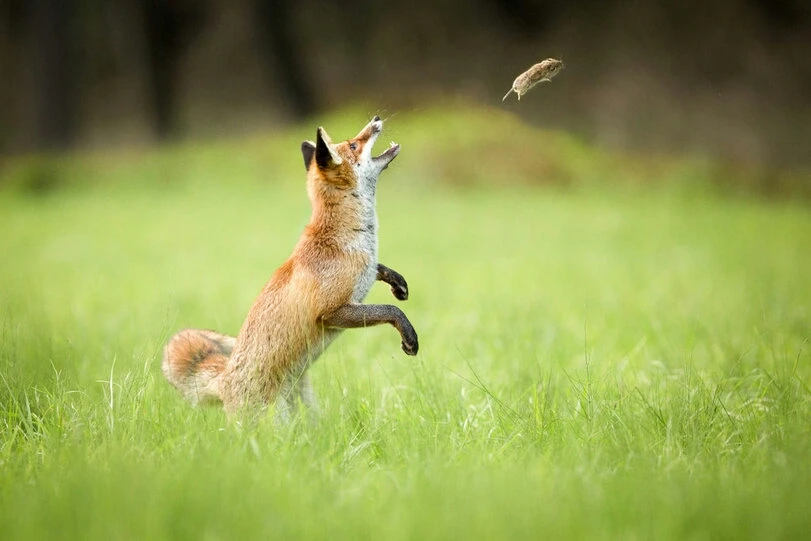
To escape foxes, voles have announced the launch of their own space program.
Like any good adventure, this one begins with lengthy preparation. Immediately before the mating season—in January, February, or March, depending on the region—the female finds or digs several burrows in her territory. She understands perfectly well that a girl with her own living space is a much more desirable prize than a simple homeless rogue. 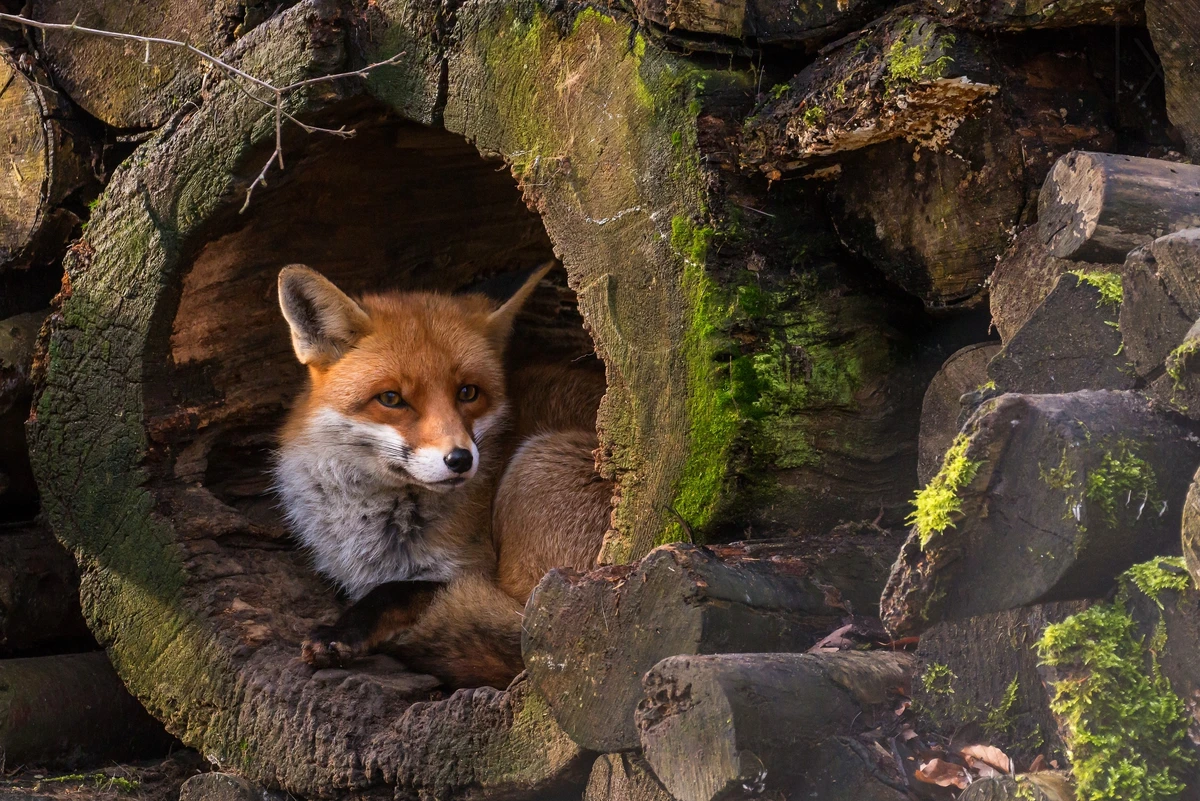
Hey, handsome, want to come visit me?
Then the female places numerous scent marks along the boundaries of her territory and screams loudly to attract as many males as possible. And they are indeed attracted. And the males aren't fools either, leaving their marks next to those of the females to show that the spot is already taken, and you'd better go home, kid. This really works on young males weakened by illness: they often retreat, not daring to participate in the competition for a paw and a heart. 
A sweet kiss on the cheek. What could be more beautiful?
Those males who decide to take the risk stoop to the lowest form of mating games—plain fighting among themselves. They will bite and scratch until the strongest male chases away all the others and is left alone with the lady. However, the losers will still have a chance to prove themselves... 
An integral part of mating rituals is the fox foxtrot—a special dance performed by the male with a potential bride. If the dance is performed flawlessly, the female may choose this male, even if he loses the competition of brute strength. 
Dancing on the cliff. How romantic! 
But fights are always inevitable.
Of course, the female will accept the victor's advances. She'll even give him a corner of her den so they can become a full-fledged family for a while and raise 2 to 6 puppies. She'll also call several homeless subordinate vixens, who don't have their own territory and live with the owner of the plot. These homeless servants are often the owner's children from a previous marriage and help the parents raise their offspring. The vixen will carefully ensure that they don't have any children of their own—she doesn't need any competition. Sometimes it even goes so far as to kill their offspring... 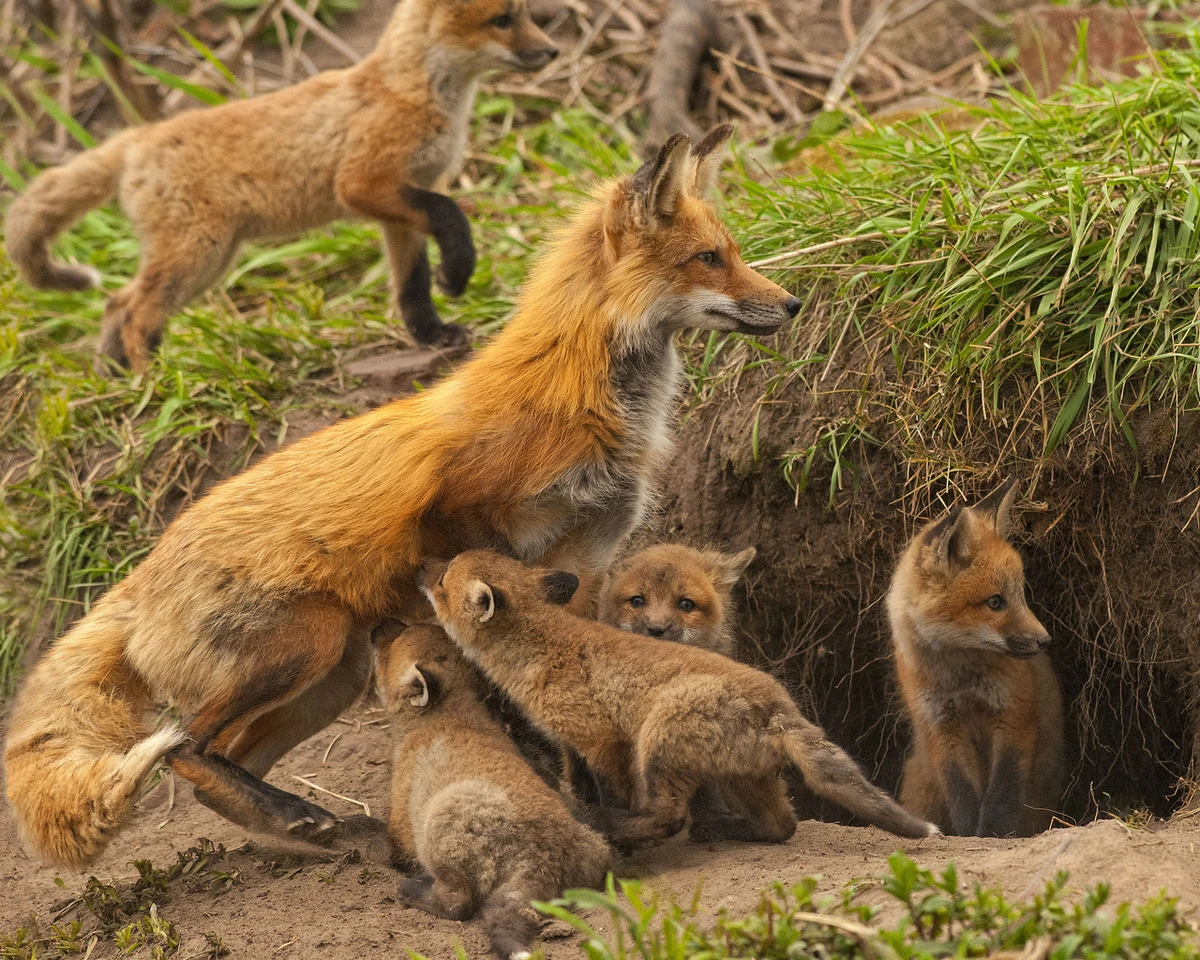
While the offspring are feeding, the vixen watches out for potential predators. She also ensures that no one breaks the rules she has established.
But the male still plays the main role in raising the offspring. He has a very strong paternal instinct, so he's selflessly devoted to his children and his manipulative wife. But she's not. If the male disappears for too long, the female fox declares him dead and begins searching for a replacement among the neighbors. And she quickly finds one, especially if she hasn't given birth yet. Since foxes haven't yet invented pregnancy tests and can't count, they easily mistake other foxes' offspring for their own. And then, if the male does return home, he sees his beautiful daughter-in-law happy with another... 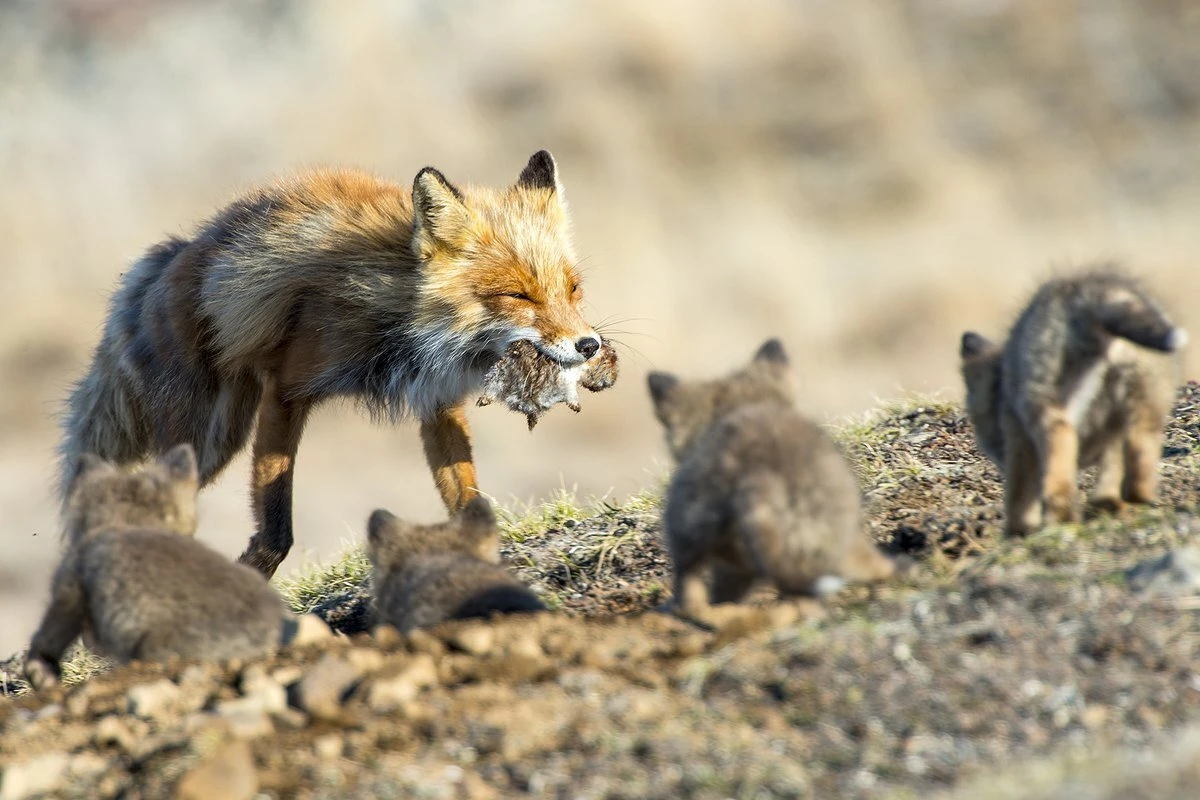
Most touching photos of fox cubs feature the father, not the mother. Or at least the stepfather.
Needless to say, such behavior is, to put it mildly, ethically questionable? Luckily for them, foxes know nothing about ethics, so they rely solely on crude practicality. The offspring of subordinate females are their food rivals. And a male who disappears for a long time is either dead, a klutz, or a poor hunter. In any case, in the dangerous and complex world of small predators, such a person won't raise offspring! 
So, which number is our father?