Sultan Tipu's Unusual Tiger: A Mechanical Marvel and Symbol of Hatred (13 photos + 1 video)
The sun was blazing hot as the clock struck one in the town of Seringapatam, near Mysore, in what is now Karnataka, India. 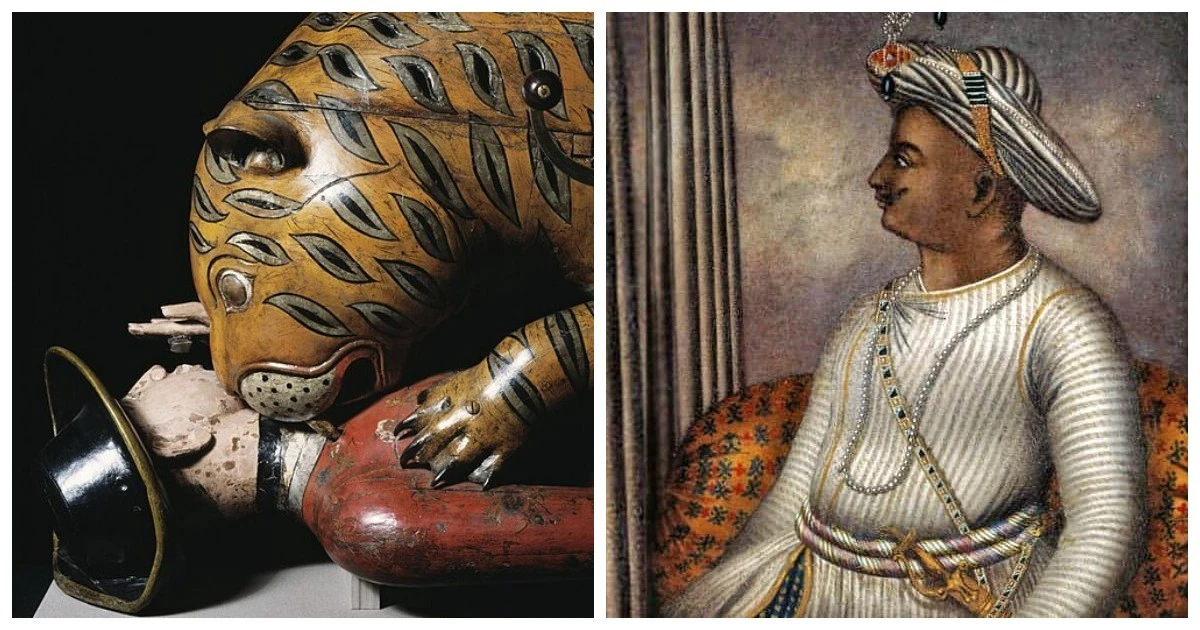
Colonel Arthur Wellesley, who commanded two parts of the British East India Company, knew that the defenders of the fortress would break for rest and food at this hour. He chose this moment for the attack. 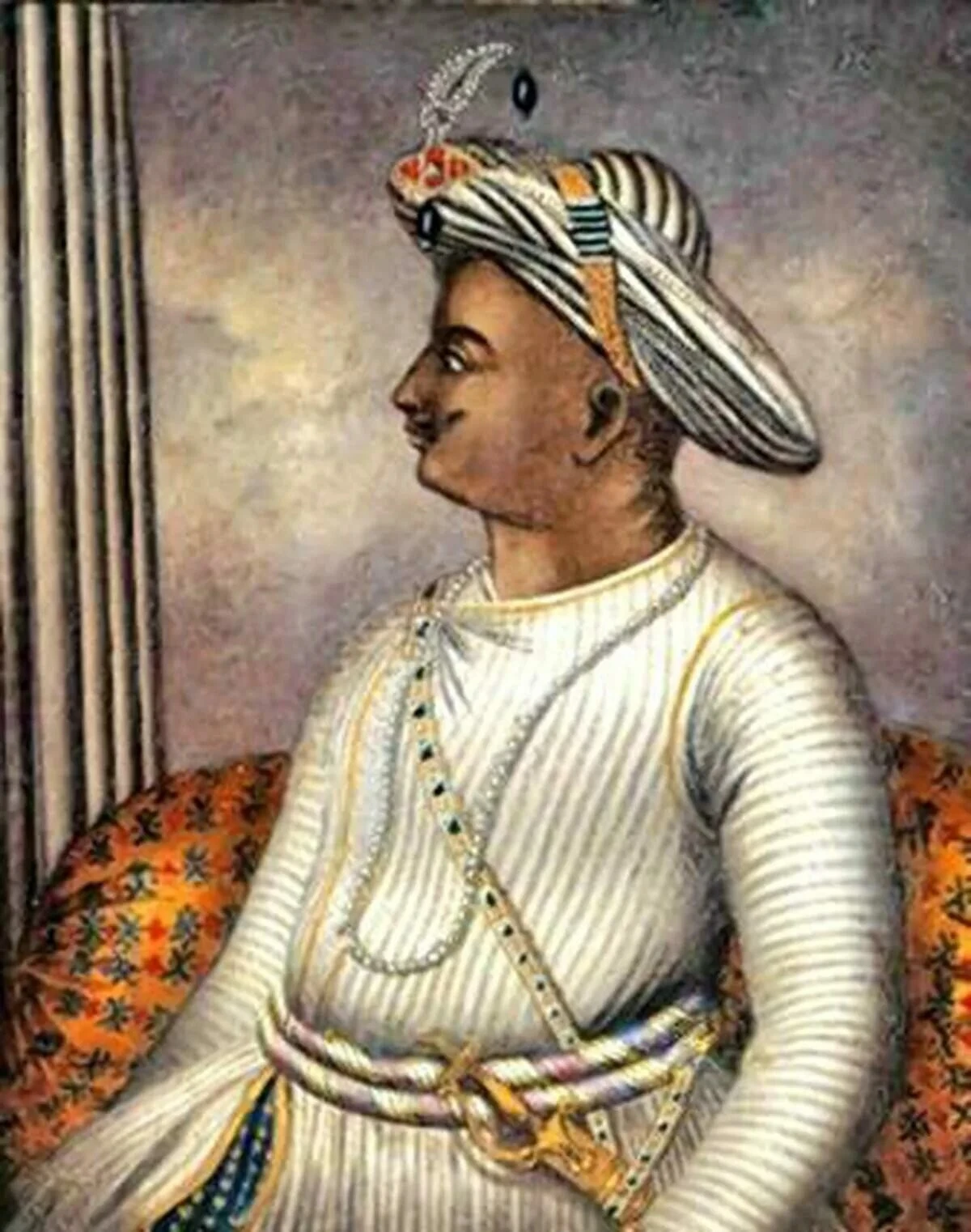
Tipu Sultan (1750–1799) was the ruler of the Indian kingdom of Mysore, with its capital in Seringapatam (Srirangapatnam). He was nicknamed the "Tiger of Mysore" or "Lion of Mysore."
On May 4, 1799, the day of the final battle between the British East India Company and the Kingdom of Mysore, the defiant Sultan Tipu fell. 76 soldiers crossed the Kaveri River, scaled the walls, and stormed the fortress. 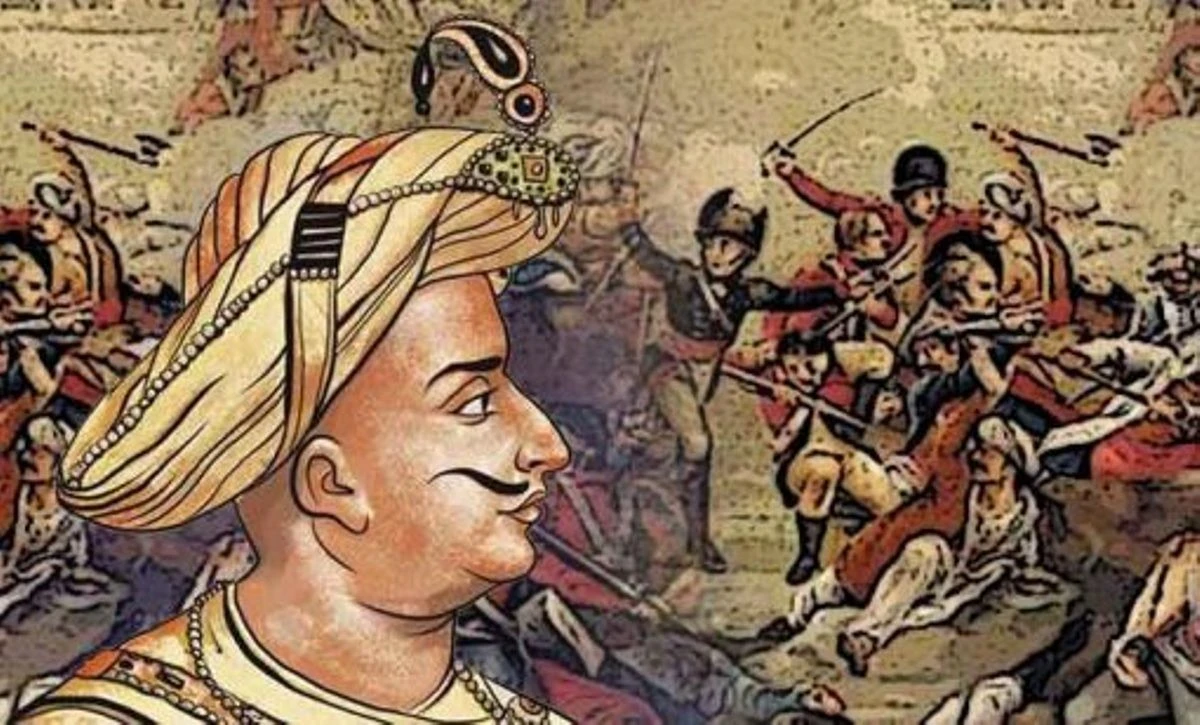
The stunned defenders were quickly overwhelmed. The fort fell two hours later. Later, the bullet-riddled body of Sultan Tipu, the "Tiger of Mysore," was found in a narrow, secret passage. 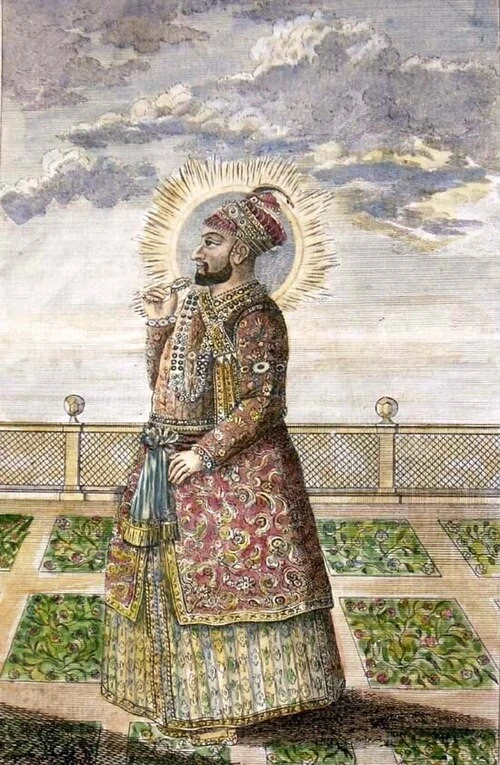
Haidar Ali - ruler of the principality of Mysore, father of Sultan Tipu
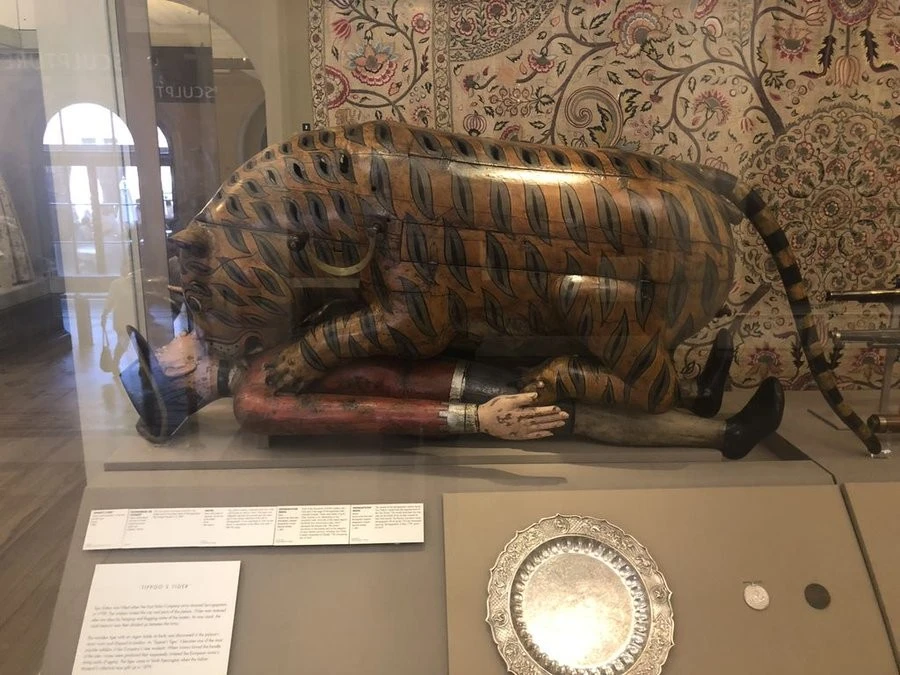
The victors began plundering the treasury, and a few weeks later, among the treasures in the palace music room, they discovered a strange object. It was a large wooden automaton depicting a tiger mauling a man in European dress. 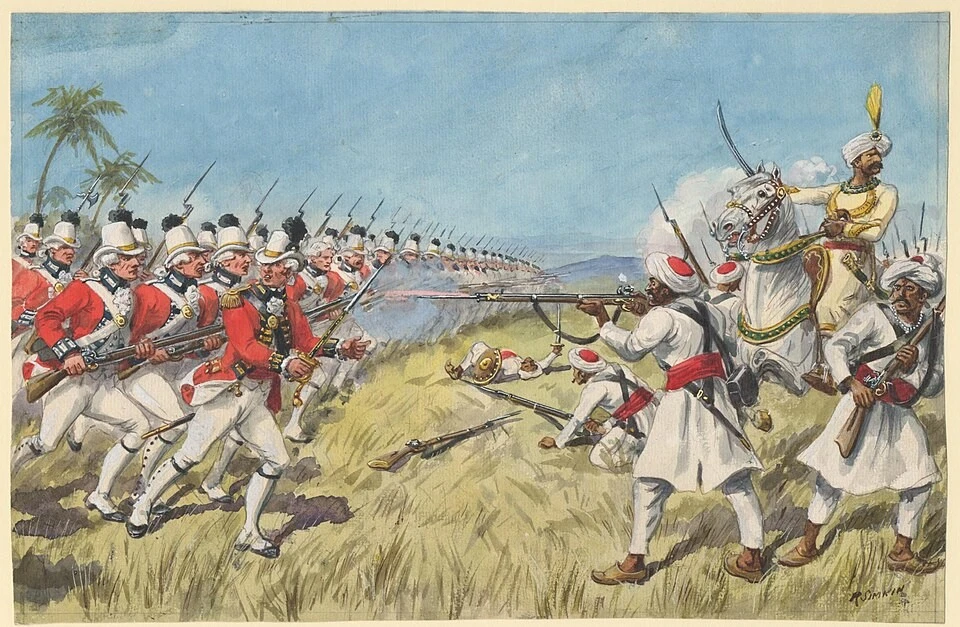
Hydar Ali in battle with the British
Almost life-size, the victim lay on his back while the beast sank its fangs into his throat. A crank protruded from the tiger's side. When turned, a hidden mechanism raised and lowered the victim's arm, while built-in bellows emitted the beast's roars and heart-rending cries. A flap on the tiger's body revealed a miniature organ with a keyboard. 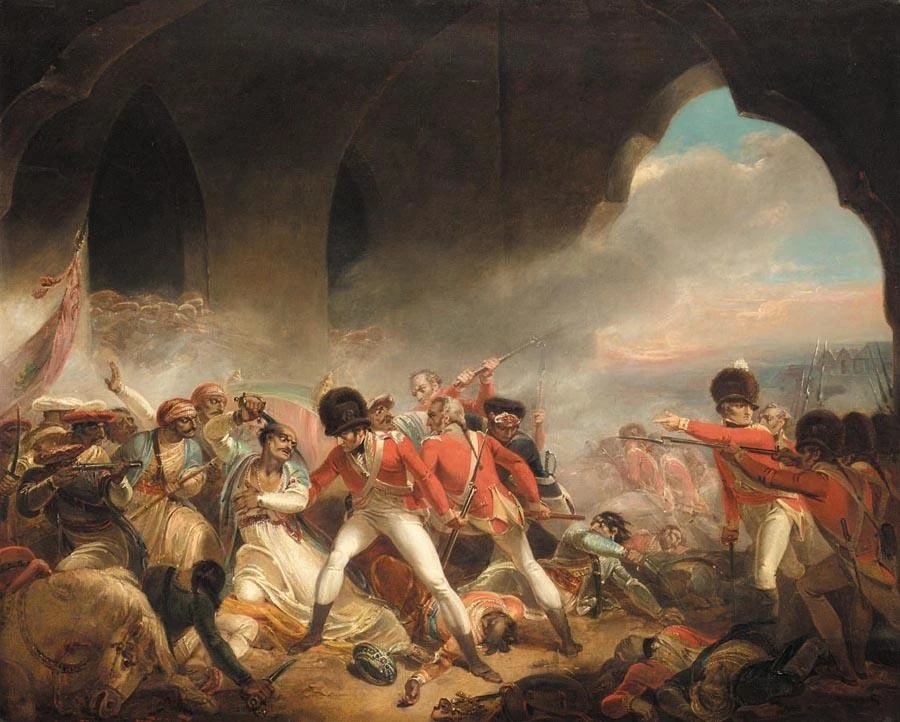
The Finale of the Anglo-Mysore Wars: The Death of Sultan Tipu. Painting by Henry Singleton
Tipu's mechanical tiger was a blatant embodiment of his hatred of the British, inherited from his father, Haidar Ali. Haidar Ali considered the British his bitter enemies, hindering the expansion of his dominions, and Tipu absorbed fierce anti-British feelings from childhood. 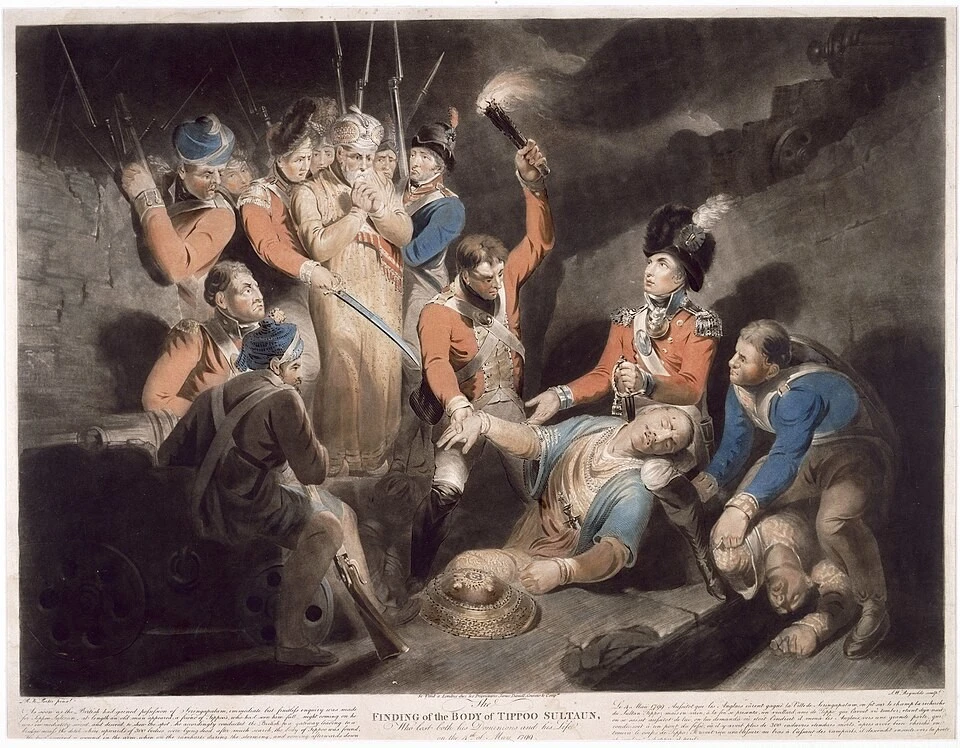
Discovery of Tipu's Body. Painting by Samuel William Reynolds, 1800
In 1792, after his defeat in the Third Anglo-Mysore War, when the Sultan was forced to cede half his lands and pay a huge indemnity, he commissioned the creation of this machine. 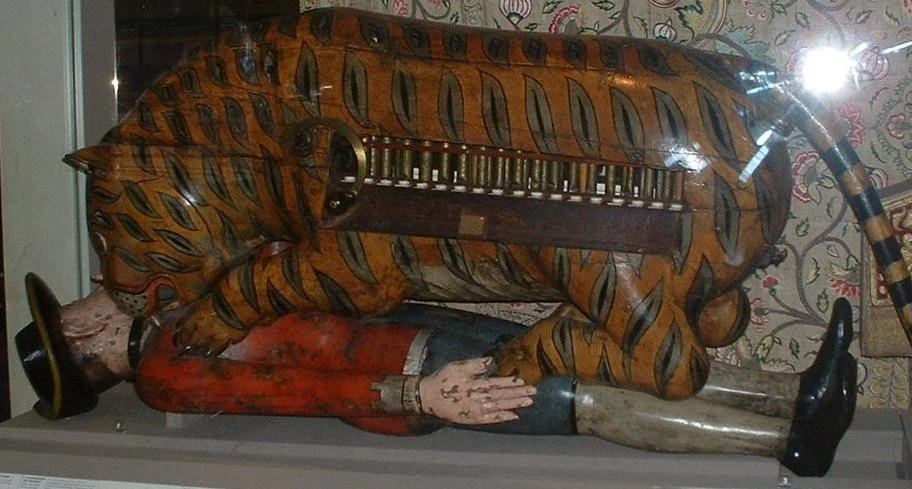
Tipu's Tiger
The tiger was the ruler's personal emblem. Its images adorned the throne, weapons, and armor, its stripes accented the walls and uniforms, and live tigers were kept in the palace itself. He even chose his nickname, "The Tiger of Mysore." The mechanical tiger became a symbol of his thirst for victory over the British. It was said that the sultan often amused himself by turning the crank and listening to the cries of his victim. 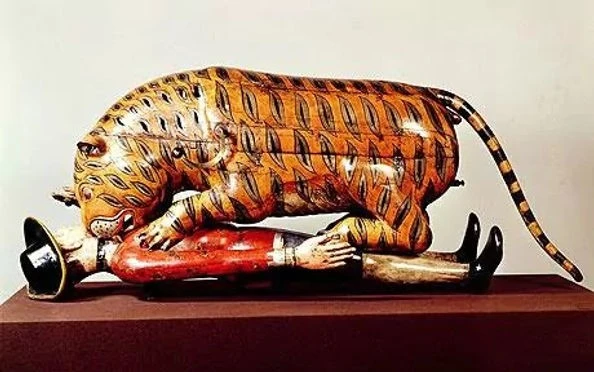
The British, of course, were not amused by this amusement. Upon discovering the ingenious mechanism, the Governor-General of the East India Company called it in a memorandum "a monument to Tipu's arrogance and barbaric cruelty" and "further proof of the profound hatred and utter disgust" he harbored for the English. 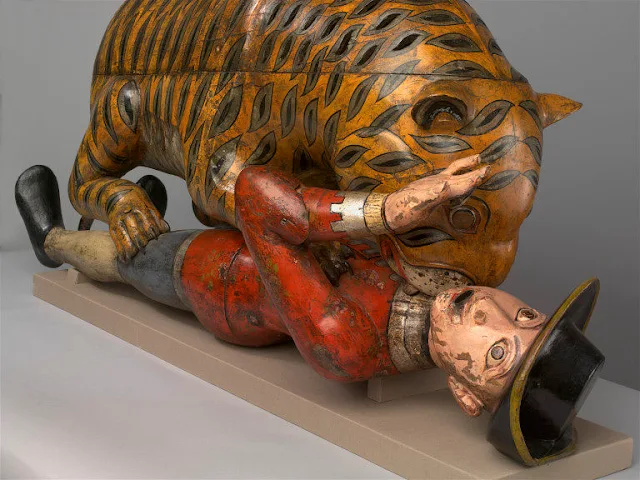
For a time, the curiosity was displayed in the reading room of the East India Company Museum and Library in London. It became incredibly popular, as anyone could approach and set it in motion to hear its roaring and groaning sounds. The handle couldn't withstand such abuse and soon broke, much to the relief of the students studying in the room. 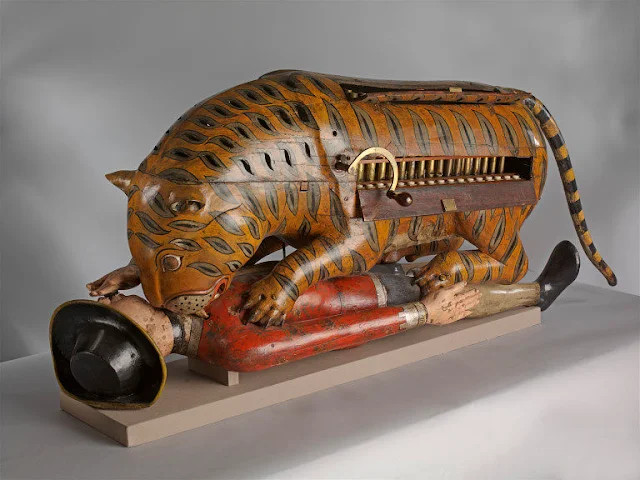
Since 1880, the tiger has been kept in the Victoria and Albert Museum, remaining one of its most famous exhibits. Its mechanism is now too fragile to function. During World War II, the museum was hit by a bomb, shattering the machine into hundreds of pieces. After the war, it was painstakingly reassembled, but it was never revived. 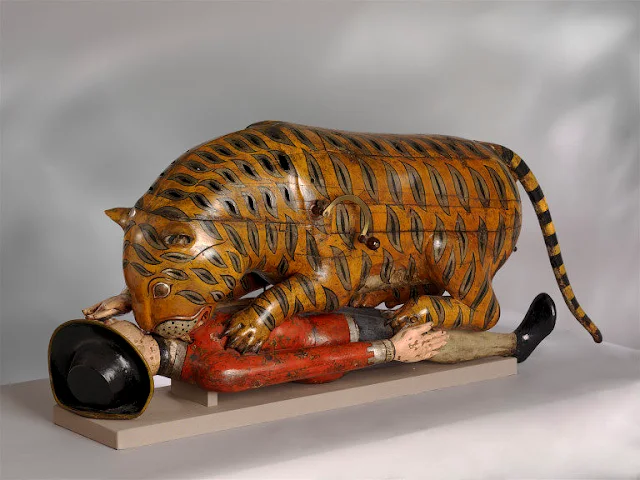
Today, Tipu Sultan's tiger occupies a prominent place in exhibits dedicated to India's resistance to British rule, as well as colonial prejudices and imperial aggression. And in museum shops, its image lives on in the form of postcards, model kits, and plush toys.