An asteroid impact on the Moon in December 2032 could be accompanied by a powerful meteor shower over Earth. This would also increase the threat to orbital satellites and communications systems. 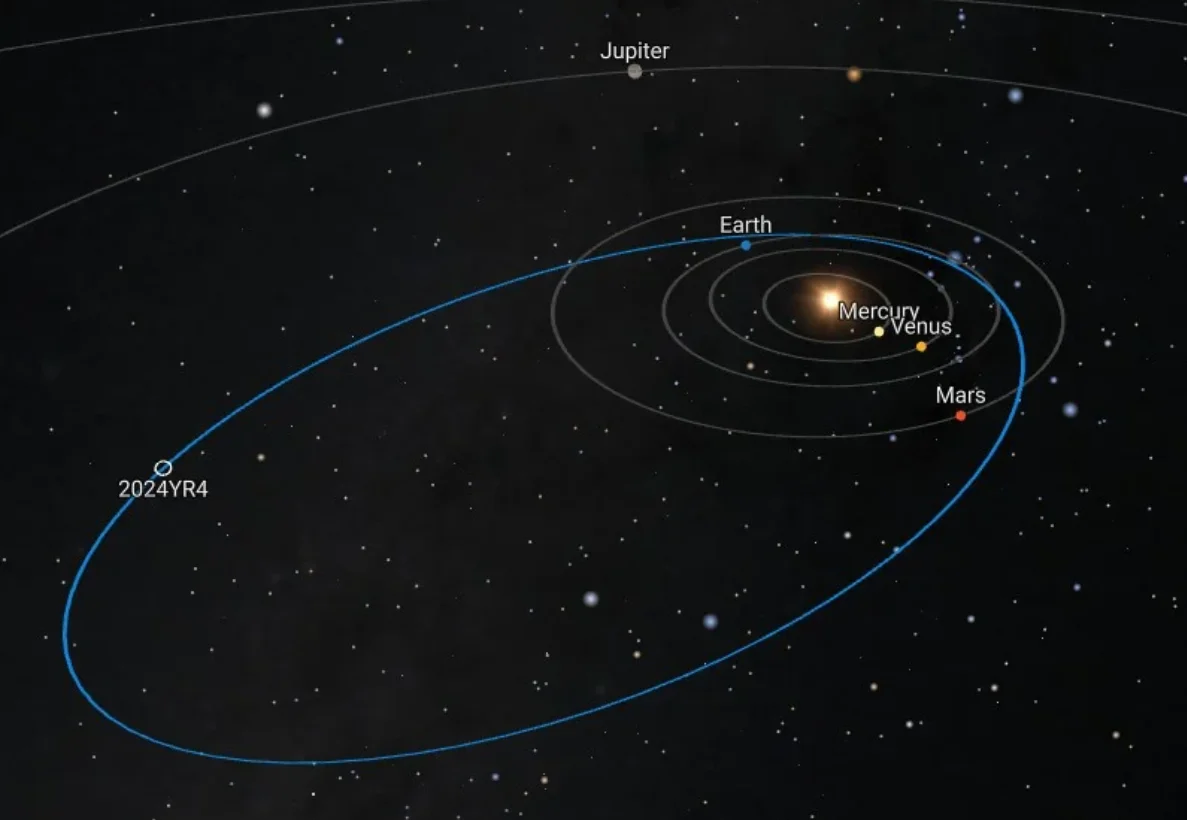
On December 22, 2032, asteroid 2024 YR4, approximately 60 meters in diameter, could collide with the Moon. The probability of this event is estimated at approximately 4%. This is low, but sufficient for scientists to calculate the consequences in advance—not only the risks, but also the rare scientific opportunities.
In a preprint on arXiv, Yifan He of Tsinghua University and his colleagues describe the data that could be obtained if an impact were to occur. Calculations indicate that the energy released would be comparable to the detonation of a medium-class thermonuclear device and would be approximately a million times more powerful than the last major impact on the Moon in 2013.
The impact would create a crater approximately one kilometer wide and up to 260 meters deep. A pool of molten rock approximately 100 meters in diameter would remain at the center. This melt would cool over several days, and the James Webb Space Telescope would be able to observe the process in infrared light. Such data would help clarify how lunar craters form and how the moon's surface has changed over time. 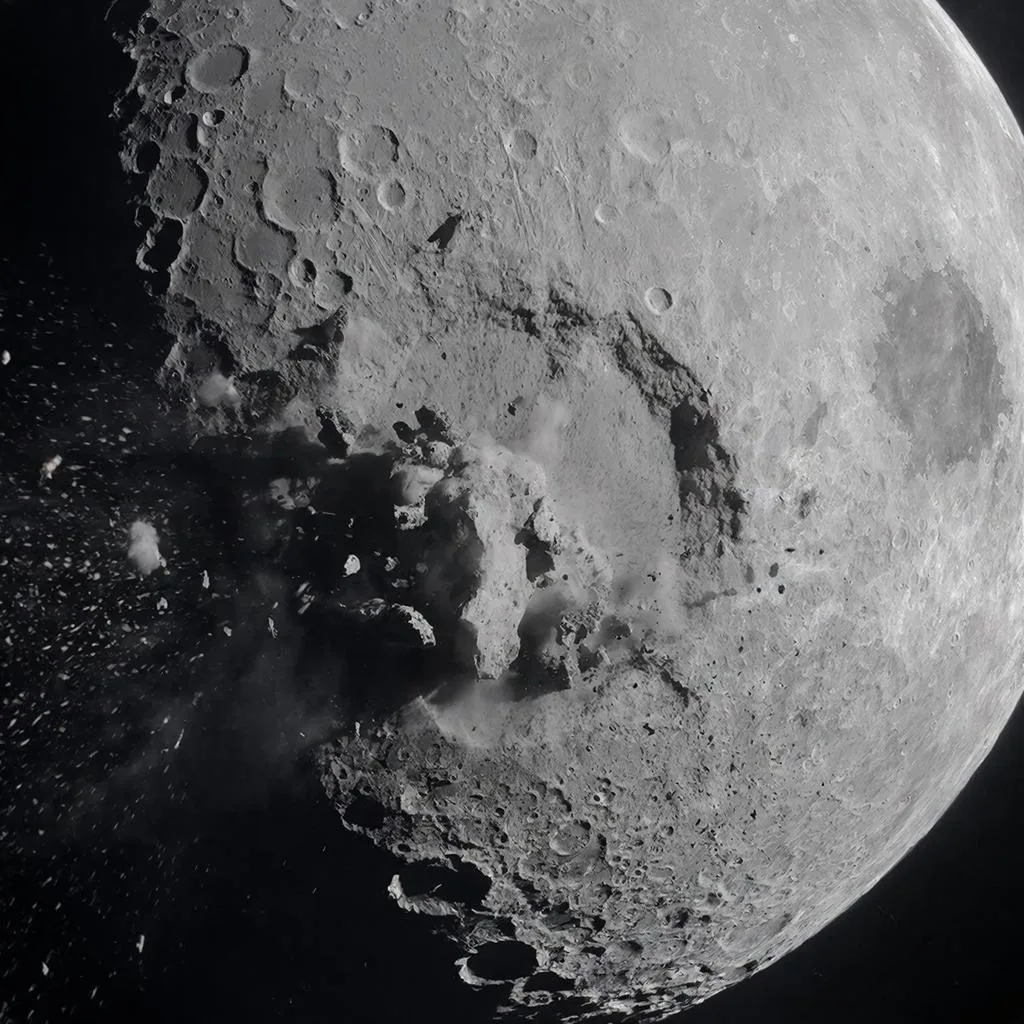
The impact will also trigger a global lunar earthquake of magnitude 5.0—the strongest ever recorded by seismometers. Analysis of the wave propagation will provide new information about the Moon's internal structure without drilling.
Another consequence is a debris flow. It is estimated that up to 400 kg of lunar material could enter the Earth's atmosphere. Meteor activity is expected to peak in late December 2032 and could reach tens of millions of flashes per hour, including hundreds of bright fireballs. The main impact zone is predicted to be over South America, North Africa, and the Arabian Peninsula.
At the same time, the debris poses a threat to satellite constellations that support communications and navigation. This is why space agencies are discussing the possibility of deflecting the asteroid's trajectory. While the probability of impact remains low, no decision has been made. But if it increases, the choice will be difficult—between a unique scientific opportunity and the safety of orbital infrastructure.Scientists have dubbed them "black smokers," even though theoretically there shouldn't be any water sources there! So, water appeared on Earth from springs rising from the depths and filled Pangaea, forming the Tethys Ocean. With the appearance of water, life also emerged, which also aligns with the majority of scientists' opinions that life originated in the sea, and that on Earth there was a time of widespread flooding. In other words, the new theory doesn't overturn existing theories, but merely reinterprets geological events! However, the outflow of hydrogen from the Earth's core lowered its density, thereby causing an increase in volume. This caused stress in the core and led to ruptures in the Earth's crust in many places. These crustal fractures are clearly visible and mapped on Earth's maps. As water formation continues, so too does the constant expansion of the Earth's interior, creating new crust. This same cause explains volcanism, which causes earthquakes from the expansion of old faults and the formation of new ones. 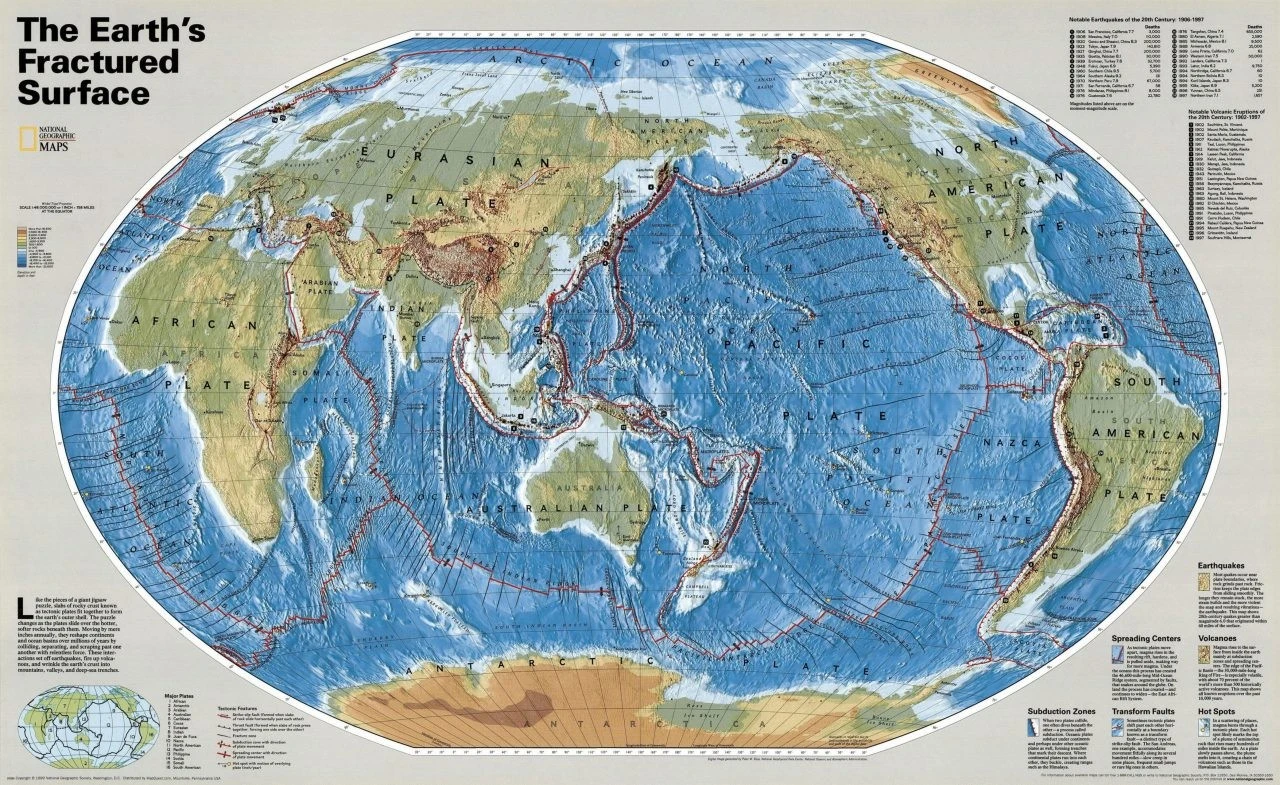
Map of Earth's tectonic faults
Add your comment
You might be interested in:



















Margaret Hamilton Dies at 90: The Story of the Moon

25 Incredibly Beautiful and Rare Stones (26 Photos)

16 Fascinating and Surprising Facts About Life in Sweden

30 Everyday Details That Will Change How You See the World

Hypnotic and Oddly Satisfying GIFs That Show How Food Is

Who Is the Woman Standing Next to Trump — and What's Going

"What Is This Thing?": 20+ Bizarre Objects That

13 "Healthy" Habits You Should Actually Quit (14

Queen of Thailand completes first solo flight in Gripen
