The deepest-sea multicellular organism on Earth (3 photos)
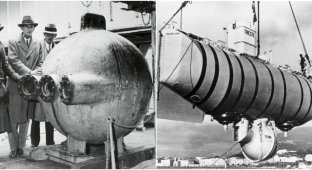
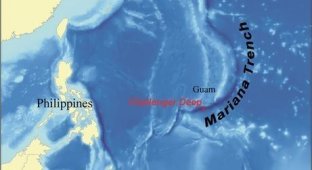
In 1960, the Swiss-American bathyscaphe Trieste reached the bottom of the Challenger Deep, the deepest point in the world's oceans (10,935 ± 6 meters). There, where the pressure is approximately 1,100 atmospheres, the crew lowered a bottom trawl, which caught 90 amphipods, providing the first evidence of life (and multicellular life at that!) in the Challenger Deep. 
The Bathyscaphe "Trieste"
It turned out that the researchers were dealing with amphipods of the species Hirondellea gigas, which was described back in 1955 by Soviet scientists Yakov Arkadyevich Birshtein and Mark Evgenievich Vinogradov based on specimens from the Vityaz expedition to the Kuril-Kamchatka Basin (the specimens were obtained from a depth of approximately 6,800 meters). 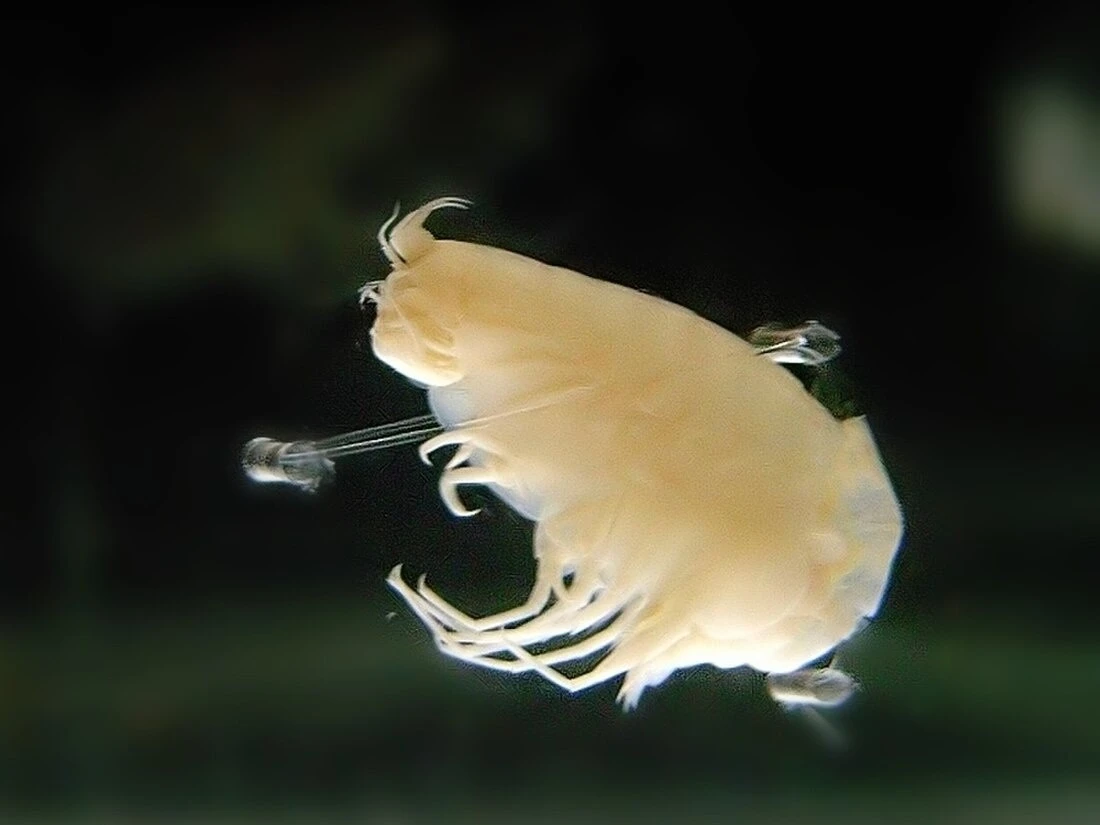
It was then that oceanographers realized just how amazing these creatures were.
Giants among their kind
It's no coincidence that the word "gigas" is part of the name. With a body length of about 7.5 centimeters (for males), they are three times larger than their coastal relatives. It's a paradox: the largest members of the family live at depths where the food they are accustomed to is scarce. How is this possible?
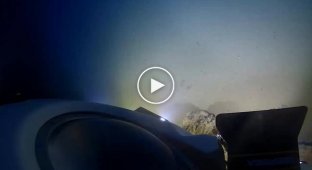
Japanese scientists have found the answer. In 2012, while studying amphipods in the Challenger Deep using the ASHURA deep-sea camera, which was encased in a balsa (ochrome) frame, researchers observed these deep-sea dwellers ravenously attacking wooden elements. Within three hours, about 40% of the frame had been consumed! It turned out that these amphipods can digest wood.
Storms and floods carry trees into the ocean. At first, the logs float, but gradually become encrusted with marine organisms and begin to sink. At critical depths (1,000–1,500 meters), the pressure forces the air out of the wood, causing it to quickly sink to the bottom.
While fish and crabs fight over the rare carrion in the upper layers, what neither of them wants—wood—sinks to the very bottom. It became a key part of the Hirondellea gigas' diet. Their unique enzyme, cellulase, converts cellulose into glucose. And the most interesting thing is that this enzyme works best under extreme pressure. Evolution has created the perfect abyssal inhabitant. 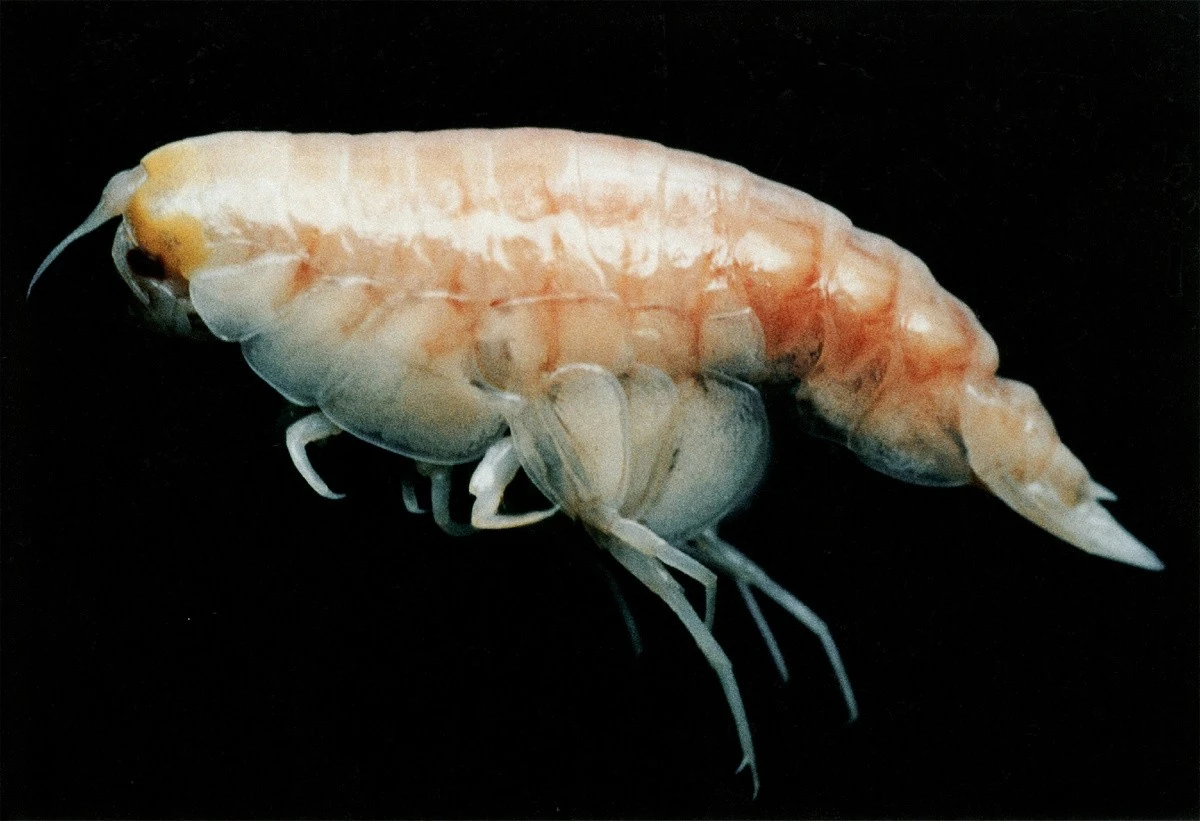
Do you think efficient wood consumption is the main feature of this marvelous creation of nature? Absolutely not!
Aluminum Armor
At a depth of 11 kilometers, the pressure converts dissolved carbon dioxide into carbonic acid, meaning the calcium carbonate shells should dissolve. But Hirondellea gigas have found a solution: they secrete gluconic acid from their gut, which draws aluminum from the bottom mud. When aluminum enters alkaline seawater, it immediately thickens, turning into an insoluble protective gel that coats their shell.
Lords of the Abyss
These creatures live in huge migratory schools of hundreds of individuals. Females can carry up to 250 eggs directly on themselves. The lifespan of Hirondellea gigas is estimated at 5-10 years.
These amphipods are the true rulers of the darkest depths of the oceans. Where humans can only remain for a few minutes, or even aboard a bathyscaphe, they thrive, reproduce, and thrive for millions of years.
In 2025, Chinese scientists completely sequenced their genome (13.92 gigabases), which turned out to be one of the largest of any animal. This achievement brings us closer to understanding how life originated and evolved on the most beautiful planet in the Solar System.