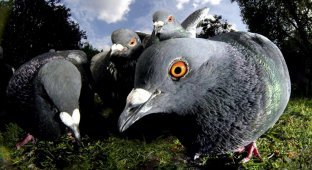
Winged aerial photographers of a resourceful German pharmacist (10 photos)
At the dawn of the 20th century, at a time when humans were just mastering flight, an event occurred that combined the ancient art of pigeon breeding with the latest technology. 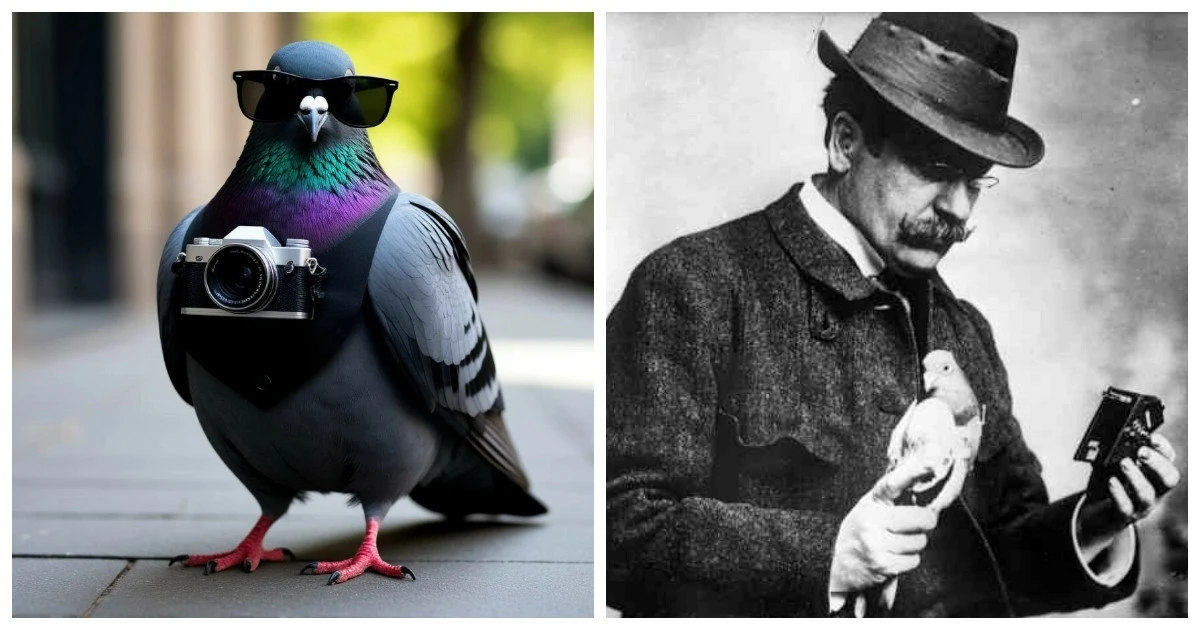
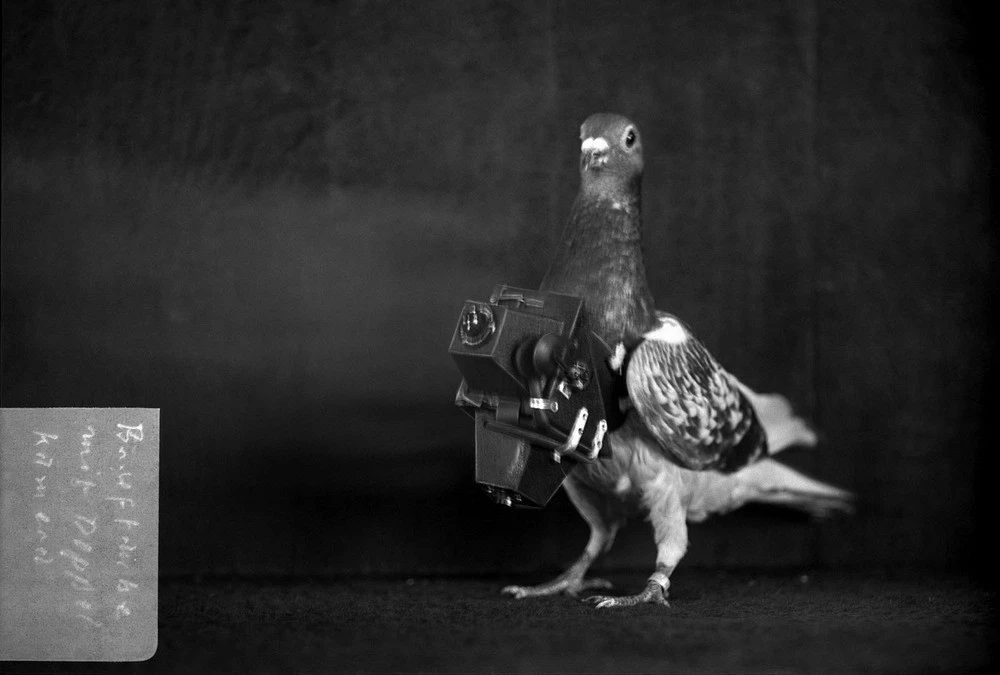
German pharmacist Julius Neubronner received a patent for a device that transformed an ordinary homing pigeon into a flying camera. His invention consisted of a tiny camera attached to the bird's chest, allowing it to take unique photographs from above. 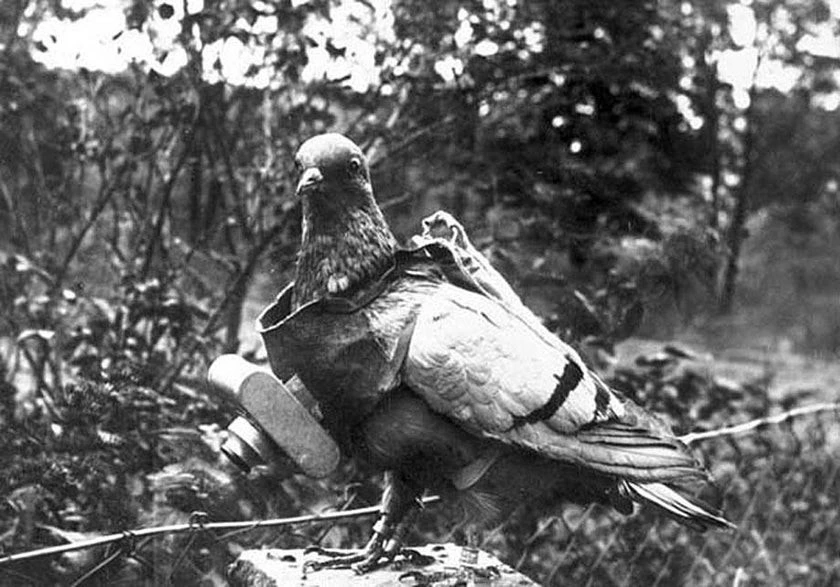
The Neubronner family from Kronberg, near Frankfurt, ran a pharmacy for generations. Like many at the time, they used a time-tested method to expedite the delivery of prescriptions and medications to the remote sanatorium: homing pigeons. This efficient service operated for decades. 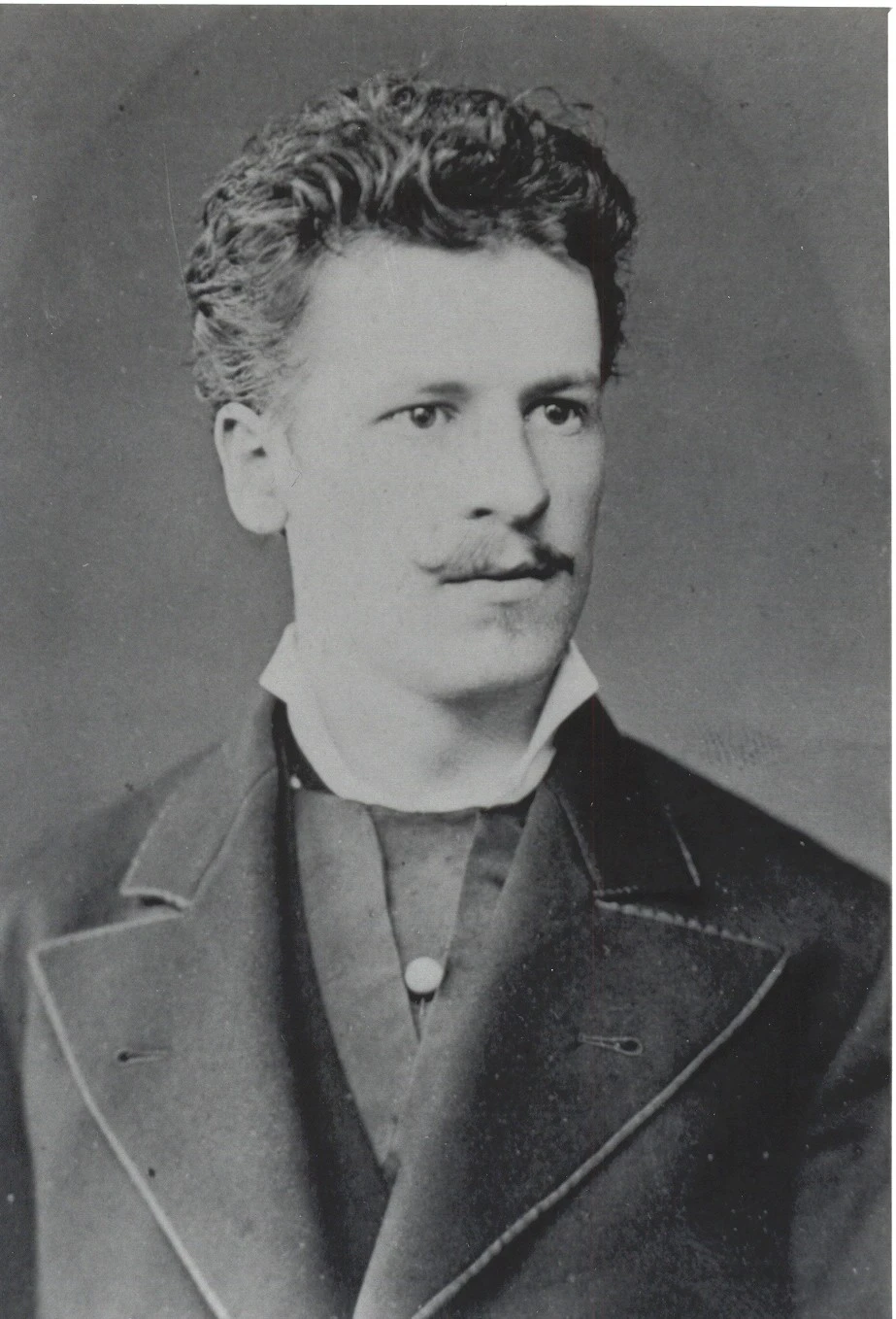
Julius Neubronner
One day, one of the feathered couriers, sent out on yet another errand, disappeared. A month later, when no one was expecting him, the pigeon returned home in excellent shape, clearly untouched by hardship. This mysterious return planted the seed of an idea in the enterprising Julius. He wanted to know where his winged helpers were going. 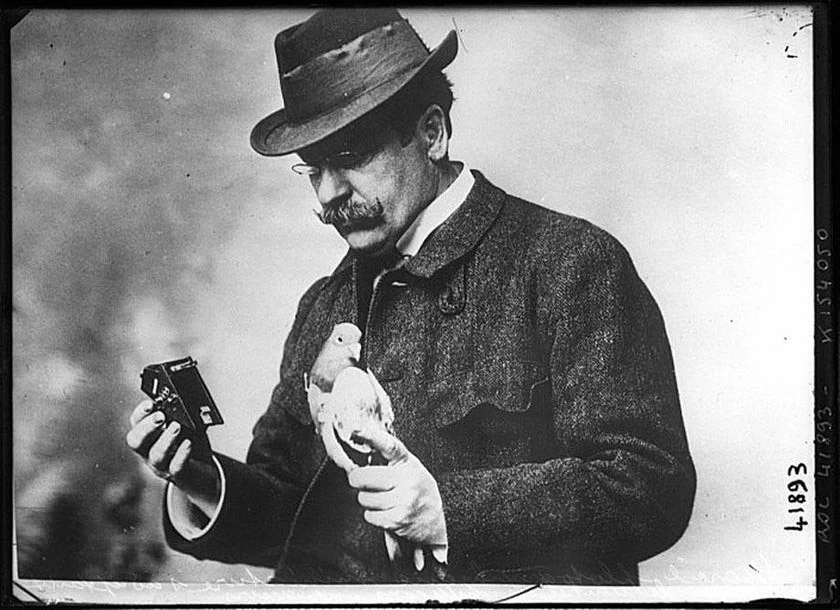
Julius Neubronner with a pigeon and a camera.
Having acquired photography skills, Neubronner constructed a lightweight wooden camera. The device was attached to the bird's body with a special harness and an aluminum plate. Inside, a mechanism powered by compressed air automatically opened the shutter at set intervals. In a single flight, the pigeon could take up to thirty shots on a small film roll. This entire ingenious device weighed no more than 75 grams, a manageable load for a trained bird. 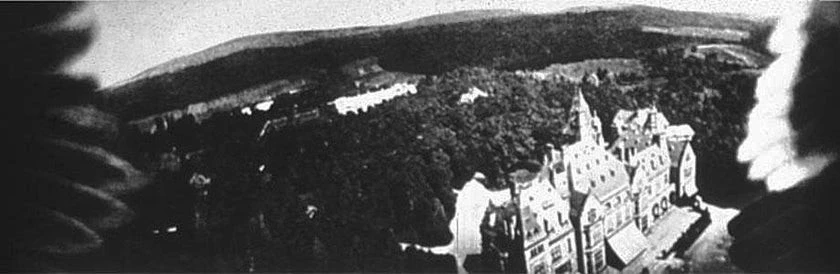
Aerial photograph of the Schlosshotel Kronberg, showing the wings of a pigeon
The resulting aerial photographs were striking in their quality and unusual perspective. Inspired by this success, the inventor continued experimenting, creating models with two lenses for shooting in opposite directions and devices for obtaining stereoscopic images. When Neubronner attempted to patent his brainchild, experts were skeptical, doubting the physical feasibility of such a flight. Only a demonstration of the finished photographs dispelled his doubts, and in 1908 the patent was officially issued. 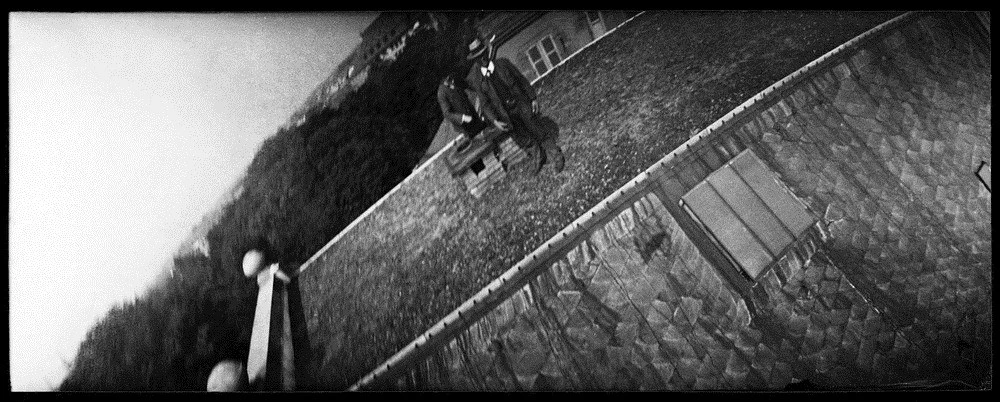
The unique technology became a sensation at international exhibitions. In Dresden, the public witnessed the arrival of a squadron of pigeon photographers, and the developed images were immediately printed as souvenir postcards. 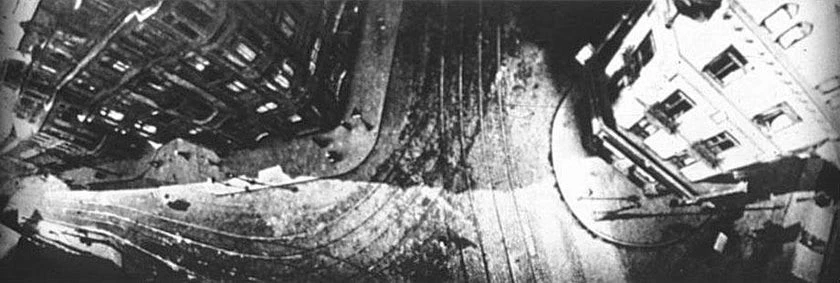
View of Frankfurt, Germany
With the outbreak of World War I, the military showed interest in the invention. Unassuming birds, capable of flying at extremely low altitudes and ignoring the din of battle, seemed ideal reconnaissance aircraft. They were used for aerial photography of enemy positions. 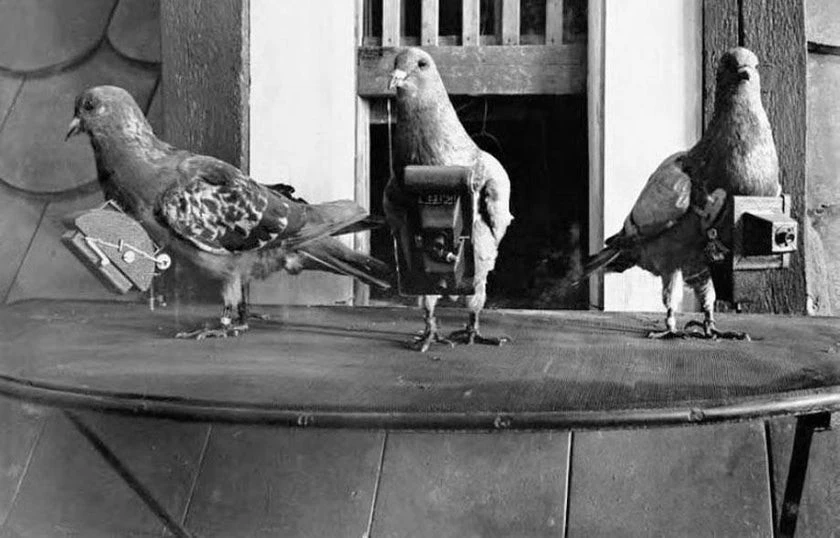
A Magnificent Trio
The use of pigeon photography continued into World War II. There were reports of the German army developing a camera with a capacity of 200 exposures, and of French projects using dogs to deliver birds behind enemy lines. Swiss photographer Christian Adrien Michel contributed by improving the shutter mechanism and creating a panoramic model. Echoes of these technologies persisted until the 1970s. 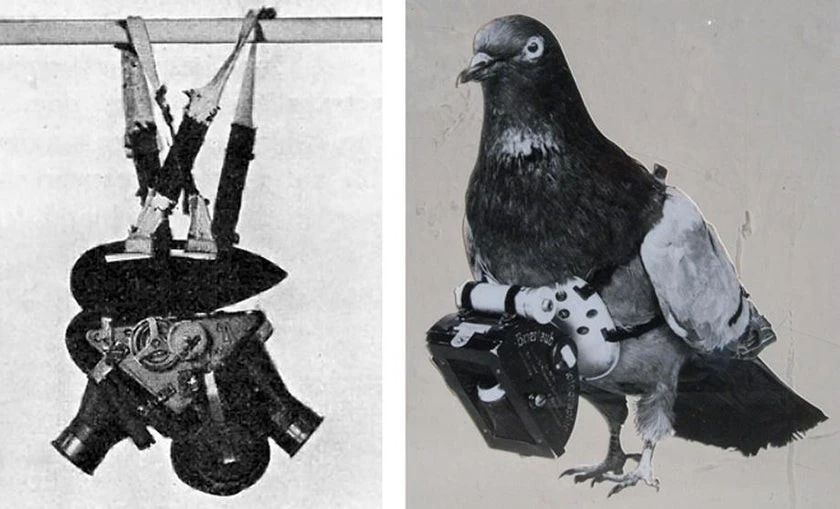
Julius Neubronner's patented pigeon camera with two lenses and safety harnesses
Today, in the age of satellites and drones, aerial photography has become commonplace. But it was Julius Neubronner and his unusual assistants who took the first step toward a bird's-eye view. And the fate of the missing pigeon that started it all turned out quite well. It turned out that it had spent a month in Wiesbaden, where it was cared for by a local restaurateur, which explains its well-fed and contented appearance upon its return.