Never cross a crow. It will seek revenge for the rest of its life! (10 photos)
Corvids are incredibly intelligent and social. Rooks can easily solve puzzles designed for three-year-olds. Magpies even hold "funerals" for dead members of their own group. Common hooded crows are needless to say: according to scientists who have studied these birds down to the last feather, their intelligence is comparable to that of children of five or even seven years old! 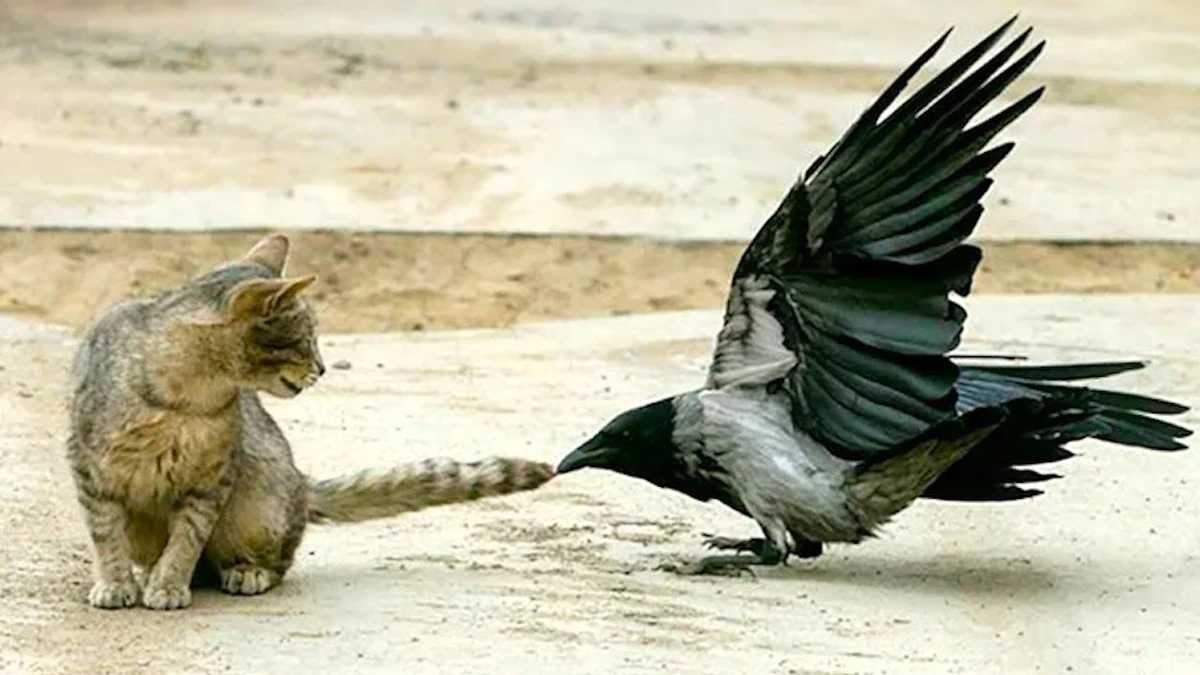
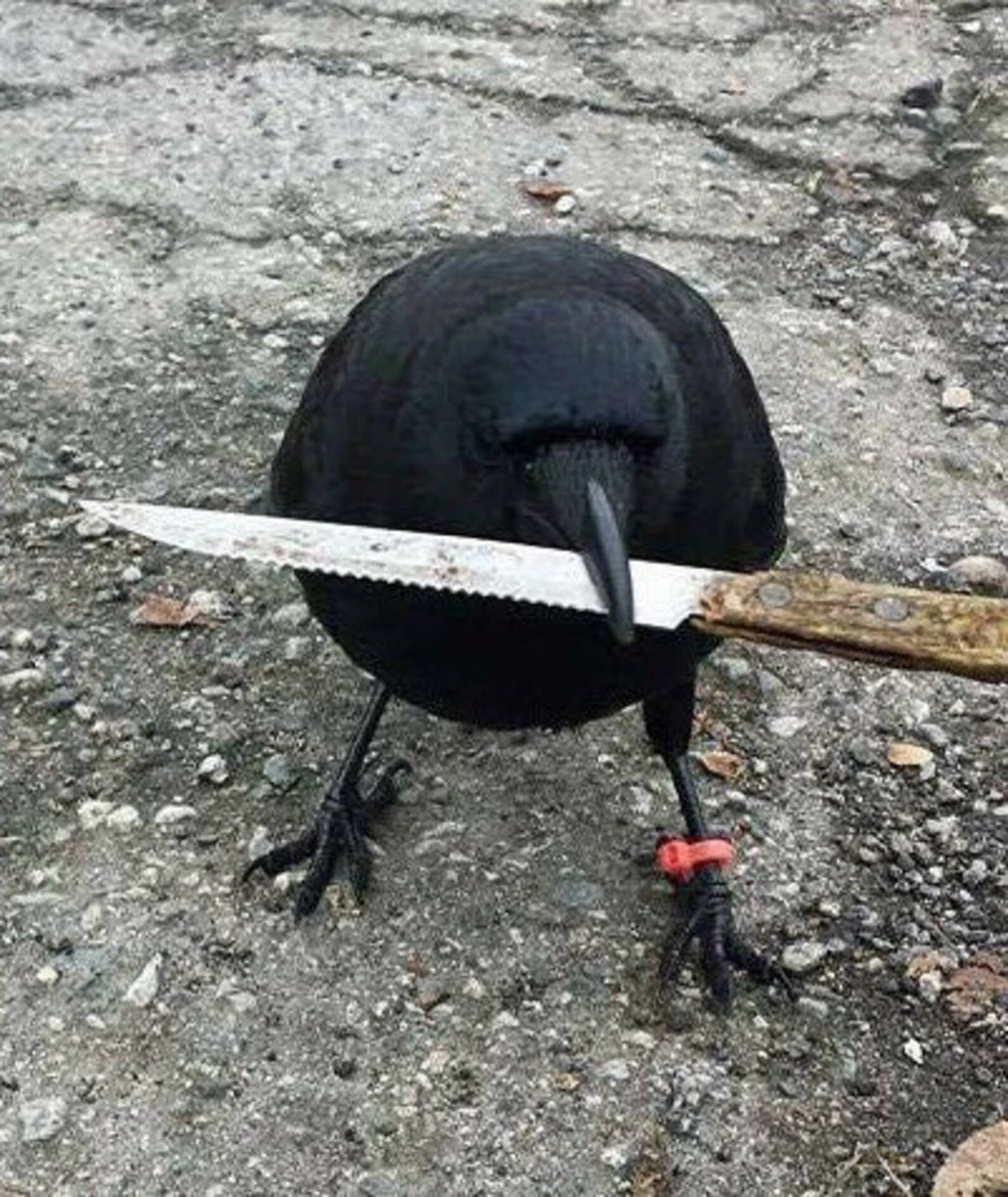
They've already learned to use bladed weapons! Just a little bit more, and they'll get to firearms!
Like us, crows are a highly sociable species. They give each other names, social roles, and, it's believed, even exchange simple information. This is how they find the most delicious garbage dumps and warn each other of danger. More food sources mean more chances for chicks to fledge and establish their territory quickly. More vigilant eyes mean fewer accidents for the population. That's what communication is for. 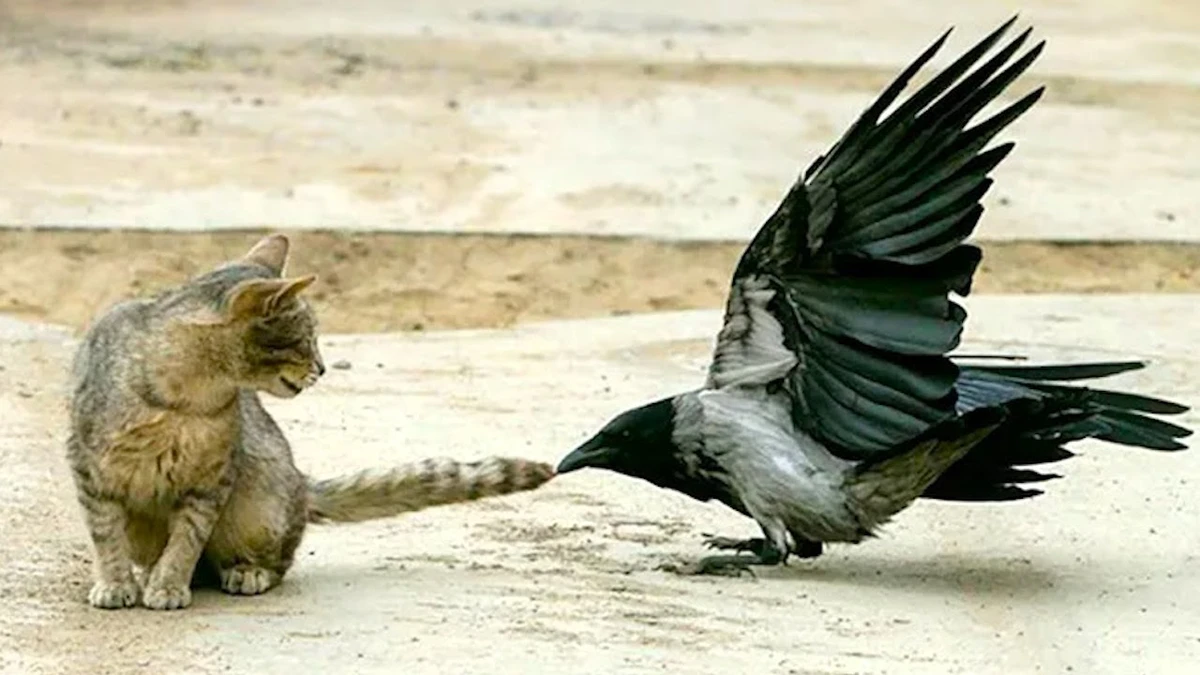
To prevent danger, you must prevent it! Many corvids bully cats and dogs, driving them away from their territory. It looks funny, but in reality, it's an effective way to protect the nest and chicks.
You're probably dying to make friends with the Karkusha in your yard. But don't rush: one wrong move and you could easily fall out of favor. If you frighten a flock or, God forbid, disturb a chick, the crows will remember your face, figure, and clothing! Having spotted an enemy, the birds happily scold the offender, launch sneak attacks, and hurl white "bombs" at them. 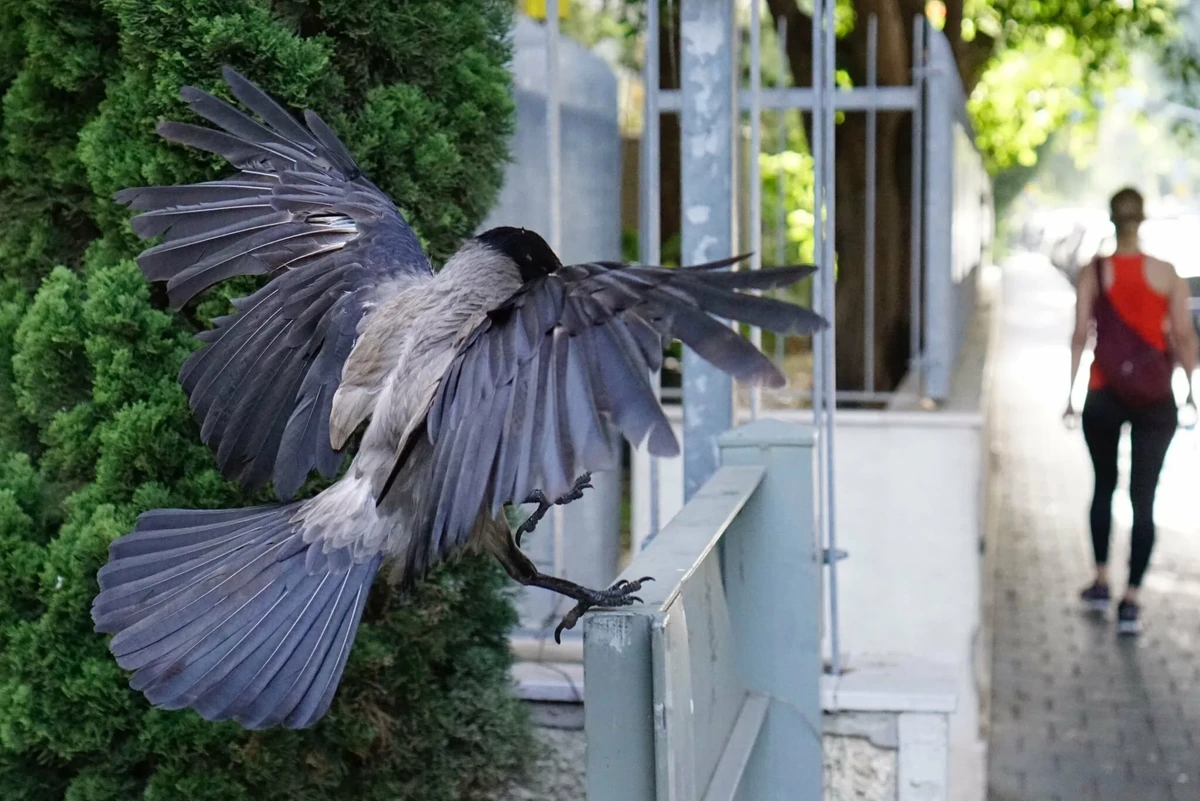
First, you chase the crow off the path, and then it finds out where you live, who your family is, and what your dog looks like.
Experiments show that crows can continue gloating for a long time: from a month to two and a half years, or even for life. And yes, they can also mistake you for another similar person, so beware. Moreover, crows will pass this information on to their friends. Insult one bird, and you've offended the entire flock. Even those birds with whom you personally haven't had a bad relationship will treat you with disdain. 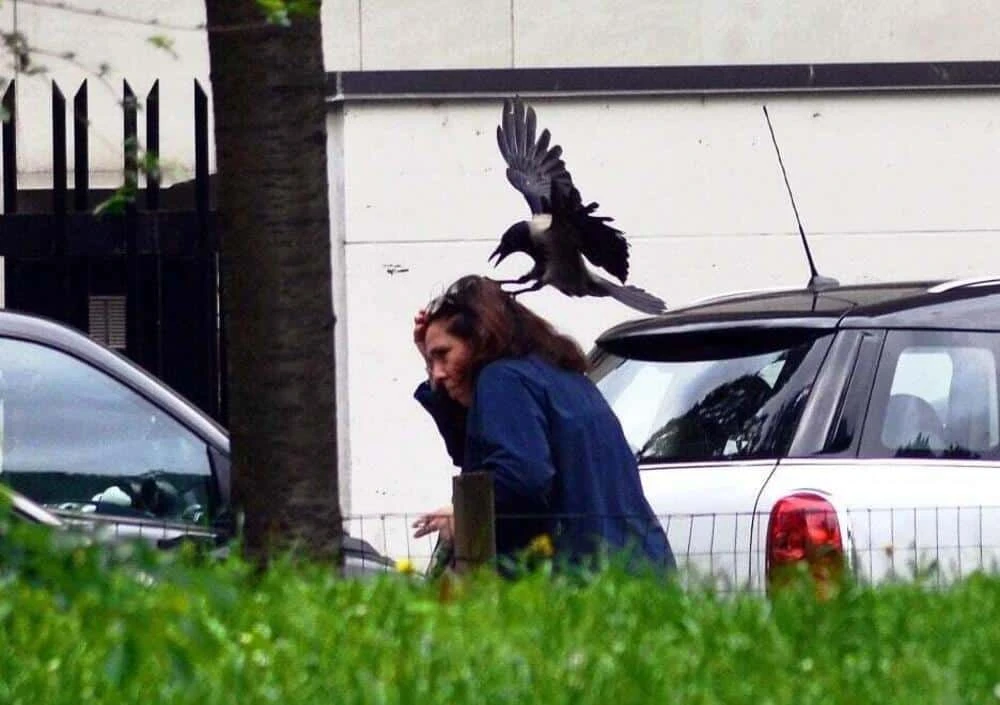
You should have listened to your mother and put on your hat!
Jackdaws also rise up to defend their home and their relatives with the same zeal. They recognize people by face and even follow the gaze of a predator. Scientists conducted an experiment: they divided into two groups. One group banded the chicks, meaning they handled the baby jackdaws. The other group approached the nest, but no further. The "evil" biologists wore one mask, while the "neutral" ones wore another. As a result, upon seeing a scientist wearing an "evil" mask, the parents quickly returned to their brood. 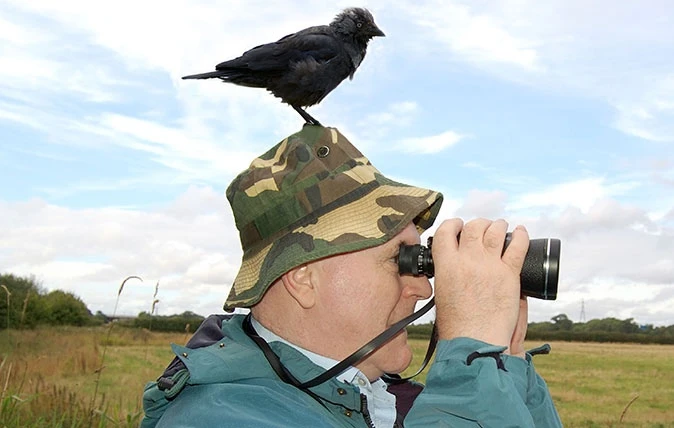
Where is that jackdaw?
Another experiment shows that jackdaws share information about untrustworthy elements with each other. Scientists divided 34 flocks into two groups. When a human approached, one group was given a recording of warning calls from their fellow jackdaws, while the other group was given the normal calls that jackdaws use when communicating. The result: the next time a human approached, the group that listened to the warning recording returned to the nest twice as fast as usual! Even though the human had done nothing wrong, he was "slandered" by the birds in the speaker! 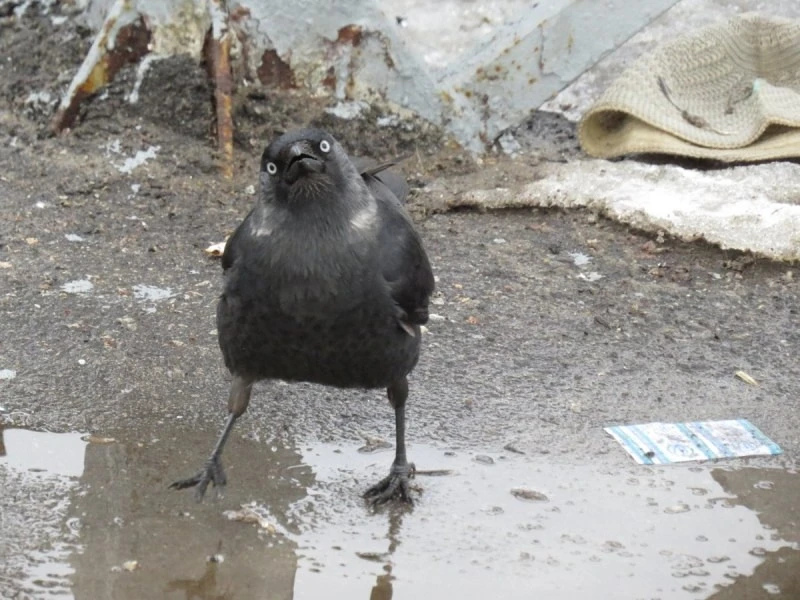
Oh, you're that Svetka! If only you knew the rumors about you in the neighborhood!
Everyday observations only confirm the facts. There are tons of stories on the internet about this. Some are ridiculous: "I once accidentally threw a stick at a crow, and it came back and dropped a dead toad on my head!" There are some downright terrifying ones: in 2023, in Singapore, crows attacked 10 people in 20 minutes! They pulled their hair and pecked them right on the crown of their heads, defending the nest! 
Such attacks seem funny, but a crow's powerful beak can easily sever a head.
We've covered how and why crows might attack you. Now let's talk about what to do about it. Do you really have to endure a vendetta for years before they leave you alone? And that's where the same intelligence and resourcefulness of birds comes in. Birds remember not only evil, but also good. There are just as many stories of friendship with crows as there are of hostility. One of the most famous recently is the duet of a two-year-old boy and a street crow. The people took the emaciated baby crow home. They fed it, nursed it back to health, and released it. But the bird didn't want to fly far. She settled in the family's backyard. She spends almost all her time with a little boy named Otto. They play and socialize together, so to speak. Only the child allows the bird to pet her. 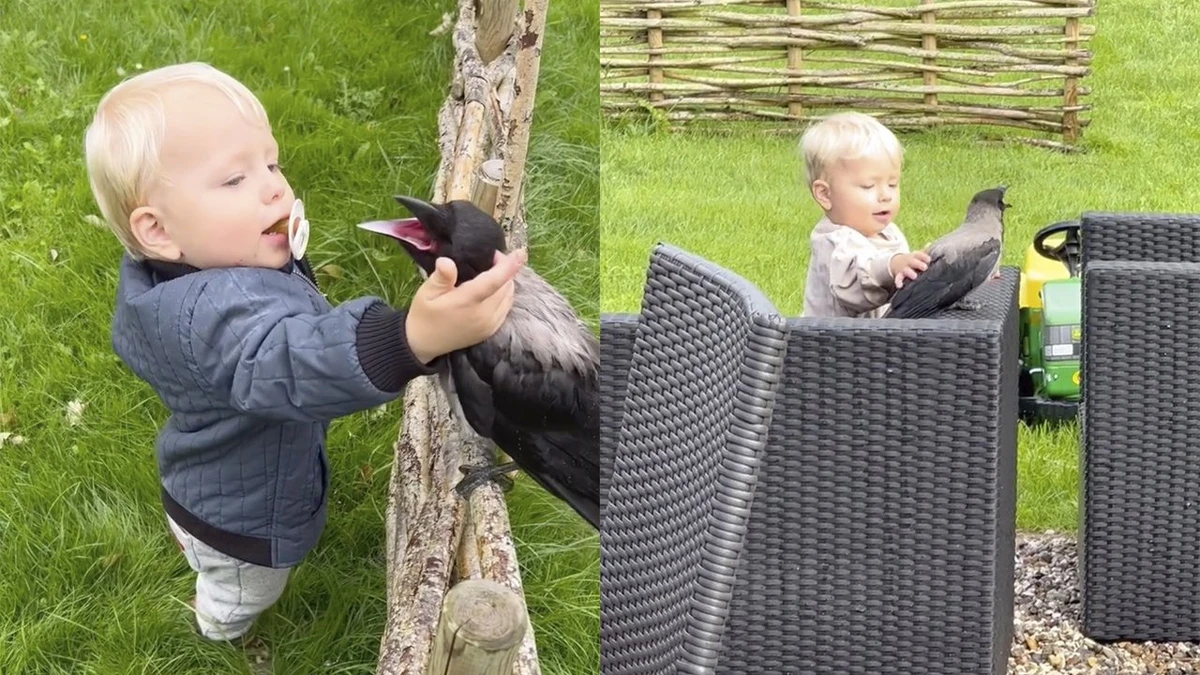
True friendship needs no words!
Many people feed birds on walks or even in their own windowsills. In return, the birds happily spend time with us, and some even bring gifts! 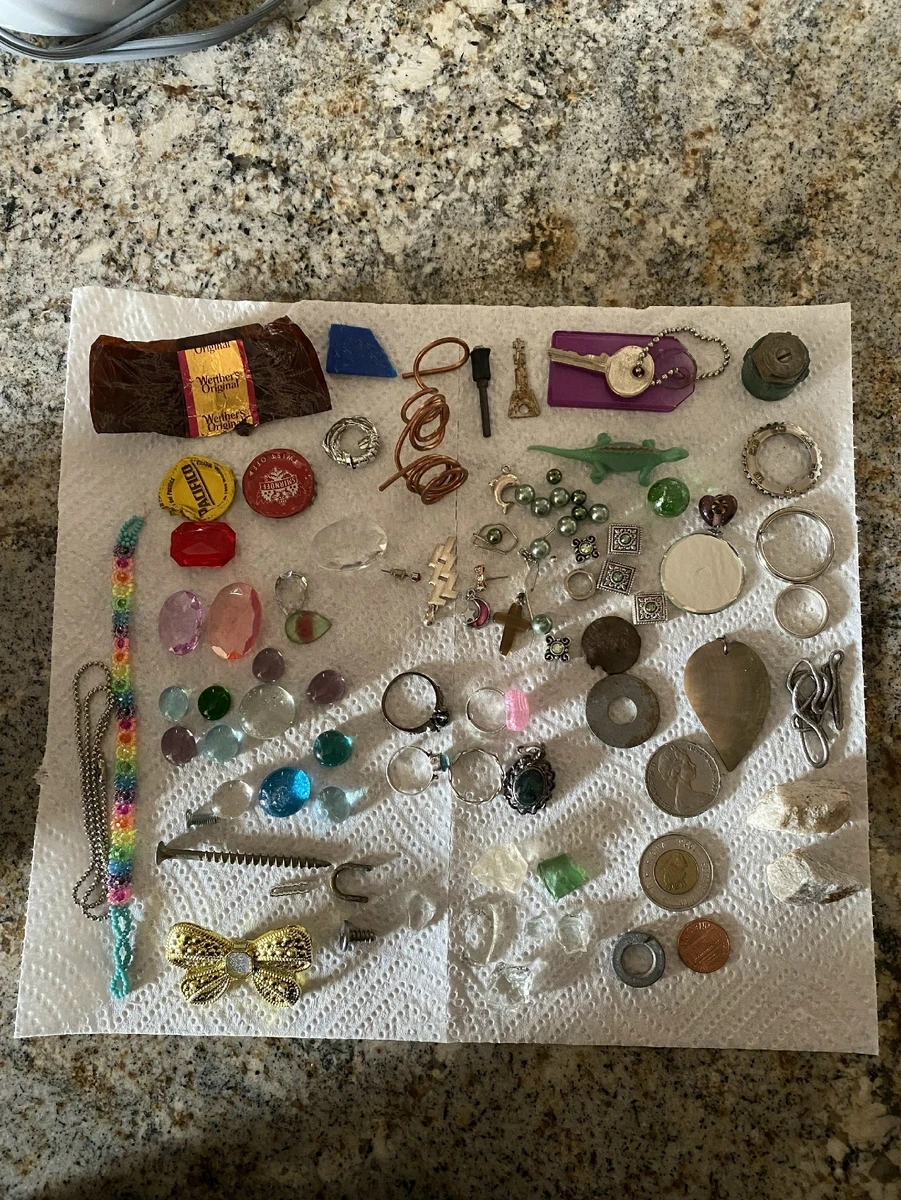
This is the beauty crows bring to their friends. Sly thoughts immediately spring to mind about how to teach crows to collect banknotes in exchange for food.