Phlegraean Fields: why a dormant supervolcano near Naples is alarming (13 photos + 1 video)
West of Naples, Italy, lies an area riddled with craters and cones. Jets of steam and sulfur gases constantly erupt from fissures and fumaroles, and the ground itself pulsates, indicating that an increasingly restless supervolcano is awakening deep below. 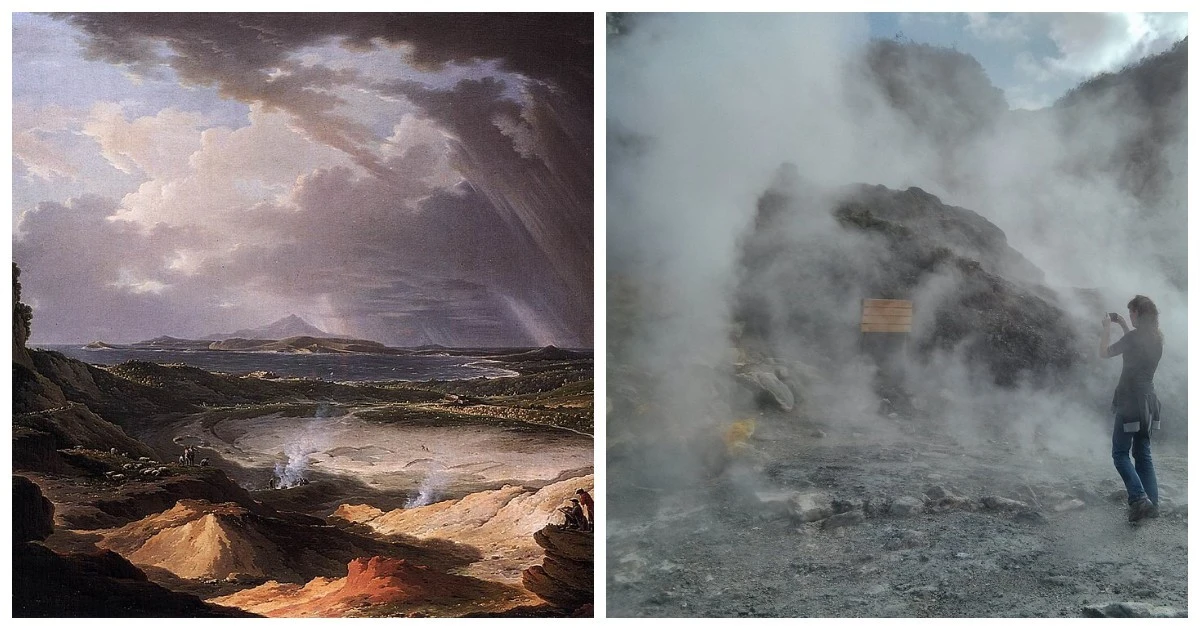
The Phlegraean Fields, or Campi Flegrei (translated as "Fiery Land" or "Burnt Fields"), first erupted about 39,000 years ago. This event was so massive that scientists believe it triggered a climate change that ultimately led to the extinction of the Neanderthals. 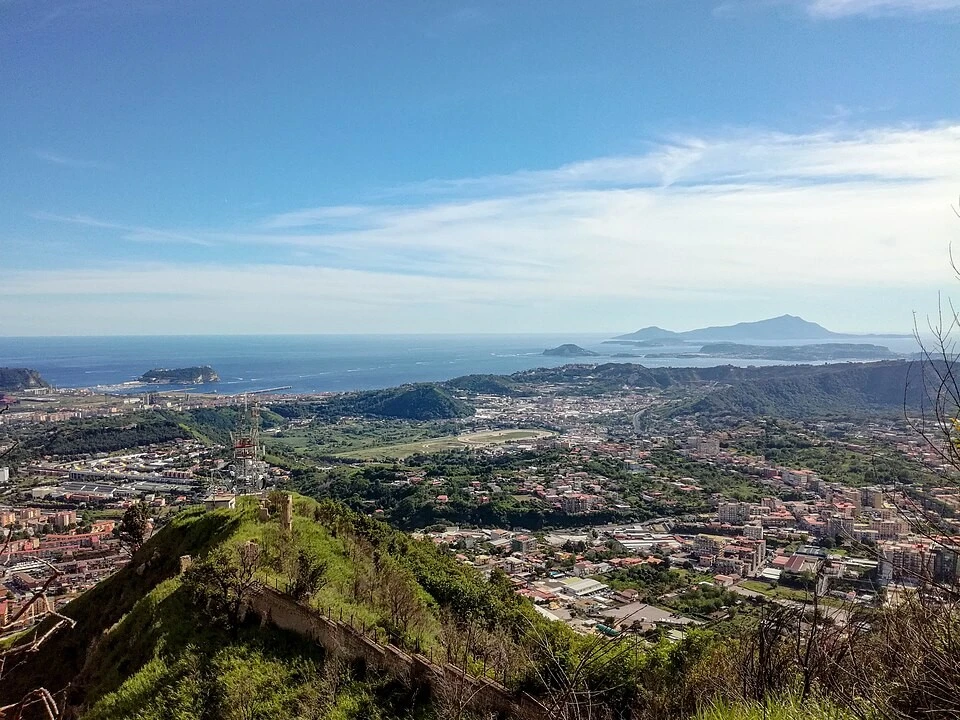
The Phlegraean Fields, view from the Camaldoli Hermitage in Naples
Ash from that eruption has even been found in Greenland, preserved in ancient ice sheets. In the remote Caucasus Mountains in our south, layers of this ash have been found in caves alongside Neanderthal bones and artifacts. 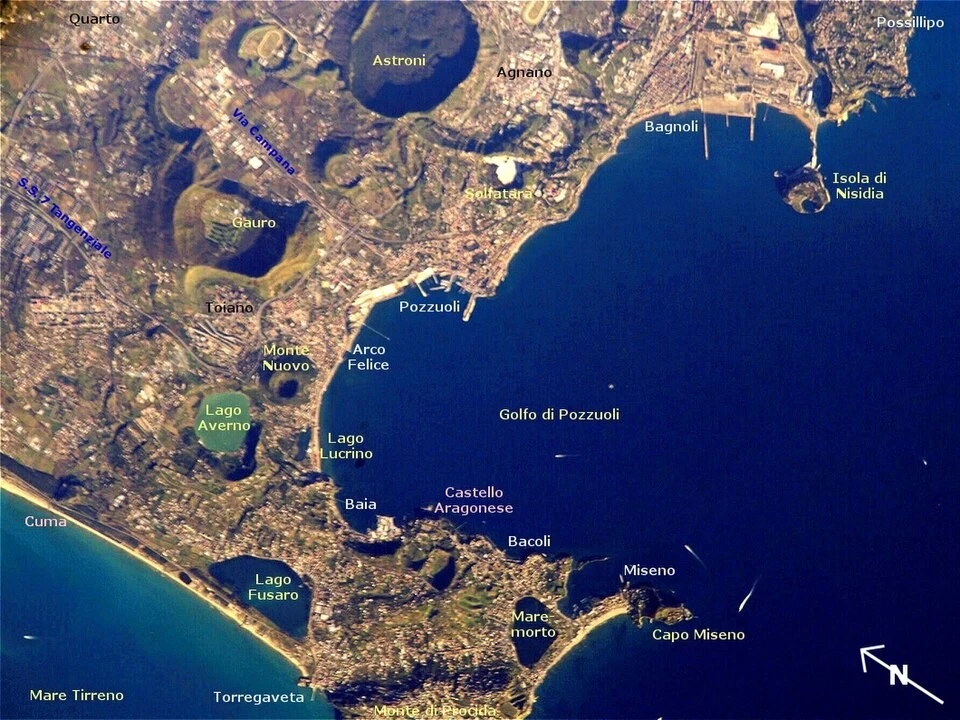
Satellite image of the Phlegraean Fields
During the Roman era, the Phlegraean Fields were a popular resort. On the northwestern shore of the Gulf of Naples stood the fashionable town of Baiae, home to the summer villas of influential Romans such as Julius Caesar, Nero, and Hadrian. Much of Baiae's ruins now lie underwater due to subsidence caused by volcanic activity. 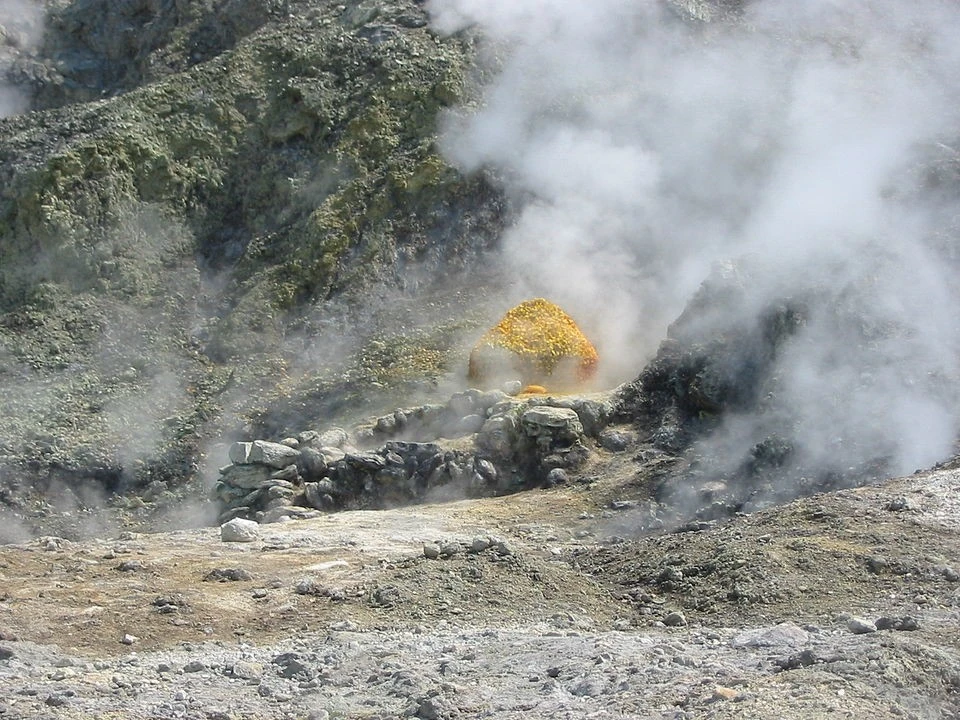
From 8000 BC to 1700 BC, there were thirteen dated prehistoric eruptions, most of which were moderate to large in magnitude. In written history, the first documented eruption occurred in 1198. It was small and caused no significant damage. 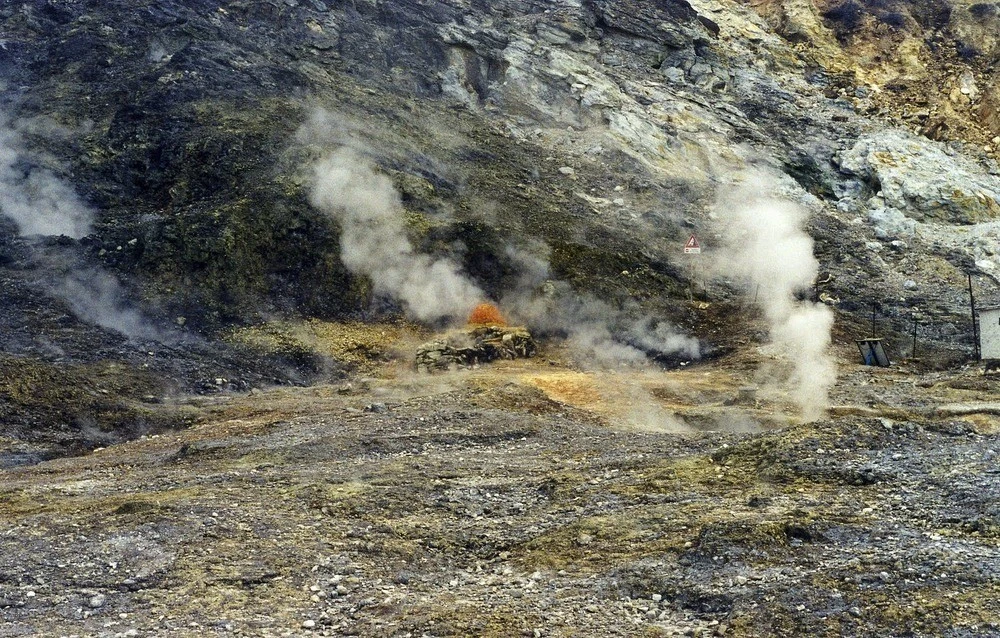
In 1538, the volcano erupted for eight days, ejecting enough material to form a new hill—the 130-meter-high Monte Nuovo. The force of the eruption was such that trees were felled within a five-kilometer radius. There is also evidence that the ground in the region periodically rises and falls. 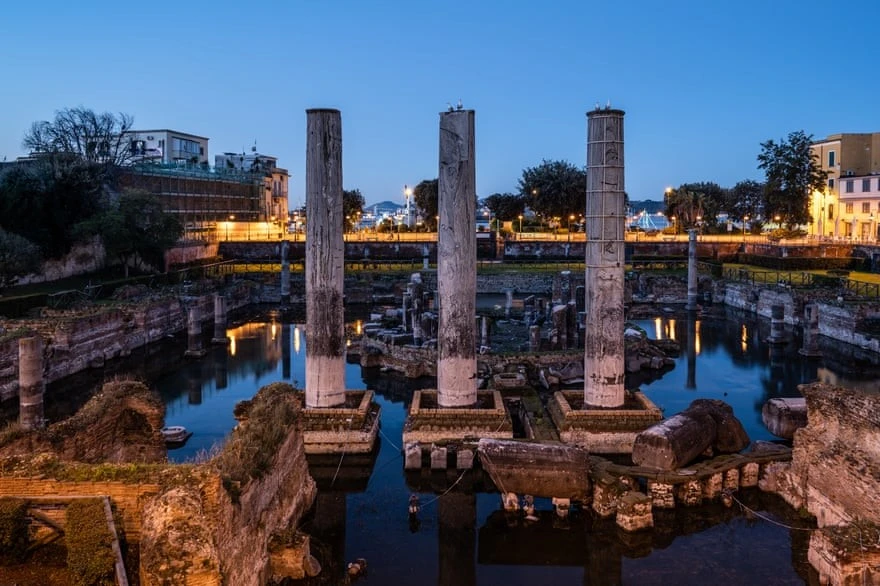
The Temple of Serapis, or Macellum, was a Roman public market. Today, it has become a symbol of bradyseismic activity, as it sometimes dries up completely and sometimes is flooded by seawater.
This strange phenomenon was observed as early as the 18th century, when King Charles of Naples ordered the excavation of the ruins of the ancient Roman market of Macellum near the coast of Pozzuoli. Traces left by sea shells were discovered at the base of three marble columns of the market. However, at that time, the columns rose more than six meters above sea level. Apparently, the columns, originally above water, sank to a depth of at least seven meters, as evidenced by the streaks, and then rose again. 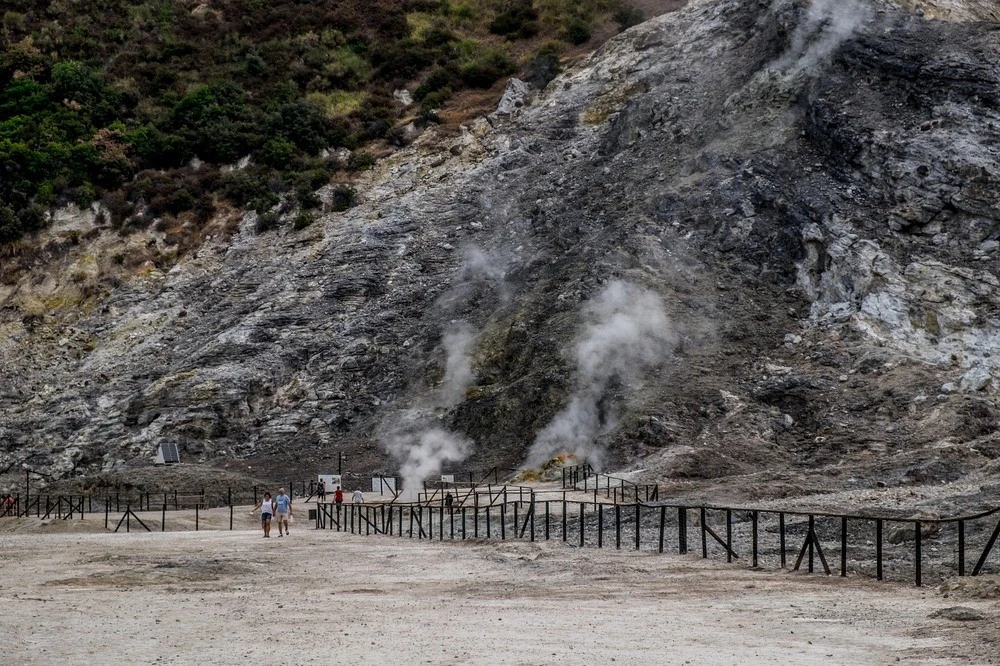
Scottish geologist Charles Lyell proposed that deep underground there was a vast magma chamber that periodically filled and emptied, causing the ground to rise and fall. This phenomenon is now known as bradyseism. It is now known that the ground in the Campi Flegrei area was already subsiding when the market was built, and continued to do so until the Middle Ages, when it began to rise around 700 to 800 AD. 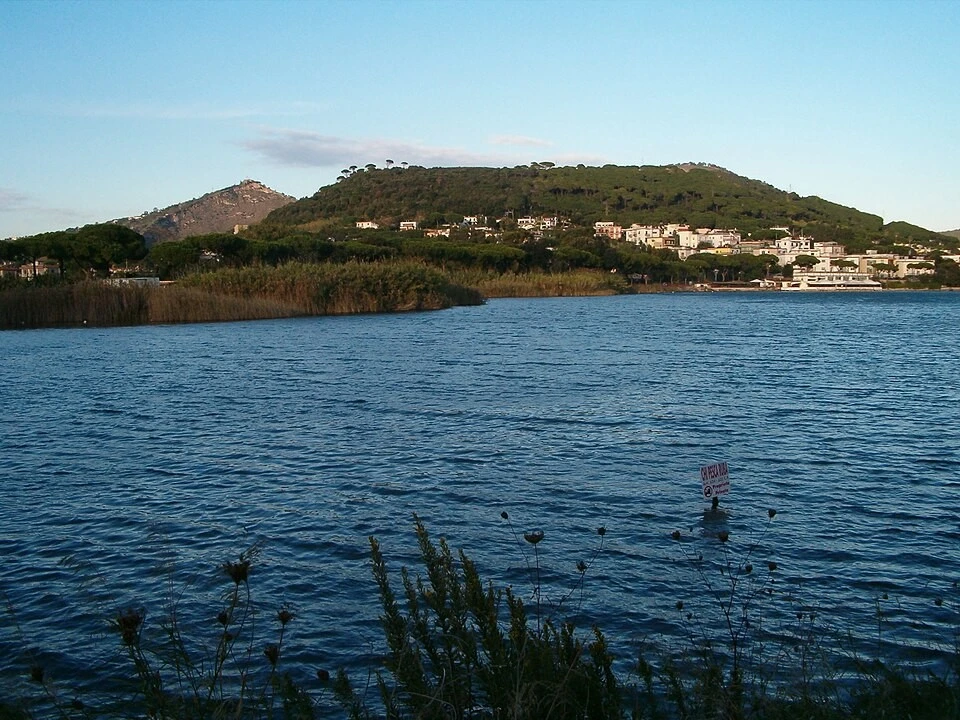
Monte Nuovo ("New Mountain") is a volcano in the Campi Flegrei caldera, near Naples, in southern Italy.
A period of subsidence followed, after which the land rose again from around 1500 until the last eruption in 1538. After that eruption emptied the magma chamber, the ground gradually subsided again. Over the past fifty years, the land has continued to rise and fall periodically. 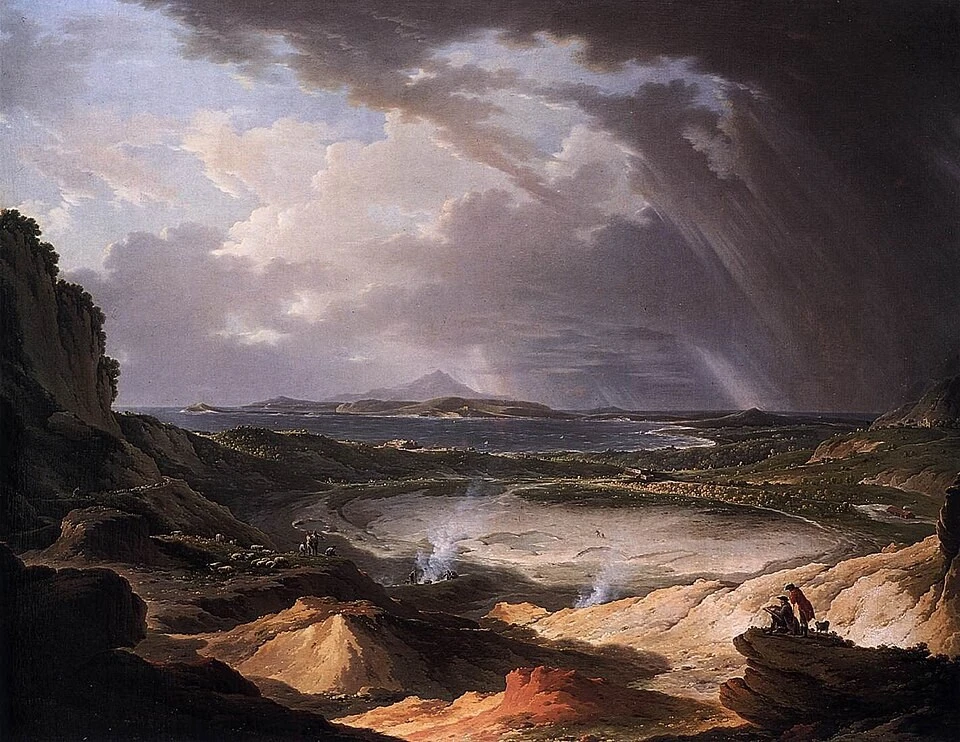
Fumarole in the Phlegraean Fields. Painting by Michael Wuttka, 1780s
Recent research has shown that periodic uplift of the ground subjects rocks to enormous stress, making them more brittle and vulnerable to fracture, which could allow magma to reach the surface. Previously, it was thought that as the pressure in the magma chamber decreases, the stress in the overlying rocks also weakens. 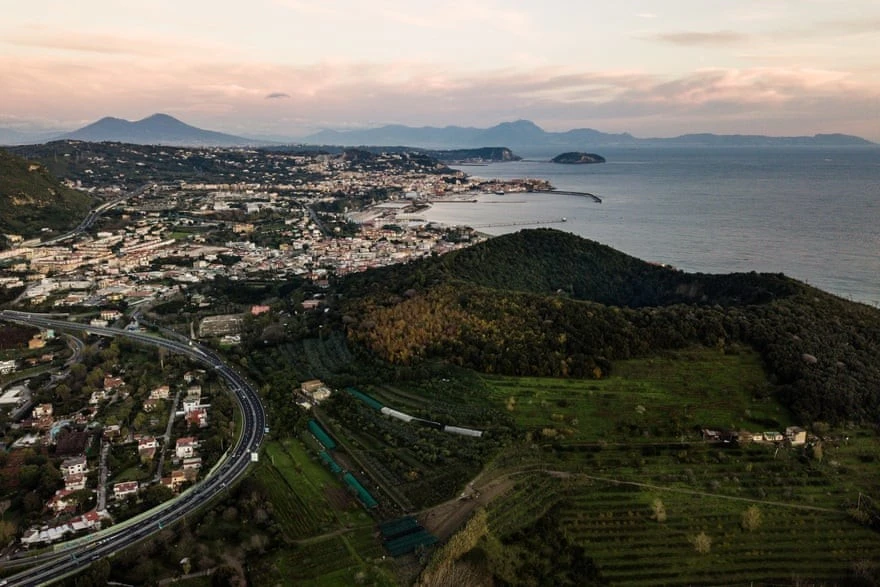
The Monte Nuovo crater with the Naples bypass on the left and the town of Pozzuoli on the right. Monte Nuovo was formed during the eruption of September 29, 1538, the last eruption in the Phlegraean Fields.
However, new modeling shows that the rocks are never completely free of pressure. When the ground rises and the rocks fracture, magma intrudes into the cracks and hardens, maintaining tension in the surrounding rocks. With each new phase of uplift, the stress accumulates, making the rocks increasingly brittle. 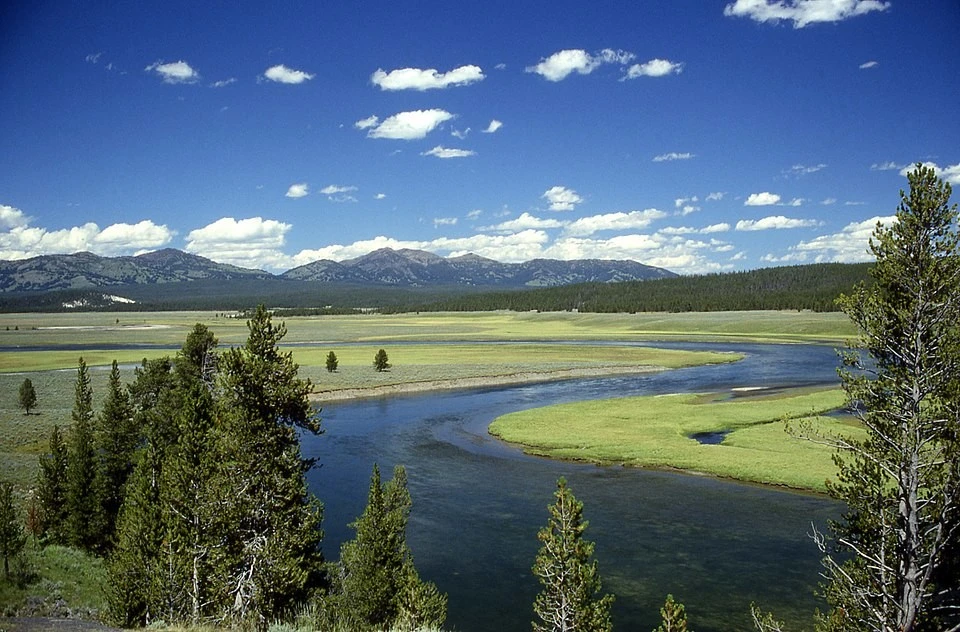
Northeastern part of the Yellowstone caldera. The Yellowstone River is visible flowing through Hayden Valley, and the caldera rim is visible in the distance.
As with the Yellowstone caldera in the United States, no one can predict when the Phlegraean Fields will erupt. But with three million people living in and around Naples, this is cause for serious concern. An eruption of the Phlegraean Fields could trigger a volcanic winter that could threaten the lives of millions of people worldwide. 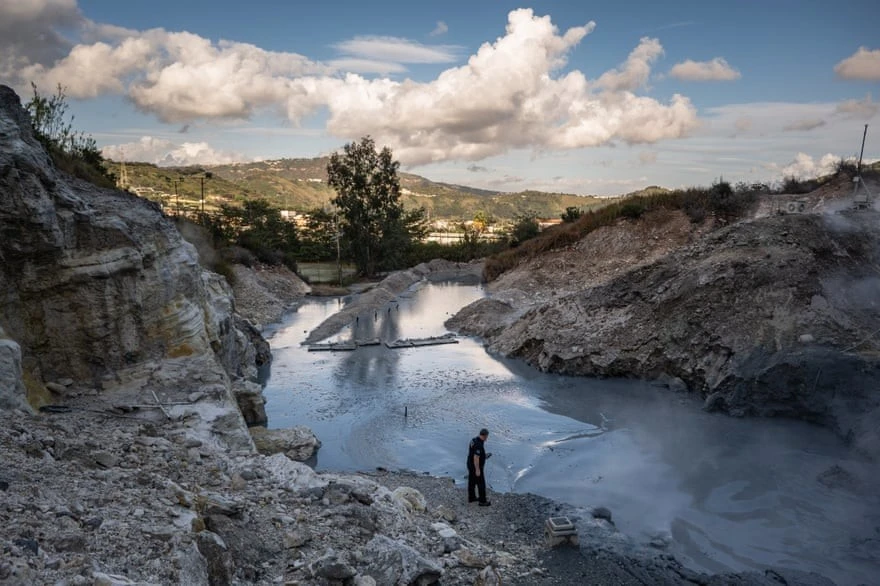
Scientists are monitoring activity in the Pisciarelli area of the Phlegraean Fields.
Italy has one of the best volcano monitoring systems in the world. Campi Flegrei is monitored 24/7 by hundreds of seismic sensors, GPS stations, gas analyzers, and satellites. 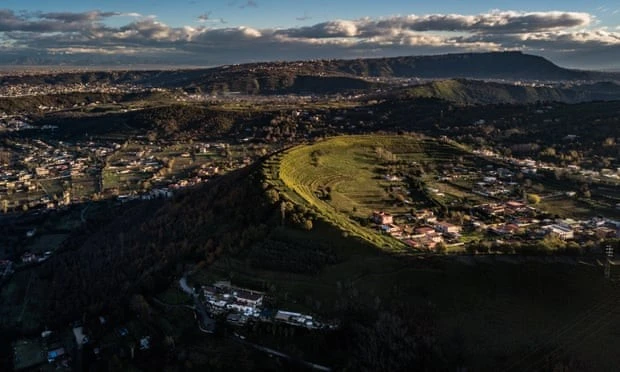
Houses and farmland in the Cigliano craters, in the heart of the Phlegraean Fields
The risk of a major eruption in the coming decades is considered low, but not zero, and is higher than for many other active volcanoes. The threat primarily comes from ongoing ground deformation and earthquakes, which could destroy buildings. Scientists are vigilantly monitoring the situation, as this caldera is one of the most dangerous volcanic hotspots on the planet due to its power and the dense population of the surrounding areas.