Consumers in many countries have felt the rise in car prices due to accelerated inflation and rising raw material prices. Another factor influencing the cost of a modern car is its electronics, which are becoming increasingly complex and diverse year after year. 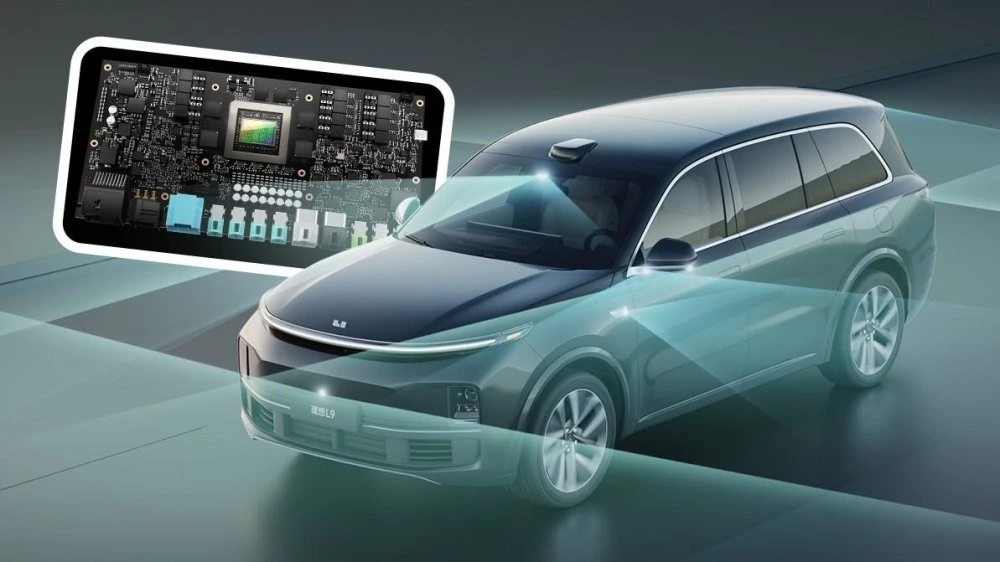
It's common knowledge that onboard safety systems and autopilot systems require significant computing resources. When referring to computer hardware, this refers to solid-state memory modules, whose cost in 2025 exceeded the price of gold, as one Reddit member pointed out.
Tom's Hardware analyzed the market and confirmed the findings. Thus, while the average cost of an 8 TB SSD device is approximately $1,476 (with a chip weighing 8 grams), the price of gold of the same weight is approximately $1,148.
This situation is being driven by the surge in demand for chips from companies in the artificial intelligence and data center sectors, where fourth-generation (DDR4) and fifth-generation (DDR5) memory modules are in greatest demand. Chip manufacturers are refocusing their production capacity on high-margin solutions for servers and data centers, while chip production for consumer electronics and automobiles is declining.
This is resulting in explosive price growth. According to industry analysts, the cost of memory modules will increase exponentially by 2025: DDR4 prices will increase by approximately 1800%, and DDR5 by more than 500%.
It's easy to guess that tiny silicon chips, now in short supply and significantly more expensive than before, will drive up car prices. According to Nio founder Li Bin, by 2026, memory modules could become a more significant expense for automakers than traction batteries.
Add your comment
You might be interested in:















Protective film Removing it with a power screwdriver

How to start a 102-liter engine

When a child plays hide-and-seek at a professional level

Man sets up bedroom camera and discovers the reason for his

Super dads who swoop in to save the day

Precision carpentry

Looks like it's time to buy WinRAR

How to hang wallpaper neatly

Athlete in Bavarian dress flies over a lake on a hydrofoil
