Pig: this is not a boar! History and differences from wild animals (10 photos)
At first glance, it all seems logical: the domestic pig descended from the wild boar. Therefore, the pig is simply a "tamed boar," a sort of fat and lazy version of the wild beast. Actually, this article could end there. If not for one thing: during their time living alongside humans, pigs have acquired many unique characteristics. 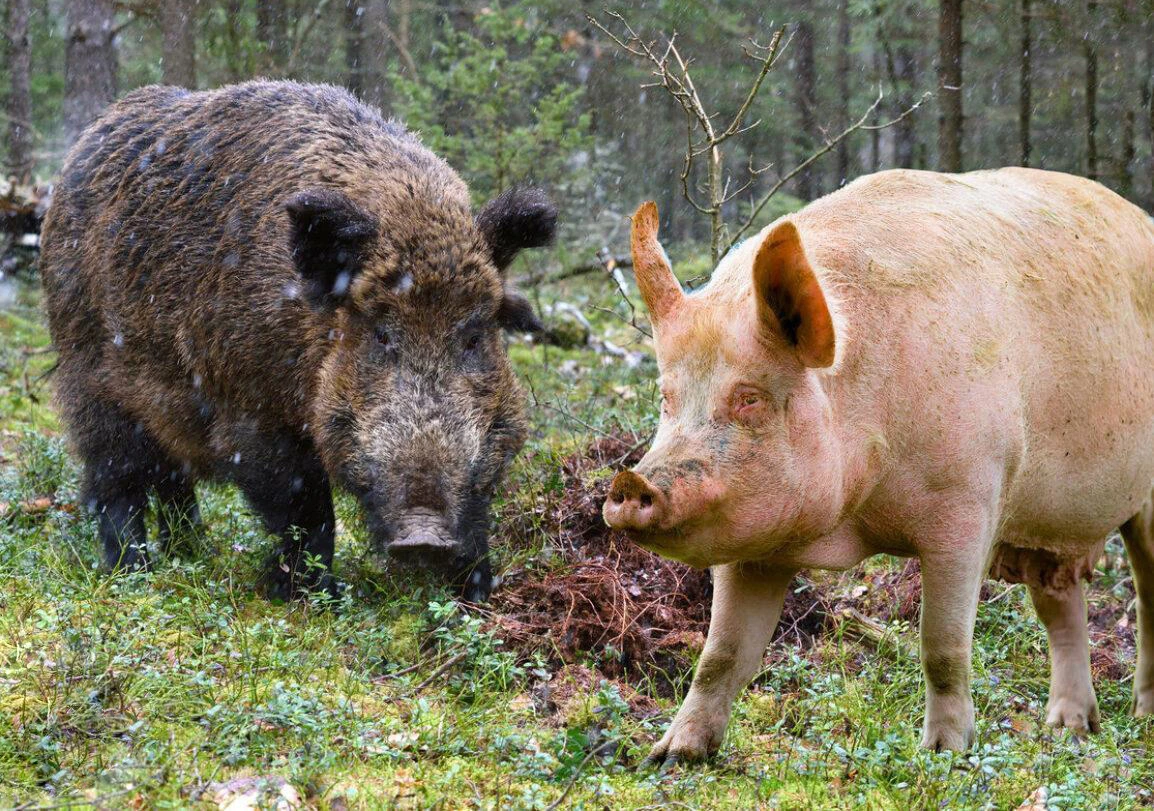
When you decide to shave, and now everyone sees you as a different person.
Before we begin, a little historical background. According to research, pig domestication began approximately 8,000–10,000 years ago in several separate locations simultaneously: the Middle East and Northern Asia. It is believed that pigs were initially fed scraps, with the calmest and most indifferent animals allowed near the dwelling. These animals served as live preserves for a rainy day. And the pigs didn't particularly mind. Pigs are generally undemanding in this regard: they are omnivorous, undemanding of living conditions, and reproduce quickly. Over time, humans learned to selectively breed ungulates and began the targeted breeding of the most prolific, fattest, and tastiest. 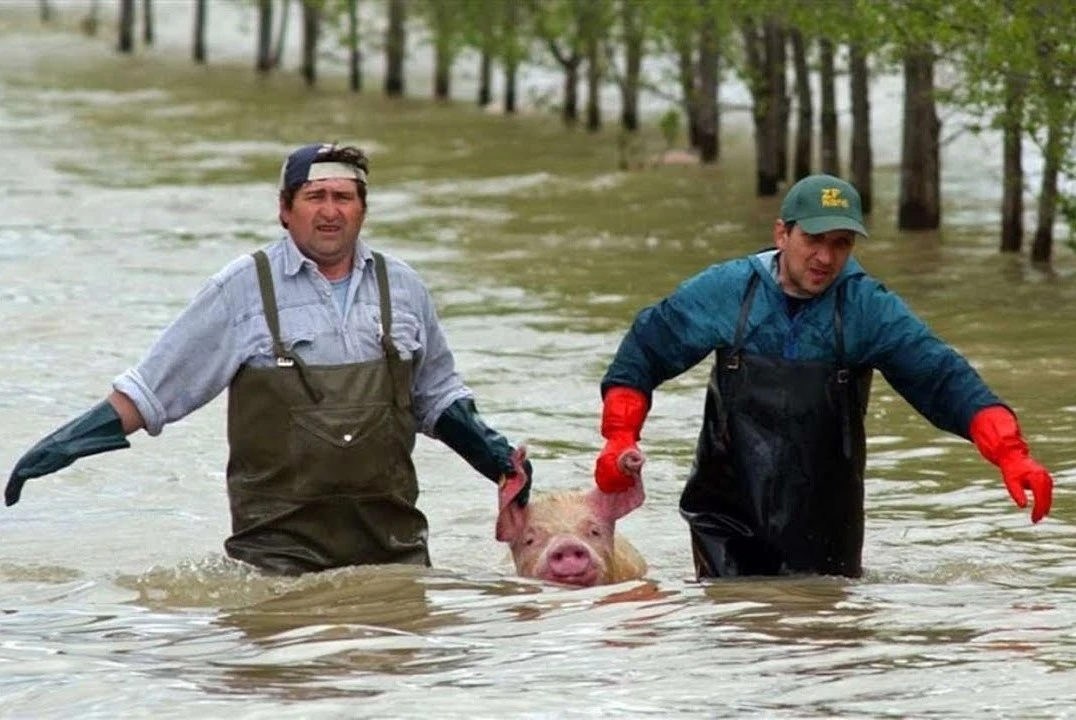
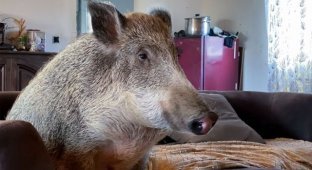
This is me bringing an unknown animal home, hoping my mother will let me keep it.
1. Size
The first, most noticeable difference is their appearance. Domestic pigs gain 2-3, or even 5 (!) times more weight than their ancestors. The largest wild boars barely weigh more than 300 kilograms, while record-breaking pigs can easily weigh over 1,100! 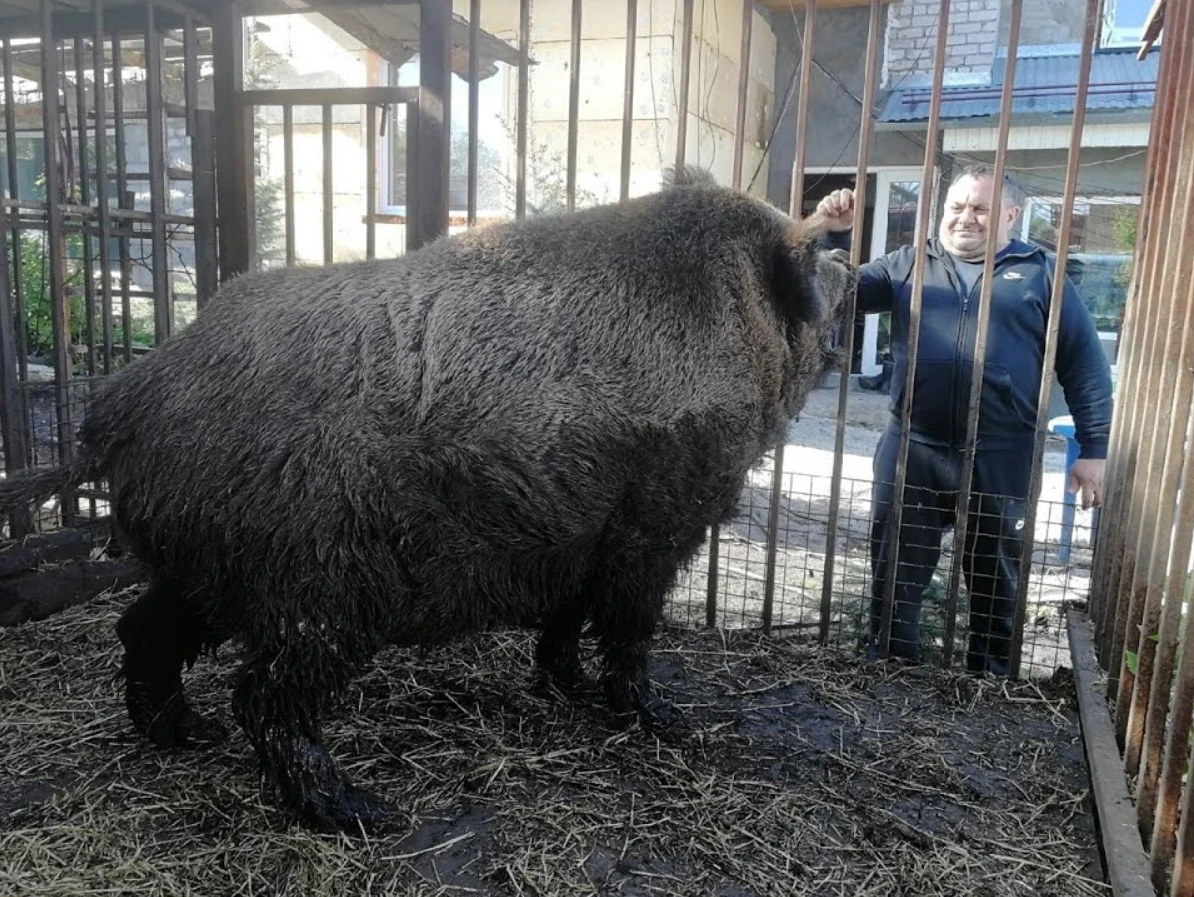
You have some strange bears at the zoo... With hooves.
A whole set of genes associated with increased body size is responsible for this. The most interesting of these genes is NR6A1. It is responsible for... extra vertebrae! This is a very unusual feature, since most animals, even unrelated to each other, despite their size and other parameters, have more or less the same number of vertebrae. For example, both we and giraffes have only 7 cervical vertebrae, and you already know the differences in appearance. 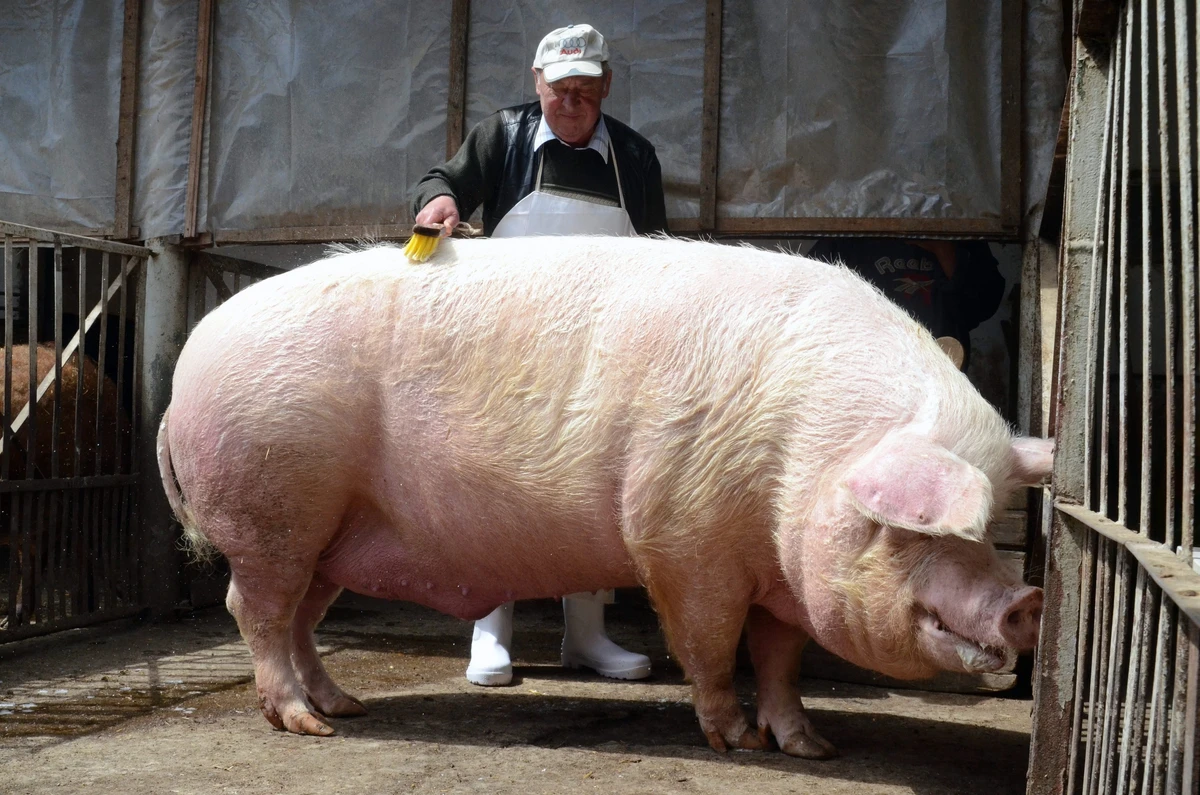
The largest pig breeds are White, Landrace, and Duroc. All of these breeds produce boars that weigh at least 300 kg!
In pigs, thanks to NR6A1, instead of 19 vertebrae in the back, there are now 20-23—each breed has its own significance. This means the body at the snout will be longer: each vertebra adds 8-10 centimeters to the back. Overall, the largest pigs have up to 40 centimeters more body length, meaning more muscle and fat. The second difference is the color and quality of the fur. The boar's body is covered in coarse hair with a thick, downy undercoat. Such a fur coat protects against all the weather's inclement weather. Pigs, however, are left with only a wisp of bristles, which sometimes don't even cover their bodies properly! It doesn't protect from the cold or heat, but pigs don't need that—people take care of them. 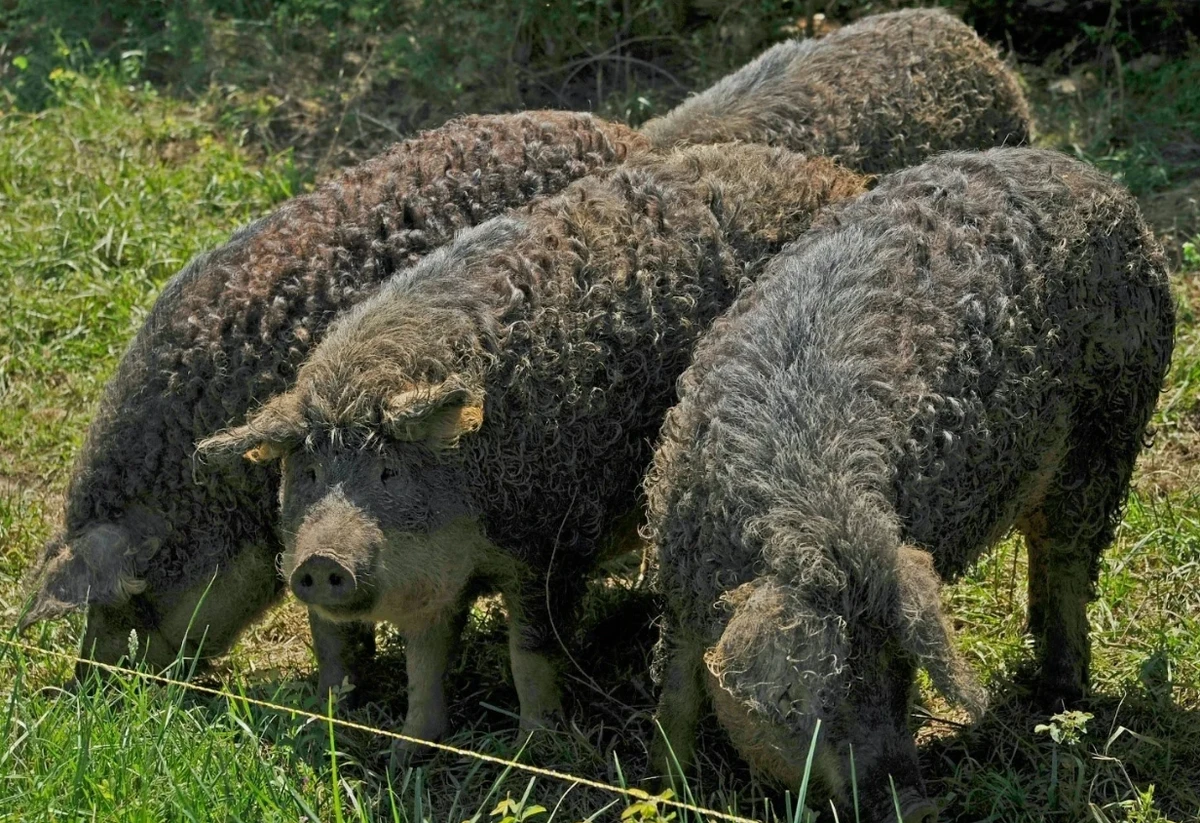
The MC1R gene, which is responsible for the characteristic camouflage pattern in wild boars, now has a whole host of variations in pigs, which appear as white, spotted, red, black, and other colors.
3. Reproductive Cycle
And this is a specific intervention in biology, not just changing the color of the fur. Wild boars reproduce strictly once a year: mating in mid-autumn, and giving birth closer to spring. Females only become mothers at two years of age, and males only claim paternity at five. Domestic pigs, on the other hand, are capable of producing offspring year-round without interruption, with females entering their first heat by six months. And they don't give birth to 5-6 piglets like wild boars, but 10-15-20 at a time! 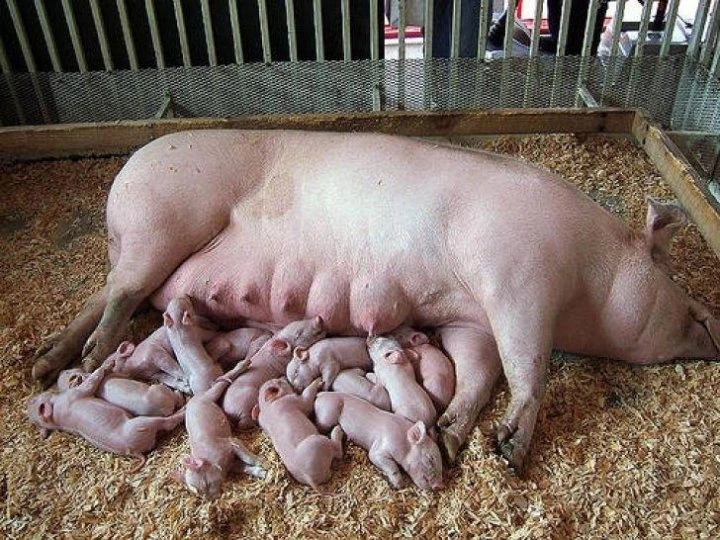
On average, a sow gives birth to up to 16 piglets. However, prolific breeds can give birth to up to 25 piglets at once!
4. Loyalty to Humans
Ordinary people underestimate this distinction. Hunters know what it's like to fall foul of a wild boar. These animals have no brakes, but they do have sharp fangs and a strong skull, perfect for ramming. Male boars and females with young are especially territorial and aggressive; approaching them can cost you your life. 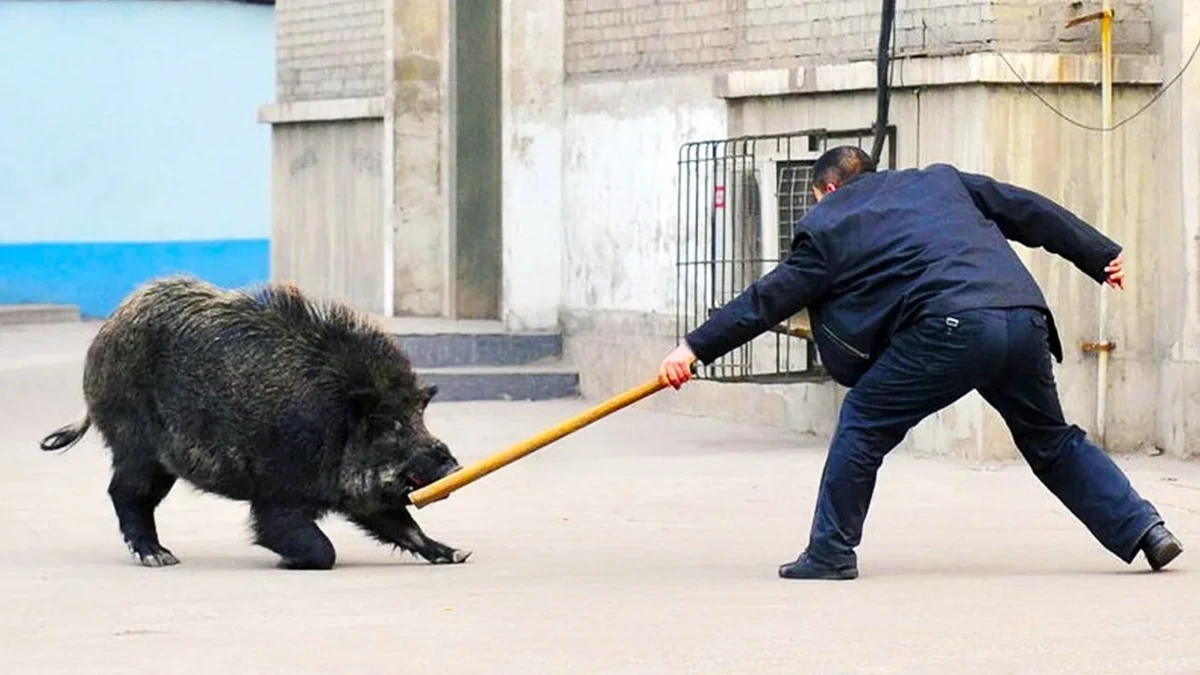
When your boss, Boar Kabanych, wants to load you with new tasks right before the New Year, but you're already ready to fight for your freedom.
On the other hand, there are domestic pigs, who readily allow humans to handle their piglets, allow them to be handled, and are indifferent to the people around them. Moreover, with close contact with humans, a piglet can become a full-fledged pet! They can obey commands, walk on a leash, and live indoors. 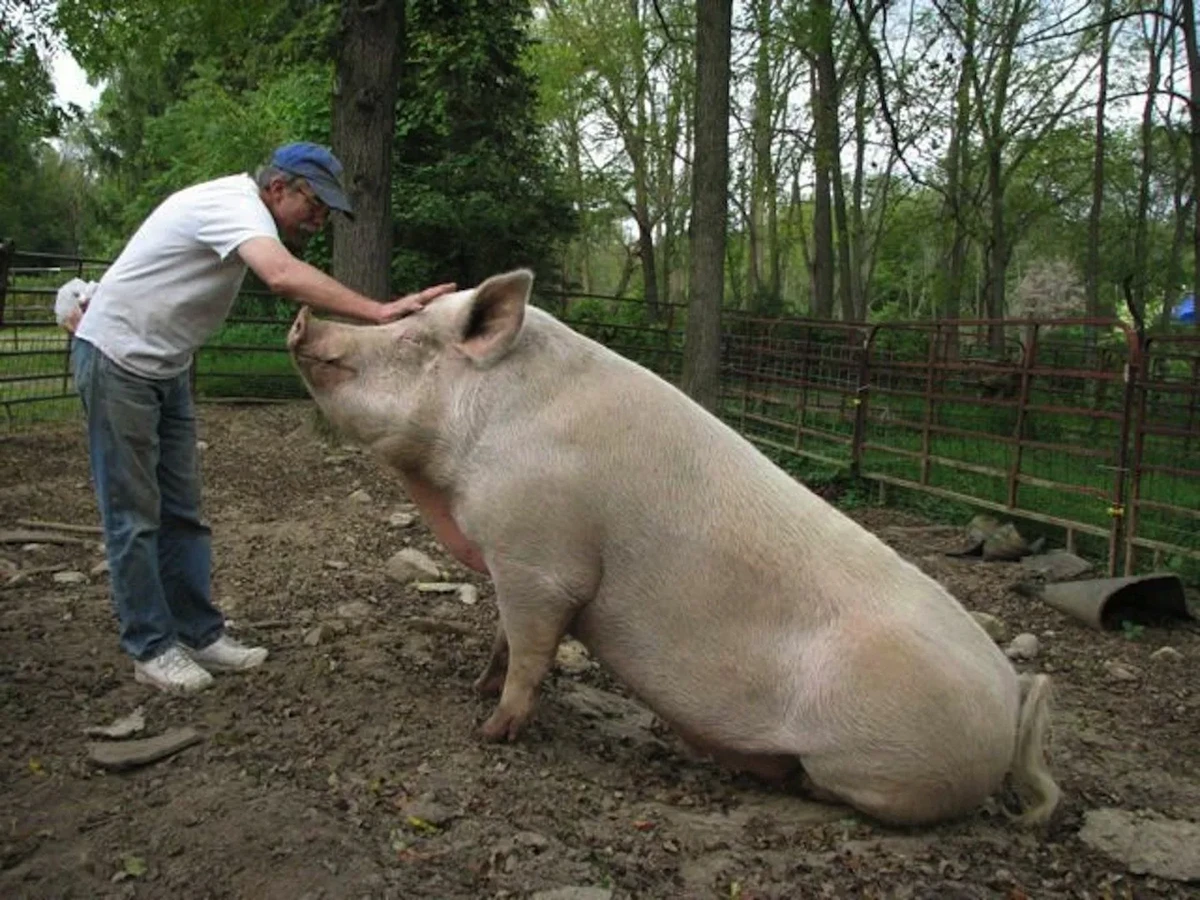
Bobik, sit!
5. Adaptation to New Conditions
At the dawn of domestication, approximately 8,000-10,000 years ago, piglets regularly interbred with wild boars. That is, they did not completely and irrevocably separate from their wild ancestors; they became a special form of the "wild boar" species. This means that all the modifications humans have bestowed upon pigs are dissipated within 3-4 generations of free life. 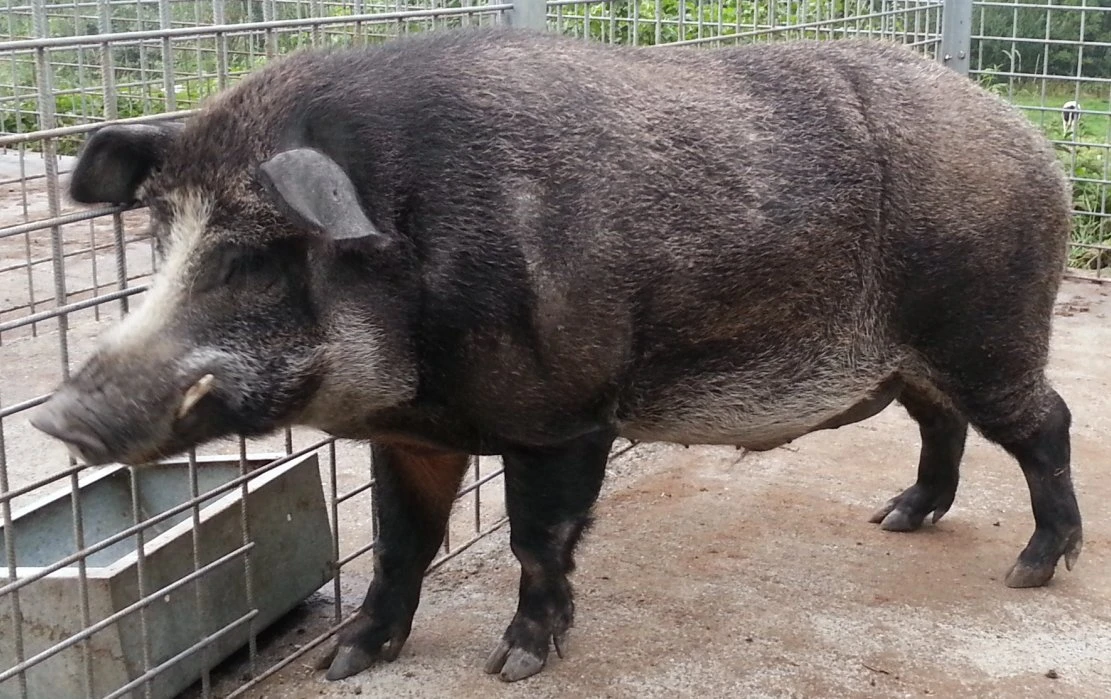
The result of crossing a pig and a boar.
This is the fifth difference between pigs and boars and from most domestic animals. They can live both alongside us and in the forest with their wild brethren, without any loss in quality of life! 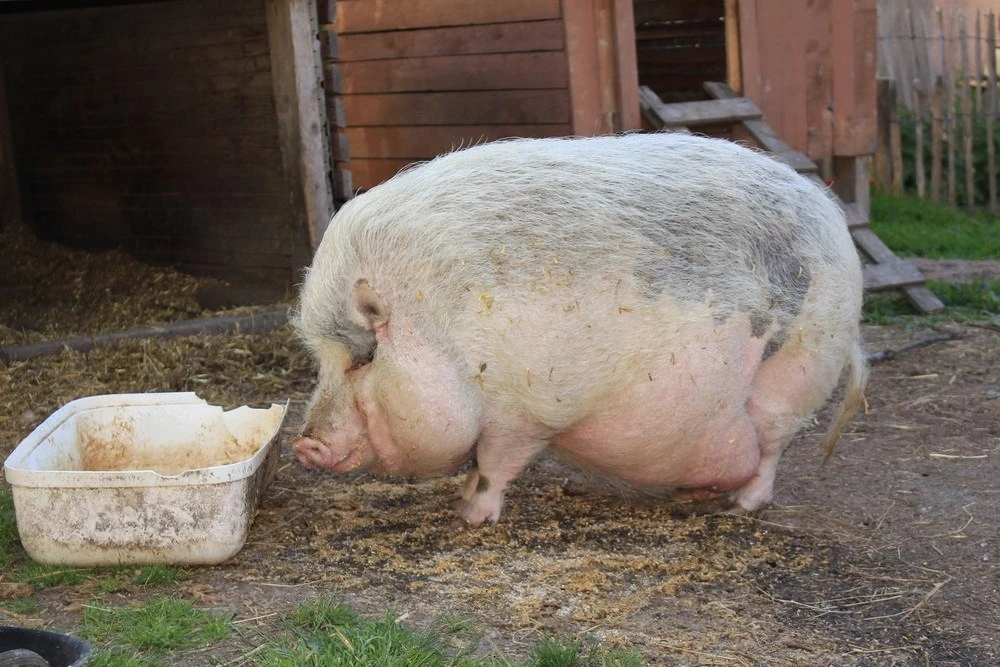
Okay, a couple more buckets of human food and I'll be back in the forest.