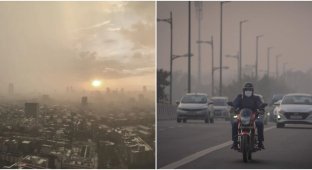
View from a balcony in smog-shrouded Delhi
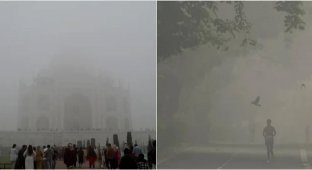
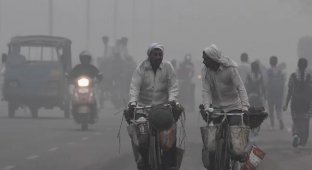
The situation in Delhi, India, is currently tens of times higher than normal. Residents have been advised to stay indoors due to health risks.
According to the country's Ministry of Environment, on Saturday evening, the Air Quality Management Commission imposed Level 4, the highest level, of the Phased Response Plan for Delhi and the National Capital Region.
Air quality in the city was classified as "very poor" on Sunday. The air pollution index at several monitoring stations exceeded 450, up from 430 the day before, and was the highest value of the current winter season, according to data from the Central Pollution Control Board. For comparison, values below 50 are considered safe.
As part of emergency measures, authorities have banned the entry of older diesel trucks, suspended all construction work, including public infrastructure projects, and switched schools to a hybrid learning format.
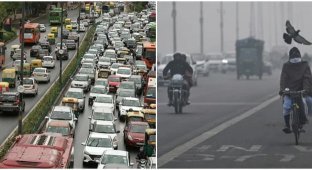
The region, with a population of approximately 30 million, faces dense winter smog annually. Cold, stagnant air traps emissions from transportation, construction, and agricultural burning in neighboring states, making pollution levels among the highest in the world and posing a serious threat to public health.
Authorities strongly recommended that residents stay home whenever possible, especially children, the elderly, and those with respiratory or cardiovascular conditions, and wear protective masks when going outdoors.