Gelada: mane, fangs, and eternal bloody showdowns (14 photos)
The word "gelada" comes from the Amharic language of the Gondar region of Ethiopia and means "ugly." These poor monkeys have always been hated for their unusual appearance. These guys can leave you stuttering if you meet them at night in a back alley. 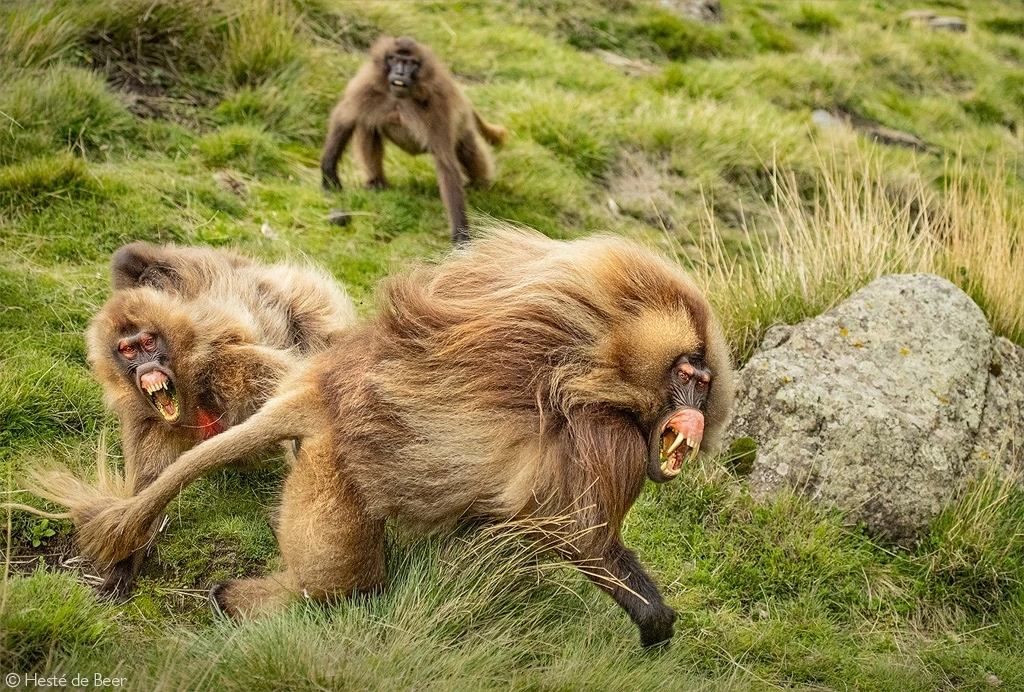
Kids, don't go to Africa. You might even meet a male gelada there.
Luckily, the chances of such an event are negligible, as geladas are found exclusively in Ethiopia, in North Africa. Moreover, the likelihood of such an encounter is several times higher in the Simien Mountains—the largest population of these primates lives at altitudes of 1,500 to 4,500 meters. 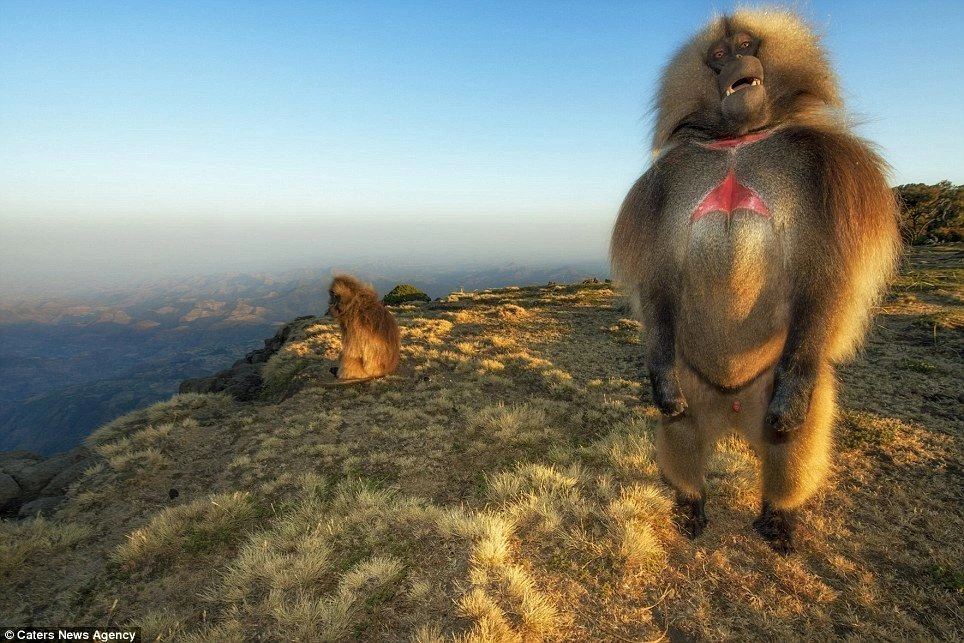
No shame, no conscience! His entire chest is on display!
A male gelada is the lion of the primate kingdom. "Everything has already been invented," this ape realized, and assumed the appearance of the king of beasts. True, all that remained of the lion costume in the dressing room were the mane, fangs, and a tuft of tail, but the gelada was satisfied with that. I don't even know which of these animals scares me more. A lion, for example, can't pull its upper lip back so dramatically, exposing its gums. It looks creepy, like a monkey has been partially skinned. It's a good thing the animal doesn't feel any pain. 
— Hey, can I copy your cool look? — Okay, but not exactly.
Gelads are pretty big monkeys. Body length: 50-75 cm, plus a 30-40 cm tail. Although males are slightly larger than females, their weight is almost twice as high: 10-12 kg for slender females versus 20 kg for gentlemen. And the latter don't weigh so much because they spend all day lounging on the couch and wearing reels. A mountain of muscle, a sea of fur, and an ocean of ambition—that's what makes up those 20 kg. 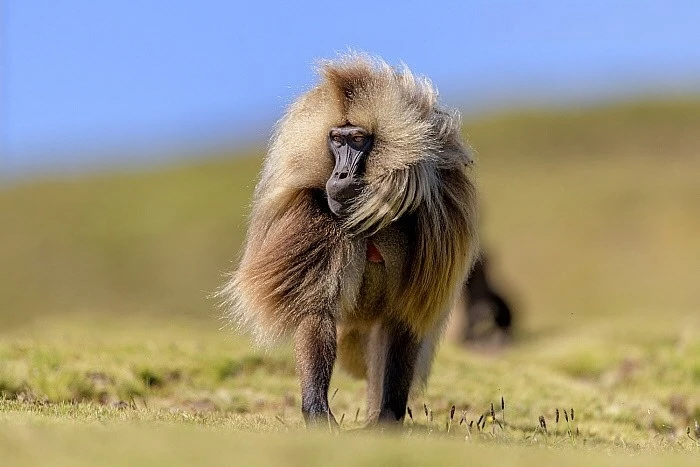
Not every lion has as much charisma as a gelada!
The world of male geladas is a world of aggression and dominance. Monkeys live either in families (harems) or in bachelor groups. A harem consists of a dominant male, 3 to 10 females, and young of varying ages. 
Family photo.
Those males unlucky enough to find a family form bachelor gangs. These groups regularly engage in skirmishes and serious fights, honing their fighting skills and forging their character. This is where the monkeys' long fangs come in handy, as they could inflict truly horrific wounds on their opponents if not for their thick, coarse fur, which often protects them from serious injury. 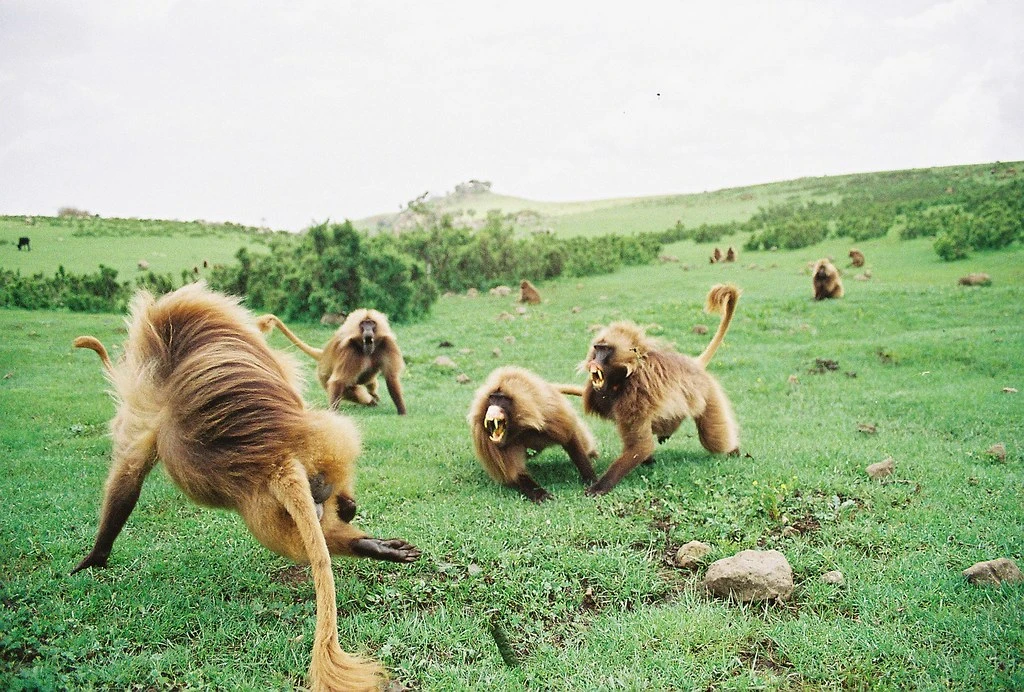
Nothing unusual, just a typical brawl.
Wait, but what's that red wound gaping right on his chest? Could all this really be the result of a brutal brawl? No, it's a "bleeding heart"! Okay, okay. If you look closely, it's not a heart at all, and it's not even bleeding. It's essentially a strip of bare skin, shaped like this. The red color is due to a dense network of blood vessels beneath the skin. The shape of this spot is limited only by your imagination. Most often, people describe it as an hourglass. I see an apple core or a bow tie rotated 90 degrees. What do you see? 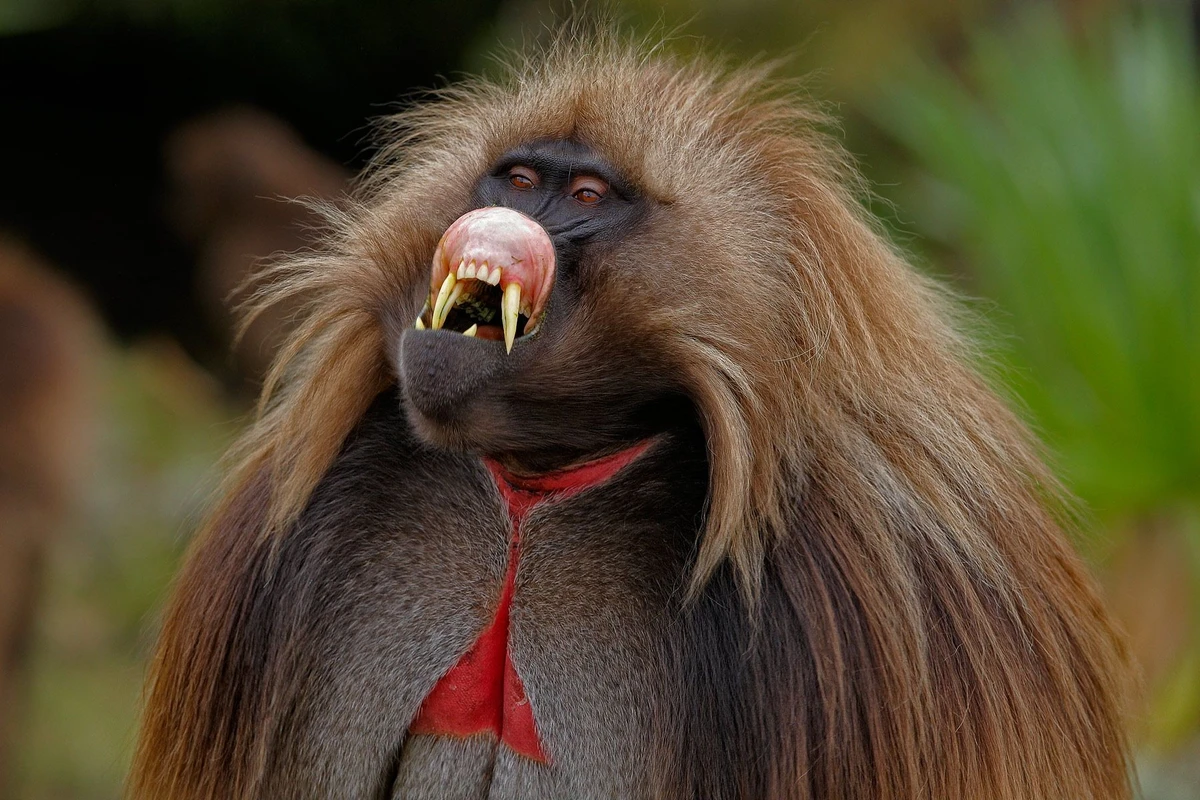
So that's what the expression "soul wide open" means.
Why is it so red? When a male experiences intense arousal, whether caused by the presence of a fertile female or aggression toward uninvited guests, the spot on his chest turns bright red as blood rushes there. The brightness and richness of the red color directly depend on the male's testosterone levels and overall health. The brighter the red cleavage on his chest, the more attractive he is to females, and the more his enemies will tremble. 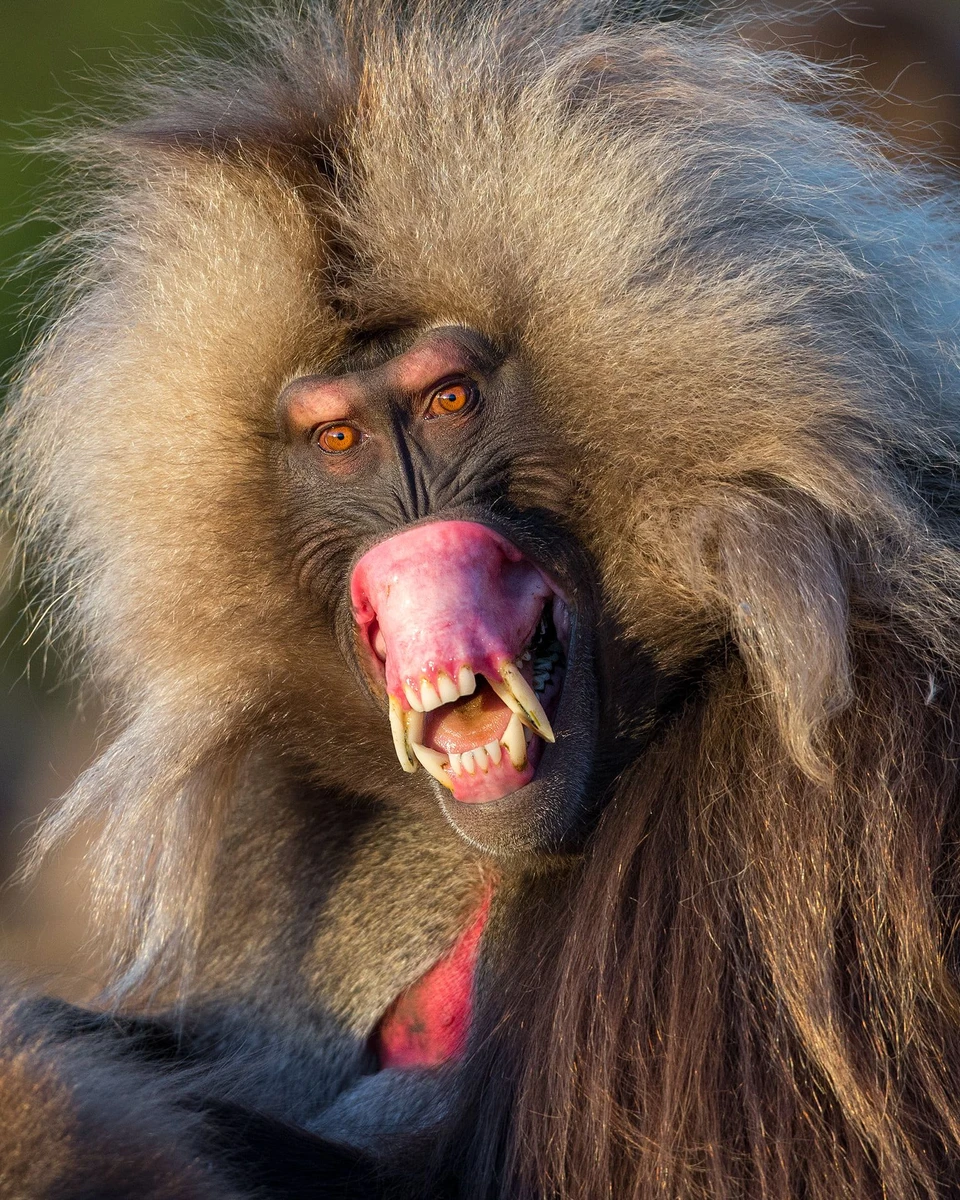
See you in your nightmares, my friend!
When a bachelor begins to think that the only thing steeper than him is the mountains, he leaves the group to try to take over the harem and become the dominant male himself. To do this, he challenges the dominant male to a fight. I was going to write "a fair fight," but that's a matter of luck. To demonstrate the seriousness of its intentions and intimidate its opponent, it resorts to all means: the monkey purses its lips, shows its fangs, and even dances a gypsy dance! Sorry, but there's no other way to describe this performance: the primate shakes its shoulders and head to make its red chest move and become more visible. 
Who are you swearing at?!
If a visiting male defeats the head of the harem, there are three possible outcomes. The first is when you're a tough macho and drive away the old leader. The females approve. Everything is fair and square. Advice and love. The second scenario is when you seem like a tough macho, but the females hold their former head of the family dearly, and they join forces to drive away the stranger. The third scenario—the most offensive—is when you're as tough as a bat, have conquered everyone and everything, but the females don't care. In this case, there's a high chance of waking up alone in the morning—the females and their cubs will quietly disappear into the night. 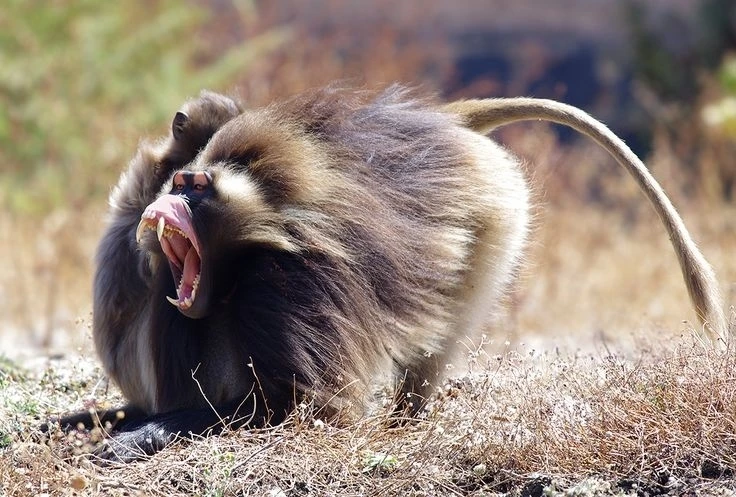
What more do you need, women?!
Let's say the first scenario occurs, the ladies have accepted the new suitor and are ready to spend the rest of their lives with him. What happens? A very unpleasant thing happens: the new dominant male begins killing the cubs of the previous leader, who are still nursing. The females scream, scratch, and bite, but, as a rule, they are powerless to prevent this bloody massacre. Biologically, the male is doing the right thing. While the female is nursing, she is incapable of conception. And nursing lasts a full year and a half. In a situation where they can come and steal your harem at any moment, that's a very long time. 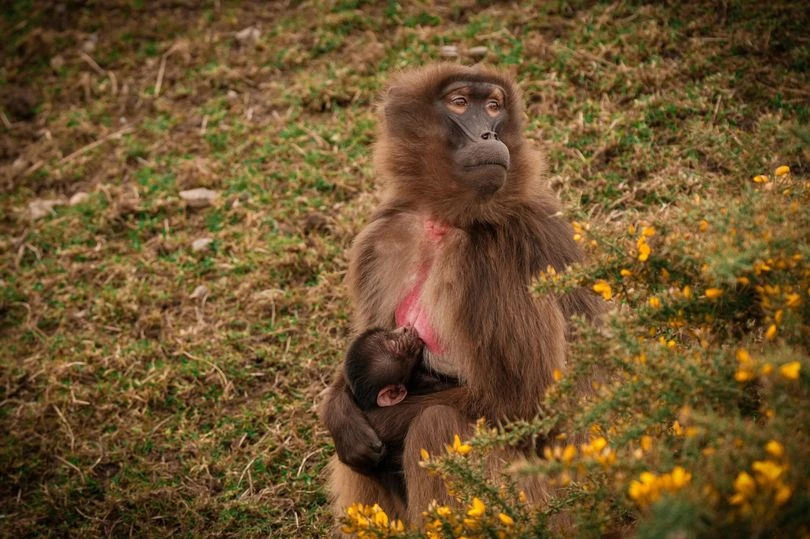
Geladas, by the way, have a luxurious breastfeeding system. The females' nipples are positioned very close to each other, so if she has only one baby, it drinks from both breasts.
On the other hand, again from a natural perspective, killing a baby on which the mother has already expended considerable resources is extremely wasteful. A female carries a baby for six months! It's a real mess, no matter where you look. Therefore, female geladas, like many women, are able to fake it. In this case, ovulation. But it's not enough for them to go to the male and say, "Darling, don't kill my baby, I want your children." This trick won't work with geladas, as their fertility is visible to the naked eye. Females, like males, have a patch of bare skin on their chests. Normally, it's light pink. When the monkey is ready to mate, the patch turns bright red, resembling a necklace of bubbles. Any male gelada knows: if his female puts on red beads, it's the long-awaited signal: "Hurray! It's time!" Well, female geladas can "put on beads" even when they're not ovulating! The upshot? The male mates with such a female and often keeps her baby alive. And he's not the least bit bothered by the fact that the long-awaited pregnancy hasn't occurred. 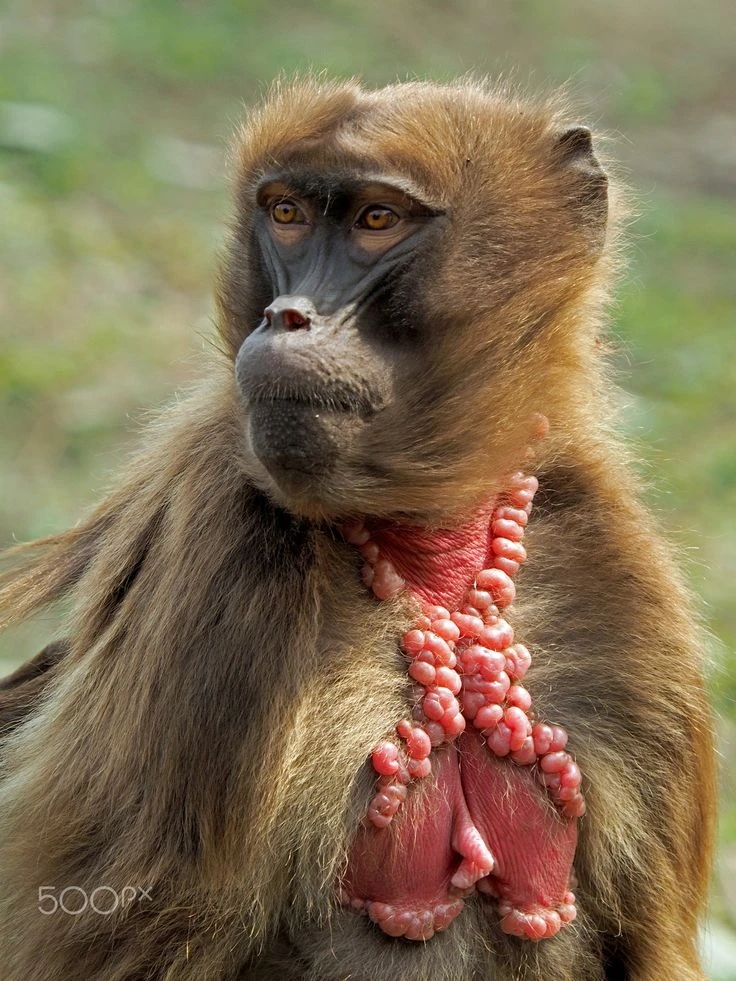
These aren't some fancy jewelry! Everything is homemade, all natural!
Speaking of cunning, in the case of geladas, both males and females are good. Sometimes a male just can't seem to get a harem, even though he really wants one. Then he attacks any mother's most vulnerable spot—her child. 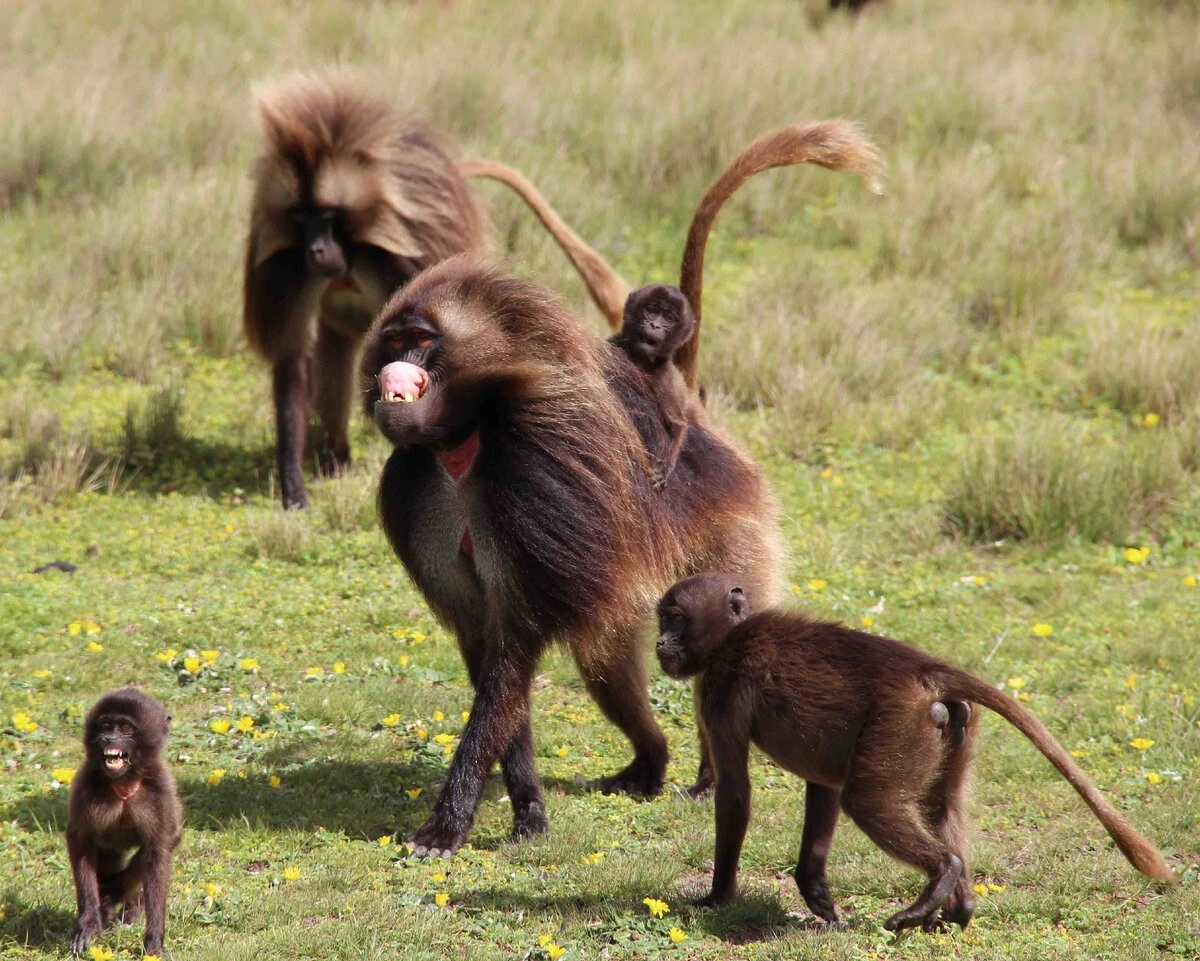
If I had a dad like that, I wouldn't want to spend much time with him either.
An adult monkey begins to befriend a baby: spending time with it, playing, teaching it, and becoming an older friend. The baby, usually deprived of the attention of its immediate father, often becomes attached to the companion, and the mother, following her child, moves from her harem to this male. Thus, through love and care, the intelligent male wins what others try to take by force. Scientists call this phenomenon "friendly child abduction." And although it doesn't happen often, this tactic also works. 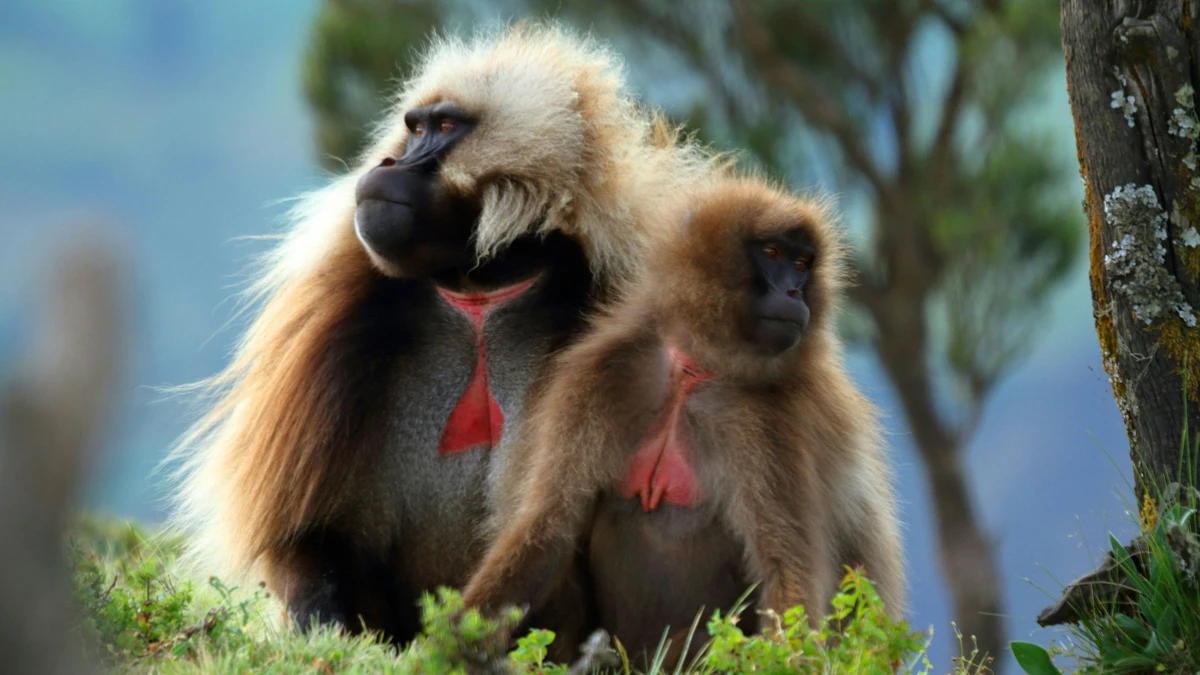
You said your friend has kids too. Would you like to introduce her?
So, ladies and gentlemen, herbivory doesn't always mean harmlessness. Yes, geladas, by the way, are the most herbivorous primate species—their diet consists almost entirely of seeds and grasses! They only need fangs, manes, and other attributes of power in the animal kingdom for violent conflicts among themselves. Internecine warfare and constant tension have turned geladas into some of the most fearsome primates on the planet!