From a Live "Nail" in the Heel to an Elderly Larva: 10 Incredible Records in the Insect World (11 photos)
What's so interesting about bugs? Most people only notice a particularly beautiful butterfly, are afraid of cockroaches, and brush away flies. 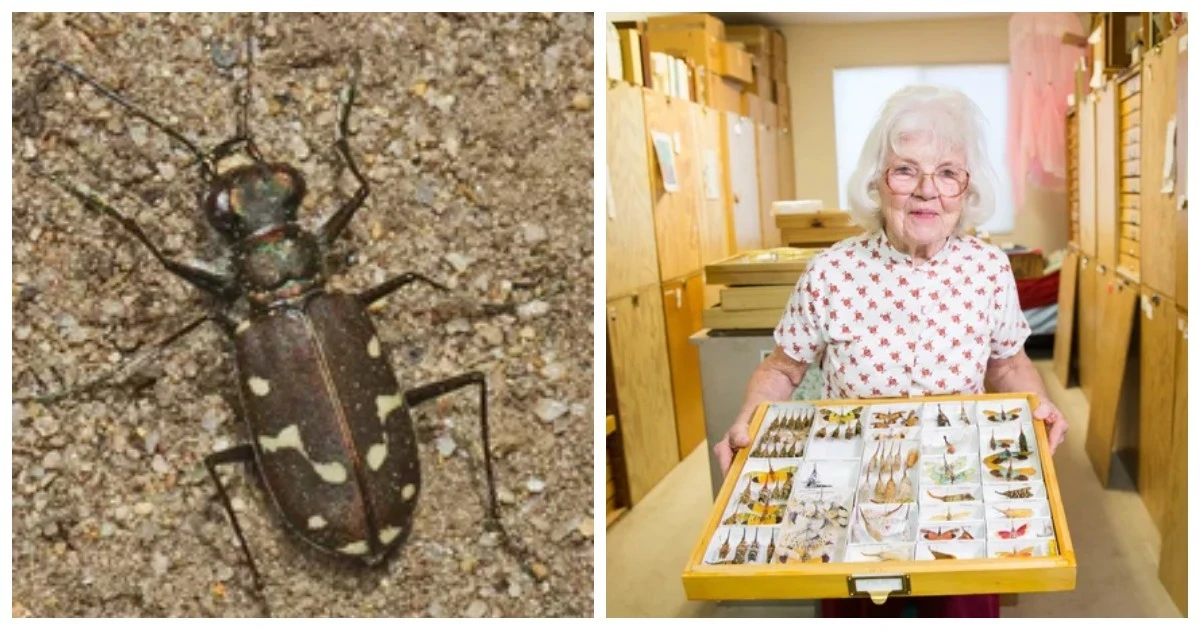
Meanwhile, these creatures aren't just bugs. This collection will change your perception of insects. Here are true champions: a giant the weight of a rat, a jumper that can jump 200 meters in human time, and a tiny one whose bite is as painful as a bullet wound.
1. Longest Insect 
The record holder for longest insect is the stick insect Phryganistria chinensis. The largest recorded specimen with its legs fully extended measured 640 mm. It was bred at the West China Insect Museum in Chengdu, the capital of Sichuan Province.
The previous record holder was the current champion's grandmother, a member of the same species. She was discovered in 2014 during a field inspection by Zhao Li, a museum curator. That specimen, with its legs fully extended, measured 624 mm. It is now also housed in the museum's collection.
2. The Fastest Land Insect 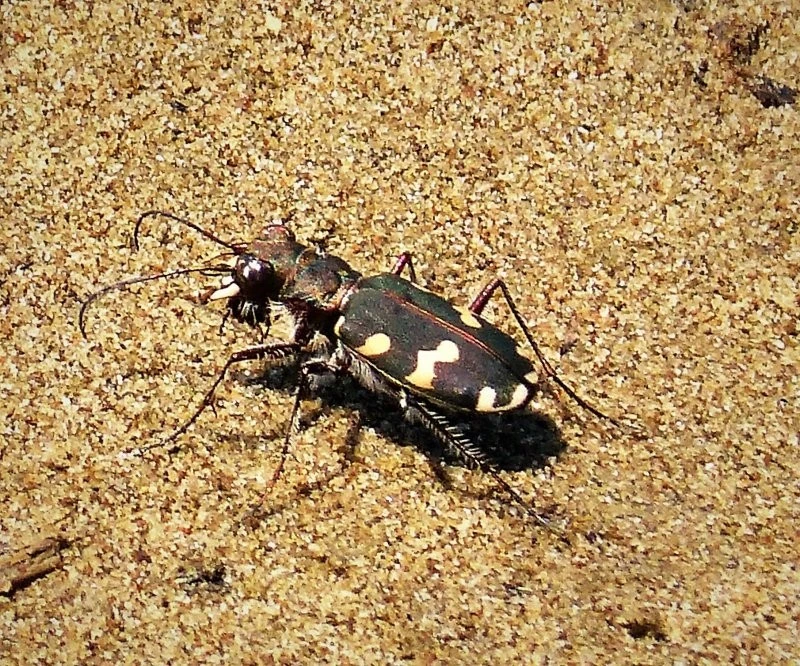
The fastest insect runners, and therefore the fastest insects on land, are Australian tiger beetles of the genus Cicindela and subgenus Rivacindela (order Coleoptera, family Carabidae). The absolute record holder, the species Cicindela (Rivacindela) hudsoni, is capable of reaching speeds of 2.5 meters per second (9 km/h).
Before scientists measured the tiger beetle's speed, the title of fastest land insect belonged to large cockroaches (order Dictyoptera). The record was set in 1991 at the University of California, Berkeley (USA): the species Periplaneta americana clocked a speed of 5.4 km/h (3.4 mph), equivalent to 50 body lengths per second.
3. Heaviest Insect 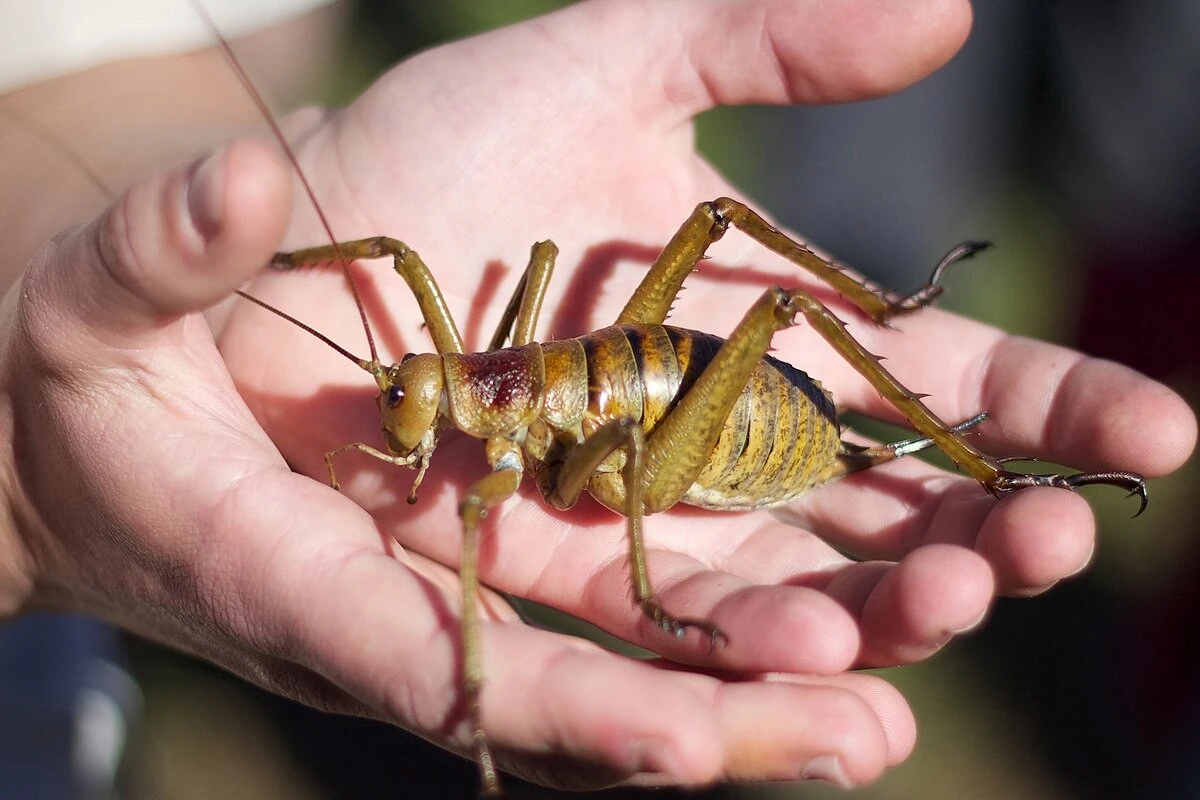
The documented weight record is 71 grams. It belongs to a pregnant female Little Barrier Island giant weta (Deinacrida heteracantha), discovered in 2011 by American scientist Mark Moffett.
This grasshopper-like insect lives exclusively in the forests of Little Barrier Island off the coast of New Zealand's North Island. The giant weta grows up to 7.5 cm in length, with females significantly larger than males.
The title of the heaviest insect in the world has been debated for decades. Some sources have cited weights of 70–100 grams for certain species of Goliath beetles (family Scarabaeidae) from equatorial Africa (Goliathus regius, G. meleagris, etc.). However, it appears that these figures refer only to the weight of their larvae; Adult Goliath beetles weigh less, ranging from 40 to 50 grams. Other contenders capable of reaching comparable weights include the actaeon beetle (Megasoma actaeon), the elephant beetle (M. elephas), and the giant longhorn beetle (Titanus giganteus).
Beetle larvae can reach much greater mass than adults. The absolute record belongs to an unusually large male actaeon beetle larva (Megasoma actaeon), bred in Japan in 2009. It weighed 228 grams, comparable to an adult brown rat. This beetle species is native to the northern regions of South America.
4. Highest Jump 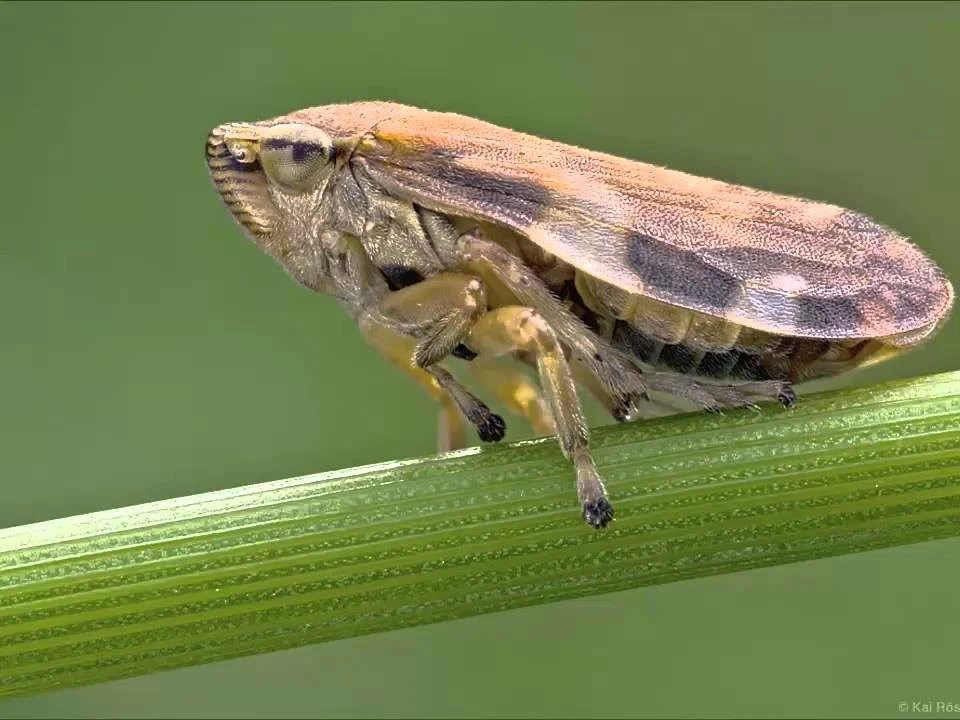
The record for the highest jump among insects is held by the spittlebug (Philaenus spumarius) at 70 cm.
During the jump, the insect accelerates at 4000 m/s², overcoming a force of over 414 times its own weight.
The study was conducted by Professor Malcolm Burrows, Head of the Department of Zoology at the University of Cambridge, in 2003. The secret to the insect's jumping ability lies in its hind legs, which contain extremely powerful muscles. Energy is stored in them through slow contraction, and a special locking mechanism allows the legs to be locked under the body, like the bowstring of a drawn crossbow, ready to fire. When the legs are released, the energy is released, and the insect takes flight in a millisecond. The hind legs are designed exclusively for jumping, so the spittlebug drags them along the ground as it walks.
5. The Oldest Insect 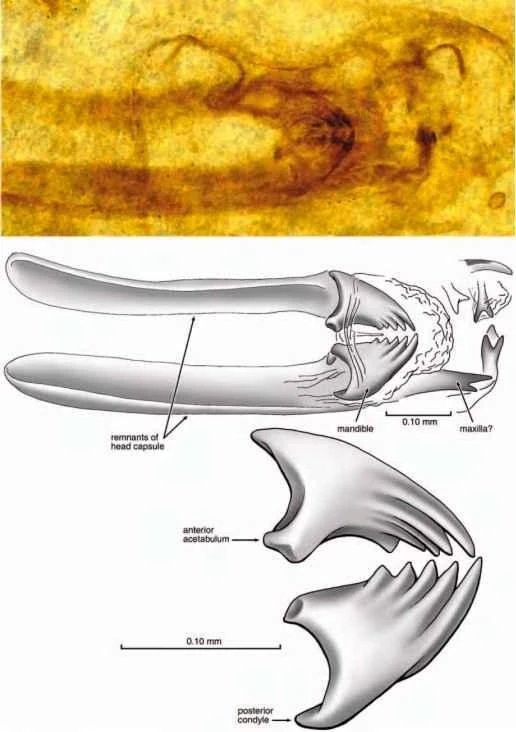
The oldest insect discovered is the fossil of Rhyniognatha hirsti, which lived approximately 410 million years ago in what is now Scotland. This is 30 million years older than any other known insect fossil.
The specimen was first described in 1926 by Australian entomologist Robin John Tilliard. Deeming the find unremarkable, he sent it to the Natural History Museum in London. There it lay for about 80 years until entomologists David A. Grimaldi and Michael S. Engel reexamined the fossil using modern microscopes. They discovered classic insect features and published their findings in the journal Nature on February 12, 2004. Although the wings were not preserved, the triangular structure of its jaws is similar to that of winged insects. This suggests that insect flight may have evolved 80 million years earlier than previously thought. The fossil remains housed at the Natural History Museum in London.
Prior to this discovery, the oldest known insect fossils were thought to be a 379-million-year-old pair of wingless insects found in New York State and Canada.
6. The Most Valuable Insect Collection 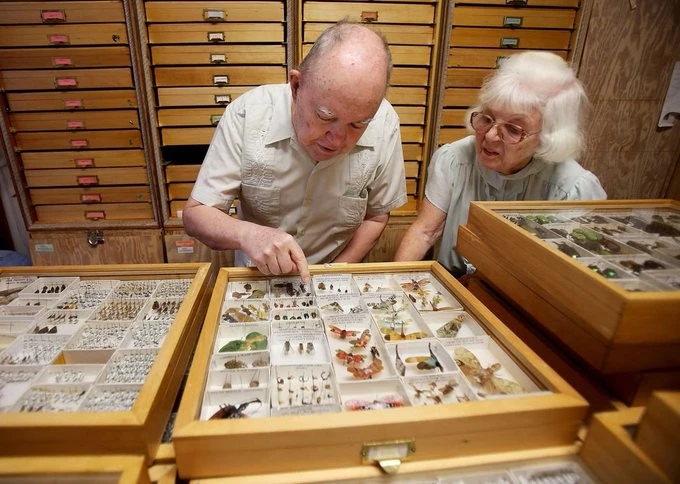
The most valuable insect collection in the world is a collection valued at $10 million. It was donated to Arizona State University in March 2017 by entomologists Lois O'Brien and Charlie O'Brien.
Lois and Charlie, who were in their eighties at the time of the donation, met at the University of Arizona in the late 1950s. They began their collection during their honeymoon in Canada and subsequently traveled the world in search of insects. The donated collection contains over 1.25 million meticulously cataloged and preserved specimens.
7. The Most Destructive Insect 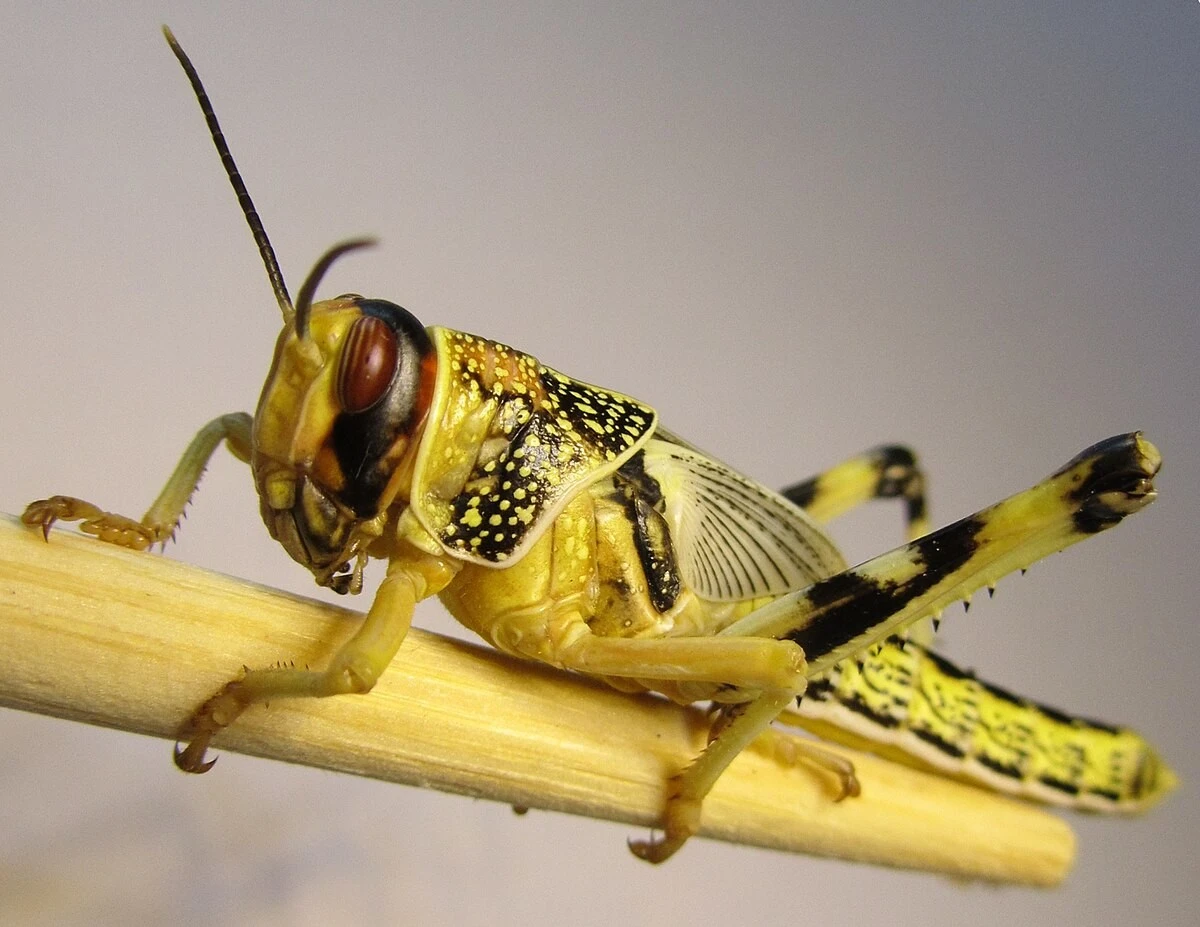
The most destructive insect in the world is the desert locust (Schistocerca gregaria), found in arid and semi-arid regions of Africa, the Middle East, and Western Asia. An individual locust, just 4.5–6 cm long, can consume its own body weight in food in a day.
However, the real catastrophe is caused by certain weather conditions that lead to the formation of unimaginably huge swarms. They devour almost all vegetation in their path. Even a relatively small swarm of approximately 50 million individuals can destroy in a single day enough food to feed 500 people for an entire year.
8. The Longest-Lived Insect 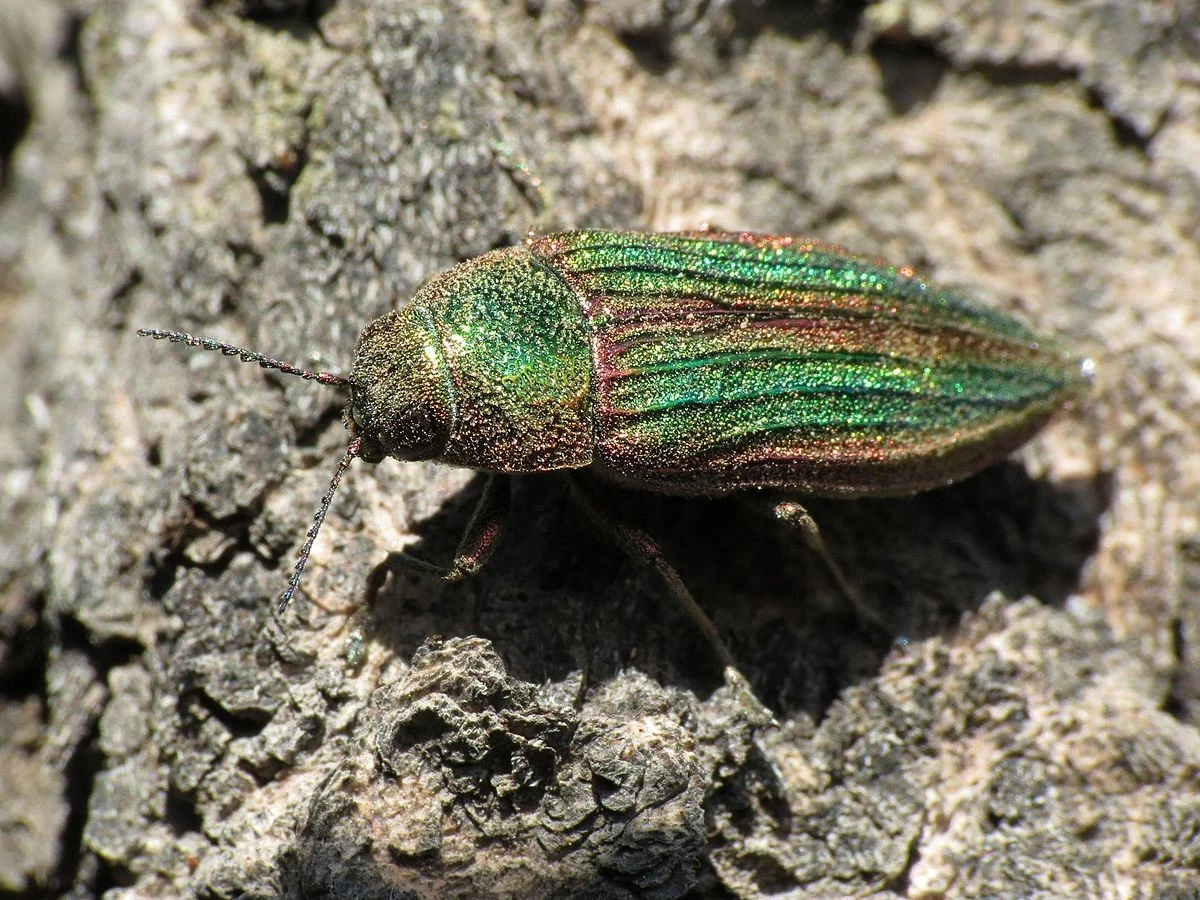
The longest-living insects are the jewel beetles (Buprestidae). On May 27, 1983, a Buprestis aurulenta beetle emerged from a step on a wooden staircase in Mr. Euston's home in Prittlewell, UK.
By that time, it had been in the larval stage for at least 47 years. During this time, the larva slowly developed within the wood.
All sources indicate that Buprestis aurulenta typically takes 1-3 years to complete its development. However, inside buildings, where the wood is dry and nutrient-poor, the development cycle from egg to adult can extend up to 30-50 years! An adult beetle of this species reaches about 2 cm in length and lives for only 2-3 months.
9. The Most Painful Sting 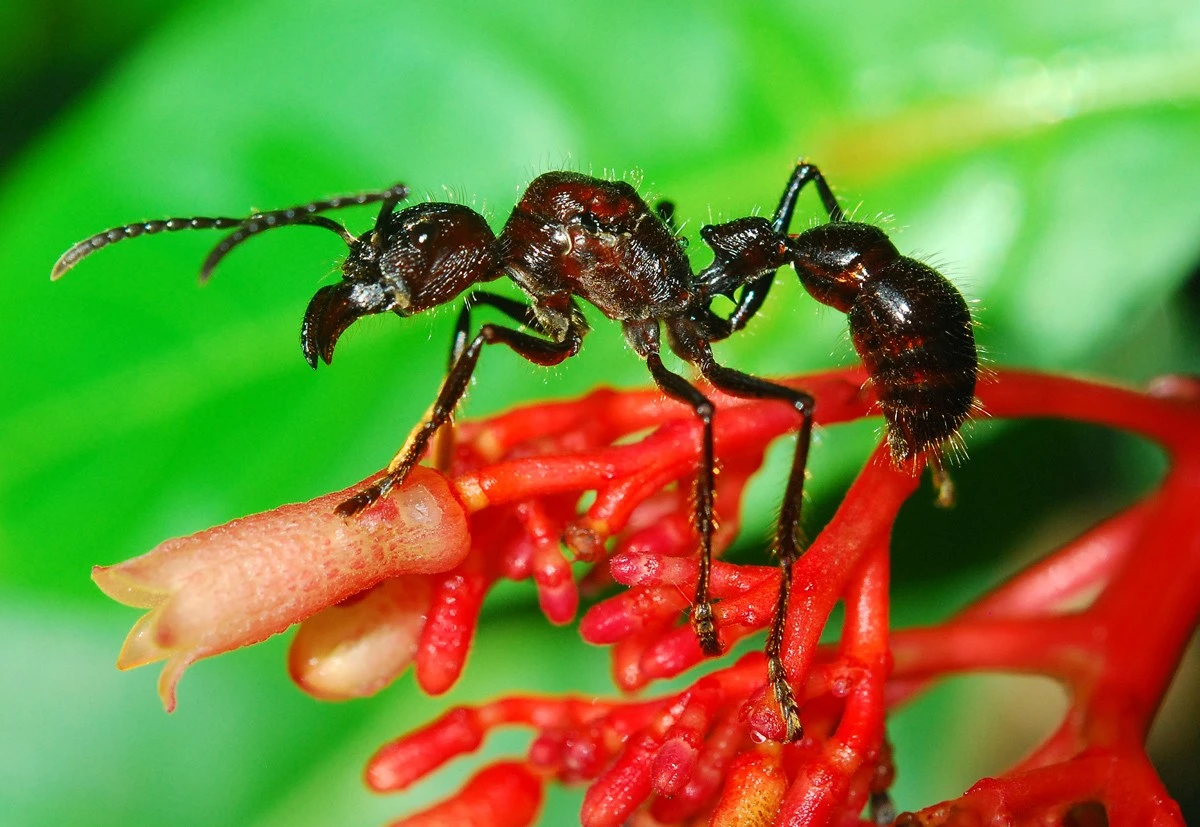
In 1983, American entomologist Justin O. Schmidt of the Carl Hayden Bee Research Center in Arizona published a detailed scale of insect stings. The index was based on his personal experiences with the stings of a huge number of different species of stinging insects.
The most painful sting, with a rating of 4.0+, was considered to be that of the bullet ant (Paraponera clavata), which is found from Nicaragua and thence through Central America to Paraguay in northern South America. Schmidt described the sensation as "like walking on hot coals with a rusty nail in your heel." Other victims compared the pain to a gunshot wound, hence the name "bullet ant."
Slightly behind in the index with a rating of 4.0 are the warrior wasps of the genus Synoeca and the road wasps (or tarantula hawks, family Pompilidae), the latter of which are the largest wasps in the world.
10. Highest-Flying Insect 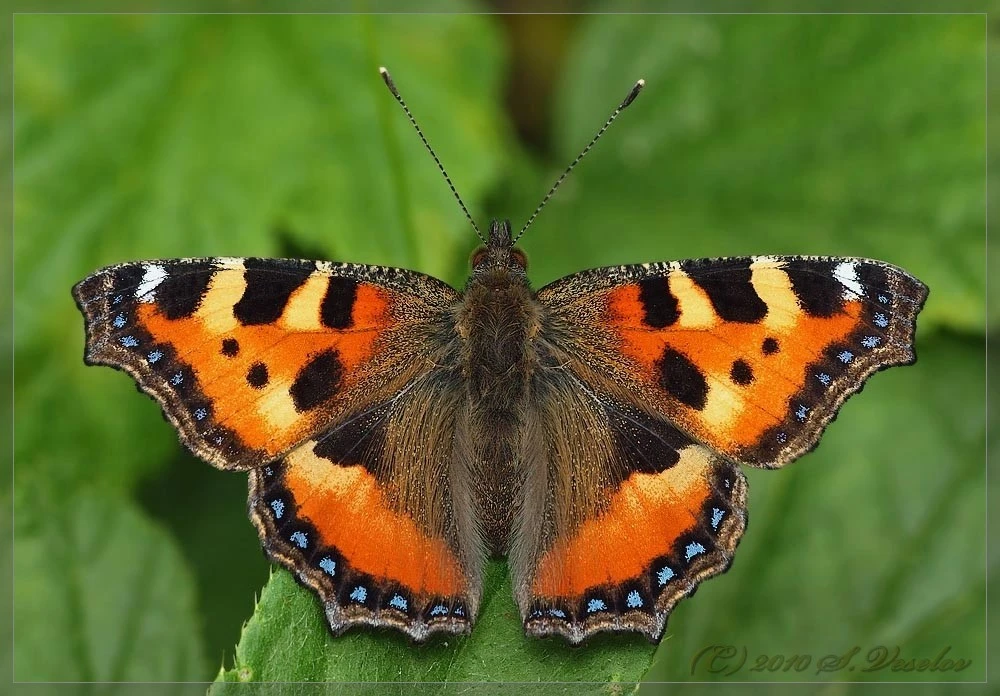
The highest-flying insect record belongs to migratory butterflies. The maximum recorded altitude is 5,791 meters. At this altitude, wrens (Aglais urticae) have been observed drifting over the Zemu Glacier in the eastern Himalayas.
By comparison, the absolute altitude record for any bird belongs to the African vulture (Gyps rueppellii, or Rüppell's vulture). On November 29, 1973, one individual collided with a passenger plane over Abidjan, Côte d'Ivoire, at an altitude of 11,300 meters. These birds are approximately 44-50 cm long.