I recently played Battlefield 1, and overall it was mediocre. However, one interesting mission stuck in my mind, where I had to play as Italian soldiers—the Arditi. I had to look it up.
I have the honor to introduce you to "Ardito" (Italian for "brave man," with a distinct touch of recklessness), a soldier in the assault unit of the Royal Italian Armed Forces during World War I. 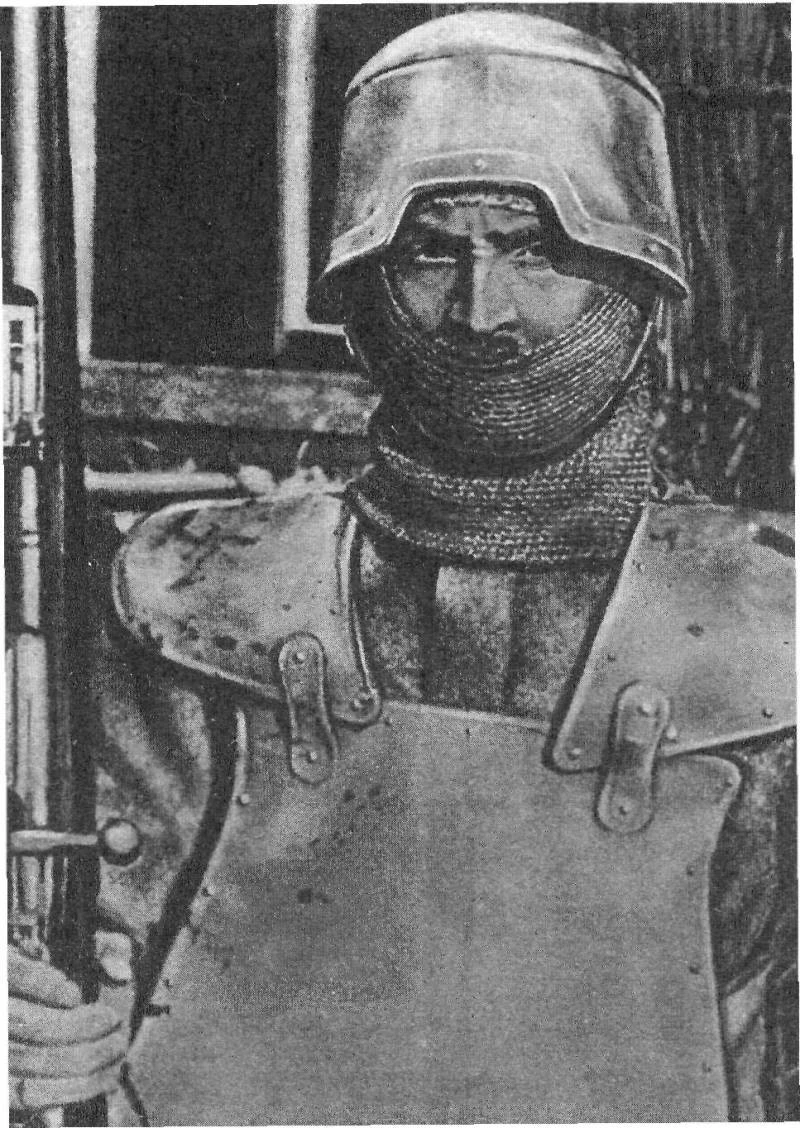
This is not a statue of an arrogant medieval condottiere (although he's certainly monumental) or a photograph of a cheerful modern-day historical fencing reenactor (although he's covered in iron up to his eyebrows).
The history of the "arditi" (plural) units, who became the heroes of epic stories and the darlings of official military propaganda in Italy in 1917-18, began (like the combat path of many special operations forces throughout history) with the initiative of field commanders and the age-old habits of natural brave men. (predators, hunters—whatever you prefer) to gather in gangs.
In 1916, the official name "Militare arditi" (Military Arditi) and permanent status were given to teams of volunteers formed in Italian front-line units to spearhead attacks under enemy fire, cut passages through barbed wire, and be the first to break into Austrian positions, hurling grenades, emitting terrifying cries, and leaping into the trenches with drawn daggers. The "arditi" were also used for reconnaissance, but they did not duplicate the front-line scout teams. "A scout is a snake, an arditi is a dragon," soldiers said, finding the Italian metaphor apt.
Clearly, a proactive combat officer with a reputation for daring audacity soon emerged, who came up with the sensible idea of forming detachments. The "arditi" were transformed into a special type of assault infantry. And at the same time, they were supplemented with sappers. Blowing up the "arditi" was a frequent occurrence, and oftentimes the daredevils themselves were blown up along with the Austrian fortifications, so professionals in this field were needed. 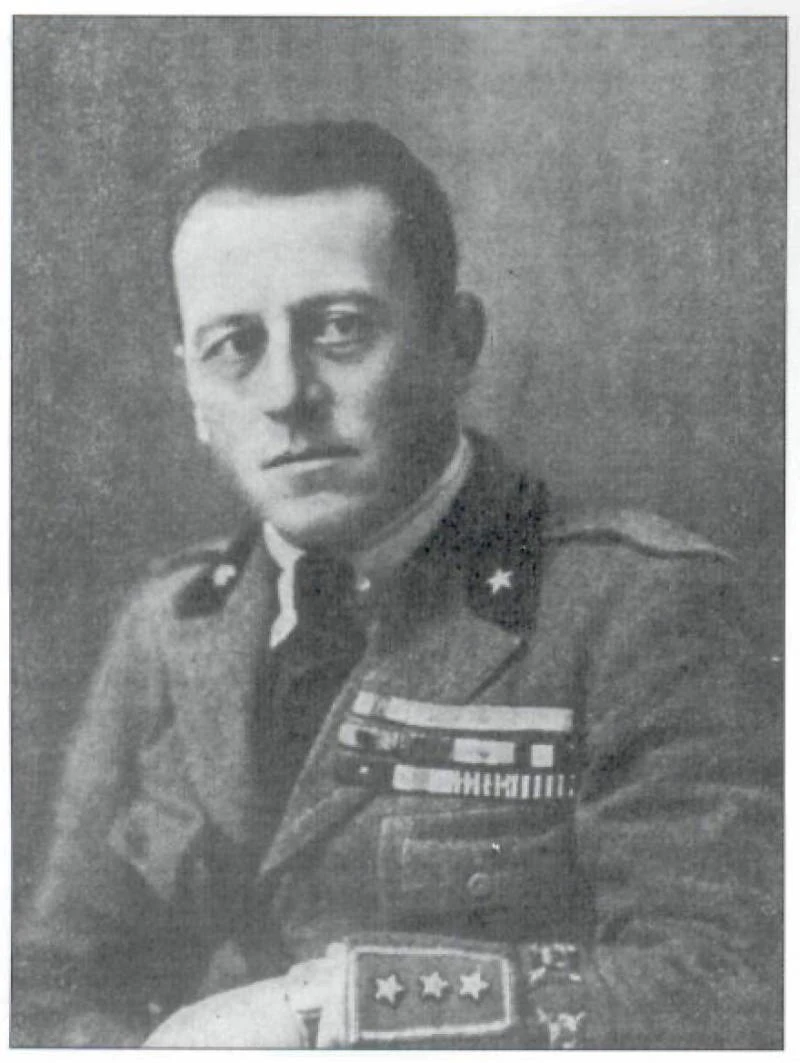
Here is this officer, the "father of the arditi," Colonel Giuseppe Bassi, the grandson and namesake of one of Garibaldi's comrades, which is no small feat for a career in Italy:
In 1917, 33-year-old Bassi, then still a major, managed to secure the command's approval to create regular "arditi" assault units. (Reparti d'assalto), cleverly using the argument of "catch up and overtake the enemy." "Sirs, the Germans have their terrible Sturmtruppen, and intelligence reports that the Austrians are forming something similar, and we have nothing. Mamma Mia, how is this possible?!"
The Italian generals in this case showed themselves to be quite adequate, and that same year, more than two dozen (estimates vary - 22, 23, or 27; in theory, one per corps) "arditi" units, festooned with explosives, armed with menacing knives, and clad in iron armor, took to the battlefield on the front in Northern Italy:
"Arditi" units could number up to 30 officers (but no less than 13 regular officer positions) and from 350 to 700 fighters (according to the staffing, which, However, rarely observed, not only in Italy—around 400 bayonets) each. They had a roughly battalion-like structure. An "arditi" company, of which there could be from one to four in a detachment, consisted of several (up to four) assault platoons (Plotone d'Attacco), a specialist platoon (Plotone Specialisti) with two light machine guns, a sapper squad, and a communications squad, and—not always—a flamethrower platoon (Plotone Lanciafiamme). A "weapons company" (Compagnia Complementi), armed with two heavy or light machine guns and two trench mortars, was assigned to the detachment, often at the expense of a regular infantry regiment, on whose front the assault troopers operated.
The "arditi" were mainly formed from members of the elite light infantry—the Bersaglieri and Alpini—as well as from Sappers.
The main feature of the Arditi equipment was the Farina trench armor, which supposedly couldn't be penetrated by a 6.5mm Mannlicher-Carcano rifle bullet. In reality, these armor plates were produced by various manufacturers and in different modifications, had varying thicknesses, and often failed to withstand bullets. 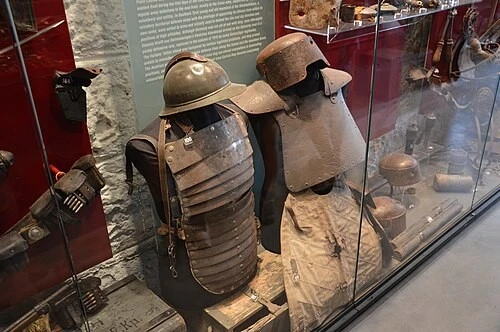
Lightweight and basic Farina armor models from the collection of the Infantry Museum (?) in Rome 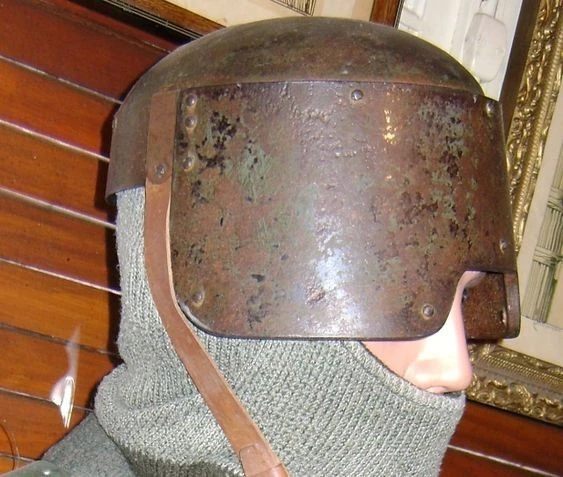
The "light" armor included the standard Hadrianic steel helmet, which became almost a symbol of the First World War, but the "full set" was completed with an assault helmet... Note the thickness of the visor – it looks like no bullet could penetrate it!
Of course, the "arditi" didn't always go into attack wearing these bulky iron contraptions. Their main striking force consisted of grenade launchers and demolition experts. A soldier's standard equipment included up to twelve (and realistically, as many as he could fit!) hand grenades in his pouch, belt, and pockets, with homemade and captured specimens widely used. Furthermore, behind each platoon of "arditi," ammunition bearers hobbled into the attack, bending under the weight of their deadly loads, carrying 150 spare grenades in "factory packaging."
Every "arditi," from the squad leader to the cook, was issued a combat dagger, which became second only to armor, and perhaps even the first, a "fetish" for this type of weapon.
A dagger in the teeth is a classic "arditi" stance, commemorating the Battle of the Piave River in 1918, where the soldiers of these units, attacking the Austrians, swam to the other bank, holding their weapons above their heads and blades in their teeth... Without armor, of course.
At first, there was no shortage of volunteers for the "arditi"... Brave men from across the Italian Army vied with each other to be transferred to the ranks of the "bravest of the brave," despite the enormous losses suffered by these assault units, who literally emerged from the smoke of artillery barrages in front of the enemy's front lines (trying to follow the barrage, the "arditi" often found themselves "hit" by their own artillery) and rushed toward barbed wire and machine guns (suppressing enemy machine gun emplacements was the "arditi's" specialty).
Having seized a bridgehead in enemy positions, the "arditi" were supposed to hold it until the attacking Italian units arrived... And if they fell under fire and failed to break through, they were to hold out for at least 24 hours to ensure the success of subsequent attacks. This was written in their regulations! Given this circumstance, the "arditi" motto—"O la vittoria, o tutti accoppati" ("All together to victory or to death")—doesn't seem like an exaggeration, even given the Italian passion for dramatic effects...
Constantly balancing on the brink of death could incite even a life-loving and good-natured Italian to a gloomy, pathetic, and murderous mood...
Incidentally, in 1918, when volunteers for heroic slaughter began to run out in units, commanders began forcibly sending the most unruly and aggressive soldiers who were causing them problems to the "arditi." How the Italian "stormtroopers" changed after this is needless to explain. Suffice it to say that in the final stages of the war, the Austrians practically stopped surrendering to the "iron-clad spaghetti" and, in turn, stopped taking the "arditi" prisoner.
No matter what popular (not always accurate) assessments the Italian soldier might have earned, the "arditi" knew how to make a splash in the Austrian lines!
"The Ten Commandments of the Arditi." A rather flowery literary text, composed by General Francesco Saverio Grazioli:
1. Arditi! Your name signifies courage, strength, and loyalty; your mission is victory at any cost. Proudly show the world that no one can resist the Italian soldier. Think of the values you defend with your valor: the freedom of your families, the beauty of your country, the wealth of your nation. This will give you indomitable strength.
2. Victory is not dependent on numbers and weapons: above all, discipline and courage are the values of the soul. Discipline is the most beautiful and highest moral force; courage – cold, firm, and will demonstrate your superiority to the enemy always and everywhere.
3. Victory lies beyond the enemy's last trench, in the rear; to achieve it, use violence and intelligence, and do not worry if the enemy remains out of reach during the attack. If the enemy surrounds you, surround the enemy.
4. Always try to grasp what is happening on the battlefield and strive to help comrades in danger. When you sense a dangerous situation, rush forward again and again.
5. When attacking, use your hand grenades and dagger – the true weapons of every Arditi. Once you have secured the terrain, use your rifle and machine gun. Protect your weapons if you want them to protect you. Anticipate an enemy attack with a machine gun attack. Then you will see the enemy attack weaken and fall like mown wheat.
6. If you have reached the enemy's rear, terrify and dismay them; one brave man is worth a hundred cowards, an Italian arditi is worth a thousand enemy soldiers.
7. Strike fear in your enemy, knowing from experience that you are their best weapon; be confident to prolong your glory. Be ferocious toward the enemy who stands before you. Be magnanimous toward the defeated enemy.
8. If you are wounded or separated from your comrades, your duty is to relay the news to your unit and try to reach your comrades at any cost.
9. Seek no other reward than the smiles of the beautiful Italian women you bravely defend. They will cover you with flowers and kiss you when you return victorious, proud of your courage, beloved son of great Italy.
10. Forward to battle! You are the finest example of the genius of our people! The whole country looks upon you during your daring attack.
The "arditi" units of World War I were disbanded in 1920. Like many veterans of special operations forces from other countries and eras, not all Italian stormtroopers found harmony in civilian life. Among the fighting units of political radicals—fascists, anarchists, left-wing socialists—whose struggle engulfed Italy, as well as among the Italian communists, there were many former "arditi"; They all actively exploited the symbols and names of these renowned fighters...
I wonder if yesterday's brothers-in-arms from the trenches near Caporetto and on the Piave River ever got to know each other, clashing face to face in bloody street battles over who would rule Italy?..
By the way, the Royal Italian Navy also formed units of "Naval Arditi" (Arditi nuotatori).
Add your comment
You might be interested in:












Persistence in achieving a goal

A biker prevented a hit-and-run driver from escaping

Not everyone is having fun on the amusement ride

The cutest lunch delivery ever

A book titled "A Guide to Rebuilding

Young women, Dancing and George Michael: nothing superfluous

An apology delivered with a running start
A steam locomotive for "big boys"

Bollywood never ceases to amaze
