Charles Manson: A Loser and a Failed Messiah. Part 1 (18 photos)
Today, let's talk about a guy who managed to cause quite a stir half a century ago. You might have heard of him, especially after the release of the 2019 film "Once Upon a Time... in Hollywood," and some even before that. This is Charlie Manson—a drug addict, a rock musician, a criminal, a superstar, a pimp, and a failed messiah who nearly brought the world to its knees because of the end of the world. 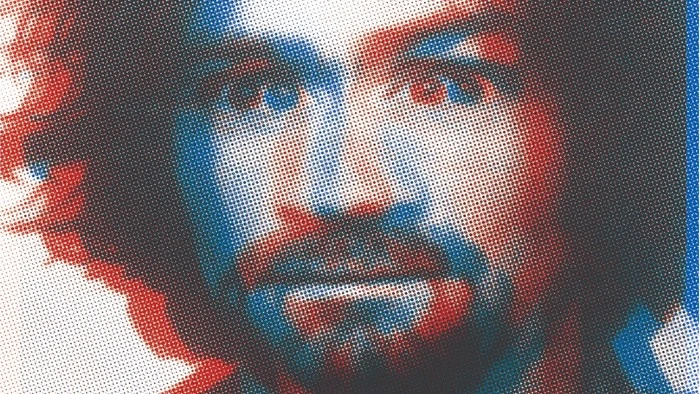
In fact, a lot has been written about his life and deeds, and a whole bunch of films have been made. He became surrounded by myths and went down in history as something sinister, almost a demon in human form.
In this article, we'll try to look at him from a different angle.
And for those who don't know his story, it will also be interesting. He was, after all, a fascinating character.
Because the irony of his fame is that he wasn't a supervillain or a brilliant manipulator. Rather, he was simply a loser who gathered a group of marginalized individuals around him and degenerated into pure evil. A mediocrity who caused mischief, but was elevated to the status of legend by journalists, writers, and filmmakers.
The most terrifying thing about the Manson Family phenomenon is that such potential Mansons are all around us. And this isn't just some psychopath getting his adrenaline fix through violence and manipulation. It could be a street alcoholic, a reclusive guy from a parallel class at university, or a rude supermarket cashier.
In this article, let's look at the entire story of Charlie himself and his circle. There's plenty of horror there, even beyond their most famous act.
Let's start with what made him famous. You've probably heard that Charlie and a bunch of accomplices murdered some actress in her home. But that's not exactly how it happened.
The Cielo Drive Massacre 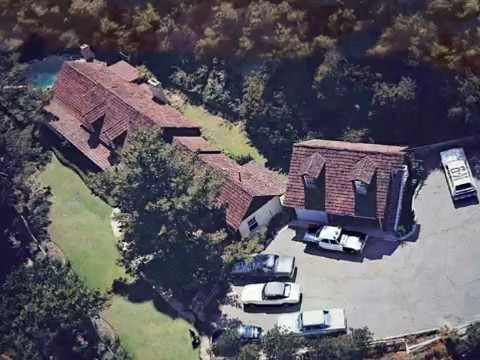
The very same mansion on Cielo Drive where it all happened
August 8, 1969, Los Angeles, in the elite residential area of Beverly Hills. Late at night, a car carrying four people pulled up to the mansion at 10050 Cielo Drive.
The property was rented by renowned director Roman Polanski, who lived there with his wife, 26-year-old actress Sharon Tate. He was in London at the time, and Sharon, eager to avoid being alone, invited her ex-boyfriend, the renowned 35-year-old stylist Jay Sebring, over. They were just friends, by the way; they had a long history together. Also with them was Roman's friend, 32-year-old actor Wojciech Frykowski, and Wojciech's 25-year-old girlfriend, Abigail Folger, the daughter of businessman Peter Folger. 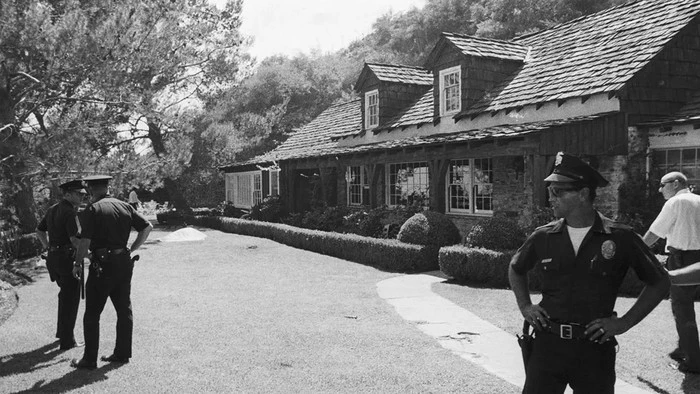
Police at the crime scene
The intruders broke into the yard, cutting the telephone wires and killing 18-year-old Steven, who was in the wrong place at the wrong time. They then broke into the house itself. You might think it was a robbery, but no, the attackers weren't after money. Those present immediately realized this – Wojciech made an unsuccessful attempt to escape, and Jay even tried to resist. It didn't help: everyone was caught, subdued, and herded into one room.
What happened next isn't worth describing in detail here. It's nothing good. Either way, by morning, Sharon, Jay, Wojciech, and Abigail were dead, and even the fact that Tate was eight months pregnant didn't stop the attackers. 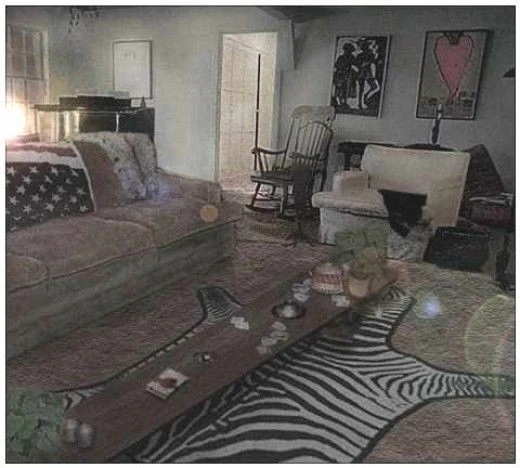
The room where it all happened, some time before. Sharon will be found on the couch, covered with this American flag.
But don't believe the journalists' horror stories. The pregnant girl wasn't disemboweled, she wasn't on drugs; it's all fake news. But the fact that the word "Pig" was written on the wall in Sharon's blood is true. And this fact is important; it will resonate in the future.
So, it was this mass murder that made Charles Manson famous, even though he wasn't even there. And he never sought fame as a killer. The massacre was carried out by a trio of loyal vampires: Tex Watson, Susan Atkins, and Patricia Krenwinkle. Also with them was Linda Kasabian, who had no involvement in the crimes. They were members of a cult called the Family, led by Manson. This crime was committed on his orders.
Public Reaction
The events of that night did not go unnoticed (since we're talking about it half a century later).
It's important to briefly discuss the context of the era: the 1960s in the United States marked the pinnacle of American government and society in the postwar years. A generation of people grew up in a sheltered position, having seen no major wars or crises. The Vietnam War was just beginning, the fuel crisis of the 1970s was still a decade and a half away, the standard of living had reached its highest level in the country's history, and morals had become more relaxed. The hippie movement was on the rise, the sexual revolution was raging, and substance abuse was becoming widespread. A whole chronicle of a couple of Sureno-minutes could be written, especially since this article was inspired by his video on the same topic, but overall, the context is clear. The 1960s, with a few caveats, were the happiest of times and have gone down in history as the "Swinging Sixties." It's true that this is a British term, but it was also used in America. 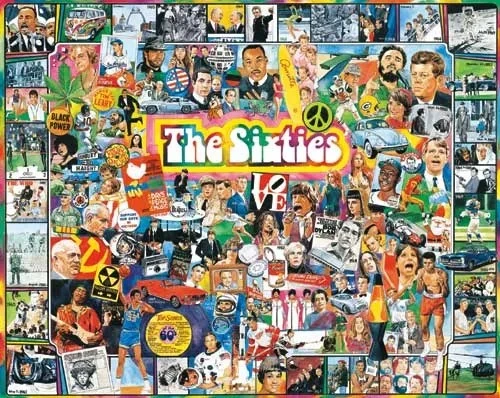
The Sixties in Brief
On August 9, 1969, the Sixties were killed along with Sharon Tate and her friends.
In the morning, overfed California literally woke up to a new world: the relaxed atmosphere of Hollywood bohemian life just yesterday was replaced by paranoia: celebrities were urgently erecting fences around their mansions, hiring security, cutting ties with friends, and canceling high-profile events. And not because they were all threatened by the mafia. No, just a bunch of stoned misfits.
Ordinary people were horrified too; after all, it's not every day that someone commits a real massacre in a generally decent city.
Here, special respect should be given to the journalists who picked up this story. In pursuit of ratings and under fierce competition, they increasingly exaggerated the situation, inventing all sorts of nonsense about what happened. Readers could learn from newspapers that Polanski's home was a drug den and that overfed rich kids had staged a bloody orgy; some wrote about satanic sacrifices, and some geniuses even went so far as to publish lists of future victims in the press (!). Celebrities weren't far behind, willingly giving interviews with captivating stories that couldn't be kept quiet. To listen to them, it's as if the entire Hollywood elite had been there and witnessed everything.
Basically, as they say today, they staged a psychotic episode of unprecedented proportions. 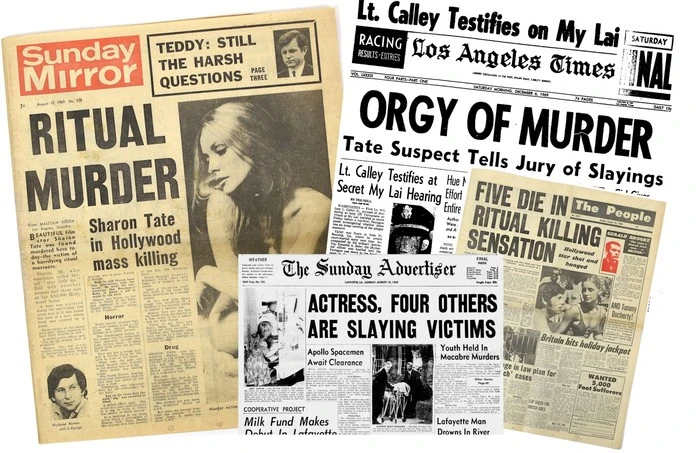
Examples of newspaper headlines from that time. No special knowledge of English required.
And just think about it – because of one tragic night, the entire bright and cheerful atmosphere of the sixties went down the drain. Drunken delirium gave way to horror and great depression, as if anticipating the decline of the seventies.
The next time American society would experience such panic would be more than three decades later, when planes crashed into the Twin Towers.
And one man is essentially to blame for everything – Charles Manson. We'll talk about him later.
(Although, of course, he's not to blame, but more on that later)
Where did this Manson come from?
Charles Mills Maddox was born in 1934 in Cincinnati, Ohio. His mother, Kathleen, was only 16, and the boy never knew his father. That same year, she married 25-year-old laborer William Manson, who adopted Charles and gave him his last name. The real father remains unknown, but there are hints that he was 24-year-old con man Colonel Walker Henderson Scott Sr. (Americans love long names!). 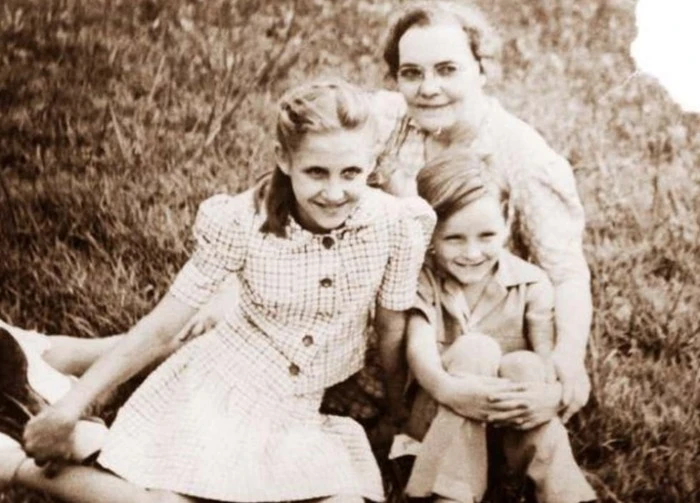
Little Charles with his mother and grandmother
There's a myth that our hero's mother was a prostitute, but that's not true, although she certainly led a peculiar lifestyle.
Three years later, William realized who he was dealing with and filed for divorce. Three years later, Kathleen, along with her brother Luther and his wife, got drunk and attacked a drinking buddy. She subsequently went to prison for five years, while Luther, according to some sources, got off with a minor scare, while others also reportedly went to prison.
Note: Some sources speak not of an attack on a drinking buddy, but of an attempted robbery of the place where it happened. For some reason, they got drunk at a car repair shop.
In fact, there are many such annotations in the biography of the future Messiah. His biography is full of rumors and inconsistencies. For example, according to some sources, during his mother's imprisonment, he lived with this same Uncle Luther; others say it was Uncle Billy in West Virginia. One thing is certain: the uncle was a real jerk and perhaps contributed most to the destruction of his nephew's psyche. He openly despised him and practiced peculiar parenting methods. 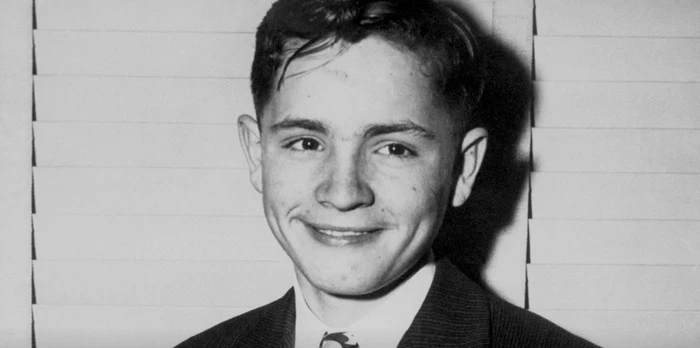
So little, and already a messiah
One of the most famous stories from Charles's childhood involved wearing women's clothes. The thing is, Charles grew up quite antisocial (with such a family) and had problems with his peers. After yet another conflict with his classmates, his beloved uncle came up with a brilliant solution: dress his nephew in women's clothes and send him to school dressed like that. How this was supposed to stop the bullying is a mystery to Jacco Fresco. Naturally, this performance made the situation even worse.
He also lived for a time with his grandmother, Nancy Ingram Maddox, a religious fanatic. She was certainly nicer than his mother's brothers, but Charlie wasn't happy with her either.
In 1942, Kathleen was released from prison and took her son with her. She didn't make a good mother – she continued to drink, drink heavily, drink heavily. One day, this woman was sitting at a bar with her young son, and the waitress joked that she would buy the baby from Katyusha. In response, Katyusha actually took Charlie and gave him to him, accepting a pitcher of beer in exchange, not wine (according to other sources, a bottle of beer). Only a few days later did Luther find him and take him.
Again, this story is unconfirmed; Charles himself told it many years later. But it is a fact that Katyusha tried several times to give her son to other families.
These attempts were unsuccessful – each time, Charlie returned to his mother. Realizing that no one would take such a boy, she sent him to a Catholic reform school. Basically, a shelter for troubled teenagers.
Manson escaped from there several times and returned home, but his beloved relatives brought him back. Ultimately, he simply ran away and became homeless. The son and mother's paths diverged completely.
By the way, Charlie had a fair amount of experience with the police at this point: he'd already received short sentences for theft and spent nights in jail. Now, on the streets, he continued stealing, but as a full-fledged criminal. He was now sent to "serious" juvenile prisons. In one of them, he met a young gangster; they escaped together and briefly engaged in robberies. Consequently, with each arrest, the prisons became progressively worse: initially, they were confined to closed Catholic schools, but at 13, he ended up in a juvenile detention center. And... there, he was raped. And with the accomplice of the guards. 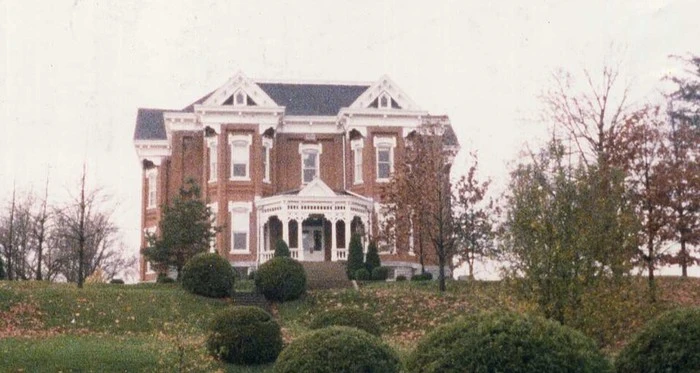
That same prison (photo from 1985), closed in 2005
Around this time, he started going crazy. It wasn't a mental breakdown, but a full-blown tactic. Charlie realized that in such places, the weaklings had it the worst, while the psychos weren't touched, so he began attacking his fellow inmates and bringing out this psychotic side of himself.
It helped. So much so that Manson came to love prisons and even asked to stay there. Apparently because life in prison is simply more stable and understandable than with a degenerate uncle or a drinking mother. And by the way, if you suddenly started feeling sorry for him, you're wrong – he also became a rapist.
At one point, our protagonist even enjoyed a brief period of freedom. In 1955, he married waitress Rosalyn Jean Willis and took up robbery, and three months later, he was sentenced to three years in prison for car theft. During this time, his wife became pregnant, and after her husband's arrest, she gave birth to Charles Manson Jr., then divorced and moved to another city. 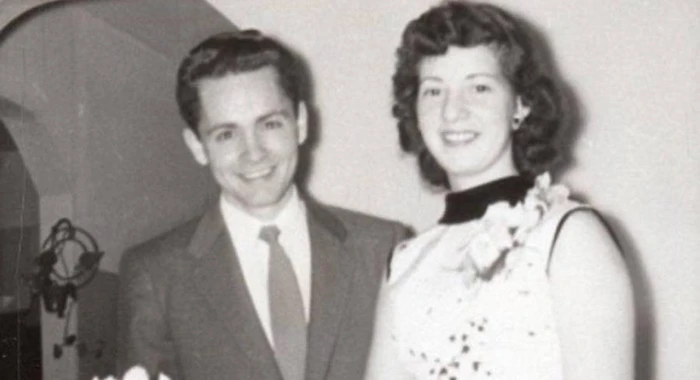
Manson with his first wife, Rosalynn Jean Willis, photo taken in 1955
After leaving prison, he took up pimping and attempted to recruit a "staff of workers," but was unsuccessful. However, he did find Leona Stevens, his second wife, among his girls. Their marriage lasted almost four years and ended in divorce in 1963, after Charles was jailed again. The marriage produced a second son, Charles Luther Manson.
But it's worth noting that our hero absorbed more than just the bad in prison. He read a lot, including all sorts of self-help literature, suddenly became fascinated with Scientology, but most importantly, he learned to play the guitar and seriously wanted to become a famous musician.
The Stakes Are Raising
By the late 1960s, Charles Manson had already become mired in crime, but hadn't yet reached the point of actual murder. Never mind, he'd get there soon.
After being released from prison in 1967, he moved to San Francisco, where the so-called "Summer of Love" was underway—a gigantic event organized by hippies in the United States, Canada, Australia, New Zealand, and several other countries. He was 33 at the time. 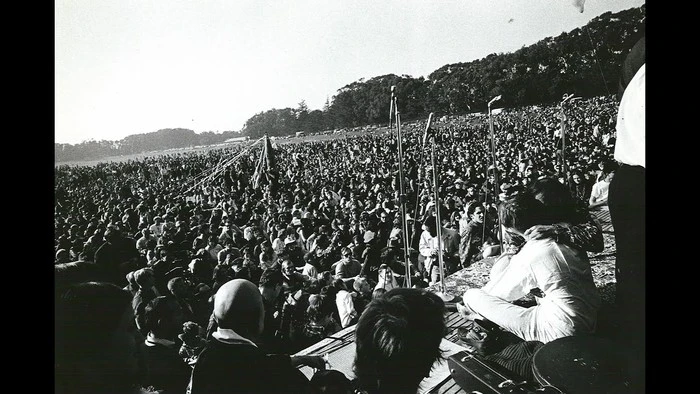
Festival during the "Summer of Love," 1967
An important point: Manson disliked hippies; he considered them weak and despised them. Yet, he decided to exploit this subculture for his future dark deeds. In prison, he read Dale Carnegie and books on Scientology, and now he decided to use this knowledge to control the masses.
In the spring, he met 24-year-old Mary Brunner. She worked as a librarian's assistant at the University of California, Berkeley. The two young men began a relationship, began living with her, and after a while, she fell under his influence. Mary quit her job and effectively became the first member of the Family, as well as the mother of Charlie's third son, Valentine Michael Manson. 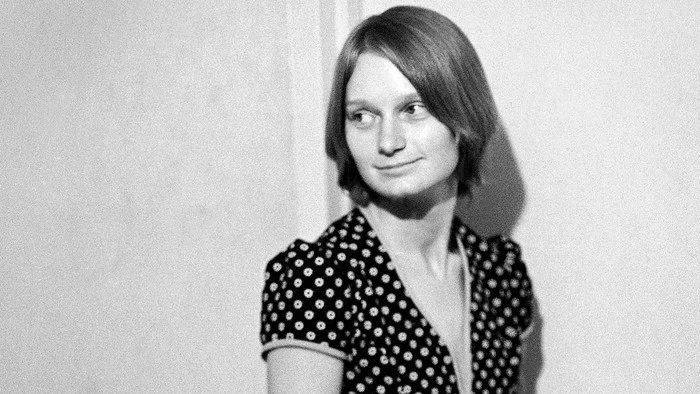
Mary Brunner in 1970
The couple left Berkeley and traveled around California, recruiting new members to their group. The core of the community quickly formed:
19-year-old Susan Atkins, who had recently suffered the death of her mother and the abandonment of her father. Trying to support herself and her brother, she became a stripper while still in school, even performing for Anton LaVey (founder of the Church of Satanism), and ultimately found homelessness and a new family in the company of Charles and Mary.
20-year-old Patricia Krenwinkle She grew up in a good family and went to university, but had a ton of insecurities due to hormonal imbalances and excess weight. Charles only needed to tell her she was beautiful and have sex with her once for her to drop everything and join his Family.
19-year-old Lynnette Frome. Born and raised in a good family, she studied choreography in school and was part of a famous dance troupe, with which she performed on television and even at the White House in front of the President. But at 14, she fell in with the wrong crowd, became addicted to alcohol and drugs, nearly dropped out of school, and eventually her parents kicked her out. She didn't live on the streets for long, however, as Charlie approached her almost immediately afterward and invited her to join the Family.
20-year-old Ella Jo Bailey. Less is known about her life, but she was one of the first members of the Family and, along with Patricia, recruited Denis Wilson.
The gang then began to grow, gathering more and more hippies. Charles taught them how to live, provided them with drugs, and threw orgies. He also played guitar and sang a lot. He hadn't yet become a messiah, but he certainly had enormous authority in the eyes of his followers. 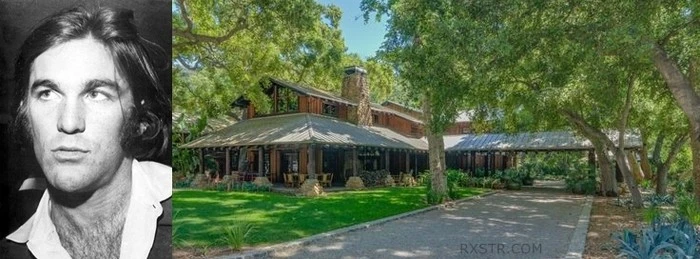
Dennis Wilson and his mansion, where the Mansonites lived
In 1968, the commune befriended Dennis Wilson, drummer for The Beach Boys, and the entire group moved to his villa in the Los Angeles suburbs. This period was crucial because the Beach Boys were one of the most popular rock bands in the country at the time, rivaling Britain's The Beatles. Imagine if Mansonites today were to move in with a member of Twenty One Pilots or Skillet, for example. This was important because, by getting close to a star, Manson had the opportunity to establish connections with people in the music industry.
A particularly important connection was Terry Melcher, producer of the Beach Boys, The Mamas & Papas, and other popular bands of the time. Charlie even began working with him on his first album, and also worked with the Beach Boys, writing songs for them.
But the friendship didn't work out: our hero had a falling out with Wilson over a very prosaic matter – the rights to one of the songs. He also resented Melcher for refusing to release that very first album.
Hurt, Charlie moved his men to a ranch belonging to 80-year-old George Spahn. They had already stayed there during their travels and had now returned. They severed all ties with Wilson and Melcher, offering only a threatening farewell. But remember this: Charlie was VERY upset with the latter. Consider it a loaded gun that will still go off. 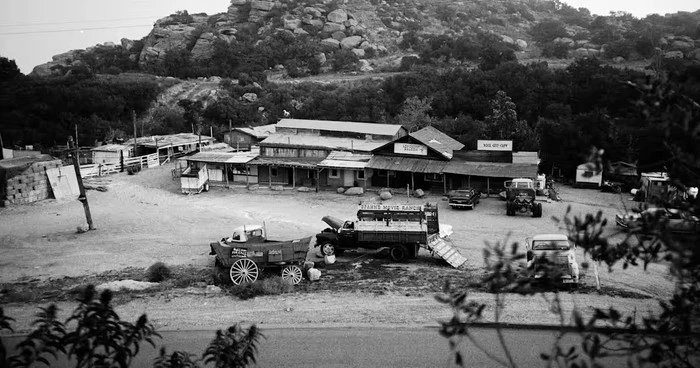
Spahn Ranch, 1969
And so we move on to the next page in the group's history – the increase in stakes promised in the paragraph's title. It seemed there were no longer any restraining factors—no more dreams of a musical career, recognition, or fame. The family was completely marginalized.
The first official attempted murder was committed against Bernie Crowe, as will be discussed later, but there is evidence of an earlier one. According to testimony obtained after Manson's arrest, the Family's first victim was 17-year-old Marina Elizabeth Habe, murdered in the summer of 1968. She was the daughter of American actress Eloise Hardt and Hungarian writer Hans Habe. She was abducted near her mother's home in Hollywood and found on the beach with multiple stab wounds. No drugs or alcohol were found in her blood, and she was not raped. She was simply kidnapped and murdered. However, a direct connection to Manson has not been established.
In total, the Family is suspected of 24 murders, of which only 9 will ever be proven.
Bernie Crowe
In the summer of 1969, Manson had a misunderstanding with drug dealer Bernie Crowe. He supplied Charles with drugs and was generally an "honest" dealer. As honest as a person can be in his line of work. But one member of the Family turned out to be rotten. Enter Tex Watson, who would later become one of the central figures in this drug-dealing organized crime group. 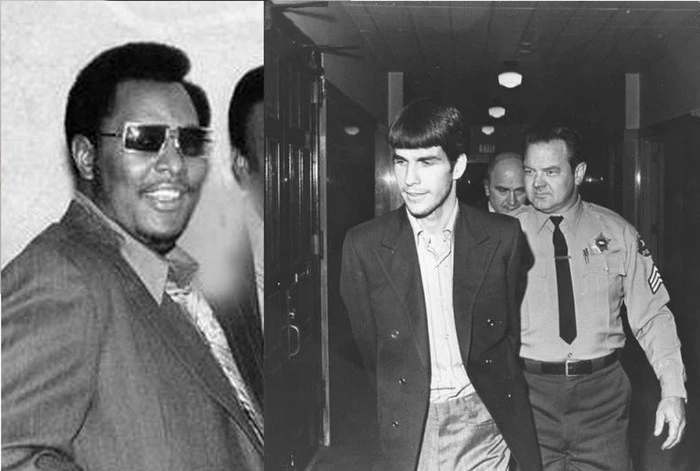
Bernie Crowe (left) and Tex Watson (right)
Tex was 24 years old at the time. He grew up in Texas in a religious family, was an excellent student, ran the school newspaper, played sports, and after graduation, went to university. He took a wrong turn when he came to California at the age of 22, became addicted to drugs, and then ended up hanging out with Wilson and befriending Manson.
In 1968, he temporarily left the Family and moved in with a girl who dealt drugs. He assisted her in her criminal endeavors, and then became obsessed with the idea of returning to the ranch, earning money for the commune along the way.
To do this, he stole a large sum of money from his girlfriend's friend, Bernie Crowe, also a drug dealer. Crowe, for some reason, didn't like this; he learned about the ranch and threatened to kill the entire Family if the money wasn't returned. Manson personally arrived for negotiations, seemingly starting a dialogue, but in the middle of it, he simply pulled out a revolver and shot the annoying dealer.
The next day, he saw on TV that the body of a Black Panther member had been found in the area where it happened. It's a leftist movement fighting for African-American rights. Bernie was black, the Panthers were black—a 100% coincidence. So the man killed was Bernie.
Well, that's what Charles decided. That moron didn't even think to poke the man's body with his foot to check if he was dead. Especially since he "killed" him in the stomach. Even in movies, people don't die from a shot to the stomach; he would have shot him in the shoulder and celebrated what a badass killer he was.
An important detail in Manson's portrait is that his joy quickly gave way to panic. He thought that since Crowe was a Panther, his friends would be able to find out who was responsible for their comrade's death and would come for revenge. He went mad and began preparing to defend the farm in earnest, arming his followers. So much for the dark messiah.
Two years later, Bernie, alive and well, would appear in court and testify against the would-be killer.
Gary Hinman
After this incident, Charlie befriended the Clean Devils biker gang and invited them to the ranch. They agreed to help the Family fight the Panthers if they attacked. This happened at the end of July.
This chapter introduces a new character: Bobby Beausoleil. He's 22 years old and a native of Santa Barbara. He was the eldest child in a large working-class family. He studied music, was in several bands, and, starting at age 15, had been sent to several correctional camps for troubled youths. By 1968, he had already become a hippie, living with his friend Gary Hinman in the desert, where he met Manson and joined him. Gary, however, didn't join the Family and instead became a drug dealer. But Bobby began buying substances from him for the commune. 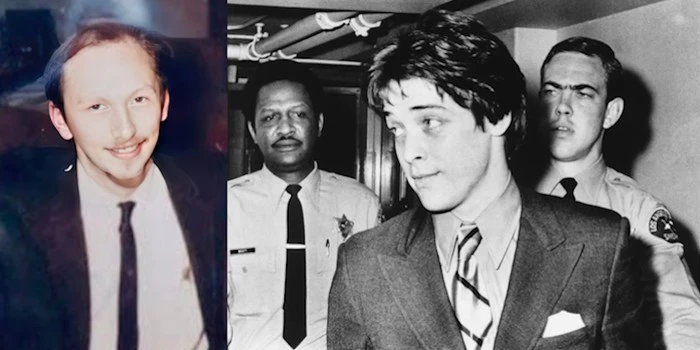
Gary Hinman (left) and Bobby Beausoleil (right)
We return to late July 1969. Bobby tries to pay the bikers with the goods he bought from Hinman, but they turn up their noses and claim the goods are defective. Bobby tries to persuade his friend to return the money, but he refuses. Manson, fearful for his relationship with the new guards and already in a rather unstable state, sent Bobby, along with Susan Atkins and Mary Brunner, to negotiate with Hinman. When things reached an impasse, he arrived personally, slashed the boy's face with a sword, and ordered him to be tortured. Then he left, leaving Gary alone with his former friend and two savage women.
As it turned out, the victim had no money. After two days of torture, Gary died, and Bobby, using the victim's blood, wrote the word "Pig" on the wall and painted a Black Panther sign to pin the murder on the Black Panthers.
There's, of course, another reason for his murder—money, oddly enough. Not the kind Gary wanted to get back, but some kind of riches that one of Charles's girlfriends spotted there. Remember, one of the first Mansonites was a certain Ella Jo Bailey? She'd been to Gary's house (the Mansonites, by the way, were prostitutes) and thought he was a rich guy. She tipped off Manson, who orchestrated this robbery attempt, using drugs as a casus belli.
And, by the way, don't forget that we're talking about idiots. Instead of wiping off all his fingerprints and burying the murder weapon somewhere in the desert, Bobby took the knife with him and put it in the trunk of his car. The dead man's car, which he simply took for himself and drove around like nothing had happened. With a bloody knife in the trunk. Guess how Bobby was caught and how his involvement in the murder was proven.
He miscalculated, but where?
The bikers, by the way, still left the ranch. They realized who they were dealing with.
The war with the Panthers never happened, but this entire chain of events, roughly from the quarrel with Wilson to the murder of Hinman, played a significant role in the tragic events of August 9th, finally driving the Mansonites and Manson himself crazy. Perhaps, if not for Wilson, there would have been no murders at all. Perhaps, if Charles hadn't seen the news about the Panther murder, nothing would have happened. Perhaps...
What difference does it make? History doesn't tolerate the subjunctive mood. Everything happened, and people died. So far, just one, but we've reached the most famous episode in the Manson cult's history, already told at the very beginning of this article.
But first, let's introduce another character to the narrative: Linda Kasabian, mentioned at the very beginning. 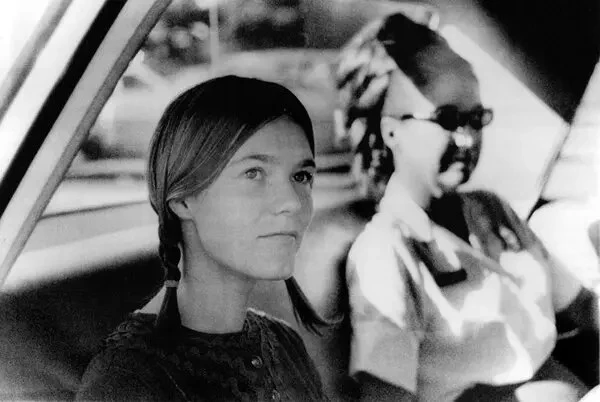
Linda Kasabian, early 1970s
At the time of these events, she had just turned 20. She grew up fatherless, but in a large family. Because she was the eldest child, her mother ignored her, and she was left to her own devices. Then came a stepfather who abused his stepchildren. At 16, she dropped out of school with a classmate, married him, and together they fled to the West Coast and...divorced. She then unsuccessfully attempted to reconcile with her father, married an Armenian man named Robert Kasabian at 19 (she's Kasabian, not Kasabian), gave birth to a daughter, Tanya, and separated from him several times, eventually ending up alone in Los Angeles. Robert abandoned his family and fled to South America. She met Katherine Share, a member of the Manson community, and moved to Spahn's ranch.
And then came the evening of August 8th. Two weeks had passed since the Hinman murder, and a car carrying Tex Watson, Susan Atkins, Patricia Krenwinkle, and Linda Kasabian pulled up to the mansion at 10050 Cielo Drive. Now you know them better than you did at the beginning of this article. They killed everyone in the house, including even an 18-year-old teenager named Steven, who happened to be in the yard at the wrong time while driving away from a friend living on the property. Even pregnant 26-year-old Sharon Tate was murdered. Susan, who was present at Hinman's murder, also wrote the word "Pig" on the wall. But this wasn't the perpetrators' initiative, but Manson's personal assignment. You'll find out why later. 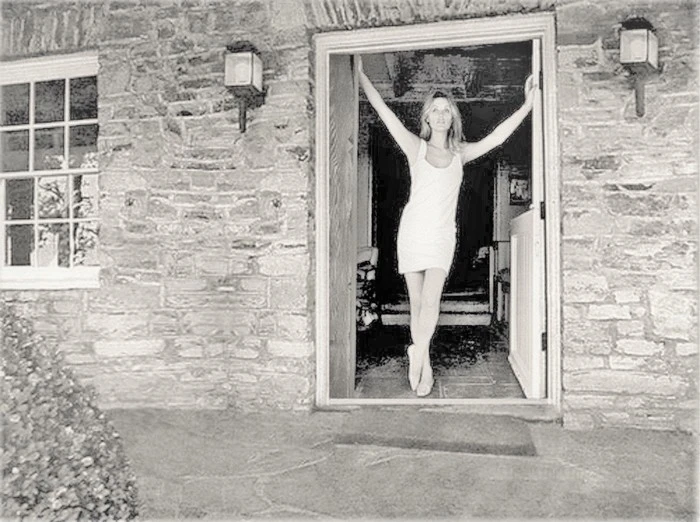
Sharon Tate at the door of the house on Cielo Drive. This door would later be purchased for a large sum by Trent Reznor of Nine Ich Nails.
Linda did not participate directly in the massacre. She went into shock after Steven's murder and didn't even enter the house. But she didn't run away either, because she simply had nowhere to go. Especially since Tanya was in the hands of the Mansonites.
Remember how Charlie held a deep grudge against Terry Melcher? Well, the grudge was strong and couldn't be easily let go. When Hinman was killed, Manson decided to continue the series and unhesitatingly chose Terry Melcher's house as the location for the second massacre. He desperately wanted the name of the producer who had offended him to be associated with something bad, at the very least. And he even succeeded.
The house was rented, and by August 1969, Polanski and his wife were already living there. One could justify the mistake by claiming that Manson didn't know about it, but no: during the trial, Sharon's friend testified that our offended man had come to the station and clearly saw that Melcher was no longer there.
And you'll never guess why Manson was SO upset by the situation with Terry. You'll laugh, even though it's not funny. Well, it's all down to the thieves' code. Charles, after all, spent a good portion of his life in prison and respected those codes, but the producer violated them. He promised to help with the album and then ditched him. Manson never forgot it.
But the question still arises: how could killing people who had nothing to do with Melcher serve as revenge against Melcher? It's hard to find any logic.
But there was a second reason for Tate's murder, but more on that later. That's a separate topic.
For now, it's important to know that the murder spree isn't over yet.
We'll discuss subsequent events in part two. It couldn't fit everything in one part due to character limitations.