Hippopotamus: sweats "blood," hunts crocodiles, and can't swim (17 photos)
According to the most conservative estimates, they are responsible for around 500 deaths per year. And these are only documented cases. African biologists quietly hint that the real figure could be two to three times higher: most incidents occur in remote villages, during fishing or river crossings, and only a small fraction are included in official statistics. 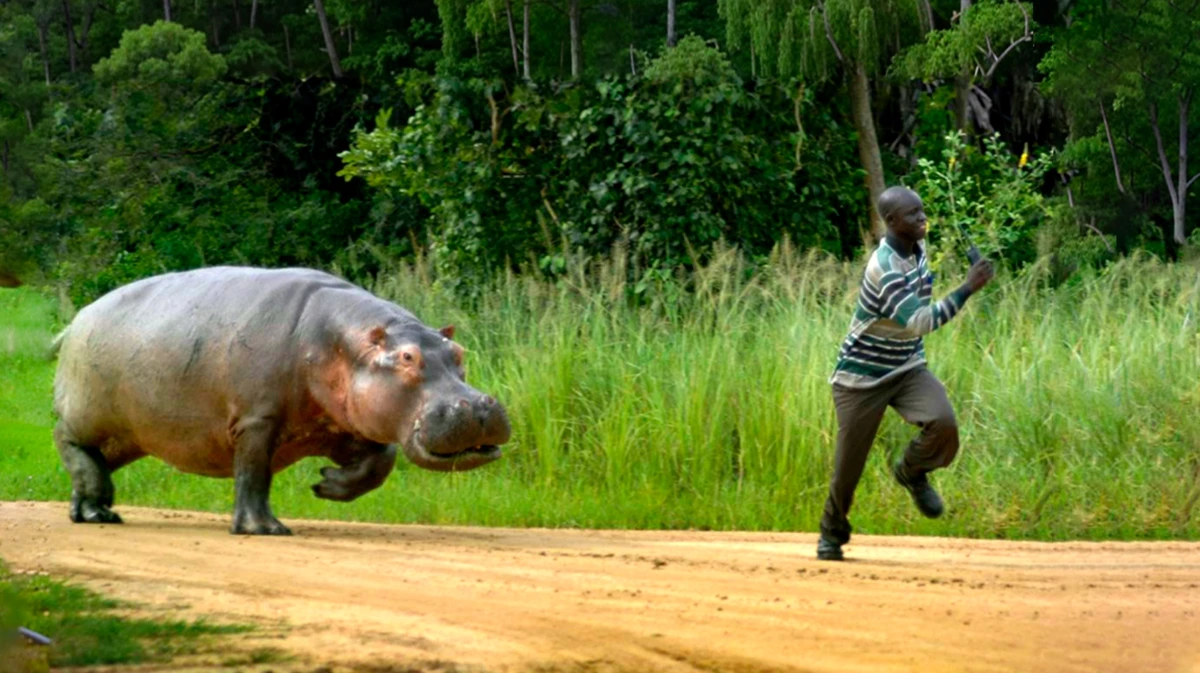
The only thing that saves a photographer in this situation is that the one holding the camera always survives.
These are perhaps the most misunderstood animals in Africa. They look like fat, soft barrels on legs, live in water, cackling, snorting, and seemingly doing nothing. But the more you learn about hippos, the clearer it becomes: they're not just "fatties." They're semi-amphibious tanks with a very strange set of superpowers. 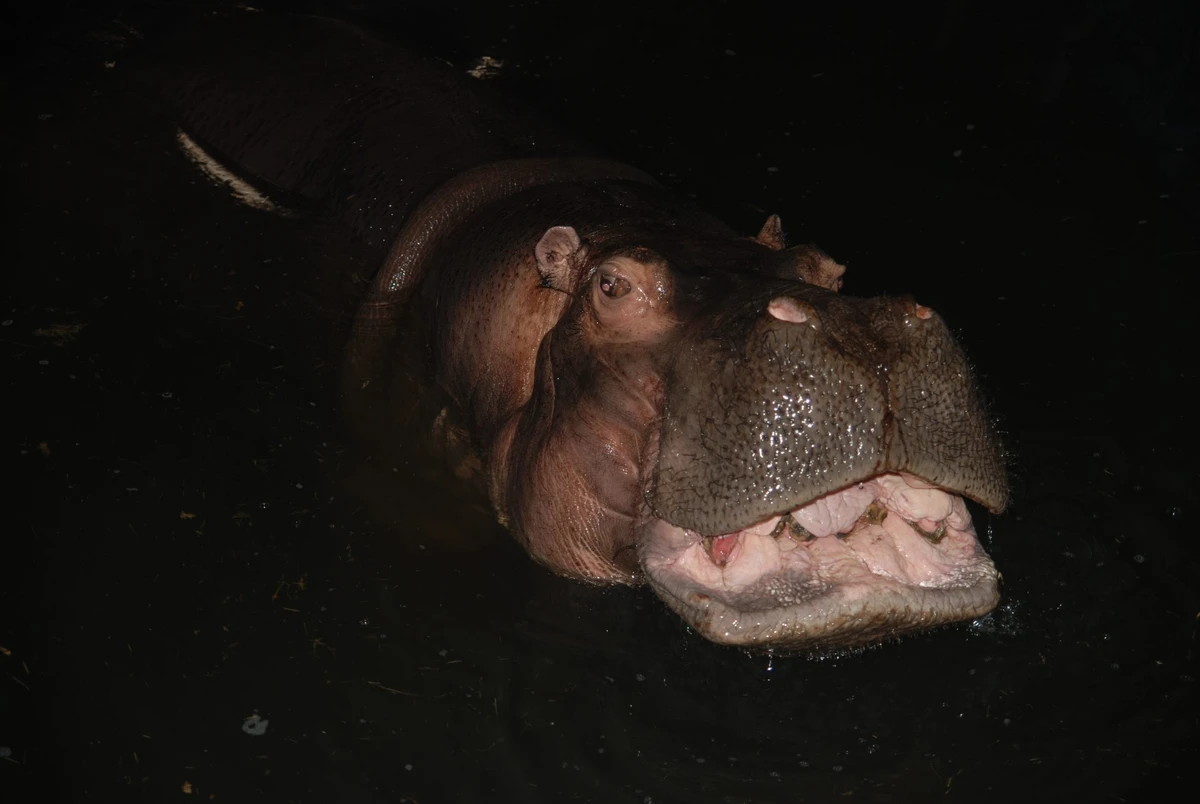
What my refrigerator sees at three in the morning.
Let's start with the fact that these animals are literally drenched in "blood." Their entire bodies are covered in a reddish-purple film. Common people call it sweat. But in fact, hippos don't sweat at all. What flows down their skin is hipposudorophore and nori-hipposudorophore—two pigmented secretions. 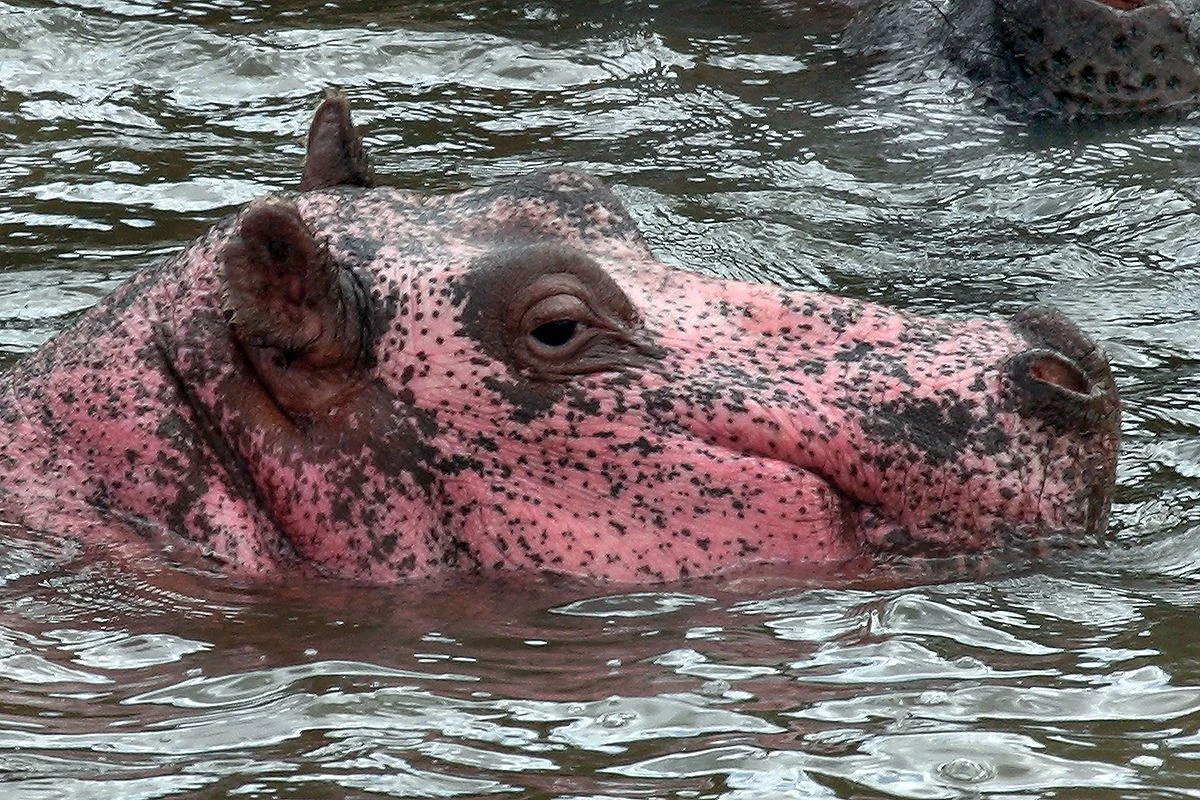
My wife told me to wear sunscreen. Stupid me, I didn't listen!
This mixture works as a sunscreen, moisturizer, and antibacterial ointment all in one. A useful thing when you've been exposed to the sun all your life—a spa treatment built right into your skin. 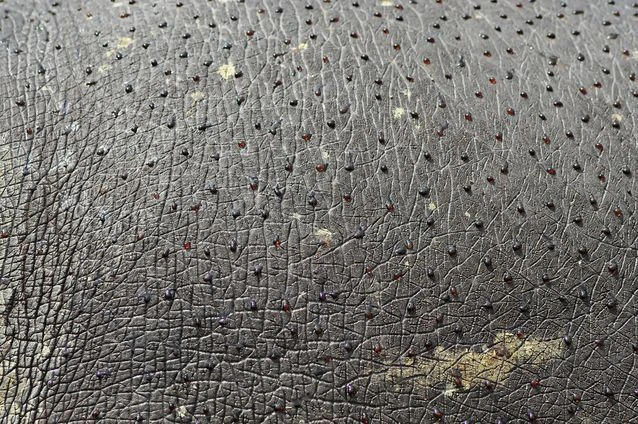
These little red dots are that secretion. How convenient it would be if we had the same!
This is also the source of the myth of "pink milk." Visually, hippos' milk can indeed appear pink. But the unusual color doesn't impart any additional properties. It's just that the red secretion sometimes colors it pastel if the female is very "smeared." 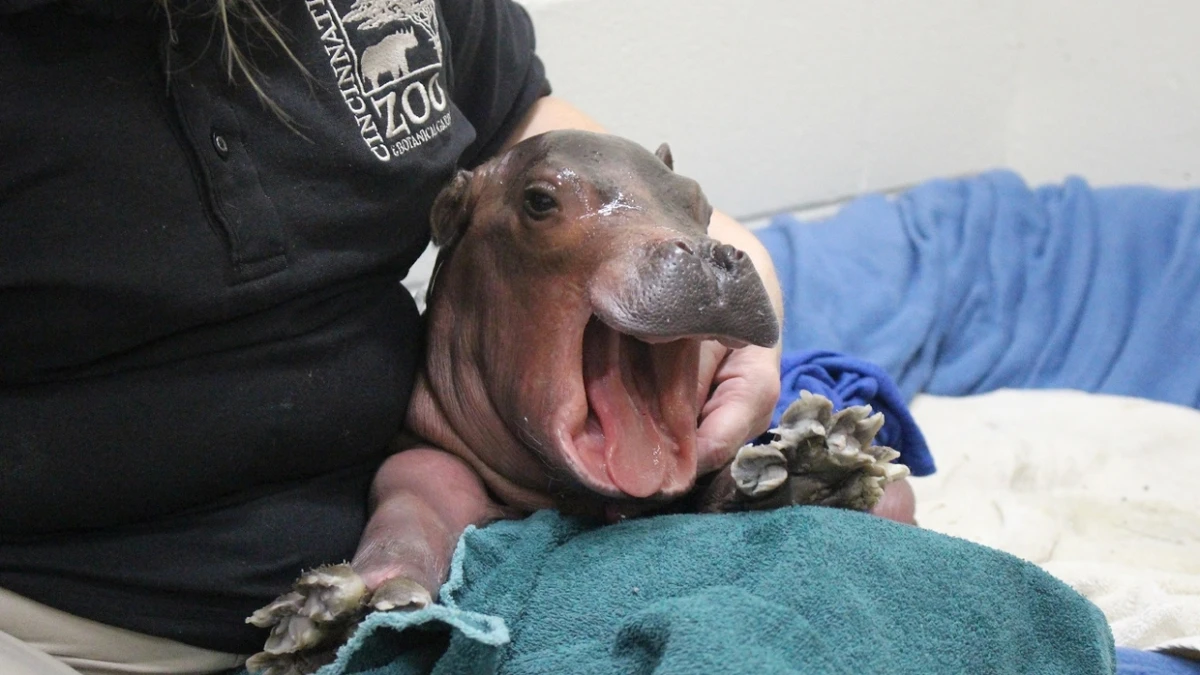
What kind of white crap are you trying to sell me? Give me my favorite strawberry milk!
It gets even more fun. Hippos can't swim. At all. Their bone tissue is pachyostosis—a condition where the bone is so heavy and massive that it's closer in density to an elephant's than a cow's. It sinks like a stone in water! Thick skin and 90% muscle mass don't add any buoyancy either. 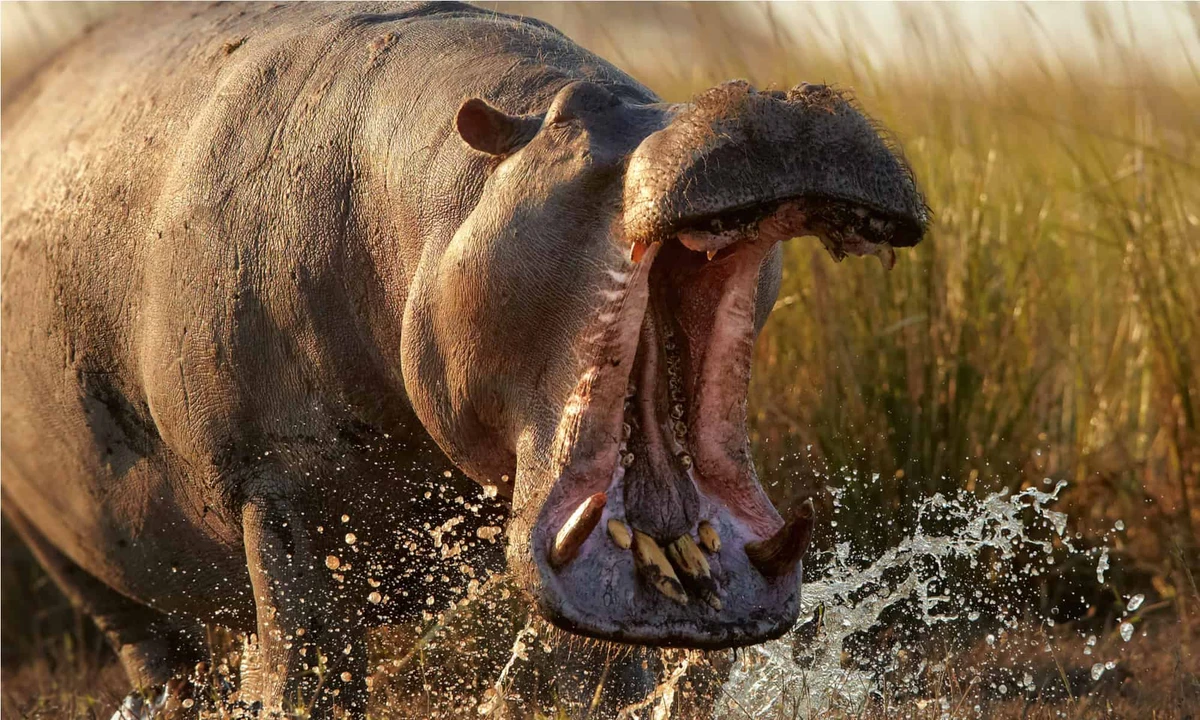
I'm not fat! I'm bulky! And my bones are heavy! How many times do I have to say this?!
That's why hippos don't swim underwater—they walk along the bottom, pushing off like a trampoline, and gliding forward by inertia, like a slow underwater airship. They're the only large mammal that lives in water but can't float. Meanwhile, in lakes, swamps, and rivers, this ponderous giant does everything: rest, feed, nap, give birth to young, and squabble. 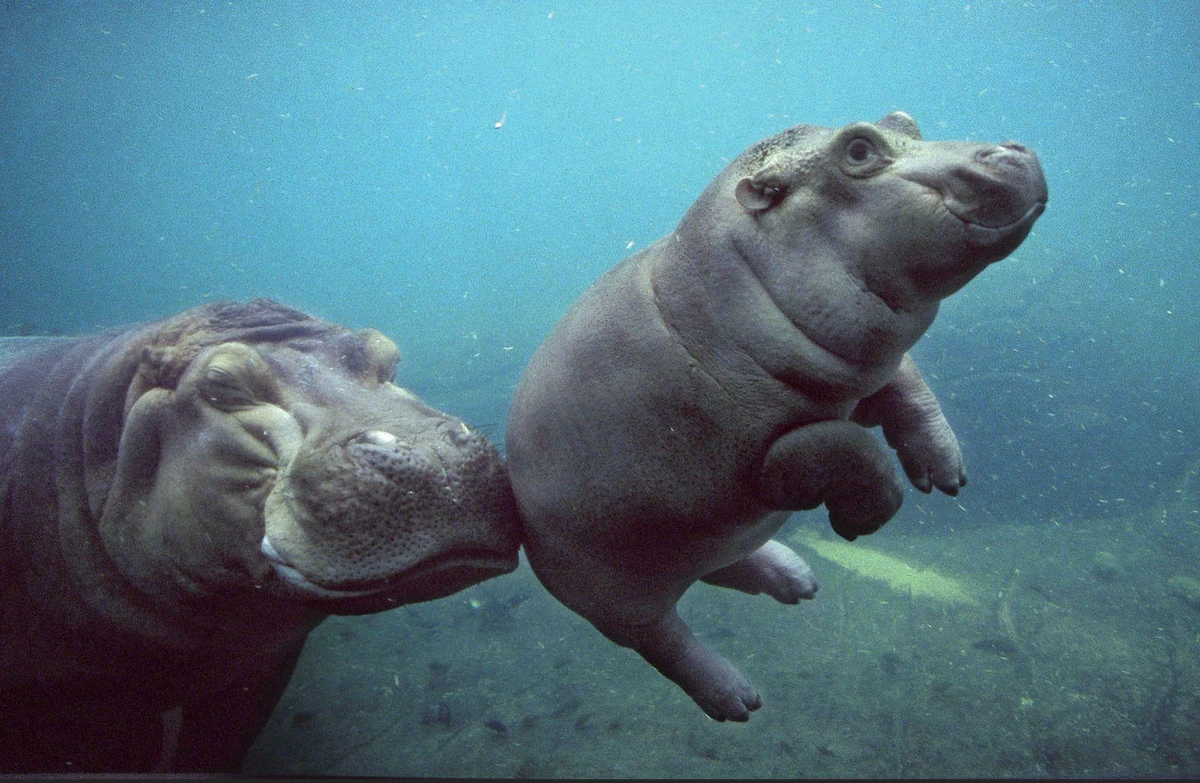
Float like a butterfly. Even if you're a hippopotamus!
Tragedy begins when the water runs out. Then the herd is forced to move on in search of a new body of water. And they can search for a new place several kilometers away from the previous one! There are recorded cases of hippos traveling up to 30 kilometers in search of new water. 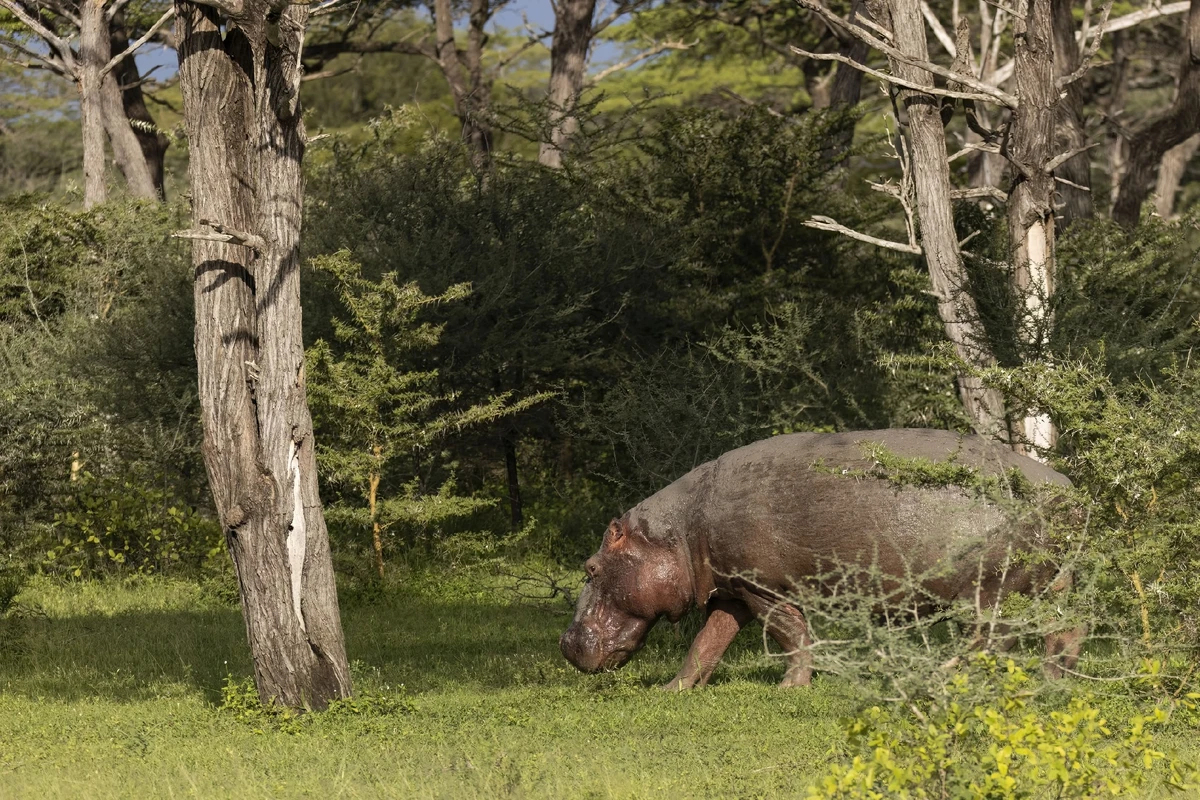
Guide: "Hippos rarely come ashore during the day." Hippos:
Tourists are amazed by a hippopotamus leisurely strolling in the middle of the bare savannah. Hippos are especially common on land in Nyerere National Park in Tanzania. There are numerous seasonal bodies of water there. One month, a lake. The next, dust. So they have to migrate regularly. To avoid getting burned, the animals stay in the shade or travel at night. But you can't call such a journey a leisurely promenade. This isn't a walk, it's a journey. And a very nerve-wracking one at that. 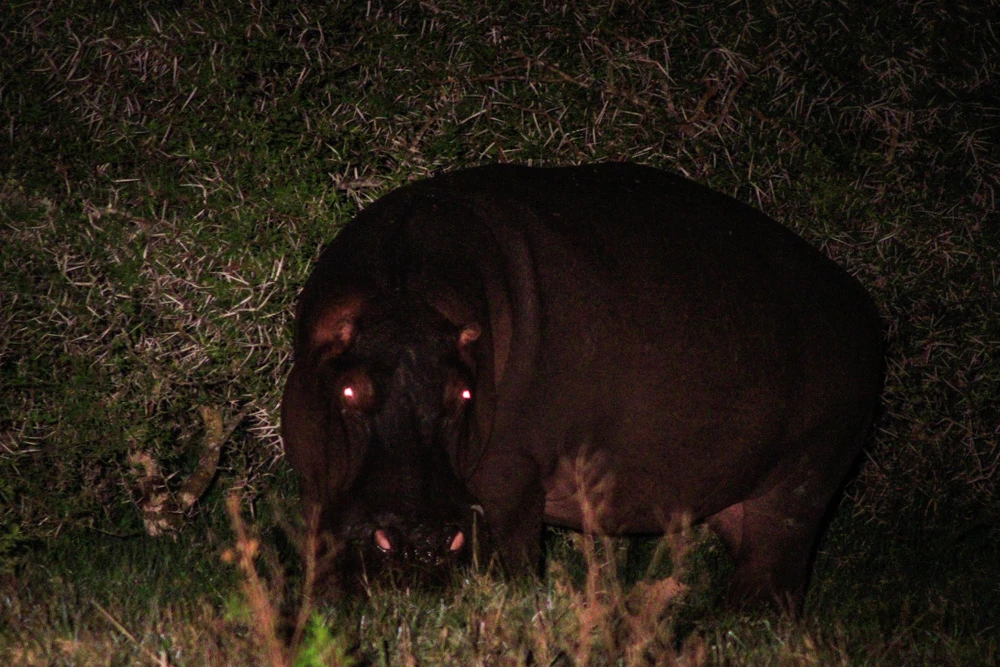
In Africa, even a rock can pose a danger. Especially if that rock is looking at you with a very unfriendly expression.
The thing is, hippos are incredibly territorial: they need a little water, a little mud, and a lot of personal space. They easily kill other animals for violating their space, run 35 km/h, roar louder than a motorcycle, can flip a boat like a paper cup, and still look like they're smiling sweethearts. 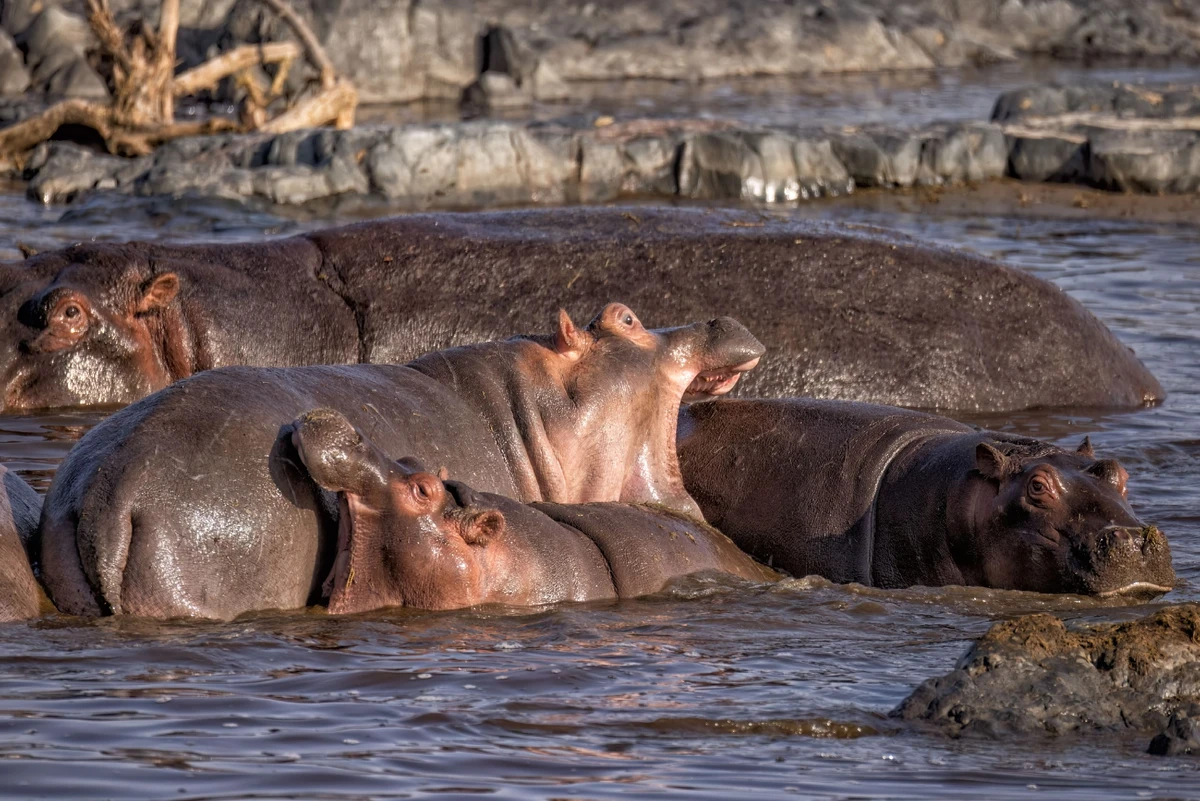
A whirlwind of snarls. Young hippos are mischievous. Serengeti, 2025. Photo by Varvara Dronova.
There's only one creature, besides their own kind, that hippos have a hard time dealing with: crocodiles. Their relationship is a whole other story. They share water bodies silently: the reptiles hunt, the hippos rule. It all comes down to a balance of power: crocodiles eat anything that moves, but they don't bother adult hippos: they're too dangerous. An adult hippo will break a crocodile in half or skewer it with its fangs. 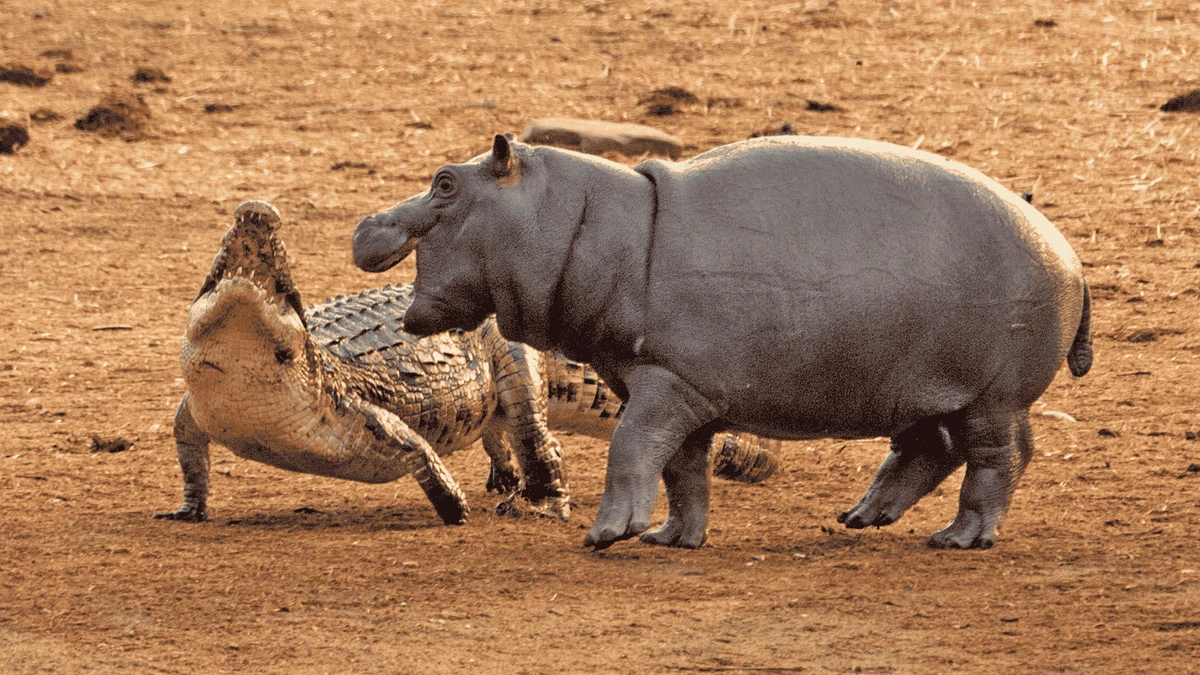
— Do you know what shashlik is? — No. — Want me to show you?
But the unspoken truce is easily shattered. If a crocodile carries off a chubby baby, the hippos won't stand for it. Field studies in Zambia show that hippos cause up to 30% of young crocodile deaths. 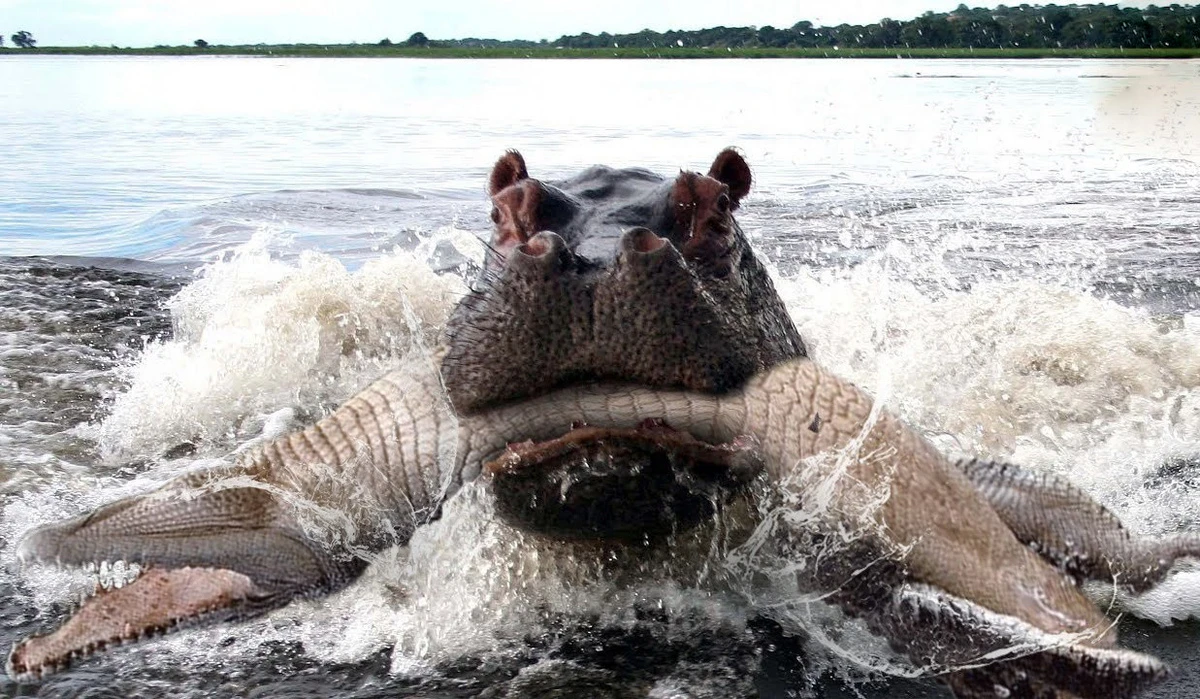
Darling, I have a New Year's gift for you! A crocodile belt!
By the way, hippos themselves can indulge in meat too. When life goes south—water shortage, stress, mineral deficiency, or someone's pushed one another—a hippopotamus can start scavenging, chasing lions away from a carcass, biting antelopes, hunting young crocodiles, and even engaging in cannibalism. However, hippos have a purely herbivorous digestion system: their three-chambered stomach is not adapted to meat, and it's actually harmful to them. But the fact remains. 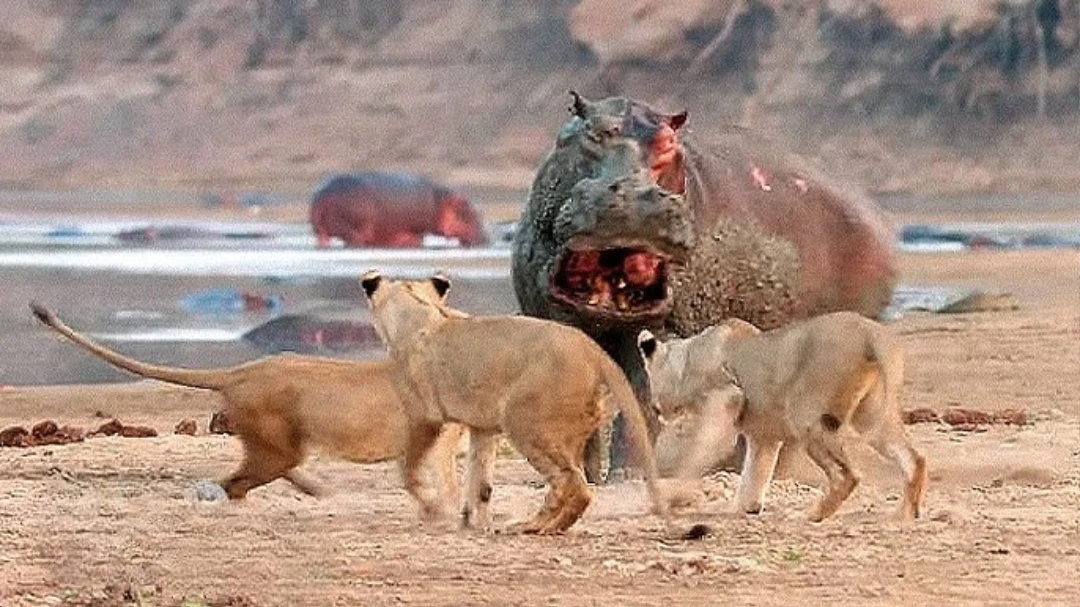
You're not hunting me. I'm hunting you!
But a herbivorous diet is the foundation of Africa's fragrant ecosystem. Hippos fertilize water bodies, create trails, and create microlandscapes. Their daily "land forays" create entire corridors in the savannah, which are then used by everything from warthogs to leopards. And fecal "contributions" to rivers, as research by the University of Utah shows, affect water chemistry and even fish distribution. Scientists also note that hippos alter the courses of small rivers, create dams, and form pools, thereby directly influencing the landscape. 
Hippos mark their territory with dung. That's why it's scattered all over the place, like a fan!
Living on land next to a body of water inhabited by hippos is a truly wonderful experience. Besides being aggressive and huge, these animals also scream constantly – they're incredibly vocal. Their voices can reach up to 115 dB. To understand how loud that is, try going up to a loudspeaker during a dance party. It's an unforgettable experience! Moreover, hippos vocalize both in the air and underwater. This is another recent discovery by biologists: the animals use "two-channel" communication in both environments. This is why, by a pond, it sometimes feels as if someone dropped a subwoofer into a lake full of hippos. 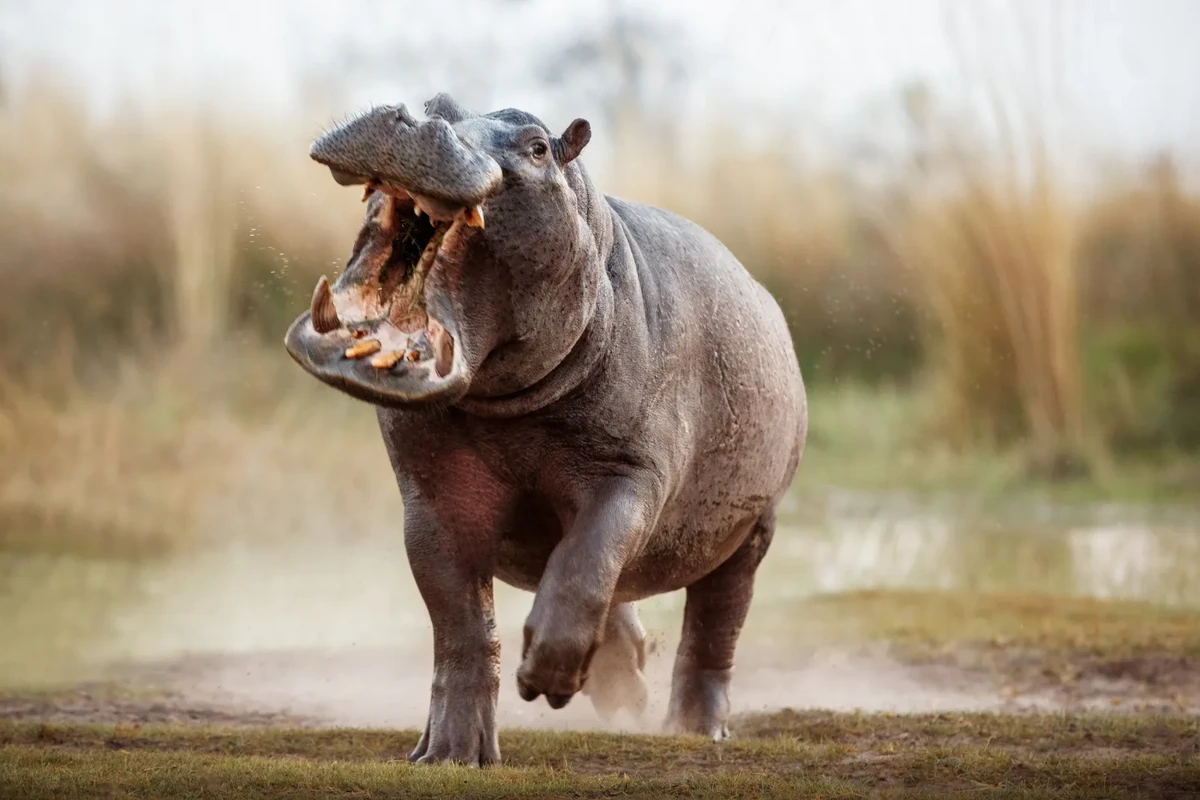
And you can't tell them that making noise after 11 a.m. is illegal...
By the way, hippos also have social characteristics that are rarely discussed. Long-term observations in East Africa show that their "herds" are not herds at all, but temporary aggregations with almost no real social connections other than the dominant male's harem. 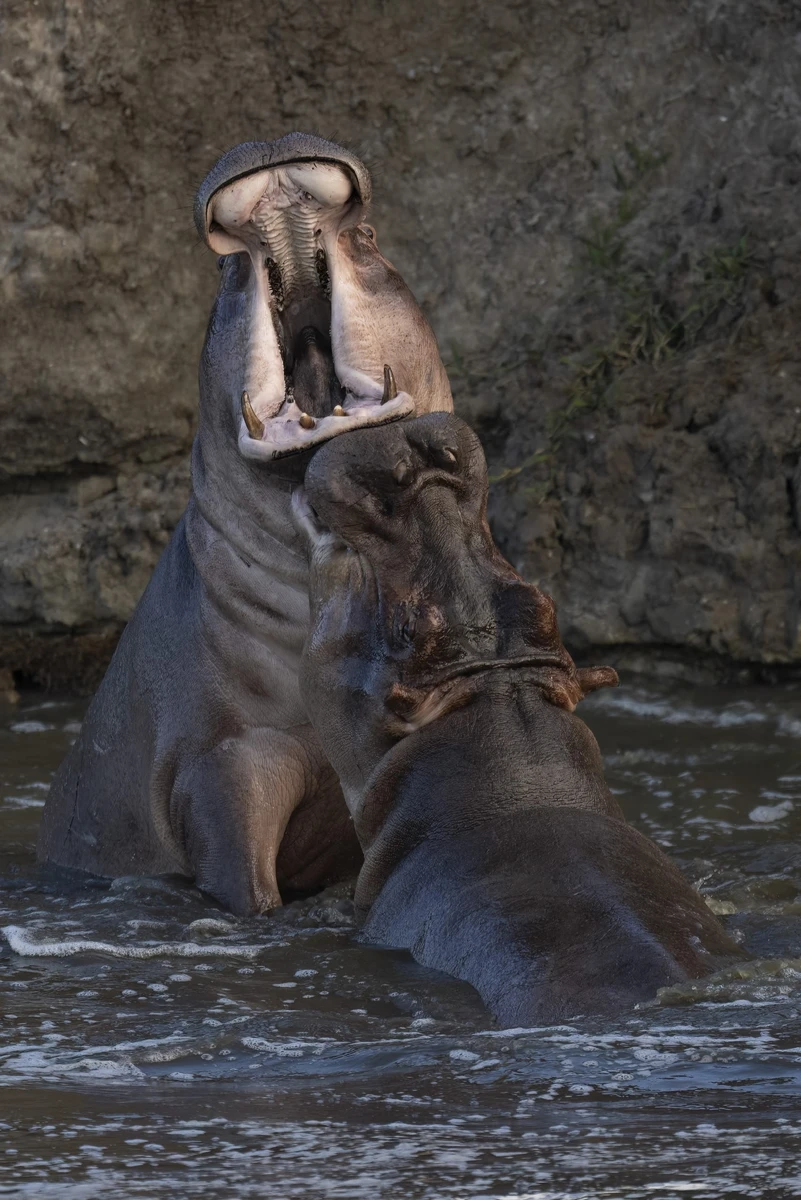
"Let there be a fight!" is the hippos' motto, both literally and figuratively. Serengeti, 2025. Photo by Varvara Dronova.
But they also have touching moments: female hippos sometimes form "creches," where several adult hippos look after a group of calves. And at rehabilitation centers like Thula Thula in South Africa, amazing cases have been documented: after release, orphaned hippos successfully form territories, recognize their old "comrades," and adapt just as well as those raised in the wild. 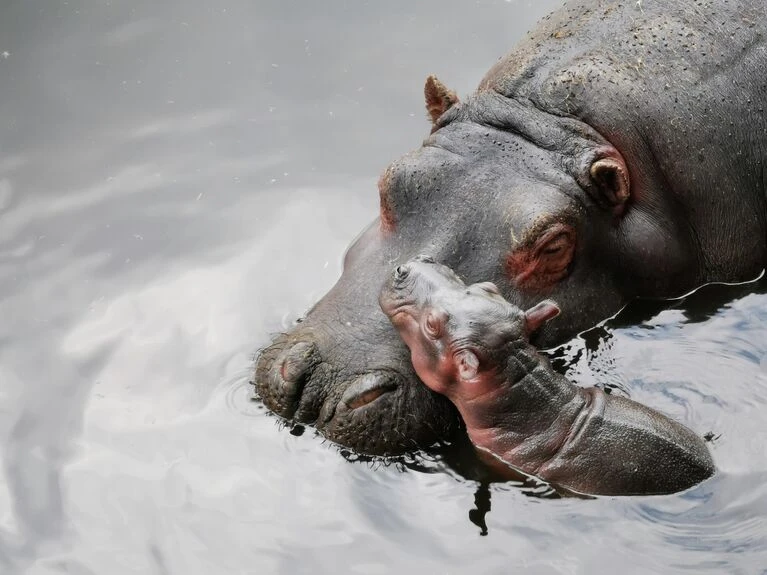
For us, they're a machine for destroying everything that exists. But for their baby, they're the strongest support and a tender mother.
I love hippos for their combination of absolute absurdity and absolute majesty. They're animals that can't swim, but live in water. They don't eat meat, but sometimes they do. They don't look fast, but they're faster than any jeep that decides to drive too close. And yes, sometimes they walk across the savannah in broad daylight and pretend it's all perfectly normal. This is Africa!