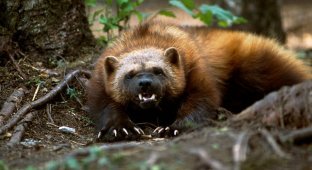
Wolverine: fells deer and drives a bear up a tree (13 photos)
This isn't just a hunter, but a vicious bundle of muscle with a natural-born survival cheat code. When all other predators die of starvation, the wolverine feasts, as befits a queen. Moreover, not only pitiful herbivores like hares and mice meet their end in her powerful paws, but also dangerous lynxes and mighty deer! 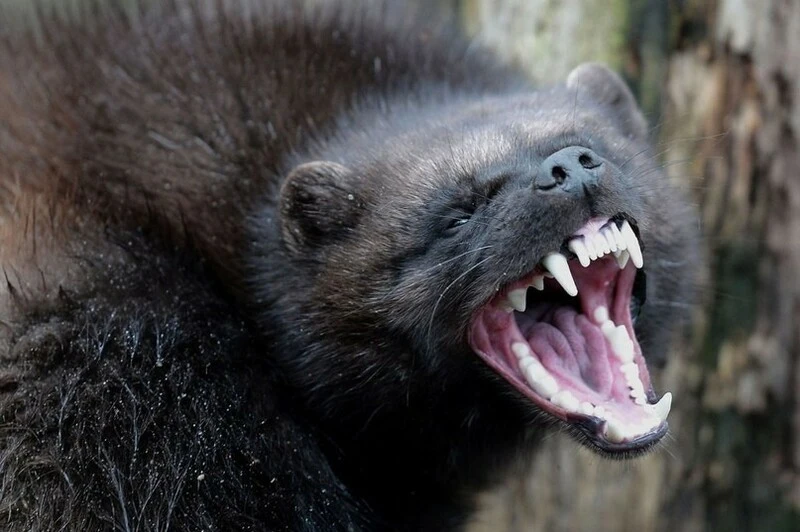
The whole world will bend to my will!
The wolverine may not be an effective predator, but it is certainly the most effective survivor. It is such a great survivor that it has conquered two continents at once: Eurasia and North America. And throughout its range, people and animals alike give the wolverine a wide berth. This is a wise decision, as every animal has three reasons to avoid it. 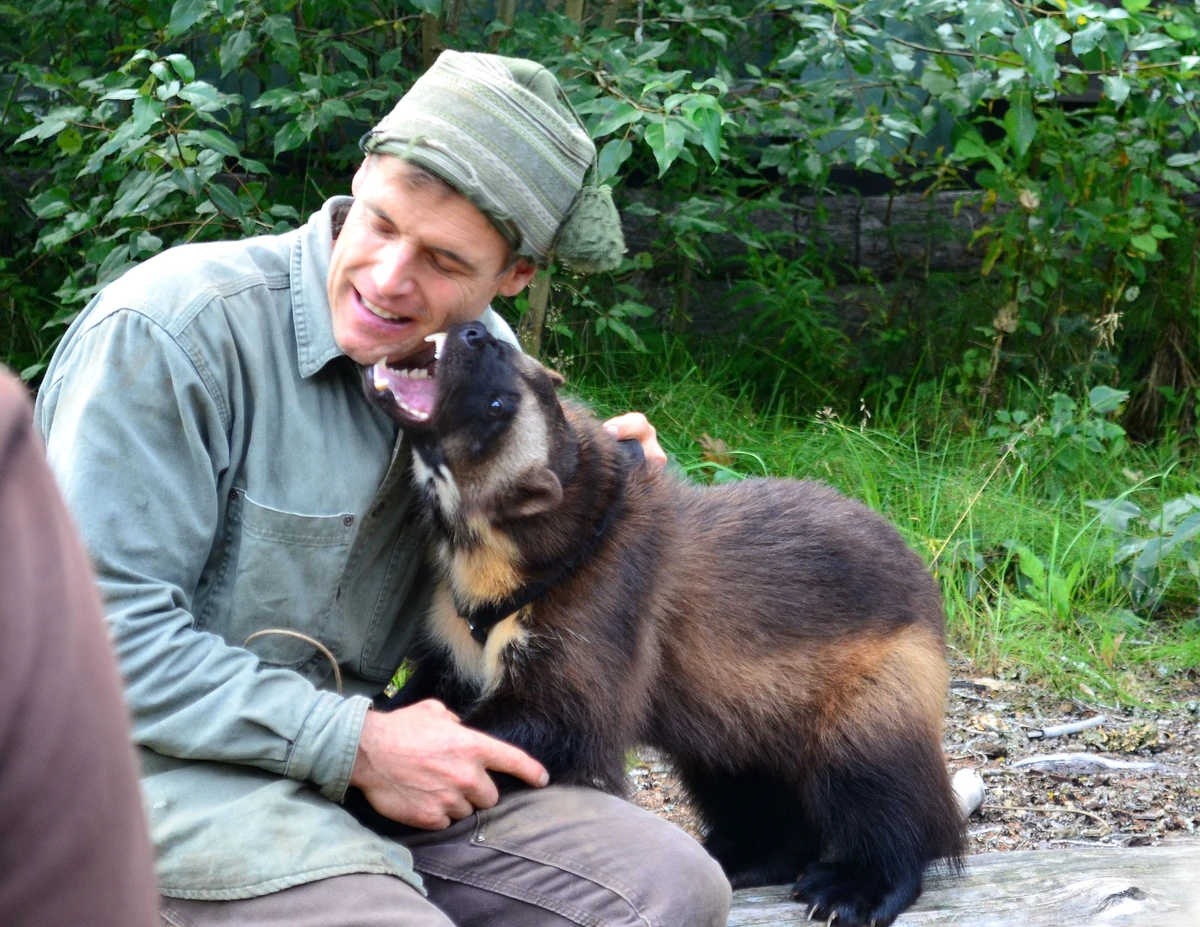
Unfortunately, people sometimes forget that wolverines are a safe bet...
First: because they are very strong! In appearance, the animal resembles a cross between a bear and a badger: a stocky body and powerful shoulders, short legs with wide feet and long, sharp claws. At the withers, the wolverine is only 10-15 centimeters taller than a domestic cat, but weighs between 16 and 32 kilograms. And a significant portion of this mass is impressive muscle. 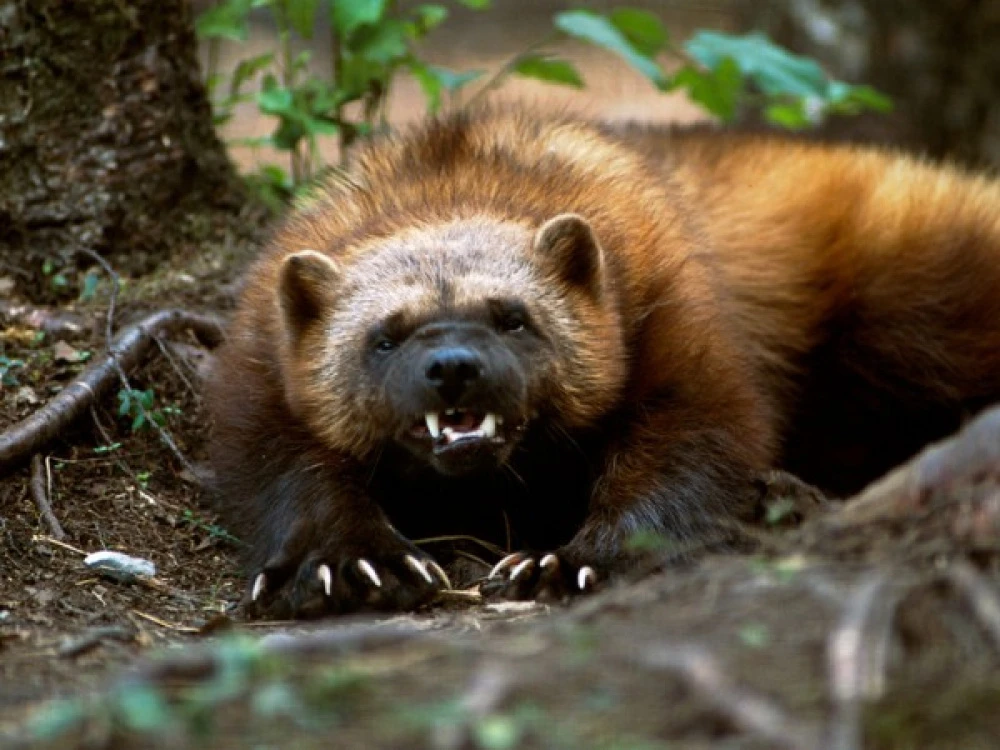
Oh, you woke the wrong animal, comrade photographer...
Secondly, the wolverine is incredibly aggressive. When it does engage in a fight, it does so as if it has no "back off" button. The beast's low center of gravity makes it nearly impossible to knock it off its feet, but it moves with surprising agility and grace for its size. When hunting smaller prey, the wolverine acts like a toothy press: it descends on top, pins it with its paws, and bites. 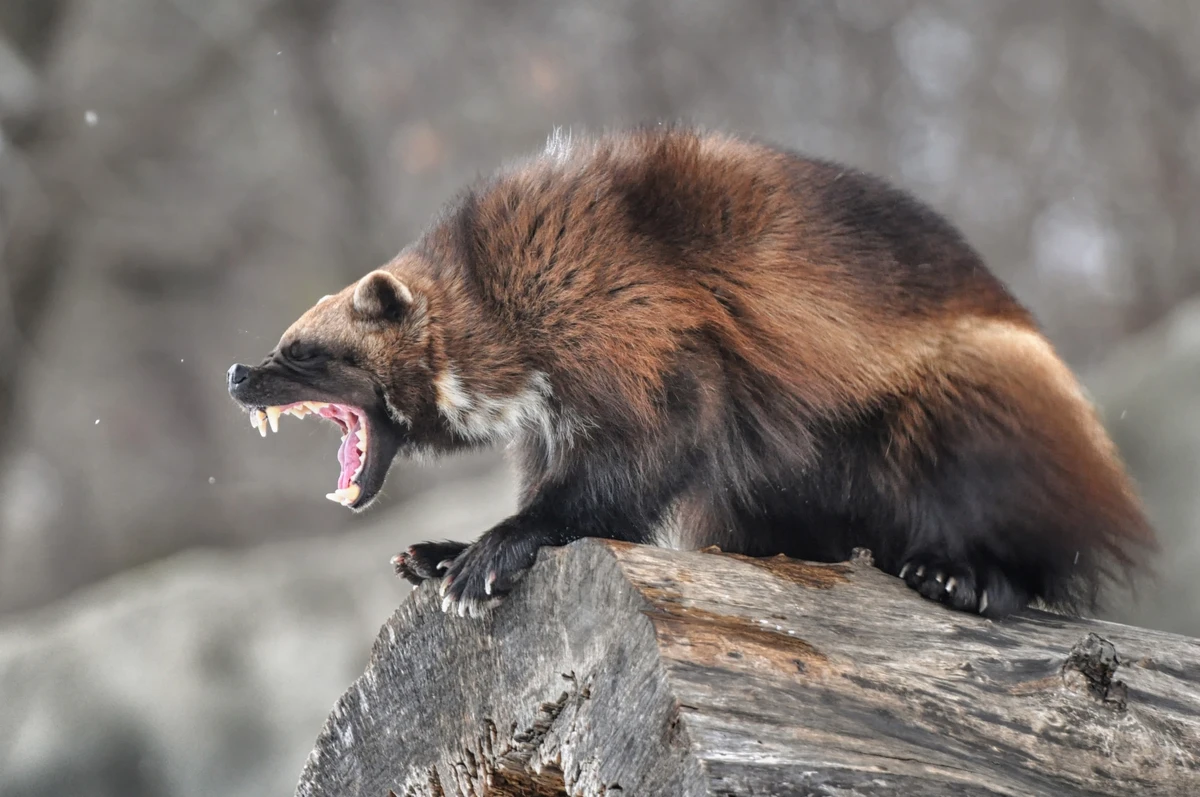
Someone's in trouble now.
When fighting opponents larger than itself, the wolverine is much more intelligent. It doesn't try to kill its prey outright, as that risks injury. Instead, the animal strives to climb its prey, reach its vulnerable spots, and bite until the victim is exhausted from pain and blood loss. The predator's jaw is so strong that it can break even frozen bones, and its short neck and powerful muscles prevent its opponent from escaping unharmed. 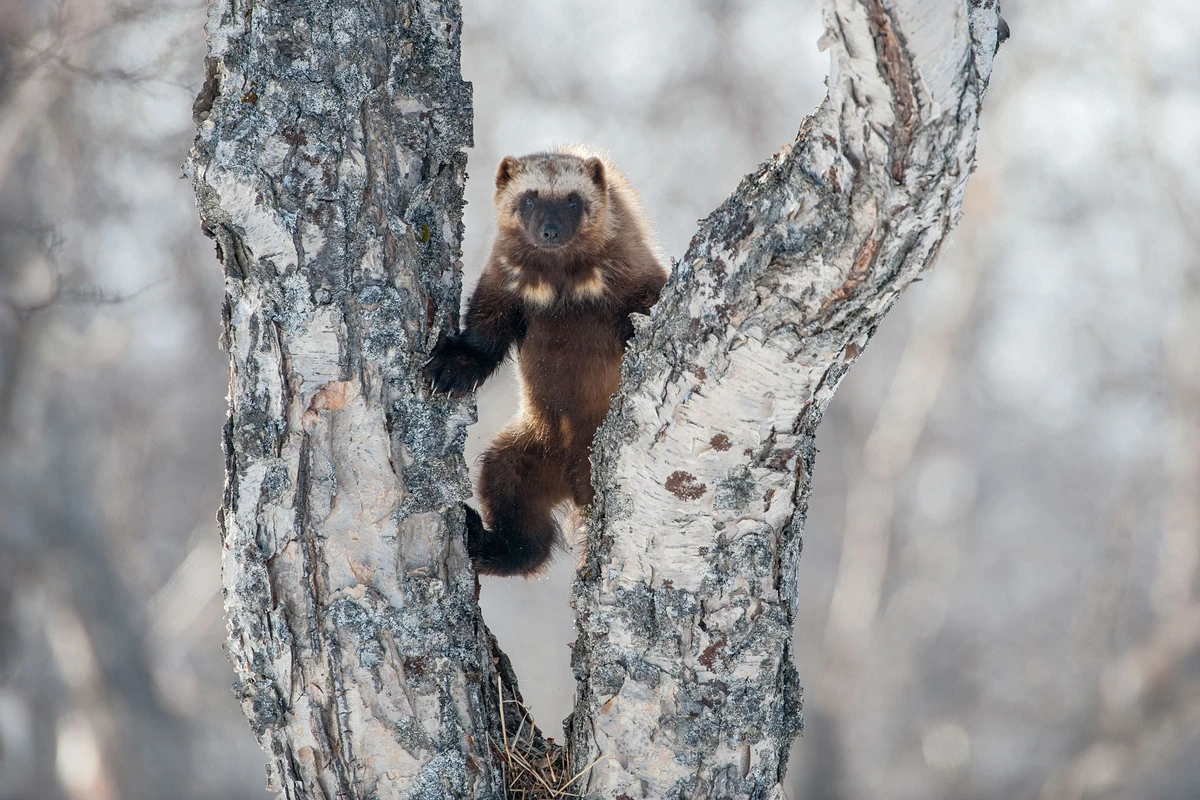
There is at least one known case of a wolverine forcing a bear to climb a tree in an attempt to escape. Then it climbed after him! The bear survived, but was bitten on the heels.
This is why the wolverine emerges victorious from fights with almost all forest animals. She can not only catch a hare, a mouse, or a fox; the frostbitten queen hunts deer, fights on equal terms with a lynx, takes prey from lone wolves, and is even capable of forcing a bear to retreat. What's more, even other wolverines can fall prey to wolverines—cannibalism is also common. 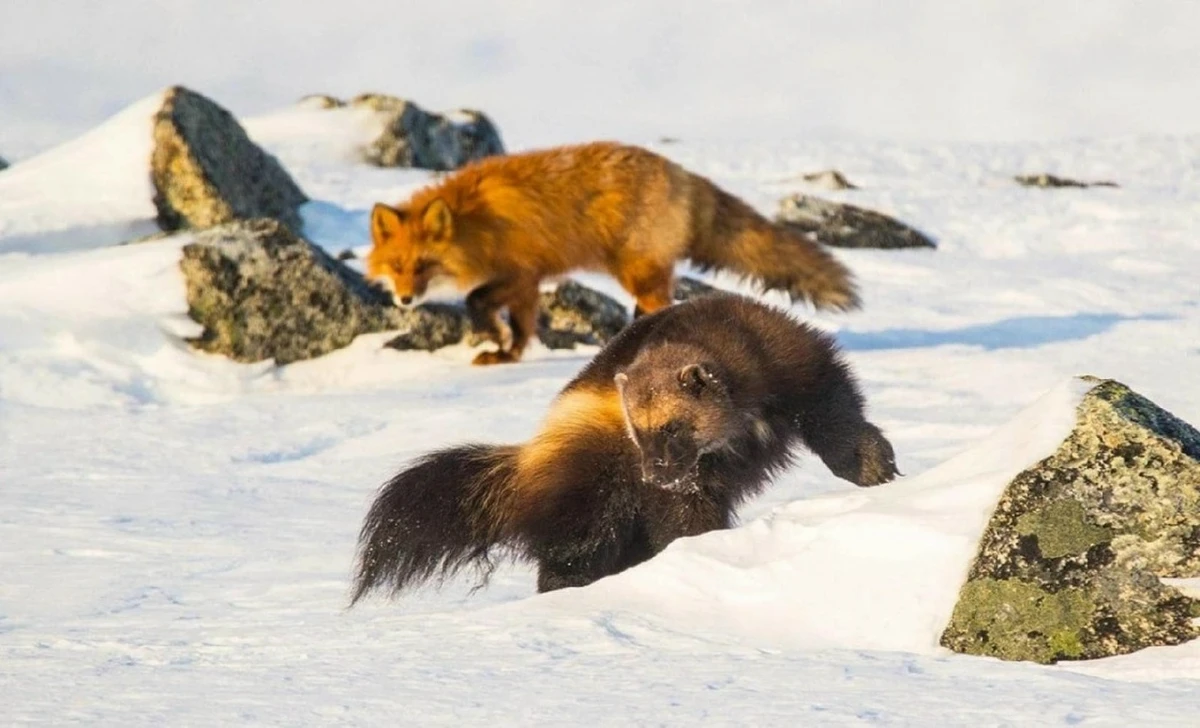
A good fox gets a piece of cheese, a bad one gets a wolverine.
After all, a wolverine is not only strong, resilient, and aggressive, it's also highly intelligent. But this intelligence isn't the kind that helps it find friends, socialize, and engage in altruism. The wolverine is a master of psychological warfare. She always looks like she has nothing to lose. She presses, pulls, and wears down her opponent until they have even a shred of willpower left. Predators rarely expect a creature so small by northern standards to fight so fiercely. But the wolverine will. That's why wolves and lynxes, when caught in a clinch with her, prefer to simply retreat before things get worse. When an opponent shows they'll fight to the bitter end, it's best not to take risks—in the forest, any wound can be fatal, and a single scratch certainly won't get you off a rabid wolverine. 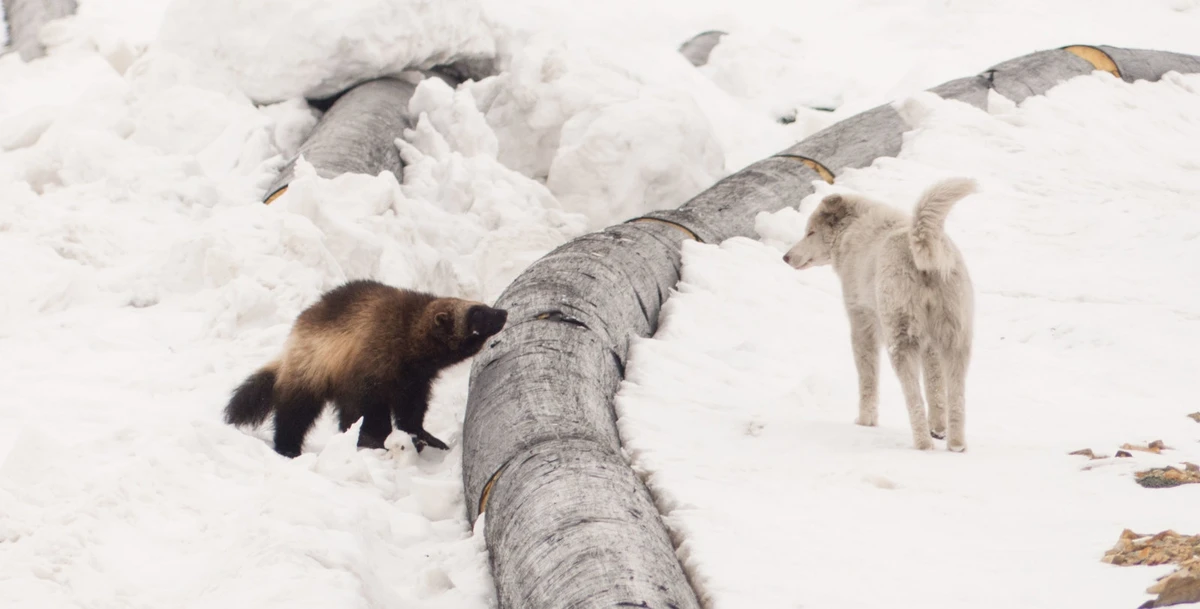
Question: Can a wolverine defeat a dog? Answer: Don't risk the dog; he doesn't stand a chance.
And most importantly: aggressive frenzy is just a show for the audience. Internally, the wolverine is always calm and constantly assesses its opponent's strength and surroundings. And if the situation changes, it will immediately retreat, only to return later. If necessary, the predator doesn't rush headlong into battle, but stalks its prey for hours, waiting for the right moment to attack. As if that weren't enough, the wolverine skillfully exploits its surroundings. In summer, it will attack prey from dense bushes and folds of the terrain; in winter, it stalks deer across old snow and crusted ice, which can't support their weight. After all, it knows that imposing its terms is half the battle's success. 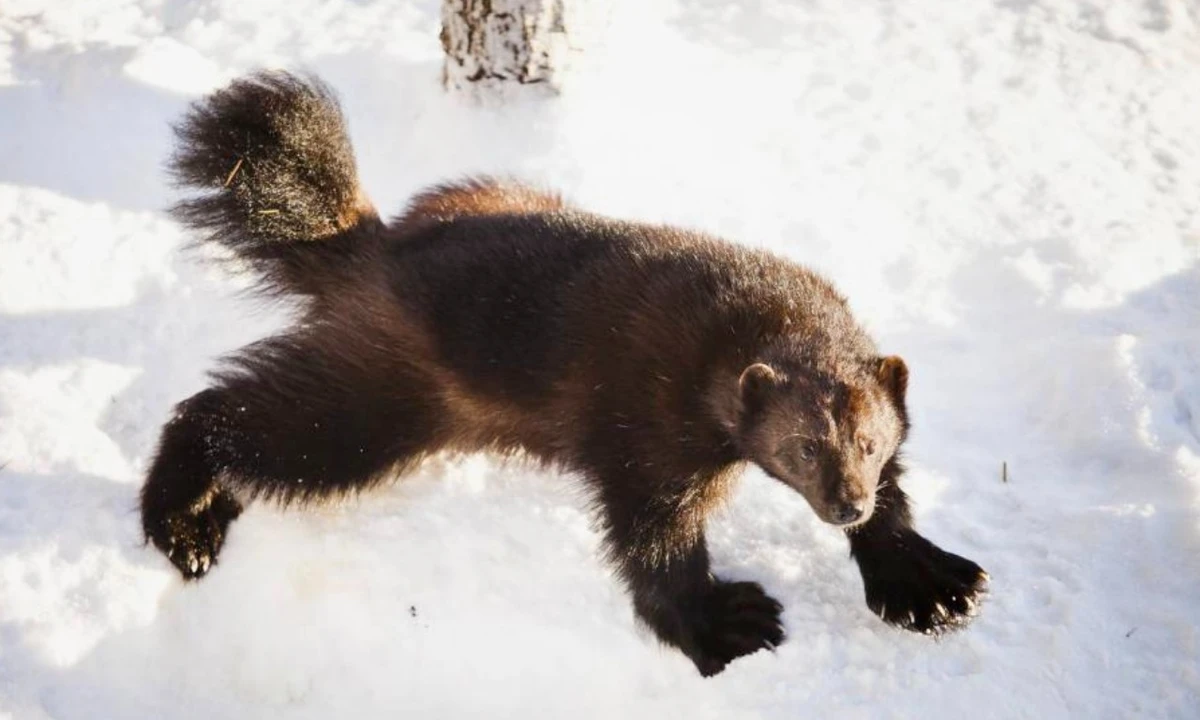
Where a deer sinks knee-deep, a wolverine walks freely. Its wide paws help distribute the weight of the snow. 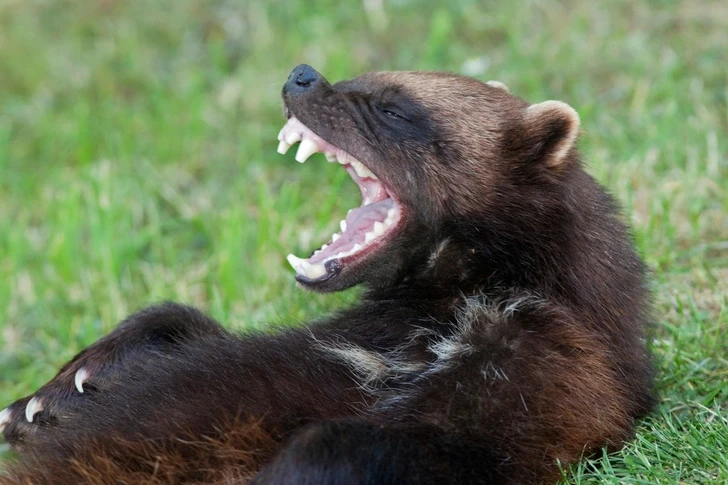
If a wolverine seems a bit like a hyena to you, know that your brain has it right. Both animals are powerful predators and scavengers, capable of inflicting severe injuries and crushing bones, so their jaw structure is similar.
But just because the wolverine is a skilled hunter doesn't mean it spends its days harassing forest dwellers for lack of anything better to do. This animal has a keen sense of when to engage in recklessness and when to use cunning. Therefore, in wolverine habitats, hunters often find empty traps and broken-in huts. Moreover, the predator doesn't simply abandon its prey. It's so clever that it buries it in the snow and marks the spot with a secretion from its glands that smells so strongly that even wolves and bears won't touch it. For months, the wolverine can live on carrion, whether it's scavenged or not—a survival skill that lynxes and wolves silently envy. 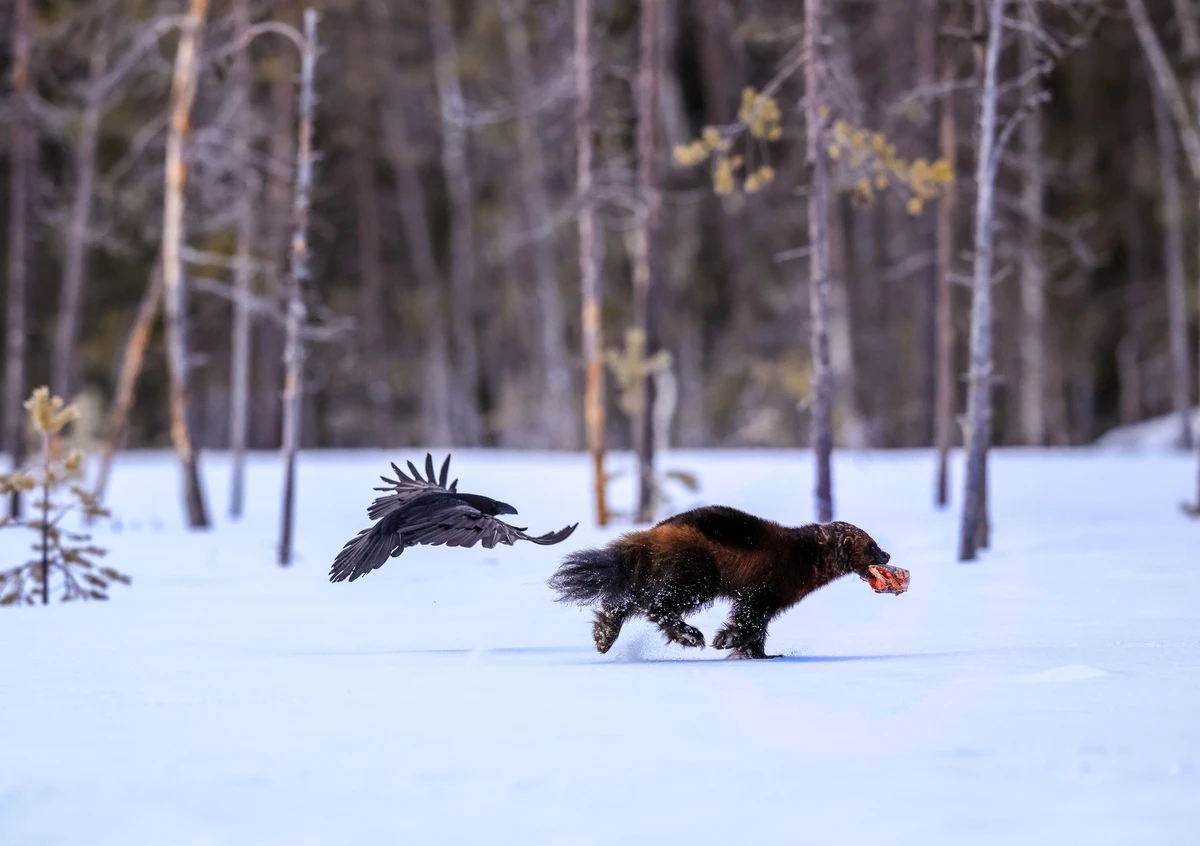
What was yours is now ours! 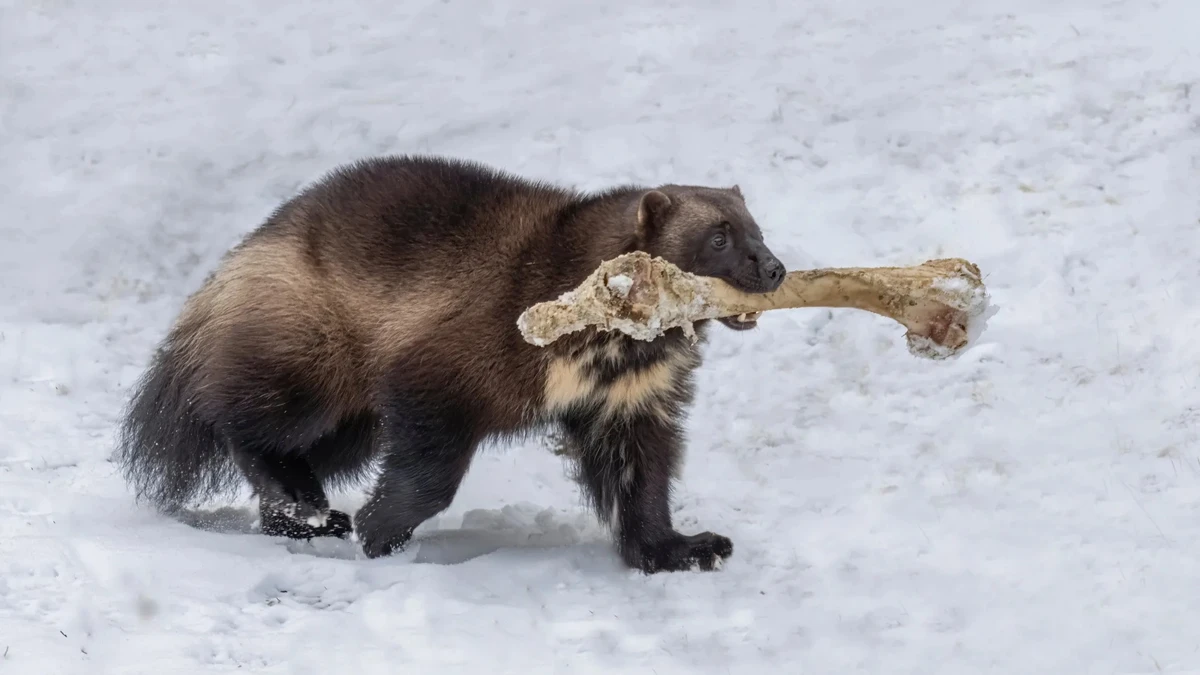
Just crunching along to a TV series...
To somehow compensate for the unstoppable power of the queen of the forests, nature has endowed it with just one, albeit very significant, drawback: a low reproductive rate. These animals are solitary by nature, coming together in the summer only for mating. Males locate females by their persistent scent, engage in sparring matches for the right to become fathers, and depart shortly afterward. Pregnancy in females lasts quite a long time for an animal of this size—up to six months. This is because the embryos do not develop at all during this time: the female's body puts their development on hold until the onset of winter. This ensures that the embryos are born in January-February, when their mother is most successful in hunting, and that they learn to hunt in the spring, when easier prey is more plentiful. The female, anticipating the difficulties of pregnancy and the 10-week nursing of 1-5 cubs, builds a den higher in the mountains whenever possible. During this time, the mother prefers to rely on hidden food caches. 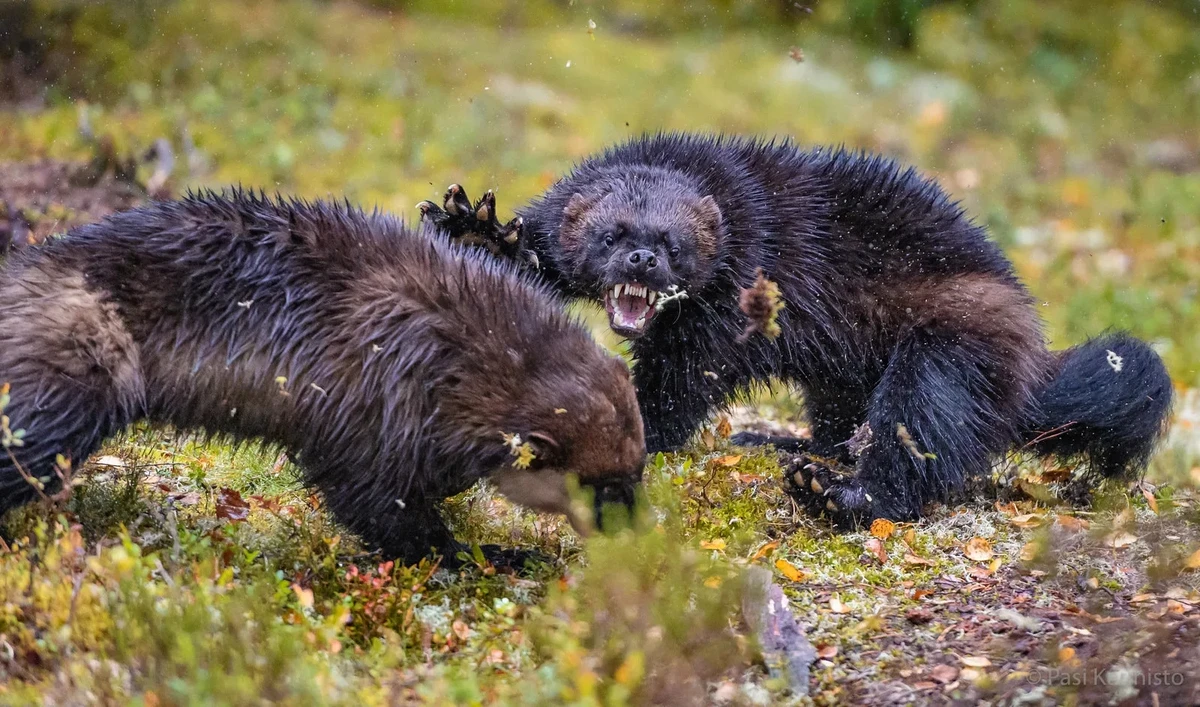
Beat your own, so that strangers will fear you!
After a wolverine weans her young, she faces a long recovery period—females can only reproduce once every two years, which is surprisingly slow for creatures of their size. The young will spend this entire time with their mother, and in rare cases, their father, learning all sorts of tricks and preparing for independent rule in the snow and cold. 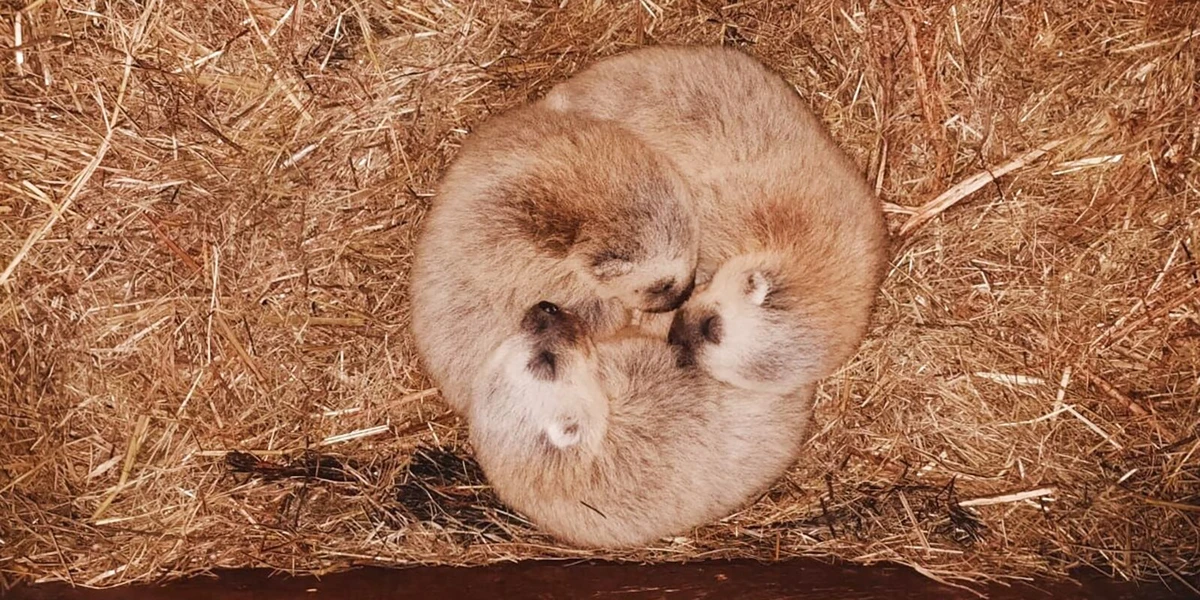
They're truly adorable, even when they're sleeping with their teeth to the wall.
As if that weren't enough, up to a quarter of the cubs die in the womb, and some of those born will be eaten by cunning and brazen predators. So, over the course of 8-10 years, a female wolf can raise 4 to 12 cubs. That's as many as a much larger female wolf gives birth to each year!