Divine Gift or Disease? Inside Savant Syndrome, the Condition That Creates Geniuses (6 photos)
They can recreate a painting in exacting detail entirely from memory, multiply five-digit numbers in their heads instantly, or memorize a whole book word for word. These aren't sci-fi superheroes—they are real people walking among us. Individuals like them are one in a million, and modern science officially acknowledges their extraordinary existence. Yet tragically, the secret behind their genius lies in a condition known to doctors as savant syndrome. 
"Idiot Savants"
The word "savant" comes from the French verb
savoir
, meaning "to know." People with superhuman abilities have undoubtedly existed throughout history, but until the Enlightenment, revealing such gifts was deadly. In the Middle Ages, suspected savants were shown no mercy and were routinely burned at the stake or drowned as sorcerers and witches. 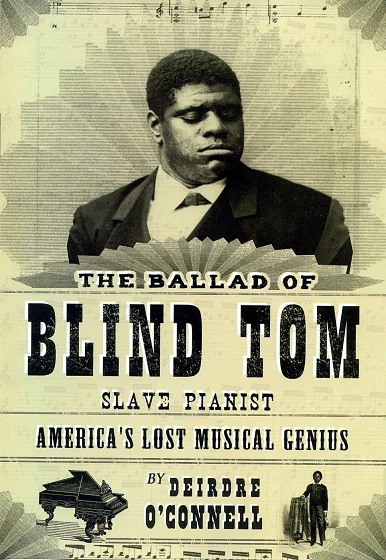
"Blind Tom"—a blind African American slave who unexpectedly became a virtuoso pianist at age 13
As a result, the phenomenon was not formally studied until the second half of the 18th century. In 1783, the German scientific journal
Gnothi Sauton
published an article about Jedediah Buxton, a man capable of performing massive numerical calculations in his head in an instant.
A more extensive investigation was carried out by Benjamin Rush, one of the founding fathers of American psychiatry. Among the doctor's patients at the turn of the 19th century was Thomas Fuller, an otherwise ordinary man who showed no general aptitude for the arts or sciences.
Yet Fuller possessed an astonishing gift: when asked to calculate how many seconds a person had lived after 70 years, 17 days, and 12 hours, he immediately produced the exact figure: 2,210,500,800 seconds. Remarkably, Fuller was never wrong, seamlessly factoring leap years into his calculations. 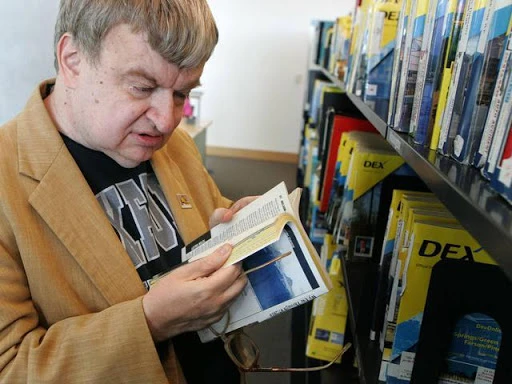
Kim Peek, history's most famous savant, possessed extraordinary abilities in mnemonics, mental calculation, and music
Even Rush struggled to fully categorize the condition, settling for a detailed account of his observations. The first physician to systematically research savants was Dr. John Langdon Down, best known for discovering the syndrome that bears his name. In 1887, Down gave a historic lecture on what he coined "idiot savants"—individuals he had encountered over 30 years of work at Earlswood Asylum.
He described patients with incredible talents in drawing, music, mathematics, or feats of memory. Yet their overall general intelligence was classified as low, leaving them virtually helpless outside their specific domain. Down provided the first precise clinical description of savant syndrome, which medical luminaries would continue to build upon in the decades that followed.
What Sets People with Savant Syndrome Apart?
Individuals with savant syndrome are characterized by an exceptional memory alongside a highly specialized talent or skill. At the same time, most savants have autism spectrum disorder or central nervous system dysfunction—roughly half of all savants fall on the autism spectrum, while the other half present with other neurological conditions. 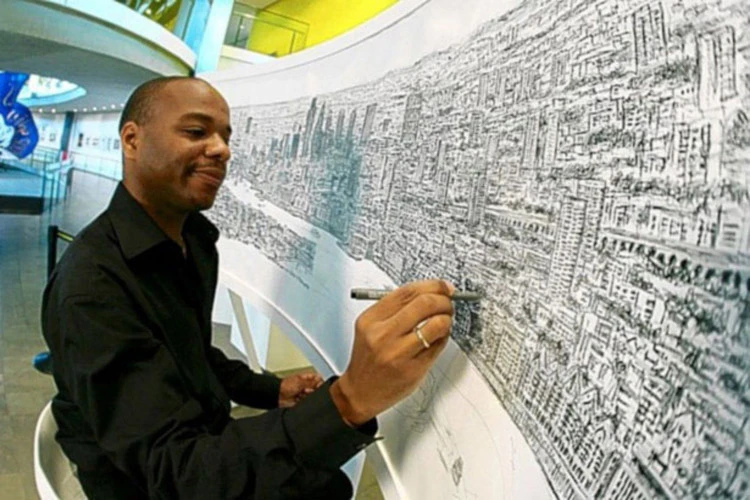
Artist Stephen Wiltshire draws complete city skylines entirely from memory
The condition can be either congenital or acquired. In some cases, a person suddenly manifests a unique talent following a traumatic brain injury or severe psychological shock. While scientists cannot yet fully explain acquired savant syndrome, they hypothesize that the sudden release of talent is the nervous system's response to extreme trauma, or perhaps a compensatory mechanism triggered to make up for lost cognitive functions.
In 1978, American psychologist Bernard Rimland compiled data on 5,400 children with autism. In 531 cases, parents reported extraordinary abilities in their children. Rimland's painstaking research revealed that savant syndrome is six times more common in males than in females. Furthermore, these extraordinary abilities overwhelmingly fall into five primary categories:
Music. Savants can play complex pieces after hearing them just once or twice without any formal training, demonstrating an astonishing capacity for improvisation and picking up instruments with ease. Interestingly, the piano is by far the most common output;
Visual arts. Savants can replicate complex objects and entire landscapes from memory with extraordinary accuracy, excelling in drawing, painting, or sculpting;
Mathematics. Individuals can perform complex mental calculations at lightning speed, sometimes without even possessing basic formal arithmetic knowledge;
Spatial processing. In certain cases, savants masterfully create intricate maps and blueprints and exhibit an infallible sense of direction;
Mechanical aptitude. The ability to measure distances and dimensions with extreme accuracy without tools, and to assemble intricate models entirely by eye.
Rimland discovered that musical ability was the most widespread trait among savants. Most individuals possess a single hyper-focused talent; instances of multiple savant skills are exceedingly rare. Occasionally, extraordinary sensory gifts emerge as well, such as a heightened, almost non-human sense of smell. 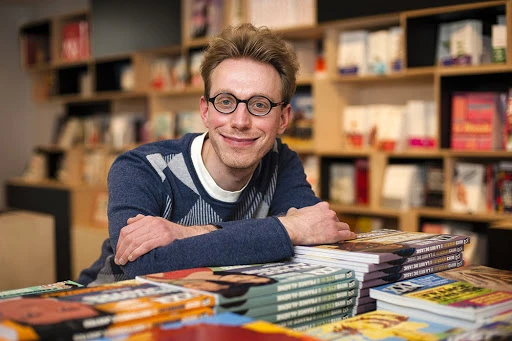
Daniel Tammet speaks 10 languages and performs complex mental calculations at lightning speed
Not all savant talents are artistic. History records savants making remarkable achievements in neurophysiology, statistics, and navigation, with around 100 scientists worldwide documented with the condition. Notably, savant syndrome is not classified as a mental illness and does not preclude individuals from working or pursuing successful careers.
Can or Should Savant Syndrome Be Treated?
Although savant syndrome is not classified as a standalone personality disorder in the DSM-5, the question of treatment has been debated for decades. In 1930, the medical community confronted the issue directly: at an international conference, psychiatrists from around the world debated whether to treat the underlying symptoms or nurture the patient's unique talents. After extensive reports and debate, the consensus was clear: focus entirely on nurturing the talent. Over time, neurological deficits often lessened or disappeared, while the incredible abilities remained intact. 
Today, experts advise parents to pay close attention to the gifts of savant children. Specialized schools and programs exist to support them, though parents retain the right to seek medical treatment if they feel the condition hinders their child's development. Cases where savant traits diminish after intervention are well documented. The most famous involved Nadia, a child prodigy artist whose extraordinary drawing ability gradually faded after she was enrolled in a conventional school environment.