Why Working on a Laptop Lying Down Is Bad for You (4 photos)
Computers play an increasingly vital role in our daily lives. We rely on laptops at work and build our free time around them—whether it's gaming, social media, streaming TV shows, or browsing online forums. Naturally, when we want to unwind, we drag our laptops onto the couch or even into bed. Some even manage to work remotely from a fully horizontal position. Medical experts, however, warn that this is a terrible habit and explain why using a laptop lying down does more harm than good. 
Studies show that working on a laptop while lying down is just as harmful as reading in bed. The posture is anatomically ill-suited for mental work, reducing focus and productivity. On top of that, positioning the screen at a safe viewing distance and angle is nearly impossible, putting extra strain on your eyes, spine, neck and back muscles, and cerebral blood vessels. 
This isn't just an issue for adults—it affects children and teenagers too. Because their eye and back muscles are still developing, spending long hours in this position significantly increases the risk of developing nearsightedness or spinal problems. Dr. Arpine Adamyan, an ophthalmologist at SM-Clinic, explains:
“Both adults and children can develop asthenopic symptoms, such as persistent headaches, dizziness, and reduced vision at both short and long distances. Another common issue—especially among office workers—is dry eye syndrome, which stems directly from prolonged screen time.” 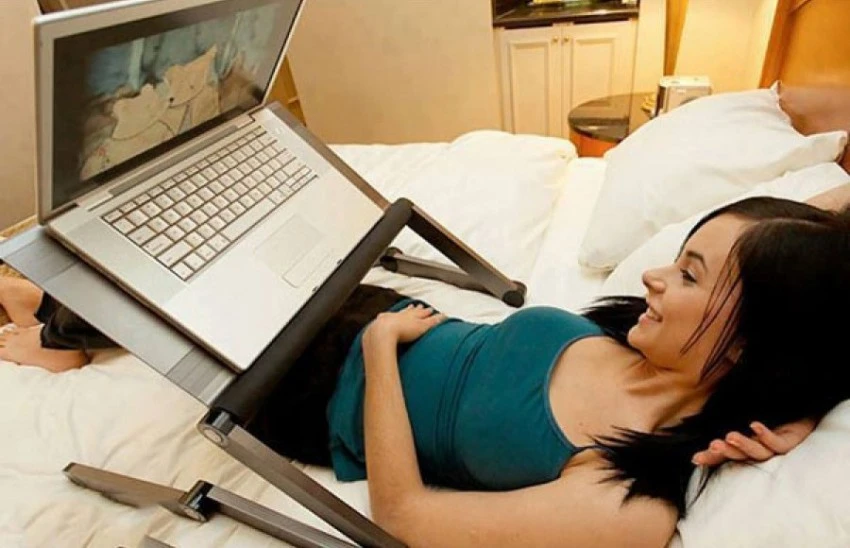
Many believe that simply watching TV shows in bed is harmless. That is a misconception—the strain on the body remains just as high, if not higher. When watching movies, people tend to lock their eyes on the screen and rarely shift positions, holding static postures for hours.
How to Set Up a Healthy Workspace
Doctors recommend working at a proper desk in an ergonomic chair. Taking brief breaks every 20 to 30 minutes is crucial to give your eyes and back a rest. During these breaks, stand up, stretch, walk around, look into the distance, and unwind. Investing in a good workspace pays off: choose an office chair with proper lumbar support, keep the screen at least 50 centimeters (20 inches) from your eyes, and ensure your room has comfortable lighting and adequate ventilation. 
Finally, keep in mind that health issues caused by poor computer posture don't appear overnight. Many people fail to realize that their failing eyesight or agonizing back pain stems from working in bed. If you notice concerning symptoms, don't wait—consult a specialist to catch any problems early.