Jeanne de Belleville: Fact and Fiction About France’s Most Famous Female Pirate (9 photos)
Known as France’s first female pirate and the Lioness of Brittany, Jeanne de Belleville is credited with enough daring exploits to fill the lives of several seasoned buccaneers. In reality, her career as a corsair was fairly brief. Yet, she became a romantic folk hero to the French, making it almost impossible today to separate myth from fact. 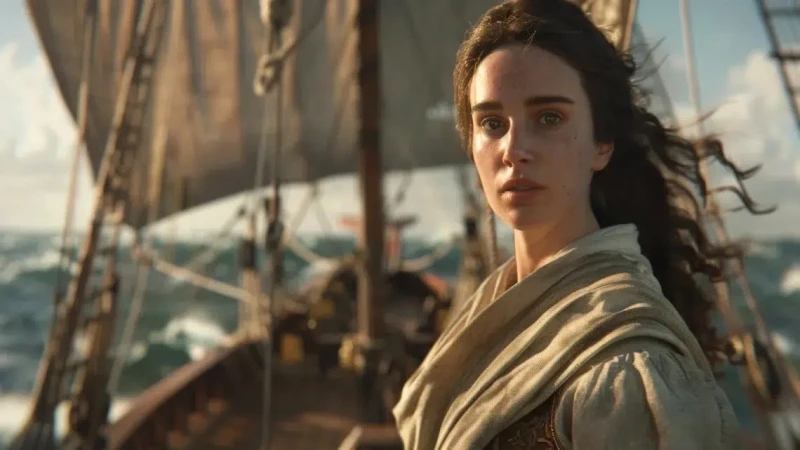
A street in Nantes bears Jeanne's name, as do streets in Quimper and the commune of Pacé in Brittany. At Château de Clisson, tour guides regale visitors with tales of the pirate’s ghost wandering the galleries and ramparts. Poems, novels, paintings, and comic books have all celebrated this fiery, heartbroken medieval warrior. 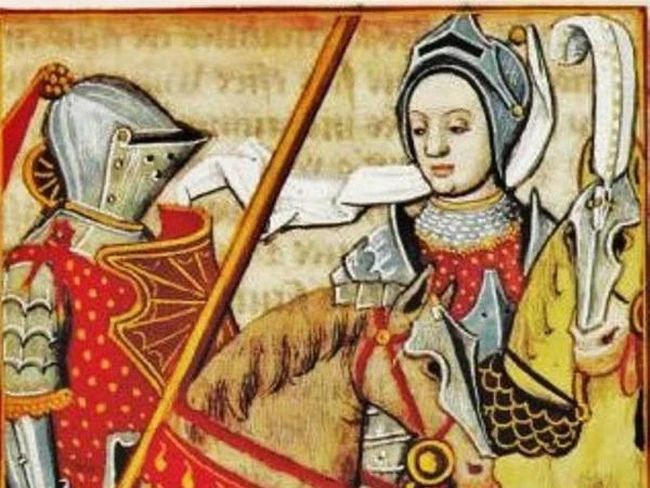
Jeanne de Belleville depicted in an ancient miniature
Legend has it that Jeanne named her flagship
My Revenge
and painted its sails blood-red. She was said to be victorious in every sea clash, offering no quarter to fallen enemies. While the real Jeanne de Belleville was quite different from the myth, she was nevertheless a remarkable figure.
Very little is known about her childhood and early years. Born into a noble family around 1300, she lost her father while still a child. Financial hardship likely led to her being married off as a young teenager. By the age of 26, she was already a widow with a substantial inheritance. 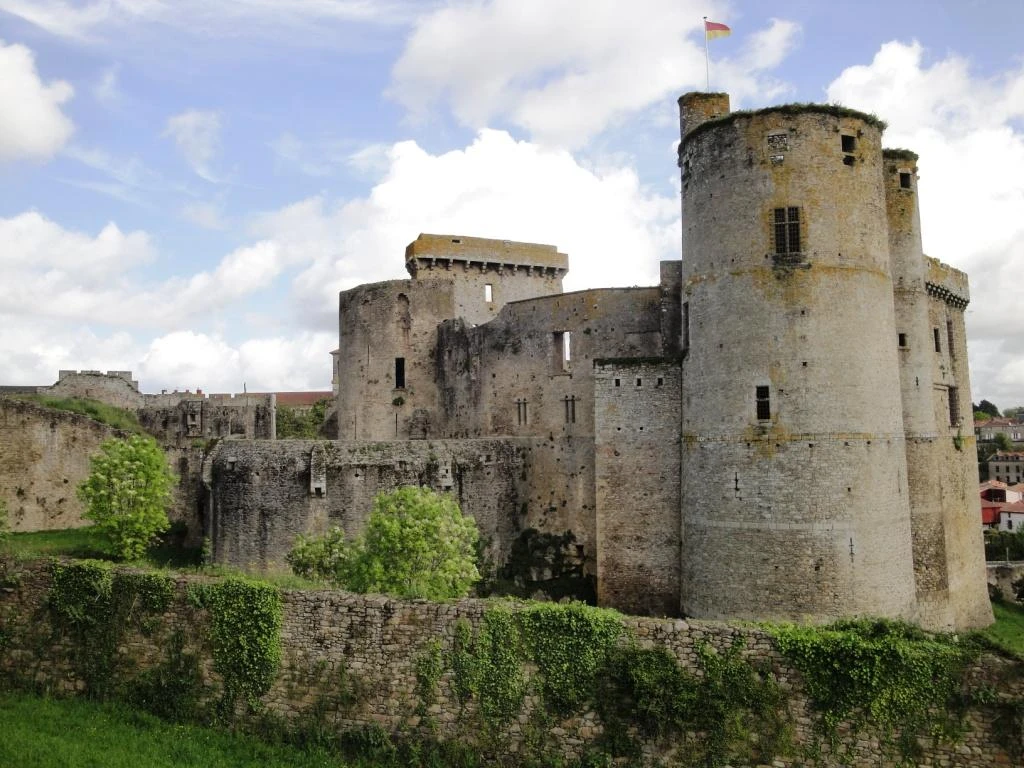
Château de Clisson in Brittany
Jeanne married her second husband, the brother of the Duke of Brittany himself. Exactly what went wrong between the young beauty and her husband remains unclear, but the Pope soon annulled the marriage at the request of the groom and his family. Official records dryly cited a newly discovered consanguinity between the spouses as the reason.
Jeanne de Belleville's Happy Marriage
Jeanne was not single for long. Her third marriage was to Olivier de Clisson, a wealthy Breton nobleman. Both were around 30 at the time of their wedding, wealthy, and well-connected. Furthermore, Jeanne's estates provided direct sea access and adjoined Clisson's inland properties.
A few years into the marriage, Jeanne unexpectedly sued her husband, accusing him of document fraud. She claimed Clisson had breached their prenuptial agreement, infringing on her children's land rights. Jeanne won the suit, and her husband swore that their four children together would not be deprived. Ultimately, however, only two of their children—a son and a daughter—would survive to adulthood. 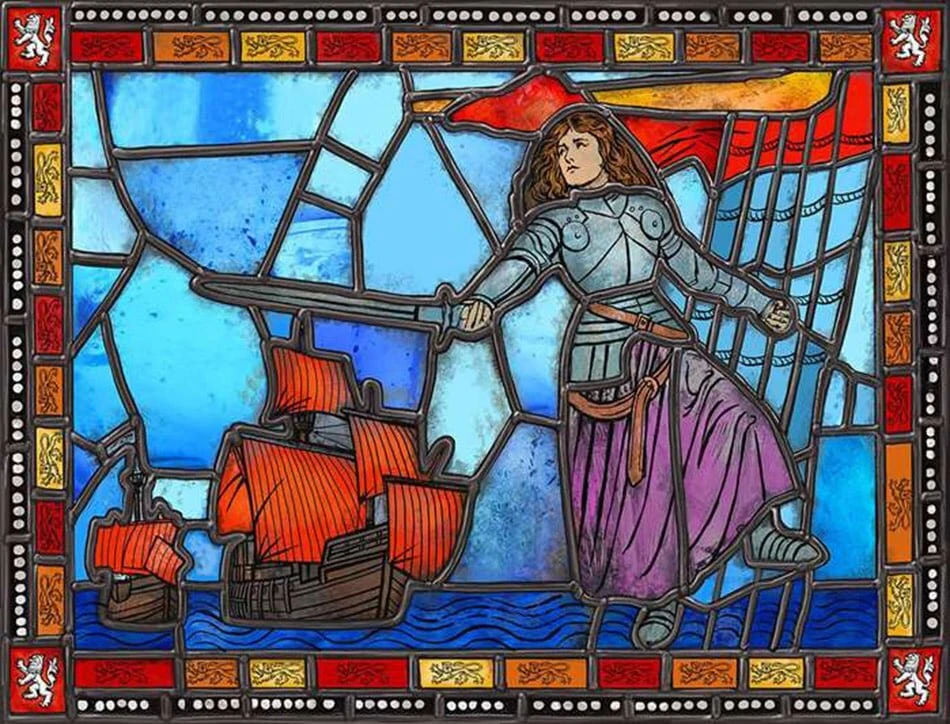
Stained-glass window depicting Jeanne de Belleville
Aside from minor disputes, life in Jeanne’s household was peaceful. But in 1337, the Hundred Years' War broke out between France and England. War brought famine, followed by the Black Death, and tragedy soon struck Jeanne's family. Brittany became a battleground not only for the kings of France and England, but also for a brutal conflict among local lords known as the War of the Breton Succession.
The Execution of Olivier de Clisson
The feud dragged on for 23 years, engulfing every noble house. Although hostilities waned in 1343, courtly intrigues persisted. Jeanne's husband, Olivier de Clisson, was arrested in Paris just before a grand tournament. He was charged with treason against the French Crown and negotiating with the English. 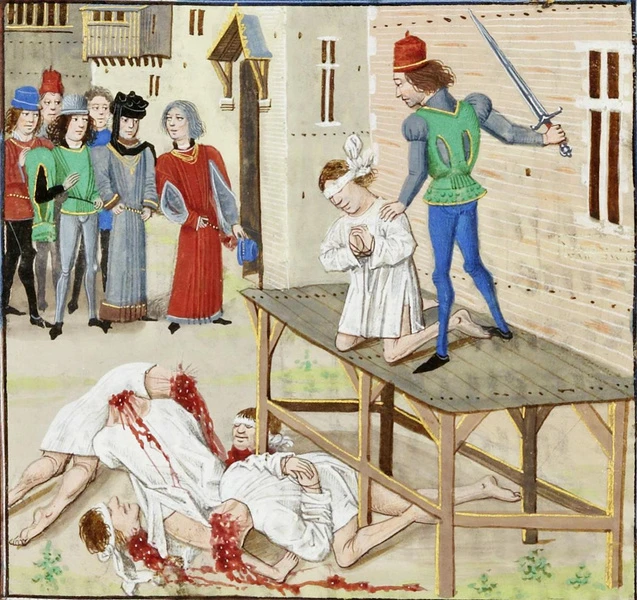
The execution of Olivier de Clisson. 15th-century manuscript miniature
Jeanne tried desperately to save her husband by bribing royal officials, but her efforts were in vain. King Philip VI himself passed the death sentence. The knight was beheaded in a public square in Paris. To further humiliate him, his lifeless body was hung by the armpits at the multi-tiered Montfaucon gallows, reserved for traitors.
Clisson’s severed head was sent home to Brittany and displayed on a spike over the city gates of Nantes. A 19th-century romantic poem popularized a story where Jeanne brings her two oldest sons to Nantes to behold their father’s head, prompting them to swear vengeance on the King. However, no historical records substantiate this account.
A Widow’s Revenge
In reality, Jeanne squandered no time on dramatic gestures. She had already taken action while Clisson was awaiting trial, rallying her husband’s loyal supporters to her cause. Following his execution, she was repeatedly summoned to Paris on charges of treason and rebellion, but she ignored every order. 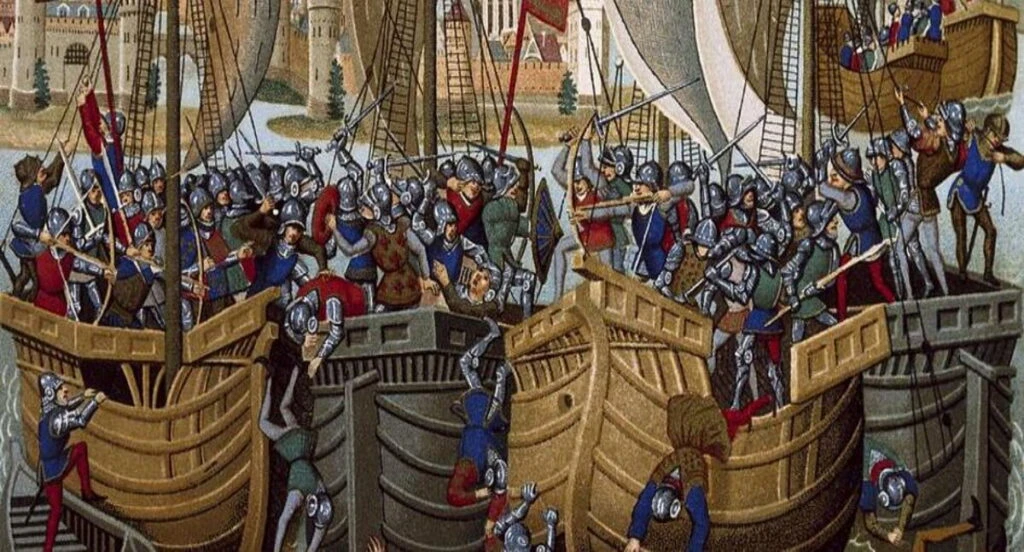
A 14th-century naval battle
Wasting no time, Jeanne set out with a force of 400 men toward a castle belonging to the family that had betrayed her husband. Unaware of Clisson’s death or Jeanne’s intentions, the garrison allowed her inside without suspicion, whereupon she ruthlessly put them to the sword.
A large royal force was dispatched to punish Jeanne, but the avenging widow was long gone. Realizing her chances were slim on land, she took her vendetta to the open seas. No one knows for certain how many ships or fighters were under her command, nor how long her piratical crusade truly lasted.
Flight to England
Historians generally believe that Belleville’s career as a pirate lasted only a few months. Yet during that brief span, she caused severe damage, antagonizing both the King of France and the Pope. Jeanne captured and sank French vessels, executing their crews on the spot. Without trial, the King declared her a traitor, stripped her of all titles and lands, and banished her in absentia from the realm. 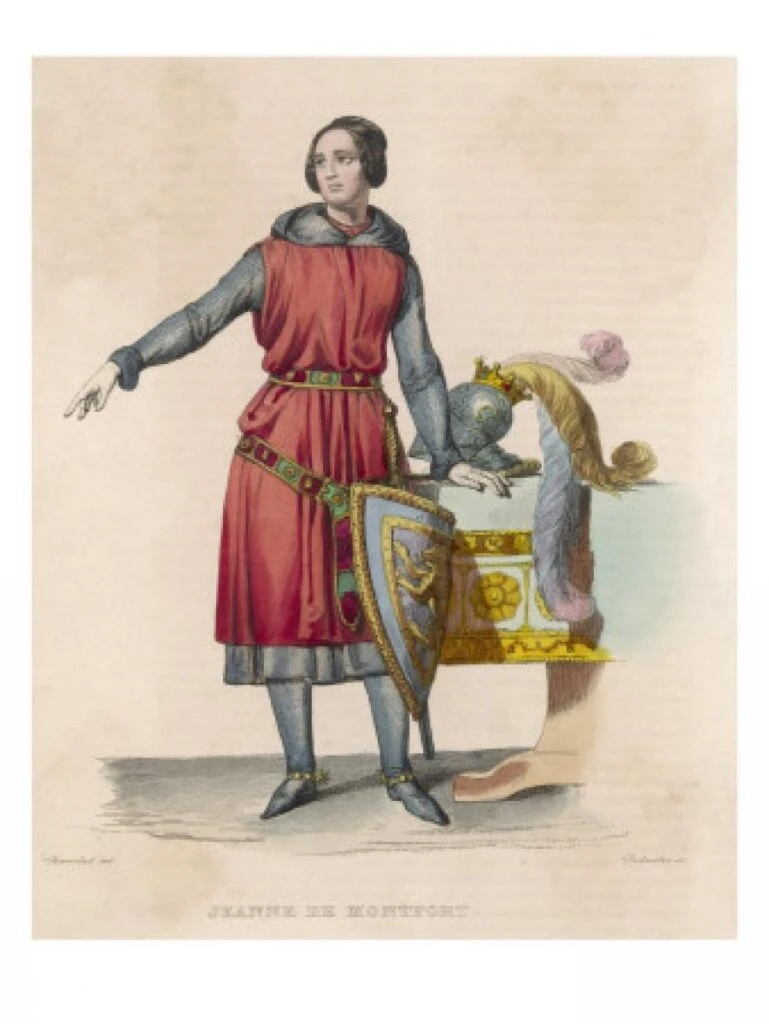
The Lioness of Brittany
Why the Lioness of Brittany ultimately abandoned piracy remains uncertain. Legend claims her fleet was struck by a violent storm and her ship sank. She found herself adrift in an open boat with her two sons in a tempestuous sea. After days at sea, Jeanne and her only surviving son, Olivier, finally washed ashore.
A New Life in England
Jeanne and her son managed to reach England, where King Edward III received them warmly. Using her connections and remaining assets, Belleville built a new life far from France. She spent the rest of her days in exile, harboring hopes that France would fall and her vast estates would be restored. 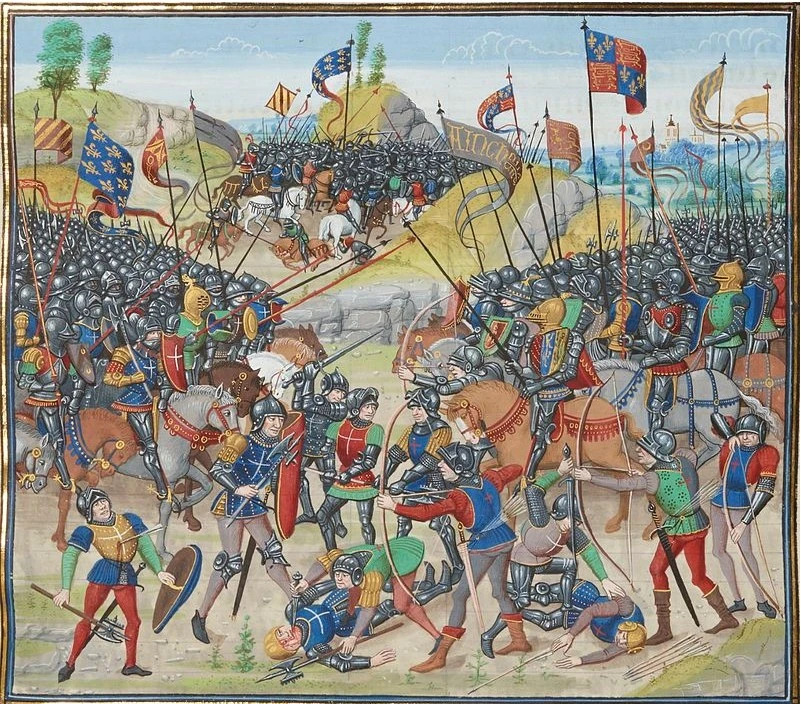
The Battle of Auray
Around the age of 50, Belleville married once more. Her new husband was Sir Walter Bentley, an English knight fighting the French in Brittany to advance his family's interests. For the remainder of her life, Jeanne reclaimed her lost lands piece by piece through proxy: whenever the English seized former properties of hers, she ensured they were returned to her possession.
The Fate of Olivier de Clisson
Upon coming of age, Jeanne’s son Olivier joined his stepfather in battle. In time, he managed to fully recover his mother’s former domains, though she had passed away five years before seeing that day. The War of the Breton Succession finally concluded in 1364 with the Battle of Auray. 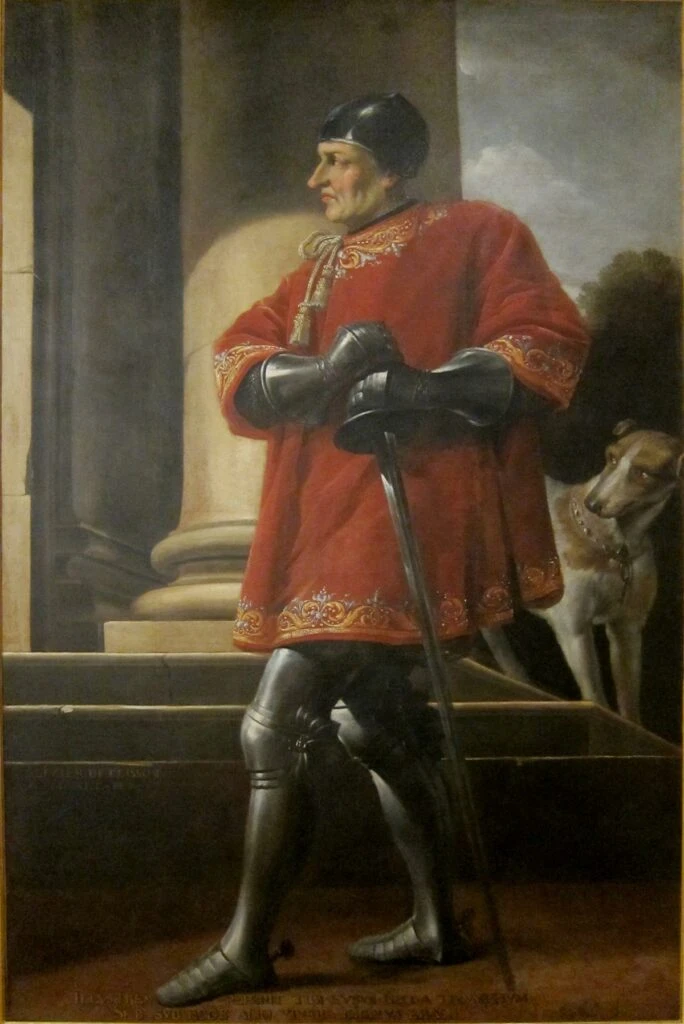
Olivier V de Clisson
Olivier V de Clisson fought valiantly, losing an eye in battle. He eventually regained the favor of the French Crown and was appointed Constable of France, the highest military authority in the realm. His entire life was defined by battle, as the Hundred Years' War raged on until 1453.