Mihrimah Sultan: Tender Princess or Cold-Blooded Politician? (15 photos)
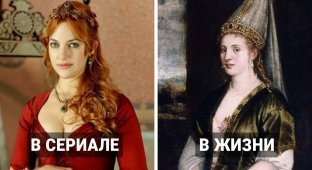
In the TV series "The Magnificent Century," Mihrimah Sultan is depicted as a young woman suffering in a marriage to a man she does not love. In reality, things were quite different. The daughter of Suleiman the Magnificent and Hurrem managed a vast fortune, corresponded with foreign monarchs, and advised two sultans. Contemporaries also whispered about a darker side: that she helped her mother and husband plot the downfall of her half-brother, Şehzade Mustafa. While there is no direct evidence, the rumors have endured for centuries. 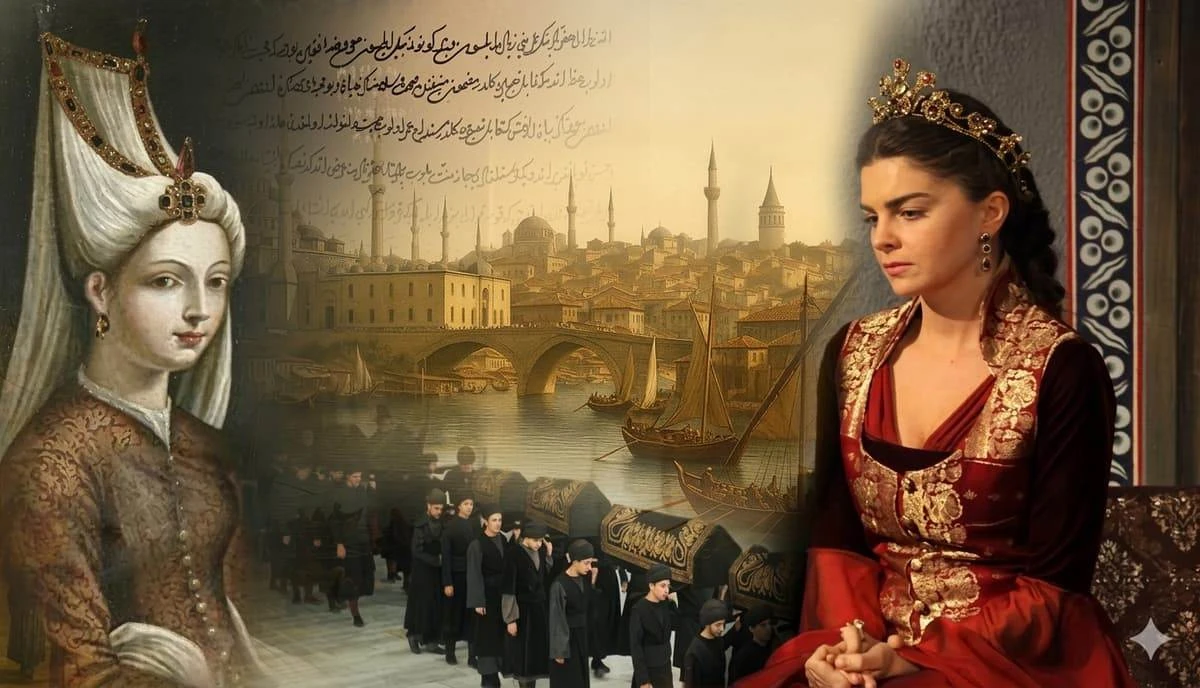
The Sultan's Favorite Daughter
Mihrimah was born in the autumn of 1522 at the Old Palace in Istanbul. While historians lack an exact birth date, September is most frequently cited. She was Hurrem and Suleiman's second child and their first daughter. Translated from Persian, her name means "Sun and Moon." In 16th-century Europe, she was known as Cameria—the Arabic variant of her name, meaning "Moonlike." 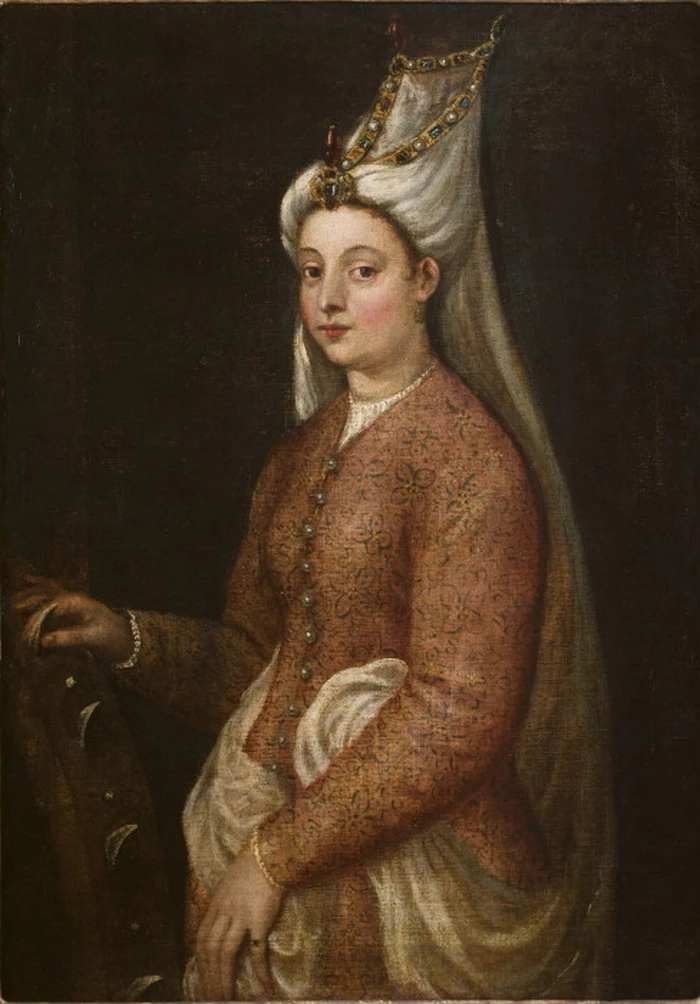
Portrait of Mihrimah Sultan. In 16th-century Europe, she was known as Cameria
Hurrem bore Suleiman six children, but Mihrimah was their only daughter to survive into adulthood. She had five brothers: Mehmed, Selim, Abdullah, Bayezid, and Cihangir. Abdullah died at three years old, while Mehmed passed away unexpectedly in November 1543. The sultan cherished his daughter deeply and always valued her opinion.
Mihrimah’s mother began her life in the harem as a simple concubine, but around 1534, Suleiman freed her and took her as his legal wife—an unprecedented move for an Ottoman sultan. As a result, Hurrem's children immediately became the focal point of palace intrigues, their fates hanging on a single question: who would inherit the throne?
The Harem as a Battlefield
Mihrimah’s childhood coincided with a fierce rivalry between two women. Hurrem fought for the future of her own sons, while Mahidevran championed the rights of Şehzade Mustafa. Venetian ambassador Bernardo Navagero described how Mahidevran once beat and humiliated Hurrem, throwing Suleiman into a rage.
The stakes in this conflict went far beyond petty personal rivalries. The Law of Fratricide, established by Mehmed II the Conqueror, permitted a new sultan to execute his brothers to maintain state order. Consequently, if Mustafa were to ascend the throne, the lives of Hurrem’s sons would be in mortal danger. 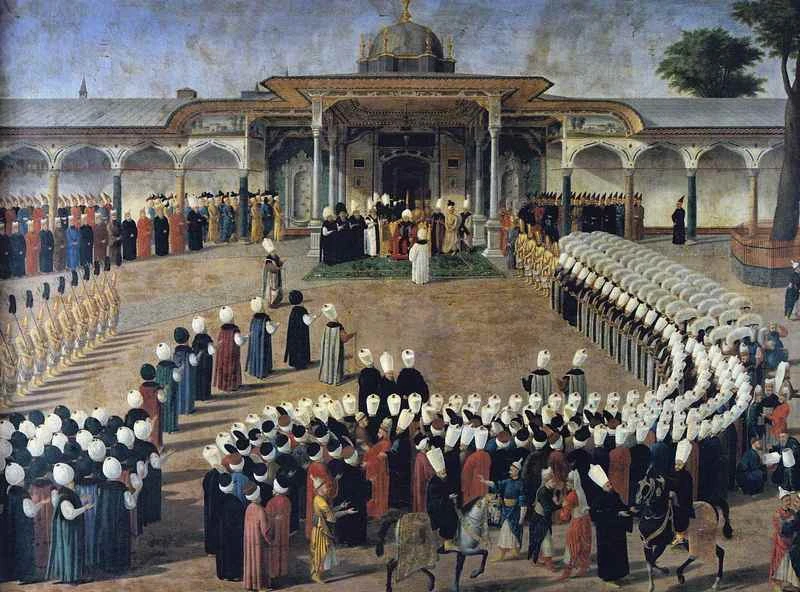
Topkapi Palace courtyard nearly three centuries after Mihrimah. Painting by Konstantin Kapıdağlı, 1789
While Mihrimah’s brothers left the capital to govern provinces, she remained by her mother's side, gaining an insider’s view of high politics. For instance, in 1541, Mustafa was transferred from Manisa to Amasya. Manisa was instead assigned to Hurrem's sons—first to Mehmed, and after his death in 1544, to Selim.
Surviving letters paint Mihrimah as an educated and disciplined woman. Together with her mother, she corresponded with Sigismund II Augustus, King of Poland; strikingly similar letters were often dispatched with the same messenger. According to Turkish historians, Mihrimah's letter congratulating the king on his accession is preserved in the Polish archives to this day.
On-Screen Romance vs. Realpolitik
In the TV drama, Mihrimah is hopelessly in love with Bali Bey but is forced into a bitter marriage with Rüstem. Viewers were captivated by this romantic tragedy about an unhappy princess when the show aired from 2011 to 2014, drawing massive global audiences. In reality, however, the arrangement was far more pragmatic. 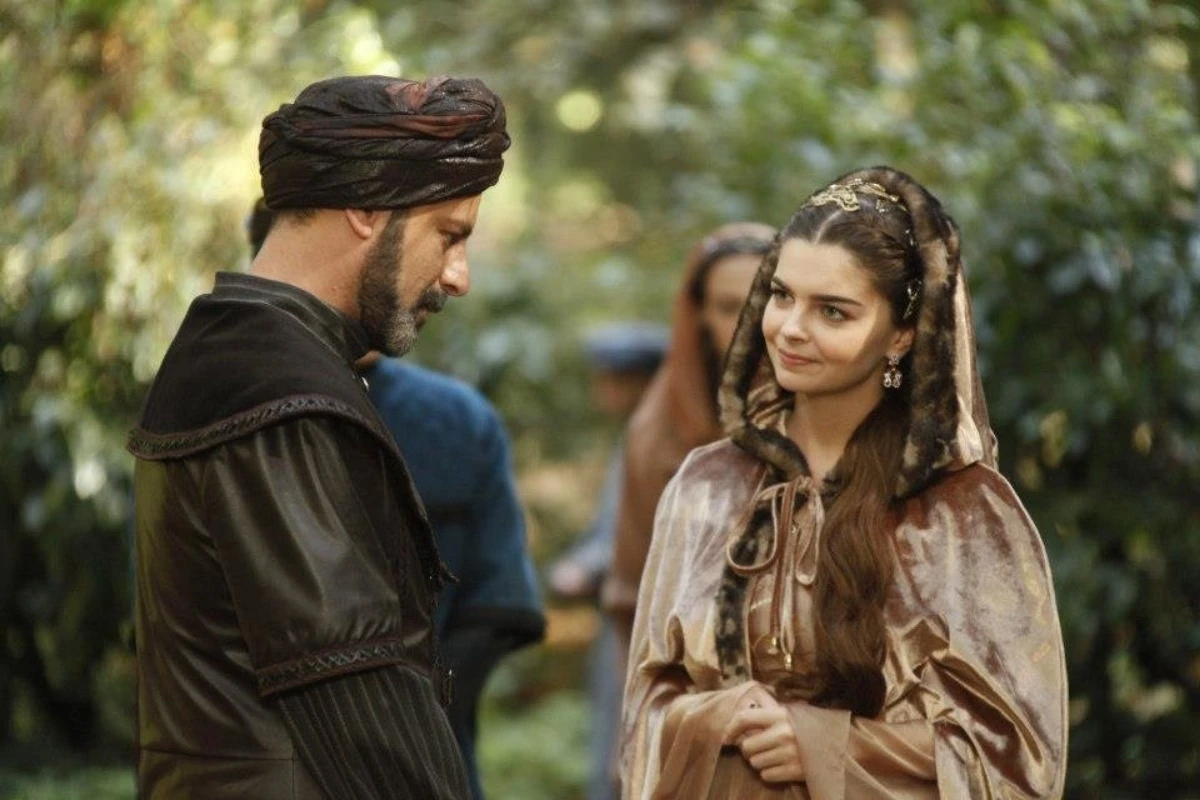
Rüstem Pasha and Mihrimah in "The Magnificent Century." Their real-life marriage was a political alliance
Suleiman decided to marry his 17-year-old daughter to Rüstem in 1539. The grand wedding took place on November 26 at the Old Palace, coinciding with the circumcision celebration of her younger brothers, Bayezid and Cihangir. The festivities lasted for 15 days.
This union served multiple strategic purposes. Suleiman secured a fiercely loyal grand vizier, Hurrem gained a powerful ally beholden to her for his career, and Rüstem married into the imperial family. Mihrimah, in turn, gained a husband who trusted her entirely with his affairs; in his will, Rüstem designated her as the executor of his estate. Historian Zahit Atçıl notes in his research on royal marriage policies that Rüstem’s career soared dramatically after the wedding.
Even so, Rüstem never became a close personal friend of the sultan. While Hurrem and Mihrimah tried to bring the two closer, Suleiman kept his son-in-law at a measured distance.
The Croatian Who Became the Sultan's Son-in-Law
Rüstem was born around 1505 in the Balkans. Historians debate his exact birthplace, suggesting Skradin, Sarajevo, or Makarska. As a boy, he was brought to Istanbul through the devshirme system—the Ottoman practice of recruiting Christian boys for state service. He was educated at the Enderun Palace School and identified Croatian as his mother tongue, a fact he personally conveyed to the diplomat Antun Vrančić. 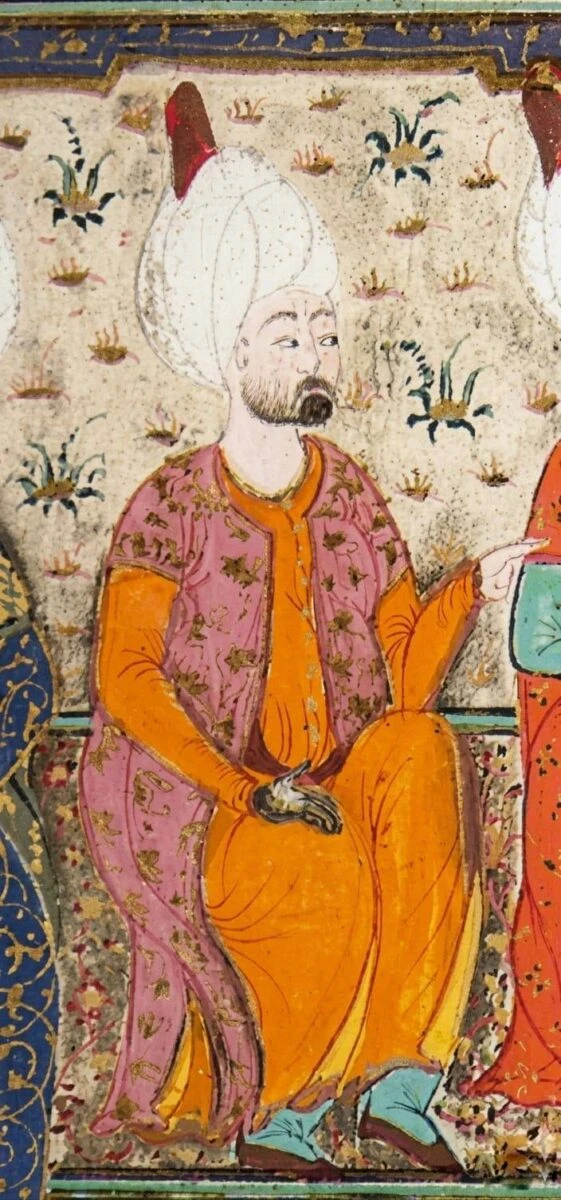
Rüstem Pasha, Grand Vizier to Suleiman. 16th-century miniature
Hurrem played a crucial role in advancing his career. Rüstem fought at the Battle of Mohács in 1526, served as a master of the horse, and tutored the sultan’s sons. By 1539, he held the rank of vizier and governed Diyarbakır. On November 28, 1544, Suleiman appointed him Grand Vizier—the empire's chief minister.
Rüstem held this position until 1553, and was reappointed in 1555. In 1547, he negotiated a peace treaty with Ferdinand I of Habsburg, who agreed to pay an annual tribute of 30,000 gold ducats. When Rüstem died on July 10, 1561, he left behind a massive fortune detailed in a meticulous inventory: 815 land plots, 476 mills, and 2,900 warhorses.
His enemies spread malicious rumors about him, claiming he suffered from leprosy. Suleiman dispatched a doctor to Diyarbakır, who found no sign of the disease.
His marriage to Mihrimah produced a daughter, Ayşe Hümaşah, born in 1541, and a son, Osman, born in 1546. Osman died in 1576. Ayşe married three times, bore five sons and five daughters, and outlived her mother by more than two decades. No reliable records survive regarding a second son, Mehmed.
Mustafa: The Army's Favorite
Mustafa was born around 1515–1517 to Suleiman and Mahidevran. As the eldest surviving prince, he governed Manisa and later Amasya, writing poetry under the pen name Mukhlisi. The Janissaries—the elite Ottoman infantry—adored him. In 1548, for instance, when he met his father near Sivas, he was warmly acclaimed by the entire nobility and military. 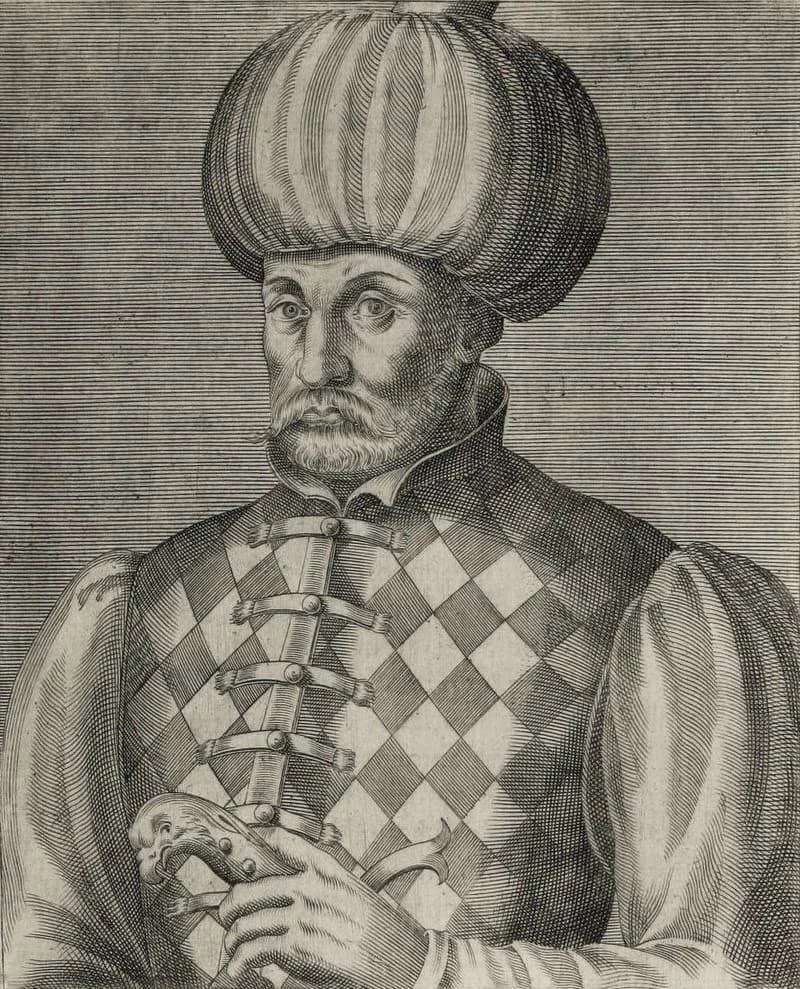
Şehzade (Prince) Mustafa. 1584 engraving. The military saw him as the future sultan
Venetian diplomats did not hide their admiration for the prince either. In February 1553, Ambassador Navagero reported to the Senate that Mustafa was universally beloved and viewed as the rightful heir. Meanwhile, Suleiman was aging and plagued by illness, and the military eagerly anticipated a change of ruler.
For Hurrem's sons, this posed a mortal threat. Selim, Bayezid, and Cihangir—Mihrimah's full brothers—faced execution if Mustafa took the throne. Habsburg diplomats noted as early as 1547 and 1550 that Rüstem sought to eliminate the prince. Furthermore, in 1549 and 1550, Rüstem denied Mustafa border reinforcements when he requested aid against Georgian and Iranian raiders.
The Tent at Ereğli
In the autumn of 1552, Suleiman placed Rüstem in command of the campaign against Persia. Rumors spread through the military camp that the sultan was gravely ill and that the troops urgently needed Mustafa to take charge. Janissaries traveled to Amasya, pledged their loyalty to the prince, and returned. Rüstem then informed the sultan that Mustafa was plotting a rebellion. According to one account, the vizier forged Mustafa’s seal and wrote a letter in his name to the Persian Shah Tahmasp.
On August 28, 1553, Suleiman left Istanbul alongside Rüstem to take personal command of the army. They set up camp near Ereğli, not far from Konya. Mustafa arrived on October 5, where he was received with honor and lavish gifts. 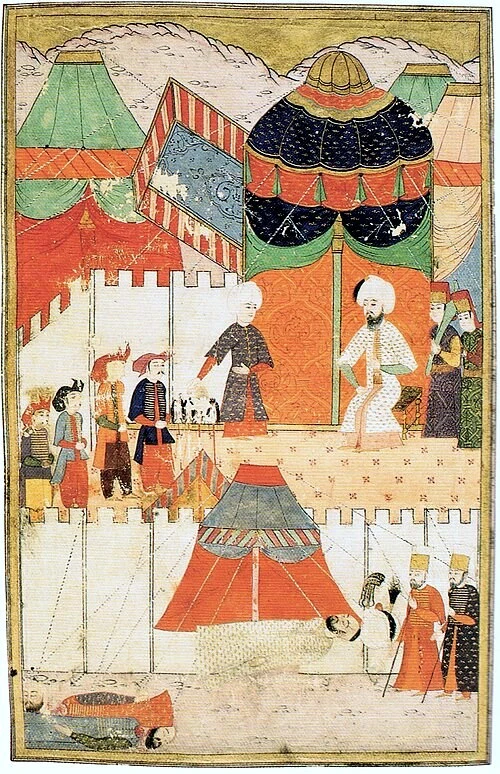
Executioners reporting Mustafa's death to the sultan, his body lying outside the tent. 16th-century miniature
Around noon on October 6, the prince entered his father's tent, leaving his weapons and retinue outside. Inside, executioners set upon him and strangled him after a brief struggle. His body was displayed outside the tent as a stark warning to the troops about the price of treason. Mustafa was 37 or 38 years old.
The prince's mother, Mahidevran, took his body to Bursa for burial. Soon after, Mustafa's young son was also executed. Rüstem was immediately stripped of his post as Grand Vizier.
What Do We Know About Mihrimah's Role?
Popular histories frequently reference Navagero’s "secret reports" regarding the execution. This is a common misconception; he addressed the Venetian Senate in February 1553—eight months before the event occurred. Detailed accounts were later recorded by Ogier Ghislain de Busbecq, the Habsburg ambassador, who claimed to have heard the story directly from an eyewitness. 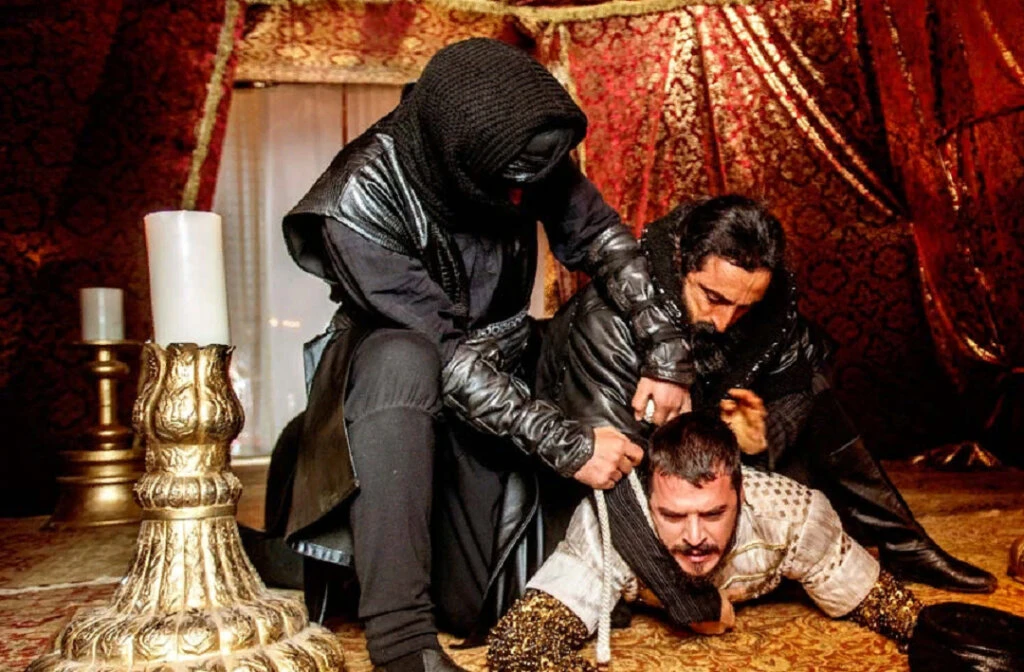
The execution of Mustafa in "The Magnificent Century." There is no direct evidence of Mihrimah's involvement
In nearly every account, Rüstem is cast as the primary villain, with Hurrem sharing the blame. Mihrimah is mentioned less frequently, though public gossip alleged she colluded with her mother and husband. However, these tales lack backing from contemporary witness testimonies. At the same time, the princess's anxiety over her brothers' survival was entirely understandable.
Public reaction to the execution was fiercely outraged. The poet Taşlıcalı Yahya composed a moving elegy on the prince's death, and in 1561, French playwright Gabriel Bounin published the tragedy "La Soltane," emphasizing Hurrem’s role in Mustafa’s demise. Suleiman was forced to dismiss Rüstem. While her husband lived in exile in Üsküdar, Hurrem and Mihrimah repeatedly pleaded with the sultan for clemency. Two years later, Rüstem was reinstated.
In 1555, Kara Ahmed Pasha—who had replaced Rüstem—was executed. Rumors once again pointed the finger at Hurrem, Rüstem, and Mihrimah, as the vizier's death paved the way for Rüstem's return to power.
Advisor to the Throne: From Malta to Szigetvár
Hurrem died in 1558. Following her mother's death, Mihrimah became her father’s chief advisor and confidante. Whenever Suleiman left the capital, she regularly dispatched news and correspondence to him. Ottoman historian Mustafa Selaniki described her as the most powerful princess in the dynasty's history.
In 1565, scholars note, she urged her father to launch an attack on Malta, even offering to fit out 400 ships at her own expense. Suleiman dispatched a fleet of between 200 and 240 vessels, depending on the source. The Great Siege of Malta lasted from May 18 to September 11, 1565, ultimately ending in an Ottoman defeat. 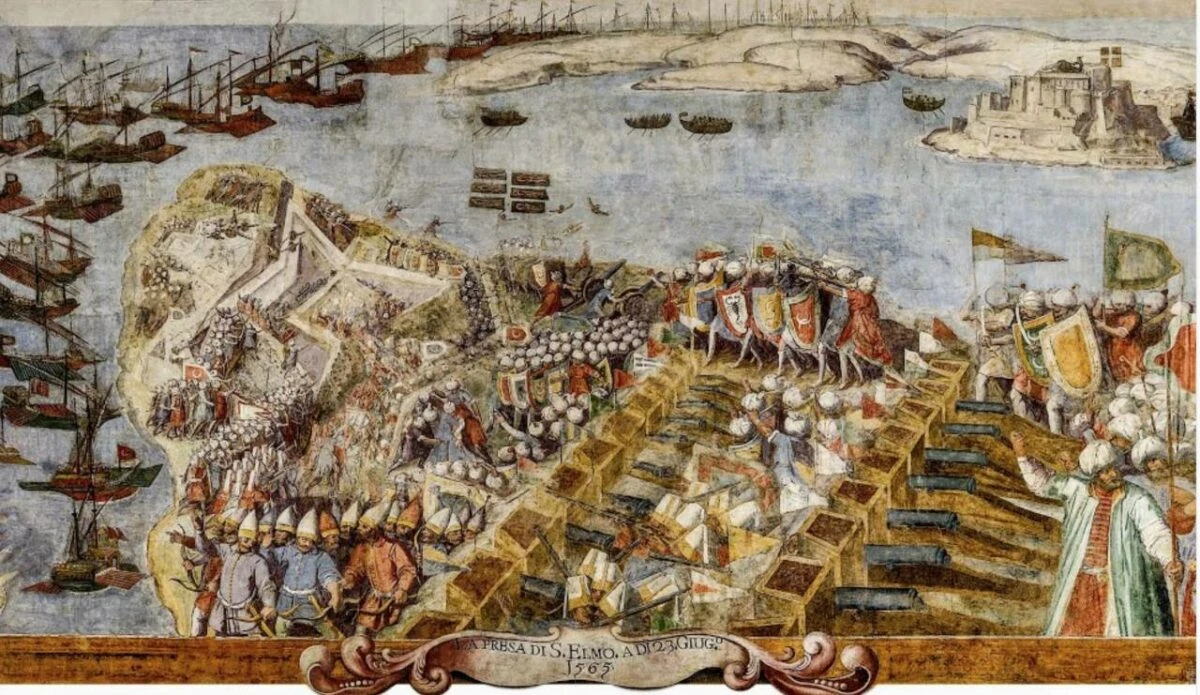
The capture of Fort Saint Elmo during the Siege of Malta in 1565. Painting by Matteo Perez d'Aleccio, late 16th century
She also strongly supported the subsequent campaign in Hungary in 1566. Suleiman died during the Siege of Szigetvár, and Hurrem’s son, Selim, ascended the throne.
Popular accounts often claim that Mihrimah personally commissioned the construction of 400 galleys for the navy. However, there is no reliable evidence confirming this; historical records document only her promise to do so.
Sister to the Sultan: Money, Letters, and Diplomacy
Selim II took the throne in 1566, eventually earning the epithet "the Sot" or "the Drunkard." The new sultan urgently needed funds, and Mihrimah lent him 50,000 gold coins. Considered the wealthiest woman of her century, she frequently provided loans to the imperial treasury. She remained a trusted advisor to her brother, and Turkish historians note that she effectively fulfilled the role of Valide Sultan—the senior female figure of the royal house. 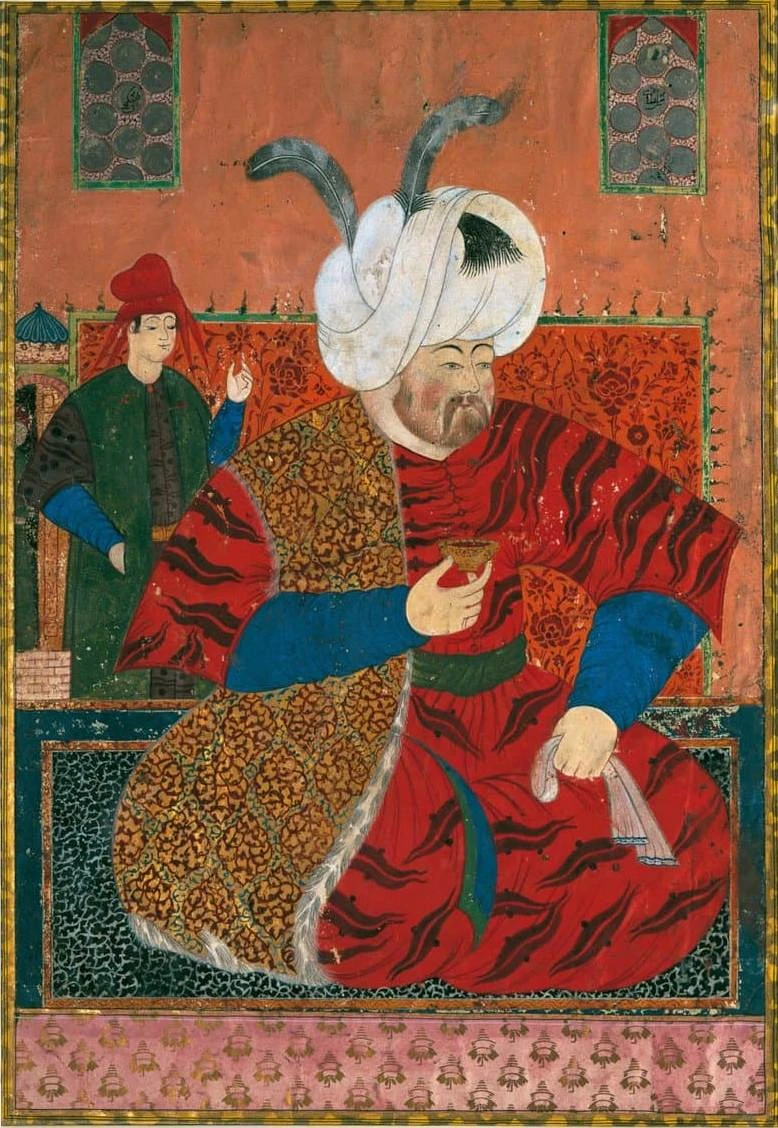
Sultan Selim II. Late 16th-century miniature. His sister supported him with counsel and funds
Mihrimah was frequently sought after for patronage. In 1566 and 1571, ambassadors from the Republic of Ragusa (Dubrovnik), a city-state on the Adriatic, appealed to her to champion their interests before the sultan. During years of crop failure, the republic survived thanks to Ottoman grain supplies, which Mihrimah actively helped secure. 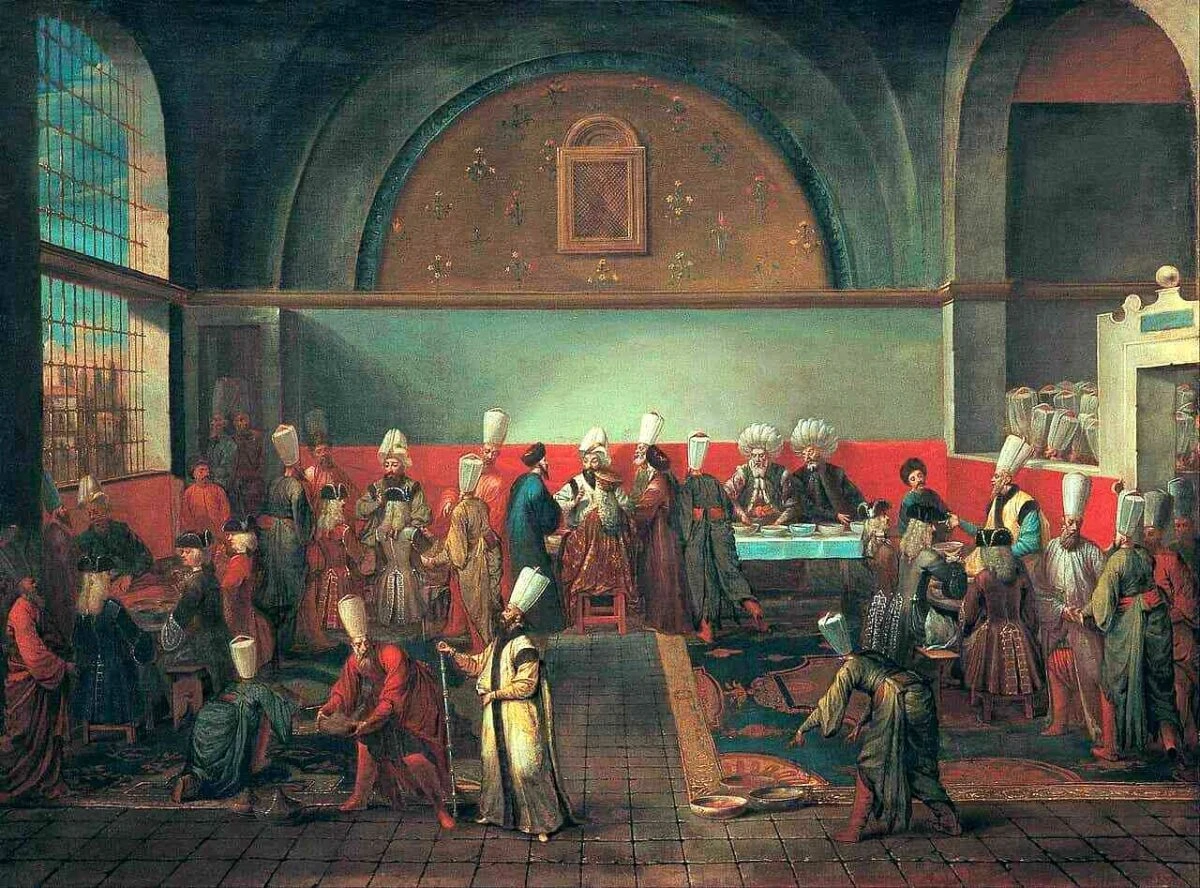
Foreign ambassadors at Topkapi Palace. Painting by Jean-Baptiste Vanmour, 18th century
In 1575, under Sultan Murad III, Mihrimah’s daily stipend was set at 600 akçe. To put this in perspective, a senior professor at the prestigious Suleymaniye madrasa earned just 50 akçe per day.
Together with her niece Ismihan, Mihrimah intervened on behalf of two Ottoman women captured at sea who had ended up at the court of Queen Mother Catherine de' Medici. In 1576, the princess provided a lavish dowry for her granddaughter Saliha upon her marriage to Yusuf Sinan Pasha, backing her new grandson-in-law against his rivals at court.
Mosques, Waqfs, and the Legend of Mimar Sinan
Mihrimah commissioned her finest mosques from Mimar Sinan, her father's chief imperial architect. The first stands in Üsküdar, on the Asian shore of the Bosphorus. Construction began around 1543–1544 and was completed in 1548. The complex features two minarets, alongside a madrasa, soup kitchen, medical clinic, and primary school. 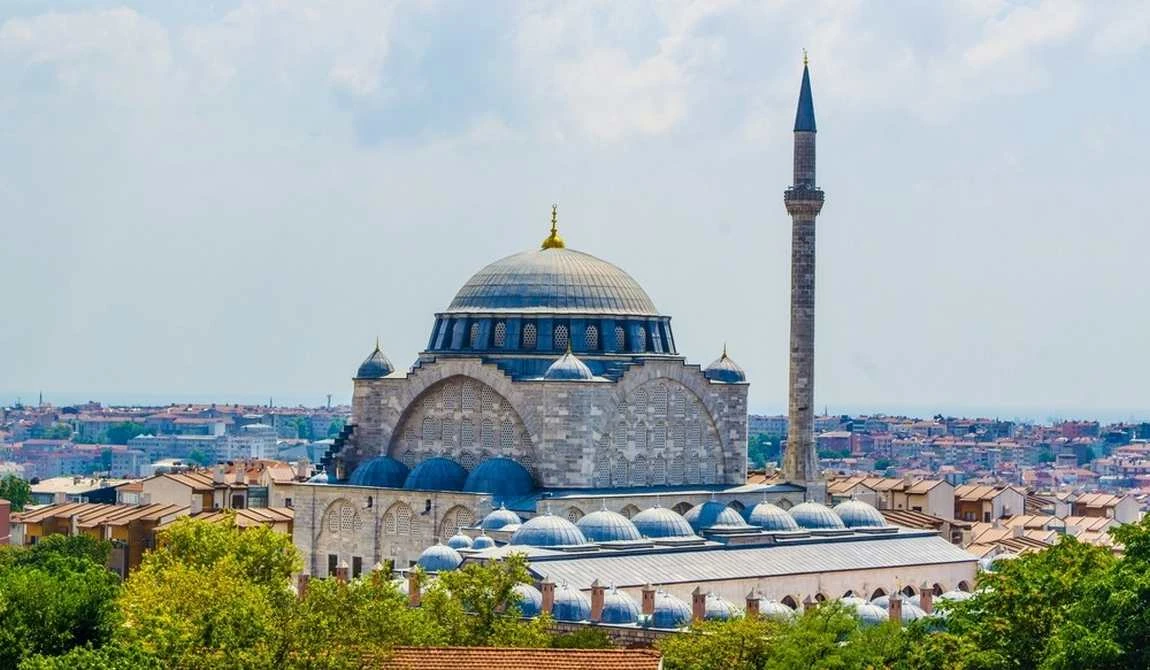
Mihrimah Sultan Mosque in Üsküdar, Istanbul. Built by Mimar Sinan between 1543 and 1548
Her second mosque stands near the Edirnekapı Gate along the western walls of the old city. Built between 1562 and 1565, it features a single, soaring minaret.
Expenses were covered by waqfs—charitable endowments funded by revenue from landholdings and shops. Mihrimah’s original endowment charter is preserved in the Directorate General of Foundations archive in Ankara. It lists a 16-cell madrasa, 8 guesthouses, stables, a warehouse, and an inn. Between 1547 and 1732, 185 professors taught at her Üsküdar madrasa. Additionally, Mihrimah funded repairs to the water supply in Mecca and established a trust that supplied iron for the navy.
Mihrimah Sultan Mosque at the Edirnekapı Gate. Its single minaret is visible from across Istanbul
A romantic legend surrounds these buildings: it is said that Sinan fell hopelessly in love with the princess and designed the two mosques so that on March 21, the sun sets behind one just as the moon rises above the other. Turkish scholar Ekrem Buğra Ekinci dismisses this story as a modern fictional invention. Since Mihrimah's exact birth date remains unknown, the date used in the legend is purely fictional.
Illness and Final Years
Shortly after her marriage, Mihrimah developed a chronic condition resembling rheumatoid arthritis, which plagued her for the rest of her life. In 1554, a miscarriage nearly cost her her life. The TV series offers a dramatic departure from reality: in its fourth season, she suffers from a mysterious rash and falls into a passionate romance with Pedro, a Spanish physician treating her.
In 1561, Rüstem died of dropsy (edema). Mihrimah completed the construction of his mosque in the Tahtakale district. She subsequently offered her hand in marriage to the new Grand Vizier, Semiz Ali Pasha, but he declined, and she never remarried. 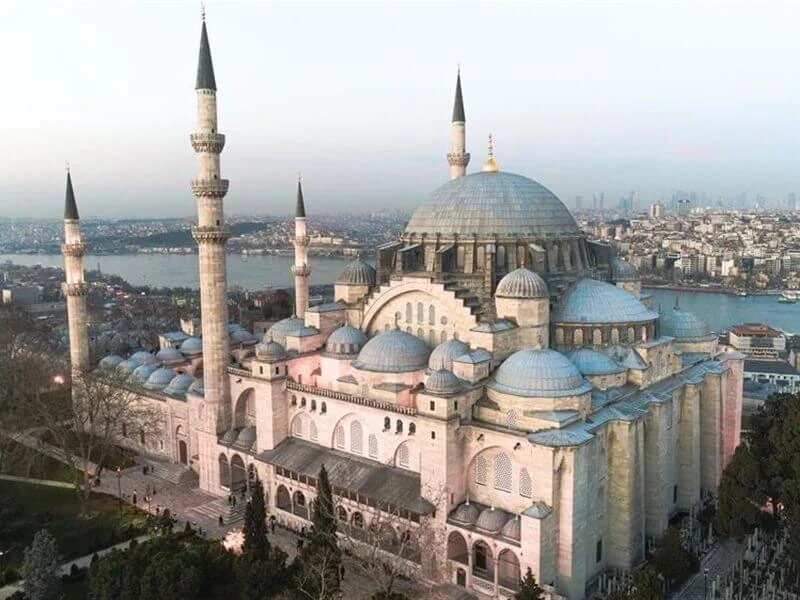
The Süleymaniye Mosque in Istanbul. The complex houses the mausoleum of Suleiman the Magnificent
Mihrimah passed away on January 25, 1578, at the age of 55, having outlived all her brothers. She was laid to rest in her father’s mausoleum at the Süleymaniye complex—the only one of Suleiman's children granted this honor. Historians record that she was mourned most deeply by the poor, whom she had helped so generously throughout her life. 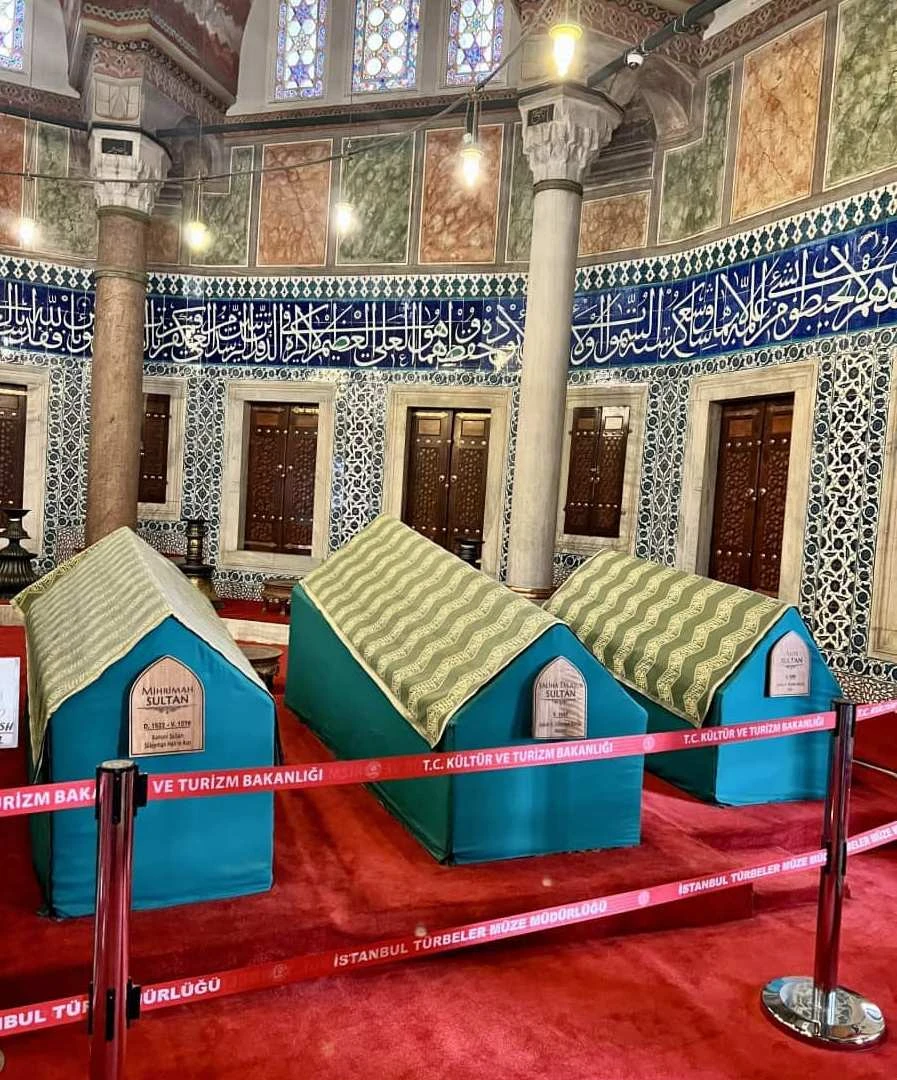
Tombs inside the mausoleum of Suleiman the Magnificent. First on the left is Mihrimah's grave
The real-life Mihrimah was neither a helpless victim nor a cold-blooded "angel of death." She managed immense wealth with strategic skill, commissioned grand architectural masterworks, corresponded with foreign monarchs, and advised sultans. While historians consider her potential involvement in Mustafa's execution possible, it remains entirely unproven. Therein lies the essential divide between historical fact and historical drama: one relies on documented record, the other on centuries of rumor.
Do you think Mihrimah helped her mother and husband plot Mustafa's downfall, or was she simply scapegoated? Let us know in the comments below!