The Confession That Sent Two Psychopathic Lovers Straight to the Electric Chair (4 Photos)
On March 1, 1949, the clatter of typewriters echoed relentlessly through the Grand Rapids Police Department in Michigan as detectives typed up a suspect's confession. 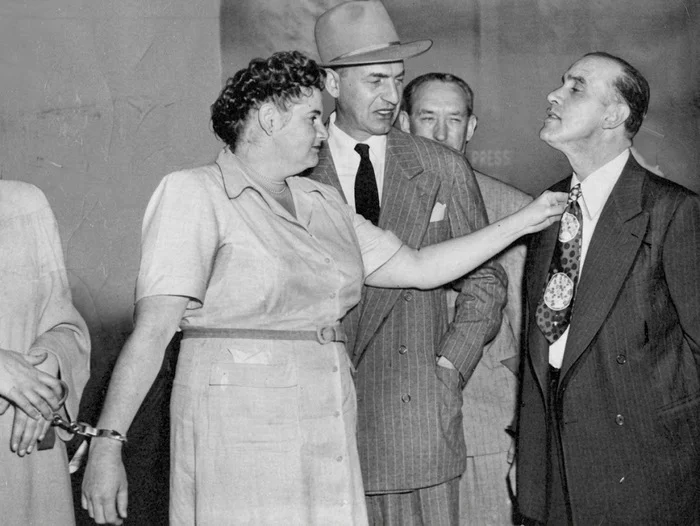
The thinning-haired man sitting across the table spoke eagerly, methodically, and in chilling detail. He rattled off addresses, amounts from cashed checks, methods of murder, and exact burial locations. By the end of the interrogation, 73 single-spaced, typewritten pages lay on the desk—a meticulously documented full confession.
The killer was utterly convinced he had outsmarted the system. He was relying on a single legal loophole: Michigan had abolished the death penalty back in 1847. The maximum sentence a local court could hand down was life imprisonment. To guarantee his survival, he laid out every dirty detail for investigators, including crimes committed in other jurisdictions. But that cold calculation, combined with a sheer ignorance of interstate legal procedures, sent him and his accomplice straight to the electric chair at Sing Sing.
The saga of the Lonely Hearts Killers is a textbook case of someone tightening their own noose while trying to exploit procedural loopholes.
It all began a day earlier, on February 28. Patrol officers responded to a call at 2221 Havana Avenue. Neighbors had raised the alarm: 28-year-old widow Delphine Downing and her two-year-old daughter, Rainelle, hadn't been seen in days. The widow’s dog was howling with hunger in the yard, and newspapers were piling up in the mailbox. When officers knocked, a balding man answering to the name Charles Martin opened the door. Beside him stood a heavy-set woman weighing well over two hundred pounds, whom he introduced as his sister, Carmen. With consummate politeness, they explained that the homeowner had rushed off to Chicago on urgent business and asked them to house-sit.
The officers could have filed a routine check report and left. But one patrolman caught a scent: the faint, unmistakable smell of damp soil and fresh mortar wafting through the kitchen and hallway. The house was fully furnished, with no visible signs of renovation anywhere on the ground floor. The police asked to inspect the basement. "Charles Martin" shrugged and led them downstairs.
In a corner of the basement, they spotted a patch of floor covered in fresh, uncured concrete. The suspects were immediately separated. Forensics units equipped with crowbars were called to the scene. Breaking through the concrete took hours. Beneath the slab lay loose dirt, and beneath that, two bodies wrapped in blankets. Delphine Downing was recovered first; the coroner noted a gunshot wound to her head. Deeper down, they found two-year-old Rainelle. An examination of her lungs revealed water—the toddler had been drowned. 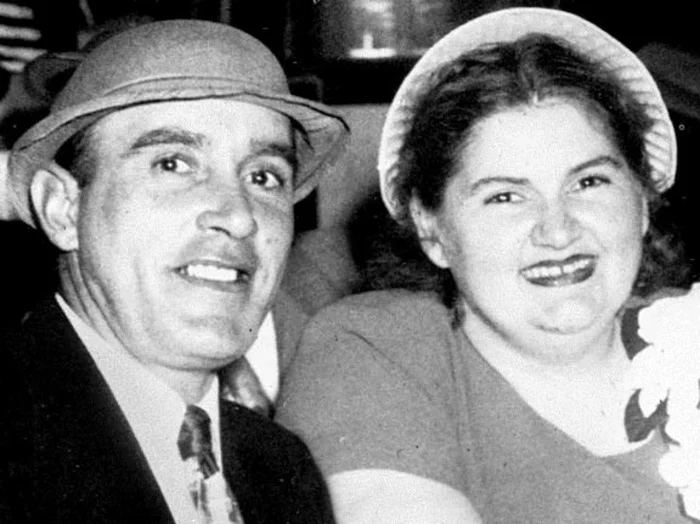
Raymond Fernandez and Martha Beck
At the station, "Charles Martin" quickly gave his real name: Raymond Fernandez, a Hawaii native and U.S. citizen. His "sister" turned out to be Martha Beck, a former nurse from Florida. Once their identities were confirmed, Fernandez—eager to play legal chess with investigators—began laying out his confession.
Fernandez's backstory is still studied in forensic psychiatry departments today. Prior to December 1945, he had no criminal record. He worked as a merchant marine and was described as quiet and unremarkable. Then came a horrific accident. A heavy steel hatch cover gave way on a cargo ship off the American coast, striking Fernandez squarely on the head. Hospital records document a massive depressed skull fracture and severe damage to his frontal lobes.
Neuroscience has long since established that the frontal lobes govern social control, empathy, and impulse regulation. Upon his release from the hospital, Fernandez was a changed man. He began losing his hair rapidly and became aggressive and a pathological liar. Before long, he landed his first prison sentence—a year in a Tallahassee penitentiary for stealing from a woman in Alabama. In prison, he shared a cell with a Haitian inmate who taught him basic voodoo practices. Fernandez became convinced he possessed a magical power over women, believing he could bend them to his will through letters. Once free, he began systematically replying to personal ads in Lonely Hearts clubs.
His scheme was simple, yet effective. He would initiate correspondence with lonely women, promise marriage, visit them, steal their cash and valuables, and vanish. At this stage, he had not killed anyone.
In 1947, Fernandez traveled to Pensacola, Florida. His latest pen-pal mark was Martha Beck, who worked at a local hospital for disabled children. Since adolescence, Beck had suffered from glandular dysfunction, severe obesity, and deep-seated insecurities. She had two children out of wedlock. Fernandez planned to stick to his usual playbook—drain her savings and run. But Beck saw right through him. Instead of calling the police, she glommed onto him with a desperate, terrifying grip. A documented fact: to stay with Fernandez, she quit her job, packed her bags, and surrendered her two young children to the Salvation Army, severing all ties with them forever.
Together, they forged a new strategy. Fernandez would target wealthy widows, while Beck tagged along under the guise of his stern yet loving sister. Having a sister present instantly allayed any suspicions of a scam. The problem lay in Beck's psychological profile: court psychiatrists would later diagnose her with a severe form of pathological jealousy. Whenever Fernandez retired to the bedroom with a victim to seal the marriage promise, Beck would fly into fits of blind, uncontrollable rage. 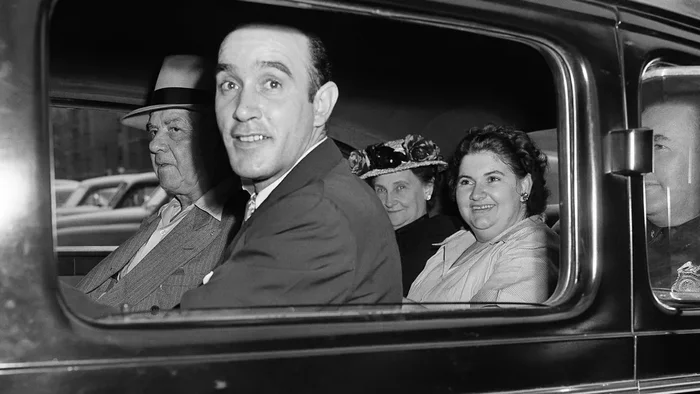
Their first known fatality occurred in August 1948. The victim was 50-year-old Myrtle Young of Arkansas. Fernandez officially married her in Cook County, Illinois. Beck, present as the "sister," threw a jealous tantrum. The pair dosed Young with a heavy dose of barbiturates, put her on a bus, and sent her home to Little Rock. She slipped into a coma en route and died shortly after in a hospital. Local police suspected no foul play, attributing her death to natural causes—until Fernandez confessed to it himself in Michigan.
Fernandez then gave Michigan detectives a detailed account of an incident from December 1948 involving Janet Fay, a deeply religious 66-year-old from Albany, New York. Fernandez had charmed her so thoroughly that she cashed $6,000 in checks and joined him at a rented apartment in Valley Stream, Long Island.
On January 2, 1949, Fay noticed strange behavior from her fiancé and his sister. An argument broke out. According to court records, Beck grabbed a hammer and struck the elderly woman over the head, and Fernandez helped strangle her. The couple then went to a store, bought a large steamer trunk, and stuffed the body inside. Case files include testimony from a hired truck driver who hauled the trunk across town, completely oblivious to its contents. Fernandez and Beck rented a house in South Ozone Park, Queens, dug a deep pit in the basement, encased the trunk in concrete, and headed off to Michigan—toward Delphine Downing.
Delphine’s death in February 1949 was a mirror image of the New York crime. Once again, jealousy reared its head. When the widow started asking questions, Fernandez slipped a heavy sedative into her food. As she passed out, two-year-old Rainelle began crying loudly. The toddler's screams enraged Beck. She began strangling the child while Fernandez shot the unconscious Delphine in the head with a revolver. Rainelle survived the strangulation, her chest rattling as she gasped for air. Beck filled a washbasin with water and held the girl’s head under until she stopped breathing. The following day, they went to a hardware store to buy cement.
Detectives in Grand Rapids listened to the narrative, methodically filing page after page. Then they picked up the phone and dialed New York. New York detectives rushed to the address on 115th Avenue in Queens. They headed into the basement and broke through the concrete floor. It took crime scene technicians hours of pickaxe work to unearth the trunk containing Janet Fay's body.
And that was precisely when Fernandez's legal trap slammed shut with a deafening crash. The governor of New York at the time was Thomas Dewey—a tough politician, former prosecutor, and staunch advocate of capital punishment. The moment New York authorities confirmed a murder on their soil, the Bronx District Attorney's office filed an immediate extradition request. Michigan authorities complied without a second thought. They knew these serial killers deserved the death penalty. Why shoulder the cost of keeping them in prison for life on Michigan taxpayers' dime when New York was ready to put them in the electric chair? The extradition paperwork was signed in record time. Realizing they were being shipped to a jurisdiction with capital punishment, Fernandez and Beck tried to recant their 73-page confession, claiming police coercion. But the transcripts were already the bedrock of the prosecution's case. 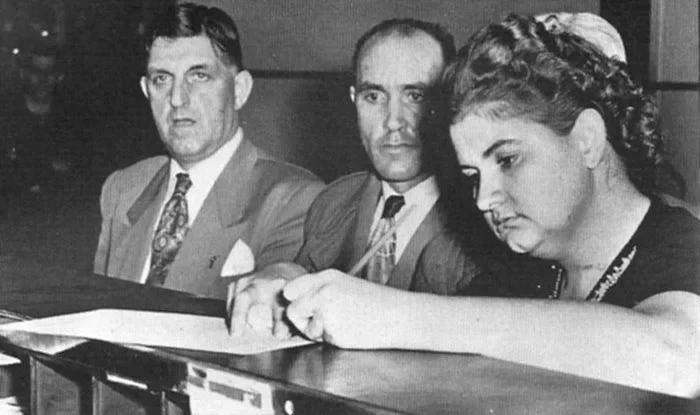
The trial opened in the Bronx in the summer of 1949. Reporters from across the nation converged to cover the "Lonely Hearts Killers." The trial lasted 44 days. The defense rested its case almost entirely on Fernandez’s medical history, attempting to invoke the M'Naghten rule—the oldest legal standard for insanity, under which a defendant is deemed insane if a brain disease prevented them from understanding the nature of their act.
The defense called Dr. Fredric Wertham, one of the premier forensic psychiatrists of the era, to the stand. He had spent hours interviewing the defendants in their cells. His conclusion was unequivocal: while Fernandez suffered from organic brain damage, deviant behavior, and a superman complex, he was fully capable of distinguishing right from wrong.
The prosecution thoroughly dismantled the insanity defense. Their primary weapons weren't emotional appeals, but canceled checks, receipts, and freight bills. The prosecutor methodically laid out the logistics of the crimes. A madman acting on impulse doesn't hire a truck to move a trunk. A man detached from reality doesn't cash a victim's checks at a bank using forged documents. Someone in a state of delusion doesn't head to a hardware store for two bags of cement the morning after a murder. They planned, covered their tracks, managed their loot, and moved across state lines. It was cold, calculated murder.
Throughout the trial, Martha Beck behaved in ways utterly disastrous to her own defense. She threw tantrums, screamed at witnesses, and scribbled love notes to Fernandez on scraps of paper right from the defense table. She demanded that guards seat her closer to him. Fernandez tried to shield her, claiming she had killed no one and was merely an innocent bystander. But testimony from drivers and clerks, forensic analysis of the murder weapons, and their own original confessions in Michigan sealed their fate.
The jury deliberated for just 14 hours. The verdict was unanimous: guilty of first-degree murder. The judge handed down the maximum sentence, leaving no room for maneuver—death for both.
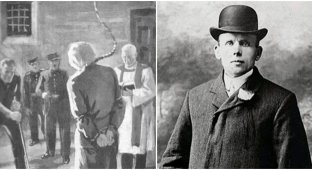
Appeals dragged on for nearly two years. Defense attorneys took the case all the way to the Supreme Court, citing extradition violations and media bias, but every plea for clemency was rejected. On March 8, 1951, the sentence was carried out at Sing Sing. They remained on death row until the very end. Records show that Beck ate constantly while awaiting execution, requesting a massive final meal of fried chicken and French fries. In his last statement to reporters, Fernandez declared that the press knew nothing about love, calling what he and Beck shared a "great affection."
That night, executioner Joseph Francel pulled the lever. Fernandez was led into the execution chamber first. Minutes later came Martha Beck. Due to her extreme weight, guards had to use custom-sized straps to secure her to the electric chair.
I often see true-crime communities try to paint couples like this as tragic star-crossed lovers—dark tales of fatal passion, us-against-the-world criminal romanticism. But the reality was far grimmer. It smelled of damp dirt and wet concrete in a stranger's basement. It was the crushed skull of a grandmother. It was a crying toddler drowned in a washbasin by a grown woman simply because her cries disrupted her private time with her lover. There was no grand romance here. Just two vile monsters who deserved each other.