Chinook Salmon: The Pacific’s Giant Fish Hunted Even by Orcas (8 Photos)
Try saying "chavycha" three times fast. A great tongue twister, but this fish offers far more than just a workout for your vocal cords. Behind its funny-sounding Russian name lie 40 to 90 pounds of tender, rich meat and heaps of top-grade red caviar. Bow down to her majesty—the undisputed queen of game fish! 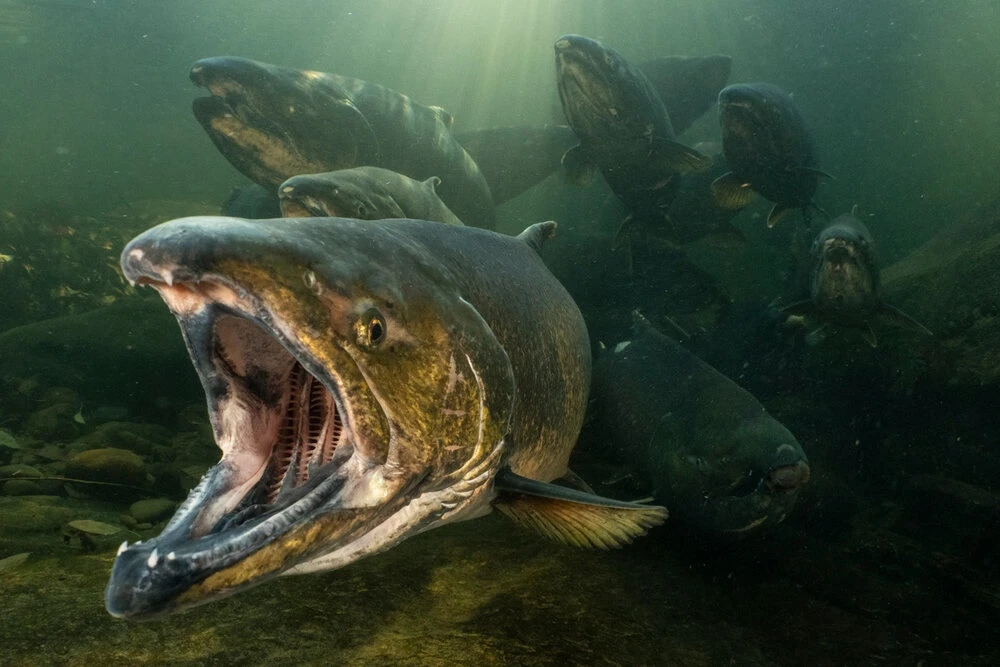
The Chinook—also known as king salmon—is the largest of all Pacific salmon. A typical adult grows to about three feet long, while record-breakers can stretch over five feet and weigh upwards of 110 pounds. At first glance, it looks much like its relatives: silver sides and dark speckles along its back. But ichthyologists can spot a Chinook anywhere thanks to two telltale signs: black gums on its lower jaw and 15 to 19 branchiostegal rays along its gills, compared to around ten in other salmon species. 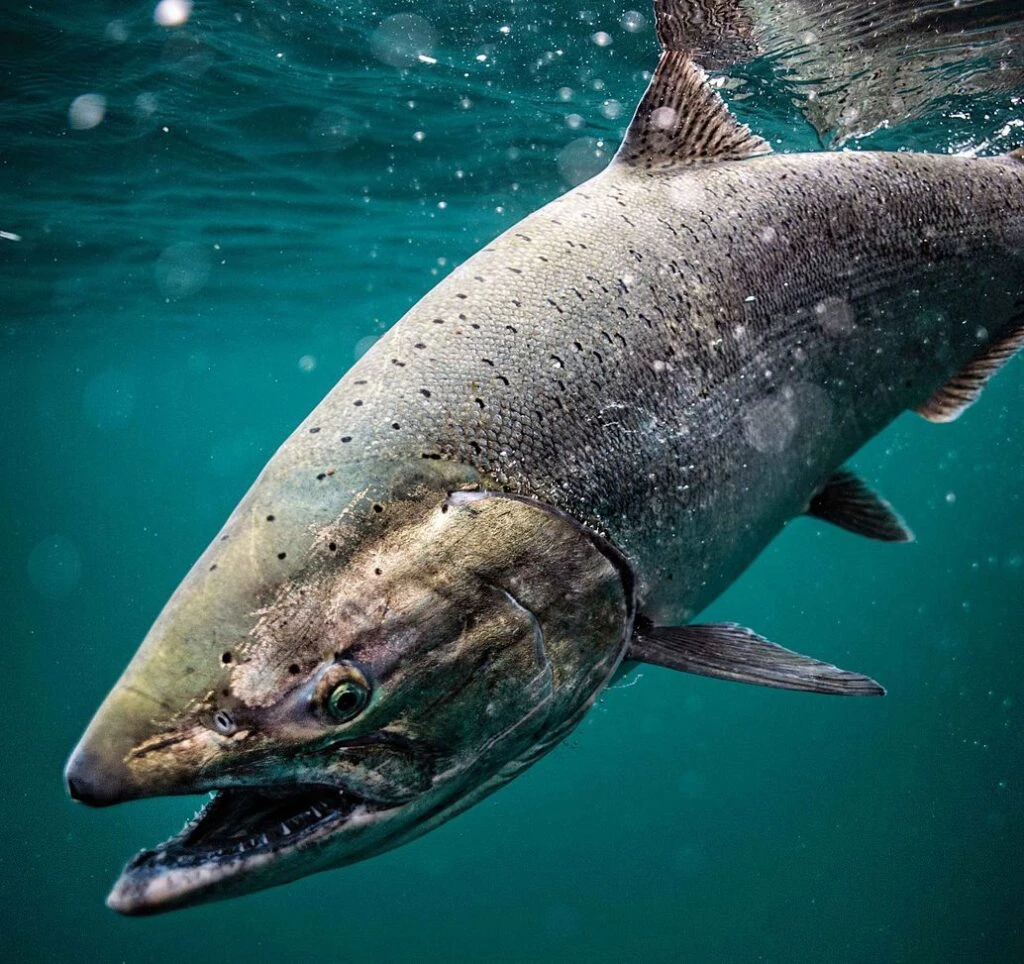
Come spawning season, the males undergo a terrifying transformation. Their bodies darken into a deep red, their jaws hook into fearsome kypes, and sharp teeth emerge—turning them into river thugs. Seeing these suitors, females turn reddish too, but otherwise keep their usual appearance. 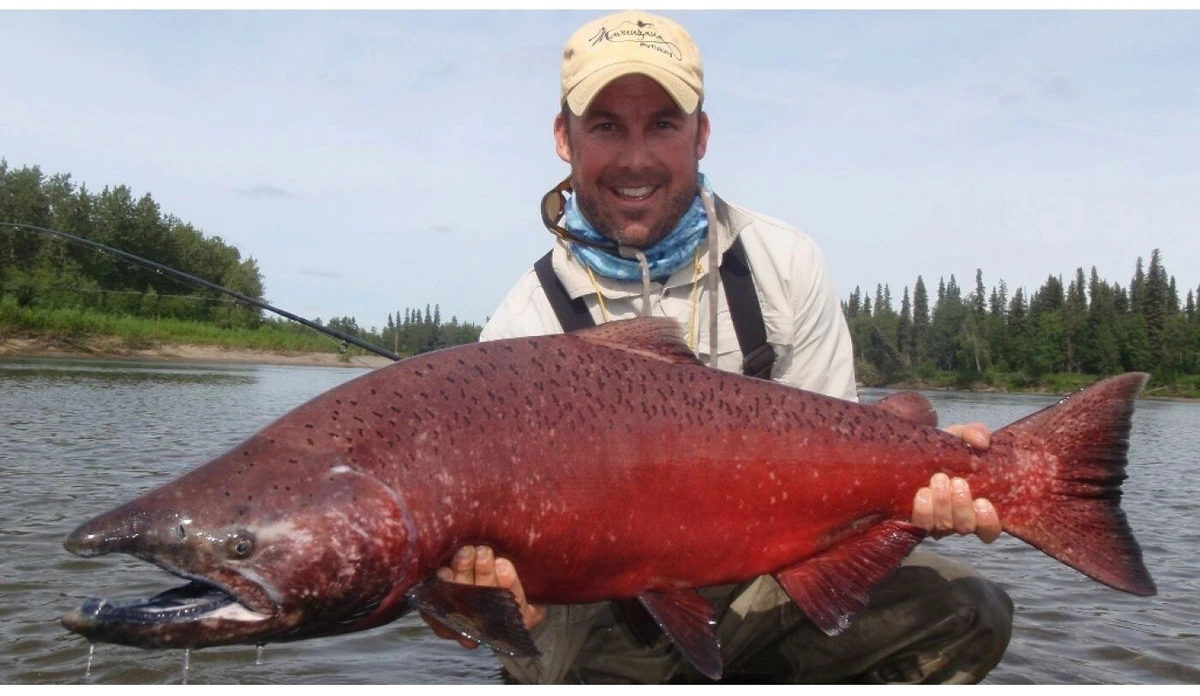
Even the toughest anglers wouldn't pass up a photo with a beauty like this!
Chinook meat is the richest among Pacific salmon, with a fat content around 10–12%. It’s tender, deeply colored, and packed with omega-3 fatty acids, vitamins A, D, and B-complex, as well as selenium, phosphorus, potassium, and other essential minerals. But the real treasure is the caviar. Among the largest of all salmon roe, it’s rich, delicate, slightly savory, and completely free of bitterness. Is your mouth watering yet? 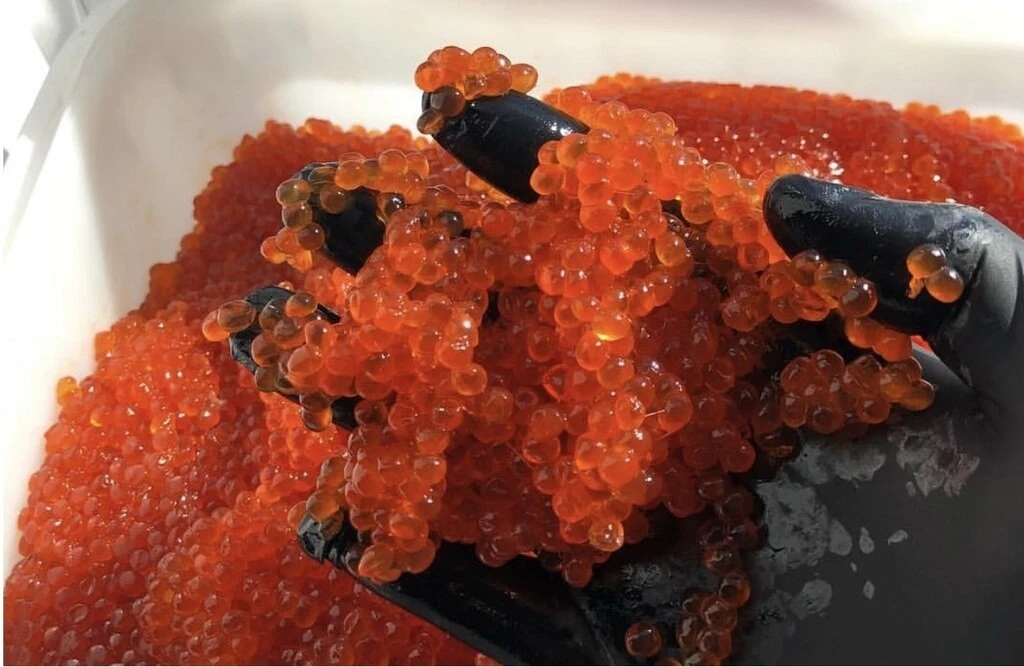
Behold: red gold!
Interestingly, Chinook isn't always red on the inside. Roughly one in twenty has snow-white flesh because of a genetic trait that prevents them from absorbing carotenoids—the crustacean pigments that give salmon their color. Once dismissed as defective, "white Chinook" now commands a premium price as a rare delicacy. Cold water is the Chinook's natural element; it can't tolerate warm temperatures. Its native habitat spans the North Pacific, from Kamchatka, Chukotka, and Alaska down to California. Humans have also introduced it even further afield—to New Zealand, Chile, and North America's Great Lakes. Thus, the reputation of this king fish has spread far beyond its native seas. 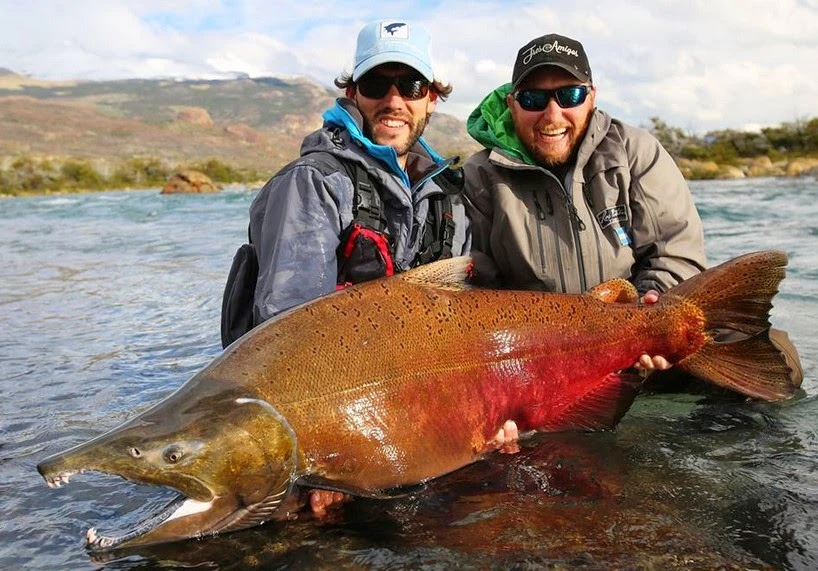
"Fellas, I don't know how, but we just reeled in a crocodile in Kamchatka!"
Almost everywhere it swims, the Chinook holds a royal title. In North America, it's known as King Salmon. In Japan, it goes by
masunosuke
, where
suke
refers to an ancient courtly rank—making it the "nobleman of salmon." And in Kamchatka, locals have long dubbed it the "Tsar Fish," with indigenous folklore valuing its meat above gold. 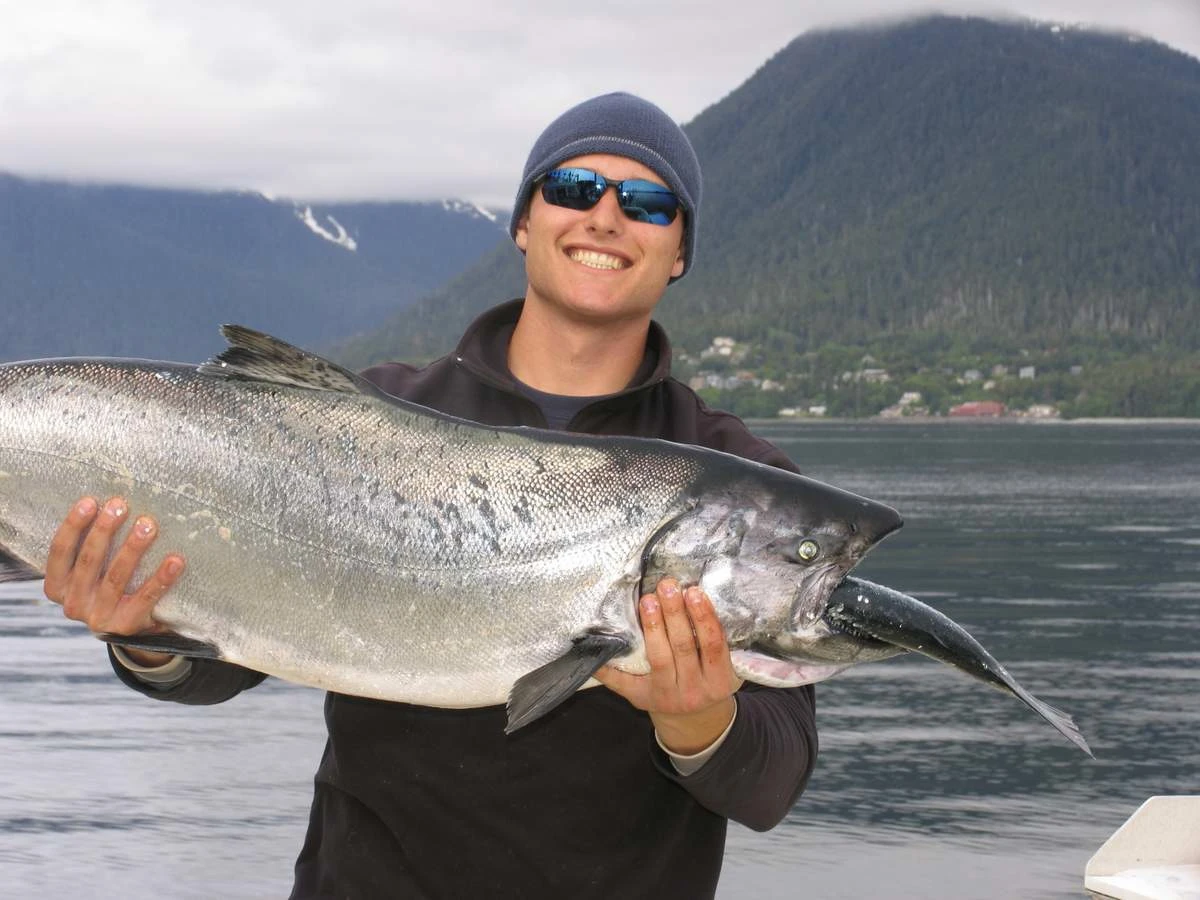
Special offer: Catch a king salmon and get 15% extra free!
This aquatic royalty is prized by more than just humans. Off the coast of North America, a resident population of killer whales feeds almost exclusively on Chinook salmon. When salmon stocks drop, the orcas starve—meaning the fate of an entire pod of apex predators hinges on this single species. The tough fish of the North also know devotion. As an anadromous species, the Chinook spends its adult life feeding in the ocean before returning to fresh water to spawn. True to its noble standing, this particular fish won't lay eggs just anywhere. To reach the perfect spot, this picky creature undertakes an incredible journey: up the Yukon River in Canada, it swims upstream for over 1,800 miles (3,000 kilometers). It doesn't eat a single bite along the way, battling rapids and leaping over waterfalls. Upon reaching her destination, the female digs a gravel nest for her eggs using powerful sweeps of her tail. WITH HER TAIL! 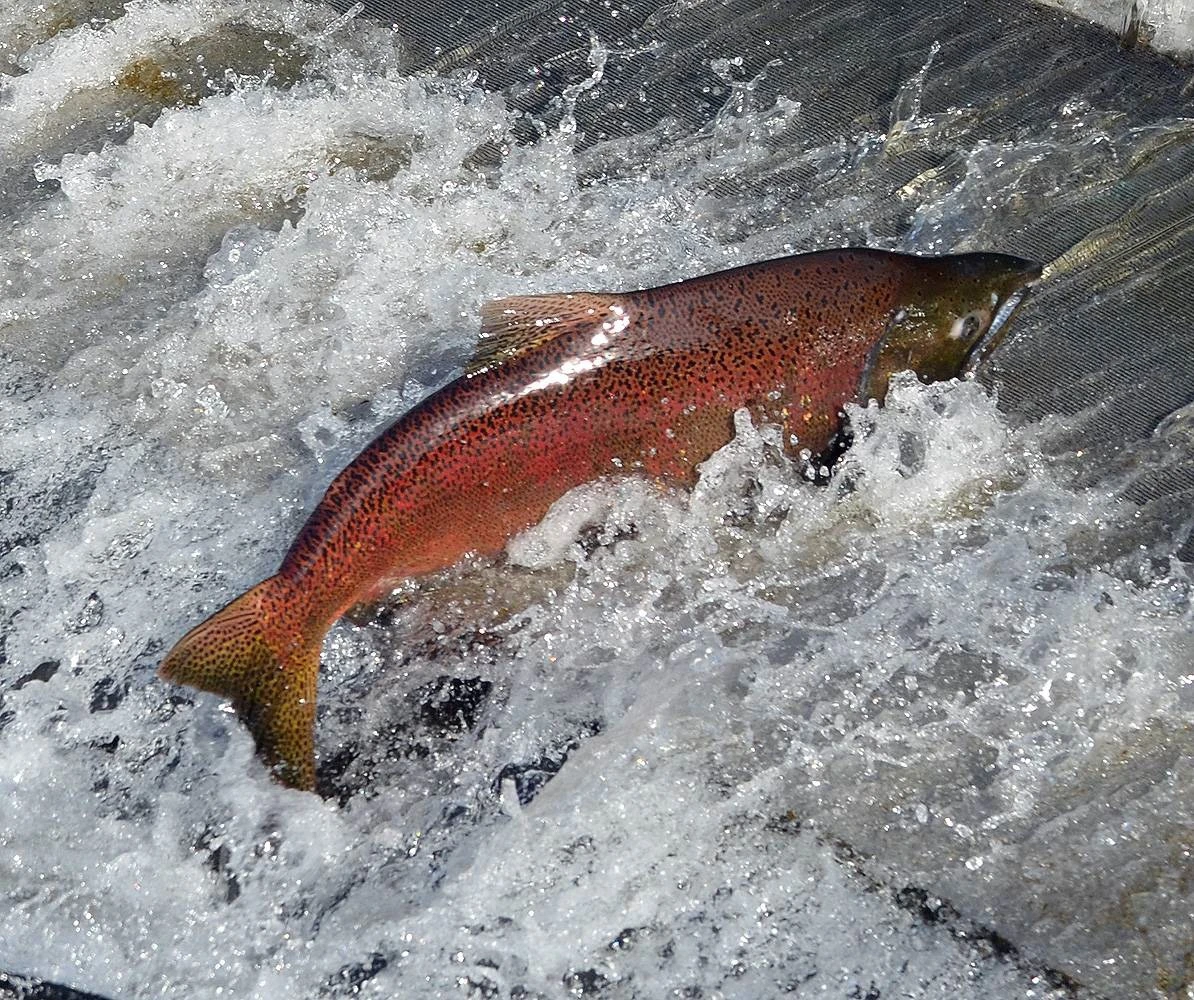
I will survive! (Or not...)
Such a marathon comes at the ultimate price. Once in fresh water, the fish stops feeding, its digestive system shuts down, and its body consumes itself. After spawning, both males and females rapidly weaken and die within days. But their sacrifice is not in vain: their decomposing bodies enrich the river ecosystem. Bears, birds, and insects feast on them, transferring ocean-derived nitrogen into the soil and surrounding trees, ultimately bolstering the food supply for the next generation. The parents quite literally give everything to their young. 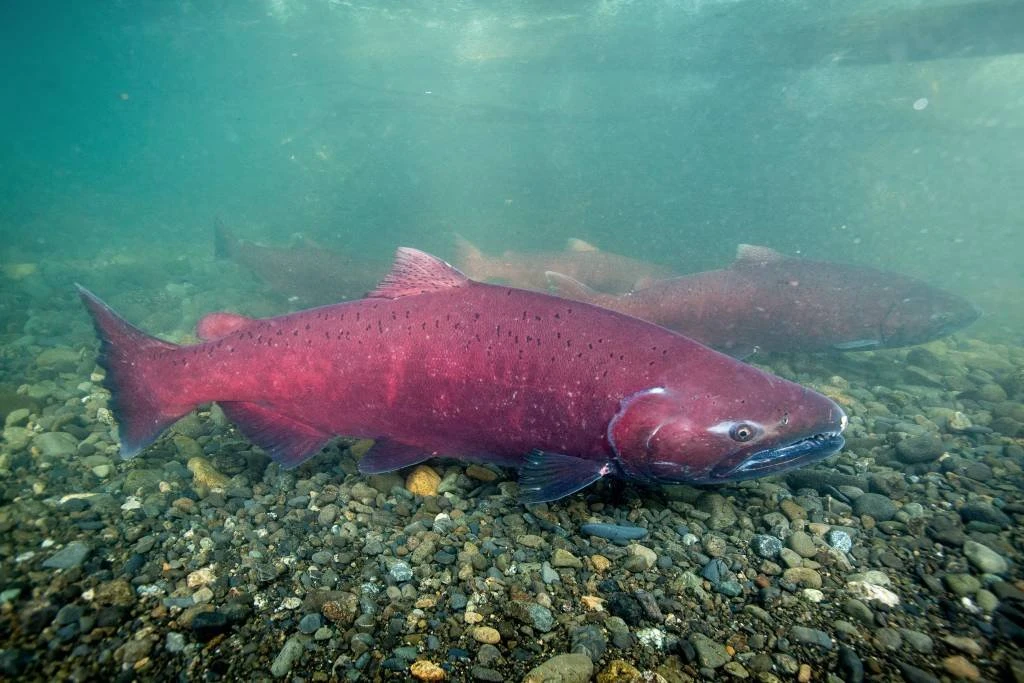
"Ah, and I really wanted to bounce the grandkids on my knee..."
Yet, there are sneaky opportunists. Some males never migrate to the ocean at all; instead, they mature right in the river, remaining no larger than a human palm. These dwarf males sneak in during spawning to fertilize eggs alongside the giant pairs—a phenomenon well known to Kamchatka ichthyologists. Soon, the eggs hatch into fry. They spend anywhere from three months to two years in fresh water before heading out to sea. Years later, as full-grown adults, they will navigate back to their native stream with uncanny precision to repeat the cycle—sacrificing themselves to give life to a new generation of king salmon.