The wetapunga is a giant insect native to New Zealand, closely related to crickets and grasshoppers. Once reduced to a single island, the species now thrives across multiple protected sanctuaries thanks to captive breeding and relocation efforts. Nearly 11,000 individuals have been released into the wild over the past 15 years. 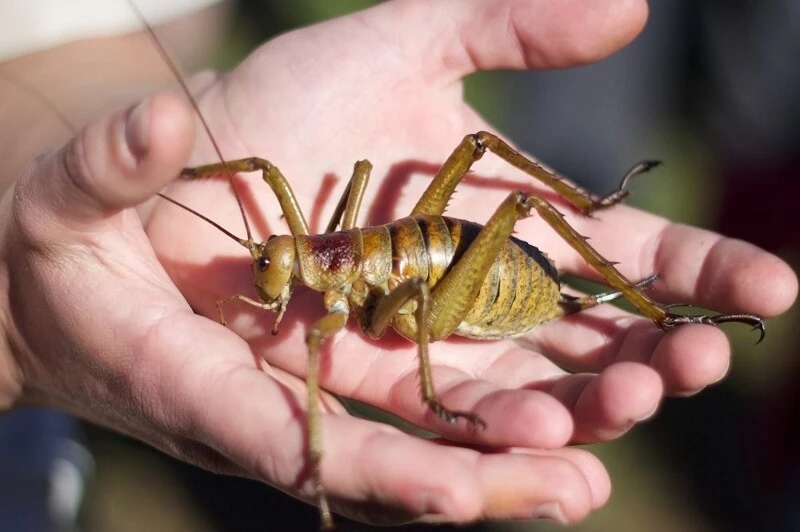
A wetapunga released on Tiritiri Matangi Island on May 1, 2014. Photo: Dinobass; CC BY-SA 4.0.
The wetapunga (Deinacrida heteracantha) is considered the heaviest species of Orthoptera in the world. Deforestation destroyed much of its natural habitat, while invasive predators like rats and stoats wiped out remaining populations. Eventually, the wild population survived on just a single haven: Little Barrier Island.
Surveys conducted between 2005 and 2009 revealed that wild numbers were too low to rely solely on direct translocations. To boost their population, several insects were taken to Butterfly Creek for captive breeding. Their offspring were released onto Motuora Island in 2010 and Tiritiri Matangi Island in 2011. 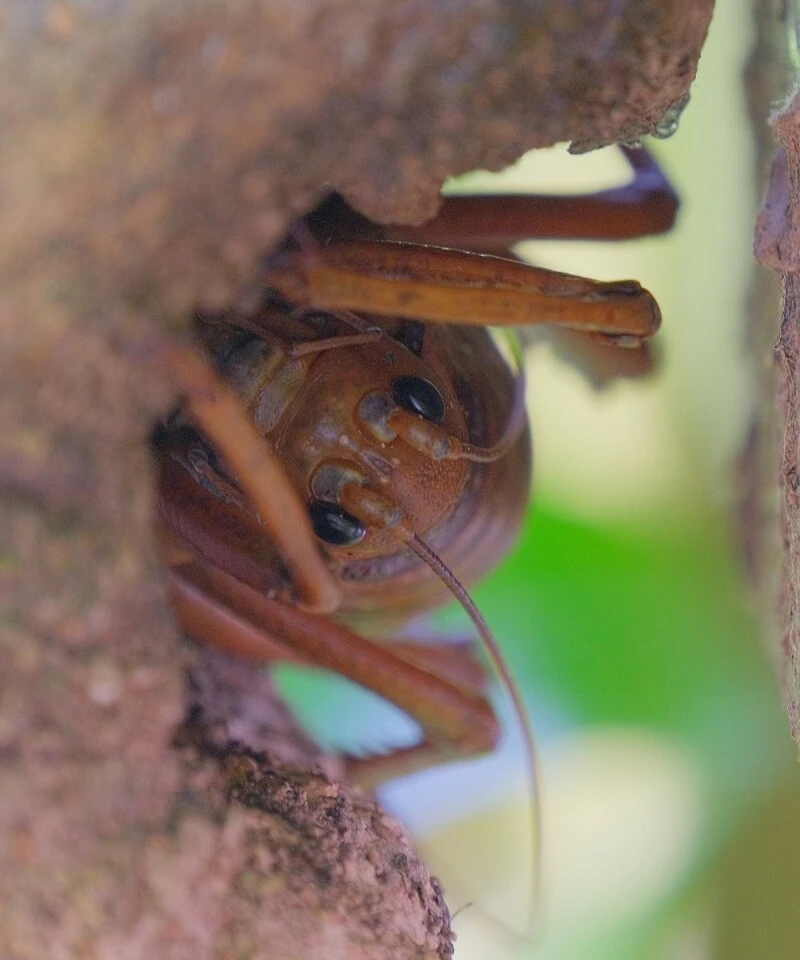
A live wetapunga inside a tree roost on Tiritiri Matangi Island. Photo: Pseudopanax at English Wikipedia; Public Domain.
Auckland Zoo joined the conservation effort in 2012, perfecting techniques to rear large numbers of juveniles. By 2025, release sites had expanded to eight predator-free islands and two fenced sanctuaries on New Zealand's North Island.
At least four wild-born generations have now lived on Motuora and Tiritiri Matangi, proving these new populations can reproduce naturally. Conservationists continue to monitor all other release sites. 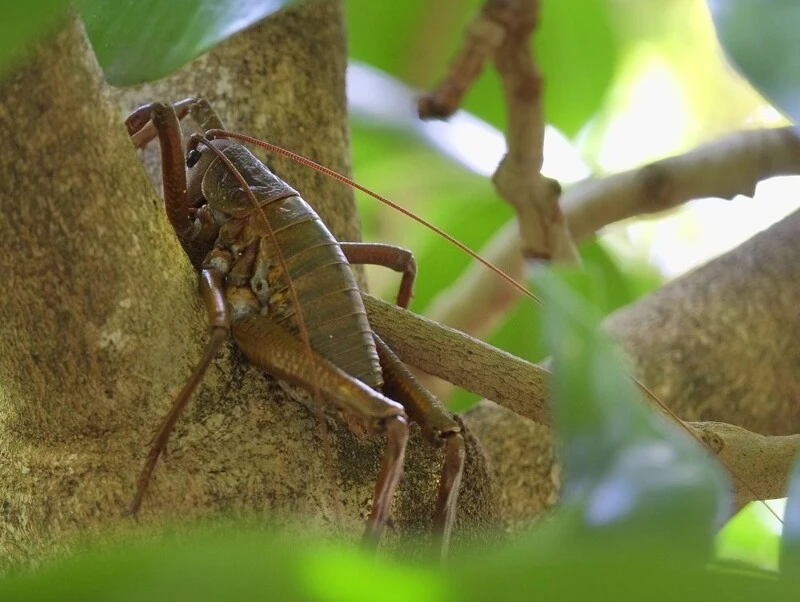
A wetapunga on a tree on Tiritiri Matangi Island, its long antenna extending toward the bottom-right corner of the photo. Photo: Pseudopanax at English Wikipedia; Public Domain.
The success of the program was published in a scientific paper, with the Department of Conservation highlighting the achievement on October 2, 2026. Although their population is growing, the species remains threatened. Breeding programs, habitat protection, and monitoring efforts are ongoing. 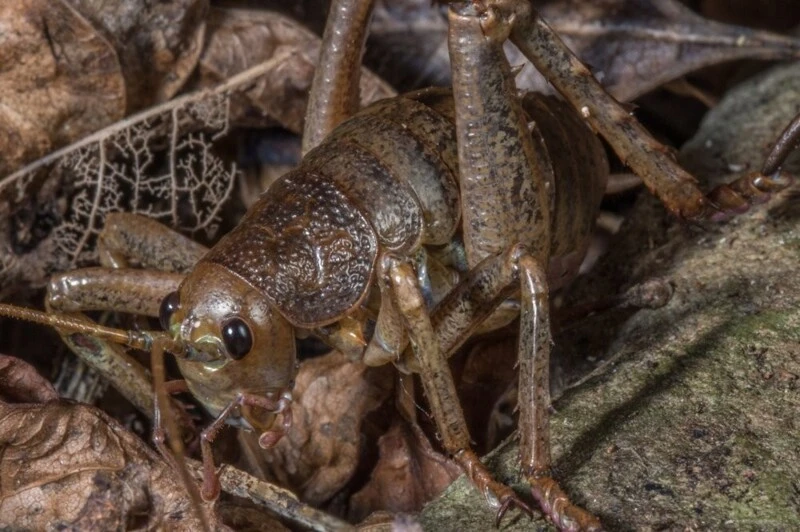
Wetapunga, Deinacrida heteracantha. Photo: Shaun Lee; CC BY 4.0.
Add your comment
You might be interested in:









Protective film Removing it with a power screwdriver

When a child plays hide-and-seek at a professional level

Super dads who swoop in to save the day

Precision carpentry

Looks like it's time to buy WinRAR

How to hang wallpaper neatly

Athlete in Bavarian dress flies over a lake on a hydrofoil

Man sets up bedroom camera and discovers the reason for his

First meeting with Mom's twin sister
