From Coal Miner to Alien-Hunting Agent: How Tommy Lee Jones Became a Hollywood Legend (11 Photos)
Tommy Lee Jones is one of those actors who is instantly recognizable: a stony face, a piercing gaze, and absolute conviction in every role—from a Texas sheriff to a secret agent protecting Earth from extraterrestrials. On September 15, 2026, he turns 80. Across five decades in film, he has earned four Oscar nominations (winning once), starred in films by Oliver Stone, the Coen brothers, and Steven Spielberg, and even ad-libbed his iconic line "I don't care!" in *The Fugitive*. Here are 10 of his defining roles without which Hollywood would be far less exciting. 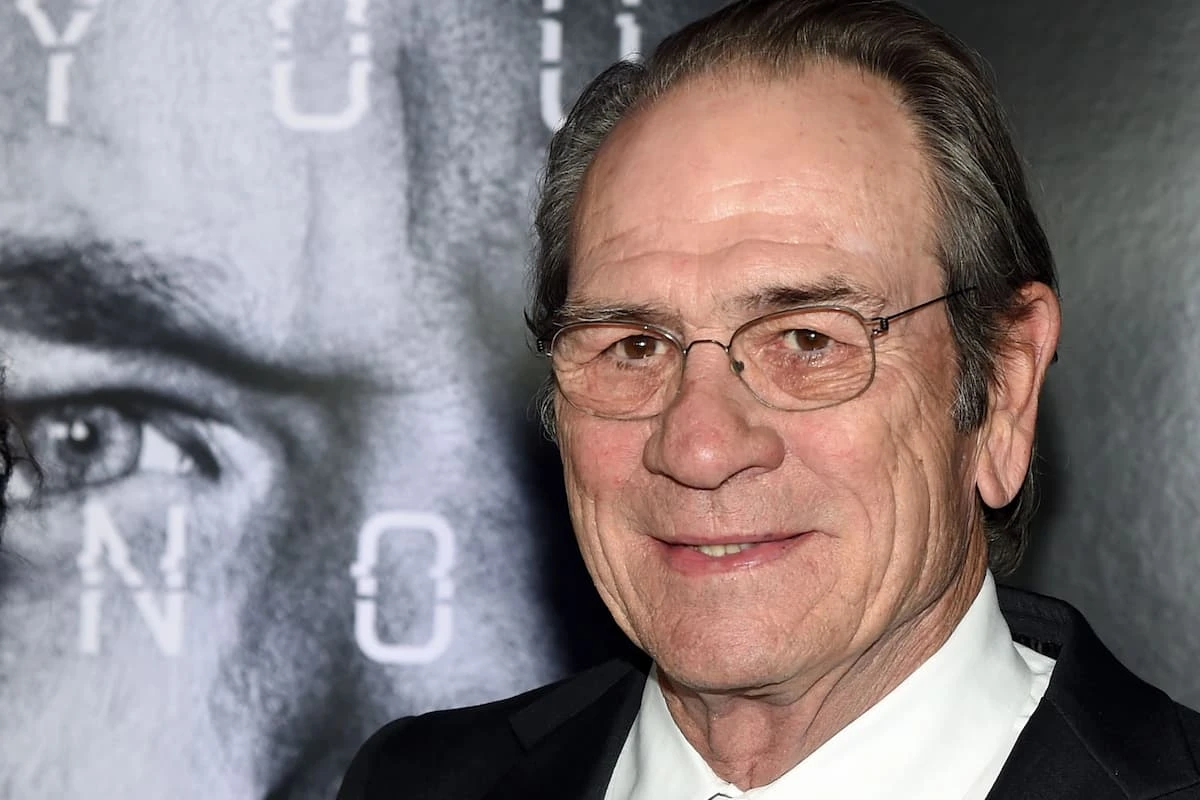
“Coal Miner’s Daughter” (1980) — First Major Role
In 1980, the biographical drama *Coal Miner’s Daughter*, based on the life of country singer Loretta Lynn, hit the big screen. Jones took on the role of her husband, Oliver "Doolittle" "Mooney" Lynn—a coal miner who pushes his wife into the spotlight while simultaneously hindering her career with his own flaws. 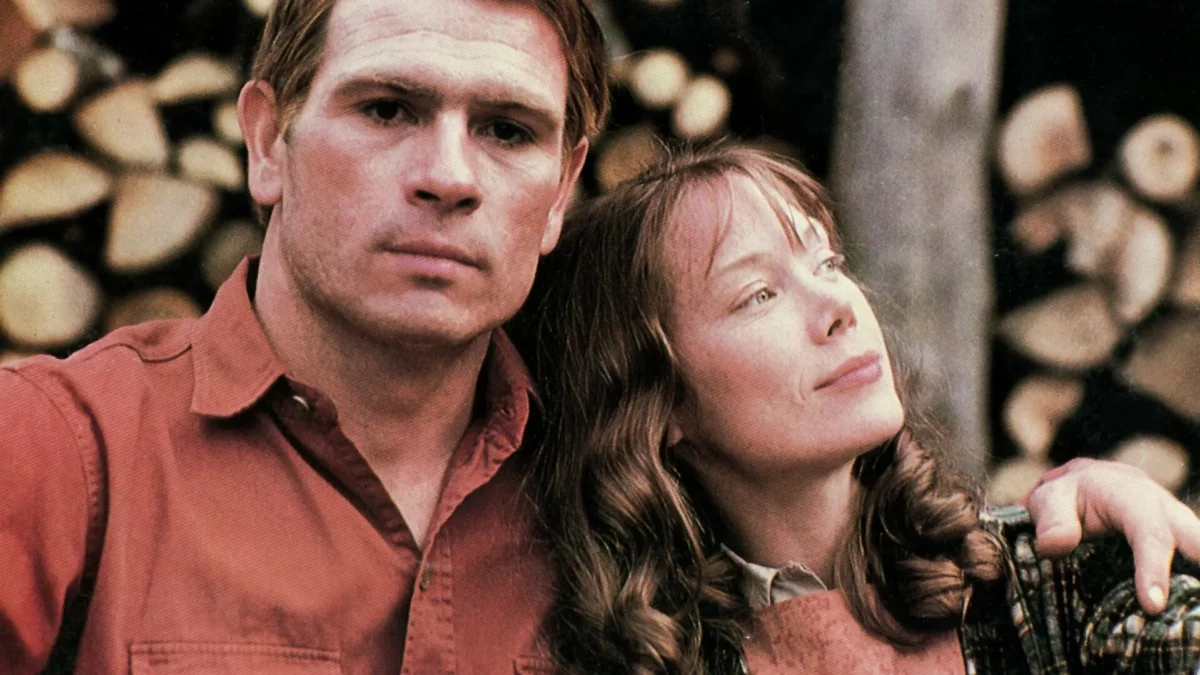
Jones played Loretta Lynn's husband—a man who propelled her career forward while self-destructing.
Jones starred opposite Sissy Spacek, who won both an Oscar and a Golden Globe for her portrayal of Loretta. Jones didn't go unnoticed either—critics praised his complex, layered portrayal of Doolittle, earning him his first Golden Globe nomination for Best Actor in a Motion Picture – Musical or Comedy.
Based on Lynn’s 1976 autobiography, the film chronicles her journey from an impoverished youth in Kentucky to becoming the queen of country music. For the 33-year-old Jones, the role proved to be his true big-screen breakthrough.
“The Executioner’s Song” (1982) — An Emmy for Playing a Killer
The TV movie *The Executioner’s Song* was adapted from Norman Mailer’s Pulitzer Prize-winning novel. Jones starred as Gary Gilmore, a real-life murderer who killed two people in Utah in July 1976 and subsequently insisted on his own execution. 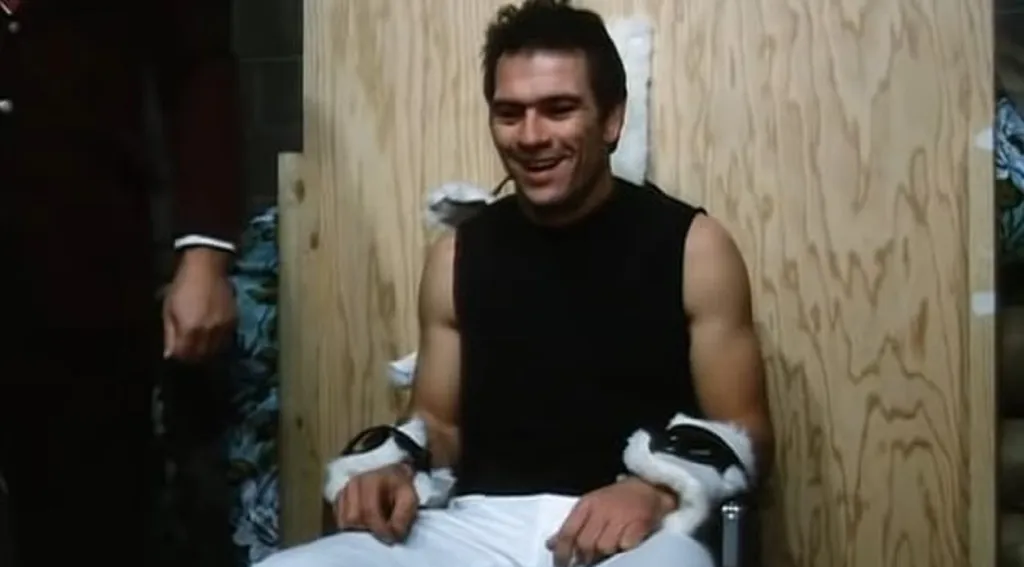
Gary Gilmore waived his right to appeal and demanded his death sentence be carried out without delay.
The U.S. Supreme Court reinstated capital punishment on July 2, 1976. Gilmore was executed by firing squad on January 17, 1977, becoming the first person executed in the United States after the moratorium was lifted. The case sparked intense national debate over the death penalty.
Jones won an Emmy Award for Outstanding Lead Actor in a Limited Series or Movie for his portrayal of Gilmore. Critics consider it one of the rawest and most powerful performances of his career, depicting a man psychologically broken long before he ever pulled the trigger.
“JFK” (1991) — First Oscar Nomination
In Oliver Stone's political thriller *JFK*, centered on the investigation into President John F. Kennedy's assassination, Jones played Clay Shaw—a New Orleans businessman accused of conspiring to kill the president. Shaw remains the only person ever brought to trial in connection with the assassination, though he was acquitted by the jury. 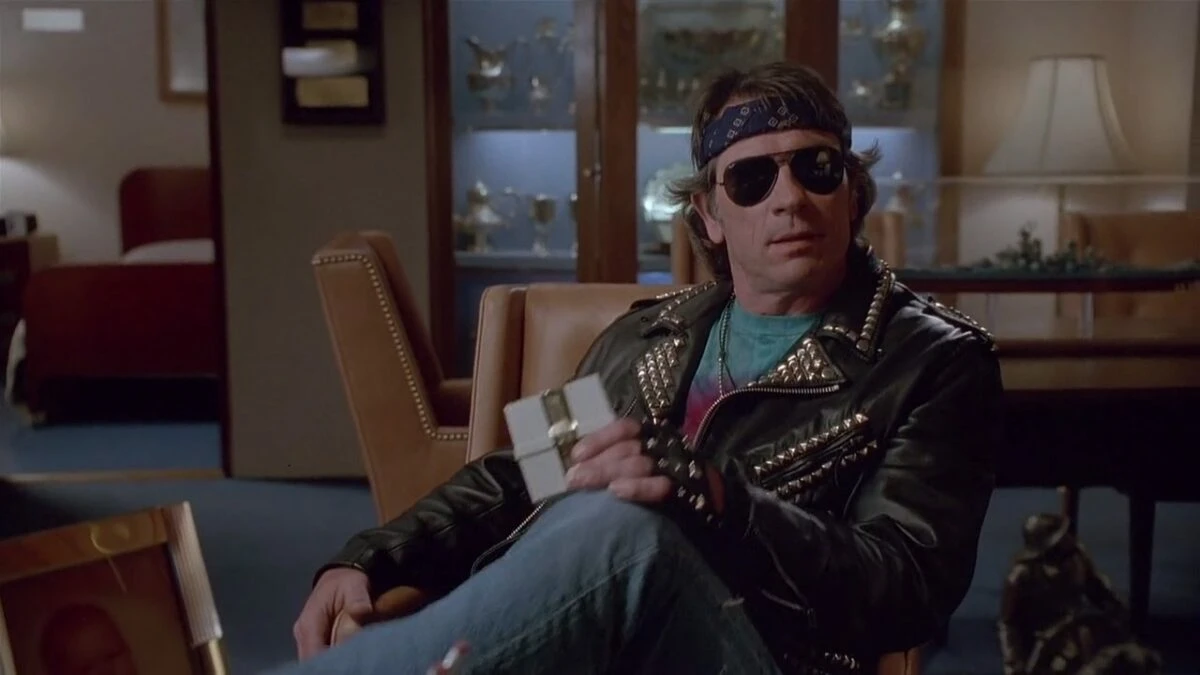
Jones delivered an understated yet hauntingly enigmatic performance as Clay Shaw, the sole suspect tried in the JFK assassination.
The performance earned Jones his first Academy Award nomination for Best Supporting Actor (Jack Palance took home the trophy that year for *City Slickers*). The film sparked a lasting friendship between Jones and director Oliver Stone, who were both born on the exact same day: September 15, 1946.
Stone went on to cast Jones in two more of his films, *Heaven & Earth* and *Natural Born Killers*, often jokingly crediting their shared birthday for their seamless creative chemistry.
“The Fugitive” (1993) — Oscar Win and an Iconic Line
In the action thriller *The Fugitive*, Jones played U.S. Marshal Samuel Gerard, relentlessly hunting Dr. Richard Kimble (Harrison Ford), a physician wrongfully convicted of murdering his wife. The role earned Jones his sole Academy Award to date, winning Best Supporting Actor. 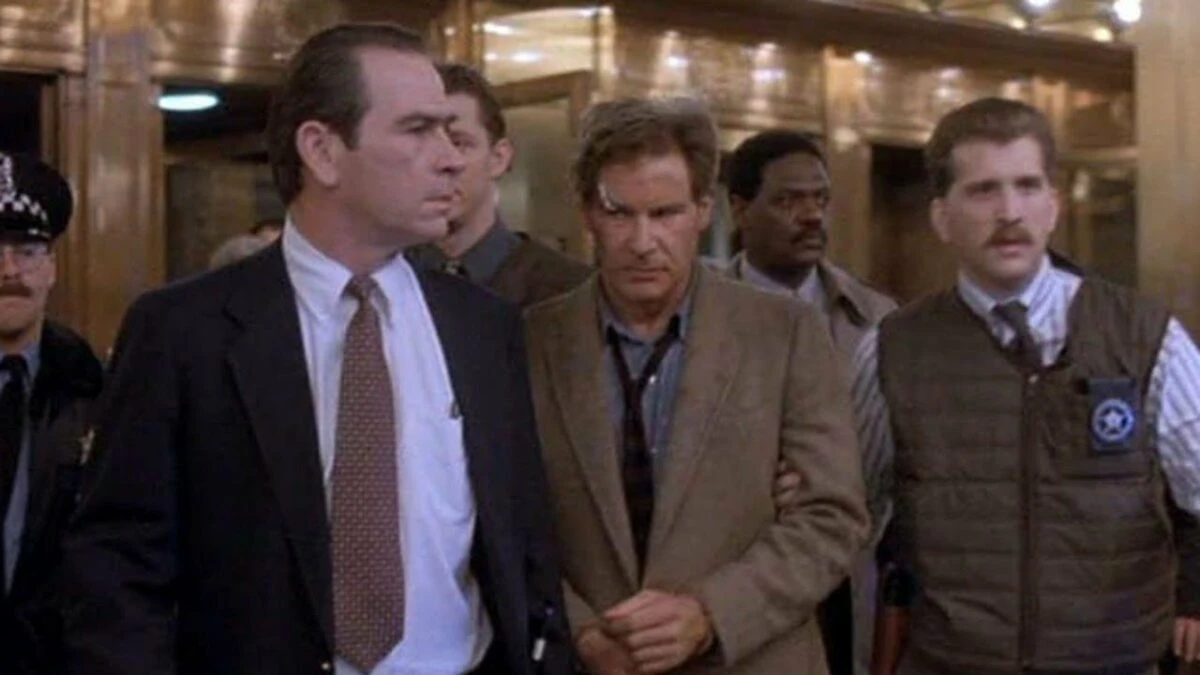
Gerard pursues Kimble strictly out of duty rather than malice—a nuance that makes him one of the most memorable characters in the genre.
The movie was shot at a breakneck pace without a fully finalized script, allowing Jones to improvise many of his scenes on the fly. The legendary line "I don't care!" came about during the storm drain chase scene—a bit of dialogue director Andrew Davis later confirmed was pitched by Jones himself.
When Jones accepted his Oscar in March 1994, he sported a shaved head—he was already filming a biopic about baseball legend Ty Cobb, which required him to be bald.
Two-Face — “Batman Forever” (1995)
An unexpected turn for an actor fresh off an Oscar victory, but a deliberate one nonetheless. In *Batman Forever*, Jones took on the villainous role of Harvey Dent/Two-Face, Gotham City's former district attorney whose face and psyche were split right down the middle. 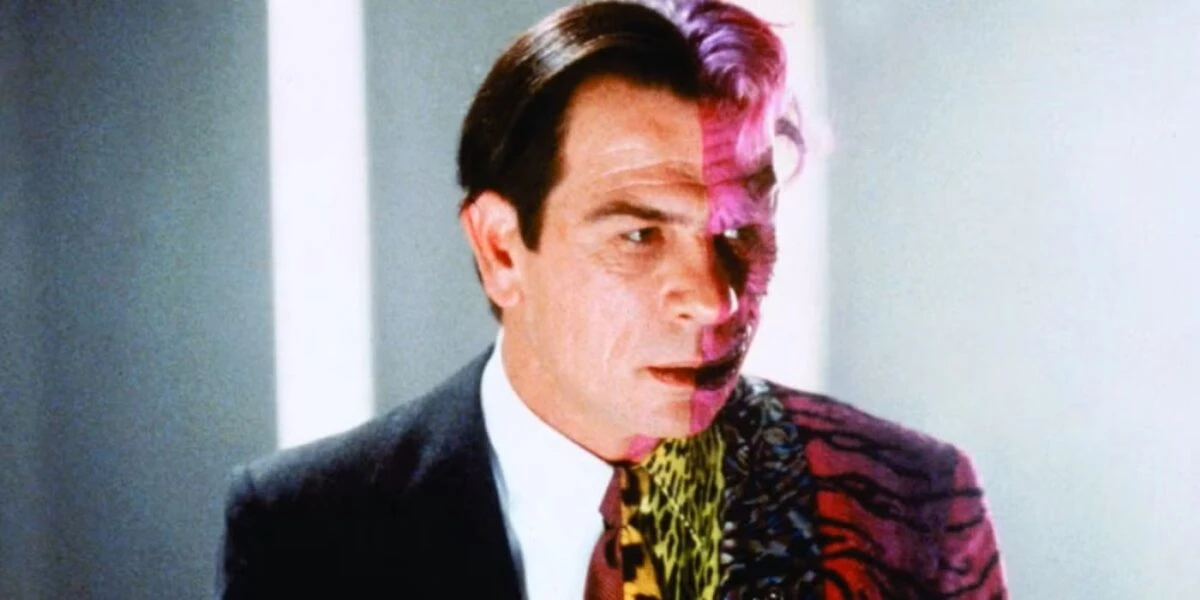
Jones delivered a flamboyant, over-the-top performance as Two-Face—a stark contrast to his usual understated characters.
Director Joel Schumacher abandoned the dark aesthetic of the previous *Batman* movies in favor of a vibrant, comic-book style. Jones adapted accordingly, offering a hammy, larger-than-life portrayal stripped of his signature deadpan demeanor. While critics were lukewarm, the blockbuster was a massive box-office hit.
Jones shared villainous duties with Jim Carrey, who played The Riddler, while Val Kilmer donned the cowl as Batman. For Jones, it remains a rare foray into unabashedly campy villainy.
Agent K — “Men in Black” (1997)
In the sci-fi comedy *Men in Black*, Jones played Agent K, the stoic veteran of a top-secret organization monitoring extraterrestrial life on Earth. His dynamic with Will Smith, playing rookie Agent J, became one of the most iconic buddy-cop double acts of 1990s cinema. 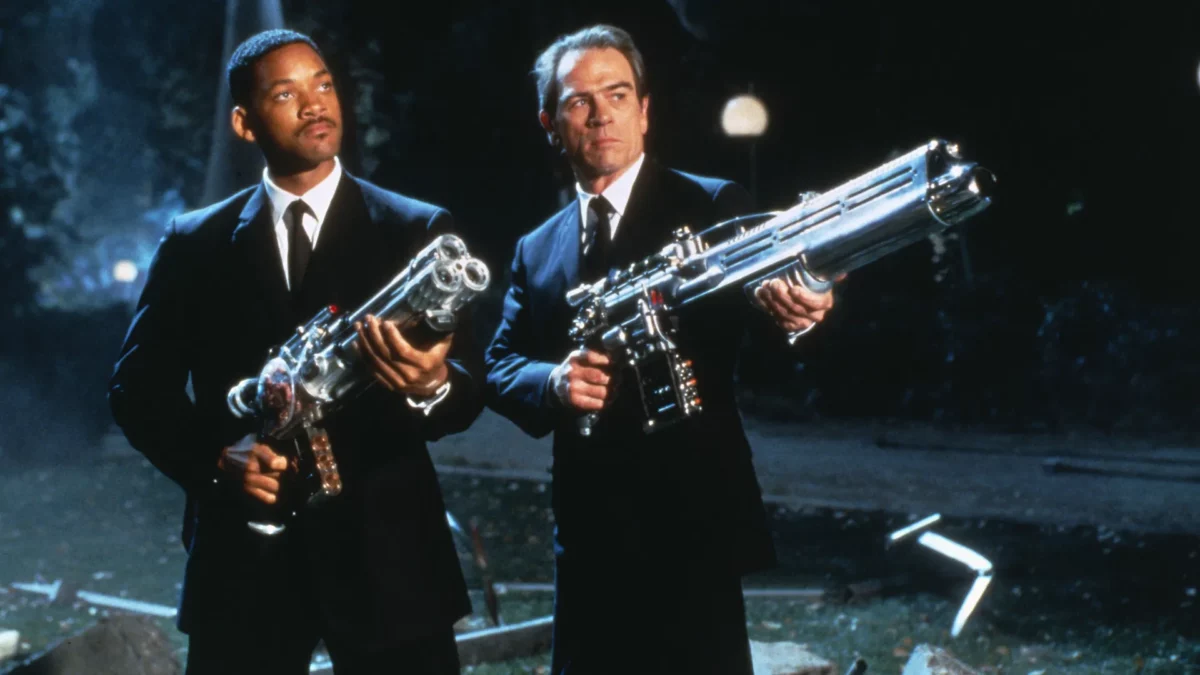
Agent K—a deadpan, battle-tested veteran—served as the perfect foil to Will Smith's high-energy character.
The *Men in Black* trilogy grossed nearly $1.7 billion worldwide. In the third installment, released in 2012, a young Agent K was played by Josh Brolin—whose spot-on impression earned praise from both critics and Jones himself.
The original film won an Academy Award for Best Makeup, with legendary effects artist Rick Baker overseeing the alien designs. For Jones, Agent K introduced his iconic deadpan persona to a whole new generation of moviegoers.
Sheriff Ed Tom Bell — “No Country for Old Men” (2007)
In the Coen brothers' neo-Western thriller *No Country for Old Men*, based on Cormac McCarthy’s novel, Jones played Sheriff Ed Tom Bell. As he pursues hitman Anton Chigurh (Javier Bardem), Bell grapples with a changing world whose newfound brutality he can no longer comprehend. 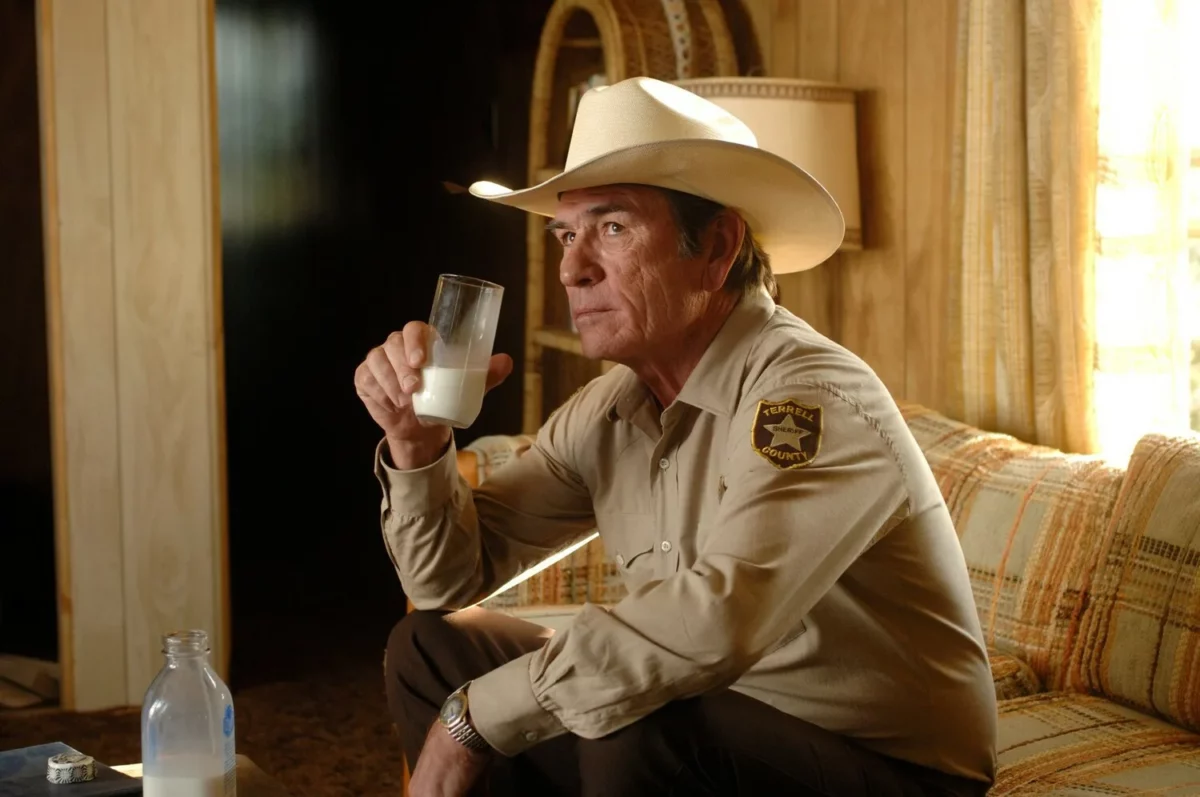
Sheriff Bell is less a hunter of criminals than a weary witness to an era he no longer recognizes.
The film won four Academy Awards, including Best Picture. Jones's haunting closing monologue—recounting a dream of his father riding ahead into the darkness—is widely considered one of the defining moments of 2000s American cinema.
The film also co-starred Josh Brolin—the very actor who, five years later, would play a younger version of Jones's character in *Men in Black 3*.
Hank Deerfield — “In the Valley of Elah” (2007)
That same year brought Jones a dramatically different role. In the mystery drama *In the Valley of Elah*, he played a retired military investigator searching for his missing son, a soldier recently returned from Iraq. 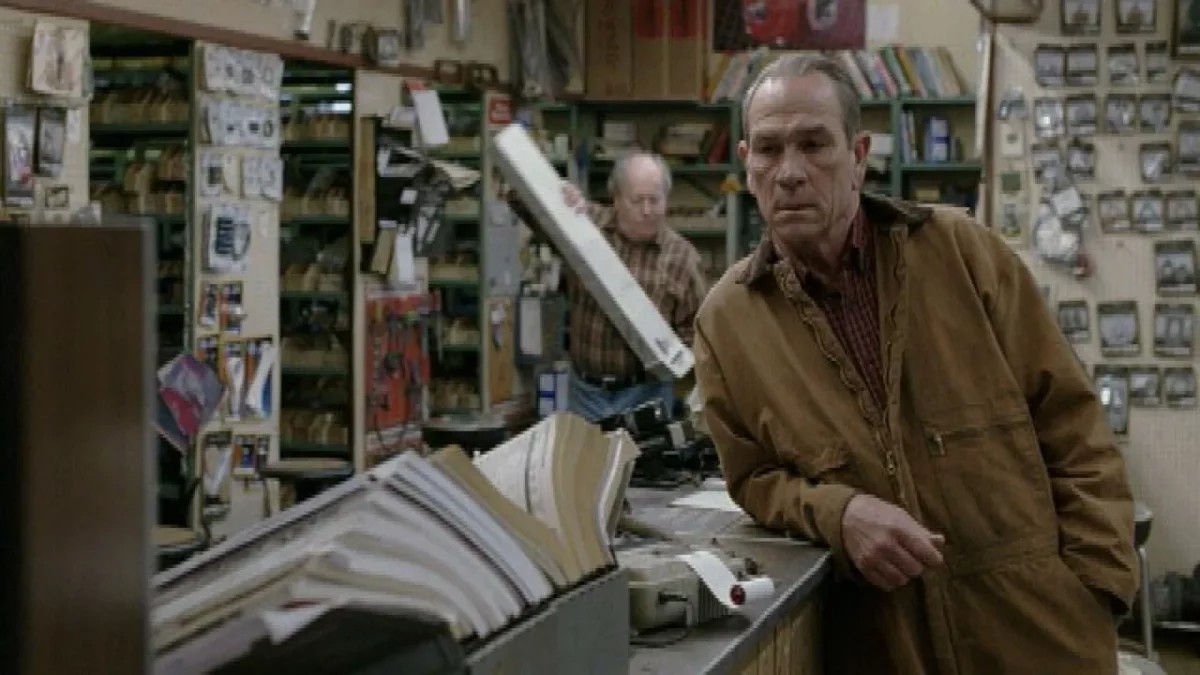
A retired military investigator seeks the truth about his son, slowly uncovering the devastating toll war takes even on those who survive.
While the film achieved modest box-office success, it earned Jones his third Academy Award nomination—and his first for Best Actor. Clint Eastwood had originally brought the project to Jones: Eastwood passed on directing it himself, but strongly urged that Jones be cast as the lead.
Critics noted that delivering two such distinct, powerful performances in the same year—a weary sheriff in *No Country for Old Men* and a grieving father here—highlighted the extraordinary range of Jones's talent.
Thaddeus Stevens — “Lincoln” (2012)
In Steven Spielberg's historical drama *Lincoln*, Jones starred as Congressman Thaddeus Stevens—a Radical Republican abolitionist pushing the president to accept nothing less than the total abolition of slavery. He shared the screen with Daniel Day-Lewis, who played Lincoln. 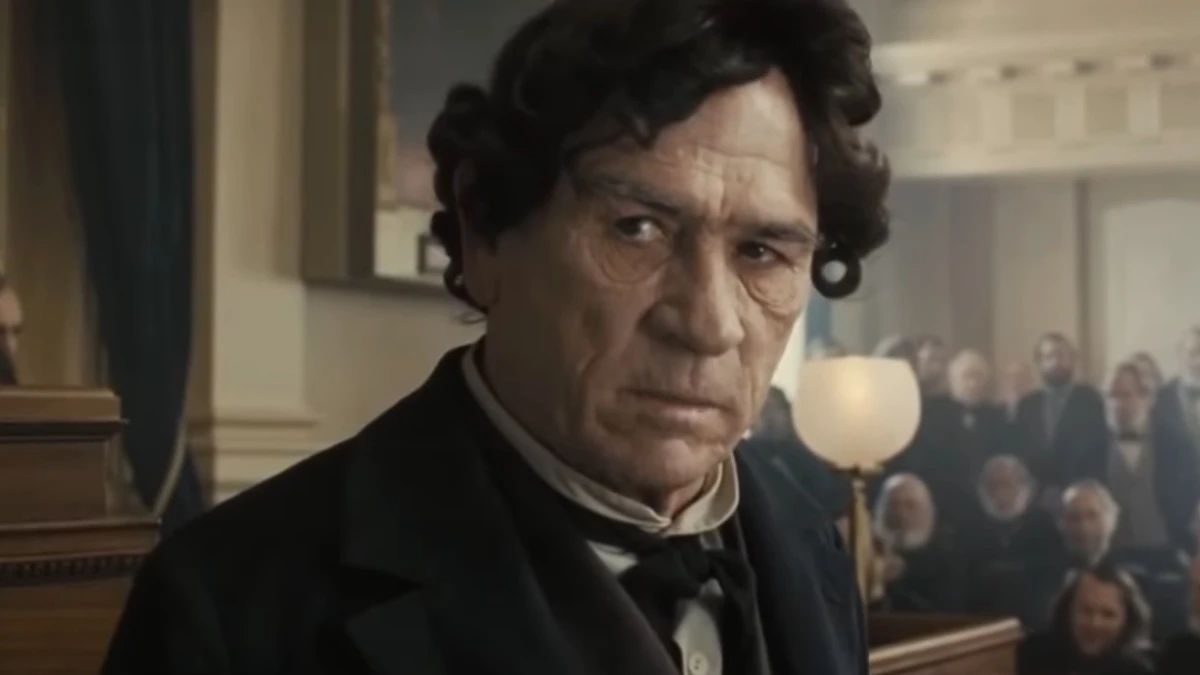
Radical abolitionist Thaddeus Stevens demanded more from Lincoln than the president was willing to promise even his closest allies.
The role earned Jones a Screen Actors Guild Award for Outstanding Performance by a Male Actor in a Supporting Role and his fourth Oscar nomination. The film was also nominated for the SAG Award for Outstanding Performance by a Cast in a Motion Picture, though the award ultimately went to *Argo*.
Stevens's stance was radical even among Lincoln's allies: he insisted not only on ending slavery, but on full racial equality under the law—a position few politicians of the era were willing to publicly champion.
Pete Perkins — “The Three Burials of Melquiades Estrada” (2005)
The only film on this list that Jones directed as well as starred in. In *The Three Burials of Melquiades Estrada*, he plays Pete Perkins, a Texas ranch foreman who kidnaps a Border Patrol agent and forces him to unearth and rebury his murdered friend in Mexico. 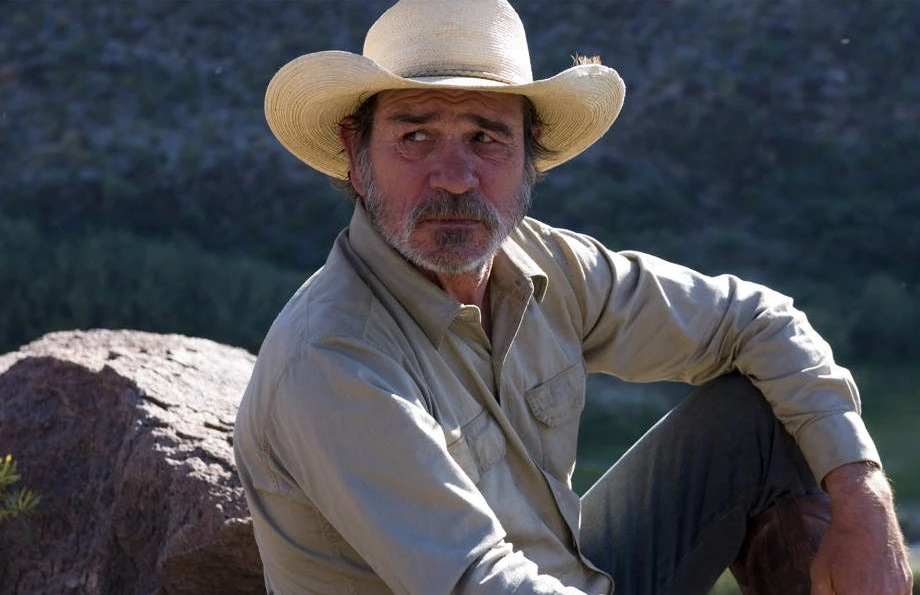
Jones's directorial debut was filmed on his own Texas ranch near the Mexican border.
The film premiered at the 2005 Cannes Film Festival, where Jones won Best Actor and screenwriter Guillermo Arriaga took home Best Screenplay. The film was also nominated for the Palme d'Or.
Much of the movie was shot on Jones’s own property in Texas. Critics consider it his most personal work—a story of borders, friendship, and keeping one's word, told by a man who grew up in that very landscape.
Over more than 50 years in the business, Jones has played sheriffs, killers, judges, presidential advisors, and alien hunters—almost always anchoring his performances with that unmistakable, inscrutable deadpan glare. Which of these ten roles do you find most unexpected for an actor of his signature style?