The Lion's Mane Jellyfish: A Stunning Giant of the Ocean Depths (11 photos)
Jellyfish rarely top anyone's list of favorite marine life, making it hard to imagine them as breathtaking. But the lion's mane jellyfish—the largest and arguably most stunning species in the world—shatters every stereotype. Native to frigid northern waters, this ocean giant never fails to mesmerize anyone who encounters it, no matter how many times they have seen one before. 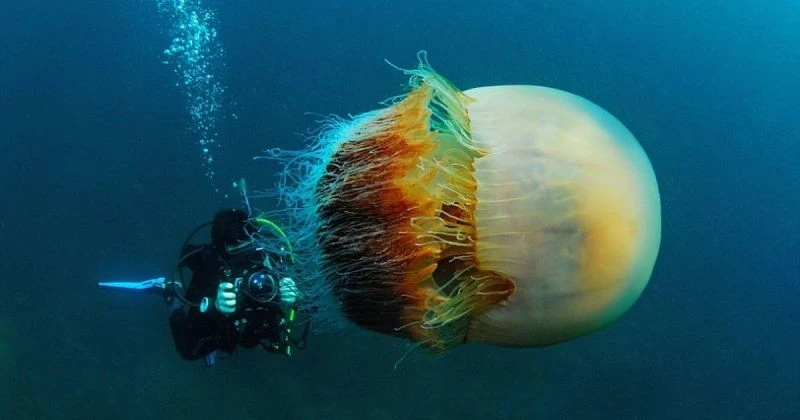
The lion's mane jellyfish, also known as the giant jellyfish or Arctic red jellyfish (lat.
Cyanea capillata
,
Cyanea arctica
), is the longest living creature on Earth. It even edges out the blue whale: while the massive marine mammal rarely exceeds 30 meters in length, a lion's mane can easily surpass 35 meters. The largest specimen ever measured stretched an astounding 37 meters long, with a bell spanning more than 2 meters in diameter! 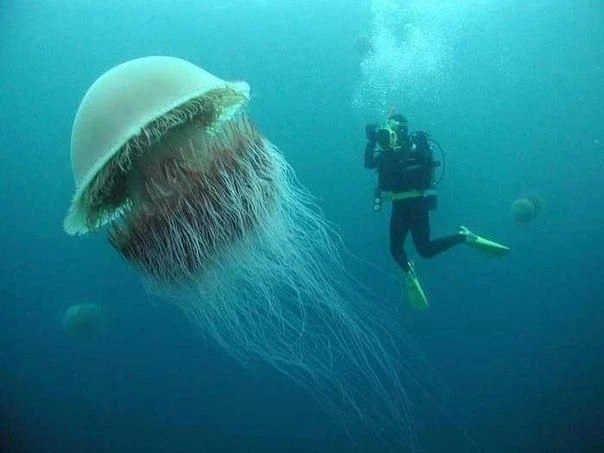
This remarkable sea creature belongs to the order Semaeostomeae within the true jellyfish class (Scyphozoa)—a group that science has yet to fully understand. While experts agree there are several distinct species of lion's mane jellyfish, the exact count and key differences remain a subject of debate. Aside from the giant Arctic variety, scientists have identified smaller relatives, such as the blue jellyfish (
Cyanea lamarckii
) and the Japanese sea nettle (
Cyanea nozakii
), though others likely exist. 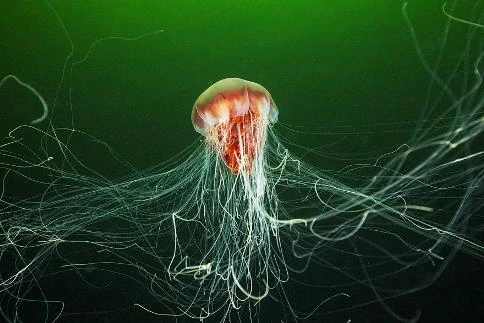
The lion's mane jellyfish thrives primarily in cold and temperate waters. While occasionally spotted in warmer regions—such as off the coast of Australia—these giants strongly prefer icy seas. Tropical waters are harsh on them; specimens that manage to reach maturity in warmer climates are typically a fraction of the size of their northern counterparts. 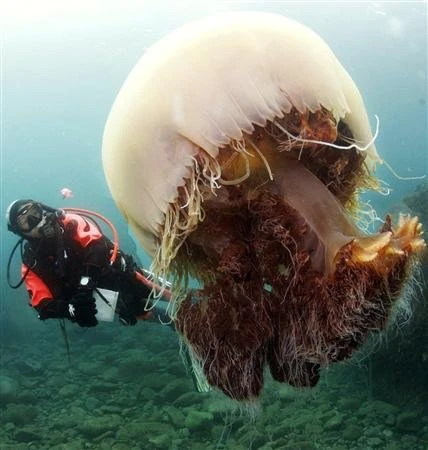
The largest recorded specimen was discovered in 1865, washed ashore in Massachusetts Bay on the Atlantic coast of the United States. Its bell measured an impressive 2.29 meters across, with tentacles trailing 37 meters behind it. To this day, science has not documented a larger individual. 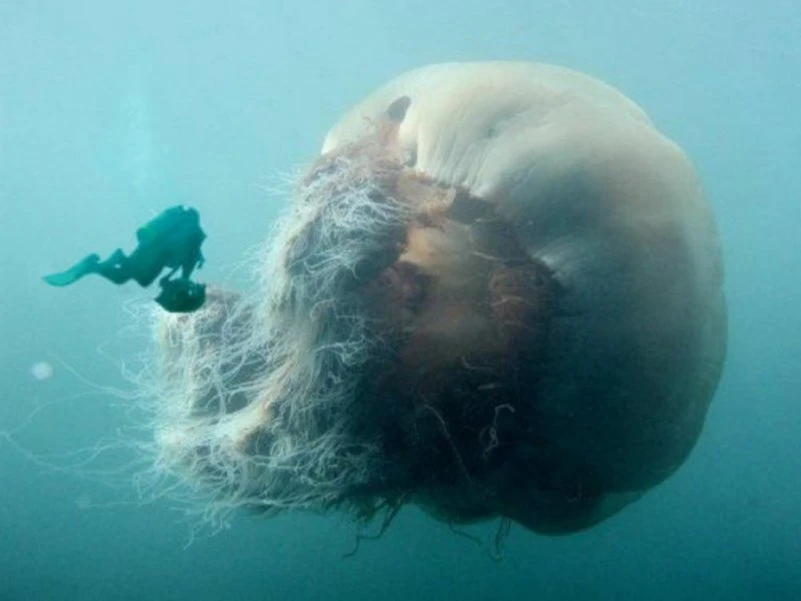
The coloration of a lion's mane jellyfish varies wildly, ranging from vivid blue to deep crimson, though brownish hues are most common. Fully grown adults typically feature a yellowish crown with rich red margins along the bell. Their oral arms are often deep crimson, while their trailing tentacles range from pink and pale blue to purple. Younger jellyfish display brighter colors, which tend to fade into muted shades as they age. 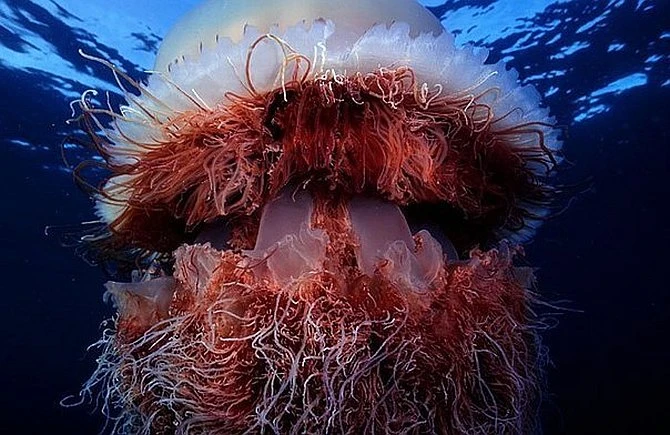
A lion's mane jellyfish possesses hundreds of trailing tentacles arranged in eight distinct clusters. Each cluster contains between 65 and 150 tentacles lined up in rows. The bell itself is split into eight lobes, giving the jellyfish a striking, eight-pointed star shape. 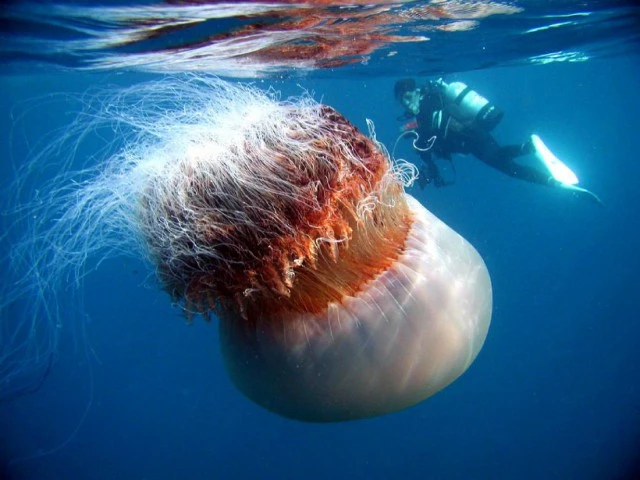
These jellyfish reproduce sexually, with distinct male and female individuals. Their mating process is quite unique: a mature male releases sperm from his mouth into the water column, which then drifts into brood pouches located on the female's oral arms. Fertilization takes place right there, serving as the incubator for the initial larval stage. 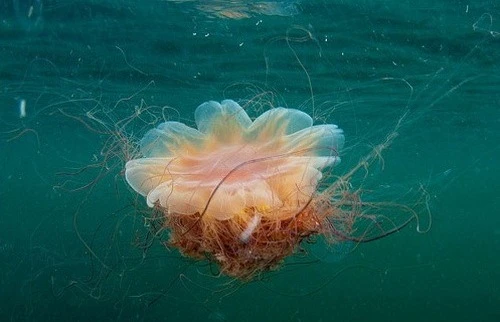
When ready, the free-swimming larvae leave the brood pouches and drift through open water. For several days, they swim around looking for a suitable solid surface, eventually anchoring themselves to rocks, the seabed, or submerged objects. 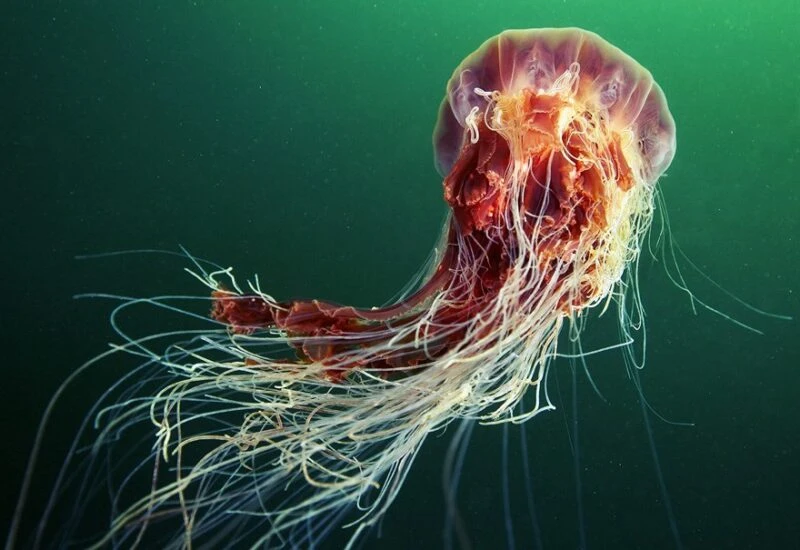
Once anchored, the larva transforms into a tiny polyp called a scyphistoma. In this stationary phase, it feeds, grows, and multiplies asexually through budding. Come spring, the polyp undergoes transverse division (strobilation), shedding stacked larvae known as ephyrae. 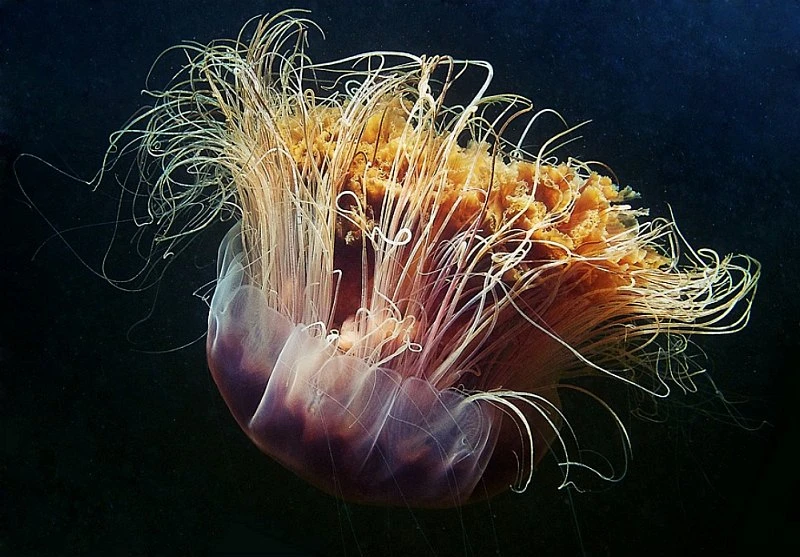
These tiny ephyrae closely resemble miniature jellyfish, featuring a small, eight-rayed bell. Though still lacking tentacles and oral arms, they rapidly mature into fully formed young lion's mane jellyfish in just two to three months. 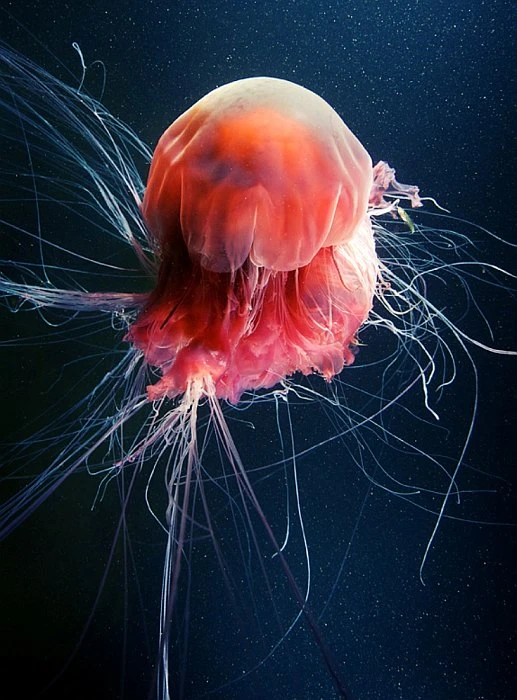
Lion's mane jellyfish spend almost their entire lives drifting near the surface, riding ocean currents and pulsating their bells while steering clear of dangerous shorelines. As they travel, they extend a massive curtain of tentacles covered in microscopic, harpoon-like stinging cells. When prey draws near, the jellyfish shoots poison-filled cells that deliver a paralyzing neurotoxin.
Their diet consists mainly of plankton and small fish. While their venom can cause painful reactions in humans, it is rarely fatal. Only one death has ever been linked to an encounter with a lion's mane jellyfish; in almost all cases, stings result in mild skin burns that heal on their own without medical intervention.