Children Thought It Was Snow: What Was Actually Falling From the Sky After Nuclear Detonations (11 photos)
Between 1945 and 1996, nearly two thousand nuclear tests were carried out worldwide. Explosions were captured on film, results were classified, and blast yields were meticulously calculated. But the people nearby—soldiers in trenches, fishermen at sea, villagers across the steppe—were rarely considered. Sometimes, however, they were targeted intentionally: to study what radiation does to a living body. August 29 marks the International Day against Nuclear Tests, established by the UN in 2009. It was on August 29, 1949, that the USSR conducted its first detonation at the Semipalatinsk test site, and on August 29, 1991, Kazakhstan officially closed it down. Here are four stories from four corners of the globe—about human beings used as live targets. 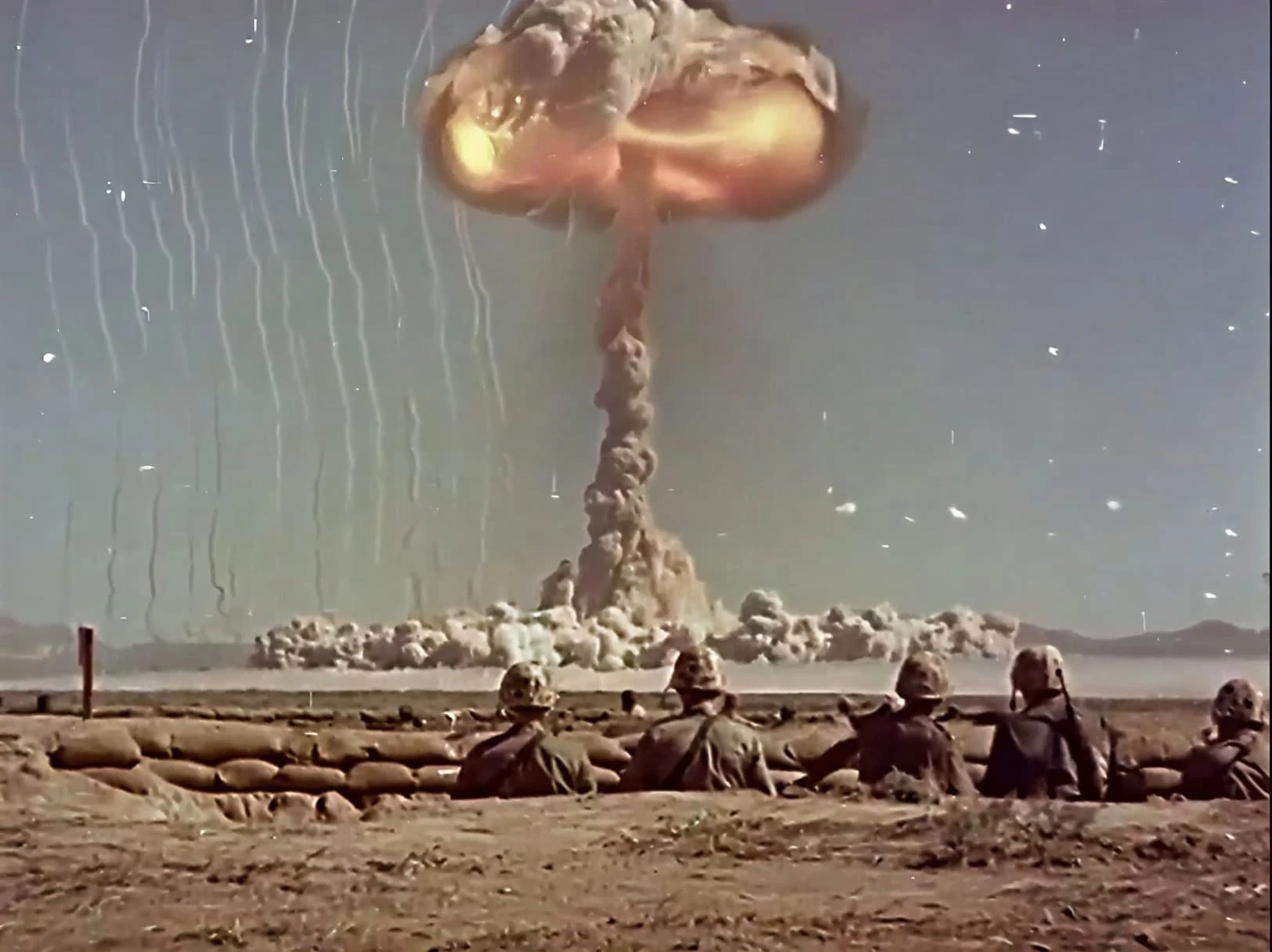
America's "Atomic Veterans": Ordered to Stay Silent
Between 1946 and 1962, the United States conducted roughly 200 atmospheric nuclear tests, involving approximately 225,000 soldiers, sailors, and Marines. On paper, they were observers and exercise participants. In reality, they were human guinea pigs.
The protocol was routine. Troops were stationed in trenches just a few miles from ground zero to test their psychological reaction to the blast and convince them that fear of radiation was "irrational." Once the bomb went off, they were ordered to rise and march directly toward ground zero. Decontamination meant doing little more than brushing the fallout off their uniforms with a broom. 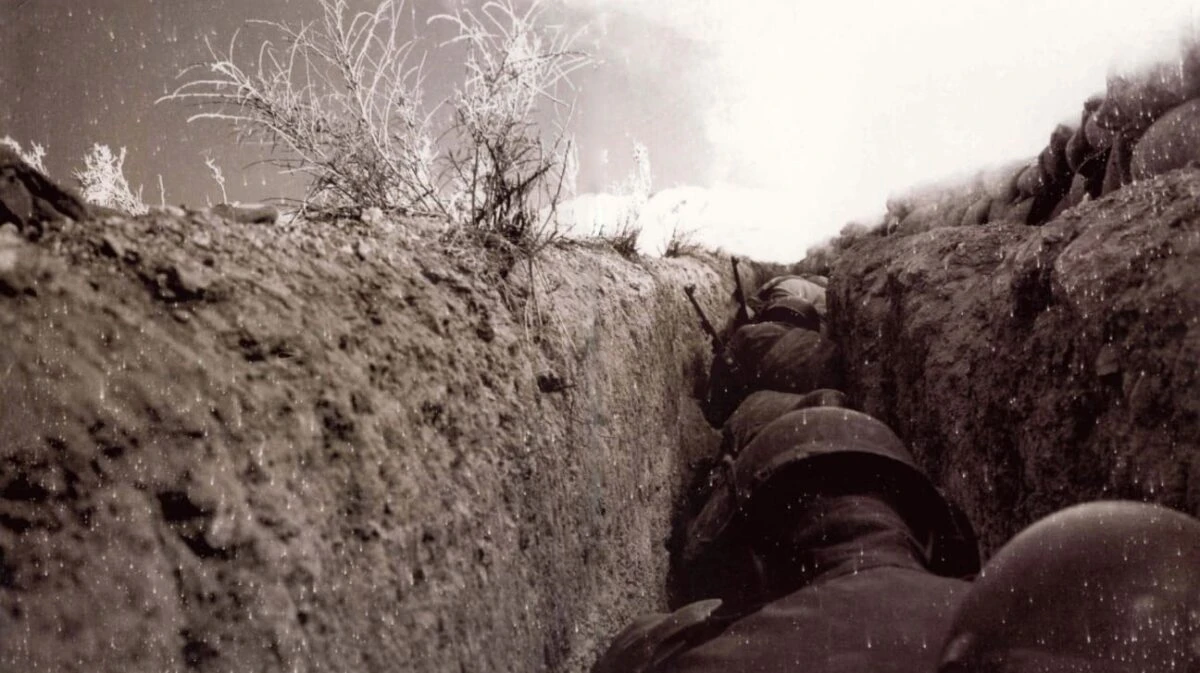
Soldiers in trenches await a nuclear blast just miles from ground zero. Nevada Test Site, 1950s
Before the exercises, every service member signed a non-disclosure agreement. Violating it carried a $10,000 fine or more than a decade in prison. As a result, when many were diagnosed with cancer 20 to 30 years later, they couldn't even tell their doctors about their exposure—the gag order was still in effect.
Congress finally passed the Radiation Exposure Compensation Act in 1990—four decades after the first tests. Yet even that offered little relief: according to NBC News, the Department of Veterans Affairs denied 86% of claims filed by irradiated veterans in 2022–2023. Estimates suggest that more than 75% of "Atomic Veterans" passed away without ever receiving recognition or compensation.
The People of Bikini Atoll: "For the Good of All Mankind"
In February 1946, U.S. Navy Commodore Ben Wyatt met with the 167 residents of Bikini Atoll in the Marshall Islands. He asked them to leave their home temporarily—"for the good of mankind and to end all world wars." King Juda, the island's leader, agreed. He later admitted that he had no idea what an "atomic test" actually entailed, nor did he realize his people would never be able to go back. 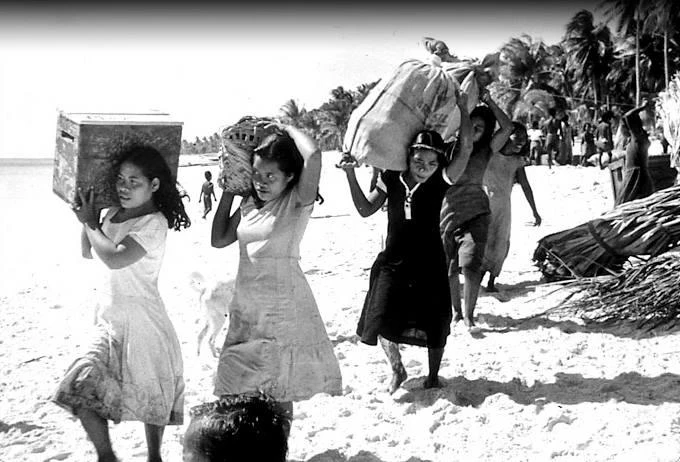
The 167 residents of Bikini Atoll left their homeland in March 1946, promised they could return "as soon as the tests were over"
On March 7, 1946, the islanders were relocated to Rongerik Atoll—an uninhabited island one-sixth the size of Bikini, located 125 miles away. The soil was unsuitable for crops, and the fish in the lagoon proved toxic. By July 1946, a U.S. military doctor reported that the islanders were suffering from severe starvation. Between 1946 and 1958, the United States conducted 23 nuclear detonations on the deserted Bikini Atoll.
On March 1, 1954, the U.S. detonated the Castle Bravo hydrogen bomb—its most powerful nuclear test in history. Yielding 15 megatons, the blast was three times more powerful than expected. Radioactive ash blanketed the neighboring Rongelap Atoll, 100 miles downwind from ground zero. 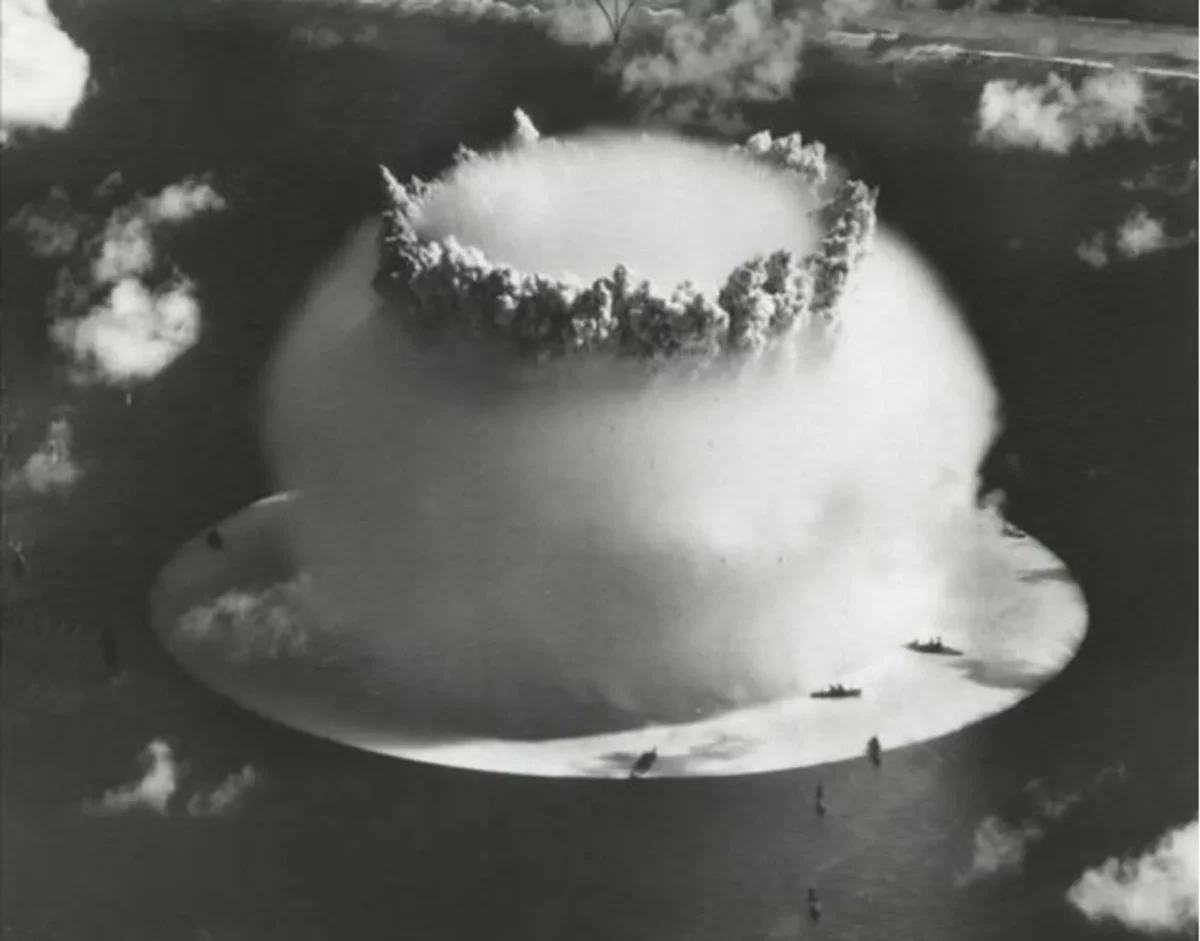
The Castle Bravo detonation, March 1, 1954. At 15 megatons, it was far more powerful than any Soviet bomb of its era
Jeton Anjain, former Minister of Health for the Marshall Islands, later testified:
"About five hours after the detonation, radioactive fallout began falling on Rongelap. It was white and fine, like powder. Nobody knew what it was. The children played in the 'snow.' They ate it."
An evacuation was ordered only two days later—even though military officials were fully aware of the danger.
In 1968, U.S. authorities declared Bikini "safe" and allowed some residents to return. By 1978, they were evacuated again after body levels of cesium-137 surged by 75% in a single year. Most descendants of the displaced islanders remain in exile to this day on Kili Island—425 miles away from their ancestral homeland, stripped of their lagoon and traditional fishing grounds.
Kazakhstan: Mushroom Clouds Outside the Window
The Semipalatinsk Test Site opened on August 29, 1949. Spanning 7,000 square miles, it was situated just 80 miles west of the city of Semipalatinsk. It was the only nuclear proving ground in the world where local populations lived right next door. 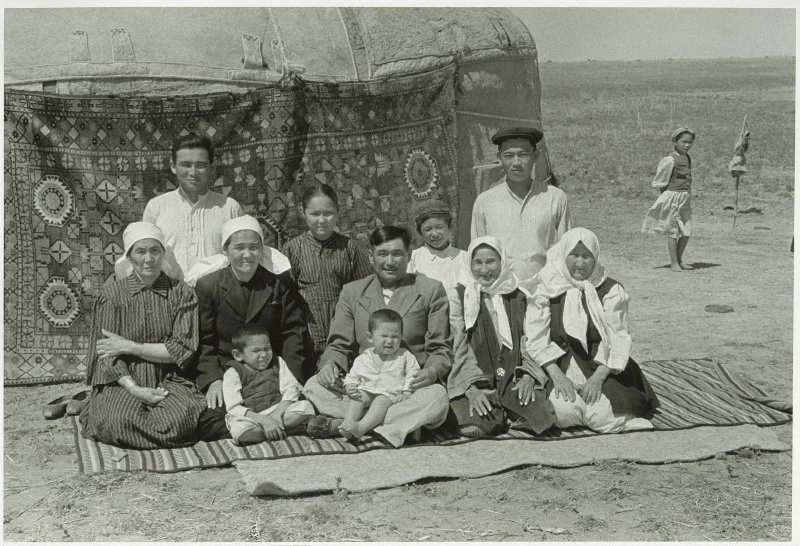
Villages surrounding the test site were never evacuated. Residents watched mushroom clouds rise with the naked eye, having no idea what was happening
Between 1949 and 1962, the Soviet military carried out dozens of above-ground and atmospheric tests. Local villagers suffered acute radiation exposure. Soviet authorities never warned the population about the hazards or explained what was taking place; everything was kept strictly classified. 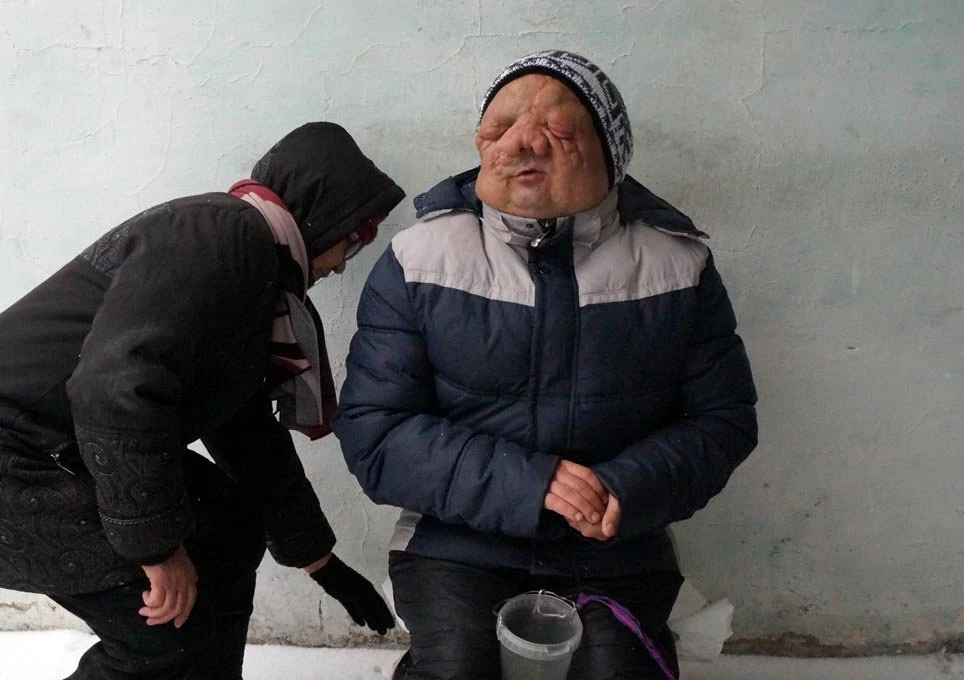
A victim of the nuclear test site.
Over 42 years, a total of 456 detonations took place at the site. According to estimates by the director of the Semipalatinsk Oncology Hospital, at least 60,000 residents in the region died from radiation-induced cancers. Descendants of those exposed—now in their third and fourth generations—still live on the grounds of the former test site, grazing livestock and fishing in the infamous "Atomic Lake," a water-filled crater created by an underground nuclear blast. 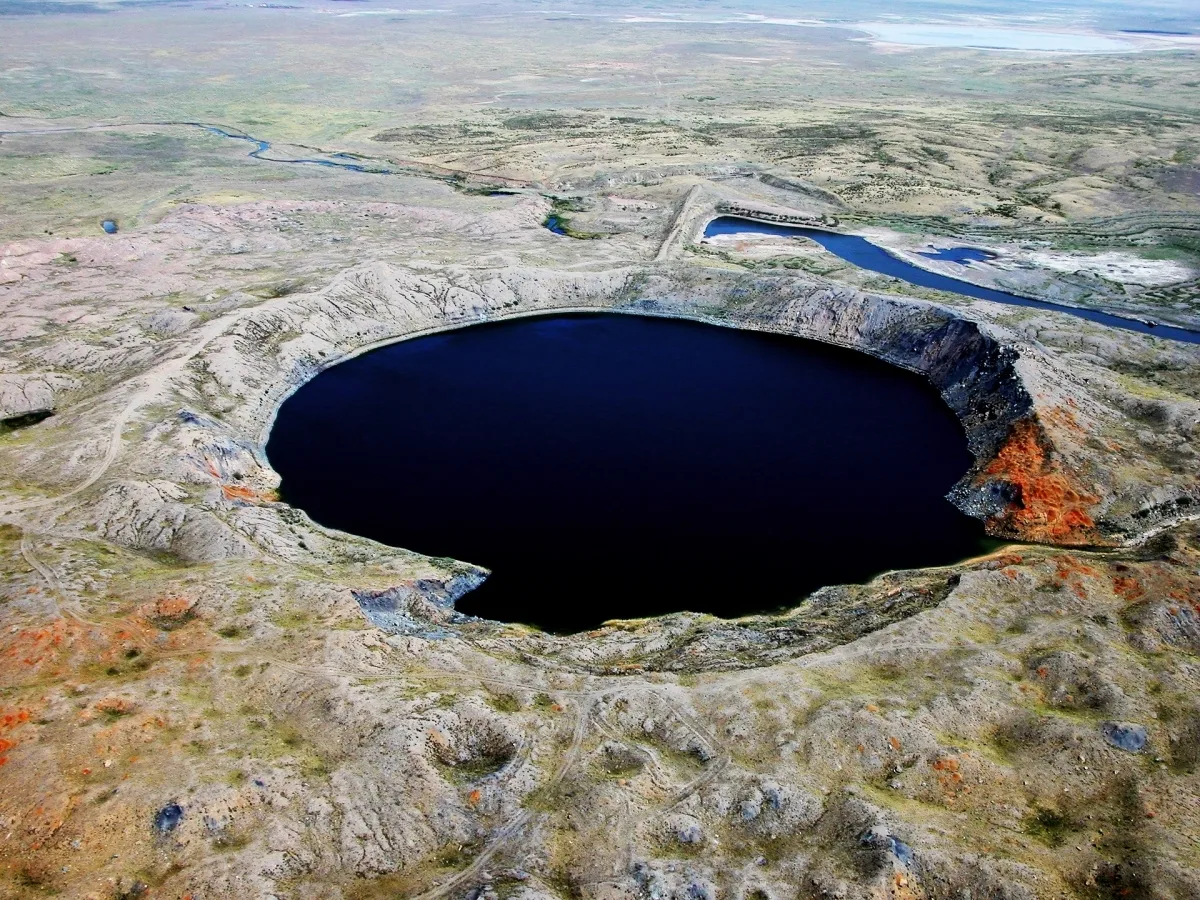
"Atomic Lake"—a blast crater filled with water. Local residents still fish here to this day
On August 29, 1991—exactly 42 years after the first explosion—Nursultan Nazarbayev, the first president of Kazakhstan, signed a decree officially closing the Semipalatinsk test site. It marked the newly independent nation's first major foreign policy decision.
French Polynesia: A Classified Catastrophe
Between 1966 and 1996, France conducted nuclear tests on the Moruroa and Fangataufa atolls in the South Pacific. Officials insisted that everything adhered to strict safety standards, but the reality was far grimmer. 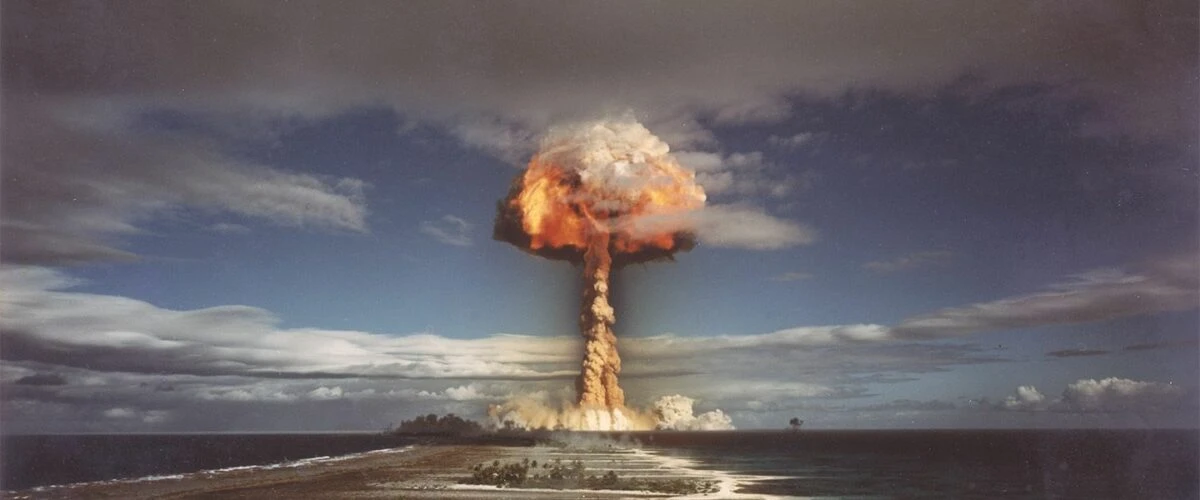
Moruroa Atoll, 1971. France conducted dozens of atmospheric tests here without disclosing the true consequences to the local population
In 2021, investigative journalists from Disclose, in collaboration with researchers from Princeton University's Science & Global Security program, published the findings of a two-year investigation. After analyzing thousands of declassified military documents, they concluded that atmospheric testing had exposed virtually the entire population of French Polynesia—roughly 110,000 people—to radioactive fallout.
On July 17, 1974, a radioactive cloud from a detonation on Moruroa drifted over Tahiti, the archipelago's most populous island. Classified military correspondence revealed that one-third of the 6,000 troops involved in testing between 1966 and 1974 went on to develop at least one form of cancer. 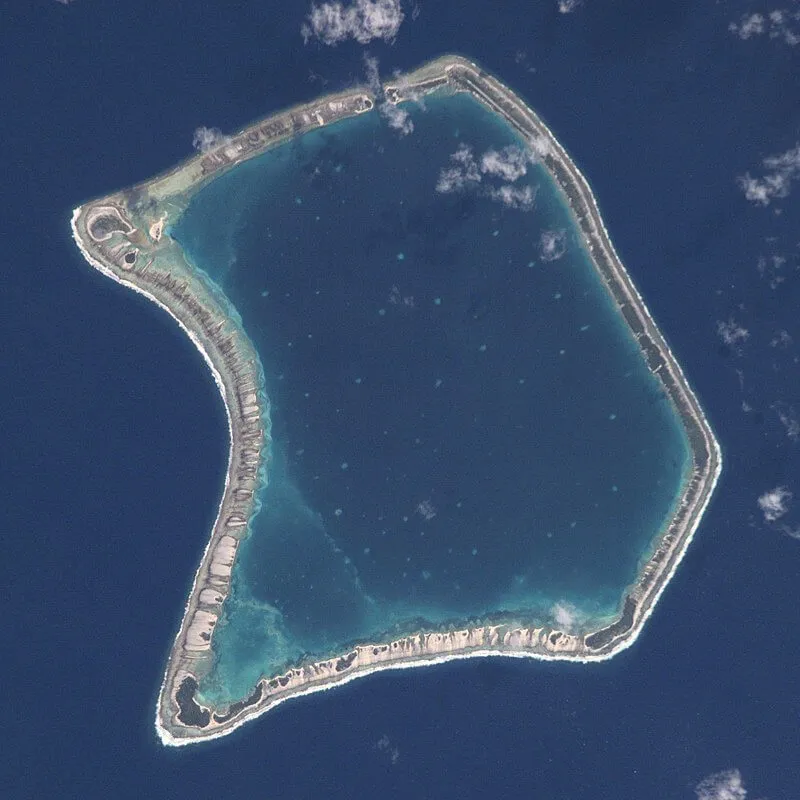
The atolls of French Polynesia lie thousands of miles from mainland France, yet the fallout reached every island in the archipelago
A compensation law was finally enacted in 2010—14 years after the final blast. However, the legal hurdles were so severe that proving radiation damage was nearly impossible. By 2021, only 454 people had received payouts, just 63 of whom were Polynesian locals. More than 80% of claims were rejected without explanation.
One Pattern Across Four Continents
All four stories share a common thread. In every case, governments delayed admitting fault for years or decades—and in some instances, never did. It took the United States 45 years to pass a compensation law for its Atomic Veterans, and decades more to begin honoring claims in any meaningful way. France has yet to offer an official public apology to French Polynesia. And the Soviet Union never bothered to tell the residents of Semipalatinsk what was being done to them. 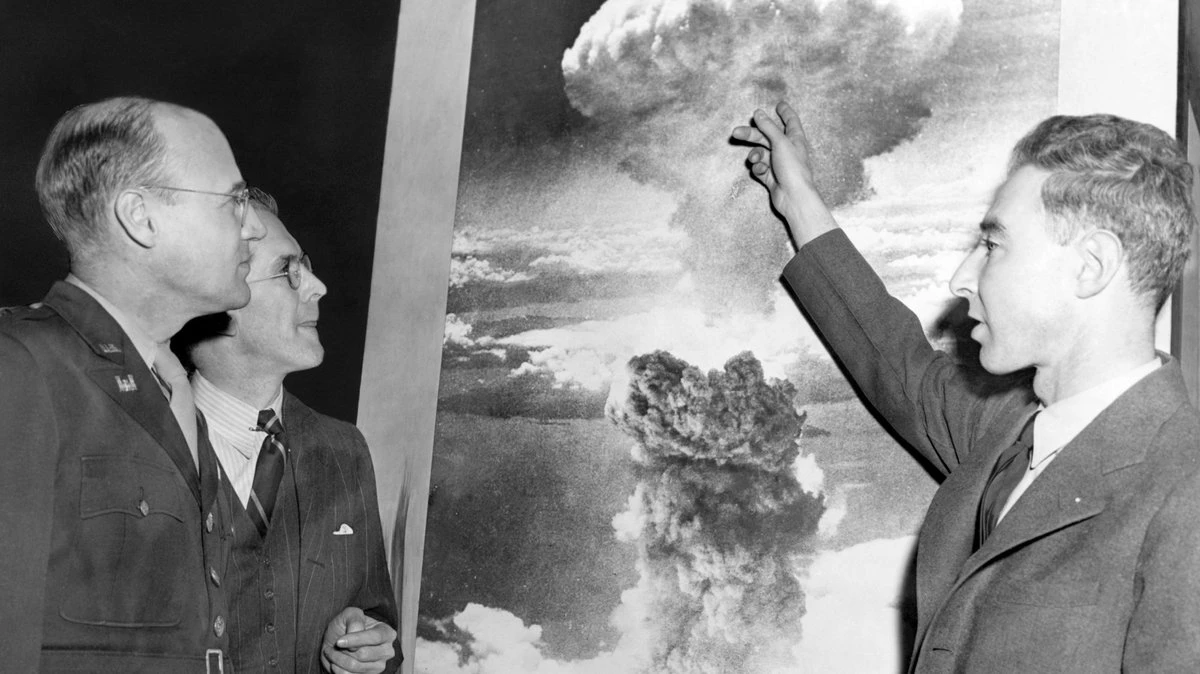
Most American "Atomic Veterans" died without receiving compensation or formal recognition of their sacrifice
The United Nations established the International Day against Nuclear Tests in 2009—64 years after the Trinity test in New Mexico on July 16, 1945. The date carries deep symbolic meaning: August 29 was chosen because on that day in 1949, the Soviet Union conducted its first nuclear test at Semipalatinsk, and on the exact same day in 1991, Kazakhstan permanently shut it down. While governments dragged their feet through endless court hearings and bureaucratic delays, those affected grew old and passed away. Many died without ever receiving an official explanation for their illnesses. 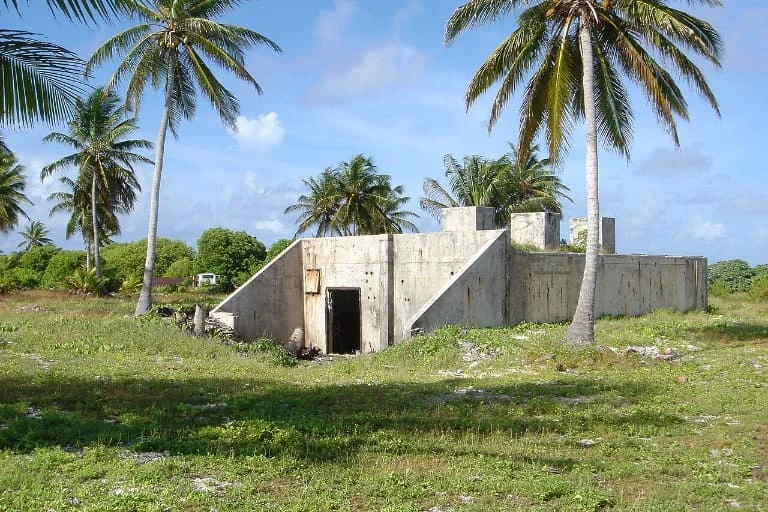
Bikini Atoll today: designated a UNESCO World Heritage site as a "monument to the nuclear age." It remains uninhabitable to this day
The legacy of two thousand nuclear detonations isn't just radioactively contaminated land. It is also a legacy of systemic cover-ups—a blueprint executed by the U.S., the USSR, France, and Britain alike: treat people as expendable, deny the fallout, and stonewall recognition for decades. The only difference was in the details.
What do you think: Has enough been done for the victims of nuclear testing today, or do their stories remain relegated to the margins of official history?