The Real, Bloody Story of Bambi Disney Kept From Us (7 photos)
On August 9, 1942, Walt Disney's animated feature film Bambi hit the big screen for the first time. It was the studio's fifth feature film, and production was approached with Disney's trademark seriousness. Animators meticulously studied the behavior of real animals, carefully crafting their facial expressions and natural environment. The result was a wonderful fairytale filled with cheerful animals, a wise mentor, and young love. But some viewers who noticed the words "based on the story by Felix Salten" in the credits decided to read the original story—and were thoroughly shocked. 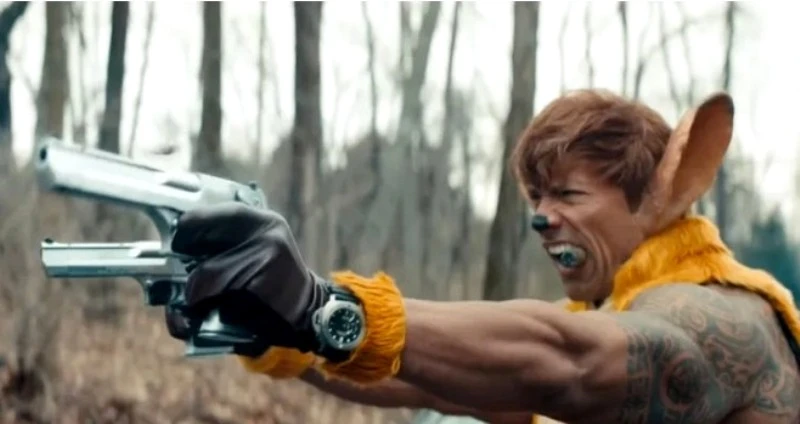
Bambi was not an instant box-office hit upon its release. Coming out at the height of World War II, audiences had far bigger things on their minds. In 1942, the film grossed $3 million against a budget of $858,000. Later, however, Bambi took off, prompting the studio to re-release it in theaters multiple times. Today, its lifetime box office gross stands at $240 million—and that is without counting video cassette and DVD sales. 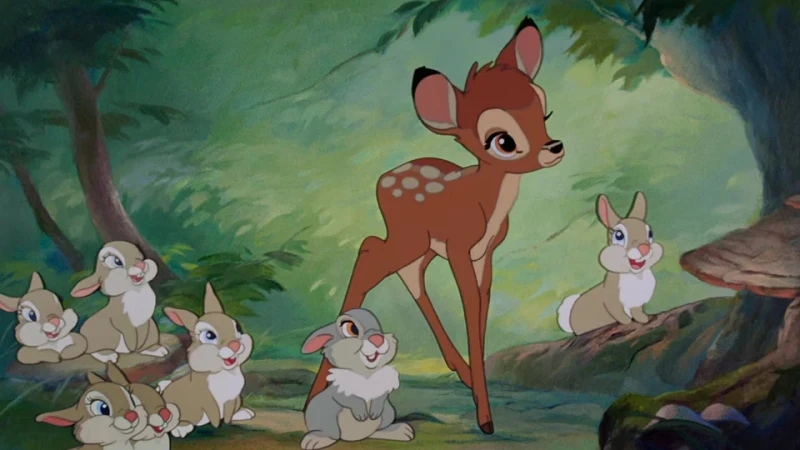
Salten and His Brutal Forest Story
So what was so wrong with Felix Salten's original story that inspired the screenplay? Felix Salten, born Siegmund Salzmann to a Hungarian-Jewish family in Pest in the Austro-Hungarian Empire, rose to fame in Vienna, where he worked as a journalist and published his literary works for many years. 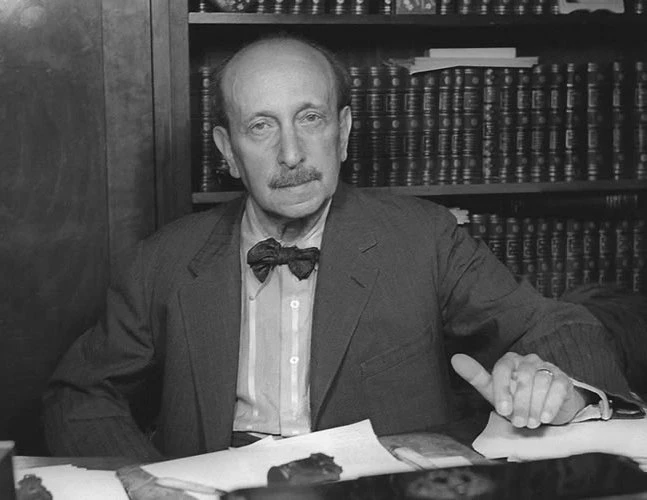
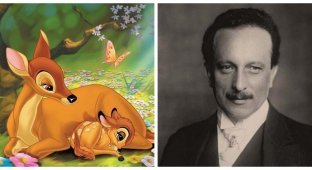
Felix Salten
In 1923, Salten published two novels starring animals. The first was titled The Hound of Florence, which told the story of a boy who turns into a dog to travel from Vienna to Florence with Archduke Ludwig to study art. The second was the novel Bambi: A Life in the Woods.
The novel about woodland creatures was packed with grim realities. In it, male deer abandon females immediately after mating, and hunters slaughter animals indiscriminately. Bambi's mother is not the only one who dies—his cousins and friends perish as well. As he grows up, Bambi acts just like the others: he abandons his mate and offspring without making any effort to be involved in their lives. 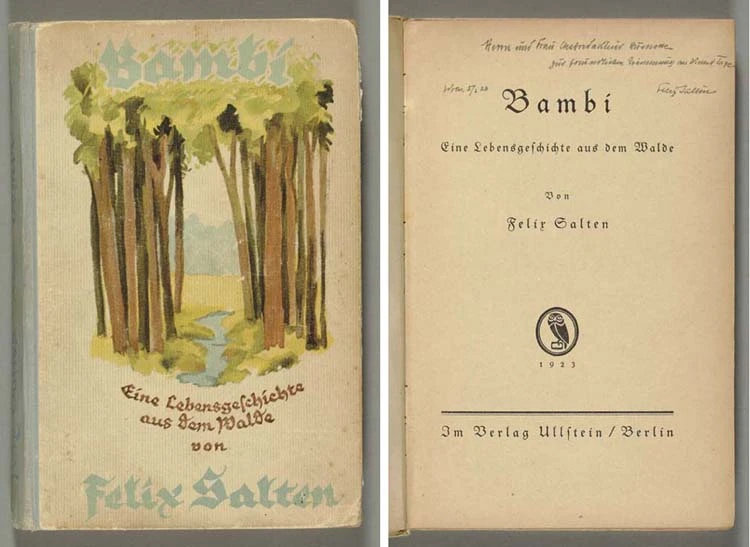
First edition of the book Bambi
Felix Salten's books could hardly be called children's literature—unless someone intended to prepare the younger generation for the harsh realities of life. Besides, what else could you expect from an author who was an avid hunter? Salten himself once admitted to personally killing at least 200 deer. The author may have exaggerated, but the fact remains: he saw animals exclusively as game.
Although Salten had no interest in politics, his works were banned when the Nazis came to power—most likely because of his Jewish heritage. Bambi: A Life in the Woods was burned in public squares alongside other "unfavorable" literature. In 1938, fearing for his life, the writer fled Austria for Switzerland with the help of friends. 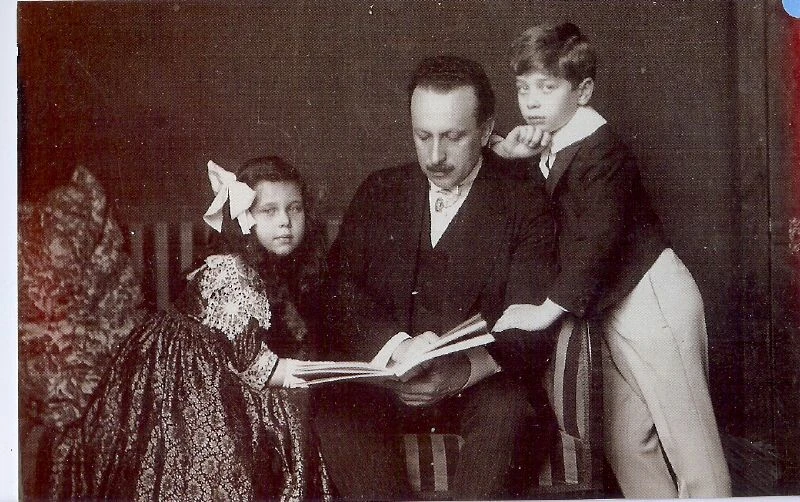
Felix Salten ruining childhoods... or rather, reading his book about Bambi to young fans
Living in exile, the author wrote two more stories set in Bambi's forest. In 1938, he published the story Perri, where the young deer appeared as a minor character. In 1940, the book Bambi's Children was released. Salten spent the final years of his life in Zurich, where he passed away in 1945.
How the Children's Story Came to Be
The book about the fawn was well known in English-speaking countries, published in a translation by Whittaker Chambers. It was effectively a loose adaptation rather than a direct translation, much like Alexey Tolstoy's The Adventures of Buratino, which was based on Carlo Collodi's Pinocchio. 
Walt Disney sketching the main character
Walt Disney acquired the film rights specifically for Chambers' adaptation. Studio screenwriters removed the excessive tragedy, resulting in a gentle children's fairytale. The movie Bambi was known and loved in the USSR as well, after Walt Disney personally gifted the film to Soviet children. Salten's original novel remained unknown; instead, starting in 1957, a much softer retelling by writer Yuri Nagibin was published.
In the mid-1980s, director Natalya Bondarchuk made two live-action children's feature films: Bambi's Childhood and Bambi's Youth (spelled "Bembi" in Soviet transliteration). Actors played the animals in the films. The adult Bambi was played by the director's husband, Nikolai Burlyayev, while their son, Ivan Burlyayev, played the fawn. Natalya Bondarchuk herself played Bambi's mother. One of the roles was given to Katya Lycheva—the young girl who traveled to the US on a peace mission during Gorbachev's era. 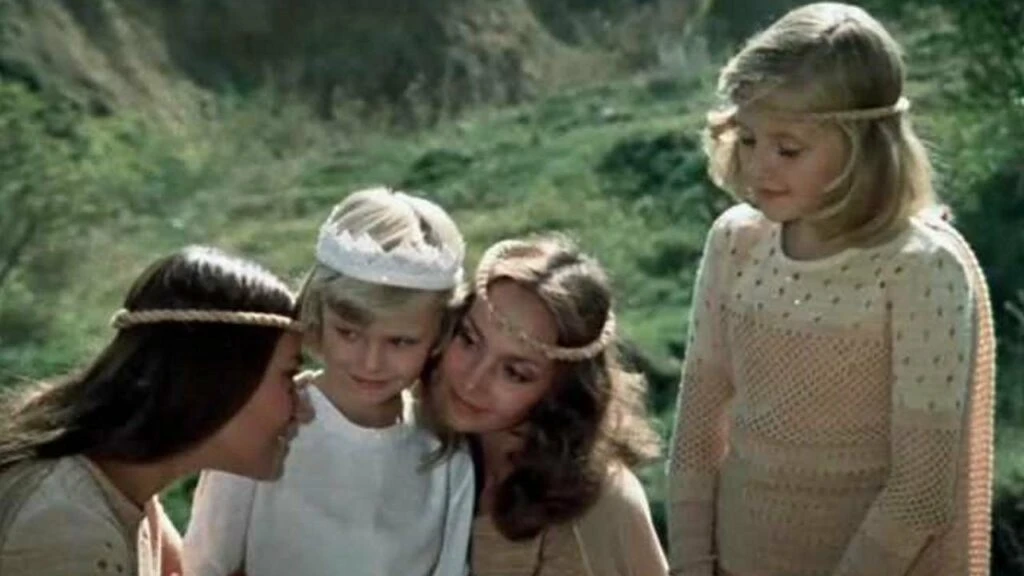
A scene from the movie Bambi's Childhood. USSR, 1985
Today, it is easy to find Bambi: A Life in the Woods and read the true, bloody story of the fawn. But if you want to preserve your fond childhood memories of the Disney classic, it might be best not to.