The Corner of China Where Women Still Rule (14 Photos)
Nestled near the Tibetan border on the shores of Lugu Lake in the Himalayas lives the Mosuo, a small ethnic minority. Their culture and way of life are truly unique, having remained largely untouched by modern trends—though local elders warn that change is looming on the horizon. The defining feature of Mosuo society is that women hold the reins. Women make the crucial economic and family decisions, inheritance passes down through the female line, and a woman can have multiple "walking husbands" whom she chooses freely for love. 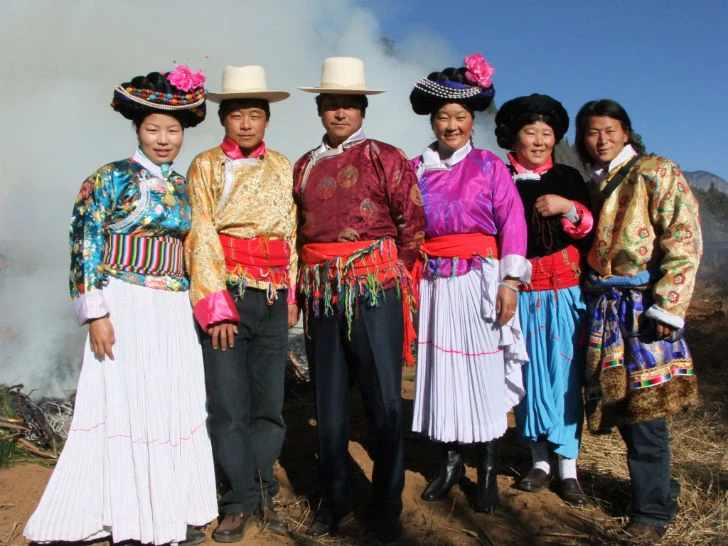
While filming the documentary
China's Last Matriarchy
, Broadly correspondent Milene Larsson spent a week at Lugu Lake living with a Mosuo family, immersing herself in their unique culture and the realities of matriarchal life. 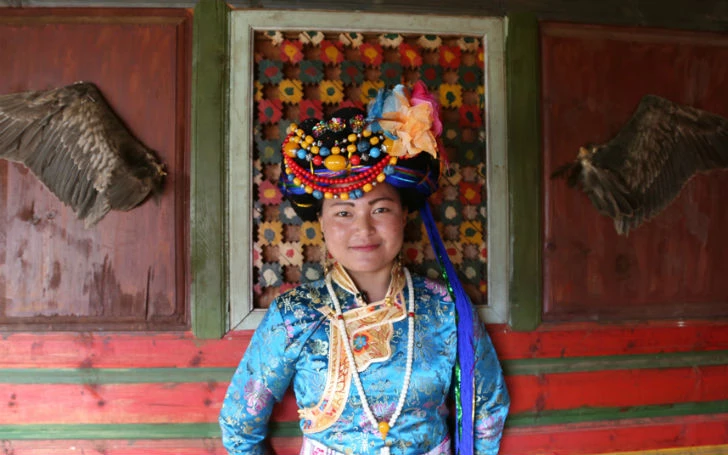
Lamu, 23, stands by the entrance to her bedroom, known in Mosuo culture as the "Flower Room." Only women of childbearing age are given their own rooms, where their lovers visit them under the cover of night and leave at break of day.
Lugu Lake sits at the foot of the Himalayas, home to a population of around 40,000 Mosuo people. Thanks to its remote location, the community has managed to preserve its distinct way of life and centuries-old traditions.
The Mosuo have no conventional concept of family or fatherhood. In many cases, neither the mother nor the child knows who the father is. Instead of traditional marriage, they practice "walking marriage," where partners maintain their own homes and visit each other as lovers. 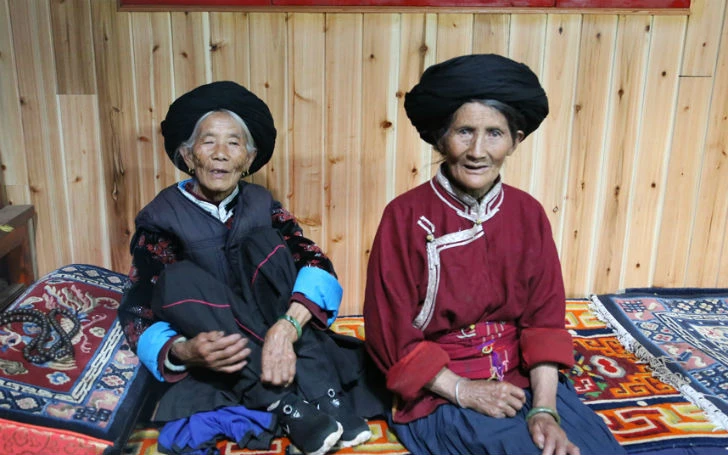
The matriarch grandmother and mother of the family that hosted the journalist. Multiple generations share a home alongside their brothers. Women jointly raise the children and serve as the main breadwinners, while men typically sell crops grown by the women or handle household repairs and construction.
In a walking marriage, a man visits his partner only at night, returning at dawn to his mother's or sister's home. Remarkably, it is usually the family matriarch's brothers who step up to help raise the children. 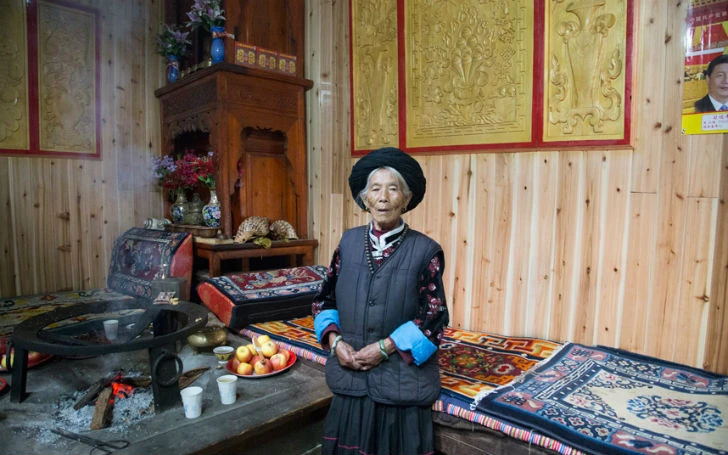
Lamu’s grandmother in a room that doubles as a living area, kitchen, and shrine. The space is often stocked with jars of tea, rice wine, apples, sunflower seeds, and nuts. Grandmothers are the most respected and revered figures in Mosuo society.
While Mosuo relationships are generally monogamous at any given time, walking marriages can be dissolved at will, meaning both women and men may have several partners over the course of their lives. 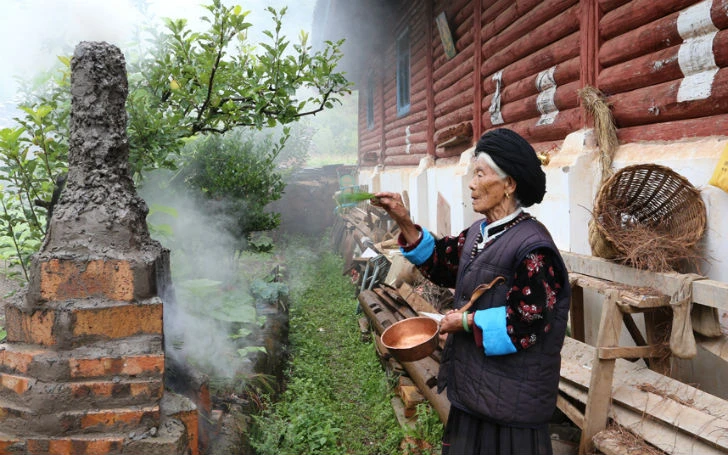
The grandmother of Lamu’s family lights incense. Spirituality plays a major role in Mosuo life, centered on a unique religion that blends their indigenous Daba beliefs with Tibetan Buddhism. 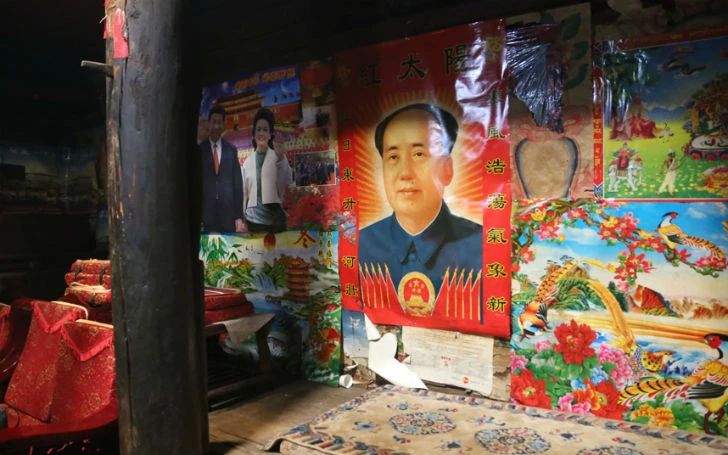
Portraits of Buddha and Mao Zedong frequently adorn house walls. The former Chinese leader is deeply revered here for bringing modern infrastructure—such as electricity and railways—to this remote corner of the country, dramatically improving living standards. 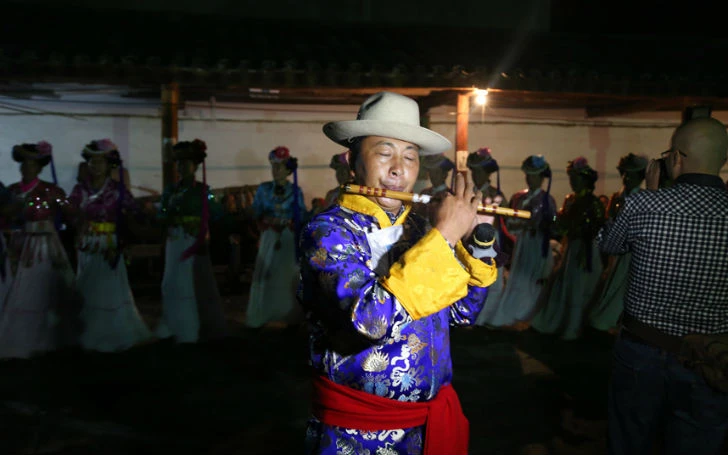
Flutes, drums, and folk songs accompany traditional Mosuo dances. 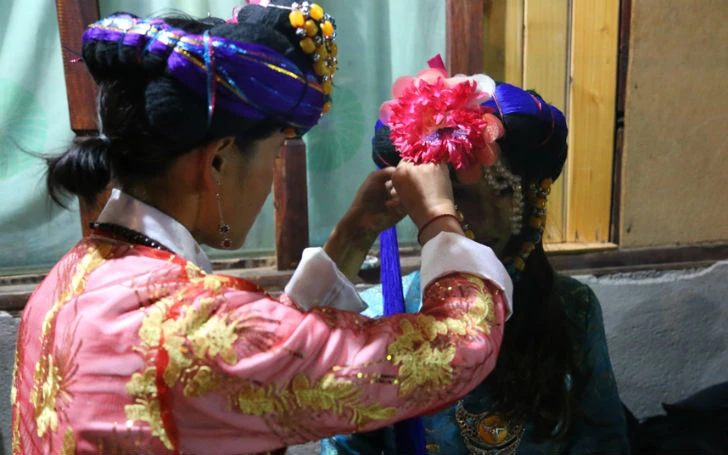
A Mosuo woman dresses correspondent Milene Larsson in traditional attire. 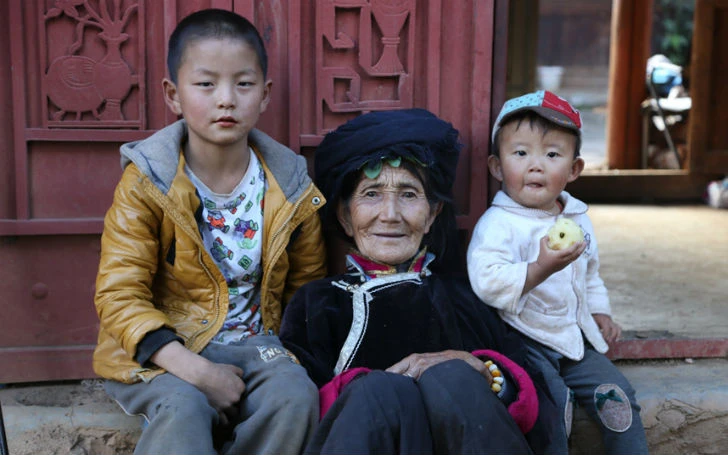
A grandmother with her grandchildren. 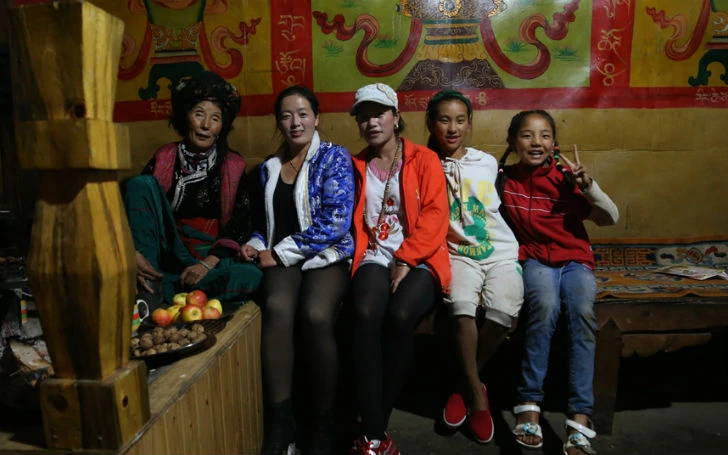
A traditional Mosuo household: three generations of women living under one roof. The encroachment of the modern world is evident in their attire—only the matriarch wears traditional dress. Women of her generation endured incredibly tough lives along the shores of Lugu Lake, never once venturing beyond them. Today, the younger generation finds itself torn between honoring centuries-old customs and pursuing educational opportunities at schools and universities. 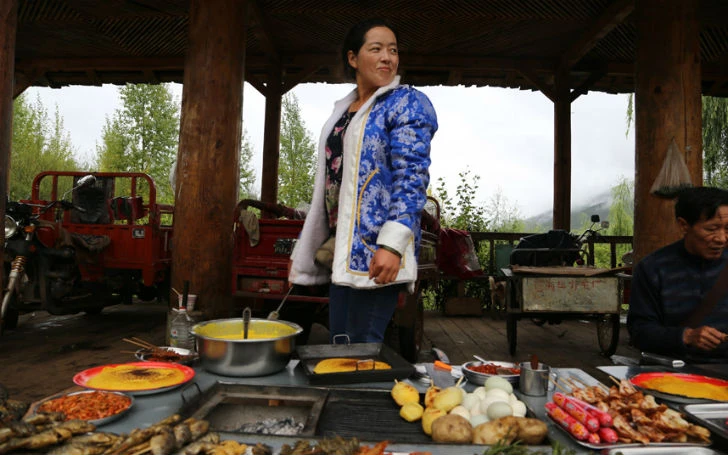
Pictured here is 33-year-old Lusu. Though she continues to live according to tribal customs, she now earns a living in tourism, as she can neither read nor write. Roughly 80 percent of Mosuo youth leave home to pursue an education in larger cities, where many ultimately settle and marry. The Mosuo speak the Na language, which has no written form. 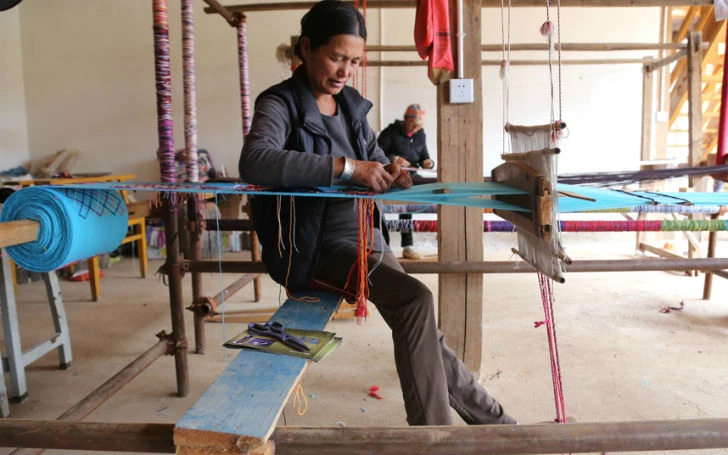
Handcrafted clothing and blankets made by this woman are sold around the globe. While needlework and weaving were once vital to Mosuo culture, these traditional crafts are now facing extinction. 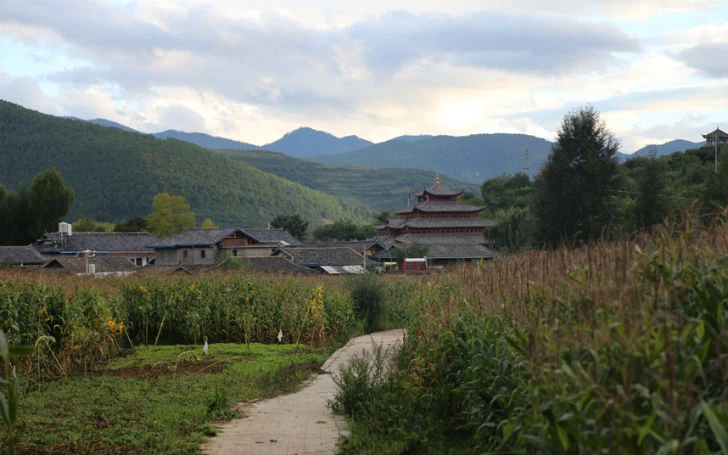
Mosuo villages are surrounded by fields of corn, sunflowers, and potatoes, with each household growing enough food to be self-sufficient. Unfortunately, the region is undergoing rapid change: a nearby highway and airport are under construction, bringing a growing influx of tourists eager to experience the scenery and the tribe's unique way of life. 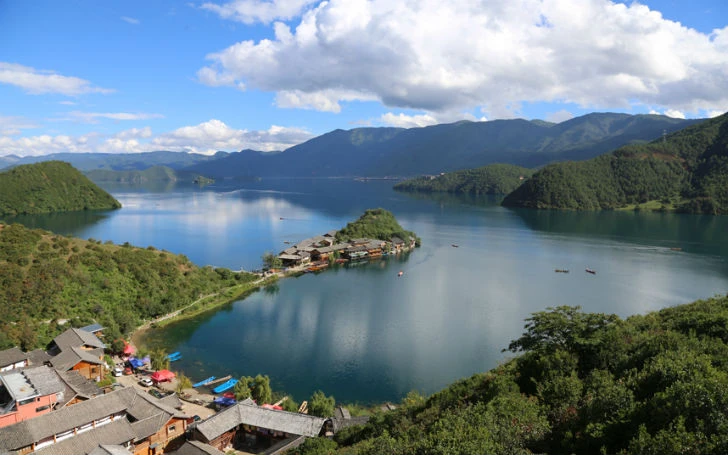
Mosuo villages along the shores of Lugu Lake.