14 Mental Disorders of Modern People You Never Knew Existed (15 photos)
Did you know that almost one in five people on the planet has a mental disorder? Probably not, because those with mental illnesses themselves don't always realize there's something wrong in their heads... 
Below, we'd like to share the 14 most common mental health issues often seen in modern people. Check them out, maybe you'll recognize someone you know, or maybe even yourself.
Pathological Lying 
Pathological lying is a person's tendency to deliberately provide false information, distort facts, and create fictitious stories. This symptom is usually caused by a desire to attract the attention of others. Interestingly, some patients with this disorder actually believe what they say.
In 2005, scientists found evidence that the brain of a normal person differs significantly from the brain of a pathological liar. In the latter, gray matter volume in the prefrontal cortex is reduced by 14.2%, while white matter volume is increased by 22%.
Taijin Kyofusho 
Taijin Kyofusho syndrome, as you might have guessed from its name, was first discovered in Japan. Its literal translation is "disease of fear of interpersonal relationships."
People with this syndrome experience a strong fear of inadvertently offending or insulting others, losing their goodwill and positive attitude. Moreover, sufferers often fear ruining others' moods even through their appearance or any physical defects, such as excessive sweating, facial flushing, stuttering, and so on.
Taijin Kyofusho sufferers typically avoid social activity, and when they need to interact with others, they experience increased heart rate, panic attacks, shortness of breath, and trembling. The difference between them and social phobics is that the latter are afraid of embarrassing themselves, while people with Taijin Kyofusho are concerned about harming others.
Open-mindedness Symptom 
Open-mindedness Symptom is most often observed in patients with mental disorders such as schizophrenia or Kandinsky-Clerambault syndrome. It is characterized by the patient's belief that their thoughts are being "broadcast" to others or to one specific person.
In mild forms, this symptom periodically causes the patient to doubt that their thoughts are hidden from others. If it persists, the individual's ability to interact with society is reduced, and their behavior changes. Severe forms of the symptom of openness of thoughts are attributed to schizophrenia.
It is the presence of this symptom in a patient that usually helps doctors distinguish schizophrenia from other mental illnesses.
Induced Delusional Disorder 
Induced delusional disorder, or as it is called, "insanity syndrome in two," is characterized by the shared delusion of two or more people with close emotional ties. In this case, patients "distribute" the following roles among themselves: the "delusional inducer"—the true patient who is the source of the delusion—and the "delusional narrative recipient"—the person in whom the delusion is induced, usually under the influence of the inducer's authority.
Treatment for this mental disorder is quite simple: the inducer and recipient are separated, and any connections between them are severed. The recipient is provided with constant emotional support while the inducer is separated from them.
Othello Complex 
The Othello complex is a type of sexual insecurity that manifests itself in pathological, unfounded jealousy, often verging on delusional. It usually occurs under the influence of alcohol.
A man with an Othello complex is terrified of losing his beloved. But even more terrified is the possibility that his girlfriend will cheat on him, and then all his friends and acquaintances will ridicule him. Convincing such a man that his partner is faithful is virtually impossible, as his jealousy is based solely on his own imaginary suspicions.
Dysmorphophobia 
Dysmorphophobia, also known as body dysmorphia or simply dysmorphophobia, is a more common cause of suicide than other mental disorders. It typically occurs in adolescents and is characterized by a lack of acceptance of one's own body or certain parts of it.
The most common areas of "defects" are skin (73%), hair (56%), nose (37%), and weight (22%). And who would have thought, this disorder affects not only overweight people but even professional athletes! Muscular dysmorphia, a condition in which a person feels their body is not muscular enough, is quite common among them.
Someone with body dysmorphia constantly looks in the mirror, searching for flaws, and becomes extremely anxious over missed workouts. They are also willing to take various steroids and dangerous drugs to accelerate muscle growth and achieve the "perfect" body.
Foreign Accent Syndrome 
Foreign Accent Syndrome is a rare medical condition in which patients suddenly begin speaking with a foreign, often unfamiliar, accent. This disorder typically occurs as a result of stroke or traumatic brain injury.
To the untrained ear, people with this syndrome sound as if they are speaking their native language, but with a different accent. For example, a native British English speaker may speak with a pronounced American accent, and vice versa.
This disorder has been largely unstudied, so there are no treatments for it. In 2012, singer George Michael revealed that after emerging from a coma, he briefly had a West Country accent. He did nothing to correct it, but the accent soon disappeared on its own.
Exploding Head Syndrome 
The name itself suggests what people suffering from this disorder experience. According to one sufferer, a sudden noise in his head intensifies, growing louder and louder until an explosion is heard. This is accompanied by bright flashes of light before his eyes, creating the impression that someone has detonated a bomb nearby.
Exploding head syndrome attacks most often occur before sleep. Some people experience them only once in their life, while others experience them several times a night.
Unfortunately, scientists have not yet been able to thoroughly study this disorder, so there is currently no treatment.
Bibliomania 
Bibliomania is a person's obsession with printed books, bordering on absurdity. To obtain a desired book, a person with this disorder will readily commit crimes, steal, or obtain it by deception.
Bibliomaniacs often have entire collections of various books at home. And these aren't always rare editions of their favorite authors. A patient with this disorder can buy absolutely any kind of literature, primarily because it appeals to them by its appearance.
Trichotillomania 
Trichotillomania is a person's obsessive desire to pull out their own (or other people's) hair. This could be scalp hair, eyebrows, or even eyelashes! It occurs in people who have experienced severe stress or in patients with mental illnesses. It is most common in women.
There are no specific treatments for trichotillomania. Standard psychotherapy and medications for depression and anxiety are used to relieve the patient's obsessive desire to remove body hair.
Body Integrity Disorder 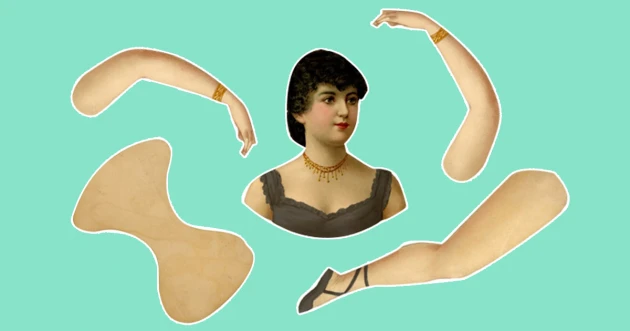
Body Integrity Disorder is also known as amputee personality disorder. This mental disorder is observed in otherwise healthy individuals who experience the desire to inflict severe self-mutilation—amputating an arm or leg, depriving themselves of sight, or altering their physical appearance.
The syndrome is closely related to xenomelia, a disorder in which a person feels as if one or more limbs are not connected to their body. Patients with this condition report feeling their hands, feet, legs, etc., as if they were "something extra," like a sixth finger.
There is a well-known case of a man with amputee personality disorder who cut off his own arm because "it was in his way." Another woman used toilet bowl cleaner to blind herself because she had dreamed of being blind since childhood.
Androphobia 
Androphobia is an uncontrollable fear of men, usually unfounded. In some cases, this disorder can be triggered by traumatic events in the past. Furthermore, androphobia can be a symptom of social phobia and arise from psychological trauma, such as rape.
Many consider androphobia to be a strictly "women's disorder," but it also occurs in men, although much less frequently.
Self-harm 
Self-harm, or self-harm, is the intentional harming of oneself without suicidal intent. Self-harm can be a symptom of various mental illnesses or manifest as an independent disorder.
Most often, people suffering from this disorder cut their skin, burn themselves, hit themselves, or use intoxicants. Although self-harm is not a prerequisite for suicide, 40-60% of people who suffer from it eventually commit suicide.
Kandinsky-Clerambault Syndrome 
Kandinsky-Clerambault Syndrome is also called a syndrome of mental automatism, as one of the symptoms of this disorder is a sense of automatism in the patient's actions. This disorder can include delusional ideas and pseudohallucinations. Patients often feel that all their feelings, thoughts, and actions are pre-arranged and unnatural.
There are several types of mental automatism: ideational, sensory, and motor. Ideational automatism is accompanied by a sensation of thoughts being "planted" in the patient's head, a symptom of openness of thoughts (we discussed this in detail above), and a detachment of one's own emotions (the patient may feel as if they are experiencing them under the influence of others).
Sensory automatism involves the occurrence of unpleasant, unnatural sensations in the body, which the patient usually cannot describe. Motor automatism is characterized by the feeling that all the patient's actions and movements are premeditated by someone else.
And these are far from all the mental disorders that are not as pronounced as, for example, schizophrenia and manic-depressive psychosis, but nevertheless pose a risk to a person's health. Therefore, it is very important to monitor not only the physical but also the mental state.
How do you take care of your mental health?